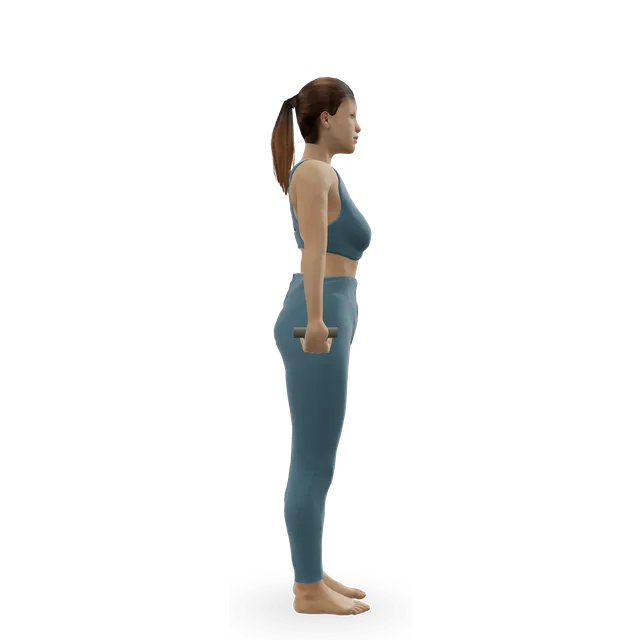
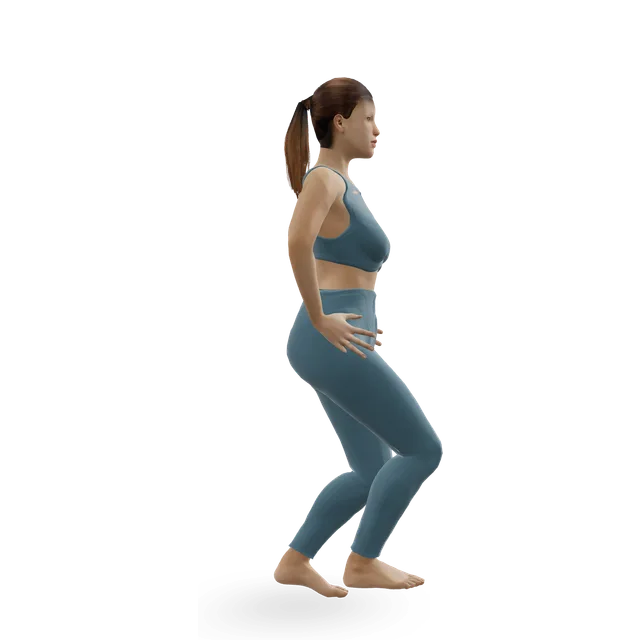
Training guide

How to do seated calf raises: the soleus, the machine and at-home versions, seated against standing, and how many

A seated calf raise is a calf raise with your knees bent and a weight on your thighs, on a seated calf machine or at home on a chair with a backpack or dumbbells. Bending the knee leaves the big calf muscle, the gastrocnemius, at a poor length to help, so more of the work falls on the soleus underneath, which makes up about half of your calf muscles.

The evidence is one small growth trial plus their use in rehab. In that trial, standing raises built the gastrocnemius and seated raises barely did, while the soleus grew about the same with either, so seated raises are a useful extra rather than the main event. They load the Achilles gently, which is why rehab programmes start with them.

This guide shows the machine and home versions step by step on the 3D figure, how heavy and how many, and what to do about your Achilles.

The short version

The move

Sit with the balls of your feet on the step and the pad on your lower thighs. Lower your heels into a comfortable stretch, then rise as high as you can, about 2 seconds each way, as in the 12-week trial, with a short pause at the top and bottom.

Source 1

Why the knee is bent

The gastrocnemius crosses the knee, so with the knee bent it is at a poor length: ankle force fell 31% and its activity 35% at 90 degrees in 30 men. The soleus underneath crosses only the ankle, and on MRI scans seated work showed up in the soleus. Expect to lift about a third less than standing, as our calf raise guide says.

Sources 2, 3, 4

The soleus is big

It made up about 52% of the calf muscles' volume in MRI scans of 13 men, against 32% for the inner gastrocnemius and 16% for the outer.

Source 5

Seated against standing

In the one trial, 14 untrained adults trained one leg standing and the other seated for 12 weeks: the gastrocnemius grew 9.2 to 12.4% standing and 0.6 to 1.7% seated, while the soleus grew 2.1% against 2.9%, no different. So do mostly straight-knee raises, with seated raises as a useful extra.

Source 1

Not a waste of time

The evidence for them is one small trial plus their use in rehab. A seated heel raise put about half of body weight through the Achilles, against up to 7.3 body weights in hopping, which is why Achilles and calf strain programmes start with them, and a heavy programme that included the seated calf machine helped Achilles pain as much as heel drops.

Sources 6, 7, 8, 9

How many

3 sets of 12 to 20, 60 to 90 seconds' rest, the last set 0 to 2 reps short of failure, twice a week after your straight-knee raises, as our calf raise guide and lower body gym workout use. Twelve hard calf sets a week grew the calves, the soleus included, more than six in one trial.

Source 10

What a seated calf raise is, and what it works

The move

You rise onto the balls of your feet while sitting, knees bent to about a right angle, with a load on your lower thighs: a seated calf machine's pad, a padded barbell, a dumbbell on one knee, or a weight or backpack on both. On the machine, or with a block under your forefoot, your heels can sink below the step; on the floor they can't.

The two calf muscles

The gastrocnemius, the muscle you can see, crosses both the knee and the ankle, so a bent knee leaves its fibres slack and at a disadvantage. The soleus, the broad muscle underneath, crosses only the ankle, so it works whatever your knee does. Both join the Achilles tendon.

Sources 11, 2, 5

What the soleus does

It carries much of the load in standing, walking and running. Modelling studies, as later papers quote them, put its pull in running at roughly 6 to 8 times body weight; those papers give slightly different figures, so treat it as a rough range.

Sources 12, 13

How hard it is

You'll lift less than standing: torque was 31% lower with the knee bent to 90 degrees. Unloaded, a seated toe raise drew only about 11% of the calves' maximum activity in 10 adults, so it needs a weight. Loaded, the Achilles took about half of body weight in a seated heel raise, the gentlest of the exercises measured in 8 adults.

Sources 2, 14, 6

Who it suits

Anyone wanting more calf work, people whose balance or knees make standing raises awkward, and people starting back after Achilles or calf trouble, as our calf raise, Achilles and calf pain guides use it. The machine page's prerequisite is none: start light.

How to do a seated calf raise on the machine, step by step

From our move page (take the full range, heels low to heels high; pause at the top rather than bouncing) and our calf raise guide's 2-second tempo, from the 12-week trial. Pointing the toes forward and the safety catch steps are coaching practice (editorial).

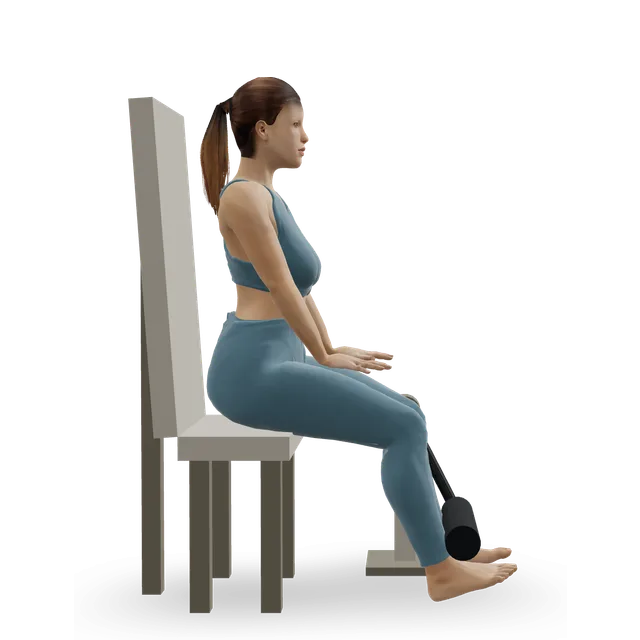
  1. Sit on the machine with the balls of your feet on the step, your heels hanging off, toes pointing forward, and set the pad snug across your lower thighs, just above the knees.
  2. Lift your heels a little to release the safety catch.
  3. Lower your heels slowly below the step into a comfortable stretch, and pause for a moment.
  4. Push up through the balls of your feet, big-toe side, as high as you can, over about 2 seconds.
  5. Pause at the top, then lower slowly, over about 2 seconds, without bouncing.
  6. After the last rep, rise up and put the safety catch back before you take your feet off.

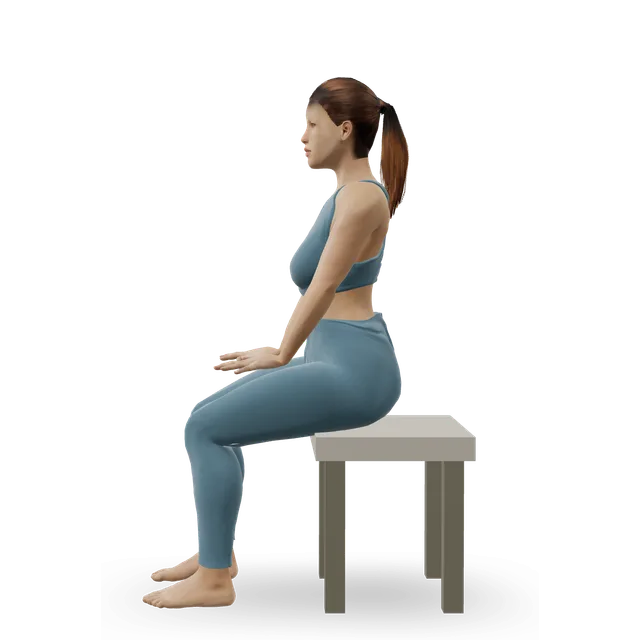
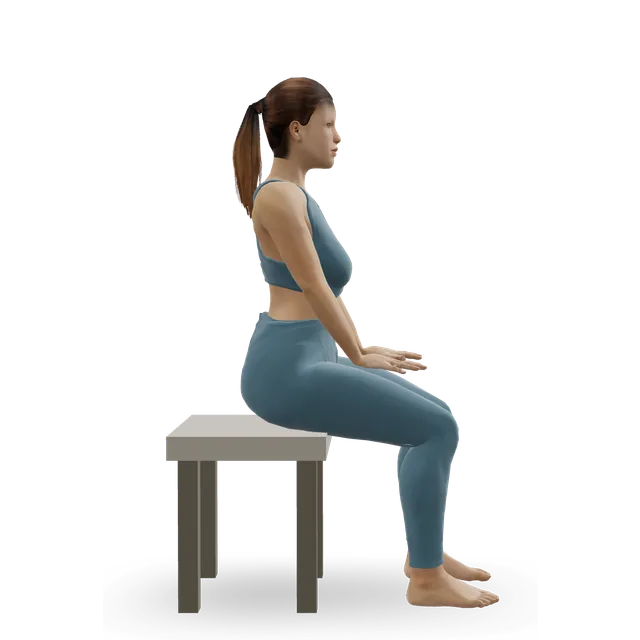
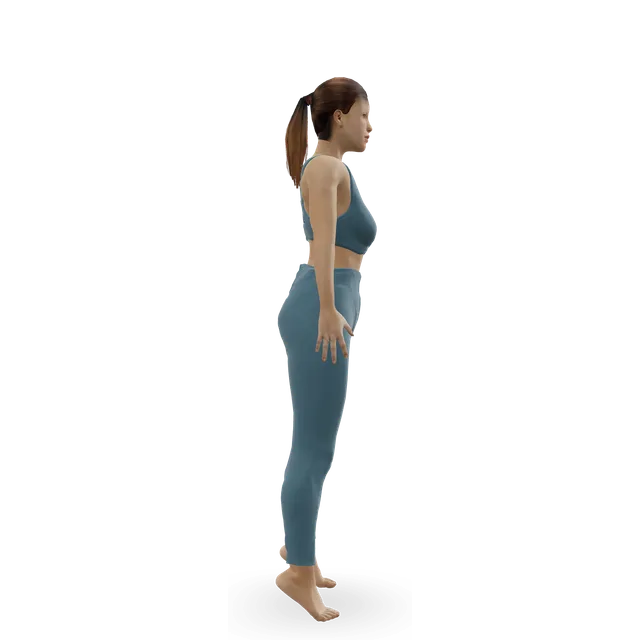
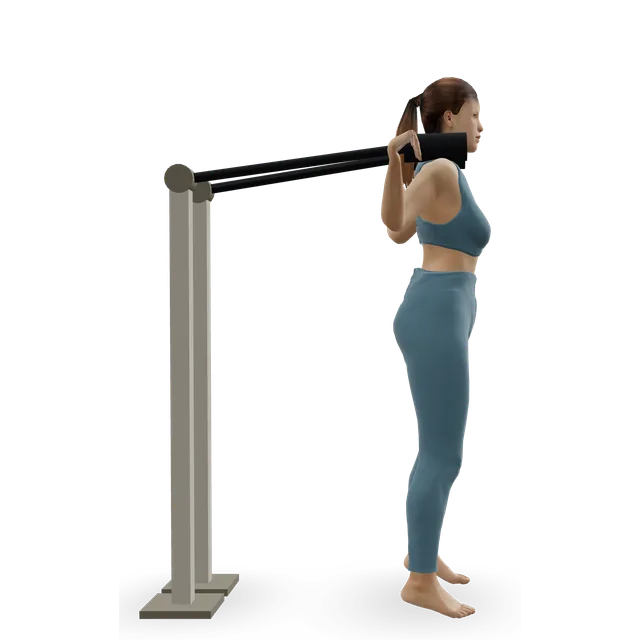
Loading the 3D figure…

Gets into position, then repeats the movement. Technical checks passed; qualified exercise review is pending.

The movement on the figure: Seated calf raise (machine)

How to do seated calf raises at home

From our seated bent-knee calf raise and seated one-leg calf raise move pages. Keep a hand on the weight: a plate that slides off your thighs lands on your feet, as the move page warns.

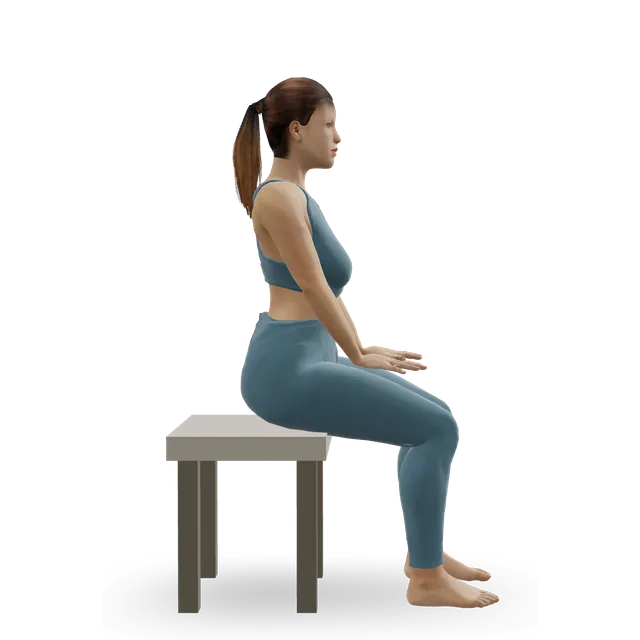
  1. Sit on a firm chair, knees bent to about a right angle, feet flat and hip-width apart.
  2. Rest a heavy backpack, a padded dumbbell or a bag of shopping on your thighs just above the knees, and steady it with your hands.
  3. Lift your heels as high as you can, keeping the balls of your feet on the floor, and pause.
  4. Lower slowly until your heels touch down.
  5. For more range, put the balls of your feet on a thick book or a step so your heels can sink below it, unless your Achilles hurts where it meets the heel.
  6. One leg at a time is harder: a dumbbell on one knee, the ball of that foot on a block.

Loading the 3D figure…

Gets into position, then repeats the movement. Technical checks passed; qualified exercise review is pending.

The movement on the figure: Seated bent-knee calf raise (soleus raise)

Machine, dumbbell, barbell and at-home versions

At home, 3 sets of 15 to 20 with a weight on your knees (our runners' home workout); one leg with a dumbbell, 3 sets of 12 to 20 each leg (our calf workout); a padded barbell, 3 sets of 12 to 20 (our editorial starting point); the seated calf machine, 3 sets of 12 to 20 (our lower body gym workout). The isometric hold, 5 holds of 30 to 45 seconds, is its move page's dose. There's no 3D demo of a seated raise in a Smith machine: the machine demo shows the movement.

Seated or standing? What the evidence says

The knee changes the calf's forceStrong evidence

In 10 men, maximal ankle torque fell to about 60% of its straight-knee value as the knee bent, and the gastrocnemius supplied at least 40% of the torque with the knee straight. In 30 young men, torque was 31% lower at 90 degrees of knee bend. Ultrasound shows the gastrocnemius at a mechanical disadvantage with the knee bent.

Sources 3, 2, 11

Does the soleus work harder seated? Studies disagreeMixed evidence

On MRI, only the soleus showed a training signal after seated work at 90 degrees, and its energy use rose as the knee bent in another scanning study. But muscle activity studies disagree: the soleus worked harder only early in slow lifts in 30 men, by only 4% at a 45-degree knee bend in 48 adults, and no differently in heel drops in 36 people, though it was best targeted at 90 degrees in 11 lifters. So seated raises take much of the gastrocnemius out, and the soleus does a bigger share of a smaller job.

Sources 4, 15, 2, 16, 17, 18

The one growth trialEmerging evidence

14 untrained adults, 7 women and 7 men, trained one leg with standing raises and the other with seated raises at 90 degrees: 5 sets of 10 at 70% of their maximum, 2 seconds up and 2 down, twice a week for 12 weeks. On MRI, the outer gastrocnemius grew 12.4% against 1.7%, the inner 9.2% against 0.6% and the soleus 2.1% against 2.9%, no different. There was no control group and no strength measure.

Source 1

Weekly setsEmerging evidence

In 61 untrained young women, 12 weekly sets of calf raises grew the soleus 12.7% in 6 weeks against 6.7% with 6 sets. In 21 untrained men doing seated and straight-leg raises for 8 weeks, the soleus grew less than the gastrocnemius. Small trials, but they suggest the soleus needs enough hard sets, whichever raise you use.

Sources 10, 19

The bottom of the movementEmerging evidence

In 42 young women, raises in the stretched bottom half grew the inner calf 15.2% against 6.7% for full raises, though that was with straight knees on a leg press. Letting the heel drop fully raised the Achilles' load, less so seated than standing, in 18 adults. Using the bottom of a seated raise is our extension of those findings (editorial).

Sources 20, 21

Toes in or outEmerging evidence

Toes out grew the inner calf more and toes in the outer calf more in a straight-knee trial of 22 young men. We found no seated study, so point your toes forward.

Source 22

Muscle activity isn't growthStrong evidence

The activity figures come from EMG (electromyography: electrodes measuring how hard a muscle works) over a few reps, which doesn't predict what a muscle builds. The growth trial matters more.

Source 23

How heavy and how many

Your first weight

A load you can raise 12 to 20 times through the full range, with 3 or 4 reps to spare in your first two weeks, as our plans advise. It'll be lighter than your standing raise: the calf is about a third weaker with the knee bent.

Source 2

Sets, reps and rest

3 sets of 12 to 20, 60 to 90 seconds' rest, the last set 0 to 2 reps short of failure, as our lower body gym workout and calf raise guide use. Light and heavy loads built similar muscle when the sets were hard, across 28 studies.

Source 24

Sets a week

About 6 hard calf sets a session, twice a week: 3 sets of straight-knee raises and 3 of bent-knee raises with a weight on your knees. That's our calf raise guide's editorial starting point, from the trials' 12 weekly sets and 10 to 20 reps.

Sources 10, 1

Tempo

About 2 seconds up and 2 down, as in the 12-week trial, with a short pause at the top and bottom.

Source 1

Moving up

Add reps to 20, then load; at home, move from both legs to one leg with a dumbbell on the knee, as our calf workout does.

Common mistakes and how to fix them

Bouncing at the bottom

Lower slowly and pause rather than bouncing out of the stretch.

Cutting the top short

Rise as high as you can on every rep.

Rushing

About 2 seconds up and 2 down.

Only doing seated raises

Seated raises barely grew the gastrocnemius; make straight-knee raises the main part, as our calf raise guide says.

Source 1

No weight at home

An unloaded seated raise is very light. Add a heavy backpack or dumbbells, or go to one leg.

Source 14

The pad too low

Set it on your lower thighs, just above the knees, not on the kneecaps.

Dropping below the step with a sore Achilles

With pain where the tendon meets the heel, stay level, as our Achilles guide advises.

Seated calf raises, your Achilles and calf strains

A gentle load on the tendonEmerging evidence

In 8 adults, the Achilles took about half of body weight in a seated heel raise, rising to 7.3 body weights in a forward one-leg hop. That's why rehab starts seated and builds up to hops last.

Source 6

Achilles tendinopathyStrong evidence

In 58 people with long-standing Achilles tendon pain, a heavy slow programme whose first exercise was heel raises in the seated calf machine (3 or 4 sets, from 15 down to 6 reps over 12 weeks, 3 seconds up and 3 down, three times a week) worked as well as heel drops, and people completed more sessions (92% against 78%). The seated part wasn't tested on its own. A clinical review's loading table starts with sitting heel raises, 3 sets of 10 and then 3 sets of 15, and an NHS trust leaflet uses 20 seated raises with a 3-second hold, 4 times, before standing raises.

Sources 7, 8, 25

Weak soleus with Achilles painEmerging evidence

In runners with Achilles tendinopathy, strength was lower with the knee bent, which the authors put down mainly to the soleus. That snapshot can't show which came first.

Source 26

After an Achilles ruptureEmerging evidence

A seated heel-rise test with half your body weight is used after a rupture, and the authors say the seated position can strengthen all the calf muscles and is useful when a standing raise isn't yet possible. Follow your team's stages, as our Achilles rupture guide says.

Source 27

Calf strains

An NHS Wales calf strain leaflet starts with a sitting heel raise, 10 times, 3 to 4 times a day, before standing raises, and expert clinicians use seated or bent-knee raises early, building from 10 to 15 reps towards heavier sets. Our calf pain guide uses 3 sets of 15 in its first stage.

Sources 9, 28

The pain rules

For Achilles pain, keep it to 5 out of 10 or less during exercise, back to its usual level by the next morning, as our Achilles guide says; in a trial of 38 people, carrying on running and jumping under a pain-monitoring rule did no harm. For a calf strain, mild discomfort up to about 3 to 4 out of 10 that settles within the day, as our calf pain guide says. With pain where the Achilles meets the heel, keep your heels level rather than letting them sink below the step.

Source 29

Blood sugar and the soleus push-up

What was testedEmerging evidence

Seated heel raises with no weight, kept up for hours with muscle sensors (the soleus push-up), cut the rise in blood sugar after a glucose drink by about half in a small lab study of people without diabetes; the university involved intends to patent the method. A pilot in 10 people with prediabetes found about a third.

Sources 30, 31

What it means

A few sets after a meal haven't been tested. A walk after meals is the better-tested habit, as our calf raise and type 2 diabetes guides explain.

The rest of the calf

Straight-knee raises first: single-leg raises from a step, 3 sets of 12 to 20 each leg (our runners' home workout and calf workout), or the standing calf machine, 3 sets of 10 to 15 (our bodybuilding lower body workout); slow calf raises, 15 on the floor as a warm-up (our calf workout). Tibialis raises, 1 to 2 sets of 15 to 20 (our calf workout); the soleus wall stretch, 2 holds of 30 seconds each side, gentle (our calf pain guide); ankle circles, 5 slow circles each way (its move page's dose).

Workouts to follow

The calf workout pairs single-leg raises from a step with seated one-leg raises. The lower body gym workout uses the seated machine at 3 sets of 12 to 20, the bodybuilding lower body workout does standing then seated raises, and the runners' workouts use the seated machine or a seated raise with a weight on your knees, for the soleus.

Plans that use it

Seated calf raises come round in these plans through the lower body gym and runners' workouts.

Warning signs

Stop and get medical help

If you get chest pain or pressure, feel faint or dizzy, are unusually breathless, or your heart races or beats irregularly during exercise, as our plans advise. The American Heart Association says these need immediate medical evaluation.

Source 32

Call 999 (911 in the US)

For chest pain that feels tight, heavy or squeezing, or spreads to your arms, neck, jaw or back; a sudden, extremely painful headache, especially while straining; someone who faints while exercising; or palpitations that don't go away, or come with chest pain, breathlessness or feeling faint. Don't drive yourself to A&E.

Call 999 too if you have pain or swelling in a leg and you're also breathless or have chest pain: it could be a clot that has reached your lungs.

Sources 33, 34, 35, 36, 37, 38, 39

Same day: a snap at the back of the heel or calf

A sudden snap, pop or grinding at the back of the heel or calf, often feeling as if you've been hit or kicked there, then not being able to push off, walk on tiptoe or climb stairs, with swelling and bruising: it can be a ruptured Achilles tendon or a broken heel bone. Contact NHS 111 or go to A&E or a minor injuries unit. In the US, go to urgent care or the emergency department.

Sources 40, 41

Ask for an urgent GP appointment or get help from NHS 111

For throbbing pain in one leg, usually the calf or thigh, with swelling, red, blue or darkened skin or swollen veins: it can be a deep vein thrombosis (DVT). It's more likely after surgery, bed rest or a long journey, in pregnancy or soon after a birth. In the US, contact your doctor or urgent care.

Source 39

See a GP

For cramps that disturb your sleep, last longer than 10 minutes or come with numbness or swelling; heel pain that hasn't improved after 2 weeks of looking after it, or comes with tingling or diabetes; or calf pain that comes on walking and eases with rest.

Sources 42, 40

A headache with effort

Ask for an urgent GP appointment or get help from NHS 111 for a headache that's triggered or made worse by coughing, sneezing, bending down or exercising.

Source 35

Calves far sorer than the session explains

After a big or unusual session, such as a calf raise challenge, muscle pain, swelling or weakness far worse than the session explains, with dark pee, needs the same-day check through NHS 111, or A&E if you feel very unwell: it can be rhabdomyolysis, a breakdown of muscle.

The machine and plates

Put the safety catch back before you step out, and pad any weight on your thighs and keep a hand on it: a plate that slides off lands on your feet. With numb feet, check them for marks afterwards, as our calf raise guide advises.

Before you start

Speak to your GP first if you haven't exercised for some time or have medical conditions or concerns, as the NHS advises. Get advice before hard or straining work if your blood pressure is uncontrolled (140/90 or higher at a clinic, or 135/85 at home), or you have heart disease or chest pain when you're active, a pacemaker or defibrillator, diabetic eye disease, glaucoma, a hernia, recent eye or tummy surgery, or you're pregnant, as our breathing guide lists.

Source 43

Sore, or hurt?

Muscle soreness for a day or two after a new or harder session is common and fades. Sharp pain, or pain that builds during a set or lingers into the next day, isn't: swap to an easier version, and see a clinician if it persists, as our plans advise. The NHS says to stop exercising straight away if you feel any pain or become unwell, and to get help from 111 if symptoms worry you or don't go away.

Source 44
Myths

"Seated calf raises are a waste of time"Mixed evidence

For size, they added little in the one small trial, though the soleus grew as much as with standing raises. For the Achilles and calf strains they are a standard first step, with a gentle load on the tendon, and the seated machine was part of a programme that helped Achilles pain.

Sources 1, 6, 7

"Seated calf raises are the way to grow the soleus"Emerging evidence

The soleus grew 2.1% with standing raises and 2.9% with seated ones, no different, and standing raises also grew the gastrocnemius, as our calf raise guide says.

Source 1

"Bending the knee switches the gastrocnemius off"Emerging evidence

It works much less (activity 35% lower and torque 31% lower at 90 degrees), not nothing.

Sources 2, 3

"The soleus is a small muscle"Strong evidence

It's about half of the calf muscles' volume, bigger than either part of the gastrocnemius.

Source 5

"Calves need 50 or 100 reps"Emerging evidence

Calves grew with 10 reps at 70% of the maximum and with sets of 15 to 20, and across muscles how hard the set is matters more than the rep count, as our calf raise guide says.

Sources 1, 24

Questions people ask

How do you do a seated calf raise?

Sit with the balls of your feet on the step and the pad on your lower thighs, just above your knees. Lower your heels into a comfortable stretch, pause, then rise as high as you can, about 2 seconds each way.

What muscles do seated calf raises work?

Mainly the soleus, the broad muscle under your calf, because bending your knee leaves the gastrocnemius at a poor length to help. The soleus is about half of your calf muscles' volume.

Are seated calf raises useless?

No, but they aren't the best calf builder on their own. In the one small trial they barely grew the gastrocnemius, while the soleus grew as much as with standing raises. They're a useful extra, and a standard early step for a sore Achilles or a strained calf.

Seated or standing calf raises: which is better?

Standing, for the big calf muscle: it grew about 9 to 12% in 12 weeks with standing raises and under 2% with seated ones. Do mostly straight-knee raises and add seated raises after them.

How do I do seated calf raises without a machine?

Sit on a chair with a heavy backpack or dumbbells padded on your thighs, the balls of your feet on a thick book, and raise and lower your heels slowly. Or do one leg at a time with a dumbbell held on that knee. Without a weight, it's a very light exercise.

How heavy should seated calf raises be?

A load you can raise 12 to 20 times through the full range, the last set 0 to 2 reps short of failure. You'll lift less than standing: the calf is about a third weaker with the knee bent.

How many sets and reps of seated calf raises?

3 sets of 12 to 20, resting 60 to 90 seconds, twice a week, after your straight-knee raises. Twelve hard calf sets a week grew the calves, the soleus included, more than six in one trial.

Should I point my toes in or out on seated calf raises?

Forward. Turning your toes shifted work between the two halves of the gastrocnemius in straight-knee studies, but no study has tested it seated.

Are seated calf raises good for Achilles tendonitis?

Often, yes: they put a gentle load through the tendon and are a common first step, and a heavy programme including the seated calf machine helped as much as heel drops. Keep pain at 5 out of 10 or less and settled by the next morning, and see our Achilles guide.

Do seated calf raises help runners?

They train the soleus, which takes a big share of the load in running, and runners with Achilles pain often show weaker knee-bent calf strength. No trial has tested whether they prevent injury.

Do seated calf raises lower blood sugar?

In a lab study, seated heel raises kept up for hours with muscle sensors cut the blood sugar rise after a glucose drink by about half; a few sets after a meal haven't been tested. A walk after meals is the better-tested habit.

Why do seated calf raises hurt my knees or thighs?

Usually the pad sits too low on the knees or presses too hard: set it on your lower thighs, just above the kneecaps, and pad a barbell or dumbbell at home. If knee pain carries on, see our knee pain guides.

Sources

  1. Kinoshita 2023 · Standing against seated calf raises for 12 weeks in 14 untrained adults, measured by MRI (within-person trial, Front Physiol)
  2. Kovács 2024 · Knee position and calf muscle activity in 30 young men (muscle activity study, Biol Open)
  3. Cresswell 1995 · Knee angle, calf torque and muscle activity in 10 men (lab study, Exp Brain Res)
  4. Price 2003 · Which calf muscles work at different knee angles, by MRI and EMG, in 24 people (lab study, Magn Reson Imaging)
  5. Albracht 2008 · The size of each calf muscle in 13 men, measured by MRI (lab study, J Biomech)
  6. Baxter 2021 · Achilles tendon load across rehabilitation exercises in 8 adults (lab study, Med Sci Sports Exerc)
  7. Beyer 2015 · Heavy slow calf raises against heel drops for Achilles tendinopathy in 58 people (randomised trial, Am J Sports Med)
  8. Silbernagel 2020 · Conservative management of Achilles tendinopathy (clinical review, J Athl Train)
  9. Aneurin Bevan University Health Board (NHS Wales) 2025 · Calf strain advice (patient leaflet)
  10. Kassiano 2024 · 6, 9 or 12 weekly sets of calf raises in 61 untrained young women (randomised trial, Int J Sports Med)
  11. Kawakami 1998 · The calf muscles' fibres at different knee and ankle angles in 6 men (ultrasound study, J Appl Physiol)
  12. Mattock 2021 · Lower leg muscles in runners with shin pain (case-control study, J Foot Ankle Res)
  13. Bramah 2021 · Running movement in men with repeated calf strains (case-control study, Int J Sports Phys Ther)
  14. Mullaney 2011 · Calf muscle activity in Achilles rehab exercises in 10 adults (muscle activity study, Sports Health)
  15. Niess 2018 · Calf muscle energy use at four knee angles in 12 volunteers (MR spectroscopy study, NMR Biomed)
  16. Hébert-Losier 2012 · Knee bend and calf muscle activity during heel raises in 48 adults (muscle activity study, J Strength Cond Res)
  17. Signorile 2002 · Calf muscle activity at three knee angles in 11 lifters (muscle activity study, J Strength Cond Res)
  18. Reid 2012 · Calf muscle activity in straight and bent-knee heel drops in 36 people (muscle activity study, Phys Ther Sport)
  19. Van Every 2022 · Seated and straight-leg calf raises, with and without a loaded stretch, in 21 men (within-person trial, PLoS One)
  20. Kassiano 2023 · Calf raises in the bottom half, the top half or the full range in 42 young women (trial, J Strength Cond Res)
  21. Yeh 2021 · Ankle angle and Achilles force in Achilles exercises in 18 adults (lab study, Scand J Med Sci Sports)
  22. Nunes 2020 · Toes in, out or forward in calf raises in 22 young men (within-person trial, J Strength Cond Res)
  23. Vigotsky 2022 · Muscle activity measured in one session is not a validated predictor of muscle growth (review, Sports Med)
  24. Lopez 2021 · Light, moderate and heavy loads for muscle growth and strength: 28 studies, 747 adults (network meta-analysis, Med Sci Sports Exerc)
  25. University Hospitals Coventry and Warwickshire NHS Trust 2023 · Achilles tendinopathy (patient leaflet, past its review date: review due June 2026)
  26. O'Neill 2019 · Calf strength in 39 runners with Achilles tendinopathy and 38 without (case-control study, Phys Ther Sport)
  27. Zellers 2020 · Seated and standing heel raises after an Achilles rupture in 10 people (muscle activity study, Transl Sports Med)
  28. Green 2022 · How 20 expert sports clinicians manage calf strains (qualitative study, Sports Med Open)
  29. Silbernagel 2007 · Carrying on running and jumping under a pain-monitoring rule with Achilles tendinopathy, in 38 people (randomised trial, Am J Sports Med)
  30. Hamilton 2022 · The seated soleus push-up and blood sugar after a glucose drink (lab study, iScience)
  31. Elek 2025 · The soleus push-up in 10 people with prediabetes (pilot study, Sports)
  32. Paluch 2024 · Resistance training with and without heart disease: 2023 update (American Heart Association scientific statement, Circulation)
  33. NHS · Chest pain (past its review date: reviewed August 2023, review due August 2026)
  34. NHS · Heart attack
  35. NHS · Headaches
  36. NHS · Subarachnoid haemorrhage
  37. NHS · Fainting
  38. NHS · Heart palpitations
  39. NHS · Deep vein thrombosis (DVT)
  40. NHS · Heel pain
  41. Cambridge University Hospitals NHS Foundation Trust 2025 · Achilles tendon rupture (patient information)
  42. NHS · Leg cramps
  43. NHS · Physical activity guidelines for adults aged 19 to 64
  44. NHS · How to warm up before exercising

Exercise education, not a personal prescription, and clinical review of these guides is pending. Check with a GP before starting hard training if you have a heart condition, chest pain, dizziness or breathlessness when active, and stop for sharp or increasing pain. Health disclaimer.