The step-up
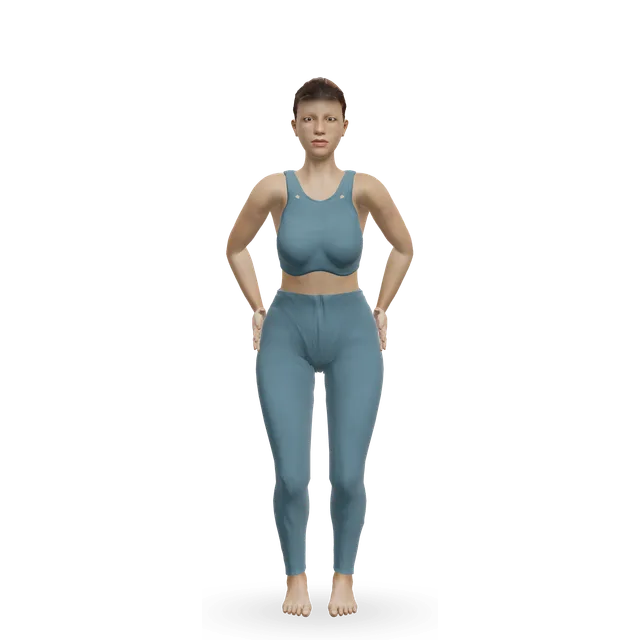
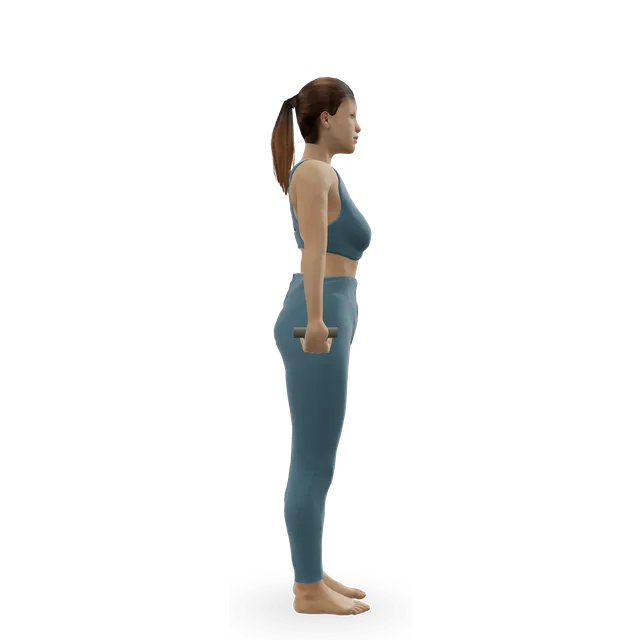
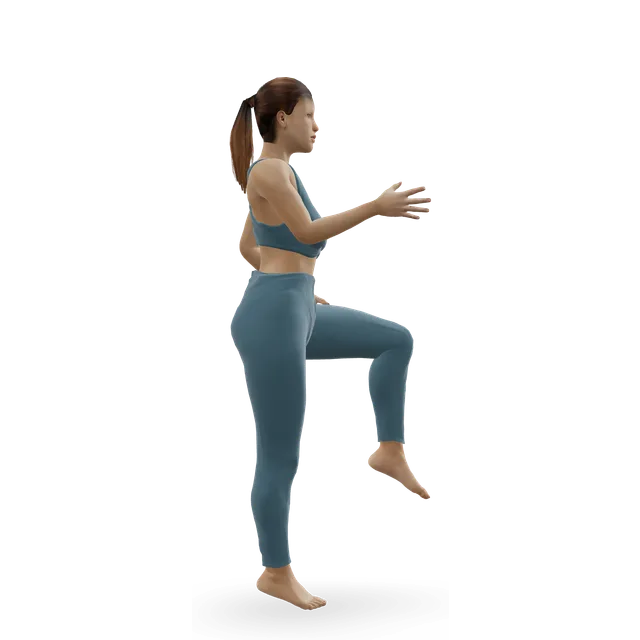
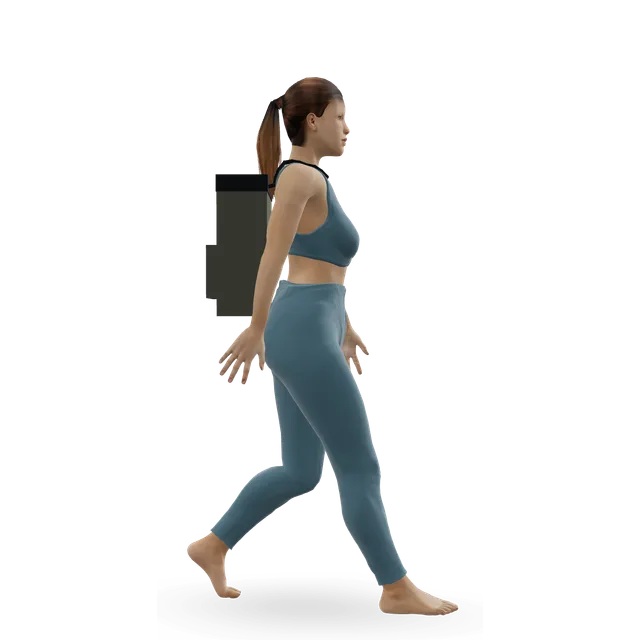
Put your whole foot on a stable step, keep that knee in line with your second toe, stand up on that leg and lower yourself slowly. Let the leg on the step do the work rather than pushing hard off the back foot (our suggestion).
Source 1
Training guide
A step-up is placing your whole foot on a step or box, standing up on that leg, and lowering yourself back down slowly. Start on the bottom stair with a hand on the rail, and do 2 or 3 sets of 8 to 12 on each leg. Raise the step as it gets easy, then hold dumbbells.
Step-ups train one leg at a time, mostly your glutes and the front of your thighs. A low step is one of the gentlest single-leg exercises for your knees, and the height you choose sets both the difficulty and the load on your knee. In trials, heavy step-ups built strength like squats, and stepping programmes built thigh muscle and stair climbing in older women.
This guide covers the steps on the 3D figure, box height, what step-ups work, lateral and weighted versions, how to progress, and your knees.
Put your whole foot on a stable step, keep that knee in line with your second toe, stand up on that leg and lower yourself slowly. Let the leg on the step do the work rather than pushing hard off the back foot (our suggestion).
Source 1
In 20 adults, a 10 cm step-up loaded the joint behind the kneecap 1.7 times body weight, less than a two-leg squat to 60 degrees (2.5 times); a 20 cm step-up 3.6 times, and a lunge 5.1 times. Of 35 rehabilitation exercises, the 20 cm step-up put one of the lowest loads on the tendon below the kneecap.
Start on the bottom stair or a low step, then build to a higher box; a box that puts your knee no higher than your hip is plenty for most people (our editorial suggestion). Raise the step before adding weight, and drop back down when you first hold dumbbells, as our move page and hiking workout advise.
Source 2
Mostly your glutes and the front of your thighs, with your hamstrings and calves helping. A review ranked the step-up highest for glute activity, but that figure comes from one study of 15 trained women on a 46 cm box, with a wide spread, and activity in a few reps isn't growth.
In young rugby players, 8 weeks of heavy step-ups built strength like back squats did. Across 24 trials, one-leg and two-leg training built similar muscle. Stepping onto rising step heights built thigh muscle and stair climbing in women aged about 69, and home stepping in a weighted vest raised leg power by about 10% in 6 weeks.
2 or 3 sets of 8 to 12 on each leg, stopping 2 to 3 reps short of failure, with about 90 seconds' rest, as our workouts and plans use; about 10 or more hard sets a week for your legs builds muscle. With knee pain, start on the bottom stair, the gentlest height, and keep within our knee guides' pain rule.
Stepping up onto a box, bench, step or stair with one foot, standing up on that leg, then stepping back down. ACE (the American Council on Exercise) rates it a beginner exercise: torso upright, the knee over the second toe, the trailing foot back down first, and stepping up onto one leg and staying there as the progression. Versions step up sideways (lateral) or across the body (crossover), add a knee raise, or add dumbbells or a barbell.
Source 1
The gluteus maximus straightens the hip as you rise. In a review of glute exercises, the step-up drew 169% of the activity of a maximal effort, ahead of lateral, diagonal and crossover step-ups (104 to 114%), the hex bar deadlift (88%) and the hip thrust (82%). All the step-up figures come from one study: 15 trained women at their 6-rep maximum on a 46 cm box, with a spread of plus or minus 101%.
The quadriceps straighten the knee. Lateral step-ups drew more than 45% of a maximal effort from the inner quadriceps in 30 adults. In 19 women aged about 69, stepping onto a 20 cm or higher step drew more outer quadriceps activity than machine exercise at 60% of their maximum.
The gluteus medius holds your pelvis level on one leg. Lateral step-ups worked it more than forward ones in 27 adults aged about 79, and the crossover step-up worked it most on the way up in the trained women.
The demand rose from the step-up to the lunge to the single-leg squat in 44 adults, and the step-up asked less of the hip than the step-down and single-leg squat in 20 adults. In another 20, the single-leg squat drew more activity than the lateral step-up or forward lunge in every muscle measured but one.
These figures come from EMG (electromyography: electrodes measuring how hard a muscle works), which shows effort in a few reps, not what a muscle builds over months.
Source 6
Stepping onto a 20 to 25 cm step, older women produced 44% less power and needed 60% more outer quadriceps activity than young women. That is why ordinary stepping can be real training for older people, and why the step height should match the person.
33 young rugby players trained twice a week for 8 weeks with either heavy step-ups or back squats (6 to 8 sets of 4 to 8 at 45 to 88% of their maximum, matched for total load). Each group improved its own lift by similar amounts (effect sizes 0.74 and 0.67), and each carried over to the other lift: the step-up group gained in the squat (0.42) and the squat group in the step-up (0.27). One small trial.
Source 7
Across 24 trials, one-leg training improved one-leg strength more (an effect size of 0.42), two-leg training improved two-leg strength more, and muscle growth didn't differ. You get better at what you practise.
Source 8
45 women aged about 69 were randomly assigned to 12 weeks of stepping with rising step heights or no training. Stepping increased thigh muscle volume on CT (computed tomography) scans, knee strength and power, a timed stair climb, walking speed and a standard function test, but not jump height or balance.
Source 9
11 inactive women aged 65 to 74 did 6 weeks of home stepping wearing a weighted vest, after a 6-week period without it. Leg power rose 10 to 11%, stair climbing time improved 9% and stair climbing power 10%. A small trial without a separate control group.
Source 10
In 20 healthy adults, the load behind the kneecap was 0.6 times body weight walking, 1.7 on a 10 cm step-up, 2.5 in a two-leg squat to 60 degrees, 3.1 stepping down from 10 cm, 3.6 on a 20 cm step-up, 4.5 in a full squat, 4.7 in a Bulgarian split squat, 5.1 in a lunge and 5.8 stepping down from 20 cm. One lab study, read in full.
Source 2
In 20 adults, 20 cm and 30 cm step-ups, a 20 cm step-down and a two-leg squat to 60 degrees were all in the lowest tier of patellar tendon loading, while lunges, full squats and Bulgarian split squats sat in the middle tier and the single-leg decline squat was highest.
Source 3
With the step height set so the knee bent to 45 degrees, stepping down forwards stressed the kneecap more than a lateral or forward step-up in 20 adults (13.8 against 11.5 and 11.2 megapascals, a unit of pressure), and stepping down loaded it more than stepping up in the 35-exercise study.
The step-up topped a review's ranking of glute activity, but every step-up figure came from one study of 15 trained women on a 46 cm box, with a wide spread between them. Activity in a few reps doesn't predict growth, so it's a good glute exercise, not a proven best one.
In 5 people with instrumented knee replacements, climbing stairs loaded the knee about 3.2 times body weight and coming down about 3.5 times, against 2.6 for walking. Stairs are hard work for a knee, which is why a low step is the place to start.
Source 20
Steps from our move page and ACE; going easy on the push from the back foot and starting with the weaker leg are editorial. Stepping down loads the kneecap more than stepping up, so with a sore kneecap, step down with the working foot first and let the other leg lower you, as our low step-up page shows.
Loading the 3D figure…
The movement on the figure: Step-up
The load behind the kneecap roughly doubled from a 10 cm to a 20 cm step (1.7 to 3.6 times body weight), and the tendon load rose from 20 cm to 30 cm, though both stayed in the lowest tier.
In older women, a 20 cm step was already enough to work the outer quadriceps harder than a weight machine at 60% of their maximum, and a 30 cm step taken sideways worked the most muscles.
Source 13
Our editorial suggestion, from the knee load and older adult studies: a low step of about 10 cm or the bottom stair to learn it or with a sore knee; then a normal stair or a box of 20 to 30 cm; then, for strength, a box that puts your knee about level with or just below your hip. Higher boxes need more hip mobility and tempt you to push off the back leg.
The glute study used a 46 cm (18 inch) box with the heaviest weight each trained woman could lift 6 times: a long way from where most people should start.
Source 5
Easiest first. Low step-ups build from up to 5 to 8 to 12 each side on the bottom stair (our seniors workout); step-ups at 2 or 3 sets of 8 to 12 each leg (our hiking and strength and balance workouts); the knee raise at 2 sets of 8 each leg (our editorial starting point); dumbbell step-ups at 3 sets of 8 to 12 each side (our dumbbell leg workout); the Poliquin step-up at 2 sets of 8 slow reps a side (its move page's dose); barbell step-ups at 3 sets of 6 to 10 (editorial); Patrick step-downs at 2 to 3 sets of 8 slow reps (our hiking workout); stair climbs as in our hill and stair conditioning.
 3D demoLow step-upBeginner · A step
 3D demoStep-upBeginner · A step
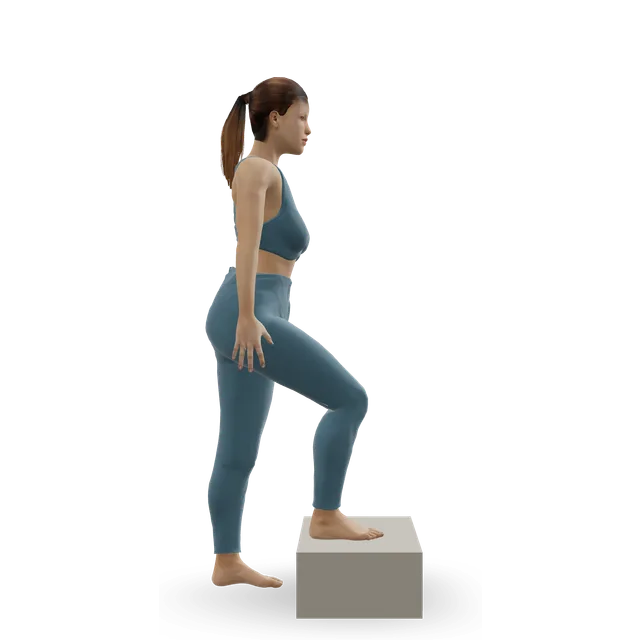 3D demoStep-up with knee raiseIntermediate · A step
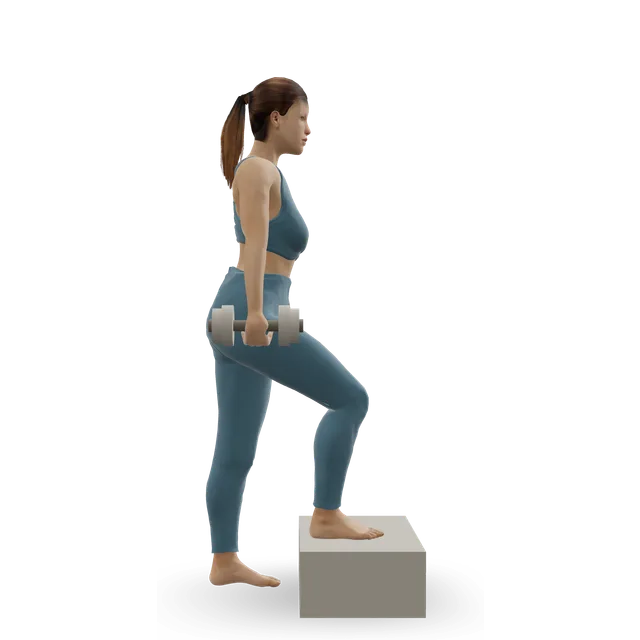 3D demoDumbbell step-upIntermediate · A dumbbell + A step
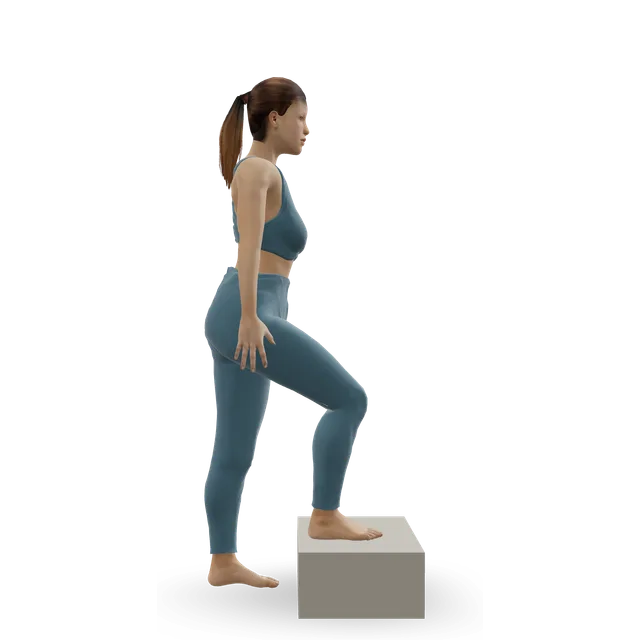 3D demoPoliquin step-upIntermediate · A step
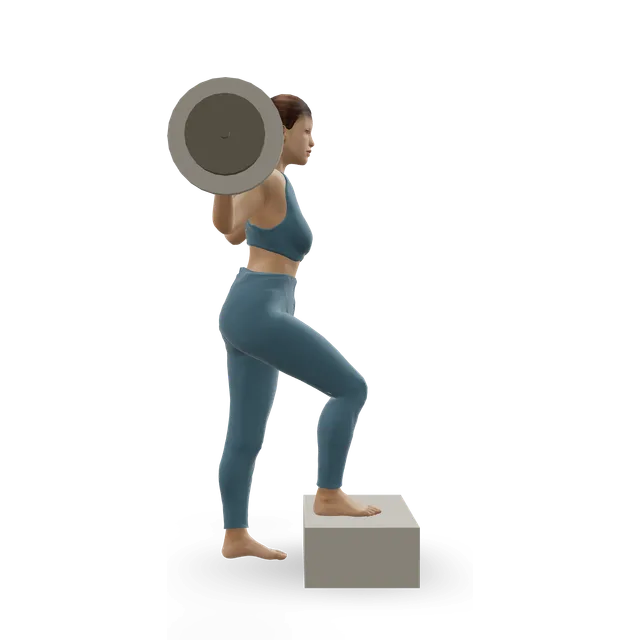 3D demoBarbell step-upIntermediate · A barbell + A step
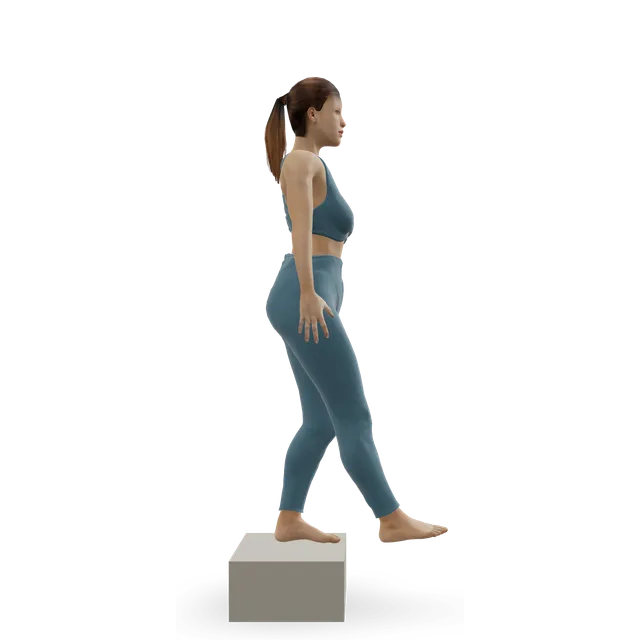 3D demoPatrick step-downIntermediate · A step
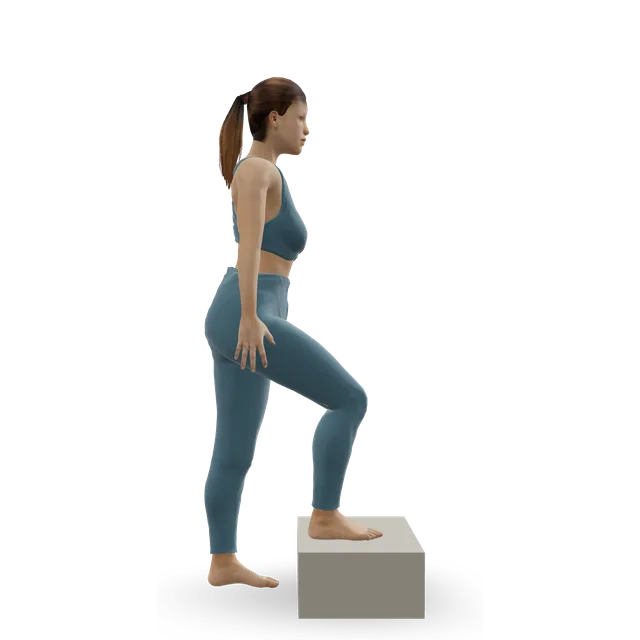 3D demoStair climbingIntermediate · A step
Stepping up sideways worked the side of the hip more than stepping forwards in 27 older adults, drew more than 45% of a maximal effort from the inner quadriceps in 30 adults, and had the most training potential of the stepping exercises in older women. At the same knee bend, it stressed the kneecap about as much as a forward step-up and less than a step-down. We have no 3D demo of it yet, so here are the steps in words. Use the step-up's dose (our editorial starting point).
Stepping onto the box by crossing the far leg over in front worked the side of the hip most on the way up in the trained women. It asks more balance; try it once forward and lateral step-ups are steady.
Source 5
2 or 3 sets of 8 to 12 on each leg, stopping 2 to 3 reps short of failure, with about 90 seconds' rest, as our dumbbell leg, hiking and strength and balance workouts use. In your first two weeks, keep 3 or 4 reps to spare, as our plans say.
Raise the step a few centimetres at a time. When 12 reps on your highest step feel easy, hold dumbbells at your sides and drop back to a lower step, then build up again, as our move page and hiking workout advise.
Two, one in each hand, is the default. With one, hold it in the hand opposite your working leg. That's our editorial reading of two studies of other movements: a weight in one hand made the opposite hip's muscles work harder in walking, and in lunges a weight held on the opposite side loaded the knee a little less than one held on the same side.
Twice a week. For muscle, the hard sets you do in a week matter more than how many days you spread them over, and about 10 or more a week for your thighs and glutes builds the most; squats, lunges and step-ups all count.
Expect to add reps or height most weeks at first. Older women's leg power rose about 10% in 6 weeks of home stepping, and stair climbing improved within 12 weeks. Timing yourself up a flight of stairs every 4 weeks is a simple check (our suggestion).
A low step-up loaded the kneecap 1.7 times body weight against 5.1 in a lunge. That makes step-ups the usual first single-leg exercise with a sore knee.
Source 2
The hip and thigh muscles worked harder in lunges and single-leg squats than in step-ups. Use step-ups first, then both.
Heavy step-ups built strength like back squats in one trial, and one-leg and two-leg training built similar muscle across 24 trials. Each made people better at its own test, so do the version that matches what you want to get better at, or both.
ACE's version allows a push from the trailing leg, which is fine for older adults and conditioning, but it takes work away from the leg on the step. For strength, keep the back foot's push light (our suggestion).
Source 1
Higher steps load the knee more. Climb a few centimetres at a time.
Source 2
Lower yourself under control instead of dropping off the edge, as our move page says.
Keep the knee in line with your second toe, and lower the step if it keeps drifting inwards.
Source 1
Put your whole foot on the step, as our move page says, so you can press through the heel.
Use the stairs or a stable, non-slip step or box, never a chair that can tip, and hold a rail while you learn.
During and after training, 0 to 2 out of 10 is safe, up to 5 acceptable, and the knee should be back to normal by the next morning; for pain at one point just above or below the kneecap, keep it to 3 or less. If it isn't settled by morning, do less next time. That's the rule in our knee pain when squatting guide, which uses step-ups at 3 sets of 8 to 10 each leg, low step first.
A 10 cm step-up was one of the gentlest single-leg loads for the kneecap. Our knee pain on stairs guide builds from the bottom stair to 3 sets of 10 each leg, then a normal stair.
Source 2
Stepping down loads the kneecap more than stepping up. With kneecap pain, let the other leg lower you, and add step-downs later.
20 and 30 cm step-ups were among the lowest patellar tendon loads measured, so they suit the early stages of our jumper's knee guide.
Source 3
Our arthritis routine uses low step-ups at 2 sets of 8 to 10 each side; keep within the pain rule and see our knee arthritis guide.
Split squats at 3 sets of 8 to 12 each side and single-leg calf raises from the step at 3 sets of 10 to 15 each side (our lower body workout at home), Bulgarian split squats as our guide sets out, glute bridges for the hips, and lateral band walks for the side of the hip.
The NHS asks older adults to do strength and balance activities on at least 2 days a week, and stepping programmes improved strength and stair climbing in older women. Hold a rail, start on the bottom stair, and build up slowly.
Start on the bottom stair, step down with the working foot first, and follow our knee guides' pain rule.
Strength training is fine in pregnancy if you did it before; start anything new gently. With pelvic girdle pain, skip step-ups if stairs hurt and do sit-to-stands instead, as our move page advises.
Source 25
Step-ups are one of the Royal Osteoporosis Society's extra exercise groups: a step at its first level, a step-up at the second and a barbell step-up at the third. It also lists stair climbing as an impact exercise for bones. Talk to your doctor or physiotherapist first if you've had several broken bones or spinal fractures.
Hold a rail or a wall, use a lower step, and do them slowly, as our move page advises.
Our step-up workout takes you from the bottom stair to a loaded box. The dumbbell leg workout uses dumbbell step-ups at 3 sets of 8 to 12 each side, the hiking workout step-ups at 3 sets of 8 to 12 and Patrick step-downs, the knee strengthening and strength and balance workouts 2 sets of 8, and the seniors workout low step-ups on the bottom stair.
A 30-minute step-up workout at home or in the gym: step-ups, split squats, step-downs and calf raises on one step, with the height set to your level.
30 minBeginner9 movesA wall, A stepLegs and glutes with dumbbells: goblet squats, Romanian deadlifts, step-ups, split squats and calf raises.
35 minIntermediate10 movesA wall, A dumbbellA 35-minute strength workout for hikers: step-ups, lunges and calf raises for climbs, slow step-downs for descents, single-leg hinges, carries and balance.
35 minBeginner13 movesA wall, A stepA 25-minute session for knees that don't currently hurt: thigh and hamstring strength, single-leg control, then an optional full-range block with knees over toes.
25 minBeginner13 movesA bench or box, A wallStrength and balance in one session: squats, Romanian deadlifts, push-ups, rows, step-ups, back extensions, carries and single-leg balance.
45 minBeginner14 movesA wall, A dumbbellA lower body workout at home: split squats, slider hamstring curls, single-leg bridges, step-ups, band walks and calf raises, with dumbbell options.
30 minIntermediate12 movesA wall, A stepFull-body gym workout B: trap bar deadlifts, cable rows, seated dumbbell press, step-ups, leg curls, push-ups and a Pallof press.
50 minBeginner13 movesCardio machine, Other / check instructionsA 40-minute strength and balance session for over-65s, built from the Otago home programme and NHS exercises, using a chair, a counter and a step.
40 minBeginner18 movesA bench or box, Something with weightStair or hill climbs with the walk down as recovery, then a loaded walk with your rucksack, building towards the hills, pack and days of your trip.
40 minBeginner5 movesA step, Something with weightStep-ups come round once or twice a week in each of these plans.
Your first four weeks: two, then three short strength sessions a week at home plus walks, building gently to a full routine.
2 training days20 minBeginner3 days a weekA weekly plan for women over 50: strength, bone-loading and balance on 3 days plus walking, built on UK osteoporosis consensus advice.
3 training days45 minBeginner2 days a weekA 12-week strength plan for runners: two sessions a week of heavy lifts, single-leg work, calf raises and hops, fitted around your runs.
2 training days45 minBeginner3 days a weekA 12-week exercise plan for over-65s: strength and balance three times a week, short balance sessions and daily walks, based on falls-prevention trials.
3 training days40 minBeginner4 days a weekA 4-day dumbbell-only plan for home or gym: two upper and two lower days, every set, rep and rest, and how to keep progressing when the dumbbells max out.
4 training days45 minBeginnerFor chest pain that feels tight or squeezing, or spreads to your arms, neck or jaw, or severe difficulty breathing. Don't drive yourself to A&E.
Source 28
If your knee is very painful, you can't move it or put weight on it, it's badly swollen or has changed shape, it locks, gives way or clicks painfully (painless clicking is normal), or you have a very high temperature with redness or heat around it. In the US, your doctor or urgent care.
Source 29
A pop, then a gap or dent just above or below the kneecap and not being able to straighten your knee, can be a torn tendon. Get it checked the same day, as our patellar tendon rupture guide says.
If knee pain hasn't improved within a few weeks.
Source 29
For chest pain, feeling faint or unusual breathlessness, as our plans' safety note says.
We found no evidence for it. Trained women did them with their 6-rep maximum on a 46 cm box, young rugby players trained them heavy for 8 weeks, and the Royal Osteoporosis Society's top level is a barbell step-up. Height and load make them as hard as you need.
A 10 cm step-up loaded the kneecap less than a two-leg squat to 60 degrees, a full squat or a lunge, and 20 and 30 cm step-ups were in the lowest tier of tendon load. Step-downs and high boxes load the knee more.
Higher boxes load the knee more, and in older women a 20 to 30 cm step already worked the thighs hard. Height is a dial to turn up slowly, not a goal (our reading).
They topped one muscle activity ranking, but the figure came from 15 trained women with a wide spread, and activity in a few reps doesn't predict growth. They're a good glute exercise among several.
Put your whole foot on a stable step, press through that heel to stand up tall, then lower yourself slowly, trailing foot first. Keep your knee in line with your second toe and don't push hard off the back foot. Do all your reps on one leg, then switch.
Start on the bottom stair or a low step, then build up to a box that puts your knee no higher than your hip; that's our suggestion. Height raises the load on your knee: 1.7 times your body weight on a 10 cm step against 3.6 on a 20 cm step. With sore knees, stay low.
Mostly your glutes and the front of your thighs, with your hamstrings and calves helping. In one study of trained women, the forward step-up drew the most glute activity of four versions, and stepping up sideways works the side of your hip more.
Low step-ups are one of the gentlest single-leg exercises for the kneecap, loading it less than a two-leg squat to 60 degrees, which is why our knee guides use them, starting on the bottom stair. Stepping down loads the knee more, so take that part slowly or step down with the working foot first.
2 or 3 sets of 8 to 12 on each leg, stopping 2 to 3 reps short of failure and resting about 90 seconds. Older adults can start with up to 5 on the bottom stair and build to 8 to 12.
Both train the same muscles one leg at a time. Step-ups are easier on the knee (1.7 against 5.1 times body weight for the kneecap) and easier to learn, while lunges ask more of the thigh muscles. Start with step-ups and use both later.
Both build leg strength. In young rugby players, 8 weeks of heavy step-ups improved step-up strength as much as squats improved the squat, and carried over to the squat too. Across 24 trials, one-leg and two-leg training built similar muscle.
First raise the step, then hold dumbbells and drop back to a lower step, and build up again. Finishing on one leg at the top, stepping up sideways or adding a slow step-down all make them harder.
One in each hand is the default. With a single dumbbell, hold it in the hand opposite your working leg: that should make the side of that hip work harder, and in lunges it loaded the knee slightly less. It's our reading of studies of walking and lunges, not of step-ups.
Yes. In women aged about 69, 12 weeks of stepping onto rising step heights increased thigh muscle, strength and stair climbing, and six weeks of home stepping in a weighted vest improved leg power by about 10%. Hold a rail, start on the bottom stair and build slowly.
Yes. The bottom stair is a good first step and the banister helps your balance. Make sure the step is stable and not slippery.
Yes: they drew some of the highest glute activity measured in one study, though activity in a few reps isn't the same as growth. For more glute work, lean your chest forward a little, use a higher box and lower slowly: these are coaching cues (our suggestion) that no trial has tested.
Exercise education, not a personal prescription, and clinical review of these guides is pending. Check with a GP before starting hard training if you have a heart condition, chest pain, dizziness or breathlessness when active, and stop for sharp or increasing pain. Health disclaimer.