How to do a glute bridge: form, single-leg and banded bridges, and bridge vs hip thrust
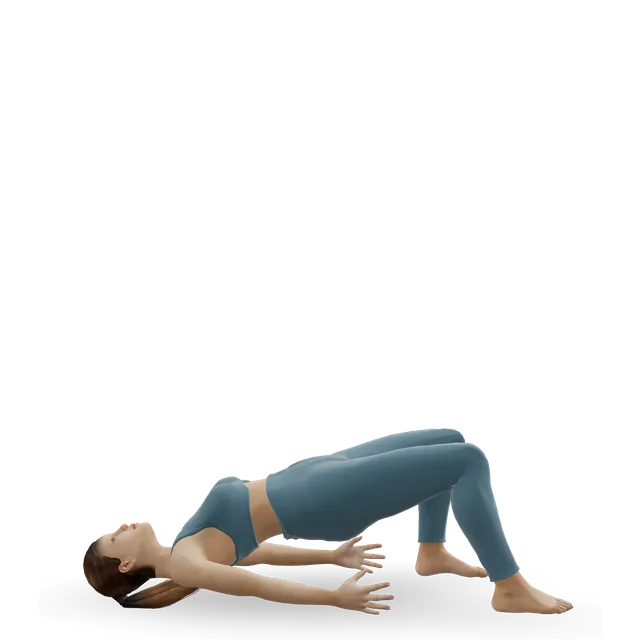
A glute bridge is lying on your back with your knees bent and lifting your hips until your shoulders, hips and knees make a straight line, then lowering slowly. It mainly works the gluteus maximus, with your hamstrings and back muscles helping. Stop at the straight line: pushing higher only arches your lower back.
On the floor with no weight, it's a moderate effort for your glutes, so it's the place to learn and warm up; single-leg, banded and loaded bridges make it harder. It's the same movement as the hip thrust, which puts your upper back on a bench. For back pain, bridges are a reasonable part of exercise, not a cure.
This guide covers the steps on the 3D figure, single-leg, banded and loaded bridges, bridge vs hip thrust, how many to do, back and knee pain, and who should change it.
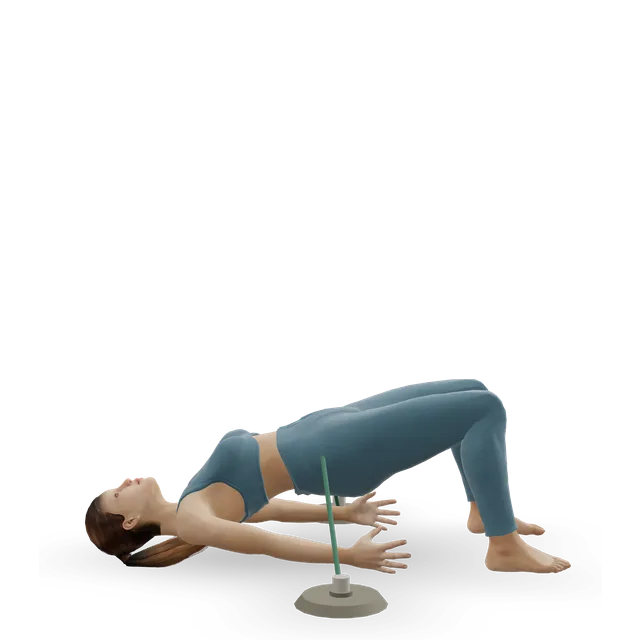
Lie on your back with your knees bent and your feet flat, hip-width apart. Brace gently, breathe out and press through your heels to lift your hips until your shoulders, hips and knees are in a line; pause, then lower slowly. Pushing higher only arches your lower back.
Mainly the gluteus maximus, with the hamstrings and back muscles. Holding a two-leg floor bridge, 20 adults used about 17% of their maximum glute max activity; on one leg, glute max rose to about 28% and the glute medius, at the side of the hip, to 57%.
Muscle can grow with light loads if your sets are hard, so progress to single-leg, banded or loaded bridges. Our inference from the muscle activity numbers is that a two-leg bodyweight bridge is too easy to build much muscle for most adults, but no trial has tested it.
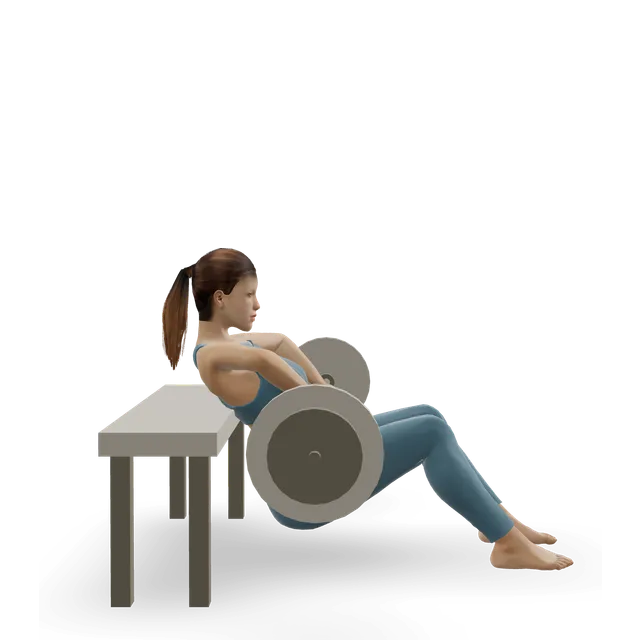
The hip thrust puts your upper back on a bench, so your hips travel further and you can load more. Studies disagree on which works the glutes harder, and hip thrusts and squats grew the glutes about equally in a 9-week trial.
Adding hip strengthening to back rehabilitation lowered pain by about 5 points on a 100-point scale across 5 trials, a small difference, and two other trials found no added benefit.
Our starting point, following our hip thrust guide: 3 sets of 10 to 15 with a 1 to 2 second pause, then single-leg bridges, 3 sets of 8 to 12 each side, once 3 sets of 15 are smooth. Two or three days a week: strength gains were greater with 2 or more sessions a week in the American College of Sports Medicine's (ACSM) overview of 137 reviews.
Lying on your back with your knees bent and feet flat, you lift your hips until your shoulders, hips and knees are in a line, then lower. In the lab, the hips started bent about 50 degrees and the knees about 100, and each bridge finished with the hips straight. The American Council on Exercise (ACE) rates it a beginner exercise.
The same hip-straightening movement. In the hip thrust your upper back rests on a bench, so your hips start lower, travel further and can take a barbell; our hip thrust guide covers it.
Muscle activity in five bridges
In 20 healthy adults holding each bridge for 5 seconds with their feet flat: on two legs, glute max worked at 17% of its maximum, glute medius 14%, the hamstrings 18 to 22% and the back extensors 25%. A band round the knees raised glute medius to 21%, and a ball squeezed between the knees raised the inner thighs to 35%. On one leg with the other knee to the chest, glute max reached 28% and glute medius 57%; with the other leg straight, 29% and 41%.
Lifting your toes and pressing through your heels didn't change glute activity, but it lowered hamstring activity in every bridge and raised front-thigh activity in single-leg bridges.
Bodyweight bridges are low to moderate effort for the glutes: an older study of 30 adults found bridges and single-leg bridges under 45% of maximum, which suits endurance and control more than strength. Loaded step-ups, deadlifts, hip thrusts and lunges passed 60% across 16 studies. And muscle activity measured in one session isn't the same as growth.
Loaded hip extension grows the glutesEmerging evidence
In 34 untrained adults, 9 weeks of hip thrusts grew the glutes as much as back squats on MRI scans; squats grew the front and inner thighs more, and neither grew the hamstrings or the smaller glutes much. Strength rose most in the lift each group trained.
Across 28 studies of 747 adults, light loads (more than 15 reps) built as much muscle as heavier loads when sets were taken to failure, and across 15 studies, stopping short of failure cost little growth. So a single-leg bridge taken close to failure can build muscle in a beginner.
A two-leg bodyweight bridge is low effortEmerging evidence
It drew about 17% of the glutes' maximum activity. Our inference from these muscle activity numbers is that it's too easy to build much muscle for most adults, but no trial has tested bodyweight bridges for muscle growth.
Bridge vs hip thrust: studies disagreeMixed evidence
With a barbell, the floor bridge drew more glute activity than the hip thrust in 10 men; in another study of 20 men, glute activity rose from the floor bridge to a feet-raised bridge to the hip thrust. Higher activity doesn't mean more growth: in the 9-week trial, the hip thrust's higher glute activity didn't grow the glutes more than squats did.
Six weeks of 4 holds each of front, back and side bridges and bird dogs, twice a week, didn't improve trunk endurance or balance against people who didn't train, in 60 active young men.
Back pain: a small extra benefit at bestMixed evidence
Adding hip strengthening to back rehabilitation lowered pain by 5.4 points on a 100-point scale (moderate-quality evidence) and disability a little (low quality) across 5 trials of 309 people. Two trials found no extra benefit: at 6 weeks in 80 people, and up to 12 months in 70.
Hip and knee strengthening together beat knee strengthening alone for pain (1.5 points on a 0 to 10 scale) and activity, across 14 trials of 673 people. The review's abstract doesn't say which hip exercises were used, so bridges are a reasonable part of hip strengthening rather than a tested treatment on their own.
Pushing your knees out against a band raised glute max activity and reduced the forward tilt of the pelvis in 21 adults, and raised glute medius activity from 14% to 21% of its maximum in another study.
From ACE's single-leg progression, which ACE rates intermediate, and our move page. Holding the other knee to your chest makes it harder to arch your back. If your hamstring cramps, bring the working foot closer.
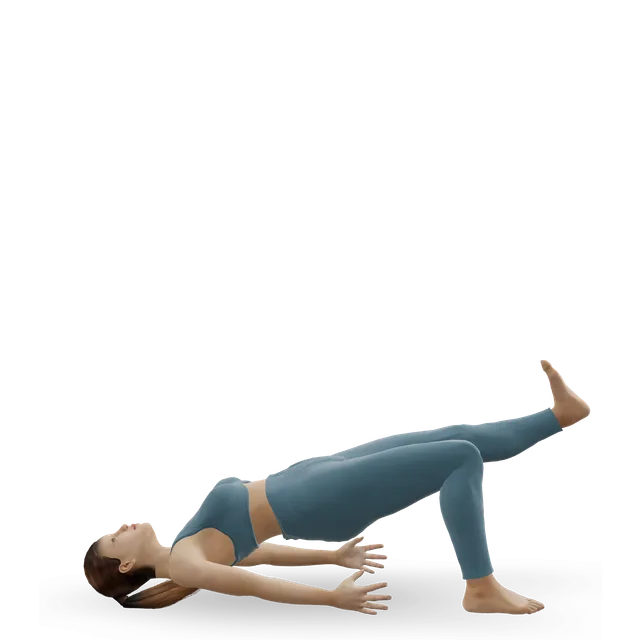
Set up as for the glute bridge, then lift one foot and hold that knee towards your chest.
Breathe out and press through the heel of your planted foot to lift your hips, keeping both sides of your pelvis level.
Use a smaller lift if your pelvis tips, and pause for 2 seconds at the top.
Lower slowly, finish the set, then switch sides.
Loading the 3D figure…
Drag to turn
Gets into position, then repeats the movement. Technical checks passed; qualified exercise review is pending.
In the hip thrust your upper back rests on a bench, so your hips travel further and you can load a barbell. The bridge starts from the floor, needs no bench and is the place to learn; ACE rates it a beginner exercise.
With a barbell, the floor bridge drew more upper and lower glute activity than the hip thrust in 10 men, and the hip thrust more front-thigh activity. In another study of 20 men, glute activity rose from the floor bridge to a feet-raised bridge to the hip thrust. Small studies that disagree: treat the two as equals with different set-ups.
Muscle activity measured in one session isn't a validated predictor of growth, and in a 9-week trial the hip thrust's higher glute activity didn't grow the glutes more than squats.
Start with the bridge. Once you're adding weight, use whichever you can set up safely and comfortably: a floor bridge with a padded barbell or a dumbbell, or a hip thrust on a bench that can't slide (our view).
Single-leg, banded, marching, held and loaded bridges
Single-leg bridges
ACE rates the single-leg bridge intermediate and starts it with your other knee held to your chest, which makes it harder to arch your back. On one leg, glute max activity rose from 17% to 28% of its maximum and glute medius from 14% to 57%.
A mini-band just above your knees, pushing them out lightly through every rep, raised glute activity and reduced forward tilt of the pelvis. It's optional.
From the top, lift one foot a few centimetres, then the other, keeping your pelvis level. It trains pelvic control; 2 sets of 6 to 10 each side is our editorial starting point.
Holds
No trial compares holds with reps for bridges. Reps through the full range suit strength and muscle; holds suit rehabilitation and endurance. Our editorial starting point is 3 to 5 holds of 20 to 30 seconds, and our hamstring strain guide starts with 5 holds of 20 to 30 seconds.
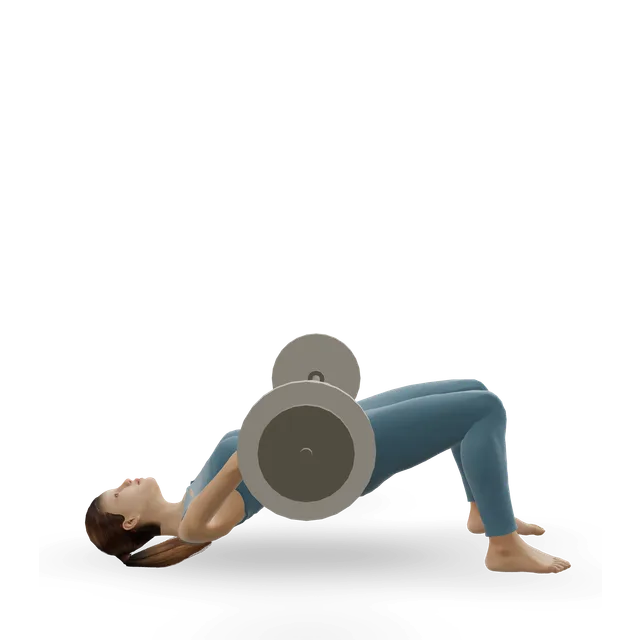
A loaded floor bridge
A padded barbell or a dumbbell across your hips, 3 sets of 8 to 12, as in our hip thrust guide's ladder; at home, a band pinned across your hips does the same job.
Feet flat or toes up
Feet flat works your hamstrings more; lifting your toes and pressing through your heels lowered hamstring activity without changing glute activity.
Easiest to hardest, as in our hip thrust guide: move up when the step before is smooth, from 3 sets of 15 two-leg bridges to single-leg bridges at 3 sets of 8 to 12 each side, then to loaded bridges and the hip thrust.
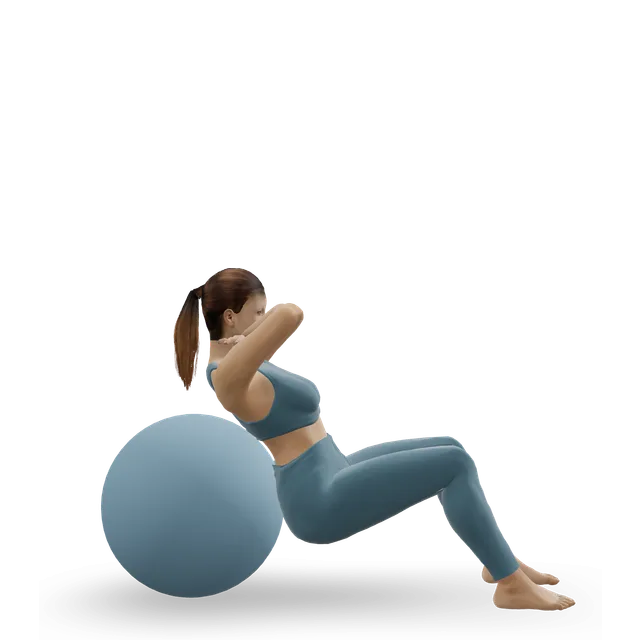
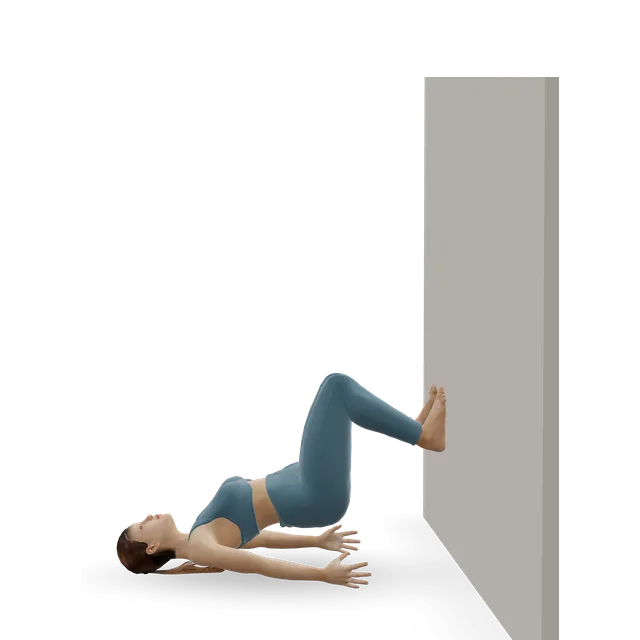
The stability ball bridge is a bench-free stand-in for the hip thrust, and the feet-on-wall and shoulder bridges come from Pilates; follow the doses on their move pages.
Two-leg bridges and hip thrusts do little for the smaller glutes at the side of the hip, so add clamshells (15 each side), band walks (10 steps each way) or side-lying leg raises (12 each side) from our glute workout at home, or the hip abduction machine (3 sets of 12 to 20) from our glute gym workout.
Glute bridge, 3 sets of 10 to 15 with a 1 to 2 second pause; staggered-stance bridge, 2 sets of 5 to 10 each side (its move page, from the LEAP trial's programme); single-leg bridge, 3 sets of 8 to 12 each side with a 2-second hold; loaded floor bridge, 3 sets of 8 to 12. These follow our hip thrust guide's progression and are our editorial starting point.
How hard
Stop 1 to 3 reps short of failure, with 60 to 90 seconds' rest between sets, as our plans' notes suggest.
How often
2 or 3 days a week. For glute growth, count your weekly glute sets across bridges, hip thrusts, squats, lunges and deadlifts and build towards 10 or more, which the ACSM's overview found grew muscle more.
Every 4 to 8 weeks, count clean single-leg reps for each side at a steady pace, or log the load and reps of a loaded bridge. A side that lags by more than a few reps is worth an extra set (our suggestion).
What to expect
With loaded hip thrusts, untrained adults grew their glutes measurably in 9 weeks, and our hip thrust guide gives their strength gains. Bodyweight bridges alone are likely to change endurance before size (our reading).
Your hamstrings take over and may cramp. Walk your feet in until your shins are about upright at the top, as our single-leg bridge move page and hip thrust guide suggest.
Feet too close
The front of your thighs takes over. Move your feet out a little (our hip thrust guide).
Knees falling in
Keep your knees in line with your feet, as our move page cues; a band round the knees helps you feel it.
Dropping down fast
Lower over a second or two, with control, until your hips touch the floor.
Never progressing
A two-leg bodyweight bridge is low effort. Once 3 sets of 15 are smooth, go single-leg or add load.
Adding hip strengthening to back rehabilitation helped pain a little across 5 trials, and two trials found no extra benefit. Exercise in general helps back pain a little, as our back pain guide explains; bridges are a reasonable choice within that, not a specific fix.
Hip and knee strengthening together beat knee strengthening alone across 14 trials, without measurable strength changes. Bridges can be part of the hip work; our runner's knee guide has a full programme.
Our hip bursitis guide's programme, from the LEAP trial, uses bridges, staggered-stance bridges and single-leg bridges, with no increase in outer hip pain allowed during them.
An aching lower back during bridges
The back extensors work in every bridge (23 to 35% of their maximum), and arching to finish moves the effort into your back. Stop at the straight line, keep your ribs down and squeeze your glutes; if it still hurts, use a smaller lift.
In later pregnancy, the NHS advises avoiding lying flat on your back for more than a few minutes. Our rule starts after the first trimester: keep time flat on your back to a few minutes and use a propped-up bridge or side-lying work such as clamshells, as our hip thrust guide and glute workout plan advise, and see our pregnancy guide.
Go easy on one-sided work such as single-leg bridges for now, as our hip thrust guide advises.
Pain on the outside of the hip
Aim for no increase in that pain during bridges, as our hip bursitis guide advises.
Back pain that's worse arching
Use a smaller lift, keep your ribs down, and see our back pain guide.
A recent hamstring strain
Follow our hamstring strain guide, which starts with two-leg bridge holds of 20 to 30 seconds.
Workouts to follow
The glute workout at home starts with bridges and moves to single-leg bridges; the glute gym workout warms up with bridges before barbell hip thrusts; the others use bridges within full-body and postnatal sessions.
If back pain comes with pain, tingling, weakness or numbness in both legs, loss of feeling around your genitals or bottom, or changes in your bladder or bowels; or for severe hip pain after a fall or injury, not being able to walk or put weight on your leg, or tingling or loss of feeling in your hip or leg after an injury.
Ask for an urgent GP appointment or get help from NHS 111
If back pain comes with feeling hot, cold, shivery or generally unwell, or is severe pain that starts suddenly or gets worse quickly; or for severe hip pain that started suddenly without a fall, a swollen hip that feels hot, a change in skin colour around the hip, or hip pain with a high temperature and feeling unwell. In the US, contact your doctor or urgent care.
If back pain hasn't improved after a few weeks of treating it at home; sciatica (pain spreading down the back of one leg) isn't improving or is getting worse; or hip pain stops your normal activities or affects your sleep, keeps coming back, or hasn't improved after 2 weeks of self-care.
Tired glutes and hamstrings are normal. Pain that travels down a leg, back pain that keeps getting worse, or outer hip pain that rises during bridges isn't: stop, and see our back pain and hip bursitis guides. Our pain rule: up to about 5 out of 10, settling within an hour or so and no worse that night or the next morning.
Myths
"Glute bridges fix back pain"Mixed evidence
Adding hip strengthening to back rehabilitation helped pain by about 5 points out of 100 across 5 trials, and two trials found no added benefit. Bridges are a reasonable part of exercise for back pain, not a cure.
"The hip thrust always beats the bridge"Mixed evidence
With a barbell, the floor bridge drew more glute activity than the hip thrust in one study; in another, it drew less. Muscle activity doesn't predict growth, and the two are the same movement with a different set-up.
"Bodyweight bridges are enough to build big glutes"Emerging evidence
A two-leg bodyweight bridge drew about 17% of the glutes' maximum activity; our inference is that it's too easy to build much muscle, though no trial has tested it. Muscle can grow with light loads if sets are hard, so progress to single-leg, banded or loaded bridges.
"If you feel it in your hamstrings, you're doing it wrong"Emerging evidence
The hamstrings work in every bridge, about 16 to 38% of their maximum with your feet flat, and more with your feet further from your hips, as our hip thrust guide notes. Walk your feet closer, or lift your toes, if they cramp.
Lie on your back, knees bent, feet flat and hip-width apart. Breathe out, press through your heels and squeeze your glutes to lift your hips until your shoulders, hips and knees are in a line. Pause for a second or two, then lower slowly.
What muscles do glute bridges work?
Mainly the gluteus maximus, with the hamstrings and lower-back muscles helping. Single-leg bridges add a lot of work for the side of your hip, the glute medius.
Glute bridge vs hip thrust: what's the difference?
They're the same movement: in the hip thrust your upper back rests on a bench, so your hips travel further and you can load more. Studies disagree on which works the glutes harder. Start with the bridge, and use either once you're adding weight.
How many glute bridges should I do?
Our starting point is 3 sets of 10 to 15 with a 1 to 2 second pause. Once 3 sets of 15 are smooth, move to single-leg bridges, 3 sets of 8 to 12 each side, as in our hip thrust guide. Two or three days a week is enough.
Can I do glute bridges every day?
Easy bridges daily are fine if your back and hips feel normal, but harder sets need recovery, so 2 or 3 days a week suits progress. A few easy bridges alone won't change much: a low-dose bridge and bird-dog programme didn't improve trunk endurance in active young men.
Do glute bridges make your bum bigger?
Not much on their own. A two-leg bodyweight bridge is low effort for the glutes, and no trial has tested bodyweight bridges for muscle growth. Muscle grows when sets are hard, so progress to single-leg, banded or loaded bridges and train your glutes 2 or 3 times a week.
Why do I feel glute bridges in my lower back?
Usually because you're pushing past a straight line and arching your back. Stop at the line, keep your ribs down and squeeze your glutes. If it still hurts, use a smaller lift and see our back pain guide.
Why do my hamstrings cramp during glute bridges?
Your hamstrings work in every bridge, more with your feet flat and further from your hips. Walk your feet closer, or lift your toes and press through your heels, and build up gradually.
Are glute bridges good for back pain?
They're a reasonable exercise, but not a cure: adding hip strengthening to back rehabilitation made only a small difference in pooled trials, and none in two trials. Exercise of most kinds helps back pain a little, so choose what you'll keep doing.
Should I put a band round my knees for glute bridges?
It's optional. Pushing your knees out against a band raised glute activity and reduced the forward tilt of the pelvis in one study, and raised side-hip activity in another.
Glute bridge hold or reps?
No study compares them for bridges. Reps through the full range suit building strength and muscle; holds of 20 to 30 seconds suit rehabilitation and endurance, in our view.
Are glute bridges safe in pregnancy?
In early pregnancy, yes for most people. In later pregnancy, avoid lying flat on your back for more than a few minutes; our rule switches to side-lying or propped-up work after the first trimester. With pelvic girdle pain, go easy on single-leg bridges.
Exercise education, not a personal prescription, and clinical review of these guides is pending. Check with a GP before starting hard training if you have a heart condition, chest pain, dizziness or breathlessness when active, and stop for sharp or increasing pain. Health disclaimer.