How to do a side plank: form, easier and harder versions, and how long to hold
A side plank is lying on your side, propped on one forearm with your elbow under your shoulder, and lifting your hips until you're straight from head to heels. Hold it only as long as you keep that line: 3 holds of 15 to 40 seconds a side, or repeated 10-second holds. Start on your knees if that's too hard.
It trains your obliques, the deep quadratus lumborum, the side of your hip and, more than most people expect, your supporting shoulder. Hold times vary with body size and from one day to the next, so compare yourself with yourself rather than with a chart.
This guide covers the steps on the 3D figure, how long to hold and how to progress, the hold times in one study, your shoulder, back pain and scoliosis, and the warning signs.
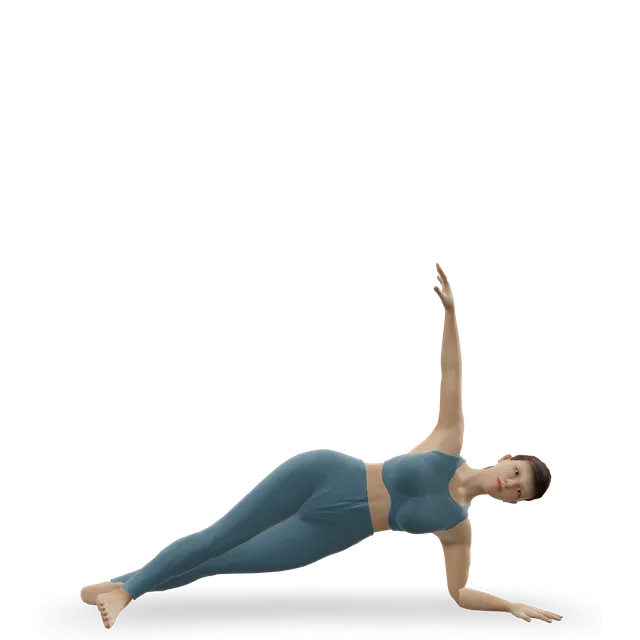
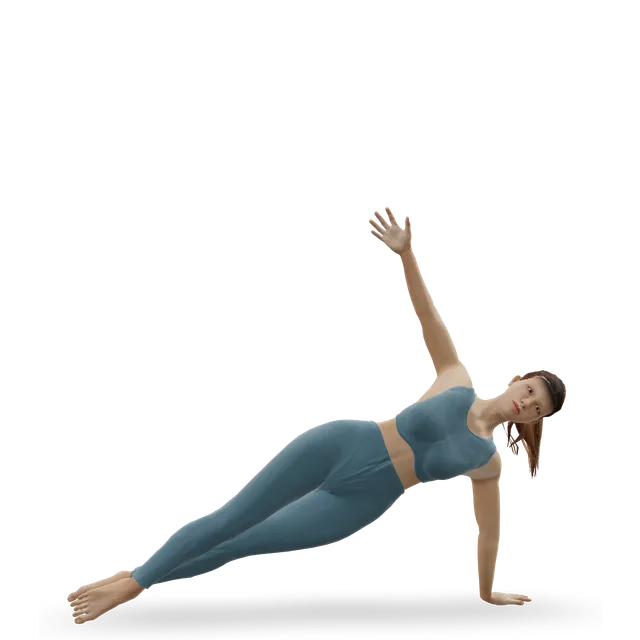
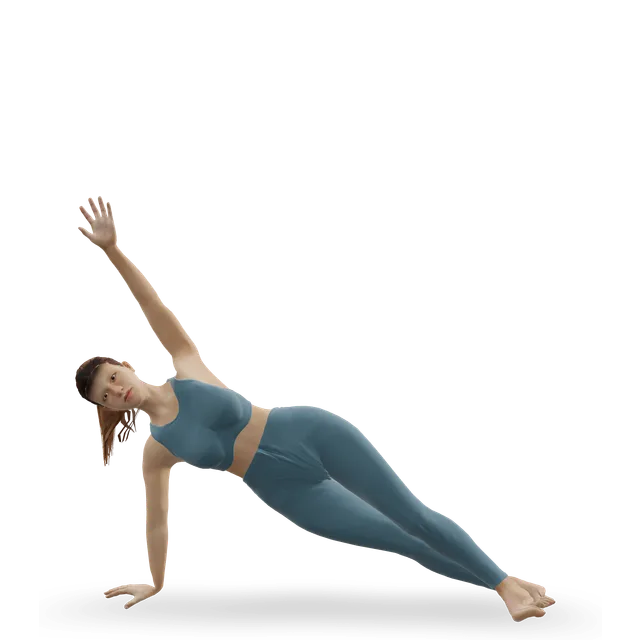
Lie on your side with your elbow directly under your shoulder and your head in line with your spine. Breathe out, brace gently and lift your hips until your body makes one line from head to heels, your weight on your forearm and the side of your bottom foot. If that's too hard, start with your knees bent behind you.
Only as long as you keep the straight line: 3 holds of 15 to 40 seconds a side, or repeated 10-second holds in falling sets of 5, 3 and 1, as our plank guide sets out. Once about 45 to 60 seconds is easy, make it harder rather than longer.
The obliques, the quadratus lumborum and the side of the hip. In a fine-wire study, the side bridge gave the most ab-wall activity for the least hip flexor activity of the holds tested; the quadratus lumborum worked at 54% of its maximum, and glute medius and outer oblique activity passed 45%.
In 24 women, the shoulder (deltoid) tired as fast as the obliques during a side bridge, and how fast both tired predicted how long they held it. If your supporting shoulder hurts, drop to your knees or stop.
In one study of 45 recreational athletes, men held a side bridge for about 2 minutes and women for about 1 minute 40 to 1 minute 50 seconds, heavier men held for less, and times varied by 15 to 17% between test days. We found no norms by age.
Side planks are one of the McGill big three for the back, and core exercise helps back pain about as much as other exercise, as our plank guide explains. A daily one-sided side plank reduced scoliosis curves in an uncontrolled series of 25 people, but not in a randomised trial of 64 teenagers, only 22 of whom kept it up.
Propped on one forearm with your elbow under your shoulder, you lift your hips until you're straight from head to heels, resting on the side of your bottom foot. The knee side plank bends your knees behind you so your knees, not your feet, take the weight. The American Council on Exercise (ACE) rates the straight-leg version intermediate.
Your spine stays still against a sideways load: gravity tries to bend your trunk towards the floor, and the muscles on the lower side hold it straight. The muscles at the side of your bottom hip hold your pelvis up, and your bottom shoulder carries your upper body.
The muscles, with numbers
The quadratus lumborum, a deep muscle between your lowest rib and your pelvis, worked at 54% of its maximum in the side support, more than other muscles, in 4 adults with fine-wire electrodes. Glute medius and external oblique activity passed 45% of maximum in 30 adults, and lifting the top leg drove glute medius activity to 89 to 103% in 24 adults. These are muscle activity (EMG, electromyography) studies: they show effort in a few reps, not what a muscle builds.
In 24 women, deltoid fatigue predicted side bridge time along with oblique fatigue, and the authors question whether the test measures trunk endurance alone. In 45 recreational athletes, men with broader shoulders held a side bridge for less time.
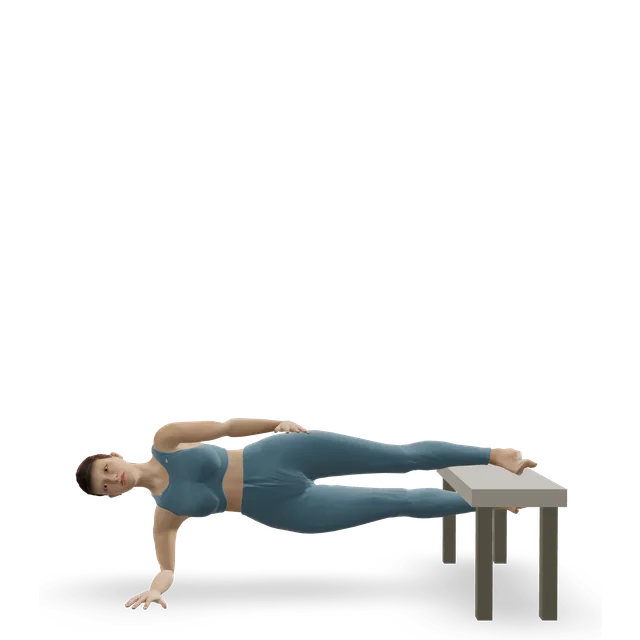
The knee side plank, the side plank, the side plank with a leg lift, the Copenhagen plank (with your top leg on a bench), the push-up to side plank and the Pilates side bend. Hip dips, a straight-arm side plank and staggered feet are cues on the side plank.
What the evidence says
What it worksEmerging evidence
Fine-wire and surface muscle activity studies agree that the side plank works the obliques, the quadratus lumborum and the glute medius at moderate to high levels, and that lifting the top leg works the glute medius hardest of the moves tested. They are small studies of a few reps.
Hold times depend on body size and vary between testsEmerging evidence
In one study of 45 recreational athletes, side bridge times were about 118 to 123 seconds for men and 101 to 110 for women, a difference that wasn't statistically significant. The typical error between test days was 15 to 17%, and heavier men held for less time. In 75 young adults, men held the side bridge for 99% as long as their front-of-trunk hold and women for 79%.
In 24 recreational women, the deltoids worked and tired as much as the trunk's side muscles, and side bridge time was predicted by deltoid and outer oblique fatigue, and by body mass and trunk height. The test's typical error was 11 seconds.
Four holds each of side, front and back bridges and bird dogs, twice a week for 6 weeks, didn't improve trunk endurance or balance against people who didn't train, in 60 active young men.
The McGill method of short, repeated holds, as ACE and Harvard Health describe it, comes from lab studies and clinical practice; our plank guide found no trial comparing short holds with long ones.
A programme built on the Copenhagen adduction exercise, a side plank with the top leg on a bench, cut groin problems in footballers: on average 13.5% had groin problems during the season, against 21.3% of those training as normal, in 652 players.
Core exercise helps chronic back pain about as much as other exercise, not more, as our plank guide explains. In 117 adults, people with back pain held front planks longer, not shorter, and plank time didn't predict back pain.
A daily one-sided side plank reduced curves by 32% in an uncontrolled series of 25 people, but made no difference in a randomised trial of 64 teenagers, only 22 of whom kept it up; the method's originator says that trial mixed types of curve. Across 10 trials of core stabilisation work, curves were about 4 degrees smaller than with no exercise, and less improved than with scoliosis-specific exercise.
Steps from ACE, Harvard Health, ACE's McGill big three article and our move pages. Stop if your supporting shoulder hurts.
Lie on your side with your legs straight and stacked and your elbow directly under your shoulder, forearm on the floor, head in line with your spine.
Rest your top hand on your hip, or across your chest on the opposite shoulder.
Breathe out, brace gently and lift your hips until your body makes a straight line from head to heels, your weight on your forearm and the side of your bottom foot.
Keep your top hip stacked over the bottom one, not rolling back, and press your forearm into the floor rather than sinking into your shoulder.
Hold while breathing normally, ending the hold when your hips start to sag, then lower with control.
Change sides.
Loading the 3D figure…
Drag to turn
Gets into position, then repeats the movement. Technical checks passed; qualified exercise review is pending.
3 holds of 15 to 40 seconds a side, ending each when your hips start to sag, or repeated 10-second holds in falling sets of 5, 3 and 1, as our plank guide and McGill big 3 routine use.
Knee side planks, 2 or 3 holds of 15 to 30 seconds each side; move to your feet once 3 knee holds of 30 seconds are steady, as our plank challenge workout does.
Then make it harder, not longer
Once about 45 to 60 seconds is easy, lift your top leg or move to a harder version rather than holding for longer, as our plank guide advises. With the McGill method, add a rep to each set (6, 4, 2), not seconds, as our McGill big 3 routine does.
How often
2 or 3 days a week, or modest daily doses, as our plank guide suggests.
Breathe
Breathe normally throughout: holding your breath raises your blood pressure, as our plank guide explains.
How long people hold a side plank
In one study of 45 recreational athletes
Men held a side bridge for about 2 minutes (118 to 123 seconds) and women for about 1 minute 40 to 1 minute 50 seconds (101 to 110), a difference that wasn't statistically significant. Heavier men held for less time, and the authors suggest adjusting norms for body size.
The typical error between test days was 15 to 17% in that study, and 11 seconds in another study of 24 women, so treat a change smaller than about 20 seconds as noise (our reading).
In 75 young adults, men held the side bridge for 99% as long as their front-of-trunk hold and 65% as long as their back-extensor hold; women for 79% and 39%.
We found no norms by age that we could check. Compare yourself with yourself: time each side once a month at most, fresh and with the same set-up, as our plank guide suggests for tests.
Side planks, easiest to hardest
Knee side planks (2 or 3 holds of 15 to 30 seconds), side planks (2 or 3 holds of 15 to 40 seconds) and leg lifts (2 sets of 5 to 8 each side) follow our plank challenge workout and Copenhagen planks (3 holds of 15 to 20 seconds each side) our advanced core workout, with staggered feet as an easier balance and hip dips as a moving version of the side plank.
Make it harder rather than longer, as our plank guide advises.
Training one side
Do the same holds each side; if one side is weaker, start with it (our suggestion).
Your shoulder in the side plank
Why it tires
Your bottom shoulder holds up much of your upper body: in 24 women, the deltoid tired as fast as the obliques, and its fatigue helped predict how long they held the side bridge.
Elbow directly under your shoulder, forearm pressing into the floor, top hip stacked, as our move pages cue.
With a sore shoulder, wrist or elbow
Use the knee side plank and keep the holds short, or train the side of your hip with side-lying leg raises (12 each side, from our glute workout at home) and your trunk's side-to-side control standing up, with suitcase carries (2 times 30 metres each side, from our kettlebell workout) or Pallof presses (2 sets of 8 to 10 each side, from our full-body gym workout B). This is our editorial advice.
Shoulder pain that lasts
See a GP if shoulder pain is getting worse or hasn't improved after 2 weeks.
Core exercise helps back pain about as much as other exercise, as our plank guide explains, and plank times say little about back health: in 117 adults, people with back pain held front planks longer, not shorter.
A daily one-sided side plank helped in an uncontrolled series but not in a randomised trial in which few people kept it up, and the method's originator says the trial mixed types of curve. Core stabilisation work does a little, but less than scoliosis-specific exercise. Our scoliosis guide covers what does help.
Use the knee side plank, keep the holds short, or use the alternatives in the shoulder section above.
Pain on the outside of the hip
Our hip bursitis guide uses knee side planks; aim for no increase in outer hip pain during them.
Pregnancy
The NHS says you can carry on with activity you already do, and to stop if you feel uncomfortable, too hot or unwell. Our prenatal routines use kneeling and side-lying core work; ask your midwife about side planks as your bump grows (our suggestion).
Breathe throughout and keep the holds short. With heart failure, the British Heart Foundation advises avoiding planks, as our plank guide explains; ask your heart team.
Workouts to follow
The plank challenge workout takes you from knee side planks to the leg lift with move-on rules; the McGill big 3 uses short holds on your knees.
If back pain comes with pain, tingling, weakness or numbness in both legs, loss of feeling around your genitals or bottom, or changes in your bladder or bowels; or for severe hip pain after a fall or injury, or not being able to put weight on your leg. During any exercise, stop and get help for chest pain or pressure, unusual breathlessness, dizziness or fainting, as our plans advise.
Ask for an urgent GP appointment or get help from NHS 111
For sudden or very bad shoulder pain; not being able to move your arm; a shoulder or arm that has changed shape or is badly swollen; pins and needles that don't go away; no feeling in your arm or shoulder; an arm or shoulder that's hot or cold to touch; pain that started after an injury or fall; or a swollen, hot hip, or hip pain with a high temperature. In the US, contact your doctor or urgent care.
If shoulder pain is getting worse or hasn't improved after 2 weeks; hip pain hasn't improved after 2 weeks of self-care or affects your sleep; or back pain hasn't improved after a few weeks of treating it at home.
Tired obliques and a tired shoulder are normal. Sharp pain in your supporting shoulder, pain at the outside of the hip that rises during the hold, or back pain that spreads down a leg isn't: drop to your knees or stop, and see our shoulder, hip bursitis or back pain guide.
Myths
"Side planks burn love handles"Emerging evidence
Training a body part doesn't remove the fat over it. Side planks strengthen the muscles underneath.
No study backs a target like that. In one study of 45 recreational athletes, times depended on body size and varied by 15 to 17% between test days. Beyond about 45 to 60 seconds, a harder version trains you more than a longer hold, as our plank guide explains.
Curves fell 32% in an uncontrolled series of 25 people but didn't change in a randomised trial of 64 teenagers, only 22 of whom kept up the exercises; the method's originator says that trial mixed types of curve.
We found no trial showing it. Front plank time didn't predict back pain in a study of 117 adults, and core exercise helps back pain about as much as other exercise.
Lie on your side with your elbow under your shoulder, legs stacked and head in line. Breathe out and lift your hips until you're straight from head to heels, then hold while breathing normally. Start on your knees if that's too hard.
How long should I hold a side plank?
Only as long as you keep a straight line: 3 holds of 15 to 40 seconds a side, or repeated 10-second holds in sets of 5, 3 and 1. Once about 45 seconds is easy, make it harder rather than longer.
How long can the average person hold a side plank?
In one study of 45 recreational athletes, men held a side bridge for about 2 minutes and women for about 1 minute 40 to 1 minute 50 seconds, and heavier men held for less. Times varied by 15 to 17% between test days, and we found no norms by age, so compare yourself with yourself.
What muscles does the side plank work?
The obliques, the quadratus lumborum deep in your lower back, the side of your hip (the glute medius) and your supporting shoulder. Lifting your top leg works the side of your hip much harder.
What's an easier side plank for beginners?
The knee side plank, with your knees bent behind you at about a right angle. Hold for 15 to 30 seconds a side, and move to your feet once 3 holds of 30 seconds are steady.
Why does my shoulder hurt in side planks?
Your bottom shoulder holds up much of your upper body, and in one study it tired as fast as the side abs. Keep your elbow right under your shoulder and push the floor away; if it hurts, use your knees or stop. See a GP if shoulder pain isn't better after 2 weeks.
Side plank vs plank: which is better?
Neither: they train different directions. The plank resists sagging and the side plank resists bending sideways, so do both.
Do side planks help back pain?
They're part of the McGill big three, and core exercise helps back pain about as much as other exercise. They're a good choice if bending forward flares your back, but not a cure.
Can side planks help scoliosis?
It isn't proven. A daily one-sided side plank reduced curves in an uncontrolled series but not in a randomised trial in which few people kept it up. Our scoliosis guide covers what does help.
Do side planks burn side fat?
No: exercising a body part doesn't remove the fat over it. Side planks do strengthen the muscles underneath.
How do I make side planks harder?
Once about 45 seconds is easy, make it harder rather than longer. Lift your top leg, add hip dips, or move to the Copenhagen plank, with your top leg on a bench. A programme built on the Copenhagen plank cut groin problems in footballers.
Can I do side planks every day?
Yes, at modest doses, such as a few holds of 10 to 30 seconds a side, if your shoulder and back feel fine. Beyond about 45 to 60 seconds, a harder version trains you more than a longer hold.
Exercise education, not a personal prescription, and clinical review of these guides is pending. Check with a GP before starting hard training if you have a heart condition, chest pain, dizziness or breathlessness when active, and stop for sharp or increasing pain. Health disclaimer.