How to do reverse lunges: the step back, the knees and hips, dumbbell versions, and how many
A reverse lunge is a step back into a lunge: your back foot lands about a leg's length behind you, your back knee drops towards the floor, and you push up through your planted front foot to stand. Because the front foot never moves, it's steadier than a forward lunge and the usual first lunge after the split squat.
In two lab studies it loaded the knee less than a forward lunge, which makes it the go-to lunge for sensitive knees, but it isn't knee-free, and the claim that it works the glutes more isn't supported.
This guide covers the steps on the 3D figure, step length, knees past toes, dumbbell, barbell and deficit versions, reverse lunges against split squats and forward and walking lunges, how many, and what to do with sore knees.
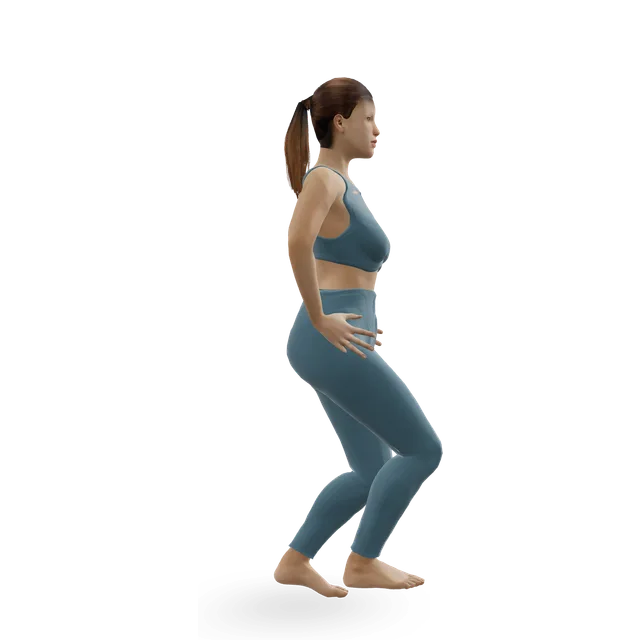
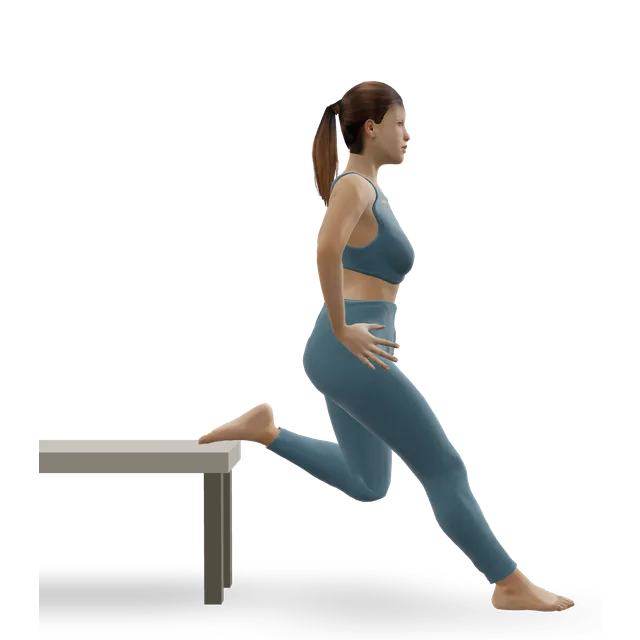
Stand tall with your feet hip-width apart. Step one foot back about a leg's length onto the ball of the foot, keeping most of your weight over your front foot, and lower straight down until your back knee nearly brushes the floor. Push the floor away with your whole front foot and bring your back foot forward to stand. The American Council on Exercise (ACE) rates it intermediate.
In one study of 9 men, the load at the knee was 1.18 N·m/kg in the reverse lunge against 1.38 in the forward lunge, and at the hip 1.84 against 2.09. In 20 women, the forward lunge produced more quadriceps force and more force behind the kneecap. Two lab studies, both in young adults without knee pain.
A lunge still sat in the moderate middle of 35 activities for kneecap load (5.1 times body weight, against 1.7 for a low step-up), and in forward lunges a short step loaded the kneecap more at the bottom of the rep. With sore kneecaps, start with a smaller range and a longer step.
Split squat, then reverse lunge, then forward and walking lunges, as the National Academy of Sports Medicine (NASM), the National Strength and Conditioning Association (NSCA) and our lunge guide order them. The knee study's authors suggest progressing the knee from the reverse lunge to the forward lunge to the single-leg squat.
The one study that measured both lunges found the forward lunge loaded the hip more, not less, so "the reverse lunge is the glute lunge" isn't supported, and no study has compared their muscle activity. Leaning slightly forward works your hips harder.
3 sets of 6 to 8 each leg while you learn, holding a support (our lunge progression workout), then 3 sets of 8 to 12 each leg, stopping 2 or 3 reps short, with 90 seconds to 2 minutes' rest (our lunge guide); with dumbbells, 3 sets of 8 to 10 each side (our gym and dumbbell workouts). Two or three times a week: the NHS asks adults to do strengthening activities on at least 2 days a week.
A step back into a split stance, lowering until the back knee nearly touches the floor, then a push up through the front foot to step back to standing. It's the split squat with a step added, and the step lands behind you, so the front foot stays planted throughout. NASM's cue: keep your weight in the front leg and push through its mid-foot.
Your front leg's quads and glutes do most of the work, with the hamstrings, inner thighs and calves helping. In the one study that measured both lunges, the reverse lunge put less load on the front knee and the hip than the forward lunge, with the same knee and hip angles; in 20 women it produced less quadriceps force and less force behind the kneecap. In forward lunges, the hip muscles do most of the work by joint load, and added weight raised the hip's and ankle's work rather than the knee's.
In a forward lunge, your front leg has to brake your body as you land on it. Stepping back, your weight stays over the planted front foot while the moving leg goes behind you (our reading of the two studies). Forward lunges with a step also loaded the kneecap more near the top of each rep than lunging in place.
A controlled split squat, which is the move page's prerequisite, and steady balance on one leg for about 30 seconds, as our lunge guide suggests.
How people differ
Step length follows leg length: about a leg's length suits most people. People who wobble do better holding a support, with their feet hip-width apart rather than in one line. The two comparison studies were in 9 young men and 20 young women.
From the move page, our lunge guide, NASM's cues (the weight in the front leg, the push through its mid-foot, either leg order) and ACE's chest-up cue.
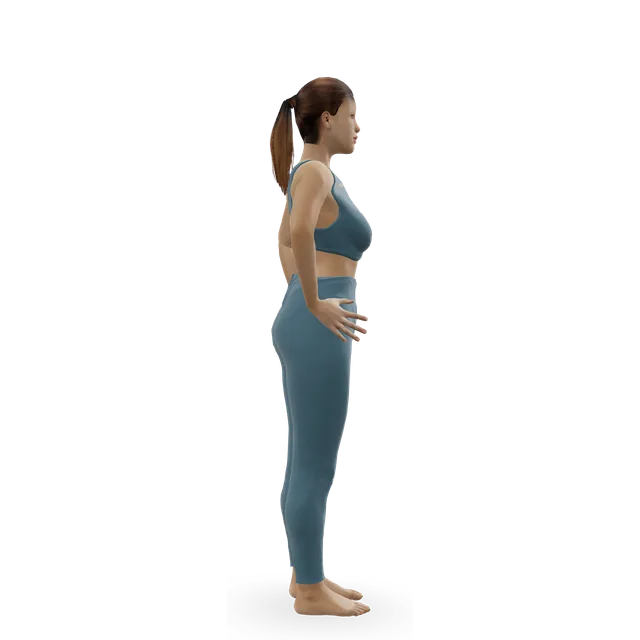
Stand tall with your feet hip-width apart, hands on your hips or fingertips on a wall or rail for balance.
Step one foot back about a leg's length, landing on the ball of the foot, with most of your weight staying over your front foot.
Lower straight down until your back knee nearly brushes the floor, your front knee bending over the middle of your foot. Keep your chest up and your trunk tall, or leaning very slightly forward.
Push the floor away with your whole front foot to stand back up, bringing your back foot forward to meet it.
Breathe in on the way down and out as you push up.
Change legs each rep, or finish all your reps on one side first; both are fine.
Loading the 3D figure…
Drag to turn
Gets into position, then repeats the movement. Technical checks passed; qualified exercise review is pending.
From the move page, whose prerequisite is controlled bodyweight reverse lunges. The starting weight follows our plans' rule. Add dumbbells once 3 sets of 12 without weights feel easy, as our lunge guide says.
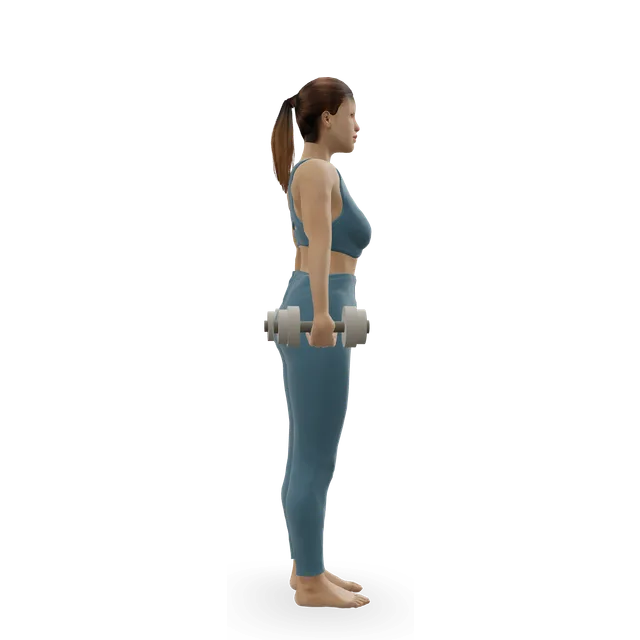
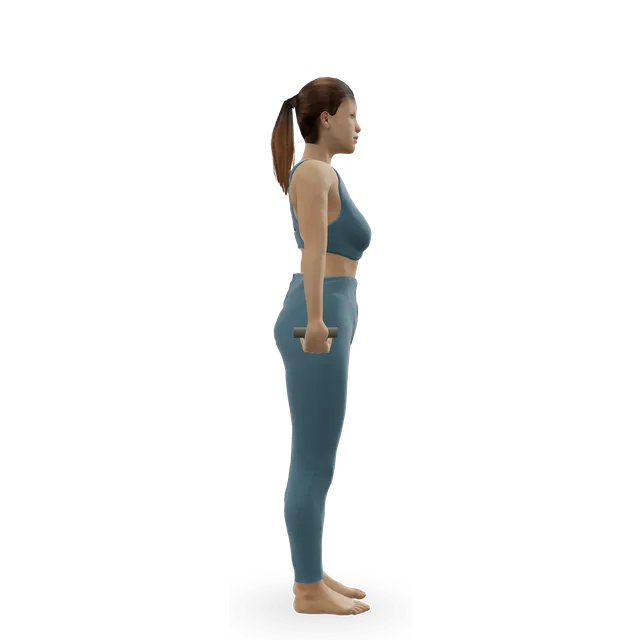
Stand tall with a dumbbell in each hand at your sides, arms long.
Step one foot back and lower your back knee towards the floor, your front knee over your foot.
Drive through your front foot to bring your back foot in to standing, then change legs.
Choose dumbbells you could lift about 10 to 12 times, and stop each set 2 or 3 reps short.
Loading the 3D figure…
Drag to turn
Gets into position, then repeats the movement. Technical checks passed; qualified exercise review is pending.
In one study of 9 men lunging with body weight and a 3-second lowering, the forward lunge produced a larger load at the knee (1.38 against 1.18 N·m/kg) and at the hip (2.09 against 1.84) than the reverse lunge, with the same knee and hip angles.
In 20 women lunging to three quarters of their leg length, the forward lunge produced more quadriceps force, more force behind the kneecap, more knee bend and a faster rise in kneecap loading than the backward lunge.
Across 35 exercises and daily activities in 20 healthy adults, peak kneecap load was about 0.6 times body weight walking, 1.7 in a low step-up, 2.5 in a 60-degree squat, 5.1 in a lunge and 5.4 running. A lunge sits in the moderate middle.
In forward lunges, a short step loaded the kneecap more at the bottom of the rep, and lunging onto a 10 cm platform loaded it less than at ground level. The authors' order for building up kneecap load runs from a small range to a moderate range, then a long step and deep range onto a platform, then at ground level. Going deeper, as in the deficit version, raises the load.
In forward lunges the force on the front cruciate ligament (ACL) was small and appeared only in short-step lunges with a stride. There are no reverse lunge figures, and nothing suggests it's worse (our reading).
Reverse lunges are easier on the knee than forward lunges at the same depth and step. Nobody has measured them in people with knee pain, so use the knee rule below rather than assuming they're pain-free.
Glutes or quads?
The forward lunge loaded the hip moreEmerging evidence
In the one study we found that compared them, the forward lunge loaded the hip more than the reverse lunge (2.09 against 1.84 N·m/kg). So the popular claim that reverse lunges are the glute lunge isn't supported, and our lunge guide says the same.
In 16 adults, the forward lunge bent the knee most but the hip did most of the work by joint load, and adding up to half of body weight raised the work at the hip and ankle, not the knee.
Leaning the trunk forward raised the hip's work and glute and outer hamstring activity in 10 adults, and a longer split stance shifted work from the knee to the hip in 20 men. A slight lean and a long step give your glutes more.
No study has compared muscle activity in reverse and forward lunges, and none has trained reverse lunges on their own. Muscle activity wouldn't settle it anyway: it isn't a validated predictor of growth.
Walking lunges add travel, balance on a moving base and a braking landing on every step, and stepping lunges loaded the kneecap more near the top of the rep. Reverse lunges are gentler and steadier; our walking lunge guide covers the travelling version.
A split squat keeps both feet planted, so it's easier to balance and comes first. A reverse lunge adds a step back and a step up into the stance. Our split squat guide covers it.
Reverse lunge or Bulgarian split squat
The Bulgarian raises your back foot on a bench and puts more of the load through your front leg. It's the harder static option; our Bulgarian split squat guide covers it.
Reverse lunge or step-up
A low step-up loaded the kneecap about a third as much as a lunge in 20 adults (1.7 against 5.1 times body weight), so step-ups suit very sensitive knees. Our step-up guide says squats, lunges and step-ups all count towards your leg sets.
In split squats in 20 men, lengthening the stance from half to 1.2 leg lengths raised the hip's share of the work by about 15% and cut the knee's by about 10%; one leg's length suited strength training, and longer stances made feet slip. Step back far enough that your front heel stays down.
In 7 men doing barbell squats, blocking the knees from passing the toes cut the load at the knee by about a fifth but raised the load at the hip about tenfold. Keep your front knee over your middle toes rather than forcing it back.
In 15 trained men, lunging with the feet in one line raised side-to-side sway of the front foot (19.4 against 14.8 cm). Step back on your own track, hip-width apart.
Step out of the lunge rather than fighting it, and hold a rail or wall while you learn, as our lunge guide says.
The reverse lunge ladder and versions
Single-leg stand, 2 holds of 30 seconds each leg next to a support; split squat, 2 sets of 8 each leg with a 3-second lowering; reverse lunge, 3 sets of 6 to 8 each leg holding a support (all from our lunge progression workout), then 3 sets of 8 to 12 each leg (our squat challenge workout and lunge guide); dumbbell reverse lunge, 3 sets of 8 to 10 each side, 90 seconds' rest, 2 or 3 reps short (our full-body dumbbell workout B); deficit reverse lunge, 2 to 3 sets of 6 to 8 each leg, light (editorial); reverse lunge with rotation, 4 to 5 each side as a warm-up (our golf, cricket and lacrosse warm-ups); walking lunge, 2 sets of 6 to 8 steps each leg, and Bulgarian split squat, 2 sets of 6 each leg (our lunge progression workout).
No 3D demo yet for these: they're taught over the reverse lunge and deficit reverse lunge demos.
Goblet hold
One dumbbell or kettlebell held at your chest. In forward lunges, a weight held in front loaded the kneecap and its tendon less than weights at your sides, so it suits sensitive knees (our reading for reverse lunges).
ACE teaches the reverse lunge with a barbell across your upper back, taken from a rack. Learn it with dumbbells first (our suggestion); the deficit demo carries a bar.
Stand up and drive the back knee up in front, balancing on the front leg. We found no study of it; get your balance first (editorial).
Curtsy lunge
The back foot steps diagonally behind the front leg, which by its shape asks more of the side hip and inner thigh. We found no study of it; keep the range small at first (editorial).
On a Smith machine
Stepping back under a guided bar is awkward; the split squat suits the Smith machine better (editorial).
From a step: the deficit reverse lunge
From the move page, whose prerequisite is controlled dumbbell reverse lunges. We found no study of it, and the extra depth raises the knee's load, so 2 to 3 sets of 6 to 8 each leg, light, is our editorial starting point.
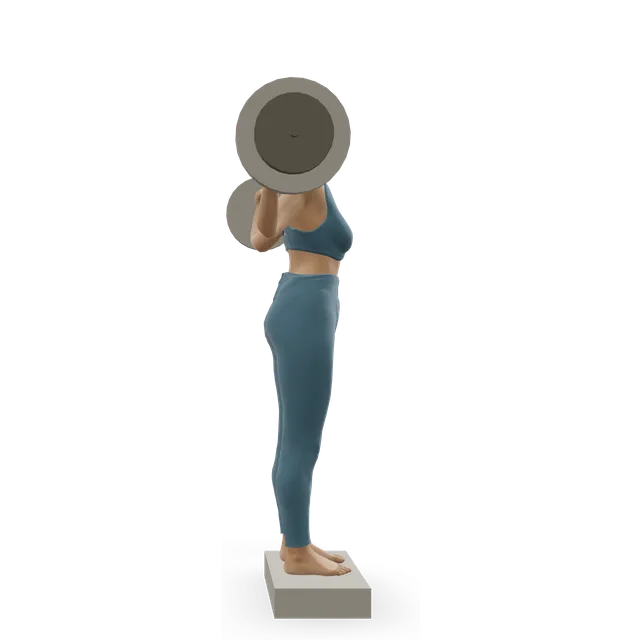
Stand on a low, stable platform, with dumbbells at your sides or a barbell across your upper back.
Step one foot back off the platform and lower your back knee towards the floor, deeper than from the floor.
Drive through your front foot to step back up onto the platform, then change legs.
Loading the 3D figure…
Drag to turn
Gets into position, then repeats the movement. Technical checks passed; qualified exercise review is pending.
Keep it over your middle toes. Shorten the range or hold a support until it stays there.
Dropping onto your back knee
Lower under control and stop a few centimetres above the floor, as our lunge guide says.
Leaning far forward by accident
Lean on purpose, and only a little.
How many, and how often
While you learn
3 sets of 6 to 8 each leg, holding a support, with 90 seconds' rest, keeping your front heel down (our lunge progression workout).
Most people
3 sets of 8 to 12 each leg, stopping 2 or 3 reps short (2 or 3 reps in reserve: how many more you could have done), with 90 seconds to 2 minutes' rest. That's our lunge guide's dose, and our squat and glute challenge workouts use it.
With dumbbells
3 sets of 8 to 10 each side, 90 seconds' rest, 2 or 3 reps short (our full-body dumbbell workout B and lower body gym workout).
In circuits
40 seconds alternating legs (our circuit training workout), or 4 each leg every minute (our EMOM workout).
How often
Two or three times a week as part of your leg work, as our lunge guide suggests. The NHS asks adults to do strengthening activities on at least 2 days a week.
Move on at 3 sets of 10 to 12 each leg with your front heel down, as our lunge guide says: add dumbbells once 3 sets of 12 feel easy, then add reps before weight. Adding reps and adding load both worked as progression in 43 trained people.
For a front heel that lifts, knee-to-wall ankle rocks, 10 slow rocks each side (the move page's dose); standing hip CARs (controlled circles), 3 slow circles each way on each leg (the move page's editorial starting point); the half-kneeling hip flexor stretch, 30 seconds each side (our lunge progression workout); the standing quad stretch, 20 to 30 seconds, 2 to 4 times each side (the move page's editorial starting point); step-ups, 2 to 3 sets of 8 to 10 each side, a lower kneecap load (our lower body workout at home); and glute bridges, 12 reps (our beginner bodyweight workout).
Knee pain of 0 to 2 out of 10 during exercise is safe, and up to 5 is acceptable if it's back to its usual level by the next morning; keep tendon pain to about 3. Sharp, catching or giving-way pain or new swelling means stop, as our knee guides say.
Start small
Lunge to a smaller depth first, or onto a low platform, with a longer step, then build to a deeper range at ground level, the order the kneecap studies' authors suggest for building up load.
The lunge progression workout teaches the reverse lunge after the split squat; the full-body dumbbell workout B and lower body gym workout use dumbbell reverse lunges; the glute workout at home and the squat and glute challenges use bodyweight sets; the circuit training workout uses 40-second rounds; the postnatal strength workout uses 6 to 8 each side, holding a support.
Start with split squats, then reverse lunges in a smaller range with a longer step, and keep to the knee rule. Our runner's knee guide has the plan.
Pain in the tendon below the kneecap
Keep the range and the load where the tendon stays at about 3 out of 10, and follow our jumper's knee guide.
Knee or hip arthritis
Reverse lunges are usually fine in a range you can control: shorten the depth, hold a support, and keep to the knee rule.
A pinch at the front of the hip
Shorten the step and the depth, and set the range by what your hip allows, as our hip guides explain.
After knee or hip surgery
Follow your surgeon's or physiotherapist's stages before lunges.
Poor balance or falls
Hold a rail or wall, or use split squats, and step out of a lunge rather than fighting a wobble.
Pregnancy
The NHS says strength training is fine if you already do it, and to avoid activities with a risk of falling. Hold a support as your balance changes, and skip lunges, or keep them small, with pelvic girdle pain, as our lunge guide says.
Our postnatal strength workout uses reverse lunges holding a support, and says to skip them if they bring on perineal or pelvic pain.
Get advice first
If you haven't exercised for some time or have a medical condition, speak to your GP first, as the NHS advises. Get advice before hard lifting if you have high blood pressure, heart disease, glaucoma or diabetic eye disease, a hernia or recent surgery, as our breathing guide lists. With controlled high blood pressure, breathe out as you push up rather than holding your breath.
If you get chest pain or pressure, feel faint or dizzy, are unusually breathless, or your heart races or beats irregularly during exercise, as our plans advise. The American Heart Association says these need immediate medical evaluation.
For chest pain that comes on suddenly and doesn't go away, feels tight or like squeezing, spreads to your arms, neck, jaw, stomach or back, or comes with sweating, feeling sick, light-headedness or breathlessness; someone who faints while exercising; palpitations that don't go away, or come with chest pain, shortness of breath or feeling faint; or a sudden headache that is extremely painful, or comes with numbness or weakness, difficulty speaking or loss of vision. Don't drive yourself to A&E.
If back pain comes with pain, tingling, weakness or numbness in both legs, loss of feeling around your genitals or bottom, or changes in your bladder or bowels.
For severe hip pain after a fall or injury, if you can't walk or put weight on your leg, or for tingling or loss of feeling in your hip or leg after an injury.
If your knee is very painful, you can't move it or put any weight on it, it's badly swollen or has changed shape, it locks, gives way or painfully clicks (painless clicking is normal), or you have a very high temperature with redness or heat around the knee. In the US, contact your doctor or urgent care.
For severe hip pain that started suddenly without a fall, a swollen, hot hip, skin colour changes around it, or hip pain with a high temperature; or a headache triggered or made worse by coughing, sneezing, bending down or exercising.
If knee pain doesn't improve within a few weeks, or hip pain hasn't improved after 2 weeks at home, keeps coming back, stops your normal activities or disturbs your sleep.
If you lose your balance, step out of the lunge rather than fighting it. Hold a rail or wall if falls are a worry.
Myths
"Reverse lunges are always easier on the knees"Mixed evidence
Easier than forward lunges at the same depth: less knee and kneecap load in two lab studies. But a lunge is still a moderate kneecap load, a short step or a deeper range (as in the deficit version) loads the knee more, and nobody has measured reverse lunges in people with knee pain.
"Reverse lunges work the glutes more than forward lunges"Mixed evidence
In the one study we found that compared them, the forward lunge loaded the hip more, not less, and no study has compared their muscle activity. Our lunge guide gives the same answer.
Across 15 studies, training to failure gave a trivial growth advantage at most. Stop 2 or 3 reps short, as our plans say: in a lunge, failing a rep also means losing your balance.
Stand tall, step one foot back about a leg's length onto the ball of the foot, and lower until your back knee nearly touches the floor. Push through your whole front foot to bring your back foot forward and stand.
What muscles do reverse lunges work?
Mainly your front leg's quads and glutes, with your hamstrings, inner thighs and calves helping. By joint load, lunges are hip-dominant exercises.
Are reverse lunges easier on the knees?
Easier than forward lunges: the knee's load was lower in men and the force behind the kneecap was lower in women in two lab studies. A lunge is still a moderate knee load, so start with a smaller range if your knees are sore.
Reverse lunges or forward lunges?
Start with reverse lunges, then add forward lunges, which load the knee and hip more. Our lunge guide covers the forward and walking versions.
Do reverse lunges work the glutes more?
Not as far as the evidence shows: in the one study comparing them, the forward lunge loaded the hip more, and no study has compared their muscle activity. Lean slightly forward and take a long step if you want more glute work.
Reverse lunges or split squats?
A split squat keeps both feet planted, so it's easier to balance; a reverse lunge adds a step back and a step up into the stance. Learn split squats first; our split squat guide covers them.
Reverse lunges or walking lunges?
Reverse lunges are gentler on the knee and easier to balance; walking lunges add travel and a braking landing. Our walking lunge guide covers them.
How far back should I step?
About a leg's length, enough that your front knee stays over your foot and your front heel stays down. A short step pushes the front knee forward and loads the kneecap more deep in the lunge.
Should I alternate legs?
Either is fine: change legs each rep, or finish one side first. Finishing one side first makes it easier to keep the reps even.
How many reverse lunges should I do?
Start with 3 sets of 6 to 8 each leg while holding a support, as in our lunge progression workout. Then build to 3 sets of 8 to 12 each leg, stopping 2 or 3 reps short, with 90 seconds to 2 minutes' rest, two or three times a week. Add dumbbells when 3 sets of 12 feel easy.
How should I hold dumbbells?
One in each hand at your sides is simplest. A weight held at your chest was easier on the kneecap than weights at your sides in forward lunges, so try a goblet hold if your knees are sensitive.
What is a deficit reverse lunge?
You stand on a low platform and step back down to the floor, so you can lunge deeper. We found no study of it, so add it once ordinary reverse lunges are easy and pain-free.
Exercise education, not a personal prescription, and clinical review of these guides is pending. Check with a GP before starting hard training if you have a heart condition, chest pain, dizziness or breathlessness when active, and stop for sharp or increasing pain. Health disclaimer.