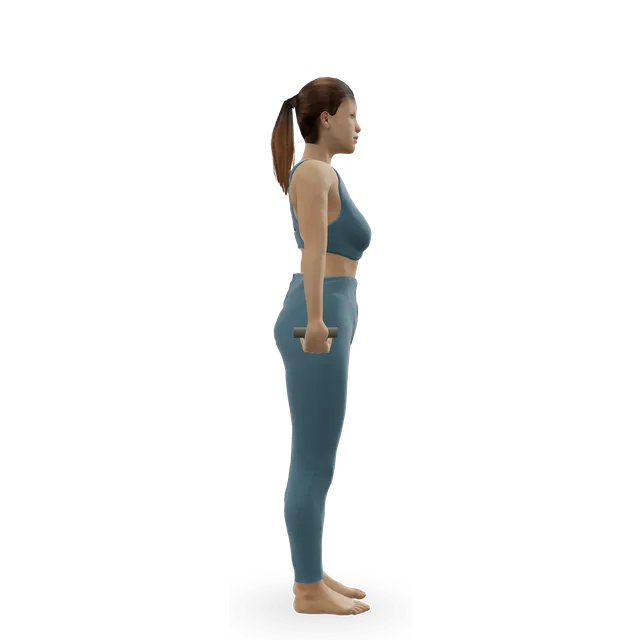
How to do leg curls: seated, lying and standing machines, and curls without a machine
A leg curl bends your knee against a padded roller behind your lower leg, training the hamstrings at the back of your thigh. Line your knee up with the machine's pivot, set the pad just above your heels, curl as far as you can and let your knees straighten on the way back. If your gym has a seated machine, use it: in a 12-week trial, seated curls grew the hamstrings 14% against 9% for lying curls.
Pointing or flexing your feet didn't change the result in a 10-week trial, and turning your toes in or out changes little. This guide covers the three machines, set-up, feet, cramps, how heavy and how many, curls without a machine, from a band to the Nordic curl, and the warning signs of a hamstring strain, with a 3D demo of every step.
The seated, lying and standing leg curls all bend your knee against a pad behind your lower leg. Line your knee up with the pivot, set the pad just above your heels, and lock the thigh pad down (seated) or keep your hips on the bench (lying).
In 20 untrained adults who trained one leg seated and one leg lying for 12 weeks, the hamstrings grew 14% against 9%. Sitting bends your hip, which stretches the three hamstring muscles that cross it. Both work, so use the machine your gym has.
Our reading of the trials is that the stretched end of the range, knees straight, is where much of the benefit comes from, so let them straighten under control between reps. The National Academy of Sports Medicine (NASM) coaches stopping just short of straight to keep tension on the muscle; no study has tested either cue against the other.
Pointed or flexed feet grew the hamstrings equally over 10 weeks; flexed feet let people lift a little more. Turning your toes in or out shifts work between the inner and outer hamstrings by only a few per cent.
2 to 3 sets of 8 to 12, stopping 2 or 3 reps short of failure (the seated leg curl move page's editorial dose); the last set can end 0 to 2 short, as our plans allow for isolation moves. Rest 60 to 90 seconds, once or twice a week.
In 21 footballers, 10 weeks of Nordic curls raised eccentric hamstring strength by 11%; ordinary curls didn't change it. The evidence for preventing strains is for eccentric work like Nordics, so pair curls with Romanian deadlifts and, when ready, Nordic curls.
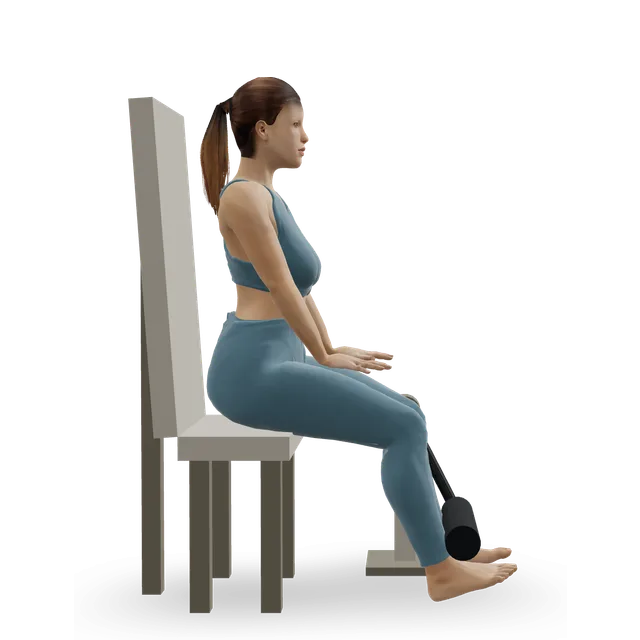
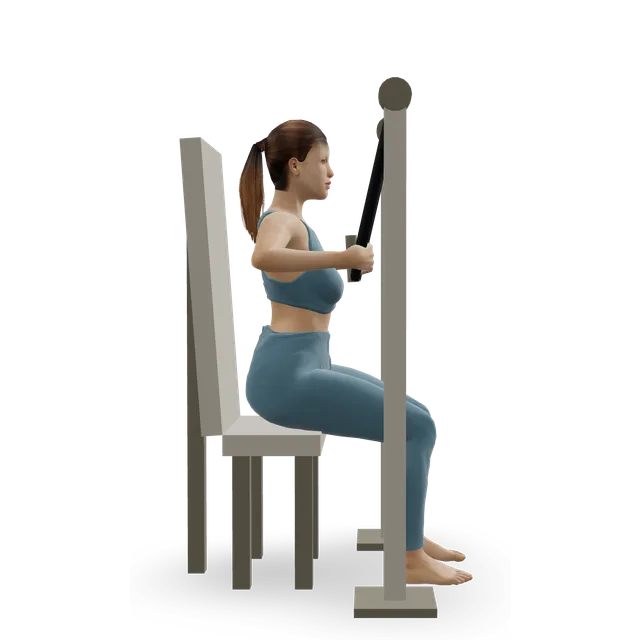
On a seated curl you sit upright with a pad locked on your thighs just above the knees and pull the roller down and back, with your hip bent to about a right angle. On a lying (prone) curl you lie face down and curl the roller up towards your bottom, with your hip nearly straight. On a standing curl you work one leg at a time with your thigh against a pad. We have 3D demos of the seated and standing machines, but none of the lying machine: its steps are in words below.
Three hamstring muscles (the long head of the biceps femoris, the semitendinosus and the semimembranosus) cross both the hip and the knee; the short head of the biceps femoris crosses only the knee. The gastrocnemius, the big calf muscle, also bends the knee, which is why some people feel their calves working and why ankle position comes up.
With your hip bent, the three two-joint hamstrings are longer while they work, which is the likely reason the seated curl grew them more. The one-joint short head grew about the same on both machines.
Seated curls grew the hamstrings more than lying curlsEmerging evidence
20 untrained young adults trained one leg on a seated curl (hip at about 90°) and the other on a lying curl (hip at about 30°): 5 sets of 10 at 70% of their maximum, 2 seconds up and 2 down, twice a week for 12 weeks, measured by MRI (magnetic resonance imaging) scans. The whole hamstrings grew 14% against 9%, the two-joint muscles 8 to 24% against 4 to 19%, and the short head 10% against 9%. The long head of the biceps femoris, the part most often strained, grew about 2.2 times as much with seated curls. One well-run trial in beginners.
Bending the hip further and lowering slowly grew them more againEmerging evidence
In 42 young men over 12 weeks, a seated curl modified so the hip bent to 120°, lifted with both legs and lowered with one over about 4 seconds, grew the hamstrings 18% against 11% for Nordic curls, and the long head 19% against 5%. Nordics grew the muscles that only bend the knee more. The trial widened the range gradually over the first 5 weeks to lower the risk of a strain. One trial, in men.
Muscle activity doesn't pick the winnerEmerging evidence
In a study of 16 trained adults funded by ACE (the American Council on Exercise), the seated curl drew less activity from the outer hamstring than the lying curl, yet seated curls grew the hamstrings more in the training trial. Muscle activity in a single session isn't a validated guide to growth.
In 24 men, hip-hinge exercises favoured the long head and knee-bending ones such as the leg curl the semitendinosus, and a review sums up the same pattern. But in 16 female athletes a lying-on-your-back curl favoured the outer hamstring, and in 20 men, knee-bending and hip-extending held at the same knee angle didn't differ. In 12 trained men, the Romanian deadlift and glute-ham raise drew more hamstring activity than the leg curl. Do both kinds of exercise.
70 young women did either the same two thigh exercises every session or rotated through six, including the lying and seated leg curls, three times a week for 10 weeks. Muscle growth and strength gains were the same.
In 34 college athletes, women reached 54 to 90% of men's hamstring-to-quadriceps activation ratios in the same exercises, which the authors suggest may mean women need relatively more hamstring work. One activity study.
Steps from NASM, the ACE study's machine set-up and our move page; the lowering speed is our suggestion.
Sit with your back firmly against the backrest and move it until the side of your knee lines up with the pivot, the backs of your knees just past the edge of the seat.
Set the lower pad on the back of your lower legs, just above your heels.
Lower the thigh pad until it presses firmly on your thighs just above the knees, so your hips can't lift.
Sit tall and hold the handles.
Breathe out and curl your heels down and back under the seat as far as you can.
Pause, then let the pad rise over about 2 to 3 seconds until your knees are straight, without letting the plates crash.
Loading the 3D figure…
Drag to turn
Gets into position, then repeats the movement. Technical checks passed; qualified exercise review is pending.
Lie face down with your knees just off the end of the bench and the side of your knee level with the pivot (coaching practice). Set the pad on the back of your lower legs just above the heels, hold the handles and keep your hips pressed down. Curl your heels towards your bottom as far as you can, at least to a right angle, then lower slowly until your knees are straight. Our seated demos show the same knee action.
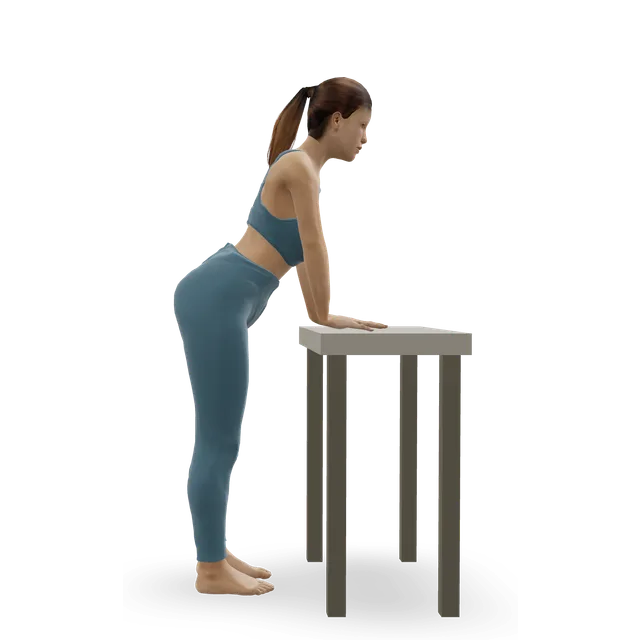
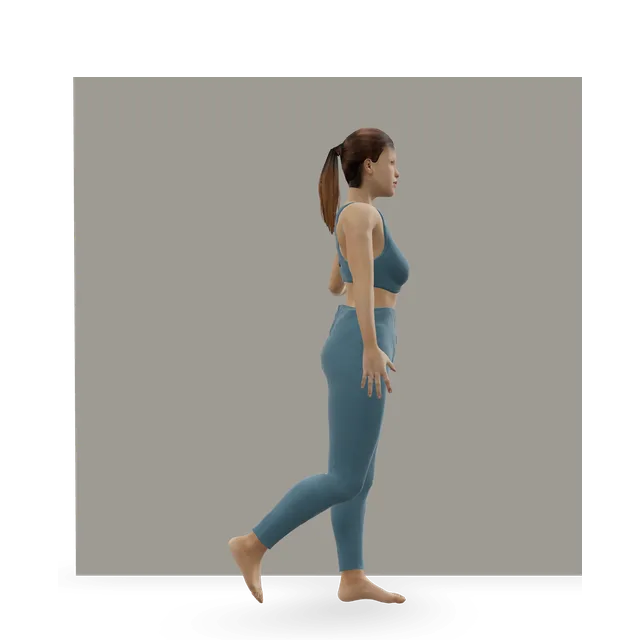
Stand with one thigh against the pad, your knee level with the pivot and the pad just above your heel. Curl one leg while the other stays straight, hips still, then switch legs. It's useful if one side is weaker (coaching practice).
Cable and dumbbell curls (no 3D demo)
With a cable, fasten an ankle cuff to a low pulley and curl standing, holding the frame, like the standing machine. With a dumbbell, lie face down on a bench and grip the dumbbell between your feet; keep it light, as it can slip. Both are coaching practice with no study; our standing and seated curl demos show the knee action.
How far to curl and straighten
Curl as far as you can
Pull your heels as far towards your bottom as the machine and your body allow, at least to a right angle at the knee.
Straighten your knees between repsEmerging evidence
Training the hamstrings at long lengths grew them more in two trials, and reviews of range of motion point the same way, though the evidence is still mixed. We read that as a reason to let your knees straighten fully, under control, at the bottom of each rep. It's an inference from those trials, not a test of this cue.
NASM coaches stopping just short of full extension to keep the muscle under tension. No study has compared the two cues; if straight knees feel uncomfortable, stopping just short is a reasonable choice.
Trained adults curled with one foot pointed and the other flexed for 10 weeks: hamstring thickness and strength rose the same in both legs, and the flexed-foot leg lifted more in total. In 17 women doing seated curls, the hamstrings swelled the same either way, and the outer calf swelled only with the ankle in a neutral position. So pointing your toes takes some work off the calf without changing the hamstring result.
Turning the toes in raised the inner hamstrings' share of activity, and out lowered it, in 13 healthy adults and in 20 people after ACL (anterior cruciate ligament) reconstruction (by 8.7% of their maximum in the lying curl). In 23 women the shifts were 2 to 13% of maximum, which the authors called of questionable importance, and in 40 adults, turning the shin outwards made the knee-bending stronger. No training study exists, so keep your toes pointing straight unless your physiotherapist suggests otherwise.
Hamstrings and calves often cramp in the fully bent position, especially in your first sessions. Start with a lighter first set, ease into the squeeze at the top over the first few reps, and if a muscle cramps, lower the weight, rest and stretch it gently before going on (our suggestion). A cramp is a tight knot that eases; a sudden sharp pain or pop is different (see Warning signs).
Sets, reps, weight and how often
Sets and reps
2 to 3 sets of 8 to 12, stopping 2 or 3 reps short of failure (the seated, standing and ball leg curl move pages' editorial dose). Our machine leg workout uses 3 sets of 10 to 15, and our hamstring and leg day workouts 3 sets of 10 to 12.
The last set can end 0 to 2 reps short of failure, as our plans allow for isolation moves; training to failure didn't consistently add to results. In your first two weeks, stop every set with 3 or 4 reps to spare.
60 to 90 seconds between sets, as our plans use for curls and other isolation moves.
Adding weight
Add reps until every set reaches the top of your range, then add the smallest step. The American Heart Association suggests 2 to 10% when you can do 2 more reps than planned in 2 sessions running.
5 sets of 10 at 70% of maximum twice a week; 2 to 4 sets of 6 to 10 slow lowerings, 2 to 3 times a week; and 2 sets of 10 to 15 to failure. These are study doses, not starting points.
To load the lowering harder than the lift, the trial above lifted with both legs and lowered with one over about 4 seconds, and NASM lists the same variation. It grew the hamstrings well in that one trial in men; start light, as slow lowering brings more soreness.
The knee programme from AAOS (the American Academy of Orthopaedic Surgeons) uses a standing curl with an ankle weight: 3 sets of 10, 4 to 5 days a week, holding 5 seconds at the top. An NHS hospital's early knee exercises use standing knee bends, 3 sets of 8. Follow your physiotherapist if you have one.
Nordics built eccentric strength; curls didn'tEmerging evidence
21 well-trained male footballers did Nordic curls or ordinary hamstring curls for 10 weeks, building from 2 sets of 6 to 3 sets of 8 to 12. The Nordic group gained 11% in eccentric strength (the strength to resist lengthening) and 7% in held strength; the curl group didn't change.
Eccentric work lowers strain riskEmerging evidence
A review found eccentric knee-bending work lowers the risk of hamstring strains when people keep it up, probably through longer muscle fibres and more eccentric strength.
Across 78 studies and 8,319 strains, the strongest risk factors were a previous hamstring strain (2.7 times the risk, 4.8 times if recent), older age, a previous ACL injury and a previous calf strain.
The Nordic is much harder than a ball curlEmerging evidence
In 10 female athletes, the Nordic worked the hamstrings much harder than the ball curl near the bent-knee end (about 75% against 50% of maximum). Romanian deadlifts and glute-ham raises drew more hamstring activity than leg curls in 12 trained men.
Lighten the first set and ease into the squeeze at the top (our suggestion).
Letting the stack crash
Lower under control and set the weight down gently after the last rep.
Leg curl machines
Seated and standing curls take 2 to 3 sets of 8 to 12 (their move pages' editorial dose, the standing one each side). The machine leg curl demo also shows a seated machine; there's no 3D demo of the lying curl. The glute-ham raise, when your gym has the bench, starts at 1 to 2 sets of 3 to 5 assisted lowerings (its move page).
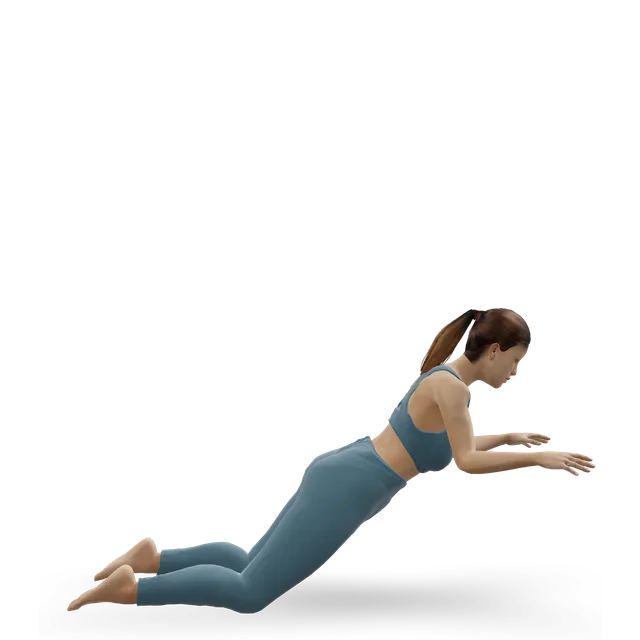
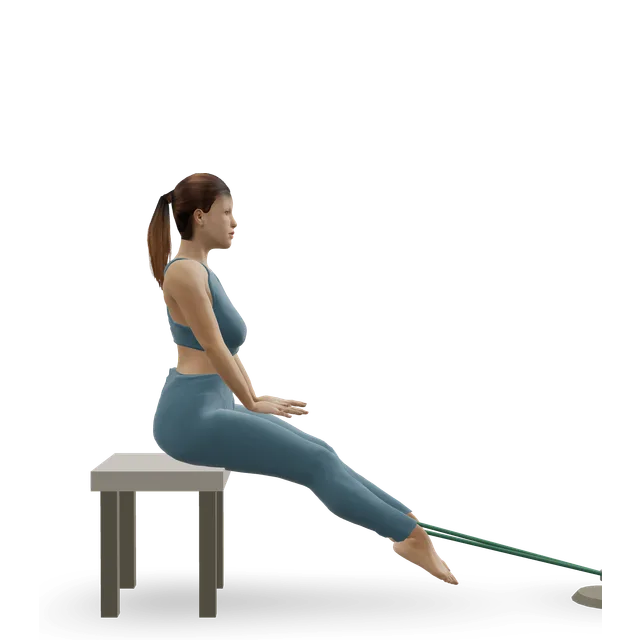
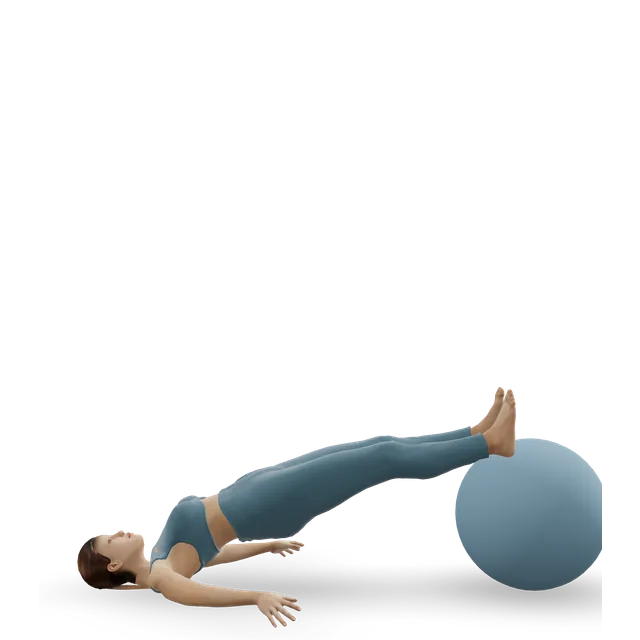
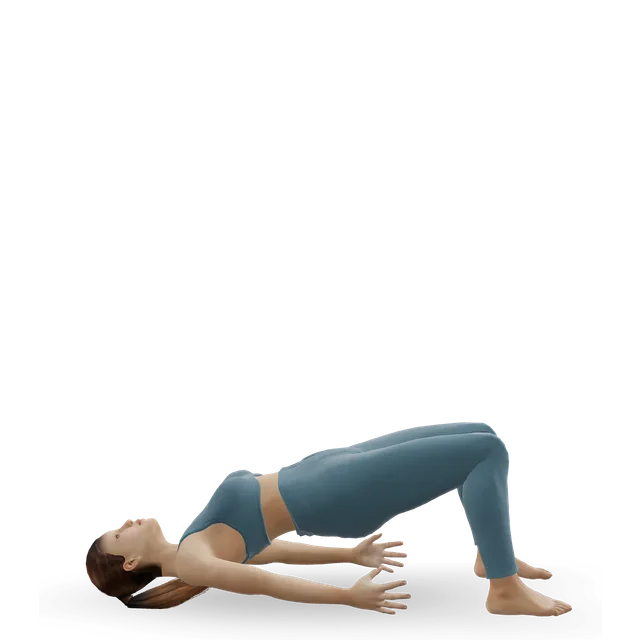
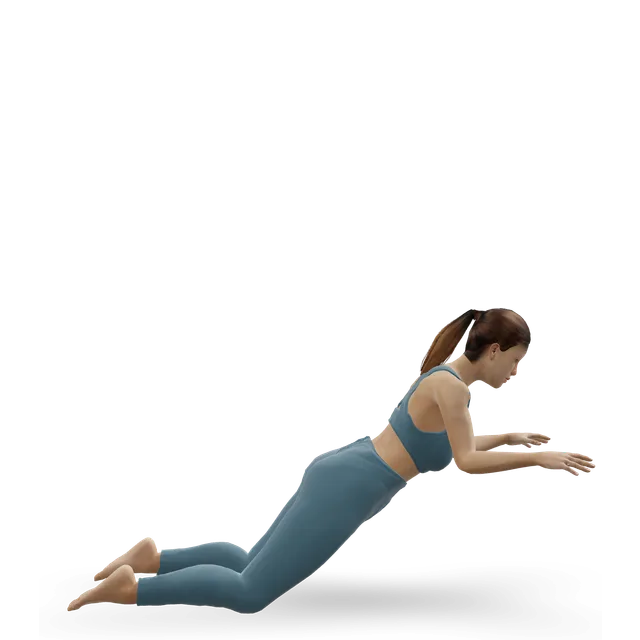
From easiest: a standing curl (3 sets of 10, holding 5 seconds, then add a 5 lb (about 2 kg) ankle weight, from AAOS via its move page), a band curl and a ball curl (2 to 3 sets of 8 to 12, their move pages), slider curls (3 sets of 6 to 10, as in our hamstring workout), slider lowering only (2 to 3 sets of 5 slow lowers, our suggestion) and the Nordic curl (2 sets of 3 to 5 slow lowers, as in our hamstring workout). There's no 3D demo of a dumbbell leg curl.
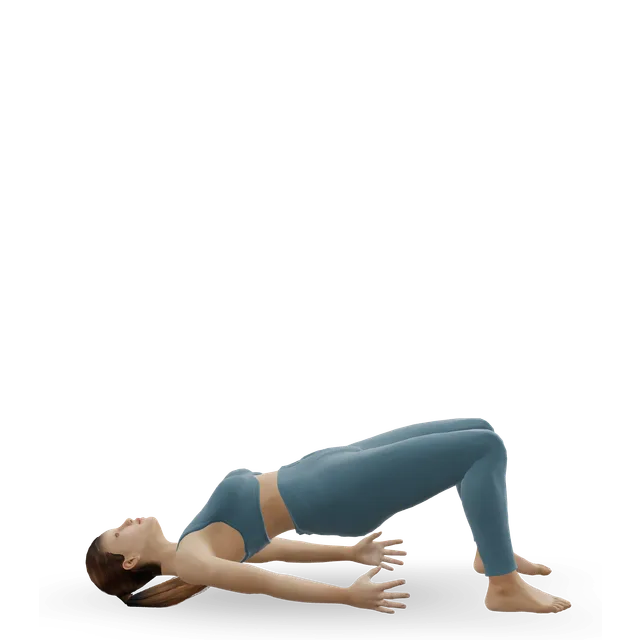
Doses from our hamstring workout: Romanian deadlifts 3 sets of 8 to 10, single-leg Romanian deadlifts 2 sets of 8 each leg, glute bridges 12 reps and hip-hinge practice 2 sets of 8 as a warm-up, and the hamstring stretch 30 seconds each leg (skip it with pain at the sitting bone).
Follow the stages in our hamstring strain guide rather than this page's doses, and bring back loaded curls as it allows.
Pain deep in the buttock
A deep ache at the sitting bone that's worse when you sit is more often high hamstring tendinopathy, which has its own guide and a slower plan.
After ACL surgery with a hamstring graft
Resisted hamstring curls wait until your rehab team allows them; one guideline notes hamstring grafts may be more sensitive early on. See our ACL surgery guide.
Hamstring curls are part of AAOS's knee conditioning programme. Keep pain within our knee guides' rule: 0 to 2 out of 10 is fine, up to 5 acceptable, settled by the next morning.
You can keep strength training if you already do; don't hold your breath and keep weights comfortable. Lying face down on a curl bench isn't covered by the NHS or Tommy's advice, so use the seated or standing curl instead (our suggestion).
The hamstring workout pairs seated curls with Romanian deadlifts and Nordics; the machine leg, leg day and lower body gym workouts put a curl into a full leg session; the first gym workout includes one.
For chest pain that feels tight or like squeezing, or spreads to your arms, neck or jaw; a headache that starts suddenly and is extremely painful, especially while straining; someone who faints while exercising or can't be woken within a minute; palpitations that don't go away or come with chest pain, breathlessness or feeling faint; or back pain with numbness or weakness in both legs, loss of feeling around your genitals or bottom, or bladder or bowel changes. Don't drive yourself to A&E.
Stop the set. A sharp pain, sometimes with a snap or pop, then tenderness, swelling and bruising over the next few hours, is a hamstring injury. Get help from NHS 111 if it's very painful or getting worse, there's a lot of swelling or bruising, it hurts to stand or walk, or it isn't improving with self-care.
A pop near your sitting bone, a large bruise high on the back of your thigh, or you can't put weight on the leg: the tendon may have pulled away from the bone and needs assessing before you exercise it, as our hamstring strain guide says.
See a GP
For a strain that's getting worse or not better after looking after it yourself, knee pain that doesn't improve within a few weeks, after any faint, or for dizziness that keeps coming back. Pain at the back of the thigh with tingling, numbness or pain spreading below the knee may come from your back (sciatica).
Achy hamstrings for a day or two after a new session are normal, more so after slow lowering or Nordics. A cramp eases with rest; a sharp pain, a pop, bruising or pain that stops you walking normally doesn't.
Myths
"Point your toes to make your hamstrings work harder"Emerging evidence
Ankle position didn't change hamstring growth or strength over 10 weeks. Pointing your toes mainly takes the calf out; flexing them lets you lift a little more.
"Lying curls are better because they hit the biceps femoris harder"Emerging evidence
The lying curl drew more outer-hamstring activity in one session, but seated curls grew the hamstrings more over 12 weeks, including the long head of the biceps femoris, about 2.2 times as much.
"Leg curls protect you from hamstring strains"Emerging evidence
The prevention evidence is for eccentric work such as Nordic curls; 10 weeks of ordinary curls didn't change eccentric strength while Nordics raised it 11%. Curls are good for size and strength; add a hinge and, if you play sport, Nordics.
Seated, if you have the choice: in a 12-week trial the hamstrings grew 14% with seated curls against 9% with lying curls, because sitting stretches the hamstrings that cross your hip. Both work, so use what your gym has.
What muscles do leg curls work?
The hamstrings at the back of your thigh, plus the gastrocnemius, the calf muscle that also bends the knee. They don't train your glutes or quadriceps, so pair them with a hip hinge such as the Romanian deadlift.
Should I point or flex my feet on leg curls?
Either. Pointed and flexed feet grew the hamstrings equally over 10 weeks; flexed feet let you lift a little more, and pointed toes take some work off your calves.
Should my toes point in or out on leg curls?
Straight is fine. Turning your toes in or out shifts work between the inner and outer hamstrings by only a few per cent, and no trial shows it changes growth.
Why do I get cramp on leg curls?
Hamstrings and calves often cramp when you squeeze hard with the knee fully bent, especially in early sessions. Start lighter, ease into the bent end over the first sets, and rest and lower the weight if a muscle cramps. A sudden sharp pain or a pop is different: stop and see our hamstring strain guide.
How many sets and reps of leg curls should I do?
Start with 2 to 3 sets of 8 to 12, stopping 2 or 3 reps short of failure, with 60 to 90 seconds' rest; the last set can end 0 to 2 short. Once or twice a week is enough, with a hip hinge on the same day or another.
Should I straighten my legs fully on leg curls?
Letting your knees straighten under control trains the stretched end of the range, which grew the hamstrings more in long-muscle-length trials. Some coaches stop just short of straight to keep tension; no study has compared the two, so use whichever feels comfortable.
Do I need leg curls if I do Romanian deadlifts?
It helps to do both: curls bend the knee and hinges straighten the hip, and the two favour different parts of the hamstrings. Our hamstring workout pairs them, with Romanian deadlifts first and seated curls after.
Do leg curls prevent hamstring injuries?
Not on their own. The prevention evidence is for eccentric work such as Nordic curls, which raised eccentric strength by 11% in 10 weeks while ordinary curls didn't change it.
How do I do leg curls without a machine?
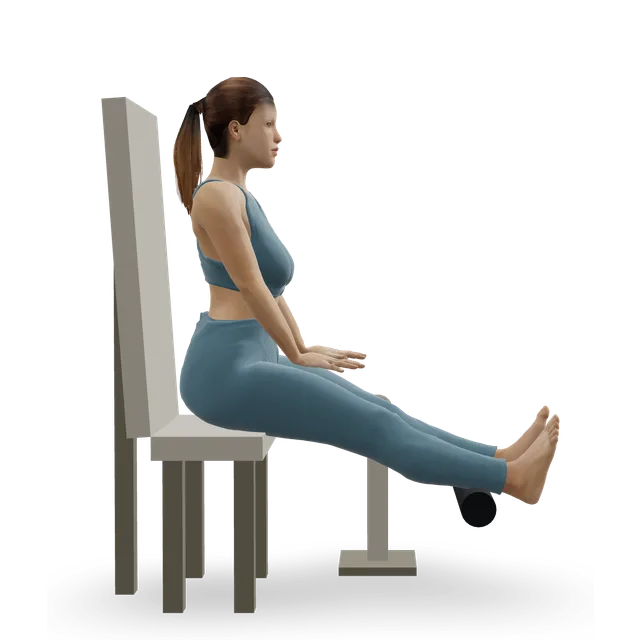
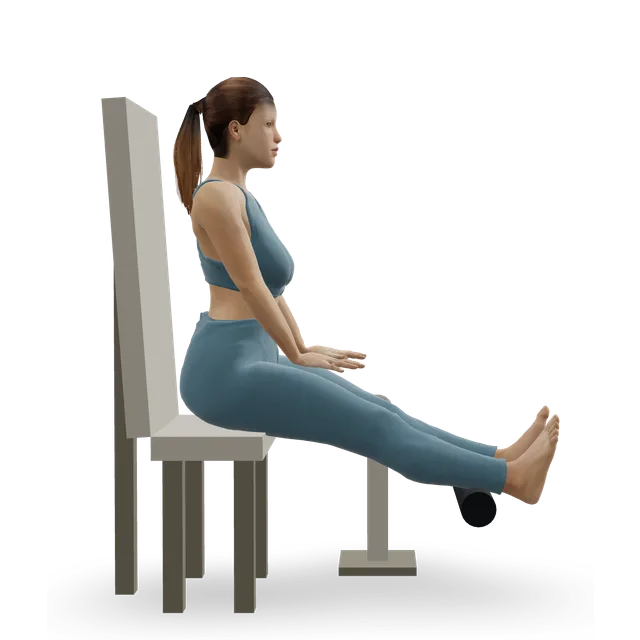
Stand and curl one heel towards your bottom, adding an ankle weight later. You can also curl a stability ball or sliders in towards you from a bridge, use a band, or work up to the Nordic curl, which is much harder than the ball curl.
Can I do leg curls with a hamstring strain?
Follow the stages in our hamstring strain guide, which brings loaded curls back gradually. A pop near the sitting bone, a large bruise high on the thigh or not being able to take your weight needs checking the same day first.
Exercise education, not a personal prescription, and clinical review of these guides is pending. Check with a GP before starting hard training if you have a heart condition, chest pain, dizziness or breathlessness when active, and stop for sharp or increasing pain. Health disclaimer.