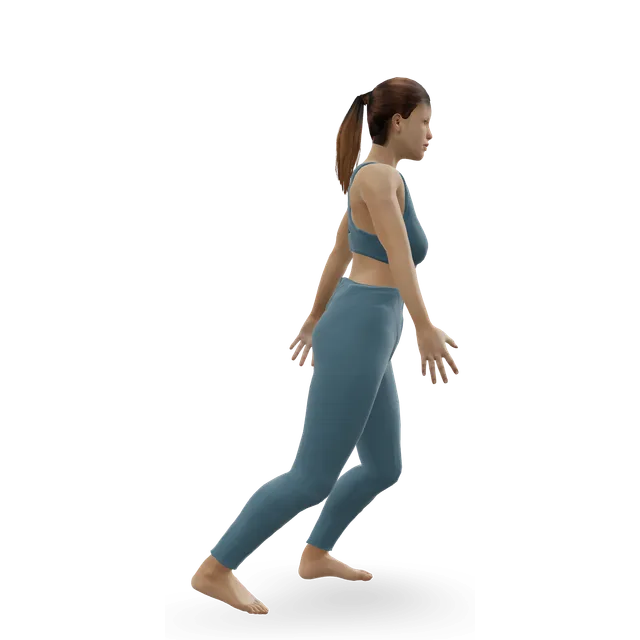
How to do leg extensions: machine set-up, how heavy, and what they do to your knees
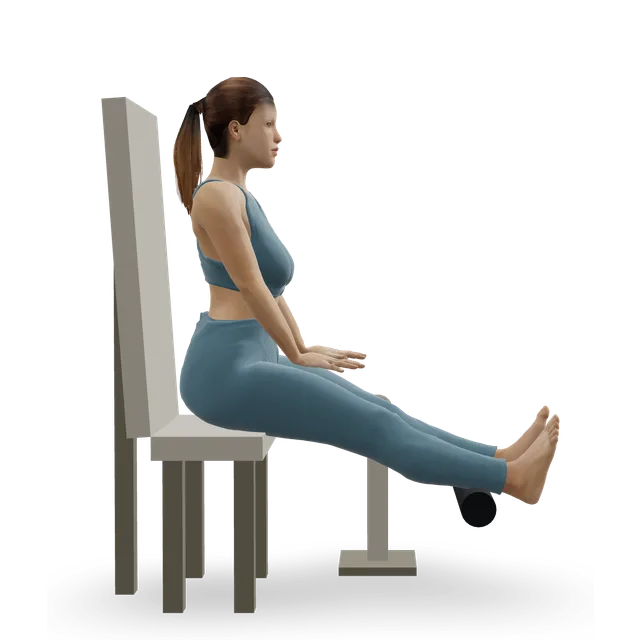
The leg extension is the one machine that trains your quadriceps on their own. Sit back with the side of your knee level with the machine's pivot and the pad just above your ankles, straighten your knees until your legs are nearly straight, then lower slowly. It's the exercise that grows the rectus femoris, the quadriceps muscle that also crosses your hip: by 13% in a 12-week trial, against 1% for the leg press.
Most of the worry about it is overstated. Leg extensions load the knee differently from squats, more behind the kneecap near straight and less when the knee is well bent, and knee rehab programmes use them. This guide covers the set-up, the range, your toes, how heavy and how many, your knees, and leg extensions without a machine, with a 3D demo of every step.
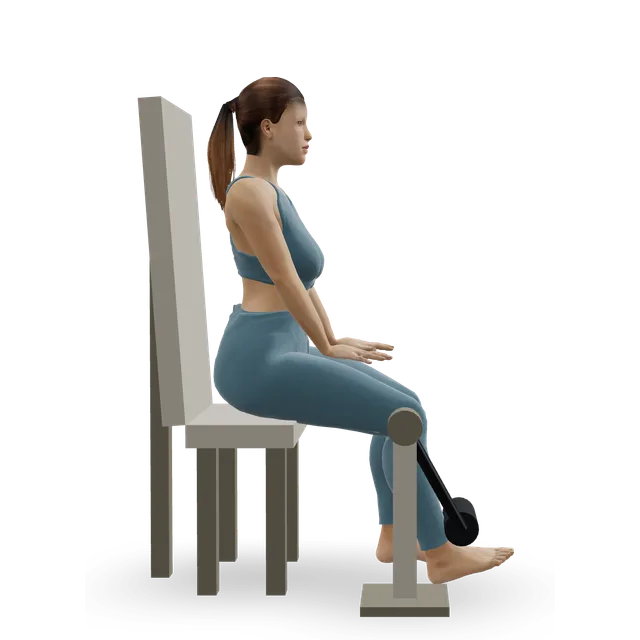
Line the side of your knee up with the machine's pivot, sit back with the backs of your knees at the front edge of the seat, and rest the pad on your lower shins just above the ankles. That's coaching practice rather than a tested rule. Write your settings down: machines differ, and in a test of 8 leg extension machines from 6 makers, none matched the knee's own strength curve.
In 17 untrained adults who trained one leg on each machine for 12 weeks, leg extensions grew the rectus femoris by 13.2% and the leg press by 1.1%, while the other three quadriceps muscles grew about equally on both. Two trials against Smith machine squats found the same pattern.
Full-range reps, or reps in the bent half of the range, grew the quadriceps more than reps kept near straight. A full range is the default; if you shorten it, keep the bent end.
Near straight, leg extensions load the joint behind your kneecap more than a squat or leg press; with the knee well bent they load it less. The ACL (anterior cruciate ligament, a main knee ligament) is loaded only in roughly the last 40 to 50 degrees of straightening. Knee programmes use the exercise. With a sore kneecap, start in the bent half, from about 90° to 45° of bend.
2 to 3 sets of 10 to 15, the last set ending 0 to 2 reps short of failure, with 60 to 90 seconds' rest, once or twice a week after your squats or leg press (our editorial starting point, within our plans' rules). Count the sets towards the 10 or so hard sets a week that build the quadriceps.
Turning your feet in or out shifted muscle activity only a little in one-off tests, and a review of 20 studies found no position that singles out the inner quadriceps. No trial has shown it changes growth.
You sit with your back against a pad and hook your lower shins behind a padded roller on a lever. The lever turns around a pivot that should sit level with your knee, so straightening your knees lifts the weight. Many machines use a cam, a shaped pulley that changes the load through the range; a cam machine loaded the joint behind the kneecap less than a constant-resistance one when the knee was well bent.
The vastus lateralis, vastus medialis and vastus intermedius cross only the knee. The rectus femoris crosses the hip as well and helps lift your thigh. Only your knee moves in a leg extension, and in a lab study it drew more rectus femoris activity than squats or leg presses, which drew more from the vasti.
Why squats and the leg press miss the rectus femoris
In a squat or leg press your hip and knee straighten together, so the rectus femoris shortens at one end while it lengthens at the other, and it barely grows. It didn't grow at all in 10 weeks of full or half squats in 17 men, and grew far less with Smith machine squats than with leg extensions in 63 women.
Physiotherapists call the leg extension an open-chain exercise because your foot moves freely; in the squat and leg press, closed-chain exercises, your feet push against the floor or a plate. The two load the knee in different ways, which is the root of the worry about leg extensions (see Your knees, below).
It grows the rectus femoris; the leg press doesn'tEmerging evidence
17 untrained adults (11 men and 6 women) trained one leg on a leg extension and the other on a leg press: 5 sets of 10 at 70% of their maximum, twice a week for 12 weeks, measured by MRI (magnetic resonance imaging) scans. The rectus femoris grew 13.2% with leg extensions and 1.1% with leg presses. The vasti grew 5.0 to 7.2% against 4.4 to 6.2%, and the whole quadriceps 7.1% against 4.9%, not a meaningful difference. The leg press also grew the glutes (15.4%) and the adductor magnus, a large inner-thigh muscle (6.2%). One well-run trial in beginners.
The same pattern against Smith machine squatsEmerging evidence
In 63 untrained young women doing 3 sets of 8 to 12 to failure twice a week for 8 weeks, leg extensions grew the rectus femoris 11.4 to 17.5% at three sites against 2.0 to 7.9% with Smith machine squats, while the squats grew the lower vastus lateralis more (18.2% against 11.2%). Squat strength rose more with squats; leg extension strength rose equally in both groups. A second trial with matched training found the same, and in 11 men, 12 weeks of knee extensor training grew the rectus femoris relatively more than the vasti.
Leaning the backrest back may help the rectus femorisEmerging evidence
22 untrained men trained one leg with the hip bent 40° (backrest reclined) and the other at 90° (upright), twice a week for 10 weeks. The rectus femoris grew more with the reclined seat, and the vastus lateralis grew the same. In a single session in 9 bodybuilders, reclined positions worked the upper and middle rectus femoris more than an upright one, and what they felt didn't match the scans. One trial and one session, so treat it as promising.
The bent half of the range builds more than the straight halfEmerging evidence
In 45 untrained women, reps from 100° to 65° of knee bend grew the quadriceps more at several sites than reps from 65° to 30°, which grew no more than no training at two of the four sites. In 50 untrained women, full-range, bent-half and mixed reps grew the quadriceps 13 to 17%, all more than the straight half, and strength rose most at the angles trained. Reviews favour a full range, or partial reps at long muscle lengths.
In 24 men and women doing one set of 8, toes turned in gave the most vastus medialis and lateralis activity and toes turned out the most rectus femoris activity. An earlier study with held contractions found a different, mixed pattern. A review of 20 studies (387 people) found no knee, hip or foot position that singles out the inner quadriceps, and activity in a single session isn't a validated guide to growth. No trial has trained one foot position against another.
In a trial in recreationally active young women training twice a week for 12 weeks, one-leg and two-leg knee extensions gave similar gains in muscle thickness and maximum strength; one-leg training built more one-leg strength in a held test.
Across 8 studies, reps lasting anything from half a second to 8 seconds grew muscle similarly; very slow reps of over 10 seconds may grow less. A controlled 2 to 3 seconds down is a comfortable middle.
Steps from our move page and coaching practice; the American Academy of Orthopaedic Surgeons (AAOS) adds: don't swing your leg or use momentum. The lowering speed is our suggestion.
Sit on the machine and move the backrest until the backs of your knees touch the front edge of the seat and the side of your knee lines up with the pivot (many machines mark it with a coloured dot).
Set the shin pad on the front of your lower shins, just above your ankles and clear of the tops of your feet.
If the machine has a range lever, set the start so your knees bend to about a right angle, or a little more if that's comfortable.
Choose the weight, hold the handles, and keep your back on the pad and your thighs on the seat.
Breathe out and straighten your knees smoothly until your legs are nearly straight. Don't kick or swing.
Pause for a moment, then lower over about 2 to 3 seconds to the start without letting the plates rest. After the last rep, lower the weight all the way before you take your legs out.
Loading the 3D figure…
Drag to turn
Gets into position, then repeats the movement. Technical checks passed; qualified exercise review is pending.
The machine's lever should turn around the same point as your knee. If the pad slides up and down your shin as you lift, the pivot isn't lined up: move the backrest. This is coaching practice; no study has tested it, but machines and their cams differ a lot.
Lean the backrest back if it reclinesEmerging evidence
A reclined backrest (less bend at your hip) put more stretch on the rectus femoris and grew it more in one 10-week trial in 22 untrained men. If your machine reclines, set it a notch or two back and keep your back on the pad; if it doesn't, an upright seat still works the whole quadriceps.
For healthy knees, set the pad on the lower shin. Moving it up towards the knee lowers the load on the ACL; after ACL surgery, where it goes is your rehab team's call.
Most machines have a lever that sets how bent your knees start. Start at about a right angle for a full range. With a sore kneecap, use the bent half, from about 90° to 45° of bend, where stress behind the kneecap was lowest in a lab study, and add the last part towards straight as it settles.
In 20 healthy adults, stress behind the kneecap was higher in the leg extension than the leg press at 0° and 30° of knee bend and higher in the leg press at 60° and 90°; the two crossed at 48°. In 10 healthy people, knee extensions loaded the kneecap more than squats near straight (0° to 30°) and less with the knee well bent (60° to 90°). These are lab models, not injury studies.
In 10 men at their 12-rep maximum, ACL tension appeared only in the leg extension, near full straightening. The forward pull on the shin ran from 40° to straight and peaked at about 14°. Measured directly in the knee, a light weight on the shin raised ACL strain at 10° and 20° of bend, while straightening between 35° and 90° kept it low. A review puts the ACL load at 10° to 50° of bend, most at 10° to 30°.
Squats don't protect the ACL moreEmerging evidence
Peak ACL strain in squats was no lower than in actively bending and straightening the knee, though adding resistance raised the strain only in the straightening exercise. A review concludes that both kinds of exercise have a place early after ACL reconstruction.
A meta-analysis of 10 trials found no difference in knee looseness, strength or function between leg extension-type exercise and closed-chain exercise, started early or late. Two later meta-analyses found benefits for quadriceps strength, one especially when this work began at least 4 weeks after surgery; certainty was low or very low in all three. The Aspetar guideline allows leg extensions from week 4 between 90° and 45° of bend, watching for pain at the front of the knee, and notes hamstring grafts may be more sensitive to early starts. Start dates in studies ranged from day 1 to 9 months, so follow your rehab team.
In 60 people with kneecap pain, 5 weeks of knee extension exercise or of squat-type exercise both reduced pain and improved function, and the results held, much the same, 5 years later. The US physiotherapy guideline recommends hip and knee exercises together and counts resisted knee extension as a knee exercise. See our runner's knee guide for a plan.
NICE (the National Institute for Health and Care Excellence) recommends exercise tailored to you, such as local muscle strengthening, for everyone with osteoarthritis, and warns that joint pain may rise at first. Knee programmes from AAOS and an NHS hospital use leg extensions or seated knee straightening.
Our knee guides use a 0 to 10 scale: 0 to 2 during and after is fine, up to 5 is acceptable, and the knee should settle by the next morning. If it doesn't, drop back a step (a smaller range or less weight) rather than stopping altogether. AAOS's programme says you shouldn't feel pain during its exercises; the knee trials our guides follow allowed a little. Sharp, catching or giving-way pain, or new swelling, means stop and get it checked.
The leg press or squat grows the vasti, glutes and inner thighs; the leg extension adds the rectus femoris. If you only have time for one, a squat or leg press covers more muscle; add leg extensions when you want the whole front of your thigh.
Squat training raised squat strength far more than leg extension training did (46.7% against 21.3% in 8 weeks), but both raised leg extension strength about equally. You get strongest at what you practise.
After, if a heavier squat or leg press is your goal: across 11 studies, strength rose most in the exercises done first. For muscle growth, the order made little difference.
2 to 3 sets of 10 to 15 (our editorial starting point). Our machine leg workout and leg day workout use 2 sets of 12 to 15, and our gym workout for seniors 2 sets of 8 to 12. Count them towards the 10 or so hard sets a week that build a muscle; about 4 a week is a workable minimum.
Stop most sets with 2 or 3 reps in reserve (RIR: how many more good reps you could have done); the last set can end 0 to 2 short. Training to failure didn't consistently add to results. In your first two weeks, stop every set with 3 or 4 reps to spare.
60 to 90 seconds between sets, as our plans use for isolation moves such as extensions, curls and raises.
Choosing the weight
Warm up, then pick a weight you think you could lift about 12 to 15 times at most, do 10 and ask how many more you had: 2 or 3 is right, 5 or more means go up a step, none or one means go down. People vary a lot in how many reps they get at the same share of their maximum, and stack numbers don't compare between machines, so go by reps in reserve rather than a chart.
Add reps until every set reaches the top of your range, then add the smallest step the stack allows. The American Heart Association suggests adding 2 to 10% when you can do 2 more reps than planned in 2 sessions running. If the next plate is a big jump, add reps first, or use a half-step or add-on weight if the machine has one.
Once or twice a week, as part of training every major muscle group on at least 2 days a week, the NHS minimum. Twice a week was the frequency in the growth trials above.
AAOS's knee programme uses 3 sets of 10, 4 to 5 days a week, holding each rep for 5 seconds, with an ankle weight from 5 lb (about 2 kg) up to 10 lb (about 4.5 kg). That's a lighter, more frequent rehab dose; follow your physiotherapist if you have one. The NHS's advice for strength exercises is to build up slowly.
Your knee isn't lined up with the pivot. Move the backrest until it is.
Swinging the weight up
Your hips lift or your body rocks back. Use a lighter weight, hold the handles and straighten your knees smoothly: AAOS says don't swing your leg or use momentum.
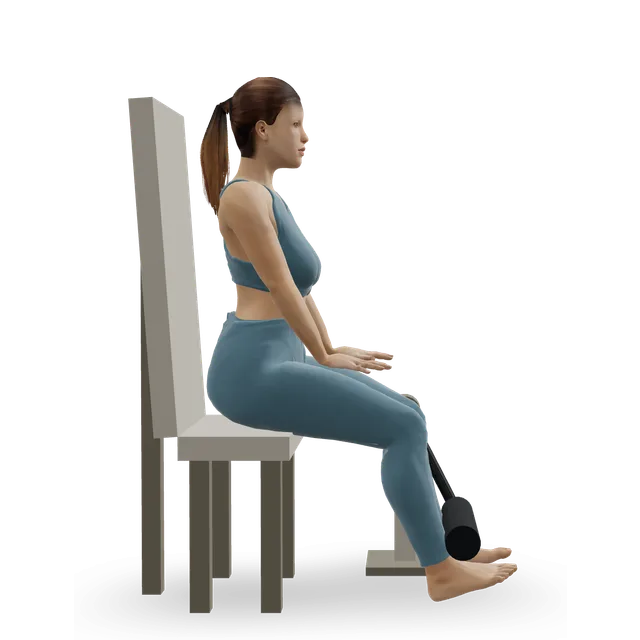
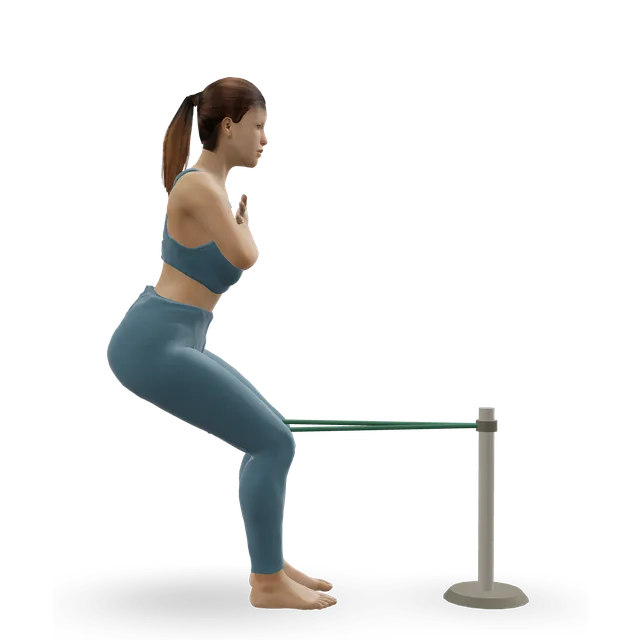
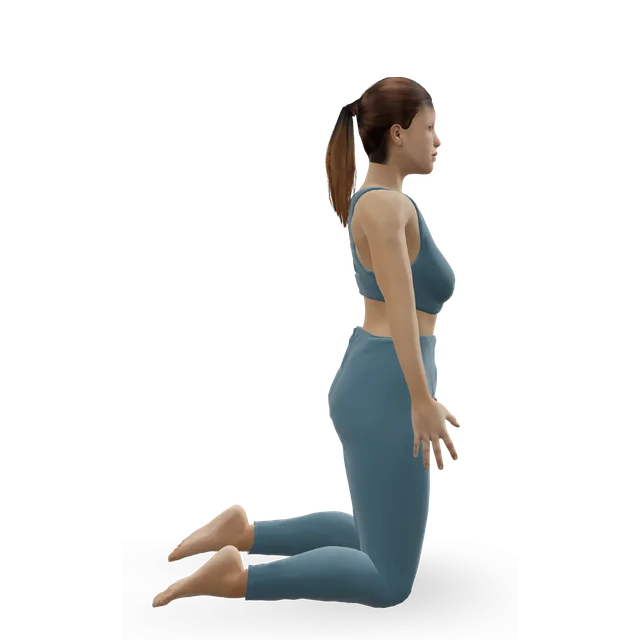
There's no 3D demo of a cable or band leg extension: the seated knee extension shows the same movement on a chair, with an ankle weight or a band looped round the chair leg (3 sets of 10 to 15 each leg, its move page's editorial dose). The Spanish squat takes 4 to 5 holds of 30 to 45 seconds and the sissy squat 2 to 3 sets of 6 to 10 (their move pages); the reverse Nordic 2 sets of 3 to 5 in a small range, as in our knee strengthening workout.
After a knee injury, start at the left: quad sets (3 sets of 10 holds of 5 seconds, our suggestion), straight-leg raises (3 sets of 10 holding 5 seconds, from AAOS), then the chair knee extension, the machine, and one leg at a time (2 to 3 sets of 8 to 12 each leg, its move page's editorial dose).
Pair it with a leg press (3 sets of 8 to 12, as in our machine leg workout) or a squat, a hamstring curl (2 to 3 sets of 8 to 12, its move page's editorial dose), step-ups (8 each side, as in our knee strengthening workout) and a quad stretch (30 to 45 seconds a side, 2 rounds, its move page).
Work from about 90° to 45° of bend first, where stress behind the kneecap is lowest, and add the last part towards straight as it settles. Our runner's knee and knee pain when squatting guides have full plans.
Our jumper's knee guide uses held leg extensions or leg presses in its early stage; follow its stages rather than this page's doses.
After ACL surgery
Only when your rehab team says so, and in the range they set: one guideline starts at about week 4 between 90° and 45° of bend. See our ACL surgery guide.
Strengthening helps, and pain may rise a little at first. Start light, use a range that stays comfortable and see our knee arthritis and knee replacement guides.
Breathe out as you lift, keep the weight moderate and stop well short of failure. With controlled high blood pressure, low to moderate strength training with proper breathing is considered safe.
You can keep strength training at the gym if you already do. Don't hold your breath, and this isn't the time for your heaviest weights. The leg extension is seated, so it suits later pregnancy too (our suggestion).
The machine leg workout puts leg extensions after the leg press; the leg day workout after squats; the gym workout for seniors uses them as part of a machine circuit; the knee strengthening workout trains the same muscles without a machine.
For chest pain that feels tight or like squeezing, or spreads to your arms, neck or jaw; a headache that starts suddenly and is extremely painful, especially while straining; someone who faints while exercising or can't be woken within a minute; palpitations that don't go away or come with chest pain, breathlessness or feeling faint; or back pain with numbness or weakness in both legs, loss of feeling around your genitals or bottom, or bladder or bowel changes. Don't drive yourself to A&E.
If you get chest pain, feel faint or dizzy, become unusually breathless, or your heart races or beats irregularly while you exercise. The American Heart Association says these need checking before you train again.
Ask for an urgent GP appointment or get help from NHS 111
For a knee that's very painful, can't move or take your weight, is badly swollen or has changed shape, or locks, gives way or clicks painfully (painless clicking is normal); or a headache triggered or made worse by exercise. In the US, contact your doctor or urgent care.
If knee pain doesn't improve within a few weeks, after any faint, or for dizziness that keeps coming back. In many areas you can refer yourself to NHS physiotherapy.
Tired, aching thighs for a day or two after a new session are normal. Sharp knee pain, pain that builds through a set, new swelling or a knee that catches isn't: stop, and see our knee pain guides.
Myths
"Leg extensions are bad for your knees"Emerging evidence
They load the knee differently from squats, not dangerously: more behind the kneecap near straight, less when the knee is well bent, and some ACL load in the last part of straightening. Knee programmes use them, they eased kneecap pain as well as squats over 5 years, and after ACL surgery they didn't loosen the knee in trials. With a sore knee, use the bent half of the range first.
"Point your toes in or out to work different parts of the quads"Mixed evidence
Foot position shifted muscle activity a little in single sessions, in different directions in different studies, and no position singles out the inner quadriceps. No trial has shown different growth.
"Squats and the leg press work the whole quad, so you don't need leg extensions"Emerging evidence
They grow three of the four quadriceps muscles well, but the rectus femoris grew 1% with leg presses against 13% with leg extensions, and didn't grow with full or half squats.
"Lock out and squeeze hard at the top for the teardrop"Emerging evidence
The top is where the kneecap is loaded most, the inner quadriceps can't be singled out, and reps in the bent half of the range grew the quadriceps more than reps near straight. A brief pause is fine.
Not for healthy knees. They load the joint behind the kneecap more than squats near straight and less when the knee is well bent, and knee rehab programmes use them. If your kneecap is sore, work between about 90 and 45 degrees of bend first and widen the range as it settles.
What muscles do leg extensions work?
The four quadriceps muscles at the front of your thigh. They're the best way to train the rectus femoris, the one that also crosses your hip: in a 12-week trial it grew 13% with leg extensions against 1% with the leg press, while the other three grew about equally on both. They don't work your glutes or hamstrings.
How should I set the seat on the leg extension machine?
Move the backrest until the side of your knee lines up with the machine's pivot and the backs of your knees touch the front of the seat, then set the pad just above your ankles. If the backrest reclines, a notch or two back puts more stretch on the rectus femoris, which grew it more in one trial. Write your settings down.
Should my toes point in, out or up on leg extensions?
Up, and keep them there. Turning your feet shifted muscle activity only slightly in one-off tests, a review found no position that singles out the inner quadriceps, and no trial has shown different growth.
How many sets and reps of leg extensions should I do?
Start with 2 to 3 sets of 10 to 15, resting 60 to 90 seconds, with the last set ending 0 to 2 reps short of failure, once or twice a week. In your first two weeks, stop every set with 3 or 4 reps to spare.
How much weight should I use on leg extensions?
A weight you could lift about 12 to 15 times at most: do 10 and check how many more you had. Numbers don't compare between machines, because their cams and levers differ, so compare yourself only with yourself on the same machine.
Should I do leg extensions before or after squats?
After, if a heavier squat is your goal, because strength rises most in the exercises done first. For muscle growth, the order makes little difference.
Leg extension or leg press: which is better?
Do both if you can. The leg press grows the vasti, glutes and inner thighs; the leg extension adds the rectus femoris, which the leg press barely touched in a 12-week trial.
Can I do leg extensions after ACL surgery?
Usually, but only when your rehab team says so: one guideline starts them at about week 4 between 90 and 45 degrees of bend, watching for pain at the front of the knee. Trials found no extra looseness in the knee with this kind of exercise. See our ACL surgery guide.
How do I do leg extensions at home without a machine?
Sit on a chair and straighten one knee against an ankle weight or a band looped round the chair leg, 3 sets of 10 to 15 each leg. The Spanish squat, sissy squat and reverse Nordic also work the front of your thigh without a machine.
Single leg or both legs on leg extensions?
Either. In a 12-week trial in young women, one-leg and two-leg extensions grew the quadriceps equally; one leg at a time helps if one side is weaker.
Exercise education, not a personal prescription, and clinical review of these guides is pending. Check with a GP before starting hard training if you have a heart condition, chest pain, dizziness or breathlessness when active, and stop for sharp or increasing pain. Health disclaimer.