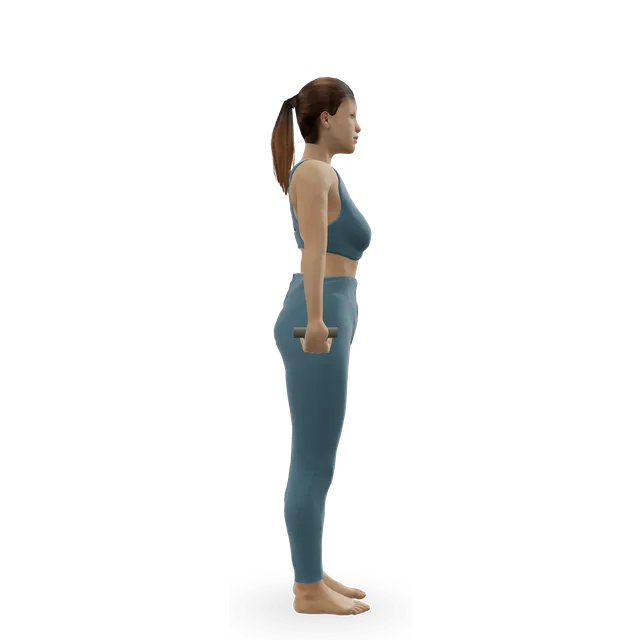
How to do a hack squat: foot placement, depth, and how it compares with the squat and leg press
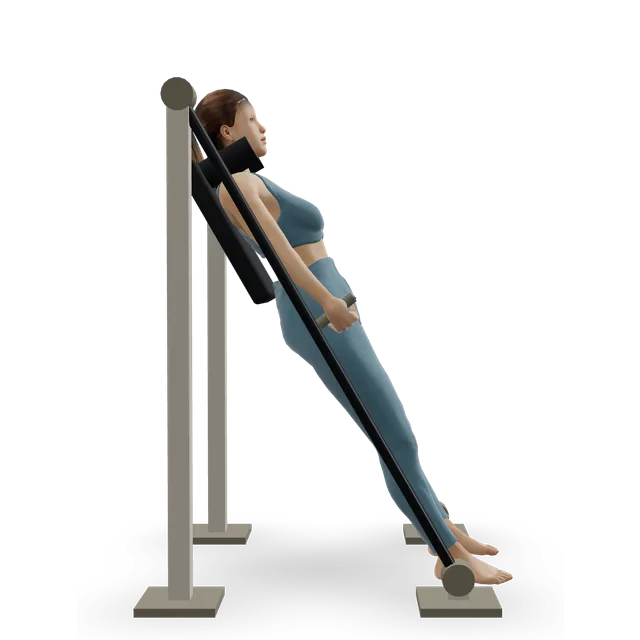
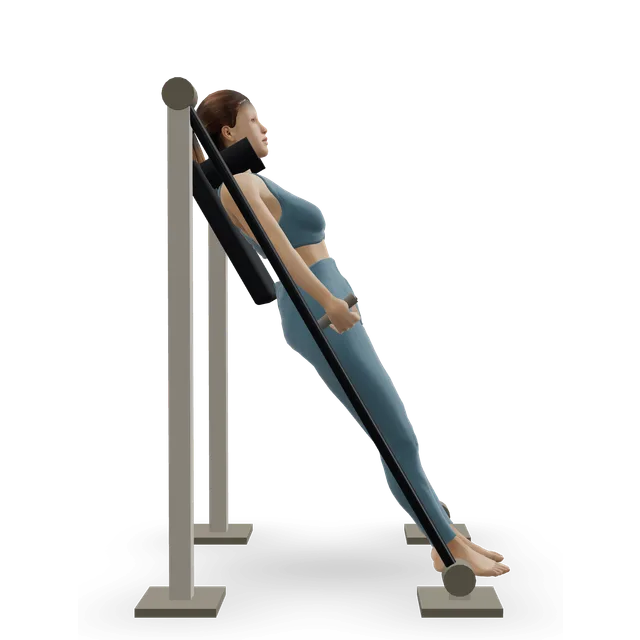
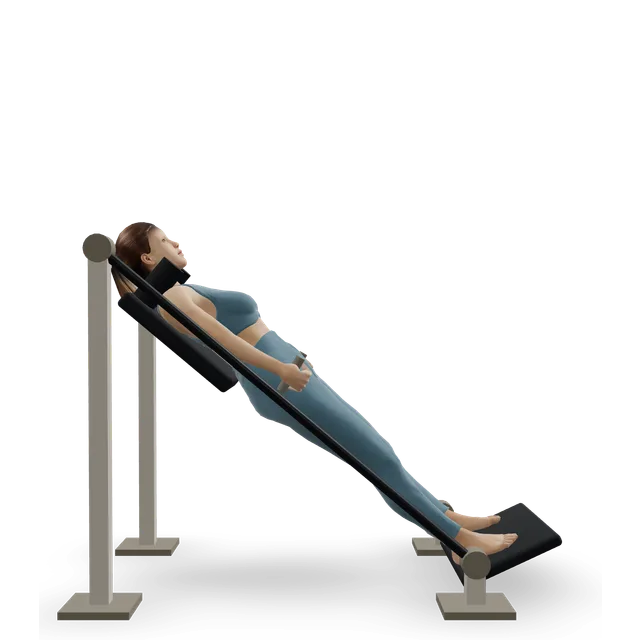
A hack squat is a squat on a machine: you stand on an angled platform with your back against a pad and your shoulders under padded yokes, and the sled runs on a fixed track. With your trunk supported and no balance to manage, your legs can work hard, which is why people lift more on it than in a back squat.
Machines and free weights built similar strength and muscle in head-to-head trials, so the hack squat is a fair swap for the squat if it suits you, though free squats carry over better to jumping. Much of the advice you'll read about foot placement has never been tested on a hack squat, and we say where it comes from.
This guide covers the set-up step by step on the 3D figure, where to put your feet, how deep to go, locking out, the barbell hack squat, sets and reps, and your knees and back.
Back on the pad, shoulders under the pads, feet on an angled platform: you squat the sled down its track and push it back up. Because the pad supports your trunk, trunk muscles worked less than in a back squat, and people lifted more.
In head-to-head trials, machines and free weights built similar strength and muscle, and people got strongest on the kit they trained with. If jumping matters to you, keep some free squats too.
No study has tested foot placement on a hack squat. The usual advice comes from leg press studies and one 2002 computer model of a fixed-track squat, in which feet further forward moved work from the knees to the hips. Start in the middle and choose the spot where your heels stay down and your knees track over your toes (our inference).
A full range built more strength and muscle than a partial one, and deeper squats grew the glutes and inner thighs more. Lower until your thighs are just past level, or as deep as you can keep your hips on the pad and your heels down.
Knee forces rise the deeper you bend in any squat, but a review found parallel squats didn't harm healthy knees. With sore knees, shorten the range or move your feet a little higher, and keep pain at 0 to 2 out of 10, or up to 5 if it settles by the next morning, as our knee guides advise.
Stop each set with 2 or 3 reps in reserve (RIR: how many more reps you could have done), the dose on our move page, or do heavier sets of 5 to 8 with 2 to 3 minutes' rest, as our plans suggest. Lock the safety catches before you step out.
The machine, the barbell version and the others
The machine hack squat
You stand on an angled platform with your back on a pad and your shoulders under padded yokes, and squat the sled down a fixed track. Nothing is held in your hands, apart from the side handles that work the safety catches.
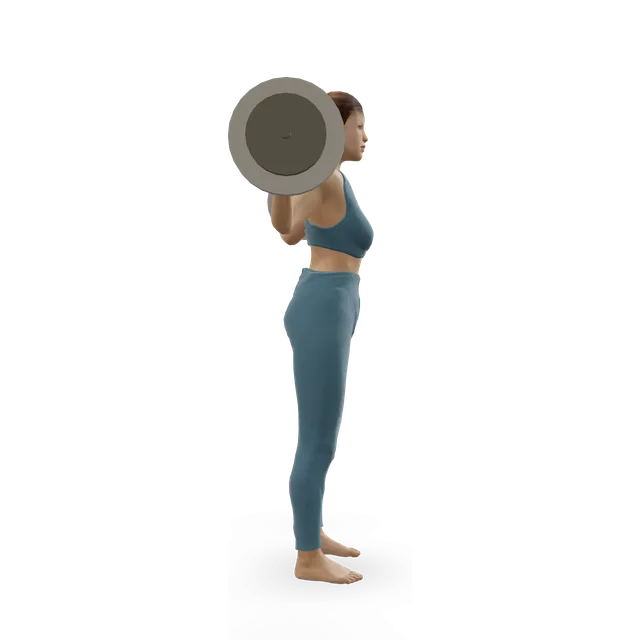
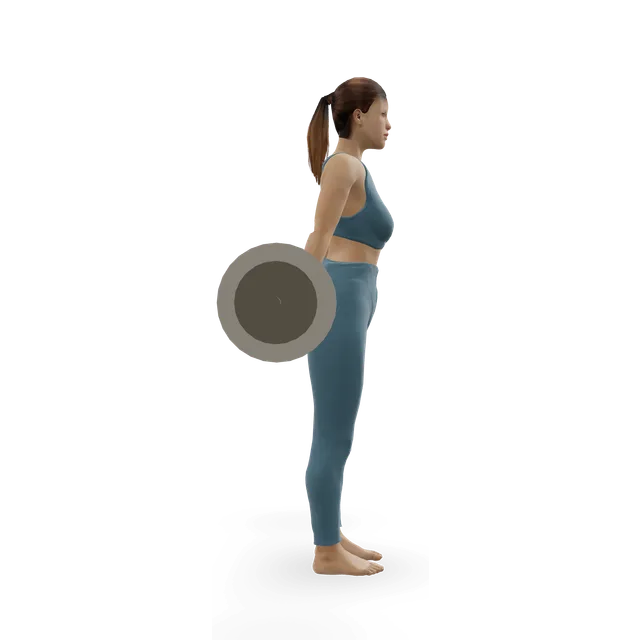
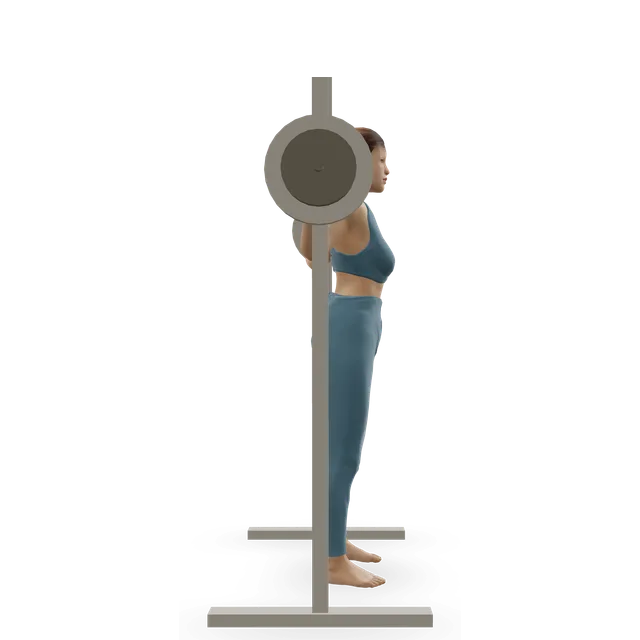
The original hack squat: a barbell held behind your legs at arm's length, lifted by standing up, like a deadlift from behind (our move page). It's a different lift from the machine version.
Pendulum squats, V-squats, belt squats and the reverse hack squat
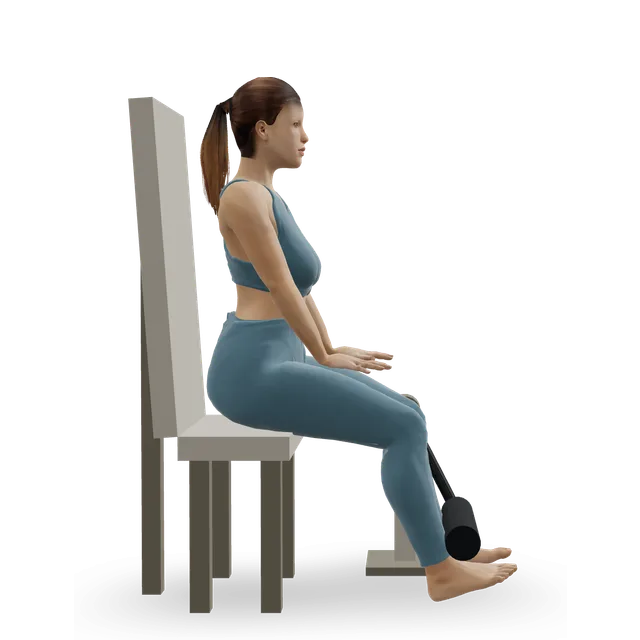
Other squat machines, some of them facing the pad. We found no studies of any of them and don't have them on the 3D figure yet, so this guide sticks to the hack squat.
What the evidence says
Less trunk work, heavier loadsEmerging evidence
In 10 men lifting 65 to 95% of their best, trunk muscle activity was lower in the hack squat than the back squat in almost every muscle at every load, their best hack squat was heavier, and the lowering took longer.
Machines and free weights build similar strength and muscleStrong evidence
Across 13 studies of 1,016 adults, strength, jumping and muscle growth didn't differ when free weights and machines were compared head to head, though each raised strength on its own kit more. Trials in 38 trained men and 46 young adults found the same.
Hack squats against squats in athletesEmerging evidence
In 23 athletes over 5 weeks, forward hack squats, squats and sprint and jump training alone gave similar changes in strength, sprinting and jumping, and the thigh muscles grew in all three groups. A small, short trial.
In 70 women over 10 weeks, rotating the leg press, hack squat and Smith machine squat built the same muscle and strength as doing the leg press every session.
Heavy hack squats in clinical groupsEmerging evidence
In two small trials of people in treatment for substance use, heavy hack squats at about 85 to 90% of their best, 3 times a week, raised their best lift by 88% in 8 weeks and 70% in 12 weeks; in the second trial, bone density rose 3.6% in the spine and 2.4% at the hip.
For jumping, free squats transfer betterEmerging evidence
In two trials, squats raised jump height more than the leg press over 8 weeks (12.4% and 12.0% against 3.5% and 0.5% in one). Those compared the leg press, not the hack squat, so treat this as our reading for any machine squat.
We found no study of foot placement on a hack squat, no study of locking the knees on any squat or press machine, no count of hack squat injuries, and no trial comparing the hack squat with the leg press.
How to do a hack squat, step by step
From our machine hack squat move page. Setting the shoulder pads, checking the sled's weight and keeping your heels down are our editorial suggestions; not locking the knees is coaching practice, not tested in studies.
Load the machine and set the shoulder pads, where you can, so you stand under them with your back flat on the pad. Check the sled's starting weight on its label, as machines differ.
Stand with your back and hips on the pad and your shoulders under the pads, feet shoulder-width apart in the middle of the platform with your toes turned out a little.
Hold the side handles, release the safety catches and straighten your legs without locking your knees.
Breathe in and lower the sled under control, knees in line with your toes, until your thighs are just past level with the platform, or as deep as you can keep your hips on the pad and your heels down.
Push through your whole foot to straighten your legs, breathing out.
At the top, straighten smoothly without snapping your knees back.
After your last rep, lock the safety catches before you step out.
Loading the 3D figure…
Drag to turn
Gets into position, then repeats the movement. Technical checks passed; qualified exercise review is pending.
Feet shoulder-width apart in the middle of the platform, toes turned out a little, as our move page sets out. Change one thing at a time from there.
There's no hack squat studyEmerging evidence
We found no study of foot placement on a hack squat. What follows is our inference from two other sources: a 2002 computer model of a squat machine with a fixed track, and studies of the leg press.
In the computer model, moving the feet further forward lowered the turning force at the knee and raised it at the hip. So feet a little higher on the platform should put more work on your hips and glutes and less on your knees, which can help with sore knees (our inference).
Feet lower on the platform let your knees travel further forward, so the front of your thighs does more, but only if your heels stay down (our inference from the same model).
In 10 experienced men, turning the feet out by 30 degrees didn't change muscle activity or knee forces in the squat or the leg press. A narrow stance raised compression in the knee on the leg press, and a wide stance raised the strain on the ligament at the back of the knee. None of this was measured on a hack squat.
Pages that say one foot position targets your outer quads or your glutes disagree with each other, and the ones we checked cited leg press studies or none (our reading). Choose the stance that feels steady and comfortable.
How deep, and should you lock out?
Go as deep as you controlStrong evidence
Across 16 studies, training through a full range built more strength (effect size 0.56) and more leg muscle (0.88) than a partial range, so a heavier sled with a shorter range isn't progress.
Deeper worked the glutes and inner thighs moreEmerging evidence
In 17 men, full squats grew the glutes (6.7% against 2.2%) and inner thighs (6.2% against 2.7%) more than half squats, with the same gain at the front of the thigh, about 5%. In another 17 men, deep squats grew the front of the thigh more than shallow ones. Both were free squats.
If your hips lift off the pad or your heels come up at the bottom, you've gone deep enough for now. This is coaching practice, as our move page's cue ("Keep the back and hips on the pad") says, not a tested rule.
No need to lock out
Straighten smoothly without snapping your knees back, as our move page and leg press guide advise. We found no study of locking the knees on any squat or press machine, so this is coaching practice.
What it works
Mainly the front of your thighs and your glutes
Our move page lists the quadriceps as the main muscles, with the glutes, hamstrings and calves helping. No study has measured hack squat muscle growth muscle by muscle.
The leg press as the nearest evidenceEmerging evidence
In 17 adults over 12 weeks, the leg press grew the glutes by 15.4% and the adductor magnus (a big inner thigh muscle) by 6.2%, but barely the rectus femoris (1.1%), which grew with leg extensions (13.2%). The hack squat is a similar machine squat, so it probably behaves similarly (our inference).
Hack squat against the squat, leg press and Smith machine
Against the back squatEmerging evidence
The back squat works your trunk and balance more; the hack squat lets your legs take a heavier load. In athletes the two gave similar gains over 5 weeks, and machines and free weights built similar strength and muscle in head-to-head trials.
We found no study comparing them. From the machines' design (our inference): the hack squat keeps you more upright and puts the load through the shoulder pads into your spine, while the leg press loads your legs with your back resting on a pad, without that load down through your spine.
Against the Smith machine squat
Both run on a fixed track. On a Smith machine the bar sits on your back with nothing behind you, so your trunk works more than on a hack squat (our reading; we found no study comparing them).
For jumpingEmerging evidence
Squats raised jump height more than the leg press in two trials, so keep some free squats if jumping matters to you.
Knee forces rise as your knees bend in any squat or leg press, and reach their peak near full depth. A review of the research found the parallel squat wasn't harmful to healthy knees, and suggested staying between straight and about 50 degrees of bend when you want to keep knee forces low.
On the hack squat your knees travel forward unless your feet are high. In the barbell squat, stopping the knees going past the toes cut the load on the knee by about a fifth but raised the load on the hips about tenfold, with more forward lean.
Shorten the range or move your feet a little higher, and keep pain at 0 to 2 out of 10, or up to 5 if it settles by the next morning. For tendon pain below the kneecap, heavy slow programmes that included the hack squat, building from 15 to 6 reps over 12 weeks, gave good short and long-term results in 39 men; pooled across trials, the gain was about 5 points on a 100-point knee score, at low certainty. Our knee pain when squatting guide sets out the stages.
Your back is supported, but the shoulder pads still load your spine (our inference from the machines' design: no study has compared the hack squat and the leg press for back pain). If a hack squat hurts your back, try the leg press instead and see our back pain guides.
Blood pressure and breath holdingEmerging evidence
Heavy leg machines push blood pressure very high: a mean of 320/250 mmHg in 5 bodybuilders doing leg presses to failure, partly from holding their breath, and eye pressure rose by about 26 mmHg in 24 young adults. With high blood pressure, heart disease or glaucoma, breathe out as you push and keep the weight moderate, as our breathing guide explains.
Stand in front of a barbell, squat down and grip it behind your legs at arm's length, palms facing back, then stand up with your chest up and the bar close to your legs (our move page). It's lifted like a deadlift from behind.
Is it worth it?
The bar can rub the backs of your legs, and many people find a trap bar deadlift more comfortable for the same job (our view).
Sets, reps and how heavy
Sets and reps
2 to 3 sets of 8 to 12, stopping with 2 or 3 reps in reserve (our move page's editorial starting point), or heavier sets of 5 to 8 with 2 to 3 minutes' rest, as our plans suggest for heavy compound lifts.
How heavy
You'll lift more than on a back squat, but there's no reliable conversion between the two, and the sled's own weight and angle differ between machines (our view). Find your weight afresh and add a little when every set reaches the top of the range.
As part of about 10 or more hard sets a week for your thighs across all your exercises, spread over 1 to 3 sessions, as our plans and our bigger legs guide suggest.
Common mistakes
Hips peeling off the pad
Stop just above the depth where it happens.
Heels lifting
Move your feet a little higher on the platform.
Knees caving in
Keep them in line with your toes, as our move page cues.
Snapping your knees straight
Straighten smoothly at the top.
Bouncing, or cutting depth as the weight goes up
Lower under control, and keep the same depth on every rep (our suggestion).
Forgetting the catches
Lock the safety catches before you step out, every time.
From the bodyweight squat to the hack squat
The hack squat and its narrow-stance version give 2 to 3 sets of 8 to 12 on their move pages; our squat and goblet squat guides cover the free squats.
The leg press at 3 sets of 8 to 12 (our leg press guide), the lying machine squat at 2 to 3 sets of 8 to 12 and the weighted sissy squat at 2 to 3 sets of 6 to 10 (their move pages); add leg extensions for the rectus femoris.
The bodybuilding lower-body workout uses the hack squat; in the machine leg workout and the leg day workouts, swap it in for the leg press or back squat at the same sets and reps.
If you get chest pain or pressure, feel faint or dizzy, are unusually breathless, or your heart races or beats irregularly during exercise, as our plans advise. The American Heart Association says these need immediate medical evaluation.
For sudden chest pain that doesn't go away or spreads, palpitations that don't stop, or if someone faints while exercising. For a headache that started suddenly and is extremely painful, for example while straining. For back pain with numbness or weakness in both legs, loss of feeling around your genitals or bottom, or changes in your bladder or bowels. If glaucoma symptoms come on suddenly, such as intense eye pain, a red eye or blurred vision.
A pop or tearing feeling at the front of the knee after a fall, stumble, jump or landing, then you can't straighten the knee or lift the straight leg off the bed, there's a dent above or below the kneecap, or the kneecap sits higher or lower than on the other side. Go to A&E or an urgent treatment centre, or get help from NHS 111.
Get help from NHS 111
In the US, contact your doctor or urgent care. For a knee that's very painful, can't take your weight, is badly swollen or has changed shape, or locks, gives way or clicks painfully.
If knee pain hasn't improved within a few weeks, or back pain hasn't improved after a few weeks, is worse at night, or comes with weight loss you can't explain.
Get advice before heavy lifting with uncontrolled high blood pressure, heart disease, glaucoma, a hernia or recent eye or tummy surgery, as our breathing guide sets out. After an inguinal hernia repair the NHS says no heavy lifting for 4 to 6 weeks.
"The hack squat is just an easier squat"Emerging evidence
It's easier to balance and works your trunk less, but your legs can work as hard or harder because you can load it more. In head-to-head trials, machines and free weights built similar strength and muscle. It's different, not easier: more leg, less trunk and balance.
There's no need to lock them hard: straighten smoothly without snapping them back, as our move page and leg press guide say. We found no study either way, so this is coaching practice. Going deep at the bottom matters more for results.
"Hack squats are bad for your knees"Emerging evidence
Knee forces rise the deeper you bend in any squat, but parallel squats didn't harm healthy knees, and heavy slow programmes that included the hack squat helped tendon pain below the kneecap. With sore knees, shorten the range or move your feet up.
"Your knees mustn't go past your toes"Emerging evidence
Blocking the knees in a barbell squat cut knee load by about a fifth but raised hip load about tenfold. Knees past the toes is normal, as our squat guide explains.
"Foot placement targets your outer quads or your glutes"Emerging evidence
No hack squat study has measured it. A computer model suggests feet further forward shift work from the knees to the hips, and toe angle made no difference in the squat or leg press. Which muscle each stance "targets" is guesswork.
Stand with your back on the pad and your shoulders under the pads, feet shoulder-width in the middle of the platform. Release the catches, lower until your thighs are just past level, then push through your whole foot to stand. Lock the catches before you step out.
Where should my feet go on a hack squat?
Start in the middle, shoulder-width apart, toes turned out a little. No study has tested foot placement on a hack squat; a computer model and leg press studies suggest higher feet shift work to your hips and lower feet to your knees, as long as your heels stay down.
Hack squat or squat: which is better?
Both build strength and muscle: machines and free weights did about equally well in head-to-head trials. The back squat works your trunk and balance more and helps jumping more, while the hack squat lets your legs work hard without the balance demand.
Hack squat or leg press: which is better?
No study has compared them. From the machines' design, the hack squat keeps you more upright and loads your spine through the shoulder pads, while the leg press doesn't, so choose by comfort and what your gym has.
Is the hack squat bad for your knees?
Not for healthy knees: knee forces rise with depth in any squat, but parallel squats didn't harm healthy knees. With knee pain, shorten the range or move your feet up, and keep pain at 0 to 2 out of 10, or up to 5 if it settles by the next morning.
How deep should I go on a hack squat?
Until your thighs are just past level, or as deep as you can keep your hips on the pad and your heels down. A full range builds more strength and muscle than a partial one.
Should I lock my knees at the top of a hack squat?
There's no need: straighten smoothly without snapping them back. No study has tested it either way, so this is coaching practice.
What muscles does the hack squat work?
Mainly the front of your thighs and your glutes, with your hamstrings and calves helping. Deeper squats grew the glutes and inner thighs more than half squats in a free-squat trial.
Why can I lift more on a hack squat than a squat?
The pad supports your trunk and the track takes away the balance, so your legs aren't held back by your trunk. Don't compare the numbers: the sled's own weight and angle differ between machines.
What is a barbell hack squat?
The original hack squat: a barbell held behind your legs at arm's length, lifted by standing up, like a deadlift from behind. Many people find a trap bar deadlift more comfortable for the same job.
Can I do hack squats with back pain?
Maybe: your back is supported, but the shoulder pads still load your spine, which is our inference rather than a tested finding. If it hurts, try the leg press instead and see our back pain guides.
How many sets and reps of hack squats should I do?
2 to 3 sets of 8 to 12, stopping 2 or 3 reps short of failure, or heavier sets of 5 to 8 with 2 to 3 minutes' rest. Aim for about 10 or more hard sets a week for your thighs across all your exercises.
Exercise education, not a personal prescription, and clinical review of these guides is pending. Check with a GP before starting hard training if you have a heart condition, chest pain, dizziness or breathlessness when active, and stop for sharp or increasing pain. Health disclaimer.