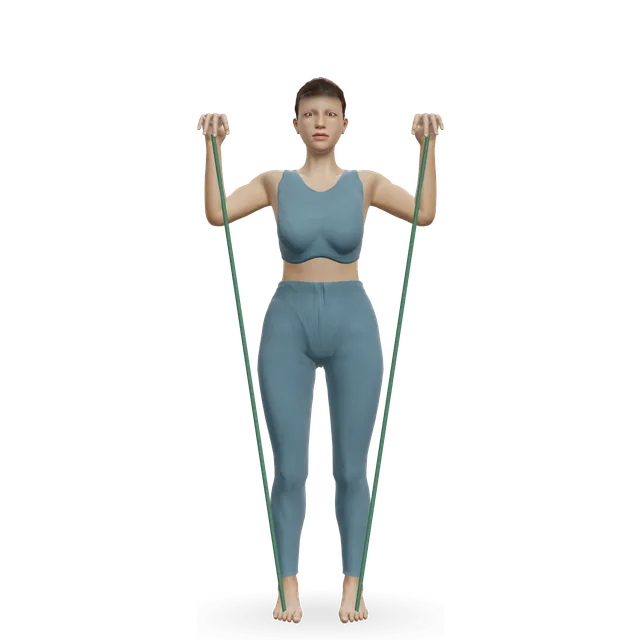
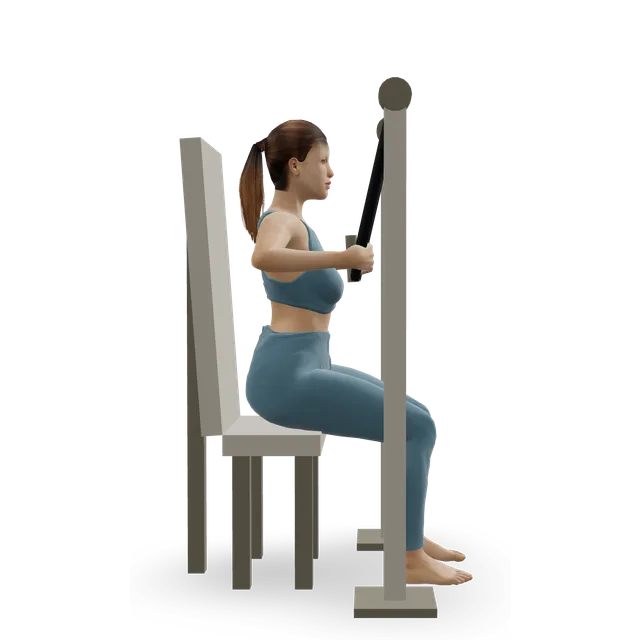
For most lifting, breathe out through the hard part
Breathe out as you lift, push or pull, and in as you lower. Don't hold your breath through a set.
Training guide
For almost every set, the rule is simple: breathe out through the hard part of the lift and in as you lower, and don't hold your breath through the set. Blood pressure climbs during any hard lift, and holding your breath pushes it higher still.
Heavy lifting is where it gets more complicated. Close to your maximum, a brief breath held against a braced trunk is hard to avoid, and many experienced lifters use it on purpose, one rep at a time. That's expert practice rather than something trials have tested, and its risk isn't known, so some people should never do it.
This guide explains what happens to your blood pressure, eyes and spine when you lift, how to breathe and brace, the Valsalva manoeuvre and when it's used, who shouldn't hold their breath, and how to breathe when you run.
Breathe out as you lift, push or pull, and in as you lower. Don't hold your breath through a set.
Blood pressure averaged 320/250 mmHg in bodybuilders doing leg presses to failure, and in one study a held breath took it to 311/284, against 198/175 when people breathed out.
Tighten your whole trunk around a good breath. You can stay braced while you breathe out.
Near your maximum it's close to unavoidable, and many experienced lifters hold a braced breath for one rep at a time, as our squat guide teaches. Its risk in healthy lifters isn't known.
With high blood pressure, heart disease, glaucoma or diabetic eye disease, a hernia or recent surgery, or in pregnancy, breathe out through every effort and keep the weights moderate.
Runners fall into a rhythm with their steps, and breathing only through the nose held back hard efforts in a lab test.
Working muscles squeeze the blood vessels, your nervous system pushes pressure up, and straining raises the pressure in your chest. Measured inside an artery, it reached an average of 320/250 mmHg in 5 bodybuilders doing leg presses to failure, and 255/190 in one-arm curls. It falls quickly when the set ends.
Source 3
In 10 athletes doing maximal leg presses, a breath held against a closed throat took blood pressure to an average of 311/284 mmHg, against 198/175 when they breathed out slowly. At moderate weights the difference was small and not significant in 30 young adults.
The Valsalva manoeuvre means breathing out hard against a closed throat, so no air escapes and the pressure in your chest and abdomen rises. A brief one is close to unavoidable with very heavy weights or when a set goes to failure. A lifting belt raises the pressure in your abdomen further.
Bracing means tightening your whole trunk at once: front, sides and back. In a lab model it stiffened the spine more than drawing the belly in, and raised pressure in the abdomen stiffens the lower spine. You can brace while you breathe out through pursed lips: breathing out forcefully produced as much force as holding the breath.
Across 16 studies, pressure in the abdomen was highest in heavy squats (over 200 mmHg), then deadlifts, rows and leg presses (161 to 176), and lowest in the bench press (about 79). For comparison, coughing and jumping produced 108 and 171 mmHg in 20 healthy adults, and lifting 4.5 kg weights about 26.
Eye pressure rises during heavy lifts, most with big lifts, heavy weights, long sets and a held breath, and in most studies it was back to normal about a minute later. Heavy leg presses raised it by 26 mmHg on average, and holding the breath doubled the rise in the bench press. Whether these brief rises harm glaucoma over time isn't known: Glaucoma UK says there's no proof they do.
A held breath raises the pressure inside the skull too, which partly offsets the strain on the brain's arteries. Burst brain aneurysms are rare; sudden rises in blood pressure, including vigorous exercise and straining, were among their triggers, and a few have been reported during weight training. The NHS says a bleed on the brain may be more likely when lifting something heavy.
In 10 athletes doing maximal leg presses, breathing out slowly kept blood pressure at 198/175 mmHg against 311/284 with a held breath. In 5 bodybuilders, part of the very high rise came from straining against a held breath. At moderate weights, in 30 young adults, the difference was small. These are small lab studies of single sessions, not studies of harm.
In 10 people, breathing out forcefully gave as much peak force as holding the breath. In a one-rep bench press in 24 men, a braced, held breath got the bar through its hardest point faster, a plain breath hold didn't help, and breathing in on the way up reduced the weight lifted.
A review says a brief Valsalva manoeuvre is unavoidable with heavy weights, above about 80% of your maximum, or when sets go to failure; that it raises the pressure in the abdomen in a way that may steady the spine; and that its health risks in resistance training are unconfirmed. An NSCA (National Strength and Conditioning Association) journal column encourages it for experienced lifters' short, maximal efforts, but prefers breathing out forcefully whenever possible.
That's expert practice, not trial evidence. Nobody has measured whether a brief hold harms healthy lifters, so its risk is unknown rather than shown to be zero.
Across 34 studies in healthy adults, eye pressure rose during resistance exercise by up to 28.7 mmHg in squats and leg presses, more with heavier weights, longer sets and a held breath, and it was back to normal about a minute later in most studies. In 24 young adults, heavy leg presses raised it by 26.4 mmHg on average.
In the bench press, holding the breath on the last rep raised eye pressure by 4.3 mmHg, against 2.2 when breathing out (30 people). In squats and curls, holding the breath only on the first half of each rep and breathing out on the second raised it less than holding it throughout, and it climbed through each set.
In lab studies, bracing and raised pressure in the abdomen stiffen the spine, and a belt raised that pressure in heavy deadlifts. No trial has tested whether either prevents injury.
In 250 people with a burst brain aneurysm, sudden rises in blood pressure were among the triggers: vigorous exercise (about 2.4 times the usual risk), straining on the toilet (7.3 times), sex (11.2 times) and blowing the nose (2.4 times). Three case reports link burst aneurysms with weight training. These bleeds are rare, and most people who lift will never have one.
The US National Institute on Aging says not to hold your breath during strength exercises: breathe out during the effort and in as you relax. The American Heart Association (AHA) says people with controlled high blood pressure can do low to moderate intensity strength training with proper breathing.
Runners tie their breathing to their stride in several ratios, most often 2 steps per breath, and settle on the patterns that make breathing easier; some don't couple them at all. Breathing only through the nose lowered peak oxygen use and the work 12 healthy adults could do in a maximal test.
Breathe in as you lower the weight and out as you lift, push or pull it, every rep, and don't hold your breath across a set. The NSCA column puts it as breathing out through the hardest part of the lift.
In a row or a pulldown, breathe out as you pull; in a squat, as you stand up. Breathe out through the hardest part, whichever direction that is.
Source 2
The NSCA column advises against breathing in as much as you can before a lift. A good breath into your belly and the sides of your waist is enough.
Source 2
Keep breathing all the way through, and count out loud if it helps, as our blood pressure guide suggests.
Learn to brace and breathe with moderate weights before heavy ones. The review of pressure in the abdomen suggests beginners and people with high blood pressure favour the bench press and rows, and build up to heavy squats and deadlifts.
Matches the breathing cue in our squat guide. The held breath in step 4 is expert practice for healthy, experienced lifters on heavy reps; breathing out through the effort is the default.
Loading the 3D figure…
The movement on the figure: Dumbbell goblet squat
For healthy, experienced lifters doing heavy sets of about 5 or fewer, our squat guide teaches a big breath (about 80% of a full one), a brace, holding it on the way down and through the hardest part of the way up, and breathing out near the top. One breath per rep, never held across reps.
No trial has measured whether this brief hold harms healthy lifters. The blood pressure studies are small lab measurements, and the aneurysm study shows triggers, not how often lifting causes harm. The risk is unknown rather than shown to be zero, so if you're unsure, breathe out.
A belt raises the pressure in your abdomen further. It's optional for heavy sets once you can brace without one; our squat and deadlift guides cover when it's worth wearing.
Source 15
Breathe out on every effort, use weights you could lift 10 to 15 times, and leave maximal lifts and lifting to failure until it's controlled and you've had advice, as our blood pressure guide explains. If your readings are 180/100 or higher, speak to your doctor or nurse before you start.
Source 8
Check with your cardiac team before lifting heavy, and never hold your breath on the effort. UK cardiac rehab uses light to moderate weights for 8 to 10 reps, 2 to 3 times a week, and avoids long holds such as planks and wall sits; with heart failure, avoid heavy weights, full press-ups and planks, as our heart disease guide explains. With a pacemaker or defibrillator, ask before upper-body strength training. The AHA calls resistance training safe and effective for adults with and without heart disease.
Source 8
Breathe out through every effort and keep weights moderate, and avoid long head-down positions. Ask your eye team before heavy lifting or long holds, especially if your glaucoma is moderate or advanced, as our glaucoma guide explains.
High-intensity strength training is not advised with active proliferative or moderate to severe non-proliferative retinopathy, because it may trigger bleeding in the eye or a detached retina. With unstable or severe retinopathy, the American College of Sports Medicine adds avoiding vigorous activities that involve holding your breath, such as heavy lifting and isometric holds, as well as overhead lifting and moves that lower or jar the head.
After cataract surgery, the NHS says no heavy lifting or sport until your eye is back to normal or your doctor says so. After glaucoma surgery, follow your eye unit's advice.
Source 32
With a hernia, use lighter weights with more reps, breathe out on the effort, and leave maximal lifts and straining with a held breath until it's repaired, as our hernia guide suggests; the NSCA column says people with hernias or recent abdominal surgery need close watching when they strain. After a groin hernia repair, the NHS says no heavy lifting or strenuous activity for at least 4 to 6 weeks. Follow your surgical team.
Tommy's advises not holding your breath and choosing weights that let you breathe normally, and says pregnancy isn't the time to try lifting your heaviest weights. After the first trimester, move bench work to an incline or a seat, as our pregnancy guide explains.
Source 11
Learn to breathe into your belly and sides lying down, keep breathing while you hold a brace in the dead bug and Pallof press, then use the same brace on loaded lifts, breathing out as you lift (our editorial order). Each move's guide covers its technique.
 3D demoCrocodile breathing (prone diaphragmatic breathing)Beginner · No equipment
 3D demoDead bugBeginner · No equipment
 3D demoHalf-kneeling Pallof pressBeginner · A band + An anchor point
 3D demoDumbbell goblet squatIntermediate · A dumbbell
 3D demoDumbbell Romanian deadliftIntermediate · A dumbbell
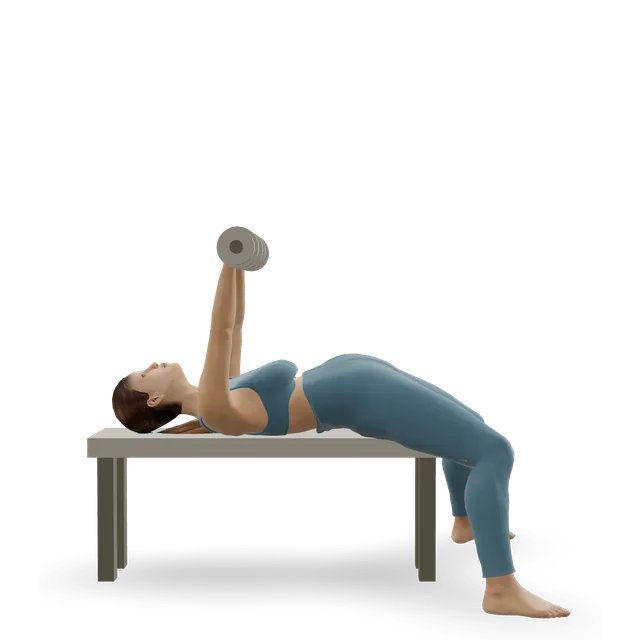 3D demoDumbbell bench pressIntermediate · A dumbbell + A bench or box
 3D demoLeg pressBeginner · Strength machine
 3D demoFarmer's carryIntermediate · A dumbbell + A kettlebell
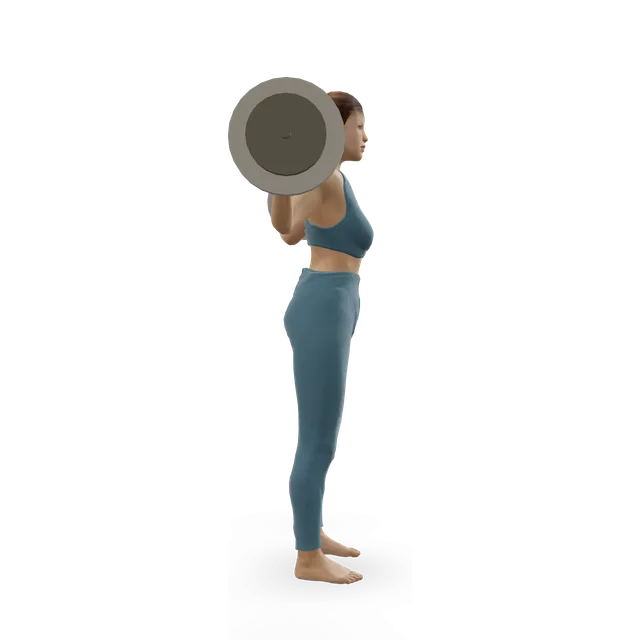 3D demoBarbell back squatAdvanced · A barbell
Runners fall into a rhythm with their steps, most often 2 steps per breath, and some don't couple them at all. These are studies of how runners breathe, not trials of teaching a rhythm, so there's no need to force one.
Breathing only through the nose held back hard efforts in a lab test. At easy paces, nose breathing is fine if it's comfortable (our suggestion).
Source 13
Moderate effort means you can talk but not sing; vigorous means you can only say a few words without pausing for breath. If you're too out of breath to talk, slow down or walk for a while, as our start running guide suggests.
Source 33
A stitch is more likely soon after eating or drinking, especially sugary drinks, as our start running guide explains. With asthma, follow your asthma plan; our asthma guide covers exercise.
The technique workouts rehearse each lift at light weights, which is the time to practise your breathing; the run-walk session suits learning to breathe on the move.
A 25-minute practice session for the squat: find your depth on a chair, groove the bodyweight squat with pauses, then load it with a slow goblet squat.
25 minBeginner8 movesA wall, A bench or boxA 30-minute session from the hip hinge to your first deadlift: hinge practice, kettlebell deadlifts, slow Romanian deadlifts, a light bar and a carry.
30 minBeginner9 movesA kettlebell, A dumbbellA 30-minute practice session for the bench press: shoulder blade work, push-ups and dumbbell presses, then the empty bar with the safety arms set.
30 minBeginner7 movesA band, A dumbbellA 30-minute practice session for the overhead press: check your overhead reach, groove it with a band and seated dumbbells, then press the empty bar.
30 minBeginner9 movesA band, A wallA 20-minute full-body dumbbell workout: two supersets of squats, rows, Romanian deadlifts and push-ups. Twice a week covers the minimum dose.
20 minBeginner8 movesA dumbbell, A bench or boxA gentle first gym workout: a bike warm-up, five machines for 2 easy sets each, a short core move and 10 minutes on the cross-trainer.
45 minBeginner11 movesCardio machine, Strength machineA 6-minute breathing routine: slow breathing, crocodile breathing, alternate nostril breathing, box breathing and 4-7-8 breathing.
6 minBeginner5 movesNo equipmentA 30-minute beginner run-walk session: a brisk walk, then 1-minute jogs with 1-minute walks, building to 3-minute runs over your first three weeks.
30 minBeginner5 movesCardio machine, A wallBoth build up the weights gradually, so you can learn to brace before the loads get heavy.
A 12-week beginner barbell program: squat every session, alternate bench and row with press and deadlift, and add weight each time until it stalls.
3 training days50 minBeginner3 days a weekA beginner gym plan: three full-body sessions a week, alternating workouts A and B, with sets, reps, rest and an 8-week progression.
3 training days45 minBeginnerFor a sudden, extremely painful headache while lifting or straining, especially with a stiff neck, being sick, sensitivity to light, fainting, confusion, or drooping, weakness or slurred speech. Call 999 too for chest pain that comes on suddenly and doesn't go away, or if someone faints while exercising. Don't drive yourself to A&E.
Intense eye pain, a red eye, rainbow circles around lights, blurred vision, or a headache with feeling sick can be glaucoma that has come on suddenly: call 999 or go to A&E.
Source 37
For a headache brought on or made worse by exercise, coughing, sneezing or bending down. Stop heavy lifting until it's been checked (our suggestion). In the US, contact your doctor or urgent care.
Source 34
Stop, sit or lie down, and breathe normally. If you faint, see a GP, as our cool-down guide also advises; if someone faints while exercising, call 999.
Source 36
See a GP if you think you have a hernia. Get help from NHS 111 for pain in or around it, a bloated tummy, being sick, constipation, a high temperature, or sudden confusion.
Source 38
If your blood pressure is uncontrolled, or you have heart disease or chest pain when you're active, a pacemaker or defibrillator, diabetic eye disease, glaucoma, a hernia, recent eye or tummy surgery, or you're pregnant.
Source 8
A brief held breath is close to unavoidable with heavy weights, above about 80% of your maximum, or when a set goes to failure, and experienced lifters use it one rep at a time; its risk in healthy lifters isn't known. The real rule: don't hold your breath for long or across several reps, and don't do it at all if you have high blood pressure, heart disease, glaucoma or one of the other conditions above.
The principle is to breathe out through the hardest part of the lift, which isn't always "up": in a row it's the pull, and on a heavy single rep, experienced lifters hold a brace until near the top. For eye pressure, holding the breath briefly and breathing out on the second half of each rep raised it less than holding it throughout.
Breathing out forcefully gave the same peak force as a held breath in 10 people, and in 24 men a plain breath hold didn't add to a one-rep bench press, though a held brace got the bar through its hardest point faster. Any gain is small and matters only near your maximum.
A braced breath raises the pressure in your abdomen and stiffens the lower spine in lab studies, and belts raise the pressure further, but no trial has tested whether either prevents injury. Our squat guide notes belts didn't prevent back pain in workers.
Breathing out keeps it lower, but it still rises a lot: 198/175 mmHg breathing out, against 311/284 holding the breath, at a maximal leg press in 10 athletes. Lighter weights and stopping short of failure matter too.
Breathing only through the nose lowered peak exercise capacity in 12 healthy adults in a lab test. Breathe through your mouth and nose as you need to.
Source 13
Breathe out through the hard part of each rep, as you lift, push or pull, and breathe in as you lower; don't hold your breath through a set. It keeps your blood pressure and eye pressure from climbing as high.
For most sets, no. On very heavy reps near your maximum, a brief held breath against a braced trunk is hard to avoid, and experienced lifters often use it one rep at a time; it's expert practice, and its risk isn't known. Don't hold your breath at all if you have high blood pressure, heart disease, glaucoma or diabetic eye disease, a hernia or recent surgery, or you're pregnant.
It's breathing out hard against a closed throat, so no air escapes: it raises the pressure in your chest and abdomen and stiffens your trunk. It also pushes blood pressure up, to an average of 311/284 mmHg at a maximal leg press in one study, against 198/175 when people breathed out slowly.
In healthy lifters, a brief one hasn't been shown to cause harm, but nobody has properly measured the risk, so it isn't known to be zero. It adds to the rise in blood pressure and eye pressure, and sudden straining is one rare trigger for a burst brain aneurysm, so people with the conditions above should breathe out instead.
Take a good breath into your belly and the sides of your waist, then tighten your whole trunk as if someone were about to poke you in the stomach, without sucking your belly in. Keep that tension through the lift; you can still breathe out slowly through pursed lips.
Out on the effort and in on the easier part: in on the way down and out on the way up in a squat, and out as you pull in a row. On heavy single reps, experienced lifters hold a braced breath until near the top, as our squat guide explains.
Straining with a held breath and then letting it go can drop your blood pressure for a moment, and so can standing up quickly after floor work. Stop, sit down and breathe normally; see a GP if you faint or it keeps happening, and call 999 for chest pain or if someone faints while exercising.
Yes, if it's controlled: use weights you could lift 10 to 15 times, breathe out on every lift and stop well short of failure, and leave maximal lifts until it's controlled and you've had advice. If your readings are 180/100 or higher, talk to your doctor or nurse first.
Usually, with moderate weights: eye pressure rises during heavy lifts, most with a held breath, and settles within about a minute. Breathe out through every effort, and ask your eye team before heavy lifting or long holds, especially if your glaucoma is moderate or advanced.
No: Tommy's advises not holding your breath and choosing weights that let you breathe normally, and says pregnancy isn't the time to try your heaviest lifts. Our pregnancy guide covers lying on your back and other changes.
No. A belt raises the pressure in your abdomen further and can help on heavy sets, but learn to brace without one first; our squat and deadlift guides explain when it's worth wearing.
However feels natural: most runners fall into a rhythm with their steps, often 2 steps per breath. When it's hard, breathe through your mouth and nose, as breathing only through the nose held back hard efforts in a lab study, and slow down until you can talk.
Exercise education, not a personal prescription, and clinical review of these guides is pending. Check with a GP before starting hard training if you have a heart condition, chest pain, dizziness or breathlessness when active, and stop for sharp or increasing pain. Health disclaimer.