Training guide

How to strengthen your legs: squats, lunges, hinges and step-ups, how often and how heavy, at home or in the gym, at any age, and a plan

Strong legs come from four kinds of move: a squat, a single-leg move such as step-ups or lunges, a hinge such as bridges or Romanian deadlifts, and calf raises, 2 or 3 times a week. Start where you are, from standing up out of a chair to a barbell squat, and add reps, then weight.

Strength training builds leg strength at any age: in trials, people in their late 80s more than doubled theirs in 10 weeks, and machines, free weights and body weight worked about equally well. This guide covers the leg muscles, the leg strengthening exercises with doses, how often and how heavy, home or gym, after 60 and with sore knees, balance and falls, how to test your legs, and a 12-week plan.

The short version

Four kinds of move

A squat (from sit-to-stands to the barbell), a single-leg move (step-ups, split squats, lunges), a hinge (bridges, Romanian deadlifts) and calf raises, plus one-leg balance. Squats alone didn't grow the hamstrings in a trial, so the hinge earns its place.

Source 1

Two or three sessions a week

Two or 3 sets of 8 to 12 per move, stopping 2 or 3 reps short of failure and adding reps, then weight, as our plans' notes say. WHO and the NHS ask for strength work on 2 or more days a week, and heavier loads, a full range and 2 to 3 sets built the most strength in the 2026 review by the American College of Sports Medicine (ACSM).

Sources 2, 3, 4

It works at any age

In older adults, strength training had a large effect on strength and a moderate to large effect on getting out of a chair. Adults over 50 gained about 25 to 33% on leg exercises, and frail nursing home residents aged about 87 gained 113% in 10 weeks.

Sources 5, 6, 7

Gym or home, machines or free weights

They built similar strength and muscle in pooled trials, and progressive bodyweight squats matched barbell squats in a small trial. Use what you have and can progress.

Sources 8, 9

For balance and falls, add balance work

Exercise cut falls by about a quarter, and programmes mixing balance and strength by about a third; strength training alone had an uncertain effect. The world falls guidelines ask for balance and functional exercise 3 or more times a week for at least 12 weeks.

Sources 10, 11

Squats are fine for healthy knees

Reviews of how squats load the knee found no evidence they harm healthy knees, though they disagree on the best depth, and knees past your toes is normal. With sore knees, our knee guide's rule sets the depth and load.

Sources 12, 13

Your leg muscles and the four moves

The muscles

The quadriceps at the front of the thigh straighten the knee, the hamstrings at the back bend it and straighten the hip, the glutes straighten the hip and keep the pelvis level, the inner thigh muscles draw the leg in, and the calves push you up and forward. Our quadriceps, hamstrings and gluteus maximus pages have the anatomy.

Why all four moves

A squat trains the front of the thigh, the glutes and the inner thighs; in a 10-week trial, full squats didn't grow the hamstrings. A hinge or a curl covers the back of the thigh, a single-leg move trains each side on its own and your balance, and calf raises cover the calves.

Source 1

Strength, not size

This guide is about strength for everyday life, walking, stairs, sport and ageing. Strength builds with fewer weekly sets than size and grows most with heavier loads. Our bigger legs guide covers size.

Sources 4, 14

How people differ

Long thighs or stiff ankles mean more forward lean or more knee travel in a squat, which is normal, as our knee guide says. If you're heavier, body-weight moves are already a real load, so sit-to-stands and step-ups are a good start. Adults over 50 gained lean mass from strength training across 49 studies, a little less at older ages.

Source 15

What the evidence says

Trials in older adults dominate; there are fewer in healthy middle-aged adults. Most training trials ran 8 to 12 weeks.

Strength training improves strength and functionStrong evidence

In the ACSM's 2026 overview of 137 reviews, with more than 30,000 people, strength training improved strength, muscle size, power, walking speed, balance and everyday function against no exercise. Strength rose most with heavier loads, a full range of movement, 2 to 3 sets and 2 or more sessions a week, and machines and free weights didn't differ.

Source 4

The guidelinesStrong evidence

WHO asks adults for muscle-strengthening activity working all the major muscle groups on 2 or more days a week, and older adults for varied activity that emphasises balance and strength on 3 or more days, to prevent falls. The NHS asks adults 65 and over for activities that improve strength, balance and flexibility on at least 2 days a week, done to the point where you need a short rest before repeating them.

Sources 2, 3, 16

Older adults gain a lotStrong evidence

In a Cochrane review of 121 trials, progressive strength training had a large effect on strength and a moderate to large effect on getting out of a chair, with smaller gains in walking speed. Across 47 studies of adults over 50, strength rose by 29% on the leg press and 33% on knee extensions. In 100 frail nursing home residents averaging 87, strength rose by 113% in 10 weeks against 3% without training, and in 10 residents aged about 90, by 174% in 8 weeks.

Sources 5, 6, 7, 17

Staying mobileStrong evidence

In 1,635 inactive people aged 70 to 89, a programme of walking, strength and flexibility work cut the share who lost the ability to walk 400 metres over 2.6 years from 35.5% to 30.1%.

Source 18

The dose in older adultsEmerging evidence

Across 25 trials in healthy older adults, the largest strength gains came with 2 sessions a week, 2 to 3 sets per exercise and 7 to 9 reps a set at a fairly heavy load. The trials were of low quality, so treat that as a guide.

Source 19

Falls: balance and strength togetherStrong evidence

In 108 trials of 23,407 people (average age 76), exercise cut the rate of falls by 23% (high certainty), balance and functional exercise by 24%, and programmes mixing balance, functional and strength work by about a third; strength training alone had an uncertain effect. The world falls guidelines recommend balance-challenging and functional exercise, such as sit-to-stands and stepping, 3 or more times a week, made harder over at least 12 weeks.

Sources 10, 11

The Otago home programmeStrong evidence

In 233 women aged 80 and over, a home strength and balance programme cut falls by about a third, and across 7 trials it cut the rate of falls by 32%. But only about a third of people were still exercising 3 times a week after a year.

Sources 20, 21

Getting up from a chair and from the floorEmerging evidence

In 5 studies of 28,036 people, those slowest at rising from a chair had about twice the death rate of the fastest, allowing for age, sex and body size. In 2,002 adults aged 51 to 80, each point on a test of sitting down on the floor and getting up again went with 21% better survival. These are links, not proof that training the tests adds years.

Sources 22, 23

Machines, free weights and body weightStrong evidence

Across 13 studies of 1,016 adults, free weights and machines built the same strength and muscle, with each making people better at its own test. Trials in 38 trained men and 46 young adults agreed. In 13 sedentary young women, a 10-level bodyweight squat programme built strength and muscle like barbell squats over 6 weeks, a tiny trial.

Sources 8, 24, 25, 9

Heavier loads build more strengthStrong evidence

Across 28 studies, muscle grew with light, moderate or heavy loads when sets were hard, but strength rose most with heavier loads.

Source 14

Home training in older adultsEmerging evidence

Across 21 trials of 4,053 people, unsupervised home strength training raised leg strength and sit-to-stand power by a small amount, without changing falls or walking speed. Across 17 trials, home programmes raised strength in healthy older adults, more when strength training was the focus.

Sources 26, 27

Squats and healthy kneesEmerging evidence

The evidence is reviews of knee forces, not outcome trials. One found deep squats don't raise the risk of injury to the knee's passive tissues, the other found the parallel squat wasn't harmful to healthy knees but preferred it to deep squats. Full squats built more full-squat strength (31.8% against 11.3%) than half squats in 17 men.

Sources 12, 13, 1

Thigh strength and knee arthritisEmerging evidence

Weaker thigh muscles went with painful knee arthritis later in 46,819 people (a link, from low-quality evidence), and exercise eased knee arthritis pain by about 13 points out of 100. Squatting, kneeling and lifting all day at work went with knee arthritis, but that isn't training; we found no study linking squat training with arthritis.

Sources 28, 29, 30

Recreational runningEmerging evidence

Recreational runners had less hip and knee arthritis (3.5%) than people who didn't run (10.2%), in studies that can't prove cause.

Source 31

How to strengthen your legs: how much and how often

How often

Two or 3 sessions a week, not on back-to-back days, as our knee guide says. If you're older and want to prevent falls, balance and strength work on 3 or more days a week.

Sources 2, 11

Sets and reps

Two or 3 sets of 8 to 15 per move (our knee guide's editorial starting point). For older adults, our older adults guide suggests a weight you can lift 8 to 12 times, building up to 3 sets, from the UK osteoporosis consensus. In your first two weeks, do 2 sets and stop every set with 3 or 4 reps to spare.

Source 32

How hard

Stop squats, split squats and hinges 2 or 3 reps short of failure, which our guides call 2 or 3 RIR (reps in reserve: how many more reps you could have done). The last set of leg extensions, curls and calf raises can go to 0 to 2, as our plans' notes say.

Rest

Two to 3 minutes between heavy squat sets of 5 to 8, 90 seconds to 2 minutes for other squats, presses and single-leg work, and 60 to 90 seconds for small moves, as our plans' notes say.

Progress

Add reps until every set reaches the top of its range, then add the smallest weight step. With body weight, add reps, then slow the lowering, then move to the harder version, as our plans' notes say.

How long

Strength rose within 8 to 10 weeks in trials, and falls programmes ran at least 12 weeks, then kept going. Treat 12 weeks as a first block, as our knee guide does.

Sources 7, 25, 11

The knee, hip and back pain rules

Pain from 0 to 2 out of 10 is fine, and up to 5 is acceptable if your knee is back to its usual level by the next morning; for tendon pain just below or above the kneecap, keep it to 3 or less. Sharp, catching or giving-way pain, or new swelling, means stop. That's our knee guides' rule.

During the exercise, pain up to about 5 out of 10 is acceptable. It should settle within an hour or so, and your hip should be no worse that night or the next morning. If it is, do less next time (fewer repetitions, a smaller range, a lighter load), not nothing.

Pain you'd call mild to moderate, no more than about 5 out of 10, that settles within an hour or so, with your back no worse the next morning, is acceptable; if it is worse, do less next time (fewer reps, a smaller range, a lighter load), not nothing. Stop or shrink any movement that sends pain, pins and needles or numbness further down your leg. That's our back pain guides' rule.

A leg strength session, step by step

Our editorial order, the shape of our knee strengthening, lower body and strength and balance workouts, with doses from our plans' notes, our knee guide and our older adults guide. Our squat, split squat and Romanian deadlift guides teach each move.

  1. Warm up for 3 to 5 minutes: march on the spot, 3 slow hip circles each way, then 10 bodyweight squats to a comfortable depth.
  2. Squat at your level: sit-to-stands, bodyweight or goblet squats, or the leg press; 2 or 3 sets of 8 to 12, as deep as you can control without pain, knees following your toes.
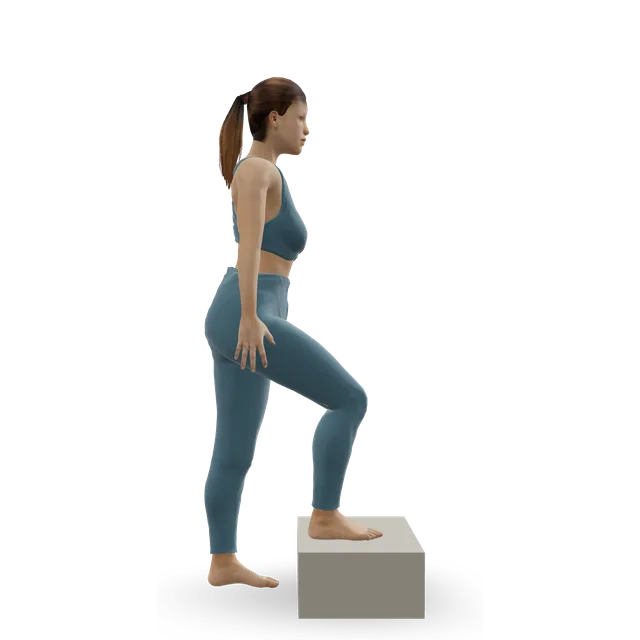
  3. One leg: step-ups or split squats, 2 or 3 sets of 8 to 12 each leg, a hand on a wall if you need it.
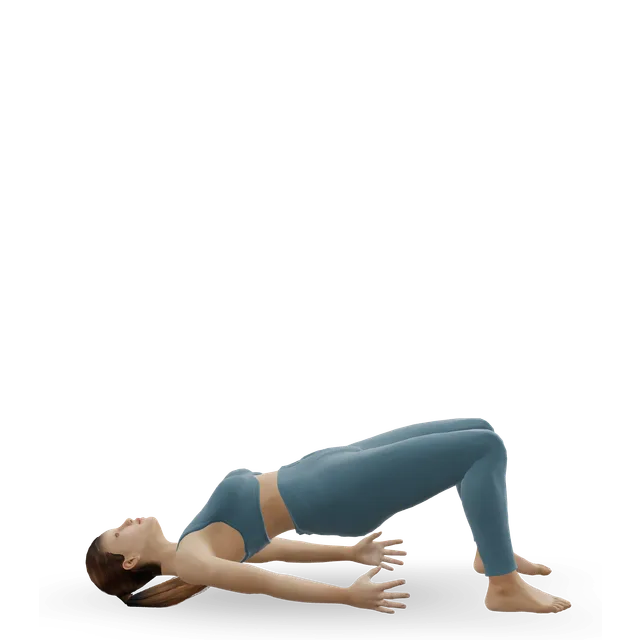
  4. Hinge: bridges or Romanian deadlifts, 2 or 3 sets of 8 to 12, back flat, lowering slowly.
  5. Calves: calf raises at a counter, 2 sets of 10 to 15, then one leg at a time.
  6. Balance: one-leg stands next to a counter, 2 holds of 30 seconds each side.
  7. Next time, add reps; when every set reaches the top of its range, add weight or move to the harder version.

Loading the 3D figure…

Gets into position, then repeats the movement. Technical checks passed; qualified exercise review is pending.

The movement on the figure: Dumbbell goblet squat

Squats, from the chair to the barbell

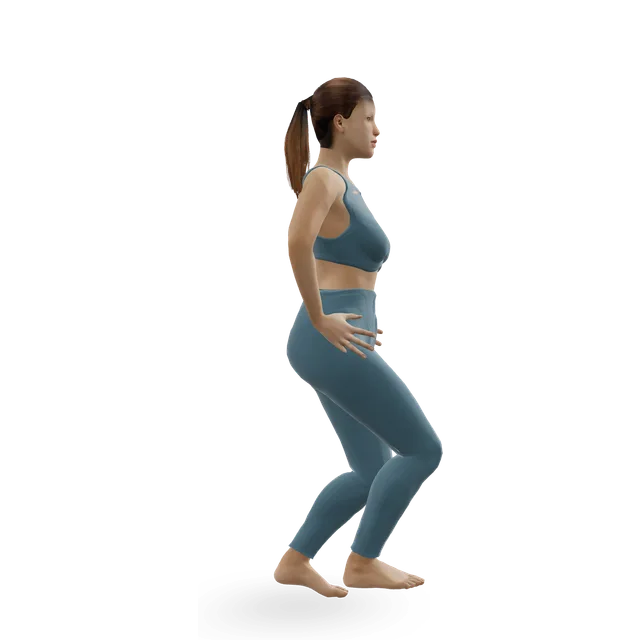
Sit-to-stands at 3 sets of 8 to 12, bodyweight squats at 3 sets of 10 to 20, goblet squats at 3 or 4 sets of 8 to 12 and the leg press at 3 sets of 8 to 12 (our knee guide and squat guide). The NHS's sit-to-stand starts at 5 repetitions.

One leg at a time

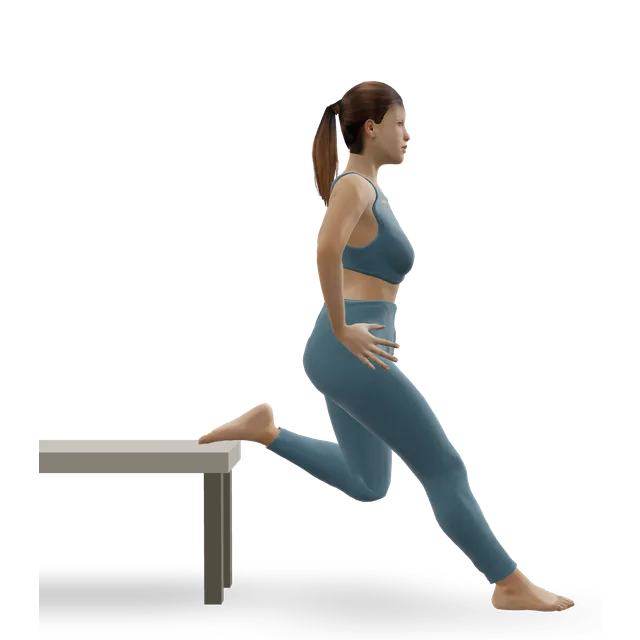
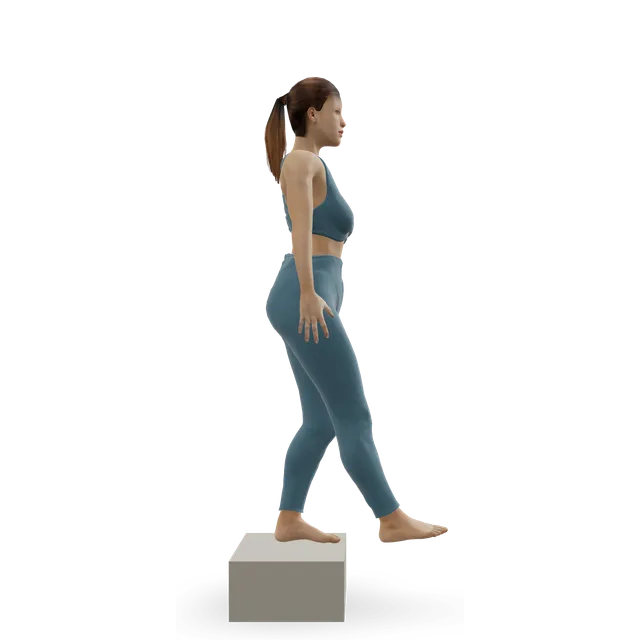
Low step-ups, then step-ups and split squats at 2 or 3 sets of 8 to 12 each leg; reverse lunges at 3 sets of 8 to 12 each leg; Bulgarian split squats at 3 sets of 6 to 10 each leg (our knee, older adults and bigger legs guides).

Hinges and the back of the thigh

Bridges at 3 sets of 10 to 15, Romanian deadlifts at 3 sets of 8 to 10, lowering for about 3 seconds, slider curls at 3 sets of 6 to 12 and leg curls at 3 sets of 10 to 15 (our hip, bigger legs and knee guides). Nordic curls come later.

Calves, balance and getting up

Calf raises holding a support, then one leg at a time; one-leg stands of 30 seconds next to a counter. Getting down to the floor and back up: the move page's dose is 5 to 8 slow cycles down and up, changing the leading leg.

At home or in the gym

You don't need a gymStrong evidence

Free weights and machines built the same strength, and progressive bodyweight squats matched barbell squats in a small trial. Sit-to-stands, squats, split squats, step-ups, bridges and calf raises need only a chair, a step and a wall.

Sources 8, 9

Keep it hard enough at home

Heavier loads build more strength, so when a move gets easy, make it harder: one leg instead of two, slower lowering, a loaded backpack or dumbbells. Our lower body workout at home and dumbbell leg workouts are built this way.

Source 14

Machines suit beginners and sore joints

The leg press, leg extension and leg curl let you set the load and range, and our machine leg workout and gym workout for seniors use them.

After 60: strength, balance and falls

It's never too lateStrong evidence

People in their late 80s and 90s more than doubled their leg strength in 8 to 10 weeks of supervised training, and strength training had a large effect across 121 trials of older adults.

Sources 17, 7, 5

Start with chairs and steps

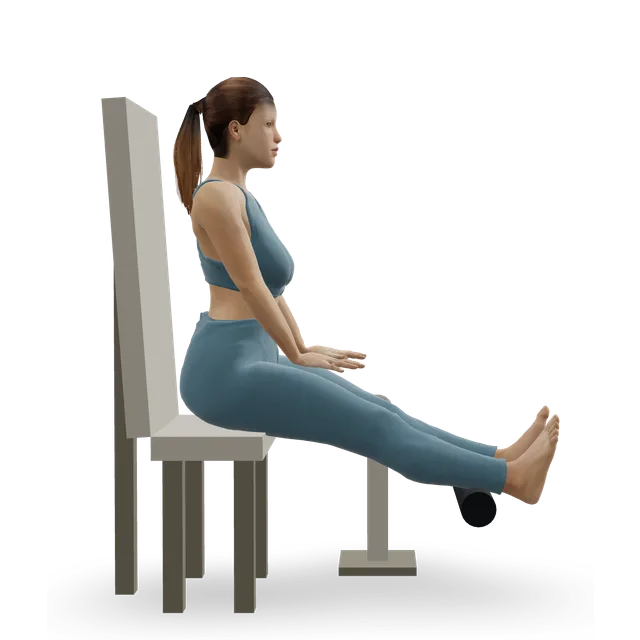
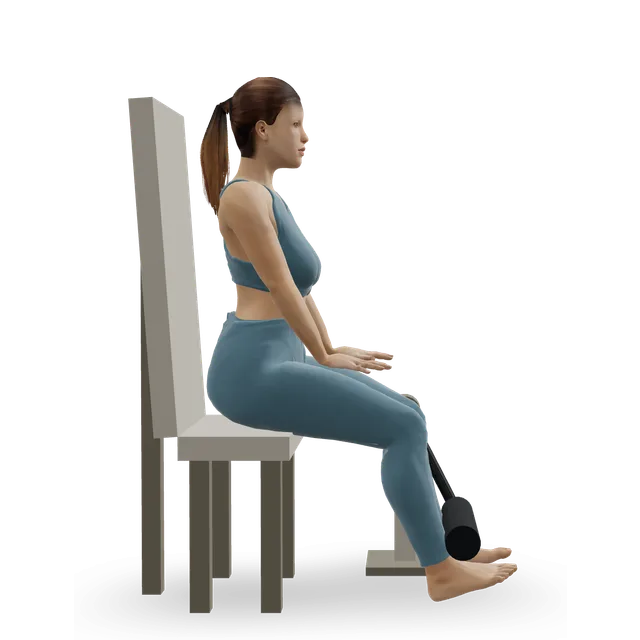
Sit-to-stands, knee straightening in a chair, step-ups and calf raises at a counter. The NHS's strength exercises start at 5 repetitions, at least twice a week, and our older adults guide builds sit-to-stands up to 10.

Source 33

Add balance on 3 days a week

Programmes mixing balance and strength cut falls by about a third, and WHO asks adults over 65 for balance and strength work on 3 or more days a week. The NHS falls page lists strength and balance training among the things that help.

Sources 2, 10, 34

Supervision helps some people

Home programmes work, but gains were smaller without supervision. If you have frailty, have fallen recently or have had a spinal fracture, start with a class or a physiotherapist, as our older adults guide suggests.

Source 26

Test your legs

The 30-second chair stand

Count how many times you can stand up and sit down in 30 seconds with your arms crossed; our chair stand test page has the steps and scores by age. Slow chair rising went with higher death rates in large studies, as a link.

Source 22

Getting down to the floor and up

Our sitting-rising test page scores how you sit down on the floor and get up again. Retest every 4 to 6 weeks the same way (our suggestion).

Source 23

Squats and your knees

Knees past your toes is normal

What matters is that your knees follow your toes rather than caving in, as our squat guide explains. The NHS's own mini squat tells you to aim your knees over your big toe.

Source 33

With sore knees

Change the depth and the load within our knee pain rule rather than dropping the move; the leg press and step-ups let you control the range. Exercise eases knee arthritis pain modestly, and our knee strengthening guide has the full plan.

Source 29

With sore hips

Our hip strengthening guide has the side-hip and single-leg work, and our hip arthritis guide the stages.

A 12-week plan, in three tracks

Our editorial plan, built from existing workouts, the phases of our plans (learn, build, a lighter week) and the falls guidelines' advice to keep going for at least 12 weeks.

  1. Pick your track. Starting from low (chairs and steps): weeks 1 to 4, the chair exercises for seniors or the strength and balance exercises for seniors twice a week, plus the balance exercises routine once; weeks 5 to 12, the strength and balance exercises for seniors 3 times a week.
  2. At home: weeks 1 and 2, the beginner lower body workout twice a week, 2 sets per move with 3 or 4 reps to spare; weeks 3 to 12, the lower body workout at home (or the two dumbbell leg workouts) twice a week, 3 sets, stopping 2 or 3 reps short.
  3. In a gym: weeks 1 and 2, the machine leg workout twice a week to learn your weights; weeks 3 to 12, the leg day workout and the lower body gym workout once each a week.
  4. Every track: finish each session with one-leg balance next to a counter.
  5. Every week: add reps, then the smallest weight step, as our plans' double progression does.
  6. Week 12: an optional lighter week (half the sets at easy weights), then retest with the chair stand test and move up a track if you're ready.
  7. With sore knees, swap the squat block for our knee strengthening workout.

Loading the 3D figure…

Gets into position, then repeats the movement. Technical checks passed; qualified exercise review is pending.

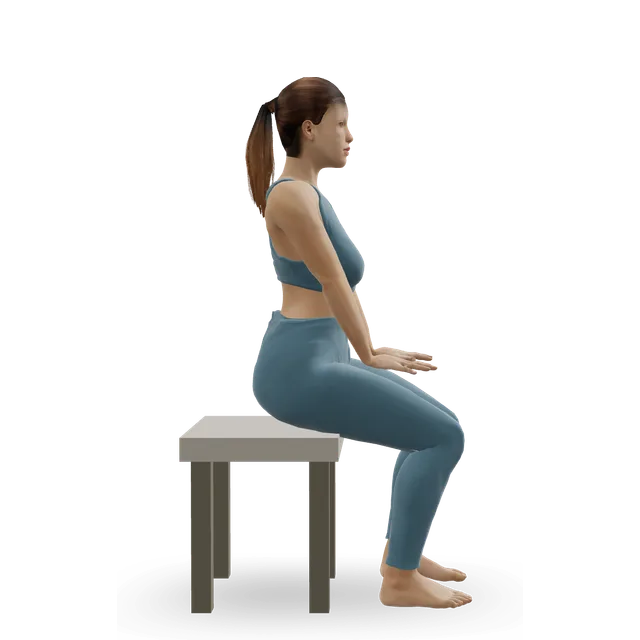
The movement on the figure: Sit to stand from a chair

Workouts to follow

The beginner and home lower body workouts and the dumbbell leg workouts suit home; the leg day, lower body gym and machine workouts suit a gym; the seniors' sessions add balance. The knee strengthening and low-impact leg workouts suit sore knees.

Beginner lower body workout

Learn to squat, hinge and lunge: a 25-minute beginner lower body workout with bridges, clamshells and calf raises.

25 minBeginner11 movesA wall, A bench or box

Lower body workout at home

A lower body workout at home: split squats, slider hamstring curls, single-leg bridges, step-ups, band walks and calf raises, with dumbbell options.

30 minIntermediate12 movesA wall, A step

Dumbbell leg workout

Legs and glutes with dumbbells: goblet squats, Romanian deadlifts, step-ups, split squats and calf raises.

35 minIntermediate10 movesA wall, A dumbbell

Dumbbell leg workout B: single-leg and hinge

Dumbbell leg workout B: Bulgarian split squats, single-leg Romanian deadlifts, slider curls, single-leg bridges, calf raises and suitcase carries.

45 minIntermediate12 movesA bench or box, A dumbbell

Leg day workout (gym)

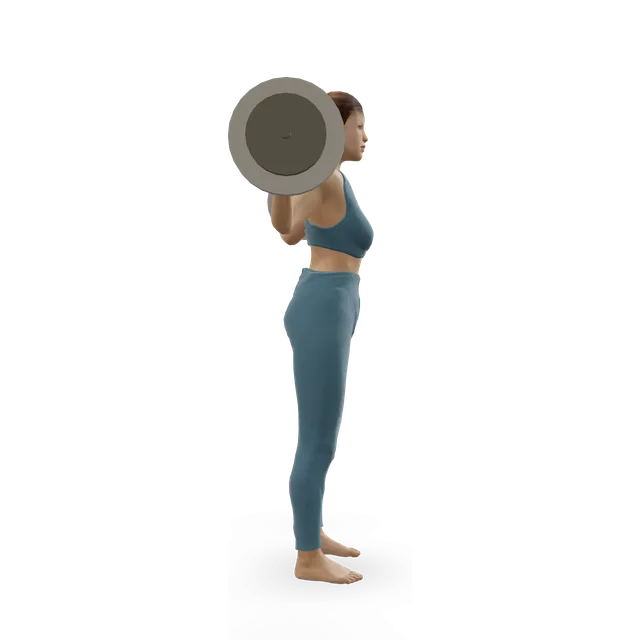
A gym leg day: back squats, leg press, leg curls, Bulgarian split squats, leg extensions and calf raises.

55 minIntermediate9 movesA wall, A barbell

Lower body gym workout

A gym lower body workout for legs and glutes: trap bar deadlifts, hip thrusts, reverse lunges, leg curls, hip abduction, calf raises and core.

50 minIntermediate13 movesOther / check instructions, A barbell

Machine leg workout: leg press, leg extension, leg curl and calves

A 45-minute leg day on machines only: the leg press, then leg extensions and seated leg curls for the muscles it misses, hip abduction and calf presses.

45 minBeginner10 movesCardio machine, Strength machine

Knee strengthening workout: from first steps to full range

A 25-minute session for knees that don't currently hurt: thigh and hamstring strength, single-leg control, then an optional full-range block with knees over toes.

25 minBeginner14 movesA bench or box, A wall

Low-impact leg workout (no jumping)

A gentle leg strength routine with no jumping: sit-to-stands, step-ups, wall sits, bridges and calf raises.

20 minBeginner7 movesA bench or box, A step

Strength and balance exercises for seniors

A 40-minute strength and balance session for over-65s, built from the Otago home programme and NHS exercises, using a chair, a counter and a step.

40 minBeginner18 movesA bench or box, Something with weight

Chair exercises for seniors: a seated workout

A 20-minute seated workout for older adults who cannot stand for long: marching, leg and arm strength, posture, and sit-to-stands that lead back to standing.

20 minBeginner11 movesA bench or box, Something with weight

Gym workout for seniors: machine strength training for muscle loss

A 50-minute gym session for older adults and sarcopenia: 7 machines for the legs, chest and back from the UK prescription, then a short balance finish.

50 minBeginner12 movesCardio machine, A bench or box

Balance exercises routine

Balance practice in 10 minutes: tandem stance, single-leg stands, marches, heel walks, tree pose and floor transfers.

10 minBeginner7 movesA wall, A bench or box

Step-up workout: from the bottom stair to a loaded box

A 30-minute step-up workout at home or in the gym: step-ups, split squats, step-downs and calf raises on one step, with the height set to your level.

30 minBeginner9 movesA wall, A step

Squat technique workout

A 25-minute practice session for the squat: find your depth on a chair, groove the bodyweight squat with pauses, then load it with a slow goblet squat.

25 minBeginner8 movesA wall, A bench or box

Learn to lunge: split squat to walking lunge

A 25-minute session from the split squat to the walking lunge: ankle and balance prep, slow split squats, reverse lunges, then walking lunges.

25 minBeginner11 movesA wall, A bench or box

Plans

Two full-body sessions meet the strength guideline; the seniors' plan builds strength and balance through the week; the squat challenge builds bodyweight squats.

Who should change their leg training

After knee or hip surgery

Follow your surgical team's limits. Our knee replacement, hip replacement and ACL (anterior cruciate ligament) injury guides cover the stages.

Osteoporosis

With osteoporosis or a past spinal fracture, avoid repeated or loaded deep rounding of the back, and bend from the hips. The osteoporosis guide covers impact and lifting.

If you have no spinal fractures, build up to about 50 moderate impacts on most days, such as heel drops, jogging on the spot or small jumps, and add strength training. Walking is weight-bearing but low impact, and on its own it does not raise bone density. Swimming and cycling are not weight-bearing.

Pregnancy

Swap moves done lying on your back, such as bridges, for standing or side-lying ones in later pregnancy (our suggestion, following the NHS advice our plans give), and follow our pregnancy guide before heavy squats or leg presses.

Wall sits and blood pressure

Wall sits raise blood pressure while you hold them, so breathe normally and never hold your breath. Ask your GP first if your blood pressure is 160/100 or higher and untreated, or if you have heart disease, and skip them with Marfan syndrome, vascular Ehlers-Danlos syndrome or aortic disease.

Frailty, falls or after a stroke

Start supervised: our older adults guide covers falls services and supervised classes, and our exercise after a stroke guide covers leg strength after a stroke.

Warning signs: when to get help

A knee injury

Go to A&E (accident and emergency) if you've injured your knee and it has changed shape, it becomes very swollen very quickly, you felt a pop or snap, you can see bone sticking out, or it's bleeding heavily. Don't drive yourself: ask someone to take you, or call 999 if the pain means you can't move your leg to get there.

Get advice from NHS 111 now: you cannot move the knee or put any weight on it, or it is very painful, badly swollen or has changed shape.

Get advice from NHS 111 now: the knee locks, gives way or clicks painfully. Painless clicking is normal.

Get advice from NHS 111 now: a hot, red or swollen knee with sudden severe pain, a very high temperature, or feeling hot, cold or shivery. This can be a joint infection.

A possible broken bone

You hurt your knee and cannot take 4 steps, or you are 55 or over and have injured it: get it checked the same day for a broken bone.

A possible torn knee tendon

A pop or tearing feeling at the front of the knee after a fall, a jump, a landing or a heavy squat, then you can't straighten the knee or lift the straight leg, there's a dent above or below the kneecap, or the kneecap sits higher or lower than on the other side. Go to A&E or an urgent treatment centre, or get help from NHS 111, as our knee pain when squatting guide explains. In the US, go to urgent care or the emergency department.

A hip after a fall

Call 999 or go to A&E for severe hip pain after a fall or injury, if you can't walk or put weight on your leg, or for tingling or loss of feeling in your hip or leg after an injury. Ask for an urgent GP appointment or get help from NHS 111 for severe hip pain that started suddenly without a fall, a hip that's swollen and feels hot, skin around it that has changed colour, or hip pain with feeling generally unwell and a high temperature.

A clot in the leg

Same day (urgent GP appointment or NHS 111): throbbing pain in one leg (rarely both), usually the calf or thigh; swelling in one leg (rarely both); red, blue or darkened skin around the painful area, which may be harder to see on brown or black skin; or swollen veins. It could be a blood clot (deep vein thrombosis, DVT), which is more likely while you're moving about much less than usual or after a hospital stay.

Also call 999 for pain and swelling in one leg with breathlessness or chest pain: it can be a blood clot that has reached the lungs.

Source 35

Back pain with leg symptoms

Call 999 or go to A&E: loss of feeling or numbness around the genitals or bottom, new trouble peeing or controlling your bladder or bowels, changes in genital sensation during sex or problems with erections or orgasm, or pain, tingling, weakness or numbness in both legs. These are signs of cauda equina syndrome, which needs treating in hospital urgently. Don't drive yourself.

See a GP if pain spreading down a leg hasn't improved after a few weeks of home treatment, is getting worse or stops your normal activities. Sciatica on both sides, or weakness or numbness in both legs that's severe or getting worse, is a 999 call or a trip to A&E.

Older adults: stop and call 999

Chest pain, pressure or tightness that spreads to the arm, neck or jaw, or does not go away when you stop, especially with breathlessness, sweating, feeling sick, or grey or pale skin.

After a fall: a possible injury to the head, neck, back or hip, or not being able to get up.

Older adults: stop for today and contact your GP or NHS 111

Dizziness, light-headedness, unusual breathlessness, clamminess or chest tightness that settles when you stop.

Any fall or near-fall, new unsteadiness, or a new fear of falling: ask about a falls assessment.

See a GP

Knee pain that has not improved within a few weeks of looking after it at home. Many areas offer NHS physiotherapy without a GP referral.

See a GP if hip pain stops you doing normal activities or affects your sleep, is getting worse or keeps coming back, hasn't improved after 2 weeks of treating it at home, or you have hip stiffness for more than 30 minutes after waking up.

Stop and get medical help

If you get chest pain or pressure, feel faint or dizzy, are unusually breathless, or your heart races or beats irregularly during exercise, as our plans advise.

Call 999 (911 in the US)

For chest pain that comes on suddenly and doesn't go away, feels tight or like squeezing, spreads to your arms, neck, jaw, stomach or back, or comes with sweating, feeling sick, light-headedness or breathlessness; severe difficulty breathing; someone who faints while exercising; palpitations that don't go away, or come with chest pain, shortness of breath or feeling faint; or a headache that starts suddenly and is extremely painful, especially while lifting or straining, or comes with numbness or weakness, difficulty speaking or loss of vision. The NHS says a bleed on the brain may be more likely when lifting something heavy. Don't drive yourself to A&E.

Ask for an urgent GP appointment or call NHS 111

Ask for an urgent GP appointment or get help from NHS 111 for a headache that's triggered or made worse by coughing, sneezing, bending down or exercising. In the US, contact your doctor or urgent care.

During any session

Stop straight away if you feel any pain or become unwell, the NHS says, and contact 111 if your symptoms worry you or don't go away.

A dull ache in your muscles for a day or two after something new is normal. Joint pain that's sharp, gets worse during a set or lingers into the next day means switching to the easier option, and seeing a GP or physiotherapist if it carries on (our plans' rule). Our muscle soreness guide has more.

Check first

Speak to your GP first if you haven't exercised for some time or have medical conditions or concerns, as the NHS advises. Get advice before heavy lifting or hard straining work if your blood pressure is uncontrolled, or you have heart disease or chest pain when you're active, a pacemaker or defibrillator, diabetic eye disease, glaucoma, a hernia, recent eye or tummy surgery, or you're pregnant, as our breathing guide lists. After a recent shoulder dislocation or shoulder surgery, follow our shoulder dislocation guide or your surgical team first.

Speak to a GP first if you haven't exercised for some time, or if you have a medical condition or concerns. Get advice first, too, if you have a health problem, an injury or symptoms, have recently had a heart attack or an operation, or are pregnant or have recently given birth.

Source 3

Hernia

See a GP if you think you have a hernia, a bulge or lump that may get bigger when you strain and smaller when you lie down. Get help from NHS 111 if you have a hernia and pain in or around it, a bloated tummy, you feel or are sick, you're vomiting blood or your vomit looks like coffee grounds, you're constipated, you have a high temperature or feel hot, cold or shivery, or you've suddenly become confused. Call 999 or go to A&E for a femoral hernia (a small lump at the top of your thigh, in your groin) with very bad tummy pain, sickness, being unable to fart or poo, a high temperature or sudden confusion.

Myths

"Squats are bad for your knees"Emerging evidence

Reviews of the forces found no evidence that squats harm healthy knees, though they disagree on the best depth, and squats are part of the programmes that ease knee arthritis. With a sore knee, change the depth and load rather than dropping them.

Sources 12, 13, 29

"You need machines to strengthen your legs"Strong evidence

Free weights and machines gave the same strength and muscle gains, and progressive bodyweight squats matched barbell squats in a small trial. Machines are a convenience, not a requirement.

Sources 8, 24, 25, 9

"Never let your knees go past your toes"Emerging evidence

The NHS's own mini squat tells you to aim your knees over your big toe, and our squat and knee guides explain why holding them back shifts the load to your hips and back.

Source 33

"It's too late to build leg strength after 70"Strong evidence

People in their late 80s and 90s more than doubled their strength in 8 to 10 weeks, and strength training had a large effect in 121 trials of older adults.

Sources 17, 7, 5

"Walking is enough to keep your legs strong"Strong evidence

Walking is good for your heart and legs, but the guidelines ask for strength work as well, and walking alone had an uncertain effect on falls.

Sources 2, 16, 10

"Leg strength alone prevents falls"Strong evidence

Strength training without balance work had an uncertain effect; programmes mixing balance, functional and strength exercise cut falls by about a third.

Source 10

Questions people ask

What's the best exercise to strengthen your legs?

There isn't one: a squat or sit-to-stands, a single-leg move like step-ups, a hinge like Romanian deadlifts or bridges, and calf raises cover the main leg muscles. Full squats didn't grow the hamstrings in a trial, so add a hinge.

How do I strengthen my legs at home?

Sit-to-stands, squats, split squats, step-ups, bridges and calf raises need only a chair, a step and a wall. Make them harder with slower lowering, one leg at a time or a loaded backpack. Free weights, machines and body weight built similar strength in trials.

How can I strengthen my legs after 60?

Start with sit-to-stands, step-ups and calf raises at a counter, 2 or 3 days a week, and add balance work. Adults over 50 gained about 25 to 33% in leg strength in trials, and frail people in their late 80s more than doubled theirs.

What are good leg exercises for older adults?

The same four patterns, made safe: sit-to-stands, knee straightening in a chair, step-ups, calf raises and one-leg balance with a hand on a counter. Programmes mixing balance and strength cut falls by about a third, and our exercise for older adults guide has a full plan.

How do I strengthen my legs with bad knees?

Keep knee pain to 0 to 2 out of 10, or up to 5 if your knee settles by the next morning, and change depth and load rather than stopping. Sit-to-stands, step-ups, leg extensions and the leg press let you control the range, and our knee strengthening guide has the plan.

How often should I do leg exercises?

Two or three times a week, with a day between. Guidelines ask for strength work on 2 or more days a week, and for older adults who want to prevent falls, balance and strength work on 3 or more.

How long does it take to strengthen your legs?

Strength rises within weeks: frail nursing home residents gained 113% in 10 weeks. Falls programmes ran at least 12 weeks and worked best when people kept going.

Can I strengthen my legs without squats?

Yes: step-ups, split squats, the leg press, bridges and Romanian deadlifts train the same muscles, and machines and free weights gave similar gains. Squats are fine for healthy knees, though, if you like them.

How can I make it easier to get up from a chair?

Practise it, and strengthen your legs: in trials of older adults, strength training improved getting out of a chair by a moderate to large amount. Stand up briskly and sit down slowly, and time yourself with our 30-second chair stand test.

Will walking strengthen my legs?

Walking keeps your heart and legs working, but it isn't strength training: guidelines ask for strength work on top. Walking alone had an uncertain effect on falls in trials.

How do I strengthen my legs for running?

Two short strength sessions a week of squats or split squats, hinges, calf raises and single-leg work, as in our strength training plan for runners. Recreational running itself isn't linked with more knee arthritis.

How can I strengthen my legs fast?

There's no shortcut beyond training 2 or 3 times a week and adding reps, then weight; strength builds over weeks to months. Heavier loads build more strength than very light ones.

Sources

  1. Kubo 2019 · Full against half squats and lower-limb muscle volumes in 17 men (randomised trial, Eur J Appl Physiol)
  2. Bull 2020 · World Health Organization 2020 guidelines on physical activity and sedentary behaviour (guideline, BJSM)
  3. NHS · Physical activity guidelines for adults aged 19 to 64
  4. Currier 2026 · ACSM position stand: resistance training prescription for muscle function, size and performance, an overview of 137 reviews (position stand, Med Sci Sports Exerc)
  5. Liu 2009 · Progressive resistance strength training for physical function in older adults: 121 trials (Cochrane review)
  6. Peterson 2010 · Resistance exercise and muscle strength in older adults: 47 studies (meta-analysis, Ageing Res Rev)
  7. Fiatarone 1994 · Exercise training and nutritional supplements for frailty in 100 nursing home residents (randomised trial, N Engl J Med)
  8. Haugen 2023 · Free weights against machines for strength and muscle: 13 studies (systematic review and meta-analysis, BMC Sports Sci Med Rehabil)
  9. Wei 2023 · Progressive bodyweight against barbell squats in 13 sedentary young women (trial, Sci Rep)
  10. Sherrington 2019 · Exercise for preventing falls in older people living in the community: 108 trials (Cochrane review)
  11. Montero-Odasso 2022 · World guidelines for falls prevention and management for older adults (guideline, Age Ageing)
  12. Hartmann 2013 · Knee and spine load with squat depth and weight (review, Sports Med)
  13. Escamilla 2001 · Knee biomechanics of the dynamic squat (review, Med Sci Sports Exerc)
  14. Lopez 2021 · Training load, muscle growth and strength: 28 studies (network meta-analysis, Med Sci Sports Exerc)
  15. Peterson 2011 · Strength training and lean mass in adults over 50: 49 studies (meta-analysis, Med Sci Sports Exerc)
  16. NHS · Physical activity guidelines for older adults
  17. Fiatarone 1990 · High-intensity strength training in 10 nursing home residents aged about 90 (trial, JAMA)
  18. Pahor 2014 · Structured physical activity and major mobility disability in 1,635 adults aged 70 to 89: the LIFE study (randomised trial, JAMA)
  19. Borde 2015 · The dose of resistance training for healthy older adults: 25 trials (systematic review and meta-analysis, Sports Med)
  20. Campbell 1997 · A home exercise programme to prevent falls in 233 women aged 80 and over (randomised trial, BMJ)
  21. Thomas 2010 · Does the Otago exercise programme reduce falls and deaths in older adults? 7 trials (systematic review and meta-analysis, Age Ageing)
  22. Cooper 2010 · Grip strength, walking speed, chair rising, standing balance and death (systematic review and meta-analysis, BMJ)
  23. Brito 2014 · Sitting down on and rising from the floor and death in 2,002 adults aged 51 to 80 (cohort study, Eur J Prev Cardiol)
  24. Hernández-Belmonte 2023 · Free weights against machines for strength and muscle growth in 38 trained men (trial, Med Sci Sports Exerc)
  25. Schwanbeck 2020 · Free weights against machines for 8 weeks in 46 young adults (randomised trial, J Strength Cond Res)
  26. Mañas 2021 · Unsupervised home strength training for older adults: 21 trials (systematic review and meta-analysis, Ageing Res Rev)
  27. Chaabene 2021 · Home-based exercise and fitness in healthy older adults: 17 trials (systematic review and meta-analysis, Ageing Res Rev)
  28. Øiestad 2022 · Thigh muscle weakness and later knee osteoarthritis in 46,819 people (meta-analysis of cohort studies, BJSM)
  29. Lawford 2024 · Exercise for knee osteoarthritis: 139 trials, 12,468 people (Cochrane review)
  30. Wang 2020 · Work demands and knee osteoarthritis: 80 studies (systematic review and meta-analysis, Arthritis Care Res)
  31. Alentorn-Geli 2017 · Recreational and competitive running and hip and knee osteoarthritis (meta-analysis, JOSPT)
  32. Brooke-Wavell 2022 · Strong, steady and straight: UK consensus statement on physical activity and exercise for osteoporosis (consensus, BJSM)
  33. NHS · Strength exercises
  34. NHS · Falls
  35. NHS · Deep vein thrombosis (DVT)

Exercise education, not a personal prescription, and clinical review of these guides is pending. Check with a GP before starting hard training if you have a heart condition, chest pain, dizziness or breathlessness when active, and stop for sharp or increasing pain. Health disclaimer.