Strength is a skill as well as a size
In the first weeks, most of the gain comes from your nervous system learning to use your muscles. Muscle growth adds more after that.
Training guide
Getting stronger is one of the most reliable changes exercise can make. In the first weeks most of the gain comes from your nervous system learning to use the muscle you already have; after that, the muscles grow too.
Any resistance training works, from bands and push-ups to barbells, and strength rises at every age. Heavier weights build the most maximum strength, but you don't have to lift heavy to get stronger.
This guide covers how strength differs from size, how heavy to lift, how many sets and reps, how long to rest and how often to train, how fast strength rises and where it levels off, training at home and in the gym, lifting as a woman, a teenager or an older adult, and how to test your strength safely.
In the first weeks, most of the gain comes from your nervous system learning to use your muscles. Muscle growth adds more after that.
Weights, machines, bands and your own body weight all build strength. Heavier loads build the most maximum strength; lighter loads lifted close to failure build similar muscle.
Big moves (a squat, a hinge, a push and a pull), 2 to 3 hard sets each, heavy enough that you could manage only about 8 reps or fewer once you know the moves, early in the session, 2 or 3 times a week.
Expect clear gains within 2 to 6 weeks. In a large gym study, strength rose by 30 to 50% in the first year and levelled off after 1 to 2 years.
Women gain at least as much strength as men relative to where they start, adults over 50 gained about a quarter to a third in trials, and supervised strength training doesn't stunt teenagers' growth.
A stronger grip and regular muscle-strengthening go with a lower risk of early death in large studies, though that's an association, not proof.
Strength is the most force your muscles can produce. The usual test is a one-rep max (1RM): the heaviest weight you can lift once with good form. It gives repeatable results.
Source 14
In the first weeks, your nervous system learns to switch on and coordinate more of the muscle, so strength rises before muscles grow much. Training one arm even makes the other arm about 12% stronger.
Muscle growth starts early and becomes the bigger part of the gain after about 3 to 5 weeks; in one study it showed on scans from about weeks 3 to 4.
You get strongest at the lift, angle and equipment you train with, so practise the moves you want to be strong at.
Source 17
Partly. Heavy, low-rep training builds strength efficiently, while lighter sets taken close to failure grow muscle with smaller gains in maximum strength. Any hard training grows some muscle over time, and how much depends a lot on the person: after the same 12 weeks of arm training, 1RM gains in 585 people ranged from none to 250%.
In 178 studies of 5,097 people (45% women), every kind of resistance training raised strength, and heavy, multi-set training 3 times a week did most. Across 28 studies, heavy and moderate loads raised 1RM more than light loads, while muscle growth was similar; in 21 studies of sets taken to failure, light loads built similar muscle and similar strength on other tests, but less 1RM strength.
The American College of Sports Medicine (ACSM) reviewed 137 reviews of more than 30,000 people: strength rose most with at least 80% of 1RM, a full range of movement, 2 to 3 sets, the lift done at the start of the session, and at least 2 sessions a week.
Source 6
More weekly sets brought more strength, but the extra gain shrank sooner for strength than for muscle size in a 2026 analysis of 67 studies.
In 22 studies, strength rose more with more sessions a week, but not when the total weekly sets were the same; the 2026 analysis found frequency still helped strength a little, with diminishing returns.
Single sets of 6 to 12 reps, 2 to 3 times a week, raised trained men's 1RM by about 12 kg in 8 to 12 weeks. In 14,690 gym members doing one hard set each of 6 exercises once a week, strength rose by 30 to 50% in the first year; that study was observational.
In 23 studies, strength rose even with rests under a minute, but more than 2 minutes did most for trained people, and 60 to 120 seconds was enough for beginners.
Source 23
In 37 men and women training 3 times a week, strength rose significantly within 2 to 6 weeks and by 19 to 27% at 12 weeks. In 7 young adults, leg strength rose 39% in 35 days.
Across 8 studies, elastic bands built strength as well as weights and machines. In 23 men, 4 weeks of progressive push-ups raised bench press strength as much as bench pressing did.
Across 13 studies of 1,016 people, free weights and machines gave similar strength and muscle, but people improved most on tests using the equipment they trained with.
Source 17
Relative to where they started, women gained at least as much strength as men, and more in the upper body; muscle grew at similar relative rates, with larger absolute gains in men. Over 50, women gained more relative lower-body strength and men more absolute strength and size.
In 47 studies of adults over 50, strength rose by 24 to 33% on the lifts tested. In 121 trials with 6,700 people, strength training made people stronger, faster at rising from a chair and quicker walking, and serious harms were rare. The US National Strength and Conditioning Association (NSCA) calls it a powerful way to fight the loss of strength and muscle with age.
In 10 frail people with an average age of 90, strength rose by 174% in 8 weeks. In 100 frail people aged 72 to 98, it rose by 113% in 10 weeks with training, against 3% without.
In a review of 22 reports in children and young teenagers, supervised strength training raised strength without affecting growth in height or weight, and the 10 studies that tracked injuries recorded 3. Position statements from US and international experts support it with good supervision.
In 101 women with low bone mass, 8 months of supervised heavy lifting (5 sets of 5 at more than 85% of 1RM, twice a week) raised spine bone density by 2.9%, against a 1.2% fall in the comparison group, with one minor back spasm. The UK osteoporosis consensus supports strength and impact exercise and advises against high degrees of rounding of the spine.
In 49 trials, protein supplements added about 2.5 kg to 1RM gains, with no more benefit beyond about 1.6 g of protein per kg a day.
Source 37
In 32 studies of 1,595 people, 1RM tests gave very repeatable results in young and older adults. The number of reps people manage at each percentage of their 1RM is predictable enough to estimate it from a set of reps.
Choose a squat, a hip hinge, a push, a pull and a carry. Do your main lifts first, while you're fresh, and practise the ones you want to get strong at.
Start with a weight you could lift 10 to 12 times, and for the first 2 weeks stop each set with 3 or 4 reps to spare while you learn the moves (our plans' starting point).
For the main lifts, work up to heavy sets: the ACSM says at least 80% of your 1RM, which our sets and reps guide puts at about 5 to 8 reps. Do 2 to 3 sets, at least twice a week, and stop your big lifts 2 to 3 reps short of failure (our plans' shared notes).
Rest 2 to 3 minutes between heavy sets of 5 to 8, and 3 to 5 minutes once they're very heavy (our plans and beginner strength programme). Beginners do well with 60 to 120 seconds.
Source 23
Add reps until every set reaches the top of your range, then add the smallest weight step. On our beginner strength programme, that's about 2.5 kg a session on squats and deadlifts and 1 to 2.5 kg on presses and rows, for as long as it keeps working.
Use harder versions as you improve (feet raised, one leg at a time, slower lowering), so your sets stay at about 5 to 15 reps (our suggestion). Bands and push-ups built strength like weights in trials.
Aim for about 1.6 g of protein per kg of body weight a day. Strength still rose when people ate less than they needed, though their muscle gain stalled. Sleep 7 to 9 hours: sleep loss lowered strength and other performance across 69 studies.
Our editorial starting point, from the plans' shared notes on warming up, effort, rest and progression. Squat and press heavy weights in a rack with the safety pins set.
Loading the 3D figure…
The movement on the figure: Barbell back squat
Choose one squat, one hinge, a push, a pull and a carry; each move's guide covers the technique. The sit to stand is a strong start for older adults.
 3D demoBarbell back squatAdvanced · A barbell
 3D demoDumbbell goblet squatIntermediate · A dumbbell
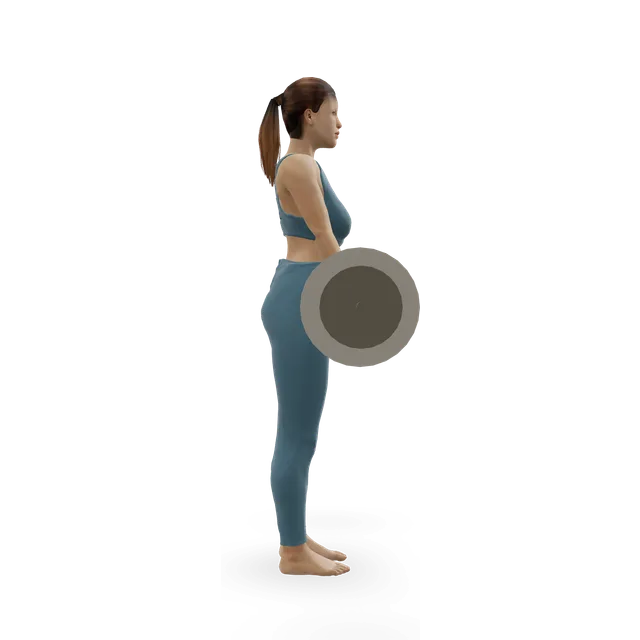 3D demoBarbell deadliftAdvanced · A barbell
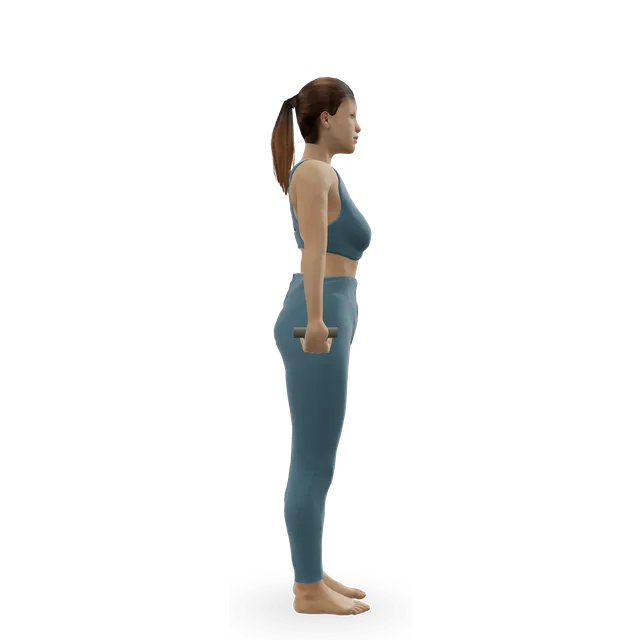 3D demoTrap bar (hex bar) deadliftIntermediate · Other / check instructions
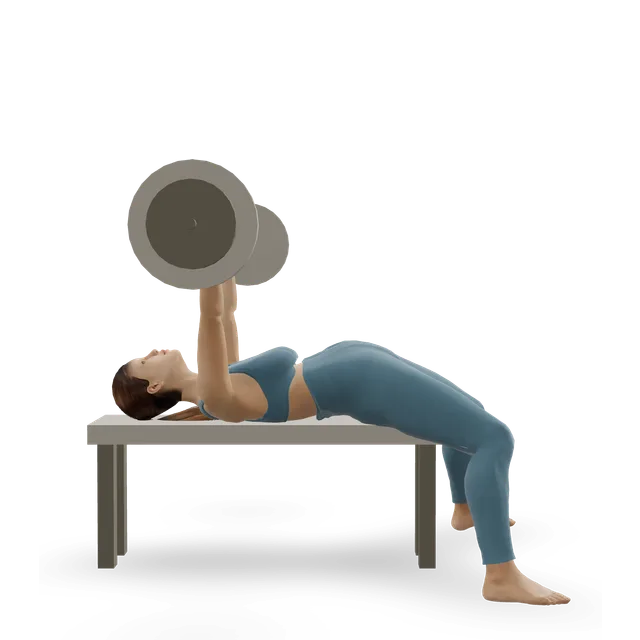 3D demoBarbell bench pressIntermediate · A barbell + A bench or box
 3D demoPush-upIntermediate · No equipment
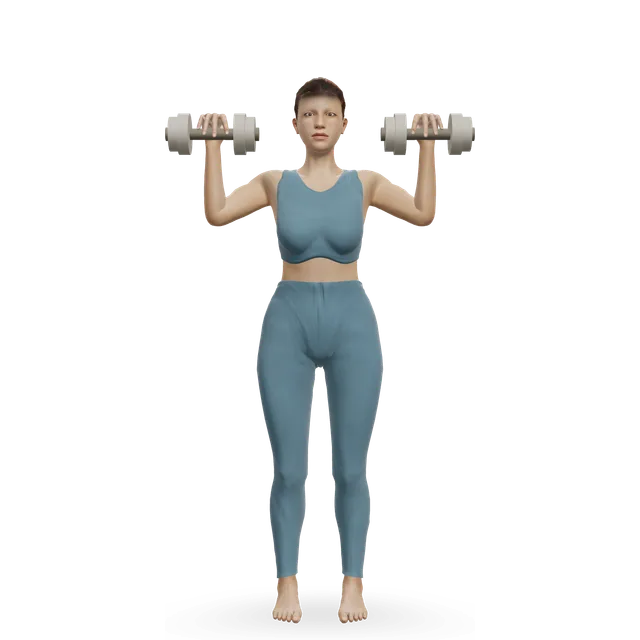 3D demoStanding overhead pressIntermediate · A barbell + A dumbbell
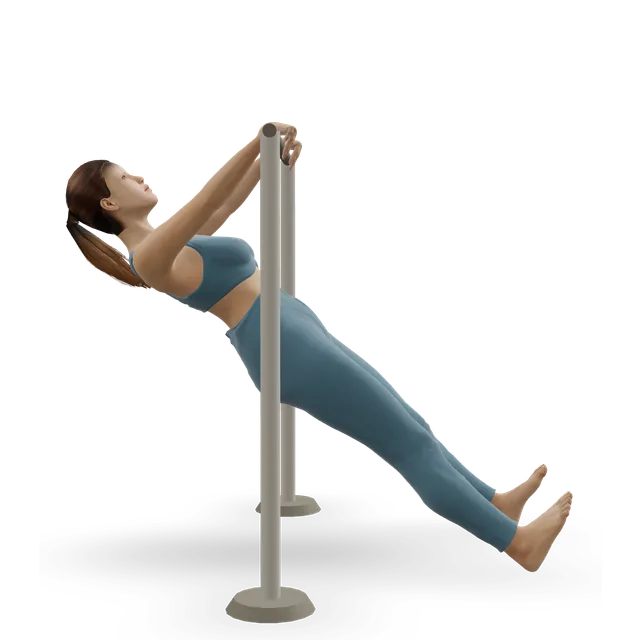
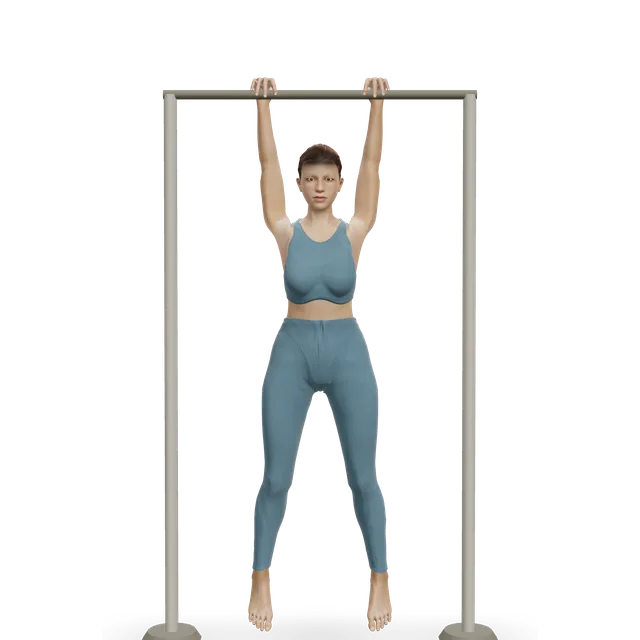 3D demoPull-upAdvanced · Pull-up bar
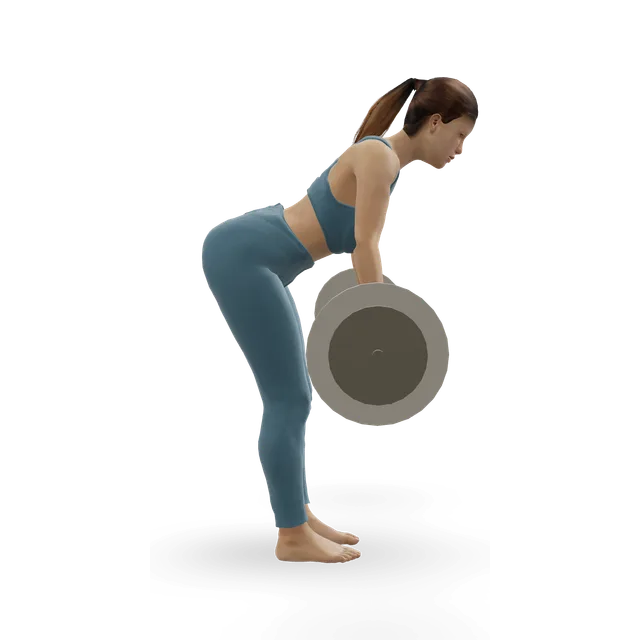 3D demoBent-over barbell rowAdvanced · A barbell
 3D demoLeg pressBeginner · Strength machine
 3D demoFarmer's carryIntermediate · A dumbbell + A kettlebell
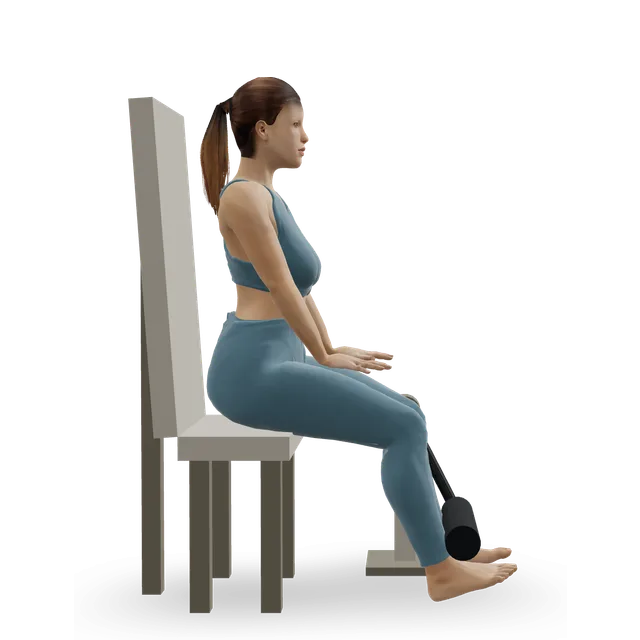
 3D demoSit to stand from a chairBeginner · A bench or box
Barbell, dumbbell, band and bodyweight sessions, and gentler ones for older adults and teenagers.
Barbell strength workout A: back squats and bench presses in sets of five, plus rows. Workout B (squat, overhead press, deadlift) is a separate session.
40 minBeginner6 movesA band, A barbellWorkout B of the beginner strength program: back squats, overhead presses and deadlifts in sets of five, plus chin-ups, with the safety pins set.
55 minBeginner10 movesA band, A barbellA 20-minute full-body dumbbell workout: two supersets of squats, rows, Romanian deadlifts and push-ups. Twice a week covers the minimum dose.
20 minBeginner8 movesA dumbbell, A bench or boxA 35-minute full-body strength workout with dumbbells: goblet squats, presses, rows, Romanian deadlifts and carries.
35 minIntermediate9 movesA band, A dumbbellA 35-minute full-body band workout: rows and push-ups, split squats and an anchored hip hinge, then bridges, face pulls, raises, triceps and a Pallof press.
35 minBeginner15 movesA wall, A bandA full-body calisthenics workout with a ladder for every move: rows to pull-ups, push-ups, split squats to skater squats, dips, hamstring curls and knee raises.
45 minBeginner11 movesPull-up barA 50-minute gym session for older adults and sarcopenia: 7 machines for the legs, chest and back from the UK prescription, then a short balance finish.
50 minBeginner12 movesCardio machine, A bench or boxA 40-minute first strength workout for teenagers: a warm-up, landing and jump drills, then squats, hinges, push-ups, rows, step-ups and carries, kept light.
40 minBeginner19 movesA wall, A dumbbellEach plan adds weight or reps week by week.
A 12-week beginner barbell program: squat every session, alternate bench and row with press and deadlift, and add weight each time until it stalls.
3 training days50 minBeginner3 days a weekA beginner gym plan: three full-body sessions a week, alternating workouts A and B, with sets, reps, rest and an 8-week progression.
3 training days45 minBeginner3 days a weekThree full-body home workouts a week with dumbbells or no equipment at all, plus walks and an 8-week plan to keep progressing.
3 training days35 minBeginner3 days a weekAn 8-week resistance band workout plan: three full-body sessions a week at home or away, with how to choose bands, add tension and anchor them safely.
3 training days35 minBeginner3 days a weekA weekly plan for women over 50: strength, bone-loading and balance on 3 days plus walking, built on UK osteoporosis consensus advice.
3 training days45 minBeginner3 days a weekA 12-week exercise plan for over-65s: strength and balance three times a week, short balance sessions and daily walks, based on falls-prevention trials.
3 training days40 minBeginner3 days a weekA 12-week workout plan for 13 to 17 year olds: technique first, then light weights, 2 or 3 sessions a week around sport and school, at home or in a gym.
3 training days40 minBeginnerStrength rose significantly within 2 to 6 weeks in a 12-week trial, much of it from your nerves learning the moves.
Muscle growth showed on scans from about weeks 3 to 4 in one study and adds to the gains from then on.
In 14,690 gym members training once a week, strength rose by 30 to 50% in the first year, levelled off after 1 to 2 years and was still about 50 to 60% above where they started at 6 years.
Source 8
Strength fades slowly when you stop, and usually stays above where you started for a long time.
Source 42
Women gain at least as much strength as men relative to where they start, and muscle at similar relative rates, so lifting is unlikely to make you bulky by accident. Our women's guide and plans cover the details.
Supervised strength training is safe and doesn't affect growth. Learn the moves with light weights first; our teenagers' plan starts there.
The NHS asks adults over 65 for strength, balance and flexibility work on at least 2 days a week. Adults over 50 gained about a quarter to a third in strength in trials, and frail people in their 90s gained more still. Start with sit-to-stands and step-ups if heavier lifts aren't for you yet.
Supervised heavy lifting raised spine bone density in women with low bone mass, and the UK consensus supports strength training while avoiding heavy rounding of the spine. Our osteoporosis guide covers which moves to change.
1RM tests are reliable, but you can track your best set of 5 or 8 instead, or estimate your max from a set of reps with our one-rep max calculator.
Wait until you've trained steadily for a few months, warm up with lighter sets, use safety pins or a spotter, and stop at the first rep that slows down badly (our suggestion).
Our grip strength, push-up and chair stand tests are quick ways to track strength without a barbell.
In 139,691 adults in 17 countries, each 5 kg less grip strength went with a 16% higher risk of dying during the study. Across 38 studies of about 1.9 million people, stronger people had lower death rates, and muscle-strengthening activity went with a 10 to 17% lower risk of early death and several diseases, with most of the benefit at 30 to 60 minutes a week. These are associations, not proof.
The UK Chief Medical Officers ask adults to do strength work on at least 2 days a week.
Source 45
For chest pain that comes on suddenly and doesn't go away, or spreads to your arms, neck, jaw, stomach or back; if someone faints while exercising; or for back pain with numbness, tingling or weakness in both legs, loss of feeling around your genitals or bottom, or changes in bladder or bowel control. During any session, stop for chest pain or pressure, unusual breathlessness, dizziness or fainting.
A pop or tearing at the front of the armpit or chest during a press, followed by bruising or a change in shape, can be a torn chest tendon. Get help the same day from NHS 111 or an urgent treatment centre, as our pec strain guide explains.
For back pain that's severe or getting worse quickly, or comes with feeling hot, cold and shivery; or for sudden or very bad shoulder pain, an arm you can't move, a shoulder that's changed shape or is badly swollen, or pins and needles that don't go away. In the US, contact your doctor or urgent care.
If back pain isn't improving after a few weeks, stops you doing your daily activities or comes with weight loss you can't explain, or if shoulder pain isn't improving after 2 weeks. Pain spreading down one leg after lifting is covered in our sciatica and deadlift back pain guides.
Breathe out as you lift. On very heavy reps, healthy, experienced lifters may hold a braced breath for one rep at a time, as our breathing guide explains; with high blood pressure, heart disease, glaucoma or diabetic eye disease, a hernia, or in pregnancy, breathe out through every effort. With uncontrolled high blood pressure, heart disease or glaucoma, check with your care team before lifting heavy.
The NHS says you can keep up strength training at a gym if you already do it, but not to start a new vigorous activity in pregnancy.
Source 50
Muscle pain far worse than the session explains, with dark, red or cola-coloured urine, needs medical help the same day, as our rhabdomyolysis guide explains.
Any resistance training beats none, and bands, push-ups and light loads taken close to failure all build strength and muscle. Heavier loads build the most maximum strength.
Reviews and position statements found supervised strength training didn't affect growth in height or weight, and injuries were few.
Early gains come mostly from the nervous system, which is why training one arm makes the other a little stronger too.
Women gain strength at least as well as men relative to where they start, and muscle at similar relative rates, with smaller absolute gains. Our tone up guide covers this in full.
Adults over 50 gained 24 to 33% in strength, serious harms were rare across 121 trials, people in their late 80s and 90s more than doubled their strength, and supervised heavy lifting raised spine bone density in women with low bone mass.
More sets and sessions add strength, but the extra gain shrinks; once a week still raised strength by 30 to 50% in the first year.
Not for maximum strength or muscle across 43 studies; explosive strength may lag a little if both are done in the same session.
Source 51
Train the big movements (a squat, a hinge, a push and a pull) 2 or 3 times a week, with 2 to 3 hard sets each, and add weight or reps as they get easier. Heavier sets of about 8 reps or fewer build the most maximum strength.
You'll be stronger within 2 to 6 weeks, mostly because your nervous system learns the moves. In a large gym study, strength rose by 30 to 50% in the first year and then levelled off over the next year or two.
For the main lifts, 2 to 3 sets of about 5 to 8 reps once you know the moves, stopping 2 or 3 reps short of failure. Beginners can start with lighter sets of 10 to 12 while they learn.
Partly. Heavy, low-rep training builds strength efficiently, and early gains come mostly from your nervous system rather than size. But any hard training grows muscle over time, and how much depends on your genes, your food and how much you train.
Yes. Push-ups built bench press strength as well as bench pressing in one trial, and bands built strength like weights in others. Use harder versions as you improve so your sets stay at about 5 to 15 reps.
At least twice a week for each movement; three times worked best in a large analysis. More sessions help mainly by adding sets, and the benefit shrinks the more you do.
About 2 to 3 minutes for heavy sets, and up to 5 for very heavy ones. Beginners do well with 60 to 120 seconds.
Yes, relative to where they start: women gained at least as much strength as men in a review of 17 studies, and more in the upper body. Men gain more in absolute terms.
No. Adults over 50 gained 24 to 33% in strength in trials, with faster chair rises and walking, and frail people in their 90s more than doubled their strength. The NHS recommends strength and balance work on at least 2 days a week after 65.
Yes, with good supervision and technique first. Reviews found it doesn't affect growth in height or weight, and injuries were rare.
You don't need to. Track your best sets, or estimate your max from a set of reps with our calculator; if you do test, wait until you've trained steadily for a few months and use safety pins or a spotter.
Protein helps up to about 1.6 g per kg of body weight a day; in 49 trials, protein supplements added about 2.5 kg to one-rep max gains. Food is fine; a shake is just convenient.
Exercise education, not a personal prescription, and clinical review of these guides is pending. Check with a GP before starting hard training if you have a heart condition, chest pain, dizziness or breathlessness when active, and stop for sharp or increasing pain. Health disclaimer.