Barbell deadlift
Lifting the bar from the floor adds range and much heavier loading to the hinge.
Hip hinge family
Barbell deadlift
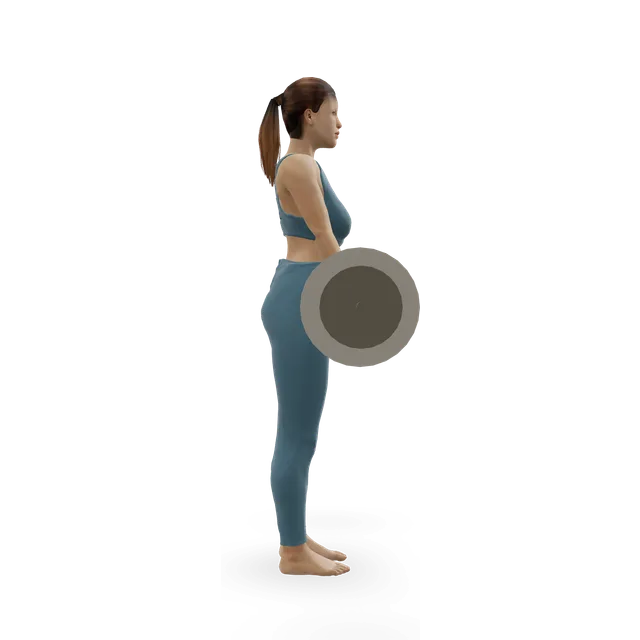
Loading the 3D figure…
Source-researched guide.
How to move
- Stand with the feet about hip width and the bar over the middle of the feet; hinge and bend the knees to grip it just outside the legs.
- Brace with a long, neutral back, then push the floor away so the bar travels up close to the legs until you stand tall.
- Lower it the same way, hips back first, and set it down under control.
Form cues
- Do not let the back round as the bar leaves the floor.
- Keep the bar close to the legs the whole way.
Practice and cautions
No universal dose is assigned. Choose a manageable amount for your current capacity, leave room for controlled repetitions, and allow recovery. A clinician’s individual plan takes priority.
With glaucoma, breathe out through each effort rather than holding your breath, and keep loads moderate: eye pressure rises during heavy lifts, most with a held breath. Ask your eye team before maximal lifts. If a rep stalls or your back starts to round, put the bar down: there is no saving a deadlift and no need to, because the floor catches it. Most trouble comes from a sloppy setup or lifting tired, so treat every rep as its own lift and reset between them. With unstable proliferative or severe diabetic retinopathy, avoid heavy lifting, overhead lifting, breath-holding and hard isometric holds; keep effort moderate and ask your eye team. With a prolapse, get advice from a pelvic health physiotherapist before heavy lifts or deep squats, and ease off if you feel heaviness, dragging or a bulge. With heart disease, check with your cardiac team before lifting heavy, and never hold your breath on the effort. This is movement education, not an assessment or treatment prescription. Stop for sharp or increasing pain, dizziness, numbness or tingling; seek individual guidance for symptoms, injury or restrictions.
Sources and review status
Sources support the educational description; they do not establish that this exercise is suitable for you.
- NASM · Barbell deadlift ↗
- NASM · Guide to squats and deadlifts (the barbell back squat) ↗
- Hackett 2024 · Resistance exercise and eye pressure in healthy adults: 34 studies (systematic review, Journal of Strength and Conditioning Research) ↗
- Free Exercise DB · alias and muscle metadata ↗
Unlicense · Free Exercise DB contributors; derived from wrkout/exercises.json. Text import; no photographs or media. · Revision f00c92c7dcf1216a928a52c3706c7ce8e2f71ed5
No variation is labeled clinically validated.
What it works
Muscles
Main: Glutes, Hamstrings. Also: Quads, Back, Forearms.
Anatomy: Gluteus maximus, Piriformis, Obturator internus, Hamstrings, Biceps femoris.
Equipment
A barbell
Level
Advanced. See the easier and harder options above.
Workouts that use it
- Barbell strength workout B: squat, press, deadlift · 55 min
- Powerlifting workout for beginners: squat, bench press and deadlift to the competition standard · 75 min
- Powerlifting mock meet: warm-up ladders, the referee's commands and openers · 90 min
- Deadlift strength workout: heavy pulls, deficit deadlifts, rows and grip · 55 min
Pain guides that use it
Part of a staged plan, with when to get help first.
- Lower back pain after deadlifts: what usually happened, the warning signs and the way back
- Hip pain when doing deadlifts: the front of the hip, the groin, the sitting bone and what helps
- Knee pain when doing deadlifts: the bar path and shins, conventional, sumo and Romanian deadlifts
- Neck pain when deadlifting: head position, the upper traps, straining and headaches, and swaps
- Shoulder pain when deadlifting: the shoulder blades, a mixed grip and the biceps tendon, and swaps
- Upper back pain when deadlifting: between the shoulder blades, rounding under load, ribs and swaps
Guides that use it
Similar moves
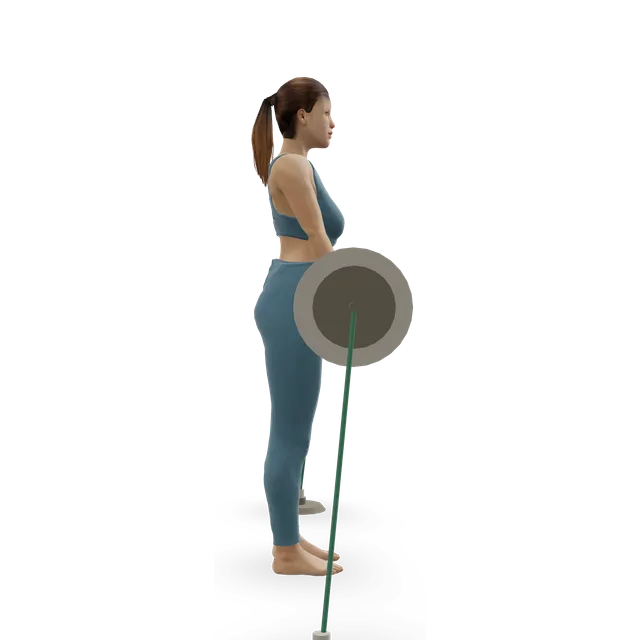 3D demoDeadlift with bandsAdvanced · A barbell + A band
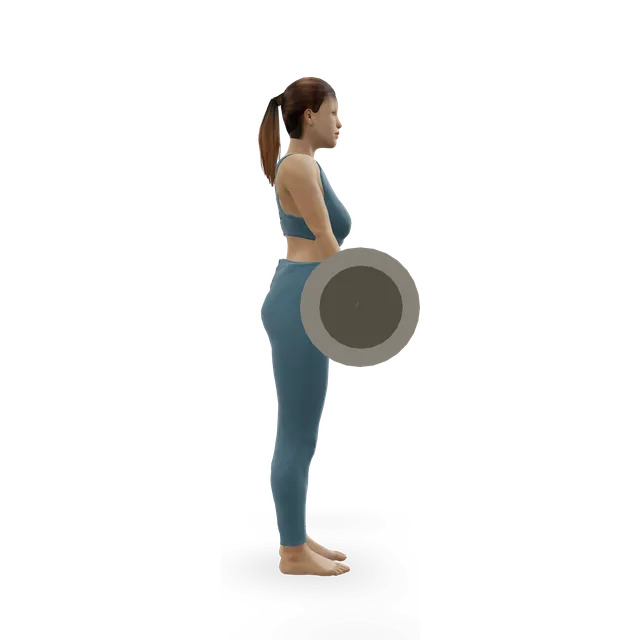 3D demoDeadlift with chainsAdvanced · A barbell + Other / check instructions
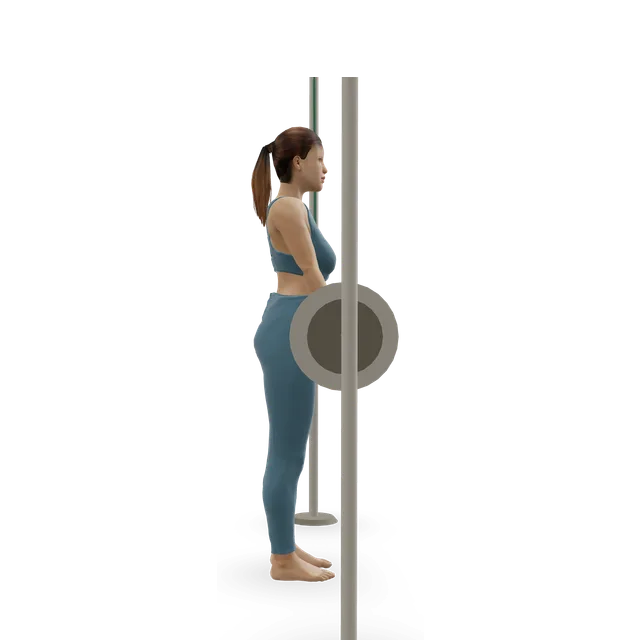 3D demoReverse band deadliftAdvanced · A barbell + A band
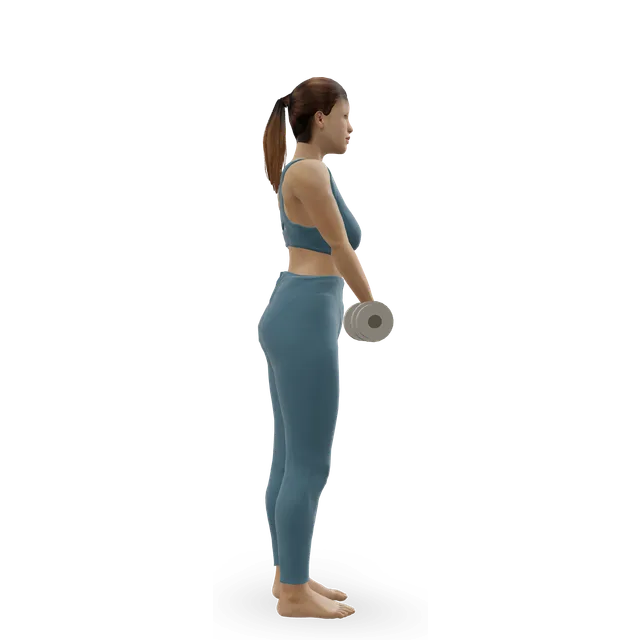 3D demoSingle-leg Romanian deadliftAdvanced · A dumbbell
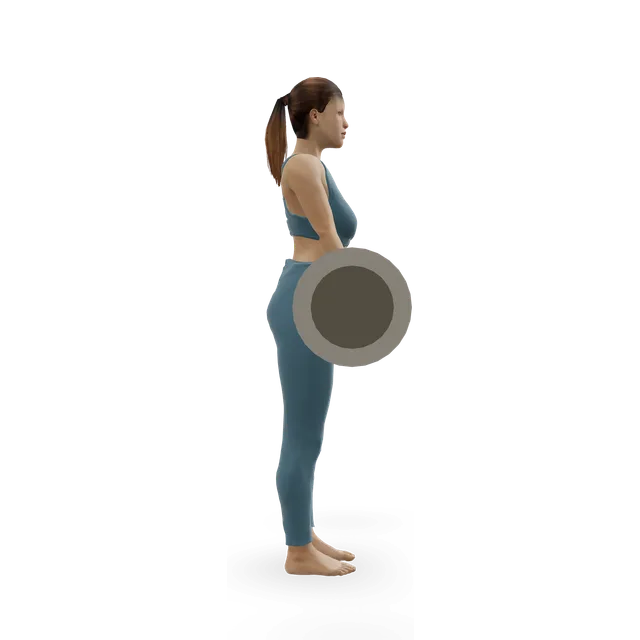 3D demoBarbell Romanian deadliftIntermediate · A barbell
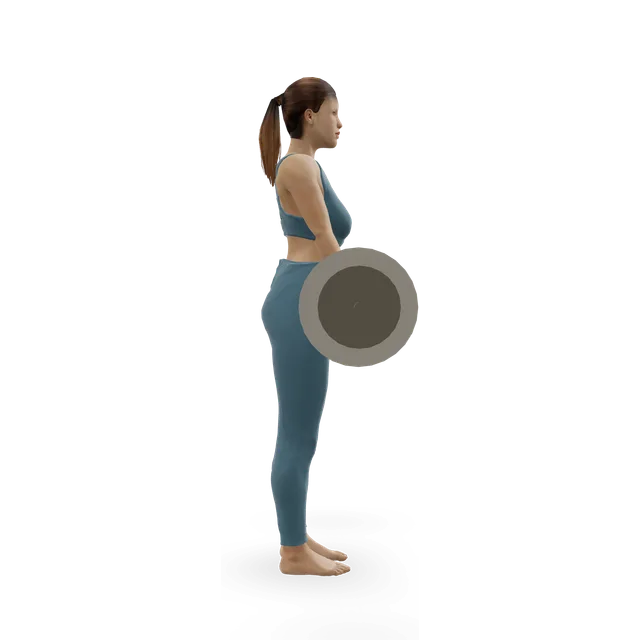 3D demoClean deadliftIntermediate · A barbell
Browse more
Questions people ask
What muscles does the Barbell deadlift work?
Mainly the glutes and hamstrings, with help from the quads, back and forearms.
What equipment do I need for the Barbell deadlift?
A barbell.
Is the Barbell deadlift good for beginners?
It is an advanced move. Build up to it with the Dumbbell Romanian deadlift first.
What is an easier alternative to the Barbell deadlift?
Try the Dumbbell Romanian deadlift or the Hip-hinge practice. Both are written steps in the same progression.
How do I make the Barbell deadlift harder?
Progress to the Deficit deadlift. Follow that guide’s technique and any stated timing.