Training guide

How to do a kettlebell deadlift: the hip hinge with a bell, sumo and single-leg versions, your lower back, and how heavy

A kettlebell deadlift is the deadlift's beginner version: stand with a kettlebell on the floor between your feet, push your hips back and bend your knees until you can reach the handle with a long back, then push the floor away to stand tall. Set it down every rep while you learn, start with 3 sets of 5, and build to 3 sets of 8 to 10 with a bell you could lift a few more times.

Nobody has measured muscle activity or the load on the back in the kettlebell deadlift itself, so this guide says what's borrowed. The bell sits close, between your feet, which the lab studies favour; rounding while lifting hasn't been linked to back pain, though heavy, repeated rounding damages discs in the lab; and kettlebell training has built strength and eased back pain a little in small trials.

This guide shows the lift and its single-leg version on the 3D figure, how to choose a bell, the sumo, double and suitcase versions, your lower back, how many to do and when to move on.

The short version

The move

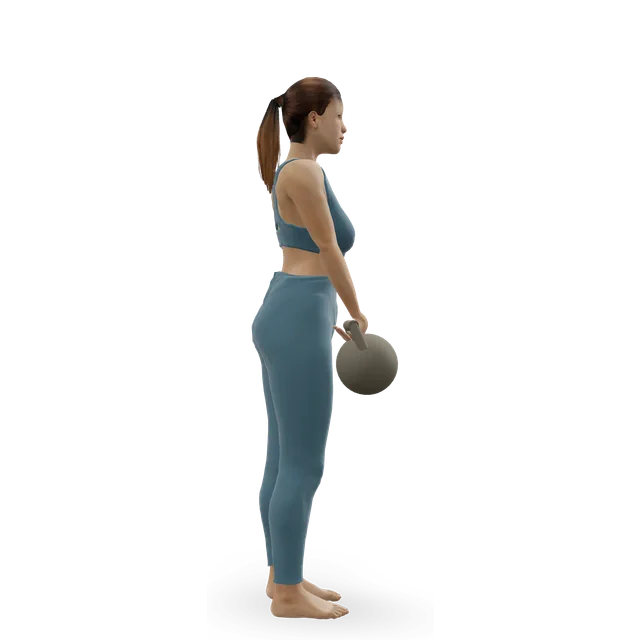
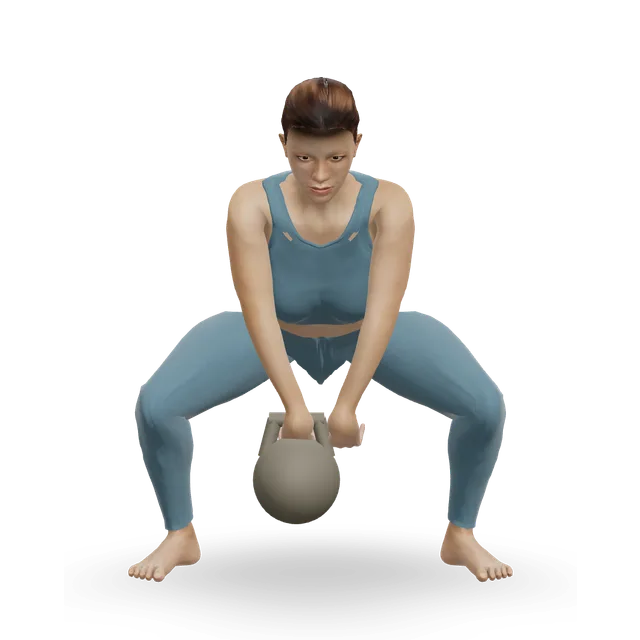
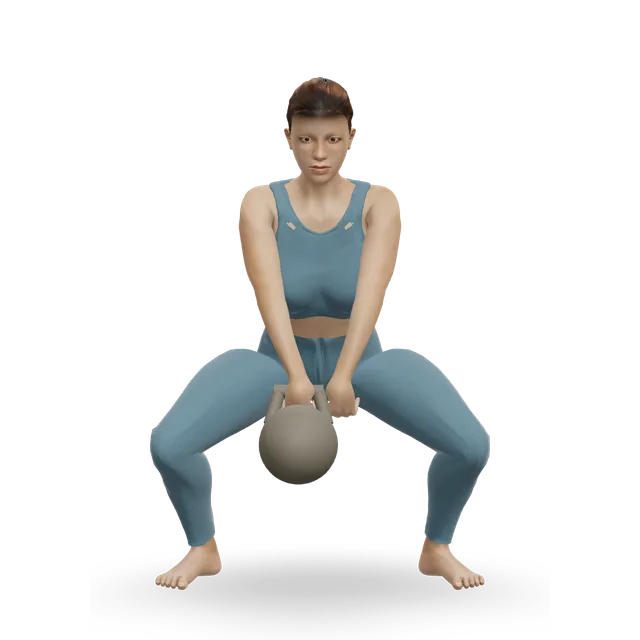
Stand with your feet about hip-width apart and a kettlebell on the floor between them, level with the middle of your feet. Push your hips back and bend your knees until both hands reach the handle, back long and chest up; brace, push the floor away and stand tall; then lower the bell the same way until it touches the floor. Set it down every rep while you learn.

Source 1

The first loaded hinge

The National Academy of Sports Medicine (NASM) calls it the deadlift's beginner version, and the American Council on Exercise (ACE) puts it straight after the bodyweight hinge. Because the bell sits between your feet, you stand over the weight, which you can't do with a barbell.

Sources 2, 3, 4

What it works: nobody has measured it

It's a hip hinge, so your glutes and hamstrings straighten your hips while your back muscles hold your shape and your grip holds the bell. We found no study of muscle activity in this exact lift; in related hinges the glutes and hamstrings work hard.

Sources 5, 6

Your back: keep the bell close and your back long

Where the weight sits in front of your spine matters more than lifting style, and a load lifted from between the feet was the one case where a bent-knee lift eased the load on the back. Rounding while lifting hasn't been linked to back pain in low-quality studies, but repeated loaded bending damaged discs in the lab, so set a long, braced back and keep that shape.

Sources 7, 8, 9, 10

How heavy

A bell you could lift 10 to 12 times, stopping with 2 or 3 reps to spare (3 or 4 in your first two weeks), as our plans advise. For scale, a workplace trial started women on 8 kg and men on 12 kg, but choose by how the reps feel, not by sex.

Sources 11, 12, 13

How many

While you learn, 3 sets of 5, setting the bell down each rep (our deadlift technique workout). Then 3 sets of 8 to 10, 2 or 3 times a week, with 2 or 3 reps in reserve (our back pain plans; NASM gives 3 sets of 6 to 12). Move on at 3 sets of 10 with your heaviest bell and a steady back.

Source 1

What a kettlebell deadlift is

Picking a bell up from between your feet

You lift a kettlebell from the floor between your feet by hinging at your hips and standing tall, then lower it the same way. It starts on the floor, so your knees bend more than in a Romanian deadlift (which starts standing and stops where your hamstrings stop you) and less than in a squat. ACE's cue: "The strength to move the weight should come from your legs and hips, NOT your shoulders."

Sources 2, 14

The muscles and joints

Your hips straighten (the glutes and hamstrings), your knees straighten a little (the front of the thighs), your back muscles hold your shape, and your grip and upper back keep the bell close. NASM lists the glutes, hamstrings and the long back muscles (erector spinae) first. Treat these as the joints that move, not measured muscle activity: nobody has measured it in this lift.

Source 1

Before you start

Our move page asks for comfortable hip-hinge practice first, and ACE moves people on to a load after 10 to 15 good unloaded hinges with a steady back. Our hip hinge guide teaches it.

Source 15

How people differ

With long legs, short arms or stiff hamstrings, the handle can sit too low to reach with a long back: raise the bell on a step or block rather than rounding to reach it, as a back pain programme did with the bar. Stiffer hamstrings went with more lower-back rounding in a stoop lift (49 adults).

In 24 lifters, men flattened their lower back's curve more than women at the start of a deadlift; small changes like this are normal and neither is wrong. Adults aged 59 to 79 trained this lift in supervised classes, building up from light bells.

Sources 16, 17, 18, 19

How to do a kettlebell deadlift, step by step

From our move page, NASM and ACE, in our editorial wording. Breathing out as you lift is our breathing guide's advice.

  1. Stand with your feet about hip-width apart, a little wider if the bell won't fit, with the kettlebell on the floor between them and the handle level with the middle of your feet, not in front of your toes.
  2. Soften your knees and push your hips back, bending your knees as much as you need until both hands reach the handle. Keep your back long and your chest up, with your eyes on the floor a little ahead.
  3. Grip the handle with both hands, arms straight. Draw your shoulders down away from your ears, breathe in and brace your stomach.
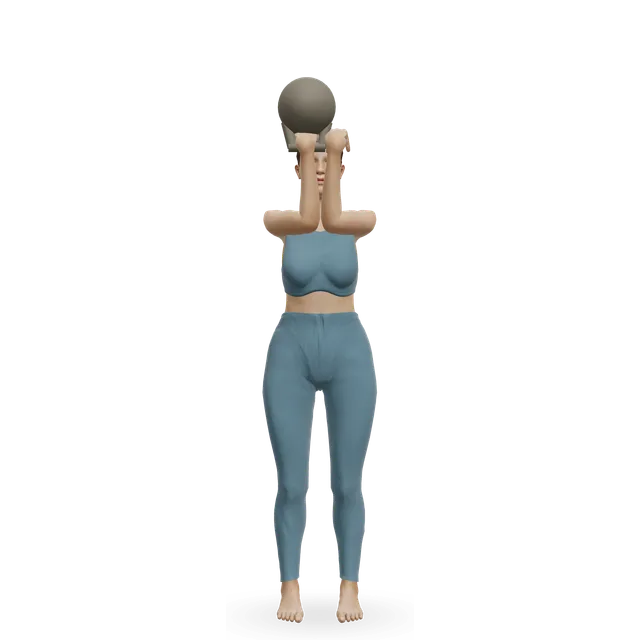
  4. Push the floor away so your hips and knees straighten together, keeping the bell close between your legs. Finish tall with your glutes tight, without leaning back.
  5. To lower, push your hips back first, then bend your knees, and let the bell travel straight down until it touches the floor between your feet.
  6. Breathe out as you stand or at the top, and reset your brace before the next rep. At the end of the set, put the bell down the way you lifted it; never drop it.

Loading the 3D figure…

Gets into position, then repeats the movement. Technical checks passed; qualified exercise review is pending.

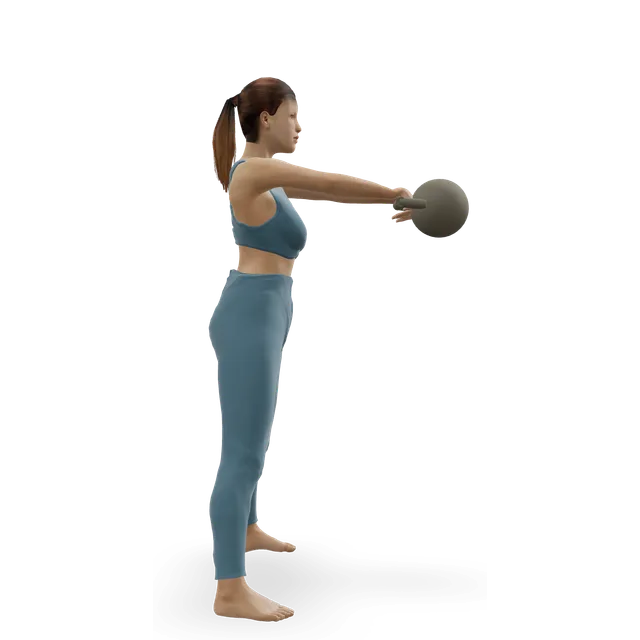
The movement on the figure: Kettlebell deadlift

What the evidence says

Nobody has studied the lift itself

We found no study of muscle activity or spinal load in the kettlebell deadlift, and none comparing it with barbell or trap bar deadlifts. A review of 99 kettlebell publications rated confidence in kettlebell research as low to very low. What follows is borrowed from studies of lifting, deadlifts and kettlebell training, and labelled as such.

Source 20

Keep the load closeEmerging evidence

In 4 people with instrumented spinal implants, stoop and squat lifts differed by only 4% in the force measured on the spine; the authors concluded that where the weight sits in front of the spine "appears to be crucial". A wide-stance lift from high handles cut modelled compression by more than 20% in 11 men. A review of lab studies found a load lifted from between the feet was the one case where a bent-knee lift lowered the turning load on the back: exactly where a kettlebell deadlift starts.

Sources 7, 21, 8

Two bells beside the bodyEmerging evidence

In 12 young men, splitting 20 kg into two loads beside the body cut peak compression on the lower back by 8 to 32% against one load in front, "roughly comparable to halving the load mass". That's the double kettlebell deadlift's set-up, though nobody has tested it with bells.

Source 22

Kettlebell training builds strengthEmerging evidence

Six weeks of swings with 12 or 16 kg bells raised half-squat strength by 9.8% in 21 men aged 18 to 27. In 32 adults aged 59 to 79, 12 weeks of supervised kettlebell classes raised predicted kettlebell deadlift strength by 16.2 kg (not a randomised trial). Six weeks of weightlifting raised back squat strength more than kettlebell training in 30 young men, though only the barbell group practised the test. The trials are small and confidence is low.

Sources 23, 19, 24, 20

Kettlebell training eased back pain at workEmerging evidence

In 40 workers in jobs with high rates of pain, mostly women, 8 weeks of kettlebell training 3 times a week, using the kettlebell deadlift as the step before swings, reduced low back pain by 1.4 points out of 10 and neck and shoulder pain by 2.1 points against no training. Their pain was mild to start with, there were no lasting or major complications, and the deadlift's share can't be separated from the swings.

Source 12

Muscle activity isn't muscle growthStrong evidence

Muscle activity measured over a few reps shows effort, not what a muscle will build over weeks, so "what it works" studies are a guide, not proof.

Source 25

Your lower back

Rounding hasn't been linked to back painMixed evidence

Across 11 low-quality studies, how much people bent their lower backs while lifting wasn't a risk factor for back pain, and in 7 of them people with back pain bent about 6 degrees less, not more. Lifters' lower backs flatten from their standing curve at the start of a deadlift and round a little more as the load rises, and a rounded back made more back-muscle force for less effort in 26 pain-free people.

The other side: repeated bending under modest compression herniated pig discs in the lab, and a 2026 review of 10 workplace studies called the direction the lower back moves "an important modifiable risk factor". Another 2026 review argues that sudden jumps in training load matter more than shape. So: set a long, braced back, accept small changes, and lower the bell if your back changes shape a lot, as our deadlift guide says.

Sources 9, 18, 26, 27, 10, 28, 29

Deadlift training for back painEmerging evidence

In 70 people with recurring back pain, barbell deadlift training (12 sessions over 8 weeks, with pain education) eased pain as much as gentler motor control exercise but improved daily activity less at 2 months, and the groups were similar at 1 and 2 years. People whose pain was milder and whose back muscles had more endurance did best.

Sources 30, 31, 32

Back strength training in generalMixed evidence

Strength programmes for the back of the body did better than general exercise for disability over 12 to 16 weeks, and possibly for pain, in 8 trials of 408 people. Only one of those trials used deadlifts, and the benefit came mostly from general gym programmes, so this isn't evidence for deadlifts in particular.

Sources 33, 34

A raised start if you can't keep your shapeEmerging evidence

In a 16-week free-weight programme for 30 adults with chronic back pain, people who couldn't keep their back from rounding when lifting from the floor lifted from a raised start instead; pain fell by about 72%. There was no comparison group, so this shows the method was workable, not that it caused the improvement.

Source 17

What NICE recommendsStrong evidence

For back pain, the National Institute for Health and Care Excellence (NICE) suggests a group exercise programme of any type, and doesn't recommend belts. It gives no lifting technique.

Source 35

The back rule

Aim for discomfort you'd call mild to moderate, no more than about 5 out of 10. It should settle within an hour or so, and your back should be no worse the next morning, as our back pain guides say. Pain, pins and needles or numbness spreading down a leg are the exception: stop, and see our sciatica guide.

With back pain, start here

Our back pain plans bring the kettlebell deadlift in as the first loaded hinge, at 3 sets of 8 to 10, light to start, adding weight while it stays within the back rule. Move on to the dumbbell Romanian deadlift once it's comfortable. Our back pain after deadlifts guide takes over if you lift heavy.

How heavy a kettlebell?

Choose by reps, not by sex

Warm up, then pick a bell you think you could lift about 10 to 12 times, do your set, and ask how many more you could have done: 2 or 3 is right. Most people misjudge the reps they have left by about one, and in your first two weeks leave 3 or 4. The American College of Sports Medicine's (ACSM) beginner range is a load you can lift 8 to 12 times.

Sources 11, 36

Trial bells, for scaleEmerging evidence

A workplace trial started women on 8 kg and men on 12 kg; a trial in young men used 12 kg below 70 kg of body weight and 16 kg above; older adults chose bells from 4 to 80 kg at an effort of 5 to 7 out of 10. No trial has compared starting weights.

Sources 12, 23, 19

Buying guides

One kettlebell maker suggests 8, 12 and 16 kg for an average-strength woman and 16 and 24 kg for an average-strength man. That's buying guidance, not a test: choose your deadlift bell by the reps you have left.

Source 13

Too light to build strength?Emerging evidence

Not at first: kettlebell training raised strength in young men and older adults. But heavier loads build more maximal strength, so when your heaviest bell feels easy for 10 or more, move on to two bells, the single-leg version, the Romanian deadlift, or a trap bar or barbell.

Sources 23, 19, 37, 38

Build up: from the hinge to the bar

Hip-hinge practice, 2 or 3 sets of 8 tapping a wall, until 10 to 15 good hinges in a row (our deadlift guide; ACE). Kettlebell deadlifts, 3 sets of 5 while you learn (our deadlift technique workout), then 3 sets of 8 to 10 (our back pain plans). Then the single-leg kettlebell deadlift, 3 sets of 6 to 8 each side (our kettlebell workout B), the kettlebell swing (our swing guide), the dumbbell Romanian deadlift, 3 sets of 8 to 10 lowering for 3 seconds (our Romanian deadlift guide, editorial), and the trap bar or barbell deadlift (our deadlift guide). None of these moves' pages gives a dose.

The single-leg kettlebell deadlift

Learn it first without a bell, fingertips on a wall, as our single-leg deadlift guide does. Its move page asks for a steady two-leg Romanian deadlift and single-leg balance first. Start at 3 sets of 6 to 8 each side (our kettlebell workout B).

  1. Stand on one leg, knee soft, with the kettlebell in the hand opposite your standing leg.
  2. Hinge forward from your hip as your free leg reaches straight back, keeping your hips square to the floor and your back long.
  3. Lower the bell close to your standing leg, as far as your hamstrings and balance allow, about shin height for many people.
  4. Drive your hip forward to stand tall, then finish the set and change legs.

Loading the 3D figure…

Gets into position, then repeats the movement. Technical checks passed; qualified exercise review is pending.

The movement on the figure: Single-leg kettlebell deadlift

Sumo, double, suitcase and single-leg versions

Single-leg: more side glute, less backEmerging evidence

The single-leg deadlift worked the gluteus maximus and gluteus medius (the side of the hip) at 59% of their maximum in 21 active people. Against a two-leg deadlift at an 8-rep maximum, it worked the gluteus medius harder (77.6% against 59.3%) and one side's back muscles less (67.2% against 82.7%) in 15 trained men. Holding the weight in the hand opposite the standing leg raised glute activity in 12 trained men. These are dumbbell and barbell studies; nobody has tested the kettlebell version.

Sources 5, 39, 40, 41

Sumo: a wider stance (no 3D demo)Emerging evidence

Feet wide, toes turned out, knees pushed out in line with your toes, the bell between your feet, and a more upright trunk. In barbell lifters, sumo shortened the bar's path by 25 to 40%, put about 10% less turning load on the lower back in models of 57 powerlifters, and worked the front of the thighs more, while conventional deadlifts worked the hips more. We found no kettlebell sumo study, and sumo isn't proven safer. Our kettlebell deadlift and plié squat demos show the hinge and the stance.

Sources 42, 43, 44, 45

Double kettlebell deadlift (no 3D demo)

A bell beside each foot, handles in line with your ankles; hinge and stand as before. Two loads beside the body loaded the back less than one in front in the lab, and two bells let you lift more in total. Start at 3 sets of 6 to 10 (our editorial starting point).

Source 22

Suitcase (one-arm) kettlebell deadlift (no 3D demo)

One bell beside one foot; stand tall without leaning towards it, then change sides. The barbell suitcase deadlift's move page shows the same one-sided lift with a bar, at 2 to 3 sets of 5 to 8 each side (the move page's dose), and our suitcase carry guide covers the side of the trunk.

Kickstand stance (no 3D demo)

One foot forward taking most of the weight, the back foot's toes touching down for balance: a step between two legs and one (coaching practice, our editorial description).

How many and how often

While you learn

3 sets of 5, setting the bell down and resetting your brace each rep, with 90 seconds' rest (our deadlift technique and swing technique workouts).

Training

3 sets of 8 to 10, the dose in our back pain plans and our deadlift and Romanian deadlift guides. NASM gives 3 sets of 6 to 12, ACE asks for 8 to 12 easily controlled reps before going heavier, and ACSM's beginner range is 8 to 12 reps, 2 or 3 days a week.

Sources 1, 4, 36

How hard

Stop with 2 or 3 reps in reserve (RIR: how many more reps you could have done), or 3 or 4 in your first two weeks, and end the set if your back starts to change shape. Training to failure isn't needed for muscle growth.

Sources 46, 11

Rest

About 90 seconds to 2 minutes between sets, as our plans suggest for compound lifts of 8 to 12 reps.

How often

2 or 3 times a week, with a day between. Strength rose most with 2 or more sessions a week in ACSM's overview, and the NHS asks adults for strengthening activities on at least 2 days a week.

Sources 38, 47

Moving up

Add reps until every set reaches 10, then go up a bell, usually 4 kg (our swing guide). Or slow the lowering to 3 seconds, or switch to a harder version. Move on from the kettlebell deadlift at 3 sets of 10 with your heaviest bell and a steady back (our deadlift guide).

Common mistakes

The bell in front of your toes

It drags you forward and rounds your back. Start with the handle level with the middle of your feet, as our move page says.

Squatting it

Hips too low and knees forward turn it into a squat, which NASM lists as a common mistake. Hips back first, shins nearly vertical.

Source 1

Rounding to reach the floor

Raise the bell on a step until your hamstrings allow more range.

Lifting with your arms or shrugging

Your arms are hooks; your hips and legs do the work.

Leaning back at the top

Stand tall and squeeze your glutes, as our deadlift guide says.

Yanking or bouncing

Take the slack out, push the floor away, and set the bell down each rep while you learn.

Too heavy, too soon

In the older adults' trial, one woman's long-standing back pain flared after a large volume of deadlifts. Build up steadily.

Source 19

Moves that go with it

Cat-cow to warm up, 8 waves, slower than feels natural (the move page's dose). Glute bridges, 12 reps (our workouts), as ACE suggests before you load the hinge. Suitcase carries, 2 walks of 20 to 30 metres each side (our workouts), and farmer's carries for grip. The kettlebell sumo high pull starts as a sumo kettlebell deadlift, 2 to 3 sets of 8 to 12 (the move page's dose), and the plié dumbbell squat shows the sumo stance, 2 sets of 8 (our sumo deadlift guide, editorial).

Workouts

The two technique workouts teach the hinge and then the kettlebell deadlift at 3 sets of 5; the kettlebell workouts use it in the warm-up, and workout B adds the single-leg version. Our hip hinge workout is the no-equipment start.

Learn to deadlift: hinge to bar workout

A 30-minute session from the hip hinge to your first deadlift: hinge practice, kettlebell deadlifts, slow Romanian deadlifts, a light bar and a carry.

30 minBeginner9 movesA kettlebell, A dumbbell

Learn the kettlebell swing

A 25-minute practice session for your first kettlebell swings: hip hinge drills, kettlebell deadlifts, then short sets of swings with a park after each.

25 minBeginner8 movesA wall, A kettlebell

Hip hinge workout: learn to hinge in 15 minutes, no equipment

Learn the hip hinge at home: the wall tap, the dowel drill and a held hinge, then single-leg hinges and bird dogs, with an optional kettlebell deadlift.

15 minBeginner9 movesA wall, A dumbbell

Kettlebell workout

A 30-minute full-body kettlebell workout: deadlifts, swings, cleans, presses, rows, halos and carries.

30 minIntermediate9 movesA kettlebell, A dumbbell

Kettlebell workout B: get-ups, squats and presses

Kettlebell workout B: Turkish get-ups, goblet squats, single-leg deadlifts, floor presses, one-arm rows and an overhead carry, with one or two bells.

40 minIntermediate10 movesA kettlebell, A dumbbell

Kettlebell swing workout: 12-minute intervals

A 20-minute kettlebell swing workout: 30 seconds of swings, 30 seconds of rest, building to the 12 rounds a training trial used, then carries.

20 minIntermediate7 movesA kettlebell, A dumbbell

Loaded carry workout: farmer's, suitcase and overhead carries

A 25-minute carry workout with dumbbells or kettlebells: farmer's carries, suitcase carries on each side and an overhead carry, with a safe pick-up first.

25 minBeginner7 movesA kettlebell, A dumbbell

Postnatal strength workout (from about 6 weeks)

A 25-minute strength workout from about 6 weeks after birth: sit-to-stands, deadlift practice, push-ups, rows, bridges and tummy work, with the knack.

25 minBeginner14 movesA bench or box, A kettlebell

Plans

Our kettlebell plan uses kettlebell deadlifts in place of swings until your hinge is solid.

Who should change it

Back pain

Light, within the back rule, as our back pain plans bring it in. Pain, pins and needles or numbness down a leg means a smaller range and our sciatica guide.

A disc problem with leg symptoms

While symptoms are irritable, reduce the weight and range, then rebuild, as our herniated disc guide explains.

Osteoporosis

Strength training is recommended, building towards weights you can lift 8 to 12 times, with good technique first. The UK consensus advises modifying or avoiding "Any exercise that causes the back to curve excessively especially with an added load", so keep your back long. The Royal Osteoporosis Society names kettlebells among the weights you can use and says "It is how you lift rather than how much you lift that matters." In one trial of 101 women with low bone mass, closely supervised heavy lifting raised spine bone density; learn heavier lifts with a physiotherapist or coach.

Sources 48, 49, 50

Pregnancy

The NHS says strength training at a gym is fine "if you do this already", but not to start a new vigorous activity. Pelvic girdle pain can be worse standing on one leg and lifting heavy objects, so with it skip the single-leg and wide-stance versions and keep the bell light.

Sources 51, 52

After a birth or with a prolapse

The NHS says to avoid heavy lifting at first. After a caesarean, lift nothing heavier than your baby for about 6 weeks, then build up, as our move page says; our postnatal strength workout starts the kettlebell deadlift no heavier than your baby in a car seat. With a prolapse, get advice from a pelvic health physiotherapist before heavy lifts, and ease off if you feel heaviness, dragging or a bulge.

Source 53

High blood pressure, heart disease or glaucoma

Use moderate bells and breathe out as you lift, as our breathing guide advises, and see the checks below.

Source 54

Warning signs

Stop and get medical help

If you get chest pain or pressure, feel faint or dizzy, are unusually breathless, or your heart races or beats irregularly during exercise, as our plans advise. The American Heart Association says these need immediate medical evaluation.

Source 54

Call 999 (911 in the US)

For chest pain that comes on suddenly and doesn't go away, feels tight or like squeezing, spreads to your arms, neck, jaw, stomach or back, or comes with sweating, feeling sick, light-headedness or breathlessness; arm pain that comes on suddenly with pressure, heaviness or squeezing across your chest; severe difficulty breathing, or a chest that feels tight or heavy; someone who faints while exercising; palpitations that don't go away, or come with chest pain, shortness of breath or feeling faint; or a headache that starts suddenly and is extremely painful, especially while lifting or straining. The NHS says a bleed on the brain may be more likely when lifting something heavy. Don't drive yourself to A&E.

Sources 55, 56, 57, 58, 59, 60, 61, 62

A headache with effort

Ask for an urgent GP appointment or get help from NHS 111 for a headache that's triggered or made worse by coughing, sneezing, bending down or exercising.

Source 61

Back pain

Call 999 or go to A&E: loss of feeling or numbness around the genitals or bottom, new trouble peeing or controlling your bladder or bowels, changes in genital sensation during sex or problems with erections or orgasm, or pain, tingling, weakness or numbness in both legs. These are signs of cauda equina syndrome, which needs treating in hospital urgently. Don't drive yourself.

See a GP if pain spreading down a leg hasn't improved after a few weeks of home treatment, is getting worse or stops your normal activities. Sciatica on both sides, or weakness or numbness in both legs that's severe or getting worse, is a 999 call or a trip to A&E.

Sources 63, 64

A bell dropped on your foot

Call 999 or go to A&E if you heard a crack, the joint or limb has changed shape or points at an odd angle, it's numb or tingling, or the skin looks blue or grey or feels cold. Get help from NHS 111 (in the US, urgent care) if it's very painful, very swollen or bruised, very stiff, or you can't put weight on it or walk more than a few steps.

Wear shoes, and set the bell down rather than dropping it.

Source 65

The back of your thigh

A sudden sharp pain at the back of your thigh during a lift is likely a pulled hamstring: stop and see our hamstring strain guide. A deep ache at the sitting bone that's worse with deep bending and sitting suggests a high hamstring tendon problem: our tendinopathy guide leaves deep hinging out at first, then brings it back after the kettlebell deadlift.

A new lump or bulge in your groin or tummy

See a GP if you think you have a hernia, a bulge or lump that may get bigger when you strain and smaller when you lie down. Get help from NHS 111 if you have a hernia and pain in or around it, a bloated tummy, you feel or are sick, you're vomiting blood or your vomit looks like coffee grounds, you're constipated, you have a high temperature or feel hot, cold or shivery, or you've suddenly become confused. Call 999 or go to A&E for a femoral hernia (a small lump at the top of your thigh, in your groin) with very bad tummy pain, sickness, being unable to fart or poo, a high temperature or sudden confusion.

The NHS lists lifting heavy weights among the causes of a femoral hernia. After an inguinal hernia repair, avoid heavy lifting or strenuous activity for at least 4 to 6 weeks.

Sources 66, 67, 68

Before you start

Speak to your GP first if you haven't exercised for some time or have medical conditions or concerns, as the NHS advises. Get advice before hard or straining work if your blood pressure is uncontrolled (140/90 or higher at a clinic, or 135/85 at home), or you have heart disease or chest pain when you're active, a pacemaker or defibrillator, diabetic eye disease, glaucoma, a hernia, recent eye or tummy surgery, or you're pregnant, as our breathing guide lists.

With controlled high blood pressure, the American Heart Association considers low- to moderate-intensity strength training with proper breathing safe. Breathe out as you lift, as our breathing guide advises.

Sources 47, 69, 54

Myths

"Kettlebell deadlifts are too light to build strength"Emerging evidence

Not for beginners and most home exercisers: kettlebell training raised strength in young men, workers and older adults. There is a ceiling: heavier loads build more maximal strength, and barbell training beat kettlebells for squat strength in one 6-week trial. When your heaviest bell is easy for 10, move on.

Sources 23, 19, 12, 37, 24

"Kettlebell deadlifts are safer for your back than barbell deadlifts"

One coaching body calls the kettlebell deadlift "superior for lower back health compared to conventional deadlifts". It's plausible, because the load is closer and usually lighter, but we found no study comparing them.

Sources 1, 7

"Never let your back round at all"Mixed evidence

Small changes in back shape under a load are normal, and rounding hasn't been linked to back pain in low-quality studies. But repeated loaded rounding damaged discs in the lab, so set a long, braced back and lower the bell if it changes a lot.

Sources 9, 10

"Kettlebell deadlifts fix your posture"

Some pages promise this; we found no study of it.

"Women should start with 8 kg and men with 16 kg"

That's buying guidance from one maker, and a workplace trial started men on 12 kg. Choose by the reps you have left, not by sex.

Sources 13, 12

Questions people ask

What is a kettlebell deadlift?

Picking a kettlebell up from the floor between your feet by pushing your hips back, bending your knees a little and standing tall, then lowering it the same way. It's the beginner version of the deadlift and the first loaded step after learning the hip hinge.

How do you do a kettlebell deadlift?

Stand with the bell between your feet, level with the middle of your feet. Push your hips back and bend your knees until you can grip the handle with a long back, brace, then push the floor away to stand tall. Lower it the same way, and set it down every rep while you learn.

What muscles do kettlebell deadlifts work?

Mainly your glutes and hamstrings, which straighten your hips, with your back muscles holding your shape and your grip holding the bell. Nobody has measured muscle activity in this exact lift; in related hinges the glutes and hamstrings work hard.

Are kettlebell deadlifts effective?

Yes, for learning the hinge and building strength from a beginner level: kettlebell training raised strength in small trials, including kettlebell deadlift strength in older adults. Heavier loads build more maximal strength, so when your heaviest bell is easy, move to two bells, one leg or a bar.

What weight kettlebell should I use for deadlifts?

One you could lift 10 to 12 times, stopping with 2 or 3 reps to spare, or 3 or 4 in your first two weeks. A workplace trial started women on 8 kg and men on 12 kg, but choose by how the reps feel, not by sex.

How many sets and reps of kettlebell deadlifts should I do?

While you learn, 3 sets of 5, setting the bell down each rep. Then 3 sets of 8 to 10, 2 or 3 times a week, stopping with 2 or 3 reps in reserve, and move on at 3 sets of 10 with your heaviest bell.

Are kettlebell deadlifts good for your lower back?

They're the first loaded lift in our back pain plans, at 3 sets of 8 to 10, light to start. Kettlebell training eased low back pain a little in a workplace trial, and deadlift training helped about as much as gentler exercise in people with recurring back pain. Keep the pain within our back rule and stop for pain down a leg.

Is it bad if my back rounds in a kettlebell deadlift?

A small change under load is normal, and rounding hasn't been linked to back pain in pooled studies, but repeated loaded rounding damaged discs in the lab. Set a long back and keep it; if you can't reach the bell without rounding, raise it on a step.

Kettlebell deadlift or Romanian deadlift: what's the difference?

The kettlebell deadlift starts from the floor each rep, with more knee bend. The Romanian deadlift starts standing and lowers only until your hamstrings stop you, with soft, still knees. Learn the kettlebell deadlift first; our Romanian deadlift guide covers the rest.

Kettlebell deadlift or kettlebell swing?

The deadlift is slow and teaches the hinge; the swing is the same hinge done fast, with the bell floating to chest height. Learn the deadlift first, as ACE and our swing guide advise, and with back pain start with deadlifts only.

How do you do a single-leg kettlebell deadlift?

Stand on one leg with the bell in the opposite hand, hinge as your free leg reaches back with your hips square, then stand tall. Learn it without a bell at a wall first; holding the weight in the opposite hand raised glute activity in one study.

How do you do a sumo kettlebell deadlift?

Stand with your feet wide and toes turned out, the bell between them, push your knees out in line with your toes and keep your trunk more upright. There's no 3D demo of it yet: our kettlebell deadlift and plié squat demos show the hinge and the stance. Sumo isn't proven safer for your back; it's a choice.

Sources

  1. NASM · Kettlebell deadlift (exercise library, National Academy of Sports Medicine)
  2. NASM · The NASM guide to squats and deadlifts: the kettlebell deadlift as the beginner deadlift (coaching guide, National Academy of Sports Medicine)
  3. Thomas 2018 · Progressions and regressions: the hinge ladder from an assisted hinge to the kettlebell deadlift (coaching article, American Council on Exercise)
  4. McCall 2024 · The Do It Better series: the deadlift (coaching article, American Council on Exercise)
  5. Distefano 2009 · Glute muscle activity in 12 rehabilitation exercises in 21 people (EMG study, J Orthop Sports Phys Ther)
  6. Del Monte 2020 · Hamstring activity in three styles of kettlebell swing: 14 people (EMG study, J Strength Cond Res)
  7. Dreischarf 2016 · Forces measured on spinal implants in stoop and squat lifting: 4 patients (in-body measurement study, J Biomech)
  8. van Dieën 1999 · Stoop or squat: lifting technique and the load on the back (review of lab studies, Clin Biomech)
  9. Saraceni 2020 · Lower-back bending while lifting and back pain: 11 studies (systematic review and meta-analysis, J Orthop Sports Phys Ther)
  10. Callaghan 2001 · Repeated bending under load and disc herniation in pig spines (lab study, Clin Biomech)
  11. Halperin 2022 · How accurately people predict the reps they have left: 12 studies (scoping review and meta-analysis, Sports Med)
  12. Jay 2011 · Kettlebell training for neck, shoulder and back pain in 40 workers (RCT, Scand J Work Environ Health)
  13. StrongFirst · What kettlebell sizes do I need? (buying guidance)
  14. McCall 2018 · Four deadlift variations, including the kettlebell deadlift (coaching article, American Council on Exercise)
  15. McCall 2016 · Technique series: the Romanian deadlift (American Council on Exercise)
  16. Patterson 2025 · Hamstring flexibility, back strength and lower-back bending in a stoop lift: 49 adults (lab study, J Appl Biomech)
  17. Welch 2015 · A 16-week free-weight programme in 30 adults with chronic back pain (cohort study, BMJ Open Sport Exerc Med)
  18. Bengtsson 2022 · Lower-back alignment during the deadlift in 24 men and women (lab study, Int J Sports Phys Ther)
  19. Meigh 2022 · Supervised kettlebell training in 32 adults aged 59 to 79: the BELL trial (non-randomised controlled trial, BMC Geriatr)
  20. Meigh 2019 · Kettlebell training in clinical practice: 99 publications (scoping review, BMC Sports Sci Med Rehabil)
  21. Kingma 2010 · How to lift a box too big to fit between the knees: 11 men (lab study, Ergonomics)
  22. Faber 2009 · Two loads beside the body against one in front: the load on the lower back in 12 men (lab study, J Biomech)
  23. Lake 2012 · Six weeks of kettlebell swings and maximal and explosive strength in 21 men (RCT, J Strength Cond Res)
  24. Otto 2012 · Weightlifting against kettlebell training over 6 weeks in 30 men (RCT, J Strength Cond Res)
  25. Vigotsky 2022 · Muscle activity measured in one session isn't a validated predictor of muscle growth (review, Sports Med)
  26. Shoji 2025 · Load and spinal bending in the deadlift: 13 participants (lab study, Front Sports Act Living)
  27. Mawston 2021 · Flexed and arched lower-back postures in a maximal lift: 26 pain-free people (lab study, Gait Posture)
  28. Liu 2026 · Lifting style, the direction the lower back moves and back pain at work: 10 studies (systematic review, Int J Occup Med Environ Health)
  29. Cherni 2026 · Beyond the neutral spine: preventing back injury in deadlifting (narrative review, Sports)
  30. Aasa 2015 · Deadlift training against low-load motor control exercise in 70 people with recurring back pain (RCT, J Orthop Sports Phys Ther)
  31. Michaelson 2016 · Deadlift training against motor control exercise for back pain: 2-year follow-up (RCT, J Rehabil Med)
  32. Berglund 2015 · Which people with back pain benefit from deadlift training? 35 patients (secondary analysis of an RCT, J Strength Cond Res)
  33. Tataryn 2021 · Strength training for the back of the body against general exercise for chronic back pain: 8 trials, 408 people (meta-analysis, Sports Med Open)
  34. Fischer 2021 · Does an exercise programme with deadlifts help low back pain? (critically appraised topic, J Sport Rehabil)
  35. NICE NG59 · Low back pain and sciatica in over 16s: assessment and management (guideline, last updated July 2026)
  36. ACSM 2009 · Progression models in resistance training for healthy adults (position stand, MSSE)
  37. Schoenfeld 2017 · Light against heavy loads for strength and muscle growth: 21 studies (meta-analysis, J Strength Cond Res)
  38. Currier 2026 · Resistance training for muscle function, size and performance in healthy adults: an overview of 137 reviews (ACSM position stand, MSSE)
  39. Diamant 2021 · Single-leg against two-leg deadlift: muscle activity at an 8-rep max in 15 trained men (EMG study, Int J Exerc Sci)
  40. Mo 2023 · Where you hold the weight in a single-leg Romanian deadlift: trunk and hip muscle activity in 12 trained men (EMG study, Front Physiol)
  41. Collings 2023 · Glute muscle forces in hip injury prevention exercises in 14 female footballers (modelling study, MSSE)
  42. Escamilla 2000 · Sumo and conventional deadlifts in 24 national-level powerlifters (3D motion study, MSSE)
  43. Cholewicki 1991 · Lower-back loads lifting very heavy weights in 57 powerlifters (modelling study, MSSE)
  44. Escamilla 2002 · Muscle activity in sumo and conventional deadlifts in 13 college football players (EMG study, MSSE)
  45. Hanen 2025 · Conventional and sumo deadlifts in 30 experienced men (biomechanics study, Front Bioeng Biotechnol)
  46. Refalo 2023 · Training close to failure and muscle growth: 15 studies (meta-analysis, Sports Med)
  47. NHS · Physical activity guidelines for adults aged 19 to 64
  48. Brooke-Wavell 2022 · Strong, steady and straight: UK consensus on physical activity and exercise for osteoporosis (consensus statement, Br J Sports Med)
  49. Royal Osteoporosis Society · How to exercise safely for bones, including the hip hinge (patient information, reviewed June 2026)
  50. Watson 2018 · Supervised heavy lifting and impact training in 101 women with low bone mass: the LIFTMOR trial (RCT, J Bone Miner Res)
  51. NHS · Exercise in pregnancy
  52. NHS · Pelvic pain in pregnancy (past its review date: reviewed December 2022, review due December 2025)
  53. NHS · Your post-pregnancy body
  54. Paluch 2024 · Resistance exercise training with and without cardiovascular disease: 2023 update (American Heart Association scientific statement, Circulation)
  55. NHS · Chest pain (past its review date: reviewed August 2023, review due August 2026)
  56. NHS · Heart attack
  57. NHS · Elbow and arm pain
  58. NHS · Shortness of breath
  59. NHS · Fainting
  60. NHS · Heart palpitations
  61. NHS · Headaches
  62. NHS · Subarachnoid haemorrhage
  63. NHS · Back pain
  64. NHS · Sciatica
  65. NHS · Sprains and strains
  66. NHS · Hernia
  67. NHS · Femoral hernia
  68. NHS · Inguinal hernia repair
  69. NHS · High blood pressure

Exercise education, not a personal prescription, and clinical review of these guides is pending. Check with a GP before starting hard training if you have a heart condition, chest pain, dizziness or breathlessness when active, and stop for sharp or increasing pain. Health disclaimer.