Training guide

How to hip hinge: bending from your hips, the wall and dowel drills, your hamstrings, your back, and how it carries into deadlifts and swings

To hip hinge, stand with your feet hip-width apart and your hands in your hip creases, push your hips back as if to shut a car door behind you, and let your trunk tip forward with your back long until your hamstrings stop you; then drive your hips forward to stand. Practise 2 or 3 sets of 8, tapping your hips back to a wall or with a broom handle along your back, until 10 to 15 in a row look the same.

The hinge is the movement inside deadlifts, Romanian deadlifts, good mornings and kettlebell swings, and the way of bending the UK osteoporosis consensus recommends. What it isn't is the only safe way to bend: rounding your back while lifting hasn't been linked to back pain, and teaching workers to "lift with their legs" didn't prevent it.

This guide shows the hinge on the 3D figure, the wall and dowel drills, how far to go, what the evidence says about your back, how it leads into kettlebell deadlifts and swings, and a 15-minute workout to learn it.

The short version

The move

Feet hip-width apart, knees soft, hands in the creases at the tops of your thighs. Push your hips back, let your trunk tip forward with your back long and your shins nearly vertical, stop when your hamstrings stop you or your back is about to change shape, then drive your hips forward to stand. The American Council on Exercise (ACE) takes the trunk to about halfway between upright and level.

Source 1

Two drills teach it

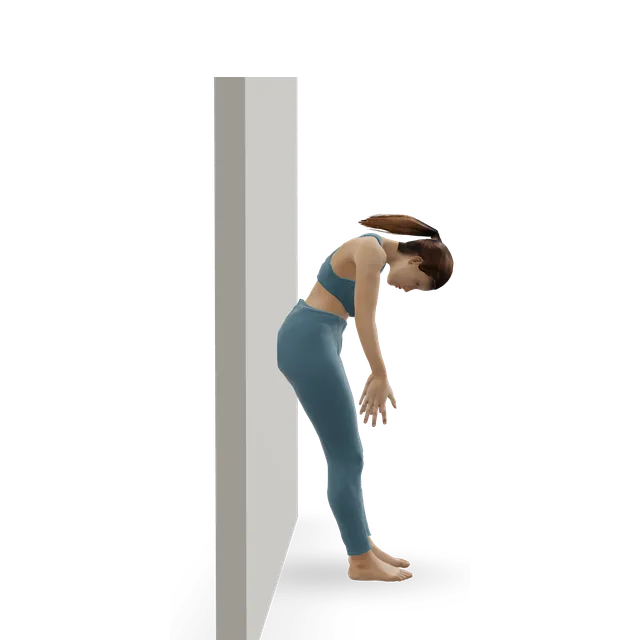
The wall tap: stand a short step in front of a wall and push your hips back to touch it. The dowel: a broom handle along your back touching your head, between your shoulder blades and your tailbone, kept in contact as you hinge. Coaches teach them in that order, then add a kettlebell deadlift.

Sources 1, 2, 3

Your hamstrings set your depth

Stiffer hamstrings went with more lower-back rounding in a stoop lift. Stop where yours stop you, or bend your knees a little more, rather than rounding to reach further.

Source 4

"Never bend your back" is a myth

Across 11 low-quality studies, bending the lower back while lifting wasn't a risk factor for back pain, and people with back pain bent less, not more. The caution: repeated loaded bending damaged discs in the lab, so under a load, set a long back and don't let it round further, as the Health and Safety Executive (HSE) puts it.

Sources 5, 6, 7

"Lift with your legs" doesn't prevent back pain

Teaching workers a lifting technique didn't prevent back pain in 7 trials of 19,317 workers, and a squat-style lift isn't easier on the spine. The Chartered Society of Physiotherapy (CSP) says "You should not fear bending or lifting". The hinge is a good way to lift a load in training, not the only safe way to bend.

Sources 8, 9, 10

How many

2 or 3 sets of 8, tapping a wall or with a dowel, until 10 to 15 in a row look the same with a steady back, as ACE advises and our deadlift, Romanian deadlift and swing guides use. Then load it with a kettlebell deadlift.

Source 11

What a hip hinge is

Bending from your hips

In a hinge you fold at your hips while your spine keeps roughly the shape you set: hips back, knees soft and nearly still, shins close to vertical, weight through the middle of your feet. It's the pattern inside deadlifts, Romanian deadlifts, good mornings, kettlebell swings, single-leg deadlifts and the set-up for bent-over rows, and the UK osteoporosis consensus recommends practising it in everyday bending too.

Sources 12, 13

Hinge, squat or bending over

In a hinge your hips do most of the bending; in a squat your knees and hips bend together and you stay more upright. Everyday bending over uses your lower back and hips together, and that's normal: in a toe touch, 126 people without back pain bent their lower backs about 52 degrees and tipped their pelvis about 59. The lower back's share falls with age. None of these is wrong; the hinge is the one that lets your hips do the work when you lift a load in front of you.

Sources 14, 15

The muscles and joints

Your hamstrings lengthen as you go down (the pull you feel at the back of your thighs), then your glutes and hamstrings straighten your hips, while your back muscles hold your shape and your stomach muscles brace. Unloaded, it's a skill drill rather than a strength exercise.

Before you start

Comfortable standing and a small pain-free range of hinging, as our move page asks.

How people differ

Stiffer hamstrings mean a shallower hinge before your back starts to round. People with back pain tend to bend less and more slowly, which is protective guarding, not a fault to drill away. In gym-goers, women tipped the pelvis more and rounded less in swings and deadlifts. Longer thighs mean more forward lean for the same depth. The drills work for any shape.

Sources 4, 14, 16

How to hip hinge, step by step

From our move page, ACE and the National Strength and Conditioning Association (NSCA), in our editorial wording. ACE takes the trunk to "midway between vertical and parallel to the floor"; the car door cue is the NSCA's.

  1. Stand with your feet hip-width apart, toes forward or slightly out, knees soft, and your hands in the creases at the tops of your thighs.
  2. Push your hips back as if to shut a car door behind you with your bottom, letting your trunk tip forward. Your hands should feel your hips fold.
  3. Keep your back long, in the shape you started with, and your neck in line, eyes on the floor a little ahead. Your shins stay nearly vertical, with your weight through the middle of your feet.
  4. Go until you feel a strong pull at the back of your thighs or your back is about to change shape, whichever comes first.
  5. Drive your hips forward to stand tall, squeezing your glutes, without leaning back.
  6. Repeat until 10 to 15 in a row look the same, then add a load.

Loading the 3D figure…

Gets into position, then repeats the movement. Technical checks passed; qualified exercise review is pending.

The movement on the figure: Hip-hinge practice

The dowel and wall drills

The same drill our Romanian deadlift guide teaches, from ACE's hip hinge (the rod drill) and its Romanian deadlift article (10 to 15 good hinges before loading, and a hand in front of the knees). The wall tap is from our deadlift guide and the NSCA, the car door cue is the NSCA's, and the bench is editorial. The 3D figure shows the hinge without the rod. If a point of the rod lifts, you've rounded or lifted your head; the popular "hip hinge test" is this drill used as a check, a coaching check rather than a validated test.

  1. Stand with your feet hip-width apart, holding a light rod or broom handle along your back so it touches the back of your head, between your shoulder blades and your tailbone.
  2. Soften your knees, then push your hips back as if to shut a car door behind you, letting your trunk tip forward. The rod should keep all three points of contact.
  3. Go as far as you can while the rod stays in contact, then drive your hips forward to stand.
  4. No rod? Stand a short step in front of a wall and push your hips back to tap it, moving a little further away as you improve.
  5. If your knees drift forward into a squat, practise with a bench or a partner's hand just in front of your knees.
  6. Aim for 10 to 15 good hinges in a row with a steady back before you add a weight.

Loading the 3D figure…

Gets into position, then repeats the movement. Technical checks passed; qualified exercise review is pending.

The movement on the figure: Hip-hinge practice

How far to go: your hamstrings

Stiffer hamstrings, more roundingEmerging evidence

In 49 healthy adults, stiffer hamstrings and weaker back muscles went with more lower-back rounding in a stoop lift (a correlation of minus 0.54). People with back pain moved their pelvis less and their lower back more in forward bending (68 people). These are snapshots, not trials, but they explain the rule: stop where your hamstrings stop you.

Sources 4, 17

Stretching changes the pelvis, not the hinge itselfEmerging evidence

Six weeks of dynamic hamstring stretching let 12 men tip the pelvis further in forward bending, not the lower back. There was no comparison group. Stretch for comfort and range if you like; practise the hinge to learn it.

Source 18

Ordinary bending is a mixEmerging evidence

Everyday forward bending uses a lot of lower-back movement as well as the hips, and the lower back's share falls with age (309 adults aged 20 to 75). A hinge is a trained pattern for loaded lifts, not the only correct way to bend.

Sources 14, 15

Learning it: what the evidence says

What coaches teach

ACE's drill keeps a light bar on the back of the head, between the shoulder blades and on the tailbone, with only slight knee bend, and asks for 10 to 15 good hinges with a steady spine before adding a load, with a hand in front of the knees if they drift forward. The NSCA's order is a back-to-wall hinge, then the dowel, then the kettlebell deadlift; ACE's ladder starts with an assisted hinge, holding a rack or straps. Neither gives sets or reps.

Sources 1, 11, 3, 2

One coached session changes how you hingeEmerging evidence

In 33 healthy young adults, about 8 minutes of coaching raised hip bend in the hinge from 80.7 to 104.6 degrees, with the knees and ankles unchanged. It was one group with no comparison and no follow-up, and the authors say the evidence "does not establish an optimal technique for teaching the hip hinge".

Source 19

Practise it; don't just read the cueEmerging evidence

Told to avoid hip movement, 25 people moved their pelvis less but their lower back no differently, so words alone shift the hips more than the spine. A short video changed 50 office workers' beliefs about back pain but not how they lifted.

Sources 20, 21

Hinge more at the hip, round lessEmerging evidence

In 39 gym-goers doing swings and deadlifts, those who tipped the pelvis more rounded the spine less. It was a sensor study, and its cut-off for "poor" posture isn't linked to injury.

Source 16

Does it carry over to deadlifts and swings?

We found no study that trained the unloaded hinge and then measured deadlift or swing technique, strength or injury. The NSCA says the dowel "tends to promote movement from the hip joints rather than the spine", a coaching view rather than a test. The link is coaching logic, and a sound one: every loaded hinge uses the same pattern.

Source 3

Your back: rounding, "lift with your legs" and what the evidence says

Rounding hasn't been linked to back painMixed evidence

Across 11 low-quality studies, lower-back bending while lifting wasn't a risk factor for back pain; 9 found no difference between people with and without it, and in 7 pooled studies people with back pain bent about 6 degrees less. People with back pain lift slower and stiffer, with more knee bend, a style that "mirrors how people ... are often told how to lift"; manual workers with back pain bent their knees 26.4 degrees more and their lower back about 4 to 5 degrees less.

Against that, highly repeated bending under modest compression herniated pig discs, and a 2026 review of 10 workplace studies called the direction of lower-back movement a risk factor worth changing; another 2026 review argues load jumps matter more than shape. The middle path, as in our deadlift guide: under a load, set a long back and keep it.

Sources 5, 22, 23, 24, 6, 25, 26

Teaching people to lift a certain way didn't prevent back painStrong evidence

In a Cochrane review of 9 trials and 20,101 workers, training in lifting technique, with or without lifting aids, didn't prevent back pain: in the 7 trials that could be combined (19,317 workers), back pain was as common with training as without (odds ratio 1.17, 0.68 to 2.02; moderate-quality evidence). An earlier review of 6 trials found the same.

Sources 8, 27

A squat-style lift isn't easier on your backEmerging evidence

A review of lab studies found disc pressure didn't differ between stoop and squat lifting, and modelled loads were the same or higher when squatting, except with the load between the feet. Lifting a box from 5 cm with the feet behind it, squatting gave about 20% more turning load on the back in 10 people. Measured on spinal implants in 4 people, the two styles were 4% apart. In 30 adults, stoop lifting gave lower compression but higher shear. Keeping the load close mattered most.

Sources 9, 28, 29, 30

What the HSE actually says

The UK's workplace regulator doesn't say "keep your back straight": "Slight bending of your back, hips and knees at the start of the lift is preferable to either fully flexing your back (stooping) or fully flexing your hips and knees (full/deep squatting)." It adds "Don't flex your back any further while lifting", keep the load close to your waist, turn with your feet, and that good technique "is not a substitute" for other ways of reducing risk at work.

Source 7

Health advice still disagreesMixed evidence

The NHS pregnancy pages say to bend your knees and keep your back straight when you lift, and one NHS trust leaflet says "Keep your back straight. Bend your hips and knees". The HSE rejects a full squat as well as a full stoop, and the CSP says "it's perfectly normal for us to find our own technique for lifting". None of this advice rests on injury trials.

Sources 31, 32, 33, 7, 10

Many professionals still believe in the straight backStrong evidence

In a survey of 400, 75% of physiotherapists and 91% of manual handling advisers chose a straight back as the safest way to lift, "despite the lack of evidence that any specific spinal posture is a risk factor". In 1,005 respondents, 70% of qualified physiotherapists saw no light-load lifting style as harmful, against 1% of medical students. These are surveys of belief, not of injury.

Sources 34, 35

Heavy, frequent lifting at work is a different questionMixed evidence

In 861 workers followed for 3 years, bending 60 degrees or more for over 5% of the day and lifting 25 kg or more over 15 times a day went with a little more back pain, and across 8 cohorts the odds rose about 11% for every 10 kg lifted. But in 4 cohorts of 2,013 workers, measured trunk bending at work wasn't linked to more back pain, and a review of 41 reviews found no consensus that posture causes back pain. This is about long working days, not a few hinges in the gym.

Sources 36, 37, 38, 39

The back rule

Aim for discomfort you'd call mild to moderate, no more than about 5 out of 10. It should settle within an hour or so, and your back should be no worse the next morning, as our back pain guides say. Pain, pins and needles or numbness spreading down a leg are the exception: stop, and see our sciatica guide.

Bending with osteoporosis

The hinge is the advised way to bendStrong evidence

The UK consensus on osteoporosis calls the hip hinge "a simple technique for safe bending" that "can be practised and integrated into all day-to-day movements", with the upper back straight and the neck in line, and advises modifying or avoiding sustained, repeated or end-range bending. An international expert consensus also recommends the hip hinge in daily life. The Royal Osteoporosis Society says "use the hip hinge to bend safely". These are expert consensus, not trial results.

Sources 13, 40, 41

Bending isn't banned

The Royal Osteoporosis Society says bending forward "is generally safe and won't cause a spinal fracture", but you may over-flex your spine if you push to the limit, especially with uncontrolled, repeated or sudden movements or a load on a curved spine. After a spinal fracture, ask a physiotherapist before loaded bending (our osteoporosis guide).

Source 42

From the hinge into lifts

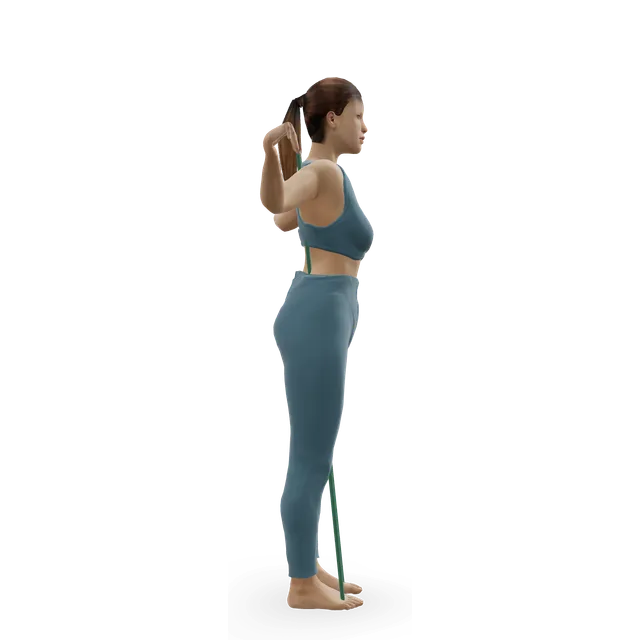
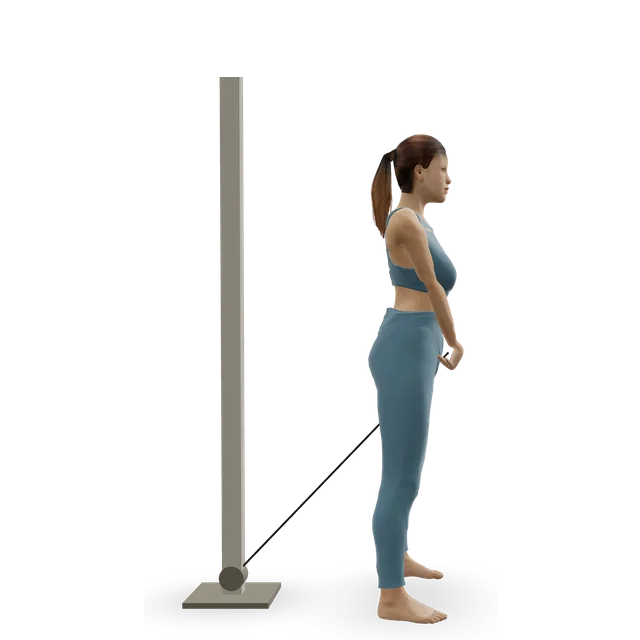
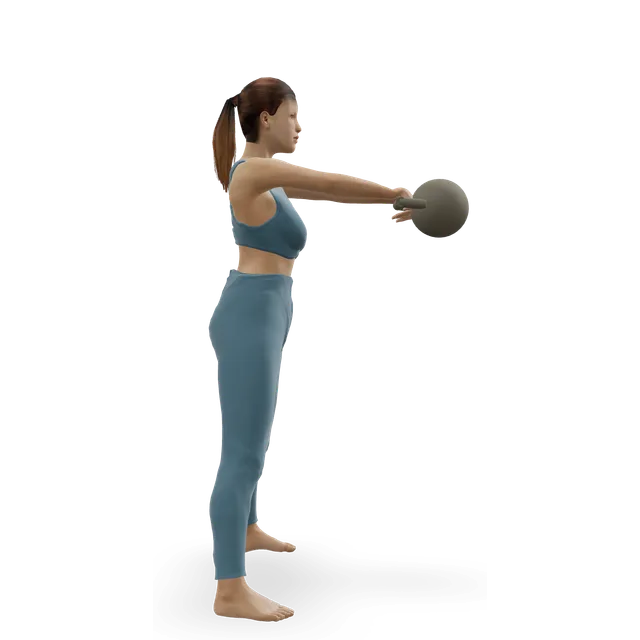
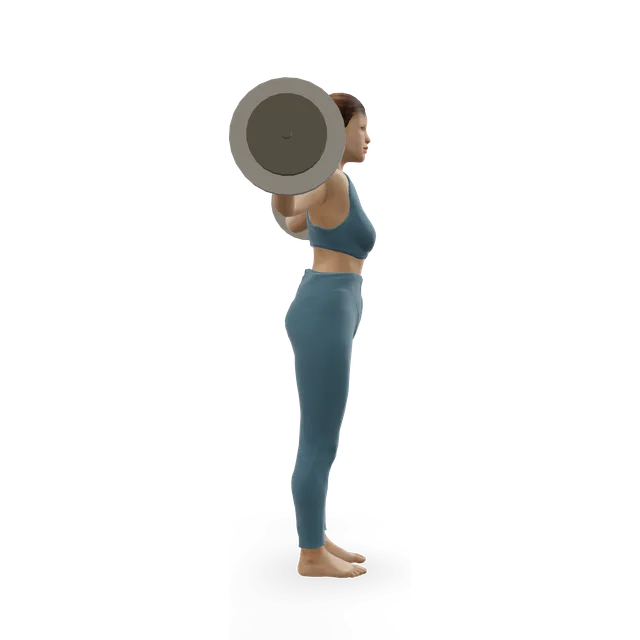
Hip-hinge practice, 2 or 3 sets of 8 with the wall tap or dowel, until 10 to 15 good hinges in a row (our deadlift guide; ACE). The band good morning, 2 to 3 sets of 8 to 12 with 2 or 3 reps in reserve (the move page's dose), or the cable pull-through, 3 sets of 12 to 15 (our Romanian deadlift guide, editorial). Then the kettlebell deadlift, 3 sets of 5 while you learn and 3 sets of 8 to 10 after (our technique workouts and back pain plans), the single-leg Romanian deadlift, 2 sets of 8 each leg with your fingertips on a wall (our hamstring workout), and the dumbbell Romanian deadlift, kettlebell swing and barbell good morning, each in its own guide.

How many and how often

While you learn

2 or 3 sets of 8 with the wall tap or the dowel. That's the dose our deadlift, Romanian deadlift and swing guides give, and our deadlift technique workout uses 2 sets of 8 with the wall tap. Move on to a kettlebell deadlift at 10 to 15 good hinges in a row with a steady back, as ACE advises. No study has tested a dose for the drill.

Source 11

Holding the position

2 holds of 20 to 30 seconds at about 45 degrees with your back long, after 2 sets of 8, as our bent-over row technique workout does: it builds the position you row from.

As a warm-up

8 reps before hinging lifts, as most of our workouts do.

With back pain

2 to 3 sets of 10, within the back rule, as our back pain plans bring it in from about the second week.

With osteoporosis

Practise it whenever you bend in daily life, as the UK consensus suggests, and 2 to 3 sets of 8 to 10 as an exercise (our osteoporosis pages, editorial).

Source 13

How often

2 or 3 times a week while you learn, or a few hinges most days (our editorial starting point). Most people learn it in a session or two (our deadlift guide's estimate). Our hip hinge workout takes 15 minutes.

Common mistakes

Knees diving forward into a squat

Put a bench or a hand just in front of your knees. As our move page says, the hips travel backward; this is not a deep knee bend.

Rounding to go lower

Stop where your hamstrings stop you.

Source 4

Looking up into a mirror

Keep your neck in line with your trunk; ACE warns that looking at a mirror strains the neck.

Source 11

Weight on your toes

Feel your weight through the middle of your feet and heels.

Not finishing, or leaning back

Stand tall with your glutes tight and your ribs down.

Tucking your tailbone hard

ACE's hand in the small of your back keeps your natural curve instead.

Source 1

Moves that go with it

The hip hinge fold, 5 slow folds with 3 breaths at the bottom (the move page's dose; with osteoporosis, stop when your back starts to round). Glute bridges, 12 reps (our workouts). Bird dogs, 2 sets of 6 each side (our fascia release for the back workout). Standing hip circles, 3 slow circles each way with each leg (the move page's dose). The hamstring stretch with a strap, 30 seconds each side (our workouts), for comfort rather than to change the hinge. The wall roll-down, 3 to 5 slow reps (the move page's dose), practises rolling the spine on purpose, for anyone afraid of bending.

Workouts

Our hip hinge workout teaches the hinge in 15 minutes with no equipment. The technique workouts go on to the kettlebell deadlift; the glute challenge's hinge ladder lets you pick your step.

Hip hinge workout: learn to hinge in 15 minutes, no equipment

Learn the hip hinge at home: the wall tap, the dowel drill and a held hinge, then single-leg hinges and bird dogs, with an optional kettlebell deadlift.

15 minBeginner9 movesA wall, A dumbbell

Learn to deadlift: hinge to bar workout

A 30-minute session from the hip hinge to your first deadlift: hinge practice, kettlebell deadlifts, slow Romanian deadlifts, a light bar and a carry.

30 minBeginner9 movesA kettlebell, A dumbbell

Learn the kettlebell swing

A 25-minute practice session for your first kettlebell swings: hip hinge drills, kettlebell deadlifts, then short sets of swings with a park after each.

25 minBeginner8 movesA wall, A kettlebell

Glute session B: hinges, step-ups and standing band work

Session B of the 30-day glute challenge: a hinge ladder to Romanian deadlifts, step-ups and standing band work, at home or in the gym.

20 minBeginner12 movesA wall, A dumbbell

Hamstring workout: Romanian deadlifts, curls and Nordics

A 35-minute gym hamstring workout: Romanian deadlifts for the hip, seated leg curls for the knee, single-leg Romanian deadlifts, then Nordic curls when ready.

35 minIntermediate7 movesA dumbbell, Strength machine

Bent-over row technique workout

A 30-minute practice session for the bent-over row: hold the hinge, groove the pull with your chest supported, then row dumbbells and a light bar.

30 minBeginner8 movesA band, A dumbbell

Posterior chain workout: good mornings, hip thrusts, back extensions and pull-throughs

A 45-minute gym session for the back of your body: light barbell good mornings, hip thrusts, 45 degree back extensions, cable pull-throughs and a carry.

45 minIntermediate8 movesCardio machine, A barbell

Plans

Who should change it

Back pain

Use a small range within the back rule; our back pain plans bring the hinge in from about the second week. If hinging sends pain down a leg, shrink the range and follow our sciatica guide, as our back pain after deadlifts guide says.

Sciatica or a disc problem

Keep the range shorter while symptoms are irritable, then rebuild.

High hamstring tendon pain

Pain at the sitting bone that's worse with deep bending: keep the hinge shallow at first, as our tendinopathy guide does.

After hip surgery

Follow your surgical team's limits on how far you bend your hip, as our hip replacement guide says.

Pregnancy

The hinge with feet hip-width apart is fine if you feel well; skip single-leg hinges with pelvic girdle pain, which can be worse standing on one leg, and keep a hand on a wall.

Sources 43, 44

Dizziness on standing up

Come up slowly and pause, as our good morning guide advises after a set.

Warning signs

Stop and get medical help

If you get chest pain or pressure, feel faint or dizzy, are unusually breathless, or your heart races or beats irregularly during exercise, as our plans advise. The American Heart Association says these need immediate medical evaluation.

Source 45

Call 999 (911 in the US)

For chest pain that comes on suddenly and doesn't go away, feels tight or like squeezing, spreads to your arms, neck, jaw, stomach or back, or comes with sweating, feeling sick, light-headedness or breathlessness; arm pain that comes on suddenly with pressure, heaviness or squeezing across your chest; severe difficulty breathing, or a chest that feels tight or heavy; someone who faints while exercising; palpitations that don't go away, or come with chest pain, shortness of breath or feeling faint; or a headache that starts suddenly and is extremely painful, especially while lifting or straining. The NHS says a bleed on the brain may be more likely when lifting something heavy. Don't drive yourself to A&E.

Sources 46, 47, 48, 49, 50, 51, 52, 53

A headache with effort

Ask for an urgent GP appointment or get help from NHS 111 for a headache that's triggered or made worse by coughing, sneezing, bending down or exercising.

Source 52

Back pain

Call 999 or go to A&E: loss of feeling or numbness around the genitals or bottom, new trouble peeing or controlling your bladder or bowels, changes in genital sensation during sex or problems with erections or orgasm, or pain, tingling, weakness or numbness in both legs. These are signs of cauda equina syndrome, which needs treating in hospital urgently. Don't drive yourself.

See a GP if pain spreading down a leg hasn't improved after a few weeks of home treatment, is getting worse or stops your normal activities. Sciatica on both sides, or weakness or numbness in both legs that's severe or getting worse, is a 999 call or a trip to A&E.

Sources 54, 55

The back of your thigh

A sudden sharp pain at the back of your thigh is likely a pulled hamstring: stop and see our hamstring strain guide.

A new lump or bulge in your groin or tummy

See a GP if you think you have a hernia, a bulge or lump that may get bigger when you strain and smaller when you lie down. Get help from NHS 111 if you have a hernia and pain in or around it, a bloated tummy, you feel or are sick, you're vomiting blood or your vomit looks like coffee grounds, you're constipated, you have a high temperature or feel hot, cold or shivery, or you've suddenly become confused. Call 999 or go to A&E for a femoral hernia (a small lump at the top of your thigh, in your groin) with very bad tummy pain, sickness, being unable to fart or poo, a high temperature or sudden confusion.

The NHS lists lifting heavy weights among the causes of a femoral hernia. After an inguinal hernia repair, avoid heavy lifting or strenuous activity for at least 4 to 6 weeks.

Sources 56, 57, 58

Before you start

Speak to your GP first if you haven't exercised for some time or have medical conditions or concerns, as the NHS advises. Get advice before hard or straining work if your blood pressure is uncontrolled (140/90 or higher at a clinic, or 135/85 at home), or you have heart disease or chest pain when you're active, a pacemaker or defibrillator, diabetic eye disease, glaucoma, a hernia, recent eye or tummy surgery, or you're pregnant, as our breathing guide lists.

With controlled high blood pressure, the American Heart Association considers low- to moderate-intensity strength training with proper breathing safe. Breathe out as you lift, as our breathing guide advises.

Sources 59, 60, 45

Myths

"Never bend your back when you lift"Mixed evidence

Bending the lower back while lifting wasn't a risk factor for back pain in low-quality studies, people in pain bend less rather than more, the HSE prefers slight bending of your back, hips and knees to a full stoop or full squat, and the CSP says don't fear bending or lifting. The caution: under a load, don't let your back round further, and with osteoporosis avoid loaded or end-range rounding.

Sources 5, 22, 7, 10, 6, 13

"A rounded back always causes injury"Mixed evidence

No study shows it. Trained lifters round a little under heavy loads without clear evidence of more injury, while pig discs herniated under highly repeated loaded bending in the lab.

Sources 26, 6, 5

"Lift with your legs, not your back"Strong evidence

As a way to prevent back pain, no: training workers to lift that way didn't prevent it in 7 trials of 19,317 workers (moderate-quality evidence), and lab studies found a squat-style lift isn't easier on the spine unless the load is between your feet. In a hinge, your legs and back work together.

Sources 8, 9

"Your spine mustn't move at all in a hinge"Emerging evidence

Even with good technique, lifters' lower backs flatten and round a little under load. "Keep a long back" means don't let it round further as you go, not rigid, as our good morning guide says.

Sources 61, 62

"Learning to hinge prevents back pain"

We found no study of it, and workplace technique training didn't prevent back pain. Learn the hinge to lift well in training.

Source 8

"If you feel your lower back working, you're doing it wrong"

Your back muscles hold the position while your hips move, so feeling them work is normal, as our Romanian deadlift guide says. Sharp pain, or pain down a leg, isn't.

Questions people ask

What is a hip hinge?

Bending forward by folding at your hips while your back keeps its shape: hips back, knees soft, shins nearly vertical. It's the movement inside deadlifts, Romanian deadlifts, good mornings and kettlebell swings.

How do you hip hinge properly?

Stand with your feet hip-width apart and your hands in your hip creases. Push your hips back as if shutting a car door behind you, let your trunk tip forward with your back long until your hamstrings stop you, then drive your hips forward to stand.

How do you hip hinge with a dowel?

Hold a broom handle along your back so it touches the back of your head, between your shoulder blades and your tailbone. Hinge only as far as all three points stay in contact; if one lifts, you've rounded or lifted your head.

What is the hip hinge good for?

It lets your hips do the work when you lift a load in front of you, and it's the base for deadlifts and swings. With osteoporosis it's the recommended way to bend in daily life. It isn't proven to prevent back pain on its own.

What muscles does a hip hinge work?

Your glutes and hamstrings straighten your hips, your hamstrings stretch on the way down, and your back and stomach muscles hold your shape. Unloaded it's a skill drill; add a kettlebell deadlift to build strength.

Hip hinge or squat: what's the difference?

In a hinge your hips go back and do most of the bending, with your shins nearly vertical; in a squat your knees and hips bend together and you sit down between your feet. A squat-style lift isn't easier on your back, except with a load between your feet.

Is a hip hinge the same as bending over?

Not quite. Everyday bending uses your lower back and hips together, which is normal; the hinge keeps your back's shape and uses more hip. Use the hinge when you lift something heavy, and don't fear ordinary bending.

Why can't I hinge at the hips?

Usually stiff hamstrings, which stop you sooner, or knees that drift forward into a squat. Go only as far as your hamstrings allow, bend your knees a little more, and practise with a chair just in front of your knees. Most people learn it in a session or two.

Why does my lower back hurt when I hip hinge?

Feeling your back muscles working is normal; sharp pain, pain that lasts or pain down a leg isn't. Try a smaller range and keep within our back rule, and see our back pain guide if it doesn't settle.

Should you never bend your back when lifting?

No: rounding while lifting hasn't been linked to back pain in pooled studies, and people in pain bend less, not more. With a heavy load, set a long back and don't let it round further, as the HSE advises; with osteoporosis, avoid loaded rounding.

Is "lift with your legs, not your back" right?

Not as a rule for preventing back pain: teaching workers to lift that way didn't prevent it in 7 trials of 19,317 workers. The HSE prefers a slight bend of your back, hips and knees to a full squat or full stoop.

How many hip hinges should I do?

2 or 3 sets of 8, tapping a wall or with a dowel, until 10 to 15 in a row look the same with a steady back. Then add a kettlebell; our 15-minute hip hinge workout walks you through it.

Sources

  1. ACE · Hip hinge with a light bar along the spine (exercise library, rated beginner, American Council on Exercise)
  2. Thomas 2018 · Progressions and regressions: the hinge ladder from an assisted hinge to the kettlebell deadlift (coaching article, American Council on Exercise)
  3. Lincoln 2023 · Progressive strategies for teaching the hinge, squat and other movement patterns (coaching article, NSCA Personal Training Quarterly)
  4. Patterson 2025 · Hamstring flexibility, back strength and lower-back bending in a stoop lift: 49 adults (lab study, J Appl Biomech)
  5. Saraceni 2020 · Lower-back bending while lifting and back pain: 11 studies (systematic review and meta-analysis, J Orthop Sports Phys Ther)
  6. Callaghan 2001 · Repeated bending under load and disc herniation in pig spines (lab study, Clin Biomech)
  7. HSE · Manual handling at work: good handling technique (Health and Safety Executive guidance, updated 2025)
  8. Verbeek 2011 · Manual handling advice and lifting aids for preventing back pain: 9 trials, 20,101 workers (Cochrane review)
  9. van Dieën 1999 · Stoop or squat: lifting technique and the load on the back (review of lab studies, Clin Biomech)
  10. Chartered Society of Physiotherapy 2017 · 10 things you need to know about your back (patient information)
  11. McCall 2016 · Technique series: the Romanian deadlift (American Council on Exercise)
  12. Howard · The ABCs of long-term athletic development: the hip hinge pattern (coaching article, NSCA Coach)
  13. Brooke-Wavell 2022 · Strong, steady and straight: UK consensus on physical activity and exercise for osteoporosis (consensus statement, Br J Sports Med)
  14. Laird 2019 · Lower-back and pelvic movement in forward bending in 266 people with and without back pain (cross-sectional study, BMC Musculoskelet Disord)
  15. Pries 2015 · Age, sex and the share of lower back and pelvis in forward bending: 309 adults (lab study, J Biomech)
  16. Michaud 2021 · Wearable sensors, the hip hinge and spine rounding in 39 gym-goers doing swings and deadlifts (sensor study, Sensors)
  17. Jandre Reis 2015 · Hamstring tightness and forward bending in 68 people with and without back pain (cross-sectional study, Asian Spine J)
  18. Hasebe 2016 · Six weeks of dynamic hamstring stretching and pelvic and lower-back movement in 12 men (training study, J Med Invest)
  19. Hanney 2026 · Hip hinge movement before and after one coached session in 33 adults (single-group study, J Funct Morphol Kinesiol)
  20. Sany 2025 · Spoken instructions and lower-back and hip movement in forward bending: 25 people (lab study, J Appl Biomech)
  21. Müller-Schmid 2026 · A short video changed back pain beliefs but not lifting in 50 office workers (randomised trial, Musculoskeletal Care)
  22. Nolan 2020 · Lifting technique in people with and without low back pain: 9 studies (systematic review, Scand J Pain)
  23. Saraceni 2021 · Lifting technique in 41 manual workers with and without back pain (lab study, PLoS One)
  24. Saraceni 2022 · Lower-back bending during repeated lifting in 42 manual workers with and without back pain (lab study, Ergonomics)
  25. Liu 2026 · Lifting style, the direction the lower back moves and back pain at work: 10 studies (systematic review, Int J Occup Med Environ Health)
  26. Cherni 2026 · Beyond the neutral spine: preventing back injury in deadlifting (narrative review, Sports)
  27. Martimo 2008 · Training and lifting equipment for preventing back pain: 6 trials, 17,720 workers (systematic review, BMJ)
  28. Kingma 2004 · Foot position, load height and lifting technique: the load on the lower back in 10 people (lab study, Ergonomics)
  29. Dreischarf 2016 · Forces measured on spinal implants in stoop and squat lifting: 4 patients (in-body measurement study, J Biomech)
  30. von Arx 2021 · From stoop to squat: lower-back loads in 30 adults lifting a box (modelling study, Front Bioeng Biotechnol)
  31. NHS · Back pain in pregnancy
  32. NHS · Your post-pregnancy body
  33. University Hospital Southampton NHS Foundation Trust · How to prevent back pain (patient leaflet, past its review date: reviewed May 2023, review due May 2026)
  34. Nolan 2018 · What 400 physiotherapists and manual handling advisers consider the safest lifting posture (survey, Musculoskelet Sci Pract)
  35. Rialet-Micoulau 2022 · Beliefs of 1,005 physiotherapists, doctors and students about lifting a light load with a rounded back (survey, Braz J Phys Ther)
  36. Hoogendoorn 2000 · Trunk bending, twisting and lifting at work and back pain in 861 workers over 3 years (cohort, Spine)
  37. Coenen 2014 · How much and how often you lift at work, and low back pain: 8 cohort studies (meta-analysis, Occup Environ Med)
  38. Maillard 2026 · Trunk bending at work and low back pain in 2,013 blue-collar workers: 4 studies (systematic review, Work)
  39. Swain 2020 · No consensus that spine posture or physical exposure causes low back pain: 41 systematic reviews (review of reviews, J Biomech)
  40. Giangregorio 2015 · Too Fit To Fracture: exercise recommendations for osteoporosis, including the hip hinge (Delphi consensus, Osteoporos Int)
  41. Royal Osteoporosis Society · How to exercise safely for bones, including the hip hinge (patient information, reviewed June 2026)
  42. Royal Osteoporosis Society · Bending forward (patient information, reviewed February 2019 and being updated)
  43. NHS · Exercise in pregnancy
  44. NHS · Pelvic pain in pregnancy (past its review date: reviewed December 2022, review due December 2025)
  45. Paluch 2024 · Resistance exercise training with and without cardiovascular disease: 2023 update (American Heart Association scientific statement, Circulation)
  46. NHS · Chest pain (past its review date: reviewed August 2023, review due August 2026)
  47. NHS · Heart attack
  48. NHS · Elbow and arm pain
  49. NHS · Shortness of breath
  50. NHS · Fainting
  51. NHS · Heart palpitations
  52. NHS · Headaches
  53. NHS · Subarachnoid haemorrhage
  54. NHS · Back pain
  55. NHS · Sciatica
  56. NHS · Hernia
  57. NHS · Femoral hernia
  58. NHS · Inguinal hernia repair
  59. NHS · Physical activity guidelines for adults aged 19 to 64
  60. NHS · High blood pressure
  61. Bengtsson 2022 · Lower-back alignment during the deadlift in 24 men and women (lab study, Int J Sports Phys Ther)
  62. Shoji 2025 · Load and spinal bending in the deadlift: 13 participants (lab study, Front Sports Act Living)

Exercise education, not a personal prescription, and clinical review of these guides is pending. Check with a GP before starting hard training if you have a heart condition, chest pain, dizziness or breathlessness when active, and stop for sharp or increasing pain. Health disclaimer.