Training guide

How to do a trap bar deadlift: high and low handles, trap bar against straight bar, your back and knees, and how heavy

A trap bar (or hex bar) deadlift is a deadlift from inside a hexagonal bar, with handles at your sides. You stand in the middle, push your hips back and bend your knees to grip the handles, and push the floor away until you stand tall. Because the weight sits beside you instead of in front, your knees do more of the work and your hips and lower back less, which is why many people find it the easiest deadlift to learn.

The research is clearer on what changes than on what's safer. In lab studies most men lifted a little more, and lifted it faster, than with a straight bar; the straight bar worked the hamstrings harder; and the lower back's modelled load was lower, at light to moderate weights by one review's account. No study has measured back pain or injury with it.

This guide covers the set-up on the 3D figure, high and low handles, the trap bar against the straight bar and the squat, your back and knees, and how heavy and how many.

The short version

Stand in the middle, push the floor away

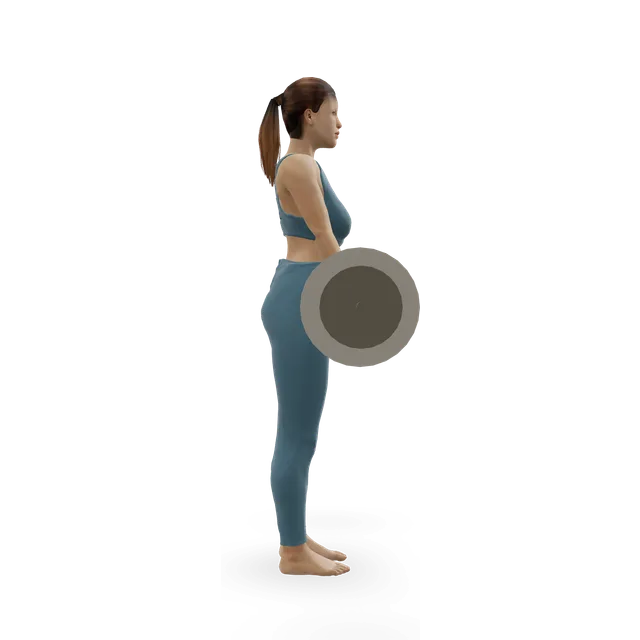
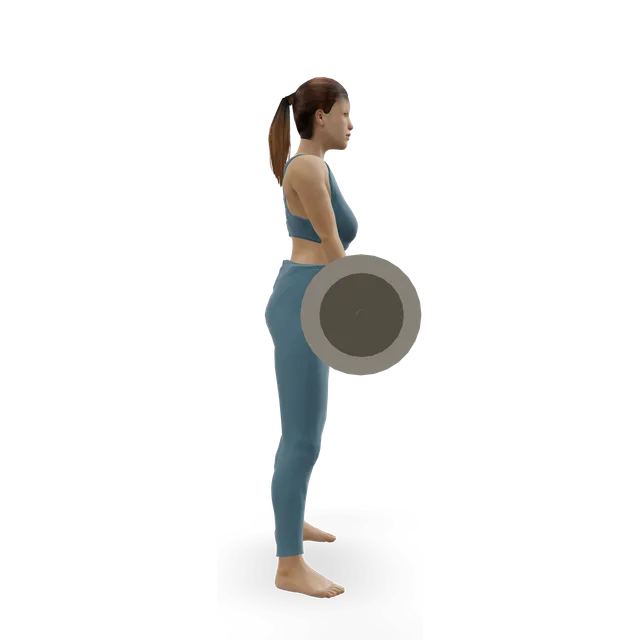
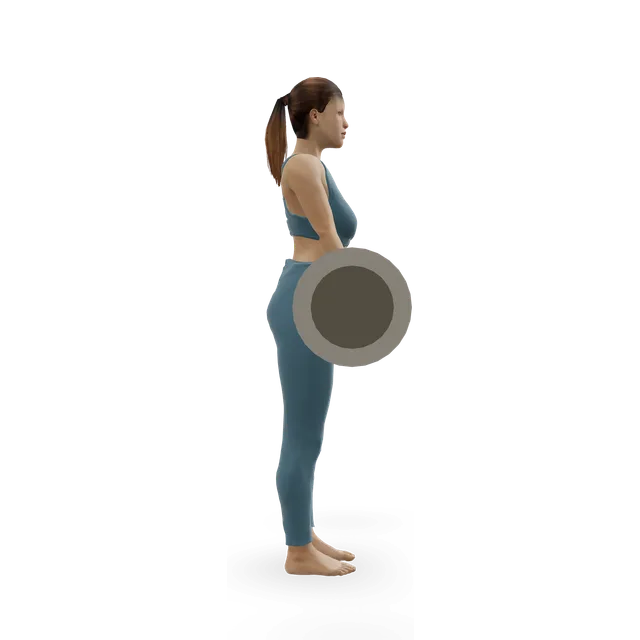
Stand in the middle of the bar with the handles in line with the middle of your feet. Push your hips back and bend your knees to grip the handles, set a long, braced back, then push the floor away so your hips and shoulders rise together. Stand tall, then lower the bar the same way.

Sources 1, 2

The work moves towards your knees

In 19 male powerlifters the trap bar lowered the peak turning loads on the lower back, hips and ankles, raised the load on the knees and produced more power. In 11 trained women, the straight-bar deadlifts loaded the hips more near the top and the hex bar loaded the knees more.

Sources 3, 4

Most men lift a little more, but not everyone

6 to 8% more in two studies, the same in a third, and slightly less in trained women in a fourth (100 against 103 kg for 3 reps). There's no reliable conversion from one bar to the other.

Sources 3, 5, 6, 4

More thigh, less hamstring

The straight bar worked the hamstrings harder, by 28% in one study. How you set up matters as much as the bar: starting with more knee bend raised front-thigh activity and lowered hamstring and lower-back activity.

Sources 7, 8

Your back: lower load in the lab, untested for injury

The lower back's modelled load was lower with the trap bar, at light to moderate weights by one review's account, but no study has measured back pain or injury with it, and a model of a 68 kg hex bar lift still put a big load on the lowest disc. Our deadlift guide's back rules apply unchanged.

Sources 3, 9, 10

How heavy and how many

While you learn, one work set of 5 after warm-up sets in weeks 1 and 2, then 2 or 3 sets of 5, adding about 2.5 kg a session while every rep looks the same, as our deadlift guide teaches. After that, 3 sets of 5 to 8, stopping 2 or 3 reps short, with 2 to 3 minutes' rest, once or twice a week. There are no strength standards to aim for.

Source 11

How to do a trap bar deadlift, step by step

From our move page and deadlift guide, the US Army's deadlift test standard, StrengthLog's set-up and the positions used in research. The 3D figure shows one handle height. The breathing and the slack-out are from our deadlift guide.

  1. Load the bar with plates on both sides and put collars on. Step into the middle so the handles line up with the middle of your feet, feet about hip- to shoulder-width apart, toes straight or turned out a little.
  2. Push your hips back and bend your knees to reach the handles. Grip the centre of each handle with a full grip, arms straight.
  3. Set your position: back long and flat, chest up, shoulders over or in line with the handles, hips below your shoulders and above your knees, heels down.
  4. Breathe in and brace, and take the slack out by pulling gently until the bar is about to leave the floor.
  5. Push the floor away so your hips and shoulders rise together. Your hips shouldn't rise before or above your shoulders.
  6. Stand tall with your knees and hips straight. Don't lean back or shrug.
  7. Lower the bar the same way, hips back first, under control. Set it down and reset your brace for each rep while you're learning. Don't drop it.

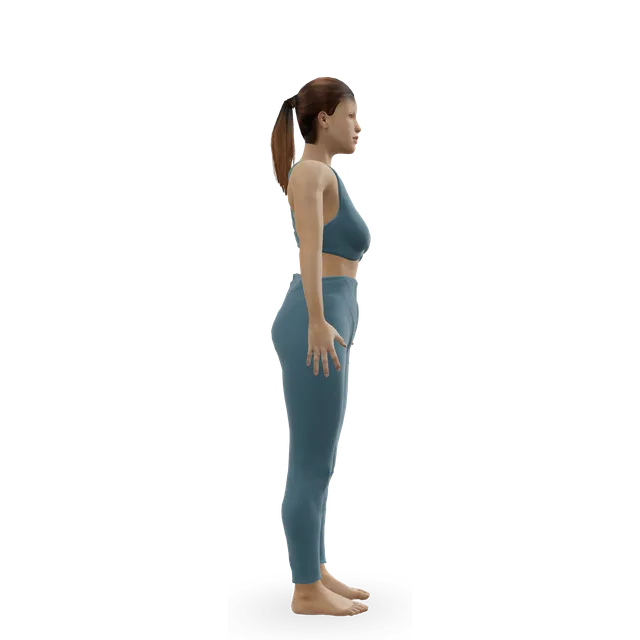
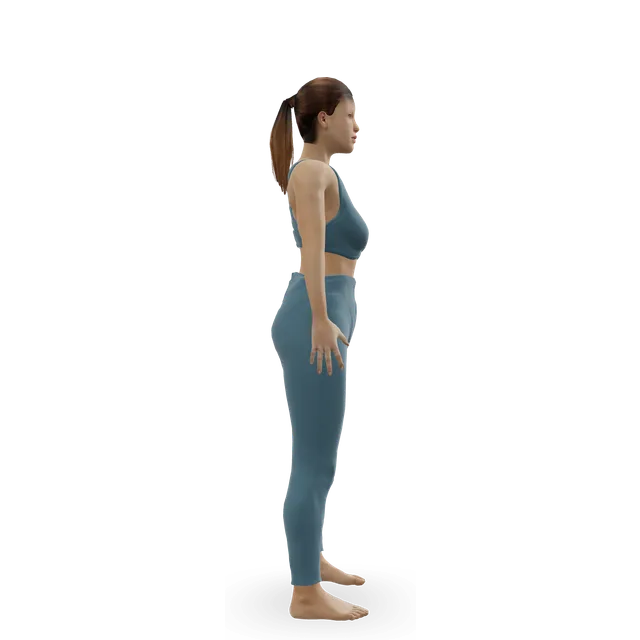
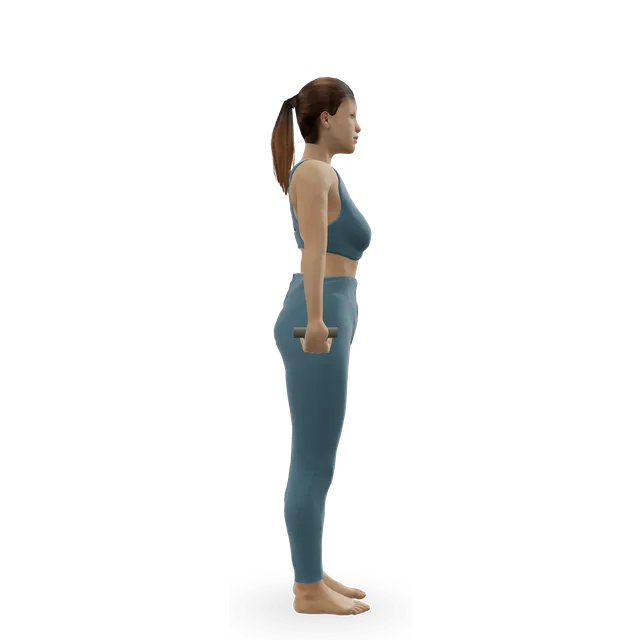
Loading the 3D figure…

Gets into position, then repeats the movement. Technical checks passed; qualified exercise review is pending.

The movement on the figure: Trap bar (hex bar) deadlift

What it is, and what it works

The bar

A hexagonal or open-ended frame you stand inside, with handles at your sides, so the load lines up with your body instead of hanging in front of your shins. Bars weigh different amounts: the US Army's is 60 lb (27 kg) and one trial's was 32 kg, so check the label on yours. Many have two handle heights: on the bar used in one study the high handles sat about 10 cm above the low ones, and in another a low handle's top was about 22.8 cm off the floor with full-size plates. Those are measurements of the bars studied; yours may differ.

Sources 2, 11, 12, 13

What it works

The front of the thighs (quadriceps), the glutes, the hamstrings, the back muscles that hold your spine, and your grip. Against a straight bar, the front of the thigh works harder and the outer hamstring less, and the knee does more of the work while the hip and lower back do less. The back muscles still work hard: their activity didn't differ from a straight bar in two studies.

Sources 7, 6, 14, 3

What you need first

A steady hip hinge and a kettlebell deadlift with a long back. Our move page asks for a steady Romanian deadlift, and our deadlift guide's ladder below gets you there.

How people differ

On a fixed bar, taller people and longer legs had a longer pull, and arm length mattered more in women. In the women's study the hex bar lifted slightly less than a conventional deadlift, while most studies in men found a little more. Older adults have trained with it under supervision in trials.

Sources 15, 4, 16, 17

What the evidence says: trap bar against straight bar

Joint loadsEmerging evidence

In 19 male powerlifters lifting both bars at 10 to 80% of their maximum, the hex bar gave lower peak turning loads (moments) at the lower back, hip and ankle, a higher one at the knee, and more peak power (4,872 against 4,388 watts). We could read only the study's summary; by the Ramirez 2022 review's account of the full paper, the lower-back difference was significant only at 10 to 60% of maximum, and the greatest trunk bend didn't differ (about 55 against 58 degrees).

In 11 trained women at a 3-rep maximum, conventional and sumo deadlifts gave larger hip loads near the top, and the hex bar more knee load, more bar speed and more hip and knee bend. These are turning loads at the joints, not the squeeze on the spine.

Sources 3, 9, 4

How much you liftMixed evidence

265 against 245 kg in 19 powerlifters; 194 against 183 kg with the same bar travel in 11 men; 181 against 181 kg in 20 men; and 99.7 against 103.2 kg for 3 reps in 11 trained women. With high handles, 31 lifters (21 men and 10 women) lifted 154.5 against 134.7 kg, over a pull 22% shorter and 25% quicker than their conventional deadlift.

Sources 3, 5, 6, 4, 18

Speed and powerEmerging evidence

At the same share of maximum, the hex bar moved faster with more force and power in 20 men, and gave 28% more average power at 90% of maximum in 11 men. In still (isometric) pulls at the same height, force was the same with either bar, in 20 men and in 35 adults.

Sources 6, 5, 19, 14

Muscle activityEmerging evidence

The straight bar worked the outer hamstring 28% more in 13 men, with no difference in the back muscles. In 20 men the hex bar worked the outer front thigh more, and the straight bar the hamstring more while lifting and the back muscles more only while lowering. Muscle activity in one session shows effort, not what a muscle will build.

Sources 7, 6, 14, 20

Your start position changes the muscles usedEmerging evidence

In 20 adults lifting a hex bar from different starts, more knee bend at the start raised front-thigh activity from about 25% to 62% of maximum and lowered hamstring activity (41 to 28%) and lower-back activity (73 to 55%). Hips a little lower works the thighs more; hips higher, with your shins more upright, brings in the hamstrings and back (our application).

Source 8

The "88% glute activation" figureMixed evidence

It comes from one study's maximal lifts, ranked inside a review that mixed different methods. No head-to-head study shows the trap bar works the glutes more than a straight bar, so don't rank exercises on it.

Sources 21, 7

High or low handles?

No study compares them

We found no study comparing high and low handles for joint loads or muscle use. What's measured is that high handles shorten the lift: a 22% shorter pull than a conventional deadlift in 31 lifters.

Source 18

High handles

A shorter range, and as one coaching source puts it, "the mobility requirements are not as high": you don't need to reach as low with a long back.

Source 1

Low handles

The longer, classic deadlift range, and the mobility needed rises with it. Swinton's powerlifters used the low handles, by the Ramirez review's account; Lockie's and Gantois's lifters used the high ones.

Sources 22, 9, 18, 23

Which to start with

Start with the high handles if your back rounds before you reach the low ones, and move to the low handles when your back stays long all the way down. That's our editorial advice, not a tested rule. Training through a fuller range built more strength in general across reviews.

Source 24

Not a squat, not a straight-bar deadlift

Against a back squatEmerging evidence

In 16 trained adults, the hex bar deadlift leaned the trunk further forward and bent the knees less than a back squat, with a similar peak knee load and a lower hip load. They lifted more in the hex bar deadlift.

Source 25

Against a straight-bar deadliftEmerging evidence

It bends the knees more and loads the hips and lower back less. It sits between a squat and a straight-bar deadlift, as our deadlift guide says, and it's still a pull from the floor.

Sources 3, 4

"It keeps your back upright"Mixed evidence

A 2026 review says the hex bar keeps the trunk more upright, but the trunk-angle data we could read found no difference from a straight bar, by the Ramirez 2022 review's account, and more forward lean than a squat.

Sources 26, 9, 25

Your lower back

The back pain rule

Aim for discomfort you'd call mild to moderate, no more than about 5 out of 10. It should settle within an hour or so, and your back should be no worse the next morning, as our back pain guides say. Pain, pins and needles or numbness spreading down a leg are the exception: stop, and see our sciatica guide.

Lower in the lab, untested for injuryEmerging evidence

The trap bar lowered the modelled turning load on the lower back in powerlifters, at light to moderate weights by the review's account. We found no study of back pain or back injury with the trap bar against a straight bar. Its lower back load is modelled, not shown in injury outcomes.

Sources 3, 9

The spine still takes a big loadEmerging evidence

A computer model of one 23-year-old man lifting 68 kg on a hex bar put about 17 kilonewtons of squeeze and 4 of shear on the lowest joint of his lower back. In 23 recreational powerlifters doing a 68 kg hex bar deadlift to failure, the trunk bent about 10 degrees more late in the set. A trap bar doesn't make the load small, and long sets drift.

Sources 10, 27

Rounding and back painMixed evidence

Rounding while lifting hasn't been linked to back pain in pooled studies, which were of low quality, as our deadlift guide says. Set a long, braced back anyway, and lower the weight if it changes a lot.

Source 28

With back painEmerging evidence

In 35 adults, 16 of them with mild, recent back pain, the people with pain pulled as hard as those without, using either bar, and felt safe and confident (8 out of 10 or more); 15 of the 35 felt stronger with the trap bar. In 70 people with recurring back pain, supervised deadlift training matched gentler exercise for pain but did worse for daily activity at 2 months, as our deadlift guide reports. In one young athlete's rehab, the trap bar deadlift caused discomfort and was swapped out.

Sources 14, 29, 30

Claims that go further than the evidence

An Army health fact sheet says the hex bar reduces force on the spine by keeping the weight closer, citing the Army's own manual, and adds that evidence for specific ways to prevent deadlift injuries is limited. Treat "safer for your back" as untested.

Source 31

Your knees

More knee load than a straight barEmerging evidence

The knee load was higher than with a straight bar in men and in women, and the peak was similar to a back squat's. We found no study of knee pain with the trap bar.

Sources 3, 4, 25

The knee rule

Pain from 0 to 2 out of 10 is fine, and up to 5 is acceptable if your knee is back to its usual level by the next morning; for tendon pain just below or above the kneecap, keep it to 3 or less. Sharp, catching or giving-way pain, or new swelling, means stop. That's our knee guides' rule.

From the hinge to the bar

Our deadlift guide's ladder: hip-hinge practice, 2 or 3 sets of 8 tapping a wall; the kettlebell deadlift, 3 sets of 8 to 10, light to start; the dumbbell Romanian deadlift, 3 sets of 8 to 10, lowering for 3 seconds; then the trap bar, high handles first if needed. Many people go from the kettlebell deadlift straight to the trap bar, which many find easier to set up. The leverage machine deadlift, with handles at your sides on a fixed path, is an alternative at its move page's dose, 2 to 3 sets of 8 to 12 stopping 2 or 3 reps short.

How heavy and how many

While you learn

Weeks 1 and 2: one work set of 5 after warm-up sets. Then 2 or 3 sets of 5, adding about 2.5 kg a session while every rep looks the same. That's our deadlift guide's progression; our deadlift technique workout uses 3 light sets of 3.

For strength and muscle

2 light sets, then 3 sets of 5 to 8, stopping 2 or 3 reps short, with 2 to 3 minutes' rest (3 for heavy sets), once or twice a week, as our lower body gym workout uses it (our editorial starting point). An Army health fact sheet for the hex bar gives 2 or 3 sets of 6 to 12, fewer reps with heavier weights, at least 2 to 3 minutes' rest and 48 hours between sessions for the same muscles.

Source 31

What a trial usedEmerging evidence

In 22 recreationally active women, 4 sets of 4 starting at 85% of maximum, twice a week for 8 weeks, raised trap bar strength 17.3%, not significantly more than half squats (11.7%). The training was unsupervised and the groups were small.

Source 11

How hard

Trained lifters judged their reps in reserve accurately in the hex bar deadlift, more so near failure, but most people misjudge by about one. There's no need to train to failure: stop 2 or 3 reps short, and end the set if your back starts to round.

Sources 32, 33, 34

Older adultsEmerging evidence

In 32 women aged about 68, 24 weeks of supervised hex bar training twice a week raised back strength 26% against a 6% fall in controls, with no adverse events reported; we could read only the trial's summary. In 25 adults aged about 70, 2 hard sets did as well as 6 over 6 weeks, and in 30 adults aged about 71 the trap bar 5-rep maximum rose from 52.5 to 67.4 kg in 6 weeks. After breast cancer treatment, 20 women trained with it for 3 months without injury. Start supervised if you can, with the same ladder.

Sources 16, 35, 17, 36

How heavy is "good"?

There are no research standards. The US Army's job test scores a 3-rep maximum from 140 to 340 lb for men and 120 to 210 lb for women aged 17 to 21, but that's a job test, not a health target. Compare yourself with yourself.

Source 2

Jumps, power and the Army test

Power peaks at moderate loadsEmerging evidence

In 25 men using high handles, power in the hex bar deadlift peaked at about 60% of maximum, with 50 to 70% much the same. For power, lift about 60% as fast as you can for 3 to 5 crisp reps (the load from the study; the reps are our suggestion).

Source 23

Hex bar jumpsEmerging evidence

Jumping while holding a hex bar at arm's length gave more power than with a bar on the back, best at about 10 to 20% of squat maximum. In a 4-week trial in 29 rugby players, hex bar jumps gave possibly greater gains in jump height, using a contested statistical method. They're for trained athletes with a coach, and have no 3D demo; jump squats are the bodyweight stand-in.

Sources 37, 38, 39

The Army deadlift test

A 3-rep maximum on a 60 lb hex bar, with two attempts, and your hips may not rise before or above your shoulders. Raters judging filmed lifts agreed only fairly to moderately on form.

Sources 2, 40

Common mistakes

Standing off-centre

The bar tips forwards or backwards. Line the handles up with the middle of your feet.

Hips shooting up first

It turns the lift into a stiff-legged pull. Your hips and shoulders rise together, as the Army's test rule puts it.

Source 2

Squatting too deep, or not at all

Too deep and your knees push forward and your back can't stay long; too high and your back does all the work. Hips between your knees and shoulders.

Source 8

Leaning back or shrugging at the top

Stand tall and stop, as our deadlift guide says.

Letting your back round as a long set goes on

Trunk bend crept up late in sets to failure. End the set there.

Source 27

Big jumps in weight

Our deadlift guide argues sudden jumps in load are the risk factor that matters most. About 2.5 kg a session while you learn.

Dropping the bar

Lower it under control. Weights dropping on people caused 65.5% of weight-training injuries in US emergency departments in one analysis.

Source 41

Who should change it

Back pain

Start with the kettlebell deadlift, light, as our back pain plans do, and build up within the back pain rule above.

Disc problems and sciatica

While symptoms are irritable, reduce the weight and range of heavy bending lifts, then rebuild, as our herniated disc guide explains. The trap bar and the kettlebell keep the load close (our suggestion).

Osteoporosis

The UK consensus recommends strength training while avoiding postures with a lot of spinal rounding. Learn the lift with a coach, keep your back long and don't round under load.

Source 42

A hamstring injury

Follow the staged plans in our hamstring strain and high hamstring tendinopathy guides before deadlifting from the floor.

Sore hands, wrists or elbows

The trap bar's neutral handles, palms facing in, take strain off your hands and elbows, as our deadlift guide suggests; straps help too.

High blood pressure, heart disease and eye conditions

With controlled high blood pressure, the American Heart Association considers low- to moderate-intensity strength training with proper breathing safe. Breathe out as you lift, as our breathing guide advises. Use weights you could lift 10 to 15 times and leave maximal lifts until you've had advice, as our deadlift guide says. With heart disease, glaucoma or diabetic eye disease, ask your specialist before lifting heavy.

Source 43

Pelvic floor symptoms and pregnancy

Leaking when you lift is a reason to see our pelvic floor guide and a pelvic health physiotherapist, not to stop lifting, as our deadlift guide says. In pregnancy, the NHS says strength training at a gym is fine if you do it already, and advises against starting a new vigorous activity.

Source 44

Moves that go with it

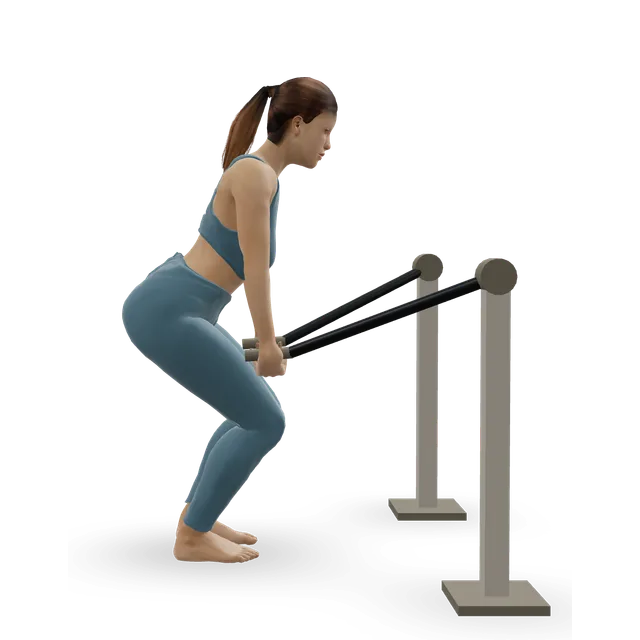
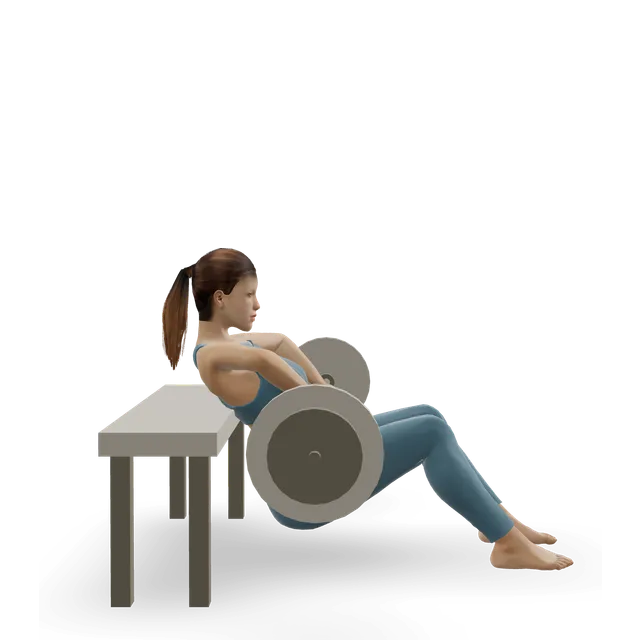
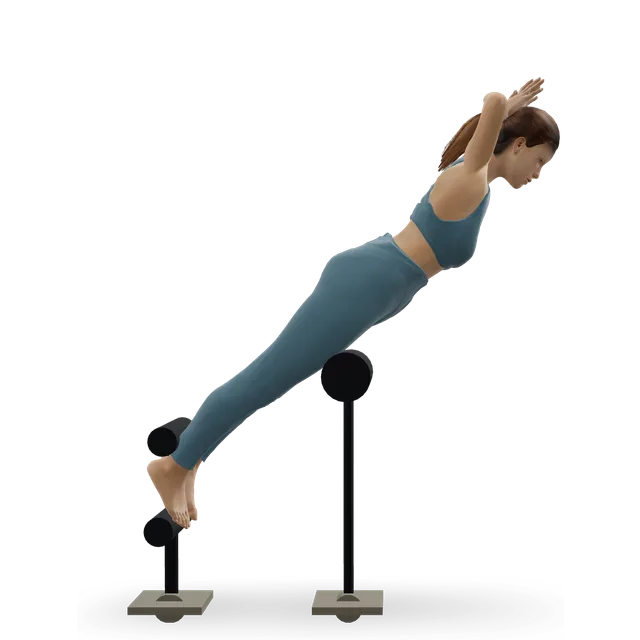
Cat-cow, 8 waves, at its move page's dose, and glute bridges, 12 reps, to warm up (our lower body gym workout); goblet squats, 3 sets of 8 to 12 (our strongman workout for beginners); barbell hip thrusts, 3 sets of 8 to 12, and machine leg curls, 3 sets of 10 to 15, for the glutes and the hamstrings the trap bar works less (our lower body gym workout); back extensions, 2 sets of 10 to 12, and farmer's carries, 3 walks of 30 metres (our deadlift strength workout); suitcase carries, 2 walks of 20 to 30 metres each side (our deadlift technique workout); jump squats, 3 sets of 5, the bodyweight stand-in for hex bar jumps.

Other deadlifts

The barbell deadlift, 2 or 3 warm-up sets then 3 sets of 3 to 5 (our deadlift strength workout); the sumo deadlift, 3 sets of 5 (our sumo deadlift workout); the barbell Romanian deadlift, 3 sets of 8 to 10 (our Romanian deadlift guide). A trap bar Romanian deadlift uses the Romanian deadlift's technique with the handles at your sides (no 3D demo).

Workouts

The deadlift technique workout walks the ladder from the hip hinge to the trap bar; the lower body gym, full-body gym B, bone-strengthening and strongman workouts use the trap bar as their main hinge, and the deadlift strength workout offers it in place of the straight bar.

Plans

Warning signs

Stop and get medical help

If you get chest pain or pressure, feel faint or dizzy, are unusually breathless, or your heart races or beats irregularly during exercise, as our plans advise. The American Heart Association says these need immediate medical evaluation.

Source 43

Call 999 (911 in the US)

For chest pain that comes on suddenly and doesn't go away, feels tight or like squeezing, spreads to your arms, neck, jaw, stomach or back, or comes with sweating, feeling sick, light-headedness or breathlessness; arm pain that comes on suddenly with pressure, heaviness or squeezing across your chest; severe difficulty breathing, or a chest that feels tight or heavy; someone who faints while exercising; palpitations that don't go away, or come with chest pain, shortness of breath or feeling faint; or a headache that starts suddenly and is extremely painful, especially while lifting or straining. The NHS says a bleed on the brain may be more likely when lifting something heavy. Don't drive yourself to A&E.

Sources 45, 46, 47, 48, 49, 50, 51, 52

A headache with effort

Ask for an urgent GP appointment or get help from NHS 111 for a headache that's triggered or made worse by coughing, sneezing, bending down or exercising.

Source 51

Your back: call 999 or go to A&E

Call 999 or go to A&E: loss of feeling or numbness around the genitals or bottom, new trouble peeing or controlling your bladder or bowels, changes in genital sensation during sex or problems with erections or orgasm, or pain, tingling, weakness or numbness in both legs. These are signs of cauda equina syndrome, which needs treating in hospital urgently. Don't drive yourself.

Call 999 or go to A&E: back pain with chest pain, or back pain that started after a serious accident, such as a car crash.

Source 53

Back pain that needs a GP soon

Ask for an urgent GP appointment or get help from NHS 111 if you have back pain and feel hot, cold, shivery or generally unwell, or have severe pain that starts suddenly or gets worse quickly.

Source 53

See a GP

If back pain hasn't improved after a few weeks at home, stops you doing daily activities, is worse at night or when you sneeze, cough or poo, comes with weight loss you can't explain or a lump, or is between your shoulder blades.

See a GP if pain spreading down a leg hasn't improved after a few weeks of home treatment, is getting worse or stops your normal activities. Sciatica on both sides, or weakness or numbness in both legs that's severe or getting worse, is a 999 call or a trip to A&E.

Sources 53, 54

Your knee

Get advice from NHS 111 if your knee is very painful, you can't move it or put weight on it, it's badly swollen or has changed shape, or it locks, gives way or clicks painfully; painless clicking is normal. In the US, use urgent care. See a GP if knee pain doesn't improve within a few weeks.

Source 55

A pulled muscle

A sudden sharp pain in your back, hip or the back of your thigh during a lift may be a strained muscle. Get help from NHS 111, or go to an urgent treatment centre (in the US, urgent care), if it's very painful or the pain is getting worse, there's a large amount of swelling or bruising or it's getting worse, it feels very stiff or is difficult to move, it's not feeling any better after treating it yourself, or you also have a very high temperature or feel hot, cold or shivery.

Source 56

Your elbow

A pop or snap with sudden pain at the front of the elbow, especially with bruising, a gap at the front of the elbow or a bulge in the upper arm, can be a torn biceps tendon. Go to an urgent treatment centre or A&E (in the US, urgent care) the same day, and don't wait for it to settle, as our biceps guides say.

Source 47

A hernia

See a GP if you think you have a hernia, a bulge or lump that may get bigger when you strain and smaller when you lie down. Get help from NHS 111 if you have a hernia and pain in or around it, a bloated tummy, you feel or are sick, you're vomiting blood or your vomit looks like coffee grounds, you're constipated, you have a high temperature or feel hot, cold or shivery, or you've suddenly become confused. Call 999 or go to A&E for a femoral hernia (a small lump at the top of your thigh, in your groin) with very bad tummy pain, sickness, being unable to fart or poo, a high temperature or sudden confusion.

The NHS lists lifting heavy weights among the causes of a femoral hernia. After an inguinal hernia repair, avoid heavy lifting or strenuous activity for at least 4 to 6 weeks.

Sources 57, 58, 59

Sore, or hurt?

Muscle soreness for a day or two after a new or harder session is common and fades. Sharp pain, or pain that builds during a set or lingers into the next day, isn't: swap to an easier version, and see a clinician if it persists, as our plans advise. The NHS says to stop exercising straight away if you feel any pain or become unwell, and to get help from 111 if symptoms worry you or don't go away.

Source 60

Before you start

Speak to your GP first if you haven't exercised for some time or have medical conditions or concerns, as the NHS advises. Get advice before hard or straining work if your blood pressure is uncontrolled (140/90 or higher at a clinic, or 135/85 at home), or you have heart disease or chest pain when you're active, a pacemaker or defibrillator, diabetic eye disease, glaucoma, a hernia, recent eye or tummy surgery, or you're pregnant, as our breathing guide lists.

With controlled high blood pressure, the American Heart Association considers low- to moderate-intensity strength training with proper breathing safe. Breathe out as you lift, as our breathing guide advises.

With a pacemaker or defibrillator, the American Heart Association asks you to check with your doctor before upper-body strength training, because repeated arm movements can damage or dislodge the leads.

Sources 61, 62, 43
Myths

"The trap bar deadlift is just a squat"Emerging evidence

It leans further forward and bends the knees less than a back squat, with a similar peak knee load and a lower hip load, and it bends the knees more than a straight-bar deadlift. It sits between them, as our deadlift guide says.

Sources 25, 3

"The trap bar is safer for your back"

Untested. It lowered the modelled lower-back load, at light to moderate weights by one review's account, but no study has measured back pain or injury, and the spine still takes a big load. The Army's claims rest on its own manual.

Sources 3, 9, 10, 31

"The trap bar keeps your back upright"Mixed evidence

A 2026 review says so; the trunk-angle data we could read showed no difference from a straight bar, and more lean than a squat.

Sources 26, 9, 25

"Everyone lifts more on a trap bar"Mixed evidence

More in most studies of men, the same in one, and slightly less in trained women.

Sources 3, 5, 6, 4

"Trap bar deadlifts don't work your hamstrings"Emerging evidence

Less, not none: the straight bar worked the outer hamstring 28% more, and a more hinged start brings the hamstrings in.

Sources 7, 8

"High handles are cheating"

They're a shorter pull, 22% shorter than a conventional deadlift, and useful while you build range. Move to the low handles when your back stays long (our editorial view).

Source 18

"The hex bar gives 88% glute activation"Mixed evidence

One study's maximal lifts, ranked inside a review that mixed methods. No head-to-head study shows the trap bar works the glutes more than a straight bar.

Sources 21, 7

Questions people ask

How do you do a trap bar deadlift?

Stand in the middle of the bar with the handles in line with the middle of your feet, push your hips back and bend your knees to grip the handles, and set a long, braced back. Push the floor away so your hips and shoulders rise together, stand tall, then lower the bar the same way.

What muscles does the trap bar deadlift work?

Your thighs (front and back), glutes and back muscles, with your grip. Against a straight bar it works the front of the thighs more and the outer hamstring less: 28% less in one study.

Is the trap bar deadlift better than a regular deadlift?

Different, not better. It moves the work from your hips and lower back towards your knees and lets you move faster; the straight bar works the hamstrings harder. Choose the trap bar to learn, for power, or if the straight bar bothers your back, and the straight bar to compete.

Do you lift more with a trap bar?

In most studies of men, a little: 6 to 8% more in two studies and the same in a third, while trained women lifted slightly less in a fourth. There's no reliable conversion between the two.

Should I use the high or low handles?

High handles shorten the pull and ask less of your hips; low handles give the full deadlift range. No study compares them, so start high if your back rounds at the low ones, then move down: that's our editorial advice.

Is the trap bar deadlift safer for your back?

Nobody knows. It lowered the modelled load on the lower back, at light to moderate weights by one review's account, but no study has measured back pain or injury with it. Use the same back rules as any deadlift: a long back, sensible jumps in weight, and stop for pain down a leg.

Is the trap bar deadlift bad for your knees?

It loads the knees more than a straight bar, about as much as a back squat at its peak. We found no study of knee pain with it; keep any pain within our knee rule.

Is the trap bar deadlift a squat or a deadlift?

A bit of both: more knee bend than a straight-bar deadlift, more forward lean than a back squat. It's still a pull from the floor.

How many sets and reps of trap bar deadlifts?

While you learn, one work set of 5, then 2 or 3 sets of 5, adding about 2.5 kg a session. After that, 3 sets of 5 to 8, stopping 2 or 3 reps short, with 2 to 3 minutes' rest, once or twice a week.

How much does a trap bar weigh?

It depends on the bar: the US Army's weighs 60 lb (27 kg) and one trial's weighed 32 kg. Check the label, or weigh it.

What's a good trap bar deadlift?

There are no research standards. The Army's test scores run from 140 to 340 lb for men and 120 to 210 lb for women aged 17 to 21, but that's a job test. Compare yourself with yourself.

Can older adults do trap bar deadlifts?

Yes, built up gradually and ideally supervised at first. In trials, women in their late 60s trained with it for 24 weeks with no adverse events reported, and adults around 70 gained strength in 6 weeks.

Sources

  1. StrengthLog 2020 · How to do the trap bar deadlift with high handles (coaching article, modified 2023)
  2. US Army (GoArmy) · 3 repetition maximum deadlift: Army Fitness Test event 1 (official test standard, not health guidance)
  3. Swinton 2011 · Straight and hexagonal bar deadlifts at 10 to 80% of maximum: 19 male powerlifters (lab study, J Strength Cond Res)
  4. Gundersen 2025 · Conventional, sumo and hex bar deadlifts compared in 11 trained women (lab study, J Strength Cond Res)
  5. Lake 2017 · A hexagonal bar and the mechanical demand of the deadlift: 11 men (lab study, Sports)
  6. Camara 2016 · Muscle activity and power in straight and hexagonal bar deadlifts: 20 men (lab study, J Strength Cond Res)
  7. Andersen 2018 · Barbell deadlift, hex bar deadlift and hip thrust compared: 13 men (muscle activity study, J Strength Cond Res)
  8. Jo 2022 · Hex bar lifts with different starting knee and trunk angles: muscle activity in 20 adults (lab study, Int J Exerc Sci)
  9. Ramirez 2022 · Lower back mechanics during repeated deadlifts (narrative review, IISE Trans Occup Ergon Hum Factors)
  10. Ramirez 2023 · Modelled trunk muscle forces and spinal loads in a heavy hex bar deadlift (modelling study, Int J Numer Method Biomed Eng)
  11. Hagerupsen 2024 · Half squats against trap bar deadlifts for 8 weeks in 22 recreationally active women (randomised trial, BMC Sports Sci Med Rehabil)
  12. Lockie 2019 · Hexagonal bar strength and power and a body drag task (study methods give the handle heights, J Hum Kinet)
  13. McGowen 2024 · Deadlift mechanics in active adults with and without low back pain: 68 adults (cross-sectional study, Int J Sports Phys Ther)
  14. Stock 2022 · Acute low back pain and still (isometric) deadlift force with two bars: 35 adults (cross-sectional study, Sports)
  15. Lockie 2018 · Height, arm length and leg length in the conventional and high-handle hexagonal bar deadlift (lab study, J Strength Cond Res)
  16. Zhang 2026 · Hexagonal bar deadlift training for 24 weeks in 32 older women (randomised trial, Exp Gerontol; summary only)
  17. Pagan 2024 · Traditional and functional training in 30 older adults (trial, Front Aging)
  18. Lockie 2018 · The one-rep maximum with a high-handle hexagonal bar against a conventional deadlift: 31 adults (lab study, J Strength Cond Res)
  19. Malyszek 2017 · Olympic and hexagonal bars in the mid-thigh pull, deadlift and jump: 20 men (lab study, J Strength Cond Res)
  20. Vigotsky 2022 · Muscle activity measured in one session is not a validated predictor of muscle growth (review, Sports Med)
  21. Neto 2020 · Main glute activity in common strength exercises (systematic review, J Sports Sci Med)
  22. StrengthLog 2020 · How to do the trap bar deadlift with low handles (coaching article, modified 2023)
  23. Gantois 2023 · Speed, power and load in the back squat and hexagonal bar deadlift: 25 men (lab study, Biol Sport)
  24. Currier 2026 · Resistance training prescription for muscle function, size and performance in healthy adults: an overview of 137 reviews (ACSM position stand, Med Sci Sports Exerc)
  25. Stahl 2024 · The back squat and the hexagonal bar deadlift compared: 16 trained adults (lab study, J Strength Cond Res)
  26. Cherni 2026 · Low back injury prevention in deadlifting beyond the neutral spine (narrative review, Sports)
  27. Ramirez 2024 · Hex bar deadlifts to failure and how the lower back and pelvis move: 23 recreational powerlifters (lab study, J Strength Cond Res)
  28. Saraceni 2020 · Is bending the lower back while lifting linked to back pain? (systematic review and meta-analysis, J Orthop Sports Phys Ther)
  29. Aasa 2015 · Deadlift training against low-load motor control exercise for recurring low back pain: 70 people (randomised trial, J Orthop Sports Phys Ther)
  30. Swift 2026 · Chronic low back pain in a young athlete: a biopsychosocial framework (case report, Int J Sports Phys Ther)
  31. US Army Public Health Center · Weight-training injuries: deadlift (fact sheet 12-024-1119)
  32. Odgers 2021 · Effort ratings and bar speed in the front squat and hexagonal bar deadlift in trained men and women (study, J Strength Cond Res)
  33. Halperin 2022 · How accurately people predict the reps they have left: 12 studies (scoping review and meta-analysis, Sports Med)
  34. Refalo 2023 · Training close to failure and muscle growth: 15 studies (systematic review and meta-analysis, Sports Med)
  35. Knowles 2025 · Two against six sets of training in 25 older adults (exploratory trial, Front Aging)
  36. Champ 2024 · An exercise programme after breast cancer treatment, with trap bar deadlifts: 20 women (prospective study, Sports Med Int Open)
  37. Swinton 2012 · Where the load sits in weighted jumps, hex bar against barbell: 29 rugby players (lab study, J Strength Cond Res)
  38. Turner 2015 · The best load for peak power in the hexagonal bar jump squat: 17 professional players (lab study, J Strength Cond Res)
  39. Weakley 2021 · Jump training with a barbell or a hexagonal bar in 29 rugby players (randomised trial, J Strength Cond Res)
  40. Wedge 2023 · How reliably raters judge the Army's 3-rep maximum deadlift (reliability study, Mil Med)
  41. Kerr 2010 · Weight-training injuries in US emergency departments, 1990 to 2007 (descriptive study, Am J Sports Med)
  42. Brooke-Wavell 2022 · Strong, steady and straight: physical activity and exercise for osteoporosis (UK consensus statement, Br J Sports Med)
  43. Paluch 2024 · Resistance training with and without heart disease: 2023 update (American Heart Association scientific statement, Circulation)
  44. NHS · Exercise in pregnancy
  45. NHS · Chest pain (past its review date: reviewed August 2023, review due August 2026)
  46. NHS · Heart attack
  47. NHS · Elbow and arm pain
  48. NHS · Shortness of breath
  49. NHS · Fainting
  50. NHS · Heart palpitations
  51. NHS · Headaches
  52. NHS · Subarachnoid haemorrhage
  53. NHS · Back pain
  54. NHS · Sciatica
  55. NHS · Knee pain
  56. NHS · Sprains and strains
  57. NHS · Hernia
  58. NHS · Femoral hernia
  59. NHS · Inguinal hernia repair
  60. NHS · How to warm up before exercising
  61. NHS · Physical activity guidelines for adults aged 19 to 64
  62. NHS · High blood pressure

Exercise education, not a personal prescription, and clinical review of these guides is pending. Check with a GP before starting hard training if you have a heart condition, chest pain, dizziness or breathlessness when active, and stop for sharp or increasing pain. Health disclaimer.