Partly possible
Strength is a skill as well as a size: early gains come mostly from your nervous system. But any hard training grows some muscle over time.
Training guide
You can get a lot stronger without getting much bigger, but not with no change at all. In the first weeks most of the gain comes from your nervous system learning to use the muscle you have, and the training that builds strength (heavy weights, few sets, plenty of rest) isn't the training that builds the most muscle (lots of hard sets close to failure, and eating more than you burn).
This guide covers how strength and size differ, the settings that favour strength, how much muscle people really gain, whether lifting makes women bulky, and a plan built from our barbell and bodyweight workouts. It doesn't promise a look: people vary a lot, and you choose the dose.
Strength is a skill as well as a size: early gains come mostly from your nervous system. But any hard training grows some muscle over time.
Heavier weights build the most strength, while muscle grows across a wide range of weights. Sets of about 3 to 6 on a squat, a hinge, a press and a pull suit this goal.
Strength gains level off after a few hard sets per lift, while muscle keeps growing with more. Two or 3 sets per lift is enough.
Muscle growth seems to rise as sets end closer to failure, while strength doesn't; the analyses that found this call themselves exploratory. Stopping 2 or 3 reps short suits this goal.
Eating less than you burn held back muscle gain more than strength gain in pooled trials. That isn't a reason to diet: eat enough to train well.
Source 9
Women and men gain muscle at similar rates relative to where they start, and women less in absolute terms. Muscle grows slowly and follows the dose you choose.
Strength is the most force you can produce; size is how much muscle you have. Bigger muscles can produce more force, but strength also depends on how well your nervous system switches the muscle on, how well your muscles work together, and your skill at the exact lift.
In 15 young adults, nerve changes explained most of the strength gained in the first weeks, and muscle growth became the bigger part after 3 to 5 weeks. In 28 people, 4 weeks of strength training raised how fast the nerves fired the muscle.
Lots of weekly sets, sets taken close to failure, and eating more than you burn. What drives strength more than growth: heavy loads, practising the lift and resting fully between heavy sets.
The NHS says a strength exercise increases your muscles' strength, size, power and endurance. No programme builds pure strength; you can only tilt the balance.
Source 13
Women who don't want bulk, climbers, runners, martial artists and other athletes who compete by body weight or move their own body, older adults who want function, and people who want to feel stronger and look the same. Wanting to stay a size is a fair goal, and so is wanting to grow.
Most trials ran 6 to 12 weeks, many in young men; the energy deficit and sex difference findings come from meta-analyses of small trials.
In 21 studies with sets taken to failure, heavy loads raised one-rep max strength more, while muscle growth was similar. In 28 studies of 747 adults, heavy and moderate loads built more strength than light ones, and growth didn't differ by load. In 178 studies of 5,097 people (45% women), loads above 80% of maximum built the most strength. The ACSM's 2026 overview found strength rose most with at least 80% of maximum, 2 to 3 sets, early in the session, at least twice a week.
In 67 studies of 2,058 people, more weekly sets brought more growth and more strength, but the extra strength levelled off much sooner. In 34 trained men, 1, 3 and 5 sets per exercise gave the same strength gains, while more sets built more muscle. The ACSM linked extra growth to 10 or more sets per muscle a week.
In trained men, a single set of 6 to 12 reps at about 70 to 85% of maximum, 2 or 3 times a week, raised the squat and bench press by about 12 kg over 8 to 12 weeks, pooled across 5 studies.
Source 16
In 38 untrained people over 8 weeks, a group that only practised a one-rep max each session gained as much strength as a group doing 4 sets of 8 to 12 to failure, while the high-volume group grew more muscle at most sites. It's one small trial.
Source 17
In meta-regressions pooling the research on how close to failure sets end, strength gains were similar across a wide range, while muscle growth rose as sets ended closer to failure; the authors call the analyses exploratory. In 22 young men squatting for 8 weeks, stopping each set when the bar slowed by 20% gave the same squat strength and a better jump than stopping at 40%, with 40% fewer reps and less growth of two thigh muscles.
Across 23 studies, rests over 2 minutes did most for strength in trained people, and 60 to 120 seconds was enough for beginners. Rests over about a minute gave a small advantage for growth, with no clear extra gain past 90 seconds.
In trials of at least 3 weeks, strength training while eating less than you burn gained less lean mass than with enough energy, but similar strength; a deficit of about 500 kcal a day prevented lean mass gains.
Source 9
In 22 professional ballerinas randomly assigned to 12 weeks of thigh strength training or none, the trained dancers got stronger at the knee and no longer lost strength after a tiring dance routine, while their body weight and thigh circumference didn't change. It's one small trial.
Source 20
In 10 studies, muscle growth relative to the starting point didn't differ between women and men, and women gained more relative upper-body strength. In 29 studies, men's absolute gains were slightly larger, mostly in the upper body, while relative gains were similar. In 24 studies of women, strength rose a lot and muscle size moderately.
In 111 studies of 1,927 healthy men, resistance training added about 1.5 kg of muscle on average. After the same 12 weeks of arm training in 585 adults, muscle size changed by anything from 2% smaller to 59% bigger, and strength by 0 to 250%. Men's circulating testosterone is more than 15 times women's, which largely accounts for the difference in muscle mass between the sexes.
Sets of about 3 to 6 at roughly 80 to 90% of your maximum on a squat or leg press, a hinge, a press and a pull, early in the session. Our sets and reps guide puts strength sets at 5 to 8; going down to 3 to 5 once you know the lifts matches our barbell workouts and the ACSM 2009 advice of heavy loading with 3 to 5 minutes' rest for experienced lifters (our suggestion).
Source 25
Two or 3 hard sets per lift, about 4 to 6 hard sets per muscle a week. That weekly figure is our suggestion, extrapolated from the volume analyses rather than a tested dose; growth climbs with 10 or more sets per muscle a week.
Source 5
Stop every set 2 or 3 reps short of failure, as our plans advise, and end a set when the bar slows a lot. Leave out drop sets and finishers taken to failure.
Two to 3 minutes between heavy sets, and 3 to 5 minutes once they're very heavy, as our plans and rest between sets guide say.
Train each main lift 2 or 3 times a week: strength is specific to the lift you practise, as our get stronger guide explains.
Doing cardio as well doesn't reduce strength, and it doesn't stop growth either, so it isn't a size control. Do it for your health.
Source 26
Our editorial session, adapted from our get stronger guide's heavy set steps and our plans' shared notes. Squat and press heavy weights in a rack with the safety pins set; our squat guide teaches the lift.
Loading the 3D figure…
The movement on the figure: Barbell back squat
Learn them first at 8 to 12 reps with 3 or 4 to spare. Then 3 sets of 5, as our barbell strength workouts use, and later 3 to 5 (our suggestion), with 2 to 3 minutes' rest. The goblet squat and leg press are the way in.
 3D demoDumbbell goblet squatIntermediate · A dumbbell
 3D demoBarbell back squatAdvanced · A barbell
 3D demoLeg pressBeginner · Strength machine
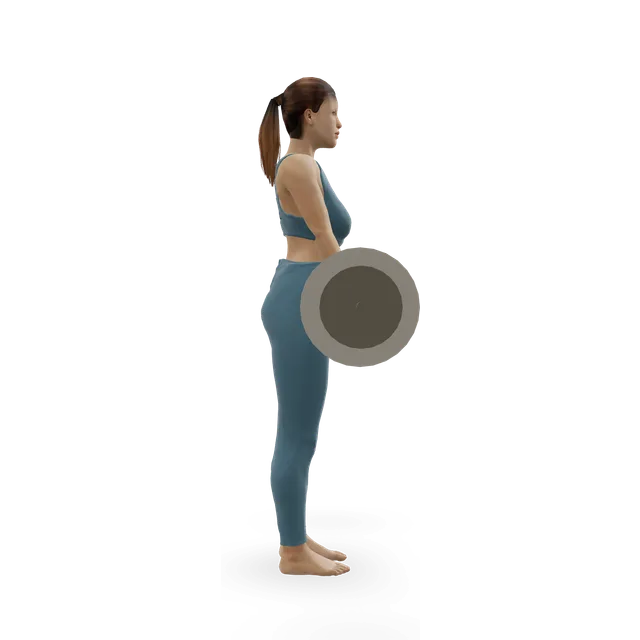 3D demoBarbell deadliftAdvanced · A barbell
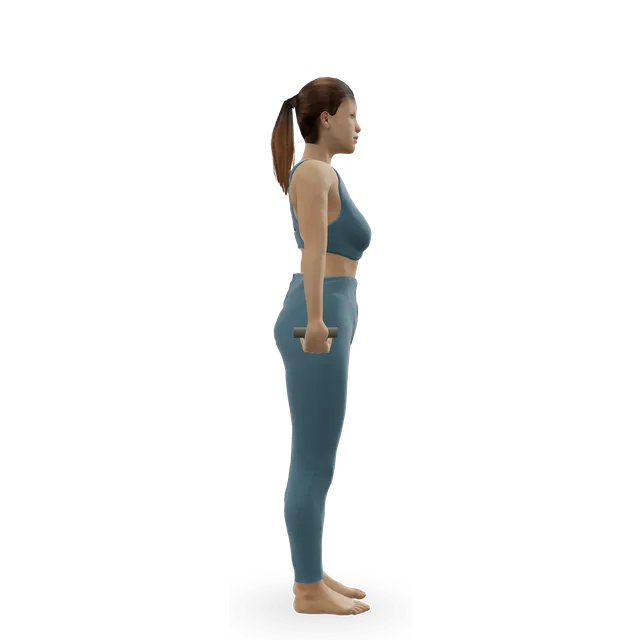 3D demoTrap bar (hex bar) deadliftIntermediate · Other / check instructions
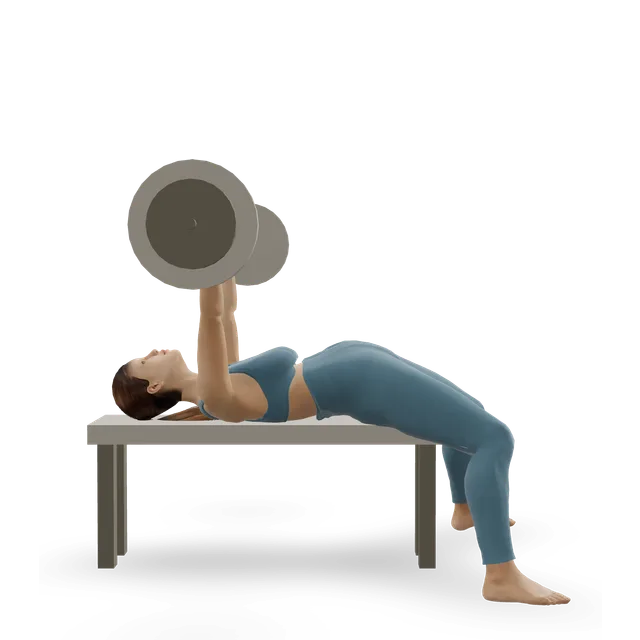 3D demoBarbell bench pressIntermediate · A barbell + A bench or box
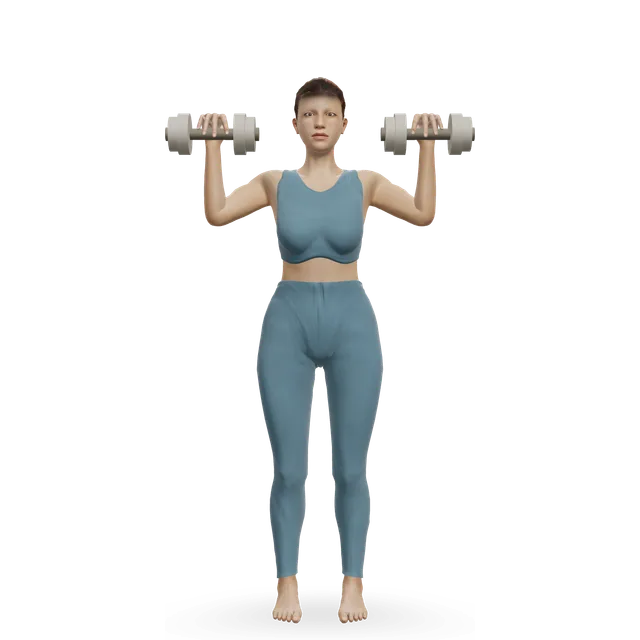 3D demoStanding overhead pressIntermediate · A barbell + A dumbbell
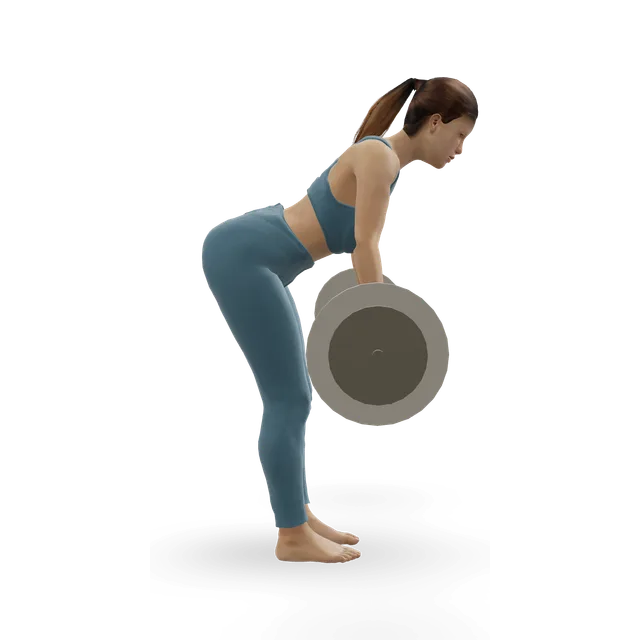 3D demoBent-over barbell rowAdvanced · A barbell
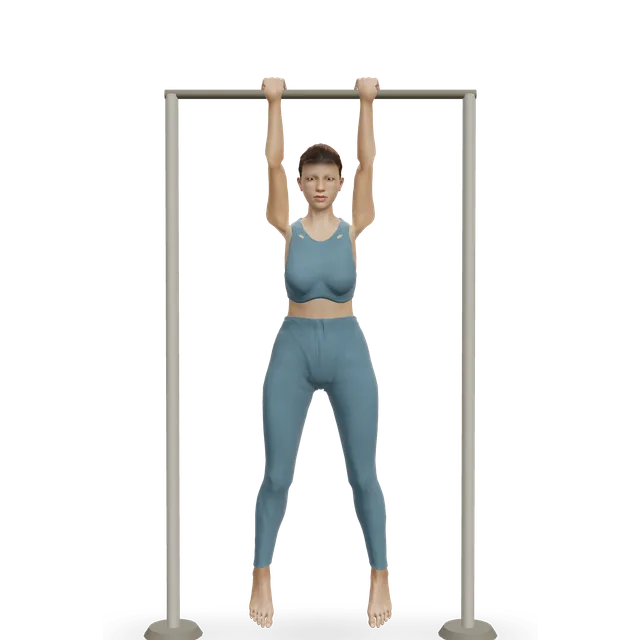 3D demoChin-upAdvanced · Pull-up bar
Hard bodyweight steps in sets of 5 to 8, stopping 2 or 3 reps short (our suggestion), matching our get stronger guide's advice to keep home sets at about 5 to 15 reps. If you could do 20 or more, move up a step.
 3D demoRear-foot-elevated split squat (Bulgarian split squat)Intermediate · A bench or box
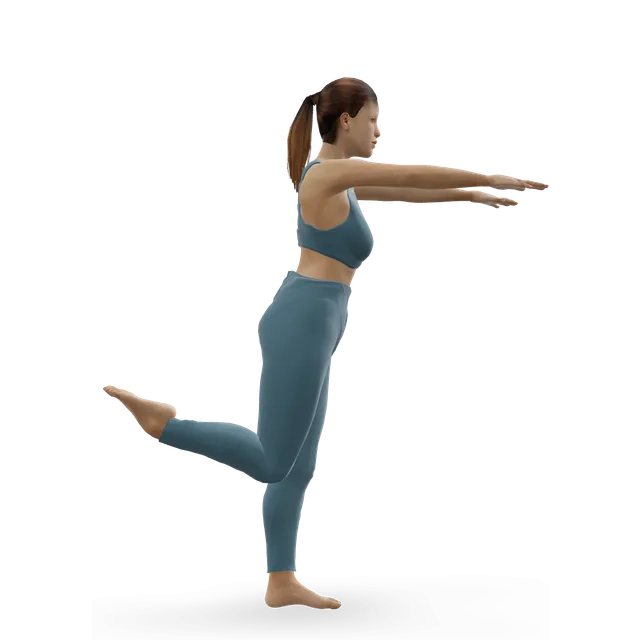 3D demoSkater squatAdvanced · No equipment
 3D demoSingle-leg Romanian deadliftAdvanced · A dumbbell
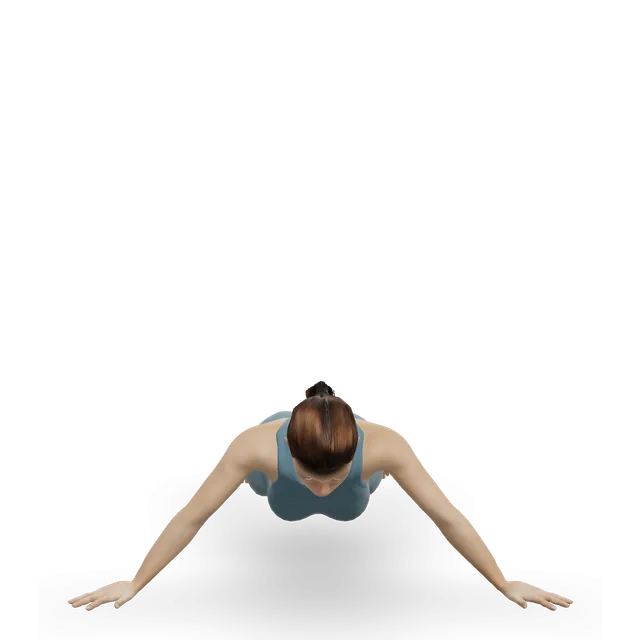 3D demoArcher push-upAdvanced · No equipment
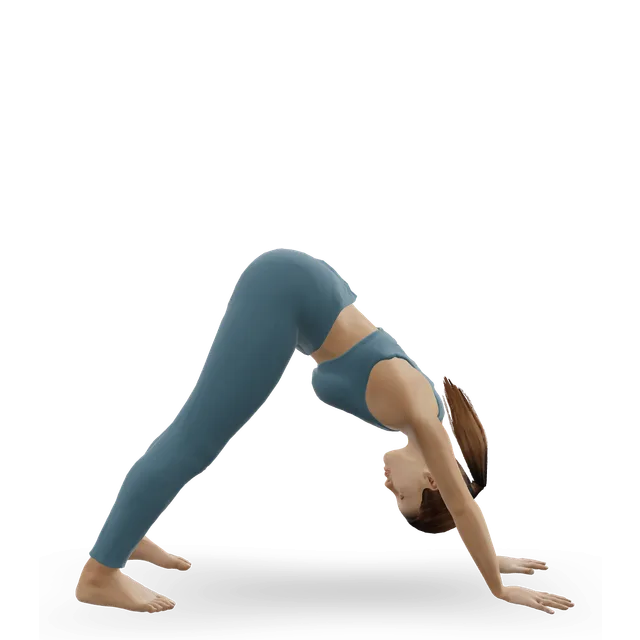 3D demoPike push-upIntermediate · No equipment
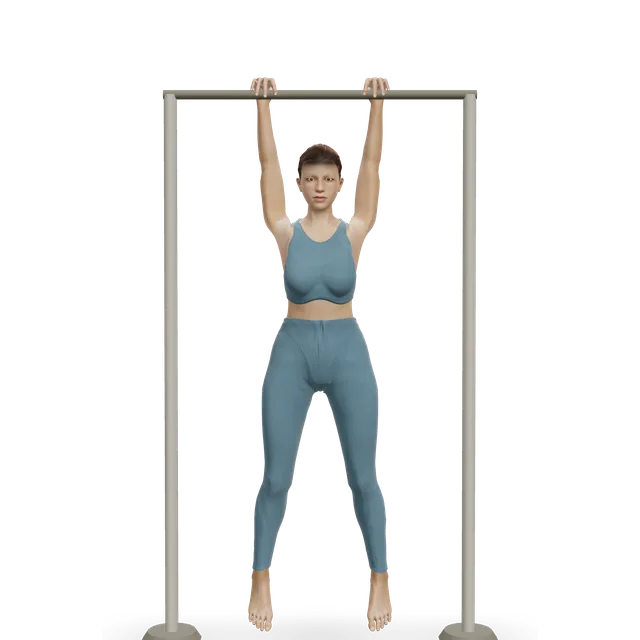 3D demoPull-upAdvanced · Pull-up bar
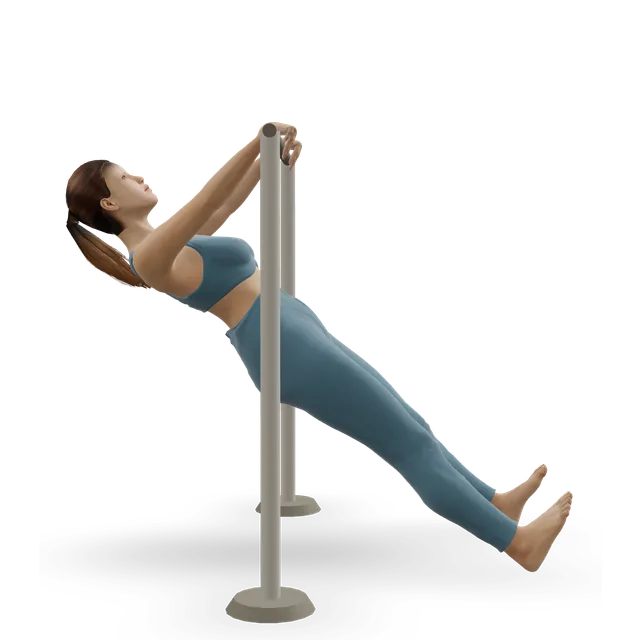 3D demoInverted rowIntermediate · Pull-up bar
Muscle growth needs energy: a deficit of about 500 kcal a day prevented lean mass gains in pooled trials, while strength still rose. Eating to your needs, rather than a surplus, keeps growth slower; it's not a reason to diet.
Source 9
Training hard on too little food harms health and performance in women and men (relative energy deficiency in sport, or REDs). If you are worried about your energy, your periods or repeated injuries, see a doctor.
The NHS lists spending a lot of time worrying about your weight and body shape, eating very little food, exercising too much, and having very strict routines around food among the signs of an eating disorder, and says to see a GP as soon as you can. Worrying a lot about one area of your body can be body dysmorphic disorder. Beat's helpline in England is 0808 801 0677, and our eating disorders guide has the other numbers.
Log your lifts first. If size matters to you, measure your arms, thighs and waist at the same spots every 4 weeks, as our tone up guide suggests, and hold your sets and weights where they are when you like the result.
Women and men gain muscle at a similar rate relative to where they start; men gain a little more in absolute terms, mostly in the upper body. Muscle grows slowly, and you control the dose, as our tone up guide and our strength training for women guide say.
About 1.5 kg of muscle on average across 111 training studies in men, who gain more in absolute terms than women. People vary hugely: after the same 12 weeks, some people's arms barely changed and others' grew by more than half.
Light and heavy loads build similar muscle when the sets are hard, and heavier loads build more strength. Heavy, low-volume training is the strength-without-size end.
In each, 2 or 3 main lifts for 3 sets of 3 to 5 (or 5, as in our barbell workouts), 2 to 3 minutes' rest, stopping 2 or 3 reps short, then one or two light extras such as rotator cuff work, a carry or a plank. Our beginner strength programme, built on barbell strength workouts A and B in sets of 5, is close to this already (our editorial plan).
In weeks 1 and 2, learn the lifts with sets of 8 to 12 and 3 or 4 reps to spare, as our plans start. Then move to sets of 5, and after about 8 to 12 weeks of steady technique, some sets of 3 to 5 (our suggestion).
You don't need to. If you do, wait until you've trained steadily for a few months, warm up with lighter sets, use safety pins or a spotter, and stop at the first rep that slows down badly, as our get stronger guide suggests.
The same principles work: women gained a lot of strength in trials, and more relative upper-body strength than men. Our strength training for women guide covers the questions that differ.
Strength matters more than size for everyday function. Choose loads by reps in reserve and build up gradually; the NHS asks adults over 65 for strength, balance and flexibility work on at least 2 days a week, and our build muscle after 50 guide has more.
Source 27
Heavy, low-volume lifting on a few lifts, 2 or 3 times a week, alongside your sport (our suggestion). Making weight by severe dieting is risky; the eating disorder lines on this page apply, and our runners' strength plan found body mass didn't change in most trials.
With osteoporosis or a past spinal fracture, avoid repeated or loaded deep rounding of the back, and bend from the hips. The osteoporosis guide covers impact and lifting.
Strength rises within 2 to 6 weeks, much of it from your nerves learning the moves, and by 30 to 50% in the first year in a large gym study our get stronger guide describes. Some muscle comes too, and how much varies a lot between people.
Source 1
Barbell strength workouts A and B are heavy and low-volume already: sets of 5 with 2 to 3 minutes' rest. The calisthenics workout is the home option; the reps in reserve workout teaches you to judge effort.
Barbell strength workout A: back squats and bench presses in sets of five, plus rows. Workout B (squat, overhead press, deadlift) is a separate session.
40 minBeginner6 movesA band, A barbellWorkout B of the beginner strength program: back squats, overhead presses and deadlifts in sets of five, plus chin-ups, with the safety pins set.
55 minBeginner10 movesA band, A barbellA 20-minute full-body dumbbell workout: two supersets of squats, rows, Romanian deadlifts and push-ups. Twice a week covers the minimum dose.
20 minBeginner8 movesA dumbbell, A bench or boxA full-body calisthenics workout with a ladder for every move: rows to pull-ups, push-ups, split squats to skater squats, dips, hamstring curls and knee raises.
45 minBeginner11 movesPull-up barLearn how many reps you really have left: machine sets where you call out your reps in reserve, then keep going to check, in about 30 minutes.
30 minBeginner7 movesCardio machine, A bandThe beginner strength programme is the heavy, low-volume template; the runners' plan adds two short strength sessions to running.
A 12-week beginner barbell program: squat every session, alternate bench and row with press and deadlift, and add weight each time until it stalls.
3 training days50 minBeginner3 days a weekA 12-week calisthenics plan for beginners: three bodyweight sessions a week with push-up, pull-up, squat and dip ladders, and a bar if you have one.
3 training days40 minBeginner2 days a weekA 12-week strength plan for runners: two sessions a week of heavy lifts, single-leg work, calf raises and hops, fitted around your runs.
2 training days45 minBeginnerThe NHS lists spending a lot of time worrying about your weight and body shape, eating very little food, exercising too much, and having very strict routines around food among the signs of an eating disorder, and says to see a GP as soon as you can. Worrying a lot about one area of your body can be body dysmorphic disorder. Beat's helpline in England is 0808 801 0677, and our eating disorders guide has the other numbers.
Beat says a drive to be more muscular, sometimes called muscle dysmorphia, can be part of an eating disorder, especially in men. The NHS lists exercising too much and very strict routines around food among the signs of an eating disorder, and says people with body dysmorphic disorder may take anabolic steroids because they don't see themselves as big or strong enough. See a GP; our eating disorders guide has Beat's helplines.
A pop or tearing at the front of the armpit or chest during a lift, followed by bruising into the chest or upper arm, a change in the shape of the chest or armpit, or weakness pushing, can be a torn chest tendon. Don't wait for it to settle: get help the same day from NHS 111 or an urgent treatment centre, as our pec strain guide explains.
A sudden pop at the front of the elbow during a heavy pull, with bruising, a gap at the front of the elbow or a bulge in the upper arm, can be a torn biceps tendon. Go to an urgent treatment centre or A&E (in the US, urgent care or the emergency department), and don't wait for it to settle: repair is best done within the first 2 to 3 weeks.
Call 999 or go to A&E: loss of feeling or numbness around the genitals or bottom, new trouble peeing or controlling your bladder or bowels, changes in genital sensation during sex or problems with erections or orgasm, or pain, tingling, weakness or numbness in both legs. These are signs of cauda equina syndrome, which needs treating in hospital urgently. Don't drive yourself.
See a GP if pain spreading down a leg hasn't improved after a few weeks of home treatment, is getting worse or stops your normal activities. Sciatica on both sides, or weakness or numbness in both legs that's severe or getting worse, is a 999 call or a trip to A&E.
If you get chest pain or pressure, feel faint or dizzy, are unusually breathless, or your heart races or beats irregularly during exercise, as our plans advise.
For chest pain that comes on suddenly and doesn't go away, feels tight or like squeezing, spreads to your arms, neck, jaw, stomach or back, or comes with sweating, feeling sick, light-headedness or breathlessness; severe difficulty breathing; someone who faints while exercising; palpitations that don't go away, or come with chest pain, shortness of breath or feeling faint; or a headache that starts suddenly and is extremely painful, especially while lifting or straining, or comes with numbness or weakness, difficulty speaking or loss of vision. The NHS says a bleed on the brain may be more likely when lifting something heavy. Don't drive yourself to A&E.
Ask for an urgent GP appointment or get help from NHS 111 for a headache that's triggered or made worse by coughing, sneezing, bending down or exercising. In the US, contact your doctor or urgent care.
Stop straight away if you feel any pain or become unwell, the NHS says, and contact 111 if your symptoms worry you or don't go away.
A dull ache in your muscles for a day or two after something new is normal. Joint pain that's sharp, gets worse during a set or lingers into the next day means switching to the easier option, and seeing a GP or physiotherapist if it carries on (our plans' rule). Our muscle soreness guide has more.
Speak to your GP first if you haven't exercised for some time or have medical conditions or concerns, as the NHS advises. Get advice before heavy lifting or hard straining work if your blood pressure is uncontrolled, or you have heart disease or chest pain when you're active, a pacemaker or defibrillator, diabetic eye disease, glaucoma, a hernia, recent eye or tummy surgery, or you're pregnant, as our breathing guide lists. After a recent shoulder dislocation or shoulder surgery, follow our shoulder dislocation guide or your surgical team first.
After heart surgery through the breastbone, or a heart or lung transplant, follow your surgeon's advice before pushing, pulling or lifting with your arms.
Source 28
See a GP if you think you have a hernia, a bulge or lump that may get bigger when you strain and smaller when you lie down. Get help from NHS 111 if you have a hernia and pain in or around it, a bloated tummy, you feel or are sick, you're vomiting blood or your vomit looks like coffee grounds, you're constipated, you have a high temperature or feel hot, cold or shivery, or you've suddenly become confused. Call 999 or go to A&E for a femoral hernia (a small lump at the top of your thigh, in your groin) with very bad tummy pain, sickness, being unable to fart or poo, a high temperature or sudden confusion.
Women gain muscle at similar rates to men relative to where they start, with smaller absolute gains, and muscle grows slowly: about 1.5 kg on average across 111 trials in men. Heavy, low-volume training builds strength with relatively little growth.
Backwards, if anything: growth follows hard sets and volume, not low reps, and light sets taken close to failure grow muscle as well as heavy ones.
Early gains come mostly from the nervous system, and practising a heavy lift built as much strength as high-volume training in one trial, with less growth.
It doesn't reduce muscle growth or strength across 43 studies. Size depends mostly on how many hard sets you do and whether you eat enough.
Source 26
Not guaranteed: any hard training grows some muscle, and people vary hugely after the same training. You control the dose and can hold it where you like.
Source 23
Partly. Heavy, low-rep training builds strength efficiently, and early gains come mostly from your nervous system. But any hard training grows some muscle over time, and how much depends on your genes, your food and how much you train.
Lift heavy, in sets of about 3 to 6, on a few big lifts, keep the number of sets low, stop 2 or 3 reps short of failure, rest 2 to 3 minutes, and eat to your needs rather than a surplus.
About 3 sets of 3 to 6 on each main lift, 2 or 3 times a week, once you've learned the lifts at 8 to 12. Strength gains level off after a few sets per lift, while muscle keeps growing with more.
Not by accident. Women gain muscle at similar rates to men relative to where they start, with smaller absolute gains, and muscle grows slowly. You control the dose.
No. Light and heavy weights build similar muscle when the sets are hard, and heavier weights build more strength.
That's normal early on: in the first weeks most strength comes from your nervous system learning the lift. People also vary hugely; after the same 12 weeks, some people's muscles barely changed.
An energy deficit held back muscle gain more than strength gain in pooled trials. Don't diet to stay small: eat enough to train well, and talk to a GP if food or your body worries you.
No. Across 43 studies, cardio didn't reduce muscle growth or maximal strength. Do it for your health, not to stay small.
About 1.5 kg on average in training studies of men, and women gain less in absolute terms. It comes slowly, and people vary a lot.
Partly: professional ballerinas got stronger at the knee over 12 weeks with no change in thigh circumference or body weight. Hip thrusts grew the thighs less than squats in a trial our glute guide describes.
Yes. Use hard bodyweight steps, such as Bulgarian split squats, archer push-ups and pull-ups, in sets of 5 to 8, and move up a step when you could do more than 20.
Track your lifts first. If size matters to you, measure your arms, thighs and waist at the same spots every 4 weeks, and hold your sets and weights where they are when you like the result.
Exercise education, not a personal prescription, and clinical review of these guides is pending. Check with a GP before starting hard training if you have a heart condition, chest pain, dizziness or breathlessness when active, and stop for sharp or increasing pain. Health disclaimer.






