Your muscles, not your heart and lungs
Muscular endurance is a muscle's ability to keep working against a load without tiring: reps or hold time. Stamina, which our stamina guide covers, is whole-body fitness.
Source 1
Training guide
Muscular endurance is how long your muscles can keep working against a load: how many push-ups or squats you can do, or how long you can hold a plank or carry your shopping. It's different from stamina, which is your heart and lungs keeping you going, and any strength training improves it.
The classic advice is sets of more than 15 with short rests, but the evidence for a special endurance rep range is weaker than often claimed, and getting stronger helps too. This guide covers what muscular endurance is, how many reps and sets and how much rest to use, holds and circuits, how to test yourself with our push-up, plank and chair stand tests, and a 6-week plan built from our workouts.
Muscular endurance is a muscle's ability to keep working against a load without tiring: reps or hold time. Stamina, which our stamina guide covers, is whole-body fitness.
Source 1
In the American College of Sports Medicine's (ACSM) 2026 overview of 137 reviews, resistance training improved muscular endurance compared with not training. In 34 trained men, 1, 3 and 5 sets per exercise raised it by similar amounts.
Light to moderate weights for more than 15 reps, with rests under 90 seconds, 2 or 3 times a week, as the 2009 ACSM position stand suggests. The 2026 overview found too little data to set a dose, so treat it as a starting point.
Getting stronger makes a fixed load easier, so you can do more reps with it. Keep one or two heavier sessions a week.
Source 1
Our push-up, plank, sit-up, wall sit and chair stand tests give you a number; repeat the same test every 4 to 6 weeks and compare yourself with yourself.
A sudden jump to hundreds of reps can cause rhabdomyolysis, a dangerous breakdown of muscle. Add a round or a few reps at a time (see the warning signs).
A review defines local muscular endurance as the ability to resist muscular fatigue when using a submaximal load. The NHS says strength exercise increases your muscles' strength, size, power and endurance, so the same training builds all four.
Absolute endurance is how many reps you can do with a fixed load, such as your body weight in a push-up test. Relative endurance is how many you can do at a set share of your one-rep max (1RM: the most you can lift once), usually 40 to 60%. Getting stronger raises the first, not necessarily the second.
Source 1
Carrying shopping up the stairs, digging the garden, a long hike with a rucksack, holding a child, or the last rounds of a circuit or a race.
Strength, practice at the test and, for bodyweight tests, body weight all change your score. The review notes that women may resist fatigue better than men in sustained efforts, and that few load studies included women.
Source 1
Strength is the most force you can produce, tested with a one-rep max or a heavy set of 5. Our get stronger guide covers it.
Stamina is your heart, lungs and muscles keeping you moving for longer, such as running, cycling or walking further. Our stamina guide covers it.
In 32 untrained men, sets of 20 to 28 improved reps at 60% of their maximum most and also raised aerobic power, while sets of 3 to 5 built the most strength. Circuits train muscular endurance and fitness together.
The load studies are small (18 to 43 people), short (5 to 9 weeks) and mostly in young men; the 2021 review notes few included women.
The ACSM's 2026 overview found resistance training, including home-based training, improved muscular endurance compared with no exercise, but there was too little data to say whether load, volume or set structure changed it. In 34 trained men over 8 weeks, 1, 3 and 5 sets per exercise raised bench press reps at 50% of maximum by similar amounts.
The 2009 ACSM stand advised light to moderate loads (40 to 60% of 1RM) for more than 15 reps with rests under 90 seconds. In 18 trained men, sets of 25 to 35 raised bench press reps at 50% of maximum by about 17%, against a 1% fall for sets of 8 to 12. But a 2021 review called the evidence for a load-specific effect equivocal: light loads may help absolute endurance, mostly in the legs, while results for relative endurance conflict.
In a classic bench press trial the review describes, 43 untrained men who trained heavy (sets of 6 to 8) still raised their reps with a fixed weight by about 28%, against about 40% with lighter loads. Heavy training didn't raise reps at a share of their new, higher maximum.
Source 1
In 18 active women doing sets of 15 to 20 for 5 weeks, 20-second rests improved repeated sprints more (12.5% against 5.4%), and 80-second rests improved leg press strength more (46% against 20%). It's one small trial.
Source 9
Across 45 studies of 897 people, resistance circuits raised muscle mass by about 2%, cut fat mass by about 4%, raised aerobic fitness (VO2 max) by about 6% and improved upper and lower body strength. Another review found large fitness gains with about 14 to 30 sessions over 6 to 12 weeks of at least 20 to 30 minutes. The trials were small.
In 1,104 male firefighters followed for 10 years, those who could do more than 40 push-ups had far fewer heart and circulation problems than those who managed fewer than 10, allowing for age and body mass index. It's a link in active men, not proof that push-ups protect you.
Source 11
Across 43 studies, adding aerobic training to strength training didn't reduce maximal strength or muscle growth; explosive strength gained a little less, mainly when both were done in the same session. An earlier analysis found more interference with running than cycling and with more frequent, longer sessions.
More reps, longer holds or more rounds of the moves you care about (push-ups, squats, carries, a plank), plus some heavier strength work for the same muscles (our suggestion).
Light to moderate weights (40 to 60% of your maximum) for more than 15 reps, with short rests under 90 seconds, as the 2009 ACSM position stand suggests and our sets and reps guide repeats. The 2026 overview found too little data to set a dose, so sets of 15 to 25 are our editorial starting point.
Take light sets close to failure. Our plans' rule: if a move is light enough that you could do 20 or more reps, take its last set to within 0 or 1 rep of failure; bigger moves stop 2 or 3 reps short. Stop a set when your form breaks, not only when you can't move.
Under 90 seconds between endurance sets, as our rest between sets guide says. Pair two moves that don't compete (a push and a squat) and rest 60 to 90 seconds after the pair to save time.
Two or 3 days a week, with a day between. The NHS asks for strength work on at least 2 days a week.
Source 14
Planks: 3 holds of 20 to 45 seconds, ending each when your hips start to sink, then make it harder rather than longer (our plank guide). Wall sits: 4 holds of 20 to 45 seconds at a comfortable depth (our wall sit guide). Breathe throughout.
For strength, train at the hardest step you can do for 8 clean reps and move up when every set reaches 15, as our push-up guide's ladder rule says. For push-up endurance, add sets of an easier step taken close to failure, or follow our push-up challenge.
Once or twice a week, do your main lifts for 2 or 3 sets of 5 to 8, as our sets and reps guide suggests for strength. It raises the reps you can do with a fixed load.
Source 1
Our editorial session, built on the 2009 ACSM advice (more than 15 reps, under 90 seconds' rest), our circuit training guide's stations and our plans' effort rule for light sets. Our push-up guide teaches the push-up ladder.
Loading the 3D figure…
The movement on the figure: Push-up
Sets of 15 to 25 taken close to failure, under 90 seconds' rest (our editorial starting point). Band rows: 3 sets of 10 to 15, stopping 2 to 3 reps short of failure, with 60 to 90 seconds' rest (the move page's dose); add reps for endurance once that's easy.
 3D demoBodyweight squatBeginner · No equipment
 3D demoIncline push-upBeginner · A bench or box
 3D demoKnee push-upBeginner · No equipment
 3D demoPush-upIntermediate · No equipment
 3D demoReverse lungeIntermediate · No equipment
 3D demoGlute bridgeBeginner · No equipment
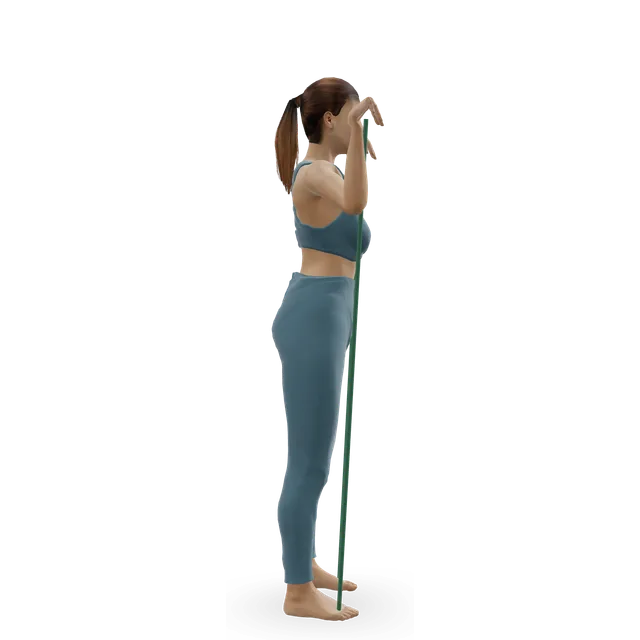
 3D demoBand rowBeginner · A band + An anchor point
 3D demoStep-upBeginner · A step
Planks 3 holds of 20 to 45 seconds, side planks 3 holds of 15 to 40 seconds a side and wall sits 4 holds of 20 to 45 seconds (our move guides); make them harder rather than longer. Straight-arm plank: 3 holds of 15 to 30 seconds, a suggested starting point (the move page's dose).
Six to 10 stations: a squat, a hinge, a push, a pull, a single-leg move, a core move and one or two cardio stations, ordered so body parts take turns. Work for 30 to 45 seconds or 10 to 15 reps, take 15 to 30 seconds to change, and do 2 or 3 rounds with 1 to 2 minutes between, 2 or 3 days a week, as our circuit training guide sets out.
Load each strength station so you finish 2 or 3 reps short of failure; for timed stations, use a weight you could lift about 15 to 20 times (our circuit training guide).
Add a round, then reps or weight at the strength stations, then shorten the changeovers.
In a circuit, 40 seconds or 10 to 15 reps each, 2 or 3 reps short of failure, as our circuit training guide says. Step jacks: 30 to 45 seconds within a circuit, 2 to 3 rounds (the move page's dose, its editorial starting point).
 3D demoDumbbell goblet squatIntermediate · A dumbbell3D demoPush-upIntermediate · No equipment
 3D demoSupported single-arm dumbbell rowIntermediate · A dumbbell + A bench or box3D demoReverse lungeIntermediate · No equipment
 3D demoDumbbell Romanian deadliftIntermediate · A dumbbell
 3D demoDead bugBeginner · No equipment
 3D demoStep jack (low-impact jumping jack)Beginner · No equipment
 3D demoJumping jackBeginner · No equipment
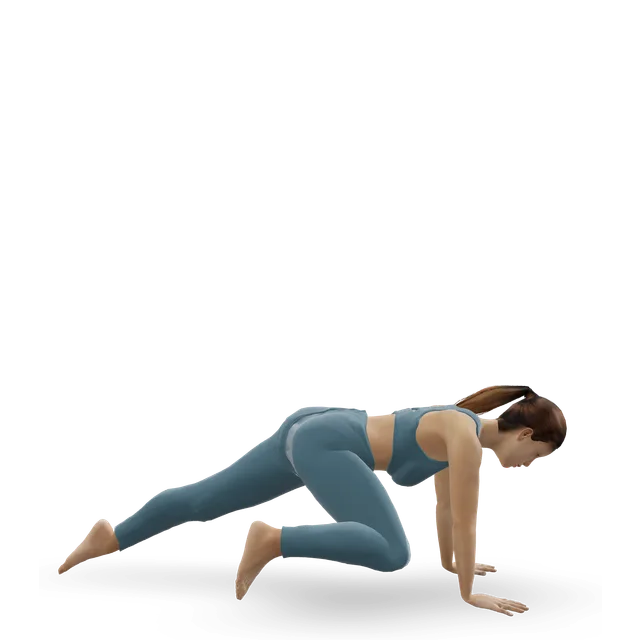 3D demoMountain climbersIntermediate · No equipment
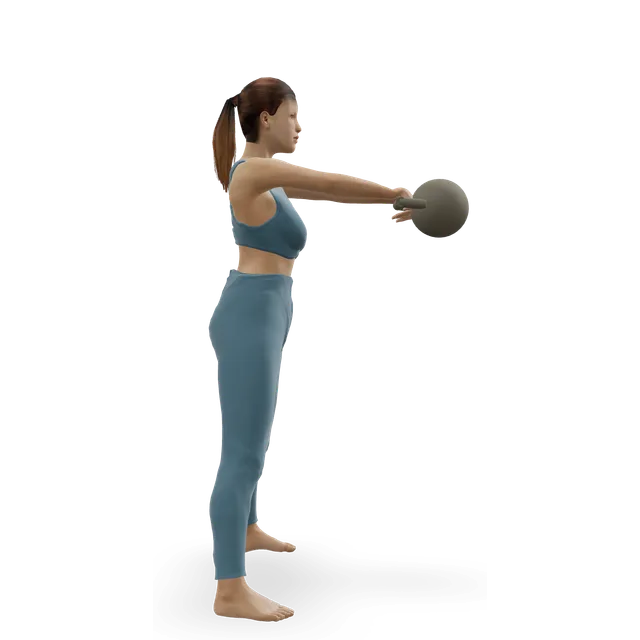 3D demoKettlebell swingIntermediate · A kettlebell
As many complete push-ups as you can in a row; our push-up test page has the Canadian scores by age and sex, men from their toes and women from their knees. A change of 2 or 3 push-ups may be day-to-day difference.
Hold a forearm plank as long as your form holds. In 471 US college students, the median was 110 seconds for men and 72 seconds for women, as our plank test page says.
Skip sit-ups with osteoporosis, back pain that flares with bending, in later pregnancy or the first weeks after a birth, or with a hernia.
Our wall sit test has no published norms, so it compares you only with your own last time at the same depth.
The 30-second chair stand test counts how many times you can stand up from a chair; our page gives the usual range for adults aged 60 to 94.
Use the same test, time of day and warm-up every 4 to 6 weeks (our suggestion). Our fitness test workout bundles chair stands, push-ups, a plank and a timed walk or run.
Monday, our circuit training workout (2 rounds in weeks 1 and 2, then 3). Wednesday, a strength session such as our 20-minute strength workout. Friday, reps and holds from our push-up, squat and plank challenge workouts. Test in week 1 and week 6 with our fitness test workout. This is our editorial plan; our 6-week workout plan builds the same mix into a full week.
Add a round, a few reps or a few seconds to one or two moves, not to everything at once (our suggestion).
Leg endurance comes mostly from the running or riding itself; add two strength sessions a week, as our strength training plan for runners does, and our stamina guide covers the aerobic side.
Our push-up and pull-up guides and 30-day challenges build reps with practice sets and harder versions.
Mix carries, lunges, sled-style pushes and running; our Hyrox plan sets it out week by week.
The circuit training workout is the main session: 8 stations, 40 seconds on and 20 off, 3 rounds. The challenge workouts build push-up, squat and plank endurance, and the fitness test workout is your retest.
A full-body circuit of 8 stations: dumbbell squats, push-ups, rows, lunges, deadlifts and cardio moves, 40 seconds each, for 2 or 3 rounds.
35 minBeginner14 movesA dumbbell, A bench or boxA 15-minute push-up ladder for the 30-day push-up challenge: wrist prep, wall to knee push-ups or floor to archer push-ups, and band rows to balance it.
15 minBeginner11 movesA wall, A bench or boxA 15-minute squat ladder for the 30-day squat challenge: sit-to-stands and chair squats, then split squats, Bulgarian split squats and skater squats.
15 minBeginner12 movesA wall, A bench or boxA 12-minute plank session for the 30-day plank challenge: front planks that get harder, not longer, plus side planks and bird dogs for the whole trunk.
12 minBeginner12 movesNo equipmentA full-body resistance band workout: squats, rows, push-ups, presses, pull-aparts, band walks, good mornings and flyes.
30 minBeginner9 movesA band, An anchor pointA 16-minute EMOM: start squats, push-ups, lunges or jumping jacks at the top of each minute and rest for what's left, with easier and harder targets.
22 minBeginner9 movesA wallThe 12-move circuit from a 2013 fitness journal article: 30 seconds per move and 10 to switch, with a short warm-up and an easier swap for every move.
12 minIntermediate13 movesA wall, A stepA fitness test session to repeat every 6 to 12 weeks: the 30-second chair stand, the push-up test, an optional plank and a timed 1.6 km walk or 12-minute run.
45 minBeginner12 movesA bench or box, Cardio machineA 20-minute full-body dumbbell workout: two supersets of squats, rows, Romanian deadlifts and push-ups. Twice a week covers the minimum dose.
20 minBeginner8 movesA dumbbell, A bench or boxA 20-minute kettlebell swing workout: 30 seconds of swings, 30 seconds of rest, building to the 12 rounds a training trial used, then carries.
20 minIntermediate7 movesA kettlebell, A dumbbellThe 6-week plan mixes strength, a circuit and cardio and starts and ends with simple tests.
A 6-week workout plan for strength and fitness: two strength days, a circuit and two cardio sessions a week, with simple fitness tests in weeks 1 and 6.
3 training days45 minBeginner3 days a weekA free 30-day push-up challenge, from wall to archer push-ups: 3 short sessions a week, optional practice days and a push-up test at each end.
3 training days15 minBeginner3 days a weekA free 30-day squat challenge with a chair track and a single-leg track: 3 short sessions a week, optional practice days and a before-and-after test.
3 training days15 minBeginner3 days a weekA free 30-day plank challenge that gets harder, not longer: three plank sessions a week, two optional McGill big 3 days and a plank test at each end.
3 training days12 minBeginner3 days a weekA 12-week calisthenics plan for beginners: three bodyweight sessions a week with push-up, pull-up, squat and dip ladders, and a bar if you have one.
3 training days40 minBeginner5 days a weekA 12-week first Hyrox plan: three runs, two strength sessions and one stations-and-runs session a week, built up to race weights, with a taper and race tips.
5 training days50 minIntermediateSame day (call NHS 111, or go to A&E if you feel very unwell): after a big or unusual session, such as hundreds of pull-ups, push-ups, dips or curls, a challenge or a new class, muscle pain, swelling or weakness far worse than the session explains, and dark pee (red, brown, tea or cola coloured), sometimes starting hours or days later. Dark pee isn't always there, so muscles far sorer, more swollen or weaker than the session explains still need the same-day check. It can be rhabdomyolysis, a breakdown of muscle that can harm the kidneys.
Call NHS 111 (in the US, your doctor or urgent care) for severe muscle pain and weakness with dark (cola-coloured) or reduced urine after unusually hard training. This can be rhabdomyolysis, which can harm the kidneys and needs prompt care.
Wall sits raise blood pressure while you hold them, so breathe normally and never hold your breath. Ask your GP first if your blood pressure is 160/100 or higher and untreated, or if you have heart disease, and skip them with Marfan syndrome, vascular Ehlers-Danlos syndrome or aortic disease.
Pain you'd call mild to moderate, no more than about 5 out of 10, that settles within an hour or so, with your back no worse the next morning, is acceptable; if it is worse, do less next time (fewer reps, a smaller range, a lighter load), not nothing. Stop or shrink any movement that sends pain, pins and needles or numbness further down your leg. That's our back pain guides' rule.
If you get chest pain or pressure, feel faint or dizzy, are unusually breathless, or your heart races or beats irregularly during exercise, as our plans advise.
For chest pain that comes on suddenly and doesn't go away, feels tight or like squeezing, spreads to your arms, neck, jaw, stomach or back, or comes with sweating, feeling sick, light-headedness or breathlessness; severe difficulty breathing; someone who faints while exercising; palpitations that don't go away, or come with chest pain, shortness of breath or feeling faint; or a headache that starts suddenly and is extremely painful, especially while lifting or straining, or comes with numbness or weakness, difficulty speaking or loss of vision. The NHS says a bleed on the brain may be more likely when lifting something heavy. Don't drive yourself to A&E.
Ask for an urgent GP appointment or get help from NHS 111 for a headache that's triggered or made worse by coughing, sneezing, bending down or exercising. In the US, contact your doctor or urgent care.
Stop straight away if you feel any pain or become unwell, the NHS says, and contact 111 if your symptoms worry you or don't go away.
A dull ache in your muscles for a day or two after something new is normal. Joint pain that's sharp, gets worse during a set or lingers into the next day means switching to the easier option, and seeing a GP or physiotherapist if it carries on (our plans' rule). Our muscle soreness guide has more.
Speak to your GP first if you haven't exercised for some time or have medical conditions or concerns, as the NHS advises. Get advice before heavy lifting or hard straining work if your blood pressure is uncontrolled, or you have heart disease or chest pain when you're active, a pacemaker or defibrillator, diabetic eye disease, glaucoma, a hernia, recent eye or tummy surgery, or you're pregnant, as our breathing guide lists. After a recent shoulder dislocation or shoulder surgery, follow our shoulder dislocation guide or your surgical team first.
Speak to a GP first if you haven't exercised for some time, or if you have a medical condition or concerns. Get advice first, too, if you have a health problem, an injury or symptoms, have recently had a heart attack or an operation, or are pregnant or have recently given birth.
Source 14
See a GP if you think you have a hernia, a bulge or lump that may get bigger when you strain and smaller when you lie down. Get help from NHS 111 if you have a hernia and pain in or around it, a bloated tummy, you feel or are sick, you're vomiting blood or your vomit looks like coffee grounds, you're constipated, you have a high temperature or feel hot, cold or shivery, or you've suddenly become confused. Call 999 or go to A&E for a femoral hernia (a small lump at the top of your thigh, in your groin) with very bad tummy pain, sickness, being unable to fart or poo, a high temperature or sudden confusion.
Light and heavy weights build similar muscle when the sets are hard, and heavier weights build more strength. High reps build reps-based endurance a little more, at most.
Across 43 studies, adding aerobic training didn't reduce maximal strength or muscle growth; only explosive strength lagged a little when both were done in the same session.
Source 12
Any resistance training improved muscular endurance, and nobody has shown that very high reps do more. Sets of 15 to 25 taken close to failure are plenty, and getting stronger helps too.
Training to fatigue didn't consistently improve results in the ACSM's overview. Stop most sets 1 to 3 reps short; a test set ends at good-form failure, once in a while.
Source 2
Muscular endurance is one muscle group's reps or hold time; stamina is whole-body fitness. They overlap, and circuits train both.
It's the ability of a muscle to keep working against a load without tiring: how many reps you can do, or how long you can hold. It's different from stamina, which is whole-body fitness.
Train the movement you want to last at, in sets of 15 to 25 taken close to failure with under 90 seconds' rest, 2 or 3 times a week, and keep some heavier strength work. Any resistance training improves it.
More than 15, with light to moderate weights, is the classic advice. But the 2026 ACSM overview found too little data to set an exact dose, and a review called the evidence for a special endurance rep range equivocal.
Under 90 seconds. In one trial, short rests improved repeated sprints more and long rests improved strength more.
It can, if the sets are hard: light and heavy weights built similar muscle when taken close to failure. Heavier weights build more maximal strength.
Yes: resistance circuits improved strength and aerobic fitness in pooled trials. Our circuit uses 40 seconds on and 20 off for 3 rounds.
Use our push-up, plank, sit-up or wall sit tests, or the 30-second chair stand if you're over 60, and retest the same way every 4 to 6 weeks. Compare yourself with yourself.
It depends on your age and sex; our push-up test shows the Canadian scores. In 1,104 male firefighters, those who could do more than 40 had far fewer heart problems over 10 years than those doing fewer than 10, a link rather than proof.
No. Adding endurance training didn't reduce maximal strength or muscle growth across 43 studies; only explosive strength lagged a little when both were done in the same session.
Both. Getting stronger raises how many reps you can do with a fixed weight, and endurance work builds some strength too.
Rep and hold scores often rise within a few weeks; the trials here ran 5 to 8 weeks. Retest every 4 to 6 weeks.
Build up gradually. Muscle pain far worse than the session explains, with dark pee, after a big or unusual session needs a same-day check for rhabdomyolysis.
Exercise education, not a personal prescription, and clinical review of these guides is pending. Check with a GP before starting hard training if you have a heart condition, chest pain, dizziness or breathlessness when active, and stop for sharp or increasing pain. Health disclaimer.