Strength at home
Fitness test workout: chair stands, push-ups, a plank and a timed walk or run
Four of our fitness tests in one session, in a set order: two short strength tests, an optional plank, then a timed walk or run. Each one follows its test page, so you can score it there and compare it with your next test. It's the test day of our 6-week and 12-week workout plans: do it rested, write every result down, and repeat it the same way at the end of your plan.
Warm-up
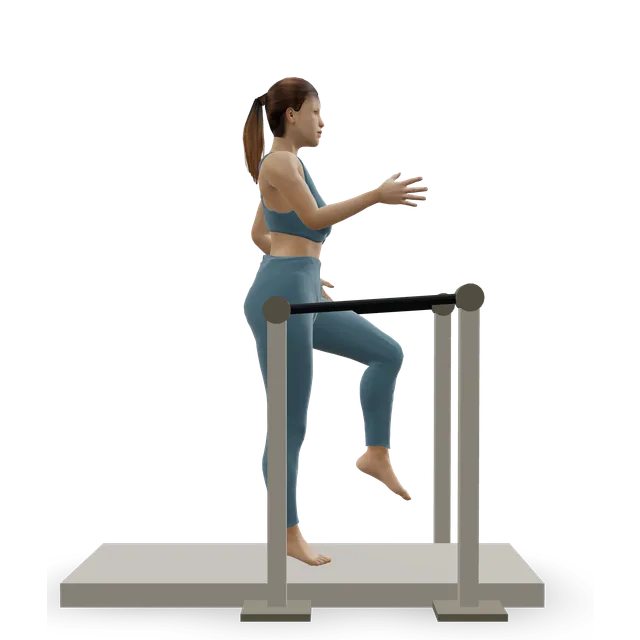
- Standing march2 minBeginner · Hip flexors, Abs, Glutes · 3D demoEasy pace, arms swingingEasier: Seated marchHarder: Standing band hip flexion
- Bodyweight squat8 slow repsBeginner · Quads, Glutes, Hamstrings · 3D demoTo a depth you controlEasier: Sit squat (partial squat)Harder: Dumbbell goblet squat
- Sit to stand from a chair2 slow practice standsBeginner · Quads, Glutes, Hamstrings · 3D demoArms crossed on your chest, as in the testEasier: Sit to stand, pushing on the thighsHarder: Bodyweight squat
- Beginner · Shoulders, Chest, Abs · 3D demoHands on a wall or bench if a full plank is hardEasier: Dumbbell shoulder-blade punchHarder: Push-up




Test 1: 30-second chair stand
Rest 2 to 3 min before the next test
- Sit to stand from a chair30 s: count your full standsBeginner · Quads, Glutes, Hamstrings · 3D demoAn armless chair about 43 cm (17 inches) high, pushed against a wall. Arms crossed, hands on the opposite shoulders; stand up fully and sit all the way down. Count a last stand if you're over halfway up when time ends. If you need your arms to stand, stop: the chair stand test page scores that as 0. Have someone beside you, and if you've fallen in the past year, tell your GP whatever your scoreEasier: Sit to stand, pushing on the thighsHarder: Bodyweight squat
Test 2: push-up test (do one version)
Rest 2 to 3 min before the next test
- Push-upAs many as you can in a rowIntermediate · Chest, Triceps, Shoulders · 3D demoThe push-up test page's rules: lower until your chin touches the floor, keep a steady pace with no rest at the top or bottom, and stop when you strain hard or can't keep good form for two in a row. Count only complete push-ups. Its bands use full push-ups for menEasier: Wall push-upHarder: Close-grip push-up (close triceps position)
- Knee push-upAs many as you can in a rowBeginner · Chest, Triceps, Shoulders · 3D demoThe same rules from your knees, body straight from knees to head. The bands use this version for womenEasier: Incline push-upHarder: Push-up
- Incline push-upAs many as you can in a rowBeginner · Chest, Triceps, Shoulders · 3D demoIf knee push-ups are too hard yet: hands on a sturdy bench that can't slide. It isn't scored against the norms, so compare it with your own next testEasier: Wall push-upHarder: Push-up



Test 3 (optional): plank test
Rest 3 to 5 min before the next test
- Forearm plankHold while you keep a straight line, up to 4 minIntermediate · Abs, Shoulders, Glutes · 3D demoThe plank test page's rules: elbows under your shoulders, one straight line from head to heels, breathing throughout. The test ends the second time your hips sag or rise and you can't fix it; note your time in whole seconds. Skip it for anything on that page's list of who it isn't for, including heart failure, untreated blood pressure of 160/100 or more, pregnancy, the weeks after giving birth, and after tummy surgery or a hernia repairEasier: Stomach vacuum (drawing-in)Harder: Plank walk-up

Test 4: timed walk or run (do one version)
- Treadmill walking1.6 km (1 mile) as fast as you can walkBeginner · Quads, Calves, Glutes · 3D demoOn a flat, measured route, such as four laps of a 400 m track plus 9 m. Walk, don't run. Note your time and your heart rate as you finish, from a chest strap or watch: counting your pulse after you stop reads low. Enter both in the VO2 max calculator if you likeHarder: Treadmill jogging
- Treadmill running12 min, as far as you canIntermediate · Quads, Calves, Glutes · 3D demoThe 12-minute run (the Cooper test) from the VO2 max calculator, only if you already run regularly and answered no to every PAR-Q+ question. Over 45 and not used to all-out efforts? Check with a qualified exercise professional first. A 400 m track makes the distance easy to measureEasier: Treadmill walkingHarder: Sprint intervals
- Treadmill walking6 min, as far as you canBeginner · Quads, Calves, Glutes · 3D demoThe 6-minute walk test, set up as its test page describes: a 30 m course, set phrases, no running. It's the gentler choice from about 60, or if a mile is too far. The page asks for no hard exercise in the 2 hours before and no warm-up, so do it first, after 10 minutes sitting near the start, or on another day. With a heart or lung condition, do this test with your care teamHarder: Treadmill jogging

Cool-down
- Treadmill walking5 min easyBeginner · Quads, Calves, Glutes · 3D demoUntil your breathing settlesHarder: Treadmill jogging
- Wall calf stretch (gastrocnemius)30 s each sideBeginner · Calves · 3D demoOptional, for comfortEasier: Seated calf stretch with a towelHarder: Heel-on-step calf and hamstring stretch
- Standing quad stretch30 s each sideBeginner · Quads, Hip flexors · 3D demoOptional. Hold a wallEasier: Side-lying quad stretch with a strapHarder: Couch stretch


Tips
- Answer the PAR-Q+ (the Physical Activity Readiness Questionnaire for Everyone) first. If you answer yes to anything, or you're over 45 and not used to hard, all-out effort, stop the push-ups and the plank at a set you finish comfortably and note it, and walk rather than run.
- Test rested: no hard exercise the day before, no big meal or caffeine for a few hours, and the same time of day each time.
- Keep everything the same next time: the same chair, push-up version, route, shoes and order.
- If you can, try each test once in the days before your first one: some of any improvement is just getting used to the test.
- The test pages treat a change of 2 or 3 push-ups, or up to about 15 seconds on the plank, as possibly just day-to-day difference.
- Score each test on its page: the push-up test, the chair stand test, the plank test, and the VO2 max calculator for the walk or run. Compare yourself with yourself; no test is a diagnosis.
- Stop at once for chest pain, dizziness, palpitations or breathlessness you can't talk through. Call 999 (911 in the US) for chest pain that feels tight or like squeezing, or spreads to your arms, neck, jaw or back.
The doses are suggested starting points, not a prescription. Choose a range you can control and stop for sharp or increasing pain, numbness or tingling. Get individual advice after an injury or surgery, or if you are pregnant or managing a health condition.
Part of these weekly plans
Follow the whole week: which session on which day, and how to progress.
Find more moves like these
More strength at home


Beginner bodyweight workout
A 20-minute full-body workout with no equipment: squats, knee push-ups, bridges, lunges and planks.
20 minBeginner10 movesNo equipment

Full-body bodyweight workout
An intermediate no-equipment workout: push-ups, split squats, single-leg bridges, pike push-ups and core work.
30 minIntermediate11 movesNo equipment


Full-body dumbbell workout
A 35-minute full-body strength workout with dumbbells: goblet squats, presses, rows, Romanian deadlifts and carries.
35 minIntermediate9 movesA band, A dumbbellQuestions people ask
How long does the fitness test workout: chair stands, push-ups, a plank and a timed walk or run take?
About 45 minutes, including any warm-up and cool-down listed. Shorten it by doing fewer rounds; lengthen it by adding one.
What equipment do I need?
You need: A bench or box, Cardio machine, A wall. Each move links to its guide, where you can find an alternative if you are missing something.
Is it suitable for beginners?
It is written for beginners. 11 of its 12 moves have an easier option listed beside them if you need one.
How do I make it easier or harder?
Use the easier or harder option listed under each move, change the number of rounds, or adjust the rest. Progress one change at a time.