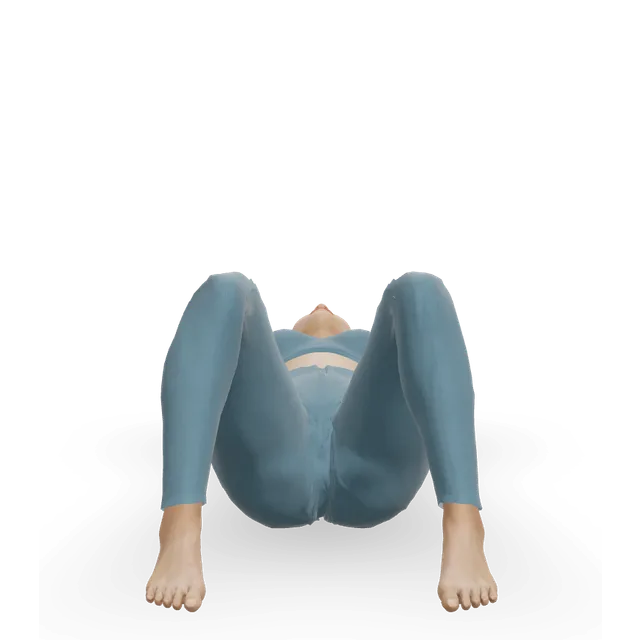
The norms most people meet
The scorer uses the Cooper Institute's 1-minute sit-up percentiles, which US police academies use. The middle (50th percentile) count is 40 for men and 35 for women aged 20 to 29, falling to 26 and 17 at 50 to 59.
Fitness test
Lie on your back with your knees bent and a partner holding your feet, fingers interlocked behind your head, and count how many full sit-ups you can do in one minute, elbows to knees and back down to the mat. Enter your count with your age and sex: from 20 to 59, the scorer shows which band you fall in on the Cooper Institute's percentiles, which US police academies use, and at other ages it shows your count and the change since last time. It uses only the five rows of that table we could check against a second document, at the ages where all five were checked, and the people the table came from aren't documented. If you'd rather not do full sit-ups, the Canadian partial curl-up is a gentler option to track from test to test. The test works your hip flexors as much as your abs, and it isn't for everyone: skip it with osteoporosis, back pain that flares with bending, in later pregnancy or the early months after a birth, or with a hernia.
Choose the test, your sex and your age, and enter your count. From 20 to 59, the 1-minute sit-up done with your feet held gets a percentile band. At other ages, and for the curl-up or sit-ups with free feet, you get your count and the change since last time: we rate only the ages where all five rows we use were checked against a second document.
25sit-ups in 1 minute
Between the 40th and 50th percentile for women aged 30 to 39 on the Cooper Institute's percentiles, as US police academies print them.
| Percentile | Sit-ups |
|---|---|
| 15th | 18 |
| 30th | 22 |
| 40thyour count reaches this | 25 |
| 50th | 27 |
| 70th | 32 |
Five rows of the Cooper Institute's percentiles, as reprinted by US police academies: the rows a second document confirmed for ages 20 to 59. The Cooper Institute's own booklet couldn't be opened, and the people behind the table aren't documented.
The test holds the feet and puts the hands behind the head, so a count done another way won't compare. Don't pull on your neck.
Stop if sit-ups bring on back pain, pain or tingling down a leg, or neck pain, and try the plank test instead. With osteoporosis or a past spinal fracture, skip sit-ups and curl-ups: a UK consensus advises changing or avoiding repeated rounding of the spine.
In later pregnancy, the NHS advises against lying flat on your back for more than a few minutes, and after a birth against sit-ups to start with.
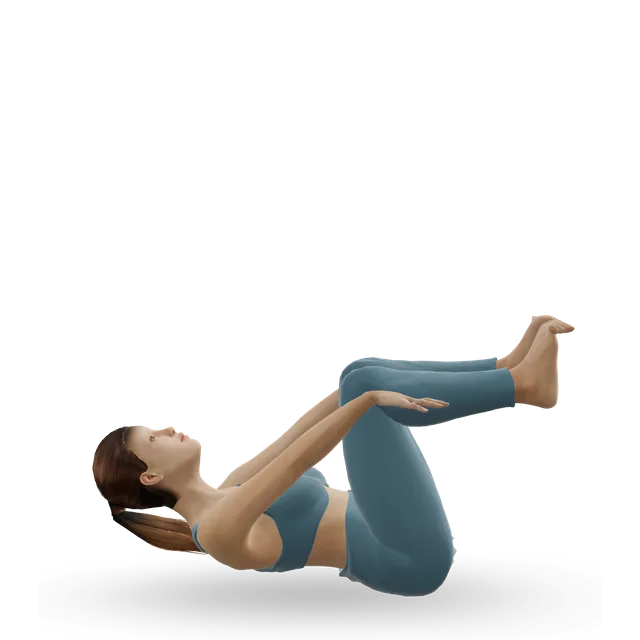
You need a mat, a timer and a partner to hold your feet and count. These are the steps US police academies use with the Cooper Institute's percentiles. The figure shows a sit-up that lowers three-quarters of the way; in the test you lower until your shoulder blades touch the mat. The warm-up is our addition (editorial).
Loading the 3D figure…
The movement on the figure: Sit-up (3/4 sit-up)
The scorer uses the Cooper Institute's 1-minute sit-up percentiles, which US police academies use. The middle (50th percentile) count is 40 for men and 35 for women aged 20 to 29, falling to 26 and 17 at 50 to 59.
We could check five rows of the table against a second document, so the scorer uses only those: the 15th, 30th, 40th, 50th and 70th percentiles. All five were checked only for ages 20 to 59, so under 20 and from 60 the scorer shows your count and the change since last time, with no rating. The Cooper Institute's booklet couldn't be opened, so who was tested isn't documented.
Sit-ups work the muscles at the front of your hips as much as your abs, and holding the feet moves more of the work onto them.
Arms by your sides, you curl up just far enough to slide your fingertips 10 cm, to a beat, up to 25. The scorer gives it your count and the change since last time, with no rating.
Skip sit-ups with osteoporosis, back pain that flares with bending, in later pregnancy or the first weeks after a birth, or with a hernia.
Five rows of the Cooper Institute's percentiles for sit-ups in 1 minute, printed from the scorer's own table. The scorer places your count in a band between them; a count equal to a row counts as reaching it.
Each row gives the age group, then the count at the 15th, 30th, 40th, 50th and 70th percentiles. These are the four age groups the scorer rates.
Source 1
The same rows for women.
Source 1
Below the 15th, 15th to 30th, 30th to 40th, 40th to 50th, 50th to 70th, and 70th or above. The scorer adds "fewer than most" below the 15th and "more than most" at the 70th or above (editorial).
We read the Cooper Institute's full percentile table in a county sheriff's reprint, whose scrambled text we rebuilt row by row. Five rows matched a second document: the 15th and 50th a college police academy's entry and graduation standards (ages 20 to 59), the 30th Pennsylvania's police entry standards (18 to 29 up to 60 and over), the 40th Rhode Island's entry standards (every age group) and the 70th New York State Park Police's graduation standards (20 to 59). The scorer uses only those rows, and only from 20 to 59, the ages where all five were confirmed; under 20 and from 60, it shows your count and the change since last time. The Cooper Institute's own booklet couldn't be opened.
No source we could open says. Pennsylvania's police training commission calls them "scientifically valid norms that represent a cross-section of general and law enforcement populations", which is the agency's description, not a study's. Treat a band as a rough guide.
Source 2
It's the table US police academies score against, and its cells agreed across five public documents wherever they overlapped. The YMCA's curl-up table, reprinted with permission by the American Council on Exercise, comes with instructions for a different movement from the YMCA's own test, so we don't use it.
The protocol grew out of a Canadian study that compared two curl-up methods in 262 adults. Canada's fitness bands for the partial curl-up could only be read in one college reprint, whose push-up sheet has an error, and whether they come straight from the Canadian norms study is unclear. So the scorer gives the curl-up your count and the change since last time. In Canada's 2007 to 2009 national survey, scores bunched at the ends: 55% of men aged 20 to 39 completed all 25, while 59% of women aged 40 to 59 and 85% of those aged 60 to 69 didn't complete one.
The scorer rates ages 20 to 59 only, and under 18 it points you to your school's test. School tests use their own protocols and standards: FitnessGram's curl-up is paced and goes up to 75, and Europe's sit-up norms for 9 to 17-year-olds use 30 seconds. In a Canadian study, 12% of children aged 8 to 12 couldn't do a partial curl-up, while almost all could score on a plank.
As the scorer works them out:
A review found moderate evidence that sit-up and partial curl-up tests are moderately to highly reliable in adults. A paced curl-up repeated closely in college students (an intraclass correlation of 0.92), repeated sit-ups repeated well in 508 Finnish employees, and a curl-up test done online and in person agreed at 0.76. In adolescent girls, a staged sit-up test's counts varied by about 17% between sessions, and police candidates scored more on a second attempt the same day after a technique briefing. We found no smallest real change for the adult 1-minute sit-up, so treat a change of a few as possibly day-to-day difference (editorial).
Every kind of sit-up worked the psoas, a deep hip flexor, at 15 to 35% of its maximum, against under 10% in a curl-up. Holding the feet lowered the activity of every abdominal site measured and raised the front-thigh muscle's.
Field curl-up tests didn't correlate with lab measures of abdominal strength, and three sit-up and curl-up tests correlated with each other at 0.50 or less. One study's authors note that fast 1-minute tests can spoil technique and have raised safety concerns.
In 8,116 Canadians aged 20 to 69 followed for 13 years, those in the lowest quarter for sit-ups had 2.72 (men) and 2.26 (women) times the risk of death of the highest quarter, allowing for age, smoking, body mass and fitness. That's an association, not proof that sit-ups protect you.
Source 26
In 2,747 adults followed for about 6 years, the 1-minute sit-up score had no relationship with later back pain (a correlation of 0.002).
Source 27
Sit-ups press on the lower spine with more than 3,000 newtons, with bent or straight legs alike, and partial curl-ups gave the most abdominal work for the least spine load. Pig spine segments herniated under thousands of loaded bends in the lab, but an expert review calls harm to healthy human spines from bending exercises "highly speculative".
In cluster randomised trials, soldiers who swapped sit-ups for core stabilisation exercises for 12 weeks scored no worse on the sit-up test, injuries were similar with either programme in 1,141 soldiers, and core stabilisation didn't prevent more back pain over 2 years in 4,147.
The back-friendlier option, from a reprint of the Canadian Society for Exercise Physiology's (CSEP's) 2003 protocol, which grew out of a Canadian study of curl-up methods. You need a mat, two strips of tape 10 cm apart and a metronome app set to 50 beats a minute. The scorer gives your count and the change since last time, not a rating.
In 2021 the Navy replaced curl-ups with the forearm plank, saying "The repeated spinal flexion movement of the curl-up is not operationally relevant, may aggravate lower back injuries and does not appropriately challenge the abdominal musculature".
Source 36
The Marines adopted the plank as an alternative to crunches in 2020 and made it mandatory from 1 January 2023, saying crunches with the feet restrained "require significant hip flexor activation", which "has been linked to an increased risk of injury, including lower back pain due to repetitive lumbar flexion".
Army health experts wrote in 2019 that "evidence did not support the value of using the sit-up test to measure military task performance". In 2022 the plank became the combat fitness test's "sole core-strength event", and the Army Fitness Test that replaced it in June 2025 kept the plank.
The Air Force keeps traditional sit-ups as one of three core options, alongside a reverse crunch and the plank.
Source 42
The British Army's entry test is a mid-thigh pull, a medicine ball throw and a 2 km run, the RAF's a 2.4 km treadmill run, and the Royal Navy's, from October 2026, the bleep test to level 6.6 with a mid-thigh pull and a medicine ball throw. Only Royal Navy diving candidates must do sit-ups: 40, with 30 press-ups and 4 pull-ups.
Australia's defence entry test asks for 45 sit-ups with the feet held for combat and officer roles, 20 for combat support roles and 25 for Navy divers. US Border Patrol applicants need 25 sit-ups, and US police academies score against the Cooper percentiles: Pennsylvania at the 30th to enter, Rhode Island and New York State Park Police at the 40th, and one Ohio academy at the 15th to enter and the 50th to graduate.
Our sit-up guide teaches free feet and light hands, because held feet move work onto the hip flexors and hands behind the head invite pulling on your neck. The norms were gathered with held feet and interlocked fingers, so a test done another way won't compare. For the test, do it their way; for training, do it the guide's way.
Practise the movement itself two or three times a week, with trunk work that doesn't bend the spine alongside it. The McGill curl-up and the Pilates chest lift are close to the curl-up test.
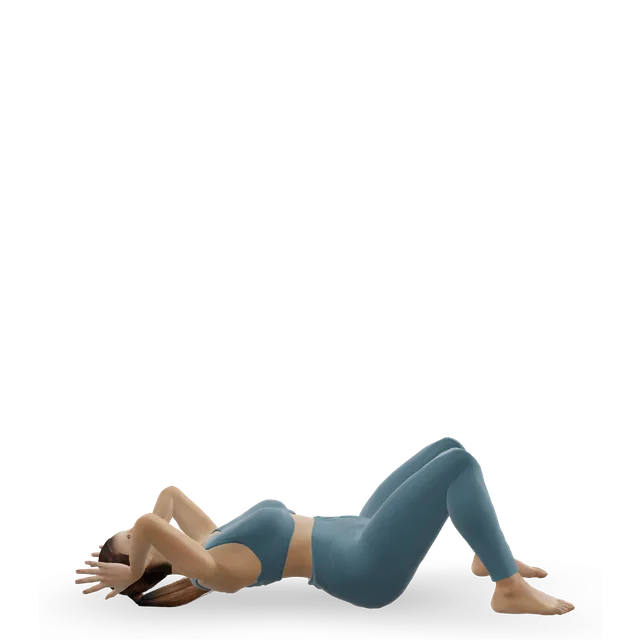 3D demoSit-up (3/4 sit-up)Intermediate · No equipment
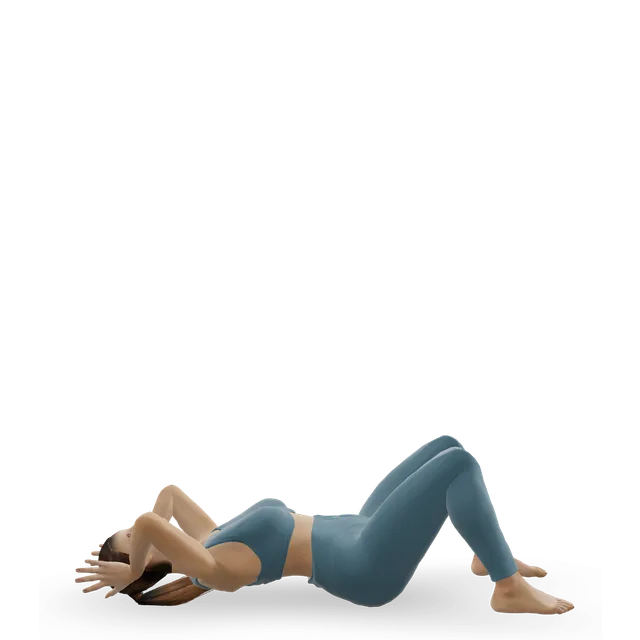 3D demoCrunchBeginner · No equipment
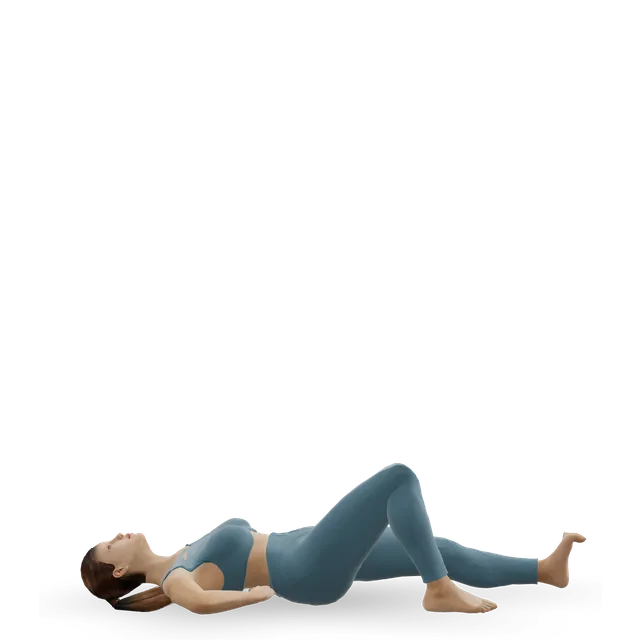 3D demoMcGill curl-upBeginner · No equipment
 3D demoChest lift (Pilates curl-up)Beginner · No equipment
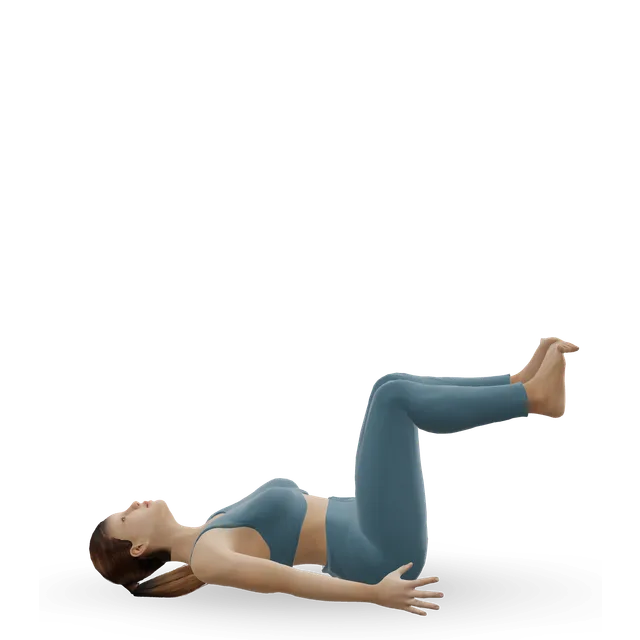 3D demoReverse crunchIntermediate · No equipment
 3D demoDead bugBeginner · No equipment
 3D demoBird dogBeginner · No equipment
 3D demoForearm plankIntermediate · No equipment
 3D demoSide plankIntermediate · No equipment
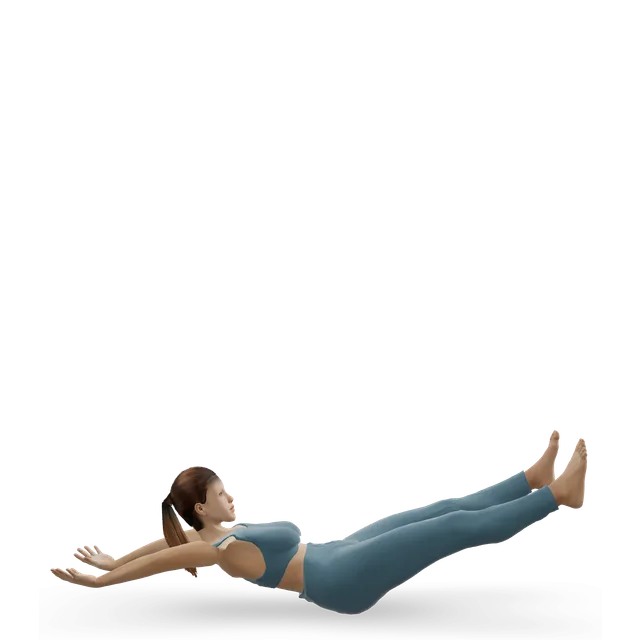 3D demoHollow body holdIntermediate · No equipment
The crunch and sit-up workout keeps to about 60 bending reps; the core and McGill sessions train the trunk without bending.
A 15-minute ab workout with a crunch track and a sit-up track, about 60 bending reps at most, plus a side plank and bird dog to balance it.
15 minBeginner10 movesNo equipmentA 15-minute beginner core workout on the floor: dead bugs, bird dogs, knee planks, side planks and curl-ups.
15 minBeginner6 movesNo equipmentThe McGill big three for the core: curl-ups, side planks and bird dogs, each held for 10 seconds at a time in falling sets of 5, 3 and 1 reps.
12 minBeginner3 movesNo equipmentAn intermediate ab workout with no equipment: planks, side planks, reverse crunches, hollow holds and mountain climbers.
20 minIntermediate7 movesNo equipmentTen minutes of the classic Pilates abdominal series: the hundred, the roll-up and the series of five, with a plank to finish.
10 minIntermediate11 movesNo equipmentEach plan includes core work across the week; test again every 4 to 8 weeks.
Your first four weeks: two, then three short strength sessions a week at home plus walks, building gently to a full routine.
2 training days20 minBeginner3 days a weekThree full-body home workouts a week with dumbbells or no equipment at all, plus walks and an 8-week plan to keep progressing.
3 training days35 minBeginner3 days a weekA 12-week calisthenics plan for beginners: three bodyweight sessions a week with push-up, pull-up, squat and dip ladders, and a bar if you have one.
3 training days40 minBeginnerChoose the curl-up, the plank test or no trunk test if any of these apply.
A UK consensus notes "reports of vertebral fractures associated with end-range, sustained, repeated or loaded flexion exercises, including sit-ups", and the Royal Osteoporosis Society says "Some exercises, like sit-ups, touching your toes and the 'roll-down' and 'curl-up' in Pilates can put pressure on the spine". Skip sit-ups and curl-ups, and see our osteoporosis guide.
An expert review lists disc herniation and flexion intolerance as reasons not to do bending exercises. Try the plank test instead, and see our back pain guide.
The NHS says: "In later pregnancy, try to avoid any activity that involves lying flat on your back for more than a few minutes." See our pregnancy guide.
Source 11
The NHS says: "Try to avoid exercises such as sit-ups, planks and high-impact exercises to start with." Before testing, see our guide to exercise after giving birth. If the gap between your stomach muscles is still obvious 8 weeks after the birth, the NHS says to contact your GP, and our diastasis recti guide explains more.
Source 12
After an inguinal hernia repair, the NHS says not to do any heavy lifting or strenuous activity for at least 4 to 6 weeks. Our move cautions say to leave sit-ups out while your tummy heals.
Sit-ups can make leaks worse, as our sit-up guide explains. See our pelvic floor and prolapse guides first.
Hands behind the head and fast reps load the neck. The curl-up or the plank test may suit you better.
Source 20
Save all-out efforts like this test until it's treated, as our blood pressure guide advises (editorial).
The adult percentiles don't apply, and school tests use their own protocols. Use your school's test and its standards.
Stop at once for back pain, pain or tingling down a leg, neck pain, chest pain or dizziness.
Call 999 if:
Call 999 or go to A&E for back pain with pain, tingling, weakness or numbness in both legs, a loss of feeling around your genitals or anus, or changes in your bladder or bowels. Ask for an urgent GP appointment or contact 111 for severe back pain that starts suddenly or is getting worse quickly.
Source 49
Get help from NHS 111 if you have a hernia with pain in or around it, a bloated tummy, feeling or being sick, constipation, or a high temperature.
Source 50
Sit-ups work the hip flexors hard, held feet lower abdominal activity, and field tests track abdominal strength only loosely.
They load the lower spine, and pig spines failed under thousands of loaded bends, but harm in healthy people is unproven and soldiers training with sit-ups had no more injuries. People with osteoporosis or bending-sensitive back pain are the exception.
Spine load was the same with bent and straight legs.
Source 28
Soldiers who swapped sit-ups for core stabilisation exercises for 12 weeks scored no worse.
Source 32
Their stated reasons were relevance to the job and possible back aggravation, and a large trial found no more injuries with sit-up training.
Hands, feet, timing, pace and caps all differ, and Canada couldn't compare its own two national surveys because one used fast sit-ups and the other paced curl-ups.
The 1-minute sit-up didn't predict back pain over 6 years.
Source 27
In Canada's national survey, 55% of men aged 20 to 39 hit the maximum of 25, while 85% of women aged 60 to 69 didn't complete one.
Source 9
It depends on your age and sex, and there's no health target. On the Cooper Institute's percentiles, the middle score is 40 for men and 35 for women aged 20 to 29, falling to 26 and 17 at 50 to 59. If you're 20 to 59, enter your count to see which band you fall in.
Lie on your back with your knees bent to about a right angle, a partner holding your feet and your fingers interlocked behind your head. Curl up until your elbows touch your knees, lower until your shoulder blades touch the mat, and count the full sit-ups in one minute, resting only sitting up.
For men, the middle score is 40 at 20 to 29, then 36, 31 and 26 in the next three decades; for women, 35, then 27, 22 and 17. These come from the Cooper Institute's tables as US police academies print them, and who was tested isn't documented. The scorer rates ages 20 to 59 only, where every row it uses was checked against a second document; at other ages it shows your count and the change since last time.
A gentler, paced version: arms by your sides, you curl up just far enough for your fingertips to slide 10 cm, in time with a beat of 50 a minute, up to 25. The scorer gives your count and the change since last time but no rating, because Canada's bands for it could only be read in one reprint. In a Canadian national survey, many people scored either 0 or the full 25.
They load the lower spine more than curl-ups, and some experts advise against them, but in soldiers sit-up training caused no more injuries than core exercises. With osteoporosis, or back pain that gets worse when you bend, choose the plank test instead.
The US Army said evidence didn't support the sit-up test as a measure of military task performance, and it now uses a plank. The US Navy said curl-ups weren't operationally relevant and might aggravate back injuries, and the Marine Corps made the plank mandatory in 2023. UK forces' entry tests don't include sit-ups, except for Royal Navy divers.
For the test, yes: the norms were gathered with the feet held, so a count with free feet won't compare. For training, our sit-up guide leaves the feet free, because held feet move work from your abs to your hip flexors.
Mostly the endurance of your abs and hip flexors at speed. Field sit-up and curl-up tests correlate only weakly with lab measures of abdominal strength, and different versions agree only loosely with each other.
Skip it with osteoporosis or a past spinal fracture (skip the curl-up too), back pain that flares with bending, in later pregnancy or the first weeks after a birth, with a hernia or after tummy surgery, and with neck pain. The plank test may suit you better.
Practise the test movement two or three times a week and build trunk strength; our crunch and sit-up workout keeps to about 60 bending reps. Scores also rise just from learning the test, so practise once before you test, then test again every 4 to 8 weeks the same way.
Fitness tests compared with published norms for adults (and for children on the beep test, the vertical jump test and the plank test), not a diagnosis, and clinical review of these pages is pending. Check with a GP before a hard test if you have a heart condition, high blood pressure, chest pain, dizziness or breathlessness when active, and have someone with you for the balance, walking, stepping and floor tests if you've fallen or feel unsteady. Health disclaimer.