Exercise guide

Diastasis recti exercises: what helps the tummy gap, after pregnancy and in men

Diastasis recti is a widening of the gap between the two sides of your six-pack muscle, where the tissue down the middle has stretched and thinned. It's very common in pregnancy and after birth, and it happens in men and older adults too. It isn't a hernia or a tear, and on its own it isn't dangerous.

Exercise is the first treatment, but be realistic about what it does: it makes your tummy muscles stronger, while the gap itself narrows only a little, if at all. Crunches aren't banned: in a trial, curl-ups made the muscles stronger without widening the gap.

This guide shows how to check your gap, a staged plan from the first weeks to full training with a 12-week curl-up workout, what to do about doming, and when a physiotherapist, a support garment or surgery makes sense.

The short version

Very common, and usually normal in pregnancy

In 300 first-time mothers, a gap of at least two finger widths was found in 33% at 21 weeks of pregnancy, 60% at 6 weeks after the birth, 45% at 6 months and 33% at a year. It isn't only a pregnancy problem: in one Swiss study of adults' computed tomography (CT) scans, 57% had a gap wider than 2 cm, and in one hospital sample of men in China, 30% did. Those two are single studies with their own methods, so their figures may not apply widely.

Sources 1, 2, 3

A stretch, not a tear or a hernia

The tissue down the middle of your tummy (the linea alba) thins and widens, but unlike a hernia there's no hole in it. European surgeons define diastasis as a gap wider than 2 cm. A hernia can happen alongside it and has its own warning signs.

Sources 4, 5, 6

Exercise builds strength; the gap narrows only a little

Across reviews of trials after birth, tummy exercises narrowed the gap by about 4 to 5 mm on average, and a 2026 update found no clear difference for exercises aimed at the deepest tummy muscle. No programme has been shown to close a gap. Exercise does make the muscles stronger, which is what most people need.

Sources 7, 8, 9, 10

Curl-ups aren't banned

In a trial of 70 women 6 to 12 months after giving birth, 12 weeks of head lifts, curl-ups and twisted curl-ups on 5 days a week made the tummy muscles thicker and stronger without widening the gap. In the first weeks after birth, the NHS advises avoiding sit-ups and planks to start with, so build up.

Sources 10, 11, 12

It doesn't clearly cause back pain or leaking

A review of 12 studies found no link between a gap and low back or pelvic pain or leaking, a small link with prolapse, and weak evidence that a wider gap goes with weaker tummy muscles, worse back pain and poorer quality of life. In one study, women with a gap had more tummy pain.

Sources 13, 14

Surgery is for troublesome symptoms or a hernia

European surgeons suggest trying physiotherapy first, and stitching the stretched tissue together if surgery is needed. On the NHS, a tummy tuck is classed as cosmetic and isn't usually available; a hernia is treated differently.

Sources 5, 15, 16

What diastasis recti is

The muscle and the midline

The rectus abdominis is the pair of long muscles down the front of your tummy, joined in the middle by a band of tough tissue, the linea alba. In pregnancy, your growing womb pushes the muscles apart, making them longer and weaker. The gap can be anywhere from just under the ribs to just above the pubic bone, and it can affect men and women of any age.

Sources 12, 17, 4

When a gap counts

European surgeons define diastasis as a gap wider than 2 cm, and say a gap of 2 cm or less may be normal. Normal widths vary along the midline and between people: in 150 women who hadn't given birth, up to 22 mm a little above the belly button was normal. In one Swiss study of adults' CT scans, up to 34 mm there may be normal, and the authors warn that the 2 cm cut-off risks over-treatment. With no agreed cut-off, a 2025 review says it may be premature to judge treatments by the width of the gap alone.

Sources 5, 18, 2, 8

How wide

Researchers grade by finger widths: 2 to 3 is mild, 3 to 4 moderate, and 4 or more severe. Surgeons grade in centimetres: under 3 cm, 3 to 5 cm, and over 5 cm. It's not known whether a wider gap means worse symptoms.

Sources 1, 4, 5

How the gap is measuredStrong evidence

European surgeons say an examination with finger widths is enough to diagnose diastasis, and suggest ultrasound or callipers 3 cm above the belly button when a precise measurement matters, keeping CT scans for finding a hernia or planning surgery. Finger checks give similar results when the same person repeats them, but two examiners agree only moderately; callipers and ultrasound are more reliable.

Sources 5, 19

How common it is

After a first birth, a gap of two finger widths or more was found in 60.0% of 300 women at 6 weeks, 45.4% at 6 months and 32.6% at a year. On ultrasound, all 84 first-time mothers in another study had a gap wider than 16 mm at 35 weeks of pregnancy, falling to 39% at 6 months. Beyond pregnancy, 57% of 329 adults aged 18 to 90 had a gap wider than 2 cm, measured 3 cm above the belly button, on CT scans done for suspected appendicitis or kidney stones at a Swiss university hospital. In 1,575 men recruited at one hospital in China, 29.8% had a gap wider than 2 cm and 10.2% wider than 3 cm. Those last two are single studies, and their settings and cut-offs may not apply widely.

Sources 1, 20, 2, 3

What raises the chanceEmerging evidence

After birth, only frequent heavy lifting (20 times a week or more) was linked with a gap at 12 months, and the researchers urge caution because the link was borderline. Weight before pregnancy, weight gained, the baby's weight and the size of the bump weren't linked, and caesarean and vaginal births gave similar gaps. Across 113 studies, exercise in pregnancy wasn't linked with it. In the Swiss study of adults, older age, a higher weight and more births went with a gap; being a man or a woman didn't.

Sources 1, 20, 21, 22, 2

What it does and doesn't causeEmerging evidence

A review of 12 studies (2,242 people) found no link with low back or pelvic pain or leaking, a small link with prolapse, and weak evidence that a wider gap goes with weaker tummy muscles, worse low back pain and poorer quality of life. In the cohort of 300 mothers, women with and without a gap had the same back and pelvic pain at a year, and in 72 women, those with a gap had more tummy pain. In the Chinese study of men, a gap wasn't linked with tummy muscle strength, back pain or quality of life.

European surgeons say how you feel about how your tummy looks, and feeling unsteady through the middle, are the most common complaints. Pelvic, Obstetric and Gynaecological Physiotherapy (POGP), the UK's pelvic health physiotherapists, lists a bulge or doming down the middle when you sit up from lying, discomfort along the middle, and a feeling of a gap. These are good reasons to get checked, even though studies don't show the gap causes back pain or leaking.

Sources 13, 1, 14, 3, 5, 17

How to check your tummy gap

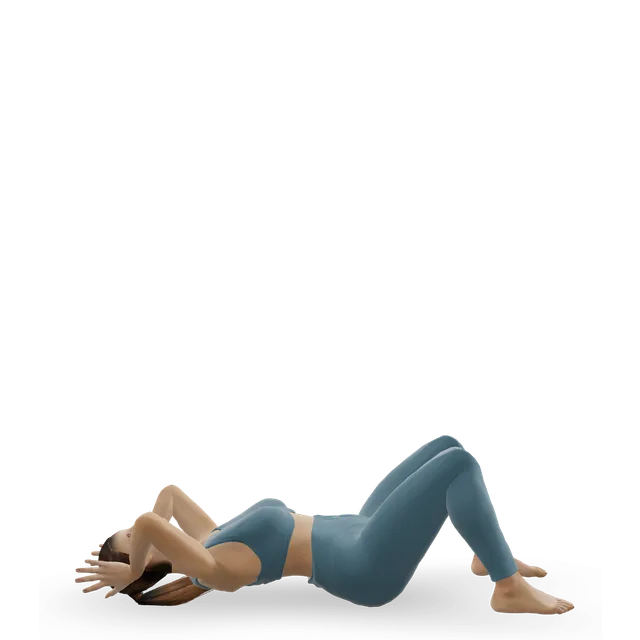
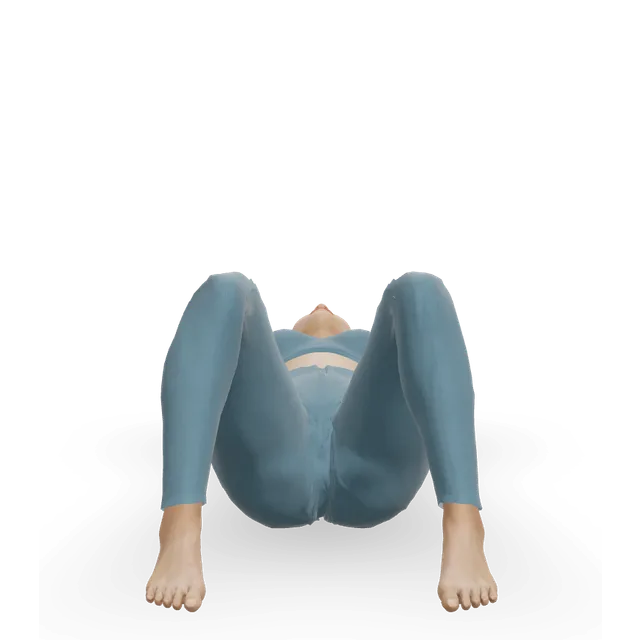
The NHS self-check for after a birth; the last step is our advice, because finger checks vary between people (a review of measurement methods). The figure shows the lift; it can't show the gap.

  1. Lie on your back with your knees bent and your feet flat on the floor.
  2. Raise your shoulders off the floor slightly and look down at your tummy.
  3. With your fingertips, feel between the edges of the muscles above and below your belly button.
  4. Count how many fingers fit in the gap. About 2 finger widths is common after a birth.
  5. Repeat every so often to check the gap is getting smaller. If it's still obvious 8 weeks after the birth, contact your GP.
  6. Track your own gap over time rather than comparing with other people: fingers differ in width, and two people checking the same gap often disagree. A physiotherapist can measure more precisely with callipers or ultrasound.

See the movement on the 3D figure: Chest lift (Pilates curl-up)

What exercise can and can't do

Exercise narrows the gap a littleEmerging evidence

In a review of 16 trials with 698 women after birth, tummy exercises narrowed the gap by 0.43 cm compared with usual care (6 trials, moderate certainty), and the authors concluded this isn't a clinically meaningful change. A 2025 review found 0.52 cm at rest (low certainty) and 0.35 cm for tummy training alone (moderate certainty). A network analysis of 21 trials found 0.48 cm for exercise alone.

Sources 7, 8, 23

The deepest tummy muscleMixed evidence

Training the transversus abdominis, the deep muscle that wraps around your middle like a corset, narrowed the gap by 0.63 cm in 2 small trials (very low-quality evidence), but a 2026 update that pooled 3 studies found no difference (0.06 cm). The update found no support for exercise alone as a way to narrow the gap, though it may help function and symptoms.

Sources 24, 9

A postnatal class didn't change who had a gapEmerging evidence

In 175 first-time mothers, a weekly exercise class plus daily pelvic floor training at home, for 4 months from 6 weeks after the birth, didn't change how many had a gap at 6 or 12 months. About 55% of both groups had one at the start, judged by finger widths.

Source 25

What the guidelines sayStrong evidence

European surgeons say no specific treatment without surgery can be recommended, but physiotherapy may be considered before surgery. Swedish surgeons call physiotherapy the first treatment, and say surgery should only be considered after a 6-month core training programme. The NHS says regular pelvic floor and deep stomach muscle exercises can help to reduce the gap, and your GP can refer you to a physiotherapist.

Sources 5, 15, 12

PilatesMixed evidence

In 35 first-time mothers, 4 weeks of Pilates (50 minutes a day, 5 days a week) narrowed the gap and the waist compared with no exercise, and a network analysis of 17 small trials ranked Pilates best at the level of the belly button. The trials are small and varied: Pilates is a reasonable way to rebuild strength, but isn't proven to close a gap.

Sources 26, 27

Why strength still mattersEmerging evidence

In the curl-up trial, the muscles got thicker and stronger while the gap stayed the same, and reviewers note that exercise may have other physical and psychological benefits. Whether a particular programme improves symptoms and quality of life is still unknown. Aim for a stronger, more comfortable middle rather than a smaller number on a finger check.

Sources 10, 7, 5

Crunches, the deep tummy muscle and doming

The curl-up trialEmerging evidence

70 women 6 to 12 months after a birth, with a gap confirmed on ultrasound, did either a 12-week home programme of head lifts, curl-ups and twisted curl-ups on 5 days a week, or no programme. As registered for the trial, the programme took about 10 minutes, with 3 sets of 8 to 12 repetitions of each move, close to the most they could do, after one session with a physiotherapist. The gap didn't narrow or widen (a difference of 1 mm), the six-pack muscle got thicker and stronger, and effects on pelvic floor problems and pain were trivial or unclear.

Sources 10, 11

What happens in the momentEmerging evidence

Ultrasound studies of women after birth agree: a head lift or curl-up narrows the gap while you do it (by about 10 mm above the belly button in one study of 38 women), while drawing your tummy in, especially as hard as you can, widens it slightly below the belly button, by about 2 to 5 mm. What these short-term changes mean over months is unknown.

Sources 28, 29, 21, 30

Narrowing isn't the whole storyEmerging evidence

In 26 women with a gap, an ordinary curl-up narrowed it but distorted the midline tissue, while gently tightening the deepest tummy muscle first narrowed it less but distorted it less. The researchers suggest this might help the two sides of the tummy work together, though their measure still needs testing. In 20 women, the midline tissue was less stiff in those with a gap. None of this has been linked with long-term outcomes yet.

Sources 31, 32

The deepest tummy muscle: gently, not as hard as you canMixed evidence

Physiotherapists teach a gentle draw-in of the lower tummy as you breathe out, held for 2 or 3 breaths, and then using it when you bend, lift or stand. Use it for control and comfort rather than sucking in as hard as you can, which briefly widened the gap below the belly button in studies, and don't expect it to close the gap.

Sources 33, 12, 28, 9

DomingMixed evidence

Doming is a ridge or bulge down the middle of your tummy when you lift your head, sit up or strain. UK pelvic health physiotherapists use it as a cue: if your tummy domes, put your fingers on your pelvis and draw your lower tummy in and wide, and ask to see a physiotherapist if your tummy bulges with exercise. No study shows doming harms recovery, and in the curl-up trial 12 weeks of curl-ups didn't widen the gap. Treat it as a sign the move is too hard for now, not as damage.

Sources 34, 33, 31, 10

In the first weeks after birthStrong evidence

The NHS advises avoiding sit-ups, planks and high-impact exercise to start with, as well as straining on the toilet and heavy lifting. POGP adds: roll onto your side to get up from lying, build up walking and gentle core exercises, and avoid jumping or running until you're stronger. Our postpartum guide covers timing and the return to running.

Sources 12, 17

A staged plan

How the stages work: our editorial plan

No trial has tested a full progression. These stages combine the NHS and POGP's early exercises, the curl-up trial and general strength training. Move on when the current stage feels easy, with no pain, no doming you can't control, no leaking and no heaviness. Men, and anyone who hasn't recently given birth, can usually start at stage 2.

Sources 12, 33, 34, 10, 5

Stage 1: reconnect

The first weeks after a birth, or if you're starting from nothing. Breathing, pelvic floor exercises, the NHS's side-lying tummy draw-in (hold for a count of 10 while breathing normally, up to 10 times), pelvic tilts (POGP: hold for 3 seconds, up to 10 times, 3 times a day), heel slides, knee folds and knee fall-outs, head lifts (POGP: head only, up to 10 times, up to 3 times a day) and walking.

Sources 12, 33, 34

Stage 2: control and strength

From about 6 to 8 weeks after a straightforward birth (later after a caesarean), or when stage 1 is easy. Dead bugs, bird dogs, bridges, side planks on your knees, a band press that resists twisting, sit-to-stands, and light lifts and carries, breathing out as you lift. Start with 2 sets of 6 to 10 of each, or holds of 15 to 20 seconds, 2 to 3 days a week (our editorial starting point).

Sources 34, 33

Stage 3: the curl-up programme

Head lifts, curl-ups and twisted curl-ups: as registered for the trial, 3 sets of 8 to 12 of each, close to the most you can do, on 5 days a week for 12 weeks, about 10 minutes a session. The trial started 6 to 12 months after the birth; start once stage 2 is easy and head lifts feel comfortable. The diastasis recti workout below follows it.

Sources 10, 11

Stage 4: back to everything

Full planks, push-ups, heavier lifting, running and jumping, once stage 3 is comfortable. The NHS and POGP advise avoiding planks and high impact only to start with, and building up as you get stronger. After a birth, use the postpartum guide's checks before running.

Sources 12, 17

Everyday habits

Roll onto your side and push up with your arms to get out of bed. When you lift, bend your knees, keep the load close, gently draw in your tummy, tighten your pelvic floor and breathe out rather than holding your breath. Avoid straining on the toilet: a small step under your feet helps. Stand tall and be aware of your posture.

Sources 17, 33, 12

Lifting weights, running and sport

No trial has tested heavy lifting, running or sport in people with a gap. Frequent heavy lifting was linked with a gap 12 months after birth, but the researchers urge caution. You can lift and run with a gap: build up gradually, breathe out on the effort, and drop back if you get doming you can't control, pain, heaviness or leaking (our editorial advice).

Sources 1, 12, 17

Stage 1: reconnect

NHS and POGP doses: the draw-in held for a count of 10, up to 10 times; pelvic tilts and head lifts up to 10 times, up to 3 times a day. Lift your head only at first, and add the bridge to the pelvic tilt once the tilt is easy.

Stage 2: control and strength

2 sets of 6 to 10 of each, or holds of 15 to 20 seconds, 2 to 3 days a week (our editorial starting point). Stop short if the middle of your tummy domes.

Stage 3: the curl-up programme

As registered for the curl-up trial: 3 sets of 8 to 12 of each, close to the most you can do, 5 days a week for 12 weeks. The chest lift stands in for the trial's head lift: lift your head, with your shoulders coming up only a little.

Stage 4: back to everything

Bring these in once the curl-up programme feels comfortable. Hold planks for 20 to 30 seconds at first (our editorial starting point).

Workouts to follow

The diastasis recti workout is the curl-up programme as registered for the trial. In the first weeks after birth, start with the postnatal exercises. If you're pregnant again, use the pregnancy Pilates workout.

Follow a plan

Weekly structure once stage 1 is easy. Keep the curl-up workout going alongside, and leave planks until stage 4.

Diastasis recti in men

How common it is in menEmerging evidence

In 1,575 men recruited at one hospital in China, 29.8% had a gap wider than 2 cm and 10.2% wider than 3 cm, and age, weight, smoking and exercise habits were linked with it. In one Swiss study of adults' CT scans, being a man or a woman wasn't linked with having a gap. Reviews describe men with diastasis as typically over 60, carrying extra weight and inactive. These are single studies or reviews of small studies, so the figures may not apply widely.

Sources 3, 2, 35, 36

Symptoms in menEmerging evidence

In most men it causes no symptoms apart from a bulge down the middle when sitting up from lying. In the Chinese study, a gap wasn't linked with tummy muscle strength, low back pain or quality of life, though a hernia was more common when the gap was wider than 3 cm. Symptoms are more likely when there's a hernia as well.

Sources 36, 35, 3

What to do

Danish surgeons put weight loss and exercise first, focusing on the deepest tummy muscle. No exercise trial has been done in men: the stages and curl-up programme here are reasonable but untested in men (our editorial view). Surgery is mainly for a hernia that causes symptoms; the role of stitching the midline alone in men is uncertain.

Sources 36, 35, 5

The aneurysm questionMixed evidence

Small studies disagree on whether diastasis is more common with an abdominal aortic aneurysm, a swelling of the main blood vessel in the tummy: two found it was, and one, in 75 men, found no difference. So a gap on its own isn't a reliable sign of an aneurysm. In England, men are invited for a one-off aneurysm scan in the year they turn 65; if you think you're at higher risk, talk to a GP.

Sources 37, 38, 39, 40

Belts, binders, tape and gadgets

Binders, corsets and tapeMixed evidence

Trials of abdominal binders, kinesiology tape and electrical stimulation, always alongside exercise, found no clinically meaningful change in the gap overall. Exercise narrowed the gap below the belly button by 0.31 cm more than binding. In a network analysis, a corset narrowed the gap by 0.65 cm compared with no treatment, in sparse, varied data.

Sources 7, 41, 23

Electrical stimulationMixed evidence

In the same network analysis, exercise combined with electrical muscle stimulation narrowed the gap by 1.12 cm compared with no treatment, the largest effect, but the data were sparse and the trials measured the gap in different ways. It's a specialist add-on, not a replacement for exercise.

Sources 23, 7

When a support helps

A support garment may feel comfortable early on, but none has been shown to fix a gap. After surgery, surgeons suggest an abdominal binder to ease pain and help you get moving, and after a tummy tuck the NHS says you'll usually wear a corset or tummy-control pants for 6 weeks.

Sources 5, 16

Surgery

When surgeons consider itStrong evidence

European surgeons suggest physiotherapy first, then stitching the stretched midline together (plication) if surgery is needed, or a mesh repair if there's a hernia, decided together with the surgeon. Swedish surgeons suggest surgery only for problems with function after a 6-month core training programme, with a gap of at least 5 cm (or less with marked bulging or a hernia), at least 2 years after the last birth, and with no more pregnancies planned. German surgeons say a hernia is the real reason to operate. The evidence behind these recommendations is low quality.

Sources 5, 15, 4

What surgery achievesEmerging evidence

In a Swedish trial of 86 patients, repair with mesh or with stitches gave similar results, and both improved pain, quality of life and strength more than 3 months of training, after which the training group still had discomfort and pain. About 5 years after surgery, none of 52 patients followed up had a recurrence. In 60 women with symptoms despite training, 98% reported better trunk function a year after the midline was stitched. These were selected patients.

Sources 42, 43, 44

On the NHS

A tummy tuck (abdominoplasty), which can include realigning the tummy muscles, is classed as cosmetic surgery and isn't usually available on the NHS. It costs about £5,000 to £10,000 privately, needs 4 to 6 weeks off work and exercise, and isn't for people who are overweight. A hernia is different: surgery is usually recommended for adults with an umbilical hernia.

Sources 16, 6

After a lot of weight loss

Exercise can't remove loose skin left after a lot of weight loss or pregnancy. Surgeons repair diastasis after weight-loss surgery as well as after pregnancy, with similar complication and recurrence rates in a review of 47 low-quality studies.

Sources 16, 45

After surgery

Surgeons say no specific rehabilitation programme can be recommended afterwards. Contact the clinic as soon as possible if you have severe pain or any unexpected symptoms.

Sources 5, 16

Warning signs: when to get help

Call 999 (911 in the US)

Call 999, and don't drive yourself to A&E, if you have a hernia (a bulge at or near your belly button) and:

  • You get very bad tummy pain that doesn't go away.
  • You feel sick, are being sick, or can't keep any food down.
  • The bulge is more swollen than usual and the skin around it has changed colour.
  • You can't fart or poo.

Source 6

Get help from NHS 111

If you have a hernia and:

  • You have pain in or around it, or a bloated tummy.
  • You feel sick or are being sick, or you're vomiting blood or your vomit looks like coffee grounds.
  • You're constipated.
  • You have a high temperature, or feel hot, cold or shivery.
  • You've suddenly become confused.

Source 46

See a GP

  • The gap is still obvious 8 weeks after the birth: your GP can refer you to a physiotherapist.
  • You have tummy pain or discomfort with a gap.
  • You think you have a hernia, or you have a lump that's painful, hard or doesn't move, or that's getting bigger or won't go away.
  • Your tummy bulges with exercise: ask to see a specialist physiotherapist.
  • You have leaking, or a heavy or dragging feeling in your vagina. These are common after birth and treatable; our pelvic floor guide has more.

Sources 12, 6, 46, 33, 17

Who to see

A specialist pelvic health (women's health) physiotherapist, through your GP or midwife; in some areas you can refer yourself. After a birth, our postpartum guide lists the urgent warning signs, such as heavy bleeding, wound problems, calf pain and breathlessness.

Sources 17, 33

Myths

"Never do crunches if you have a tummy gap"Emerging evidence

In a trial of 70 women with a gap, 12 weeks of head lifts, curl-ups and twisted curl-ups didn't widen it and made the muscles stronger, and in the moment curl-ups narrow the gap. Start gently after birth, as the NHS advises, and build up.

Sources 10, 28, 29, 12

"The right exercises will close the gap"Emerging evidence

Exercise narrowed the gap by about 4 to 5 mm in reviews, a 2026 update found no difference for deep tummy exercises, and European surgeons say no specific programme can be recommended. Exercise builds strength and comfort, which is the point.

Sources 7, 8, 9, 5

"Suck your belly button in as hard as you can"Emerging evidence

Drawing in as hard as you can briefly widened the gap below the belly button in studies, and training the deep tummy muscle had mixed results. A gentle draw-in, as the NHS and POGP teach, is for control and comfort.

Sources 28, 29, 9, 12

"Doming means you're damaging your tummy"Mixed evidence

No study shows doming harms recovery. Physiotherapists use it as a cue to make a move easier, and in the curl-up trial 12 weeks of curl-ups didn't widen the gap.

Sources 34, 31, 10

"A diastasis is a hernia, or a tear"Strong evidence

There's no hole in the tissue: the midline has stretched and thinned. A hernia can happen alongside a diastasis and has its own warning signs.

Sources 4, 5, 6

"A gap causes back pain and leaking"Emerging evidence

A review of 12 studies found no link with low back or pelvic pain or leaking, though a wider gap may go with worse back pain and weaker tummy muscles (weak evidence). Women with a gap had more tummy pain in one study.

Sources 13, 14

"Only women get it"Emerging evidence

In one hospital sample of men in China, 30% had a gap wider than 2 cm, and in one Swiss study of adults' CT scans, being a man or a woman wasn't linked with having a gap. Both are single studies, so the figures may not apply widely.

Sources 3, 2

"A belt, binder or tape will fix it"Mixed evidence

Trials of these show small or no effects on the gap. A binder may help comfort after surgery.

Sources 7, 23, 41, 5

"After a year it's too late"Emerging evidence

A third of women still had a gap a year after a first birth, and the curl-up trial started 6 to 12 months after birth and still built strength. Surgery is an option for troublesome symptoms after a proper exercise programme.

Sources 1, 10, 5, 15

"Exercise in pregnancy causes it"Emerging evidence

Across 113 studies, exercise in pregnancy wasn't linked with a gap, which is a normal part of late pregnancy.

Sources 22, 20

Questions people ask

What is diastasis recti?

It's a widening of the gap between the two sides of your six-pack muscle, where the tissue down the middle (the linea alba) has stretched and thinned. European surgeons call a gap of more than 2 cm diastasis. It's very common in pregnancy and after birth, and it happens in men and older adults too.

How do I check for diastasis recti?

Lie on your back with your knees bent and feet flat, lift your shoulders slightly and look at your tummy, then feel with your fingertips above and below your belly button and count how many fingers fit in the gap. Repeat every so often to see if it's getting smaller. Finger checks are rough: a physiotherapist can measure more precisely with callipers or ultrasound.

How common is diastasis recti after pregnancy, and does it go away?

In 300 first-time mothers, 60% had a gap of two finger widths or more 6 weeks after the birth, 45% at 6 months and 33% at a year. The NHS says it usually goes back to normal by 8 weeks, and to see your GP if it's still obvious then. Many gaps keep narrowing for months.

What exercises help diastasis recti?

Start with pelvic floor exercises, a gentle tummy draw-in, pelvic tilts, heel slides and head lifts, then build up to dead bugs, bird dogs, bridges and side planks. Later, head lifts, curl-ups and twisted curl-ups, 3 sets of 8 to 12 on 5 days a week, made the tummy muscles stronger without widening the gap in a 12-week trial. Walking and general strength training are worth adding too.

Can you fix diastasis recti with exercise?

Exercise isn't proven to close the gap: across reviews of trials, tummy exercises narrowed it by about 4 to 5 mm on average, and a 2026 update found no difference for deep tummy exercises. It's still worth doing, even years later: it builds strength, which is what most people need. If symptoms trouble you after a proper programme, surgery is an option.

Can I do crunches or sit-ups with diastasis recti?

Curl-ups aren't banned: in a trial of women with a gap, 12 weeks of curl-ups didn't widen it and made the muscles stronger. In the first weeks after birth, the NHS suggests avoiding sit-ups and planks to start with, so begin with head lifts and build up. If the middle of your tummy domes, make the move easier.

Can I do planks with diastasis recti?

Yes, in time. The NHS and POGP suggest avoiding planks at first after birth; start with dead bugs, bird dogs and side planks on your knees, then try a knee plank and a full plank once curl-ups feel comfortable (our suggestion). Make it easier or stop if your tummy domes or it hurts.

What is doming, and should I stop if I see it?

Doming is a ridge or bulge down the middle of your tummy when you lift your head or strain. UK pelvic health physiotherapists use it as a sign to make the move easier: slow down, breathe out and gently draw your lower tummy in. No study shows it damages anything, but if it keeps happening with exercise, see a physiotherapist.

Can men get diastasis recti?

Yes. In one hospital sample of men in China, 30% had a gap wider than 2 cm, though a single study's figure may not apply widely, and it's linked with older age and a higher weight. In men it's usually painless and may show as a bulge when sitting up; surgeons recommend weight loss and exercise first. See a GP about any bulge that hurts or won't go back, as it could be a hernia.

Is diastasis recti a hernia? When is it serious?

No: in diastasis the tissue has stretched with no hole, whereas in a hernia part of the bowel or fat pushes through a gap. A hernia can happen alongside a diastasis. Call 999 if a bulge becomes very painful, swollen or discoloured, or you're being sick or can't fart or poo.

Will a belt or binder fix diastasis recti?

No. Trials of binders, corsets, tape and electrical stimulation show small or no effects on the gap. A support garment may feel comfortable early on, and surgeons suggest one after surgery.

When is surgery an option, and can I get it on the NHS?

Surgeons suggest a physiotherapy programme first; Swedish surgeons suggest at least 6 months of core training, a gap of at least 5 cm or a hernia, and no more pregnancies planned. Surgery stitches the stretched tissue together, and in studies it improved pain, strength and quality of life. A tummy tuck is classed as cosmetic and isn't usually available on the NHS, but a hernia repair is a different matter.


Sources

  1. Sperstad 2016 · Diastasis recti from pregnancy to 12 months after the birth in 300 first-time mothers (cohort study, British Journal of Sports Medicine)
  2. Kaufmann 2022 · Normal width of the linea alba and diastasis recti in 329 adults on CT scans in Zurich (cross-sectional study, Hernia)
  3. Zhu 2024 · Diastasis recti in 1,575 men recruited at one hospital in China (cross-sectional study, Hernia)
  4. Reinpold 2019 · Classification of rectus diastasis by the German Hernia Society and the International Endohernia Society (expert proposal, Frontiers in Surgery)
  5. Hernández-Granados 2021 · European Hernia Society guidelines on the management of rectus diastasis (guideline, British Journal of Surgery)
  6. NHS · Umbilical hernia
  7. Benjamin 2023 · Treatments without surgery for diastasis recti after birth: 16 trials (meta-analysis, Physiotherapy)
  8. Beamish 2025 · Exercise after birth for pelvic floor problems and diastasis recti (meta-analysis, British Journal of Sports Medicine)
  9. Lyons 2026 · Tummy and pelvic floor muscle training for diastasis recti after birth: an updated review of 15 studies (meta-analysis, Hernia)
  10. Gluppe 2023 · Curl-up exercises in 70 women with diastasis recti after birth (RCT, Journal of Physiotherapy)
  11. Bø 2019 · Registration of the curl-up trial, with its 12-week home programme (trial registration NCT04122924, ClinicalTrials.gov)
  12. NHS · Your post-pregnancy body: separated stomach muscles and the stomach exercise
  13. Benjamin 2019 · Diastasis recti and back and pelvic pain, leaking and quality of life: 12 studies (systematic review, Physiotherapy)
  14. Gluppe 2021 · Tummy strength, pain and pelvic floor problems in 72 women with and without diastasis recti (cross-sectional study, Physiotherapy)
  15. Carlstedt 2021 · Management of rectus diastasis: recommendations for Swedish national guidelines (expert consensus, Scandinavian Journal of Surgery)
  16. NHS · Tummy tuck (abdominoplasty)
  17. Pelvic, Obstetric and Gynaecological Physiotherapy (POGP) · Tummy muscle separation (DRAM) in pregnancy (patient information)
  18. Beer 2009 · The normal width of the linea alba in 150 women who had not given birth (ultrasound study, Clinical Anatomy)
  19. van de Water 2016 · Ways of measuring diastasis recti and how reliable they are (systematic review, Manual Therapy)
  20. Fernandes da Mota 2015 · Diastasis recti on ultrasound from late pregnancy to 6 months after the birth in 84 women (cohort study, Manual Therapy)
  21. Sancho 2015 · Tummy exercises and the gap in 38 women after birth, on ultrasound (cross-sectional study, Physiotherapy)
  22. Davenport 2019 · Exercise in pregnancy and harms to the mother: 113 studies (meta-analysis, British Journal of Sports Medicine)
  23. Wu 2025 · Treatments without surgery for diastasis recti after birth: 21 trials (network meta-analysis, Sports Medicine)
  24. Gluppe 2021 · Tummy and pelvic floor muscle training for diastasis recti after birth: 7 trials (meta-analysis, Brazilian Journal of Physical Therapy)
  25. Gluppe 2018 · A postnatal exercise class and diastasis recti in 175 first-time mothers (RCT, Physical Therapy)
  26. Lee 2023 · Pilates and the gap in 35 first-time mothers (controlled study, BMC Women's Health)
  27. Zhu 2026 · Rehabilitation treatments for diastasis recti: 17 trials (network meta-analysis, International Journal of Gynaecology and Obstetrics)
  28. Gluppe 2020 · Immediate effect of tummy and pelvic floor exercises on the gap in 38 women with diastasis recti (cross-sectional study, Physical Therapy)
  29. Mota 2015 · Crunches, drawing in and the gap from late pregnancy to 6 months after the birth in 84 women (longitudinal study, Journal of Orthopaedic and Sports Physical Therapy)
  30. Pascoal 2014 · A held crunch and the gap in 10 women after birth (case-control study, Physiotherapy)
  31. Lee 2016 · How the linea alba behaves during a curl-up in 26 women with diastasis recti (observational study, Journal of Orthopaedic and Sports Physical Therapy)
  32. Beamish 2019 · Linea alba stiffness and distortion in 20 women with and without diastasis recti (observational study, Journal of Orthopaedic and Sports Physical Therapy)
  33. POGP 2022 · Exercise and advice after pregnancy (physiotherapy booklet)
  34. POGP 2022 · Pilates in women's health physiotherapy (physiotherapy booklet)
  35. Axelsen 2026 · Diastasis recti in men: 24 studies and proposed management (scoping review, Hernia)
  36. Henriksen 2025 · Rectus diastasis in men (review in Danish with an English summary, Ugeskrift for Læger)
  37. McPhail 2008 · Diastasis recti in 42 men with an aortic aneurysm or leg artery disease (comparative study, Angiology)
  38. De'Ath 2010 · The gap between the tummy muscles in people with and without an aortic aneurysm (comparative study, Annals of the Royal College of Surgeons of England)
  39. Moesbergen 2009 · Diastasis recti and aortic aneurysm in 75 men (CT comparison, Vascular)
  40. NHS · Abdominal aortic aneurysm (AAA) screening
  41. Abdullah 2025 · Tummy exercises versus binding for diastasis recti after birth: 13 trials (meta-analysis, Physiotherapy Research International)
  42. Emanuelsson 2016 · Mesh or stitched repair of rectus diastasis, and training, in 86 patients (RCT, Surgery)
  43. Swedenhammar 2021 · Five years after surgical repair of rectus diastasis (RCT follow-up, Scandinavian Journal of Surgery)
  44. Olsson 2019 · Surgical repair in 60 women with diastasis recti and symptoms despite training (cohort study, BJS Open)
  45. Uderzo 2025 · Rectus diastasis repair after weight-loss surgery and after pregnancy: 47 studies (systematic review, Acta Chirurgiae Plasticae)
  46. NHS · Hernia

Exercise education, not a diagnosis or treatment plan, and clinical review of these guides is pending. Stop and get advice for chest pain, unusual breathlessness, dizziness or fainting, or new pain, and check with your doctor or midwife first if they have told you to limit activity. Health disclaimer.