The test
You run 20 m shuttles in time with beeps that get faster every minute, until you can't keep up. Your score is the last level and shuttle you completed: 6.6 means level 6, shuttle 6.
Fitness test
The beep test, also called the bleep test or multistage fitness test, has you run back and forth between lines 20 metres apart in time with beeps that speed up every minute. Enter the last level and shuttle you completed with your age and sex: for adults, the scorer estimates your VO2 max (the most oxygen your body can use) with the UK table from the test's 1988 validation study and compares it with the same lab results our VO2 max calculator uses; for 9 to 17-year-olds, it compares your result with international children's norms. Your level is exact, but the VO2 max from it is an estimate, often a few points out. It's an all-out test, so answer the screening questions below first. This page doesn't play the test's beeps: you'll need a recording of the 20 m test.
Enter the last level and shuttle you completed, or your laps if you did the PACER (Progressive Aerobic Cardiovascular Endurance Run), with your sex and age. Adults see an estimated VO2 max from the UK table and can show Léger's equation beside it as a second formula; 9 to 17-year-olds are scored on children's norms.
45mL/kg/min
Level 9, shuttle 6: 78 shuttles (1,560 m), finishing at 12.5 km/h. About 12.9 METs.
Formula: the UK table (Ramsbottom 1988), read by total shuttles, built in 74 physically active adults aged 19 to 36.
Compared with US adults of your age and sex who had lab treadmill tests (FRIEND, 2015), your estimate is between the 50th and 75th percentile: above average. Norwegian volunteers your age averaged 49.1.
Your level is exact, but the VO2 max from it is an estimate: for one person it can be about 6 points out either way, and it reads low in very fit, trained athletes.
The comparison is with US adults who had lab treadmill tests, the same table as our VO2 max calculator, not with other people's beep tests: we found no published adult beep test norms we could check.
Beep tests differ: a 15 m police test, a version with 2-minute levels or a different end rule won't match these tables exactly.
This is an all-out test. If you felt chest pain, dizziness or unusual breathlessness during it, stop testing and read when to get help below.
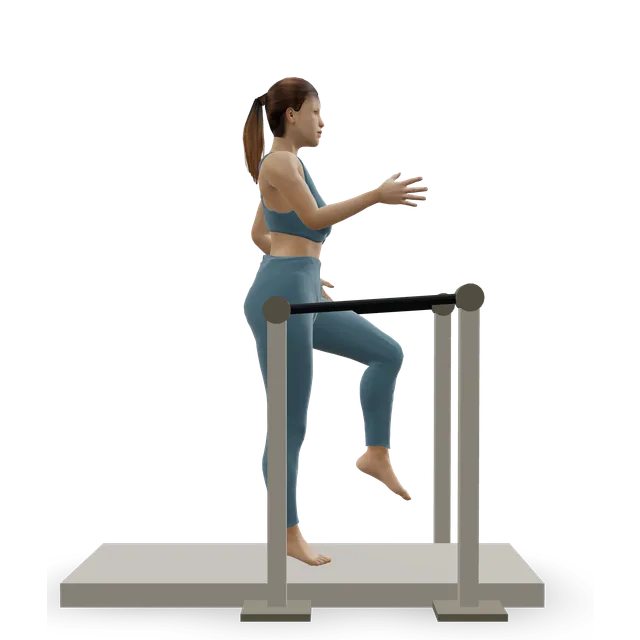
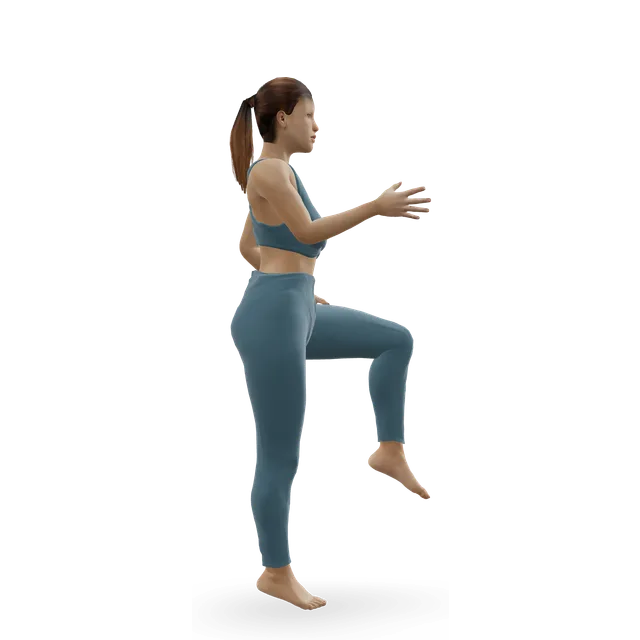
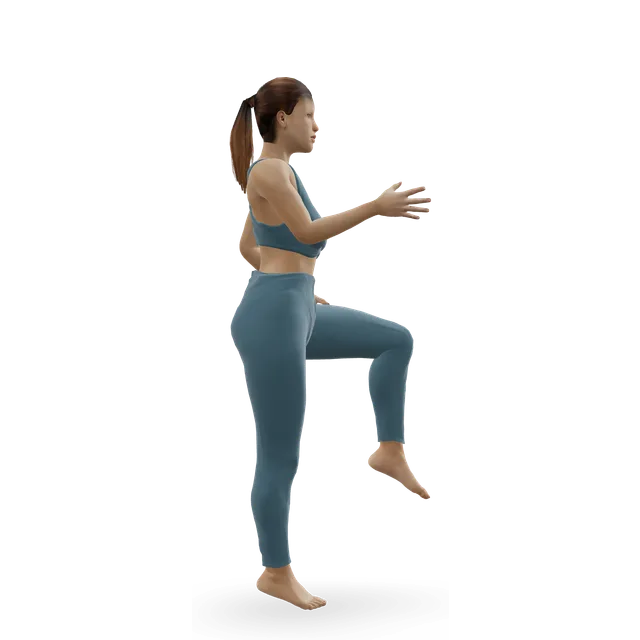
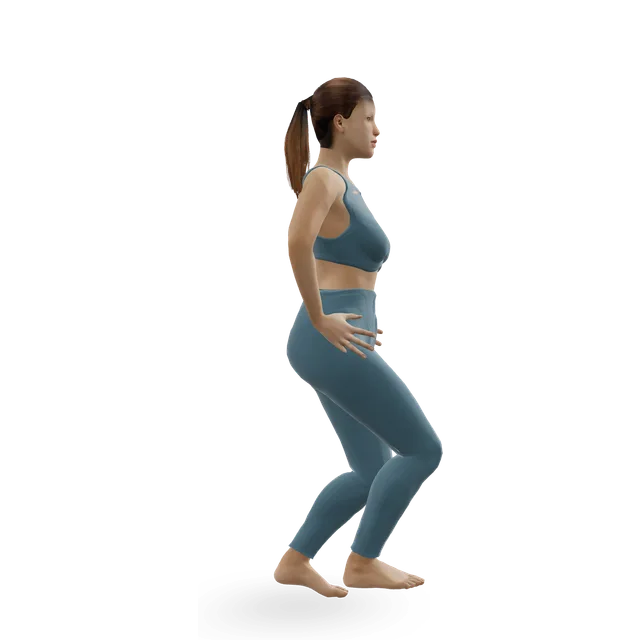
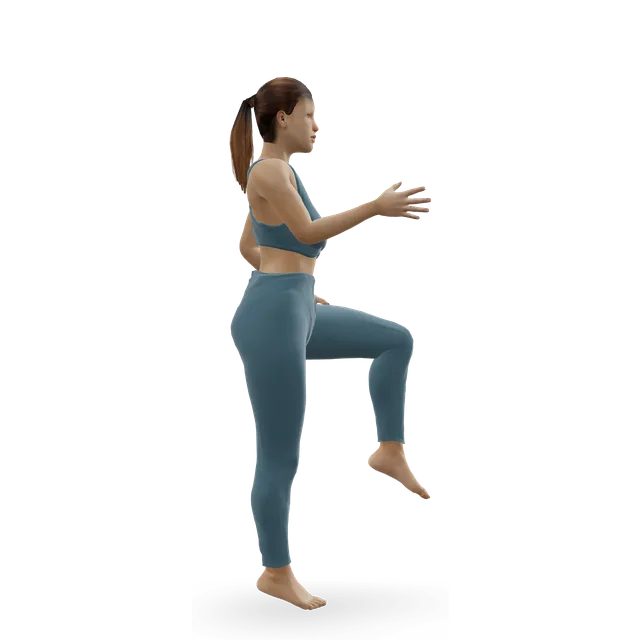
You need a flat, non-slip floor at least 24 to 26 m long (an indoor hall is best), a tape measure, two lines or cones exactly 20 m apart, a recording of the 20 m test's beeps and someone to record your score. This page doesn't play the test's audio, so bring your own recording of the 20 m test. The figure shows shuttle runs, the running and turning of the test.
Loading the 3D figure…
The movement on the figure: Shuttle runs
You run 20 m shuttles in time with beeps that get faster every minute, until you can't keep up. Your score is the last level and shuttle you completed: 6.6 means level 6, shuttle 6.
From level 2, each level runs at 8 + 0.5 × the level km/h: 9.0 at level 2, 13.0 at level 10 and 18.5 at level 21. Level 1 is 8.0 or 8.5 km/h, depending on the version.
The scorer uses the UK table from a 1988 study of 74 active adults aged 19 to 36, whose levels tracked their measured VO2 max closely. Léger's equation, from 77 adults, is offered beside it as a second formula.
Across 57 studies the test tracked lab VO2 max well, especially in adults, but for one person the estimate can be about 6 points out either way, and it read 9.3 to 13.2% low in elite athletes.
Children aged 9 to 17 have international norms from 1,142,026 young people in 50 countries. We found no adult beep test norms we could check, so adults are compared through VO2 max, with the same US lab results our VO2 max calculator uses.
Answer the PAR-Q+ first, and if you're over 45 and not used to hard exercise, check with a qualified exercise professional. The Royal Navy's advice: "Ensure you are medically fit to undertake maximal aerobic exercise."
The UK table that turns your score into VO2 max, approximate adult levels, and the international children's norms, all printed from the scorer's own tables.
Predicted VO2 max in mL/kg/min at each printed shuttle, by level. The scorer reads your total shuttles in a straight line between the printed points either side (our arithmetic): level 7, shuttle 5 (56 shuttles) falls halfway between 37.8 and 38.5, at 38.15.
Source 4
36 men and 38 women aged 19 to 36 at Loughborough, "young adults involved in physical training on a regular basis", who ran the shuttle test and had their VO2 max measured on an uphill treadmill. Their levels tracked their VO2 max closely (a correlation of 0.92, with a standard error of 3.5 mL/kg/min). The men reached levels 10 to 15 and the women 7 to 14, so the table's lowest and highest levels go beyond the people it was built on (our reading). We read the paper in a scanned copy of the full text, with every number checked against the page images.
Source 4
It's the published conversion for the UK test and its tape, it uses your shuttle as well as your level, and it came from the test's own validation study. In 65 trained women hockey players it was accurate (46.5 against 46.4 measured), while Léger's equations read high, and in 30 active young men it read 1.8 low on average. Against it, it gave a lower estimate than the lab for 75% of 20 students in Singapore (editorial weighing).
We found no adult beep test norms with a stated population that we could open, so the scorer turns your score into VO2 max and places it among 7,783 US adults aged 20 to 79 who had lab treadmill tests (the Fitness Registry and the Importance of Exercise National Database, FRIEND), exactly as our VO2 max calculator does. Beside it, it shows the average for Norwegian volunteers of your age in the HUNT fitness study, and your estimate in METs (metabolic equivalents), VO2 max divided by 3.5.
The first whole shuttle whose UK-table estimate reaches the 25th, 50th, 75th and 90th FRIEND percentile for each age group. This stacks two sources' errors, so treat it as approximate. "Below 4.2" means the UK table can't go that low, which is why the test suits younger and fitter adults best:
Speed in km/h at the last completed level, at the 5th, 10th, 20th, 30th, 40th, 50th, 60th, 70th, 80th, 90th and 95th centiles, by age at last birthday:
Source 10
Speed in km/h at the last completed level, at the 5th, 10th, 20th, 30th, 40th, 50th, 60th, 70th, 80th, 90th and 95th centiles, by age at last birthday:
Source 10
A review of 177 studies from 1981 to 2014, pooling 1,142,026 apparently healthy children and youth in 50 countries. Every study was converted to the speed at the last completed level and corrected to Léger's one-minute version, which starts at 8.5 km/h, so the scorer credits 8.5 km/h for completing level 1. The authors note that fitter children may be over-represented and that the norms may overstate children's fitness in 2014 by about 7.5%. English samples sat close to the international values: 2,041 children aged 11 to 15 in 2007, and 80 children aged 8 to 10 in North East England. We read the table in the authors' own version of the paper, held by their university.
As the scorer works them out:
Repeat tests agree well: test-retest correlations of 0.95 in 81 adults and 0.89 in 139 children, and repeat estimates within about 2.7 mL/kg/min of each other in 21 active young men. In military personnel, repeat estimates differed by 0.8 on average. Across repeated field tests in 60 young adults, the biggest source of error was day-to-day variation within each person, so practise once and test on a day you're fresh (editorial).
Across 57 studies, scores from Léger's version tracked lab VO2 max with a pooled correlation of 0.84: 0.94 in adults and 0.78 in children. The authors stress that the score is an estimate, not a direct measure. In their own studies, the UK level and Léger's speed tracked VO2 max at 0.92 and 0.90.
In military personnel, estimates came within about 6.2 mL/kg/min of measured VO2 max either way for most people, and in 30 active young men the UK table read 1.8 low on average, with limits of agreement of 6.3.
Estimates read 9.3 to 13.2% low in 26 elite intermittent-sport men, Léger's equations read low in 122 young adults, and the UK table read low for most of 20 students in Singapore. But Léger's equation read high in 110 young men and in women hockey players, where the UK table was accurate. Which way yours errs depends on who you are.
Retest correlations were 0.95 in adults and 0.89 in children for the one-minute version and 0.975 for the original two-minute version, and across three trials in 60 young adults, reliability was 0.96.
The norms pool 1,142,026 children and youth aged 9 to 17 in 50 countries. Boys outran girls by about 0.86 km/h on average.
Source 10
We found no population norms for adults on the 20 m test that we could open. Group averages exist: active young adults reached level 12.6 (men) and 9.6 (women), and 122 young adults in another study stopped at levels 9.5 and 7.8 on average. A study of Australian police recruits reports percentiles, but we could read only its summary.
From level 2, each level runs at 8 + 0.5 × the level km/h and lasts about a minute. The shuttles in each level are from the UK multistage fitness test table, which Ramsbottom's table matches; seconds, totals and distances are our arithmetic:
Level 1 is 8.0 km/h in the multistage fitness test's level table and the Eurofit version, but 8.5 km/h in Léger's test and on the UK tape as one study describes it. It has 7 shuttles either way, so it changes only how long level 1 takes.
Léger's test ends when you can no longer keep up. The Army, and a study using the multistage fitness test's level table, stop after two missed lines in a row, the Royal Navy after three, Ontario's police test after two missed warning lines 2 m before each end, and the 1983 European version when you're more than 3 m short on two beeps running. We use two in a row (editorial); a score on the three-miss rule may be a shuttle or two higher (our reading).
This page doesn't play the test's beeps. Run to a recording of the 20 m test that matches this table, and note which version it is.
Léger's 1982 test started at 8 km/h and sped up by 0.5 km/h every 2 minutes, so its levels don't match the one-minute tables. Its equation, VO2 max = 5.857 × speed - 19.458, came from 91 adults.
Source 18
Police forces in England and Wales use a 15 m test with a standard of 5:4, four shuttles at level 5, taking 3 minutes 35 seconds and covering 525 m. It isn't run to exhaustion, and its levels don't match the 20 m test's, so the scorer doesn't score it.
Source 25
The US school PACER is the same 20 m test counted in laps, and the scorer converts laps to level and shuttle. FitnessGram's published model for 10 to 16-year-olds also uses body mass index (BMI), sex and age: VO2 max = 41.76799 + (0.49261 × laps) - (0.00290 × laps²) - (0.61613 × BMI) + (0.34787 × sex × age), where sex is 1 for boys and 0 for girls. We couldn't open FitnessGram's current manual.
Source 26
For children aged 8 to 19 (188 tested), VO2 max = 31.025 + 3.238 × speed - 3.248 × age + 0.1536 × speed × age, with speed the km/h of the last stage announced. For adults, the same equation with age fixed at 18 (a correlation of 0.90 in 77 adults), printed as VO2 max = -27.4 + 6.0 × maximal shuttle speed, which is the same line (our arithmetic). The scorer uses the speed of the level your last completed shuttle was in, our reading of the method.
Some papers print -24.4 + 6.0 × speed. That matches the original only if speed means the last level completed rather than the one you were running (our arithmetic): -27.4 + 6.0 × (S + 0.5) is -24.4 + 6.0 × S. Mixing the two adds 3 mL/kg/min. Another paper prints -27.4 + 6.0 × the last speed, as published.
Stickland's equations use half-levels (men: 2.75 × the last half-level + 28.8; women: 2.85 × the last half-level + 25.1), Kilding's is for elite men (0.38 × total shuttles + 25.98), Flouris's adjusts Léger's for young men, and Ramsbottom's own regression is 14.4 + 3.48 × level. The scorer uses the UK table and offers Léger's equation (editorial).
Standards as published when we checked on 23 October 2026. They change, so check the body's own page before you train for one.
From 1 October 2026, all Royal Navy candidates must pass the multistage fitness test to at least level 6.6, whatever their age or gender, and diving candidates level 10.5. The Navy's version ends after three missed lines in a row.
Source 2
Officer candidates need level 7.10 and should aim to exceed 8.7 at the main board. The Army's version ends when you miss the line twice in a row. Soldiers do a 2 km run instead.
The RAF's pre-joining test is a 2.4 km treadmill run. It uses the multistage fitness test only in exceptional circumstances, and for prospective officers at RAF Cranwell, with the standards given during the visit.
Source 30
In annual fitness testing, level 8.8 and above is green, 6.8 to 8.7 amber and below 6.8 red. The decision records the firefighters' union's concerns about running the test in fire station yards, because of the risk of slips, trips and falls.
Source 31
A 15 m test to level 5, shuttle 4, which isn't the 20 m test (see the versions above).
Source 25
Recruits must reach level 7 on the 20 m shuttle run, which ends when they miss two warning lines in a row.
Source 24
Most of the gain comes from aerobic fitness: regular running with one or two harder interval sessions a week. Shuttle runs practise the turns, and skipping is part of a running warm-up (editorial).
Start with the run-walk session if you're new to running; the Norwegian 4x4, 5K intervals, tempo run and hill repeats are the harder sessions. Retest after 6 to 8 weeks, the same way and on the same surface (editorial).
An 8-minute dynamic warm-up for runners: ankle and hip mobility, lunges, skips and pogo hops.
8 minIntermediate8 movesA wallA 30-minute beginner run-walk session: a brisk walk, then 1-minute jogs with 1-minute walks, building to 3-minute runs over your first three weeks.
30 minBeginner5 movesCardio machine, A wallThe Norwegian 4x4, a well-studied interval session for raising VO2 max: four 4-minute hard efforts with 3 easy minutes between, on a bike, rower or treadmill.
40 minIntermediate3 movesCardio machine, A wallA 50-minute interval session for a faster 5K: an easy warm-up and strides, then five 3-minute repeats at 5K effort with 2-minute jogs, and an easy cool-down.
50 minIntermediate8 movesCardio machine, A wallA 45-minute tempo run for 10K and half marathon training: an easy warm-up and strides, then two 8-minute blocks at a comfortably hard, short-sentences effort.
45 minIntermediate6 movesCardio machine, A wallA 35-minute hill session for beginners: an easy warm-up jog, then 6 uphill runs of 60 seconds at a hard effort, walking back down between them.
35 minIntermediate7 movesCardio machine, A wallCouch to 5K builds running from scratch; the 5K and 10K plans add intervals and tempo runs.
A 9-week beginner plan with the same walk-to-run shape as Couch to 5K: three run-walk sessions a week, from 1-minute jogs to 30 minutes of running.
3 training days35 minBeginner4 days a weekAn 8-week plan to run a faster 5K once you can run one: hills, then intervals and tempo runs, mostly easy running, strength, a time trial and a light race week.
4 training days40 minIntermediate4 days a weekAn 8-week beginner 10K plan: three runs a week plus strength, a long run that grows about 10% at a time, optional hills and tempo runs, and a light race week.
4 training days45 minBeginnerThe PAR-Q+ (Physical Activity Readiness Questionnaire for Everyone) asks about a heart condition or high blood pressure, chest pain, dizziness or losing consciousness in the past year, other long-term conditions and their medicines, bone or joint problems, and being told to exercise only under supervision. If you answer yes to any, check with your GP or a qualified exercise professional before an all-out test. The 1-mile walk in our VO2 max calculator is a gentler test.
Source 13
The PAR-Q+ asks you to consult a qualified exercise professional before vigorous to maximal exercise if you're over 45 and not used to it. The American College of Sports Medicine (ACSM) bases its screening on how active you are now, any symptoms or known heart, metabolic or kidney disease, and how hard you plan to exercise, and the risks of exercise fall as people become more active. Build up first.
An all-out test needs your heart team's agreement, as our VO2 max calculator and heart guides say. Ask about a supervised exercise test, or do the 6-minute walk with your team.
Save maximal efforts until treatment has it under control, as our high blood pressure guide advises (our reading of the guidance).
Our sickle cell guide advises avoiding all-out efforts lasting more than 2 to 3 minutes without a break, and timed runs and fitness tests early in a season.
Our guide to myalgic encephalomyelitis or chronic fatigue syndrome (ME/CFS) advises against fitness tests and all-out efforts.
The PAR-Q+ asks you to talk to a health care practitioner first, and our pregnancy guide advises against starting new vigorous running.
Source 13
The PAR-Q+ advises delaying becoming more active until you feel better.
Source 13
Hard exercise in the heat can bring on heat exhaustion: test on a cool day or indoors.
Source 33
The turns at each line load them, so test once the injury has settled (editorial).
With proliferative or severe diabetic retinopathy, or after recent eye laser treatment or surgery, our diabetes guide advises against vigorous efforts: ask your eye team first.
There are no norms under 9; at this age, active play builds fitness.
Source 10
The UK table gives no estimate below that, so the 6-minute walk or the 1-mile walk in our VO2 max calculator suits you better.
Source 4
Stop the test and call 999, and don't drive yourself to A&E, for:
Stop, and don't restart that day, for signs of heat exhaustion such as tiredness, dizziness, a headache, feeling sick, heavy sweating, pale and clammy skin or cramps. Call 999 for signs of heatstroke, such as still being unwell after 30 minutes of resting somewhere cool, being cooled and drinking fluids, a very high temperature, hot skin that isn't sweating, confusion, a seizure or loss of consciousness. Get help from NHS 111 if you're struggling to treat heat exhaustion.
Source 33
Stop the test, and don't restart it that day, if you feel dizzy or faint (our suggestion, from the PAR-Q+ question on dizziness).
Source 13
Make an appointment if:
An adult should run the test, and the researchers behind the children's norms ask testers to record children's effort and any problems.
Source 10
It estimates it from your level. For one person the estimate can be about 6 mL/kg/min out either way.
Level 1 starts at 8.0 or 8.5 km/h depending on the version, the 1982 original had 2-minute levels, the police test is 15 m, and the test ends after two misses for some and three for others.
At the speed of level 10 (13.0 km/h), the published methods give about 47 to 57 mL/kg/min (our arithmetic: the UK table 47.4 to 50.2 across the level, Léger's adult equation 50.6, and the 1982 equation 56.7), and copies of Léger's equation are misprinted.
It depends on your age and sex: children have their own norms, and adults are compared through VO2 max with people their age.
It's an all-out test: answer the PAR-Q+ first, and be medically fit for maximal aerobic exercise, as the Royal Navy puts it.
The adults in one validation study practised first, and across repeated field tests the biggest error was day-to-day variation within each person. Practise once, then test (editorial).
You run back and forth between two lines 20 metres apart, reaching each line in time with a beep. The beeps speed up every minute, which starts a new level, and the test ends when you can't keep up. Your score is the last level and shuttle you completed, such as 7.5.
Each level lasts about a minute and is a little faster than the last: level 2 runs at 9 km/h, and each level after it adds 0.5 km/h, up to 18.5 km/h at level 21. The number after the dot is the shuttle you reached in that level: level 5 has 9 shuttles and level 10 has 11.
Enter your level and shuttle. The scorer uses the UK table from the test's 1988 validation study, or shows Léger's equation beside it if you choose, and compares the result with lab tests of people your age and sex. It's an estimate: for one person it can be about 6 points out.
It depends on your age and sex. For men in their 20s, the middle of US lab results works out at about level 10.4 on the UK table, and for women at about level 7.4, by our arithmetic. Children aged 9 to 17 have their own international norms.
Yes: the beep test, bleep test, multistage fitness test and 20 metre shuttle run test are the same test. Versions differ slightly at level 1, and the US PACER is the same test counted in laps.
Your level is measured exactly, but the VO2 max from it is an estimate. Across 57 studies it tracked lab results well in adults, yet for one person it can be about 6 points out, and it tends to read low in highly trained athletes.
When we checked in October 2026, the Royal Navy asked all candidates for level 6.6 from 1 October 2026, and Army officer candidates needed 7.10. Police forces in England and Wales use a different 15 metre test with a standard of 5:4, so its levels don't match the 20 metre test.
For most healthy people, yes, but it's an all-out test. Answer the PAR-Q+ questions first, and if you're over 45 and not used to hard exercise, or have a heart condition, check with your GP or an exercise professional. Stop at once for chest pain, dizziness or severe breathlessness.
You need a flat, non-slip stretch at least 24 metres long, two lines measured exactly 20 metres apart, a recording of the 20 metre test's beeps and someone to record your score. This page doesn't play the beeps. Warm up for 5 to 10 minutes first, and stop when you miss the line twice in a row.
Build your aerobic fitness with regular running and one or two interval sessions a week, such as our Norwegian 4x4, and practise quick turns at the lines. Retest after 6 to 8 weeks, the same way and on the same surface.
Fitness tests compared with published norms for adults (and for children on the beep test and the vertical jump test), not a diagnosis, and clinical review of these pages is pending. Check with a GP before a hard test if you have a heart condition, high blood pressure, chest pain, dizziness or breathlessness when active, and have someone with you for the balance, walking and floor tests if you've fallen or feel unsteady. Health disclaimer.