What a deadlift asks of the neck, and what no study has measuredEmerging evidence
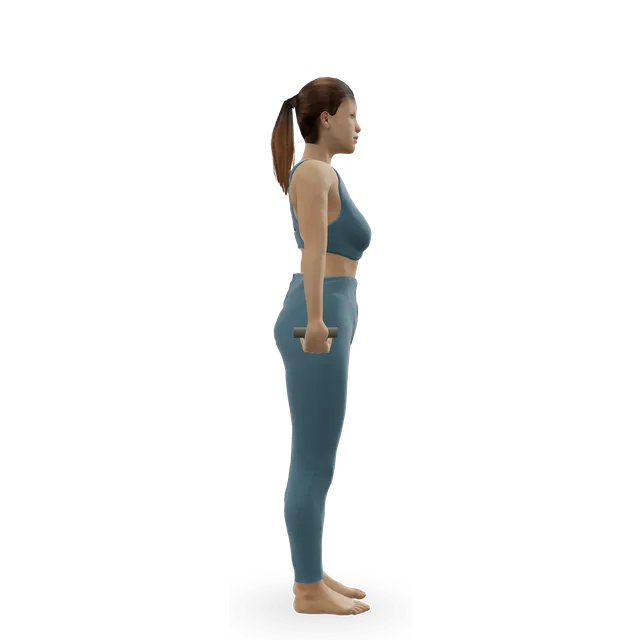
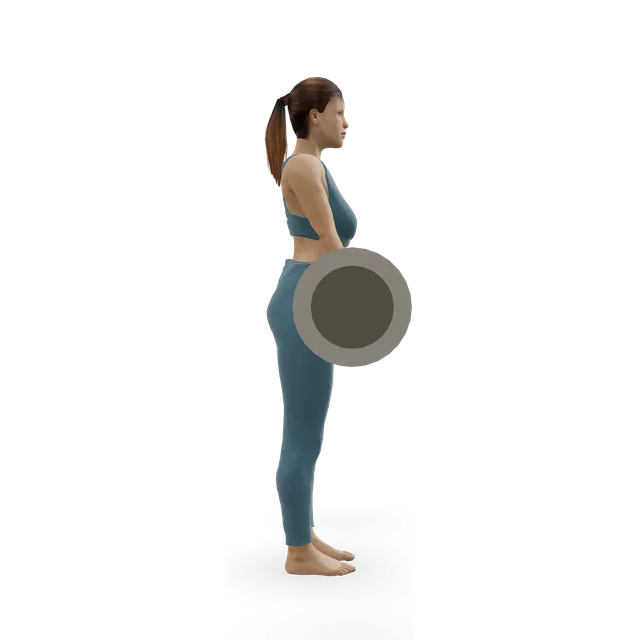
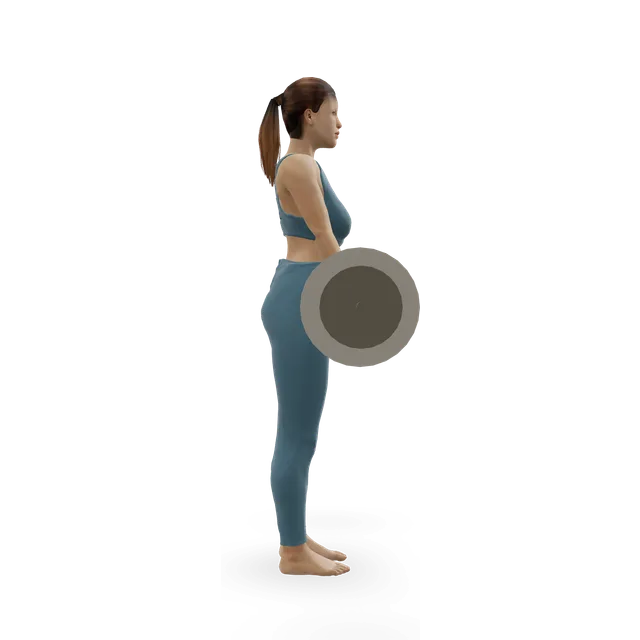
You hinge to the bar with your arms straight, brace, and push the floor away until you stand tall. The neck doesn't lift the bar, but its muscles hold your head still while your whole body braces, and the upper trapezius, which runs from the base of the skull to the tops of the shoulders, holds the shoulder blades against the pull of a heavy bar hanging from straight arms.
No study has measured the neck muscles in a deadlift. A review of 19 deadlift muscle activity studies reports leg and trunk muscles only. The one deadlift study that measured a neck angle found it unchanged at lockout with belts, straps, both or neither in 20 lifters. In 13 football players, the upper trapezius worked harder in the last part of the lift than off the floor; that the traps work hardest near lockout, and that this is the usual trap story, is our reading, since the study's summary gives no figures. A review of powerlifting injuries ties no neck injury to the deadlift.
Sources 1, 2, 3, 4
Head position: what the lab studies show, borrowed from other liftsEmerging evidence
No study has tested head position in a deadlift. In 10 men squatting, looking up and looking straight ahead gave the same movement, while looking down added hip bend. In 7 people lifting with the chin drawn in, the muscles at the back of the neck worked less and the lower back bent less. In 10 men lifting a box with the chin held on the chest, the whole spine bent more, especially the lower back. In 14 men lifting a case, head down or upright didn't change upper trapezius activity. In 21 healthy adults, a dropped or poked-forward head made the back-of-neck muscles work harder when lifting. In 15 adults holding loads at shoulder height, heavier holds worked the neck harder.
So a neutral head, neither cranked up nor tucked hard, with your eyes on the floor a metre or two ahead at the start, is coaching practice based on these squat and box-lift studies, none of which measured neck pain. A strength and conditioning teaching module asks for a neutral spine in the deadlift and gives no head cue.
Sources 5, 6, 7, 8, 9, 10, 11
Who gets it: neck injuries are uncommon in liftingEmerging evidence
Across seven lifting injury surveys, the neck and upper back together made up 1.7% to 14.7% of injuries, and women had more neck and upper back injuries. In 104 Swedish powerlifters, 70% had a current injury and no training factor was linked with a current neck injury. In United States (US) emergency departments over 10 years, the neck was 993 of 120,498 barbell injuries, under 1%, and across weight training the commonest injury was a sprain or strain (46.1%). Surveys of powerlifters find the shoulder, lower back and knee far commoner than the neck.
NHS inform lists muscle strain or tension and repeating the same strained movements in sports among the causes of neck problems. In our reading, it tends to bother people on heavy or maximal pulls, long sets with a held breath, a new programme or a jump in load, a session of deadlifts, shrugs and carries together, or a neck already sore from desk work, stress or poor sleep. No study gives the share of each cause.
Sources 12, 13, 14, 15, 16, 17, 18, 19, 20
Straining and headaches: usually harmless, but the first one needs checkingStrong evidence
The international headache classification describes a primary exercise headache as one brought on by strenuous exercise and lasting under 48 hours, and recognises weight-lifters' headache among them; the first one must be checked for a bleed on the brain, a torn neck artery and narrowed brain arteries. A sudden, brief headache the moment you strain against a held breath is a cough (straining) headache, which lasts from a second to 2 hours and has a cause in about 40% of cases.
About 4.9% of people in population surveys have had an exercise headache, usually starting in the late 20s. In 6,412 headache patients, 1.5% had headaches brought on by coughing, exercise or sex, and exertional headaches with a serious cause were rare; when there was one, it was most often a bleed. The NHS asks for an urgent GP appointment or NHS 111 for a headache triggered or made worse by exercising.
Sources 21, 22, 23, 24, 25, 26
Blood pressure and the rare serious causesEmerging evidence
Nobody has measured blood pressure in a deadlift. In 5 bodybuilders doing heavy leg presses, it averaged 320/250 mmHg at its peak; a brief held breath can't be avoided above about 80% of your maximum effort (31 men); and breathing out cut a maximal leg press peak from 311/284 to 198/175 mmHg in 10 athletes. A held breath also raises pressure inside the head, which partly offsets the strain on the brain's arteries (7 patients).
Vigorous exercise roughly doubled the short-term risk of a burst brain aneurysm in 250 people (2.4 times), but only 2% to 7% of ruptures happen during strenuous activity; three cases have been published during curls and leg presses, and the NHS says a bleed may be more likely when lifting something heavy. A torn neck artery often starts with headache and neck pain, often after a minor jolt or strain (40.5% of 966 people); among 190 published sport cases, 4 followed weightlifting and 10 more general exercise, and an expert review says sport rarely causes one. Repeated thunderclap headaches brought on by exertion or straining can come from narrowed brain arteries. All of these are rare, and none is a reason to fear deadlifts, but they are why the warning signs come first.
Sources 27, 28, 29, 30, 31, 32, 33, 34, 35, 36, 37, 38, 39, 40, 41
Rare injuries near the neckEmerging evidence
A stable fracture of the bony point at the base of the neck (clay shoveler's fracture) has been described in two weightlifters, who recovered in 6 and 12 weeks; a review suggests a heavy pull could cause it, but no deadlift case has been reported. In one 17-year-old, a first rib fracture with a winged shoulder blade followed school deadlifts and settled within two weeks. Both are rare.
Sources 42, 43
When a scan or test mattersStrong evidence
Not for an ordinary neck ache from deadlifting. NHS inform says X-rays and MRI (magnetic resonance imaging) scans usually aren't needed to diagnose a trapped nerve, and a scan may be offered if symptoms aren't improving or greatly affect your life.
Tests matter for the first headache brought on by lifting (hospital checks for a bleed, a torn artery or narrowed arteries), weakness that is getting worse or signs of pressure on the spinal cord, an injury, sharp bony pain at the base of the neck after a heavy pull, and chest pain, which needs an electrocardiogram (ECG) and blood tests.
Sources 44, 21, 45
How it usually goesStrong evidence
Muscle aches settle within days. The NHS says most neck pain only lasts a few weeks, and NHS inform expects the biggest change in the first couple of weeks, with most problems improved within 8 weeks. Studies are less rosy: in pooled studies of new neck pain, pain fell from 64 to 35 out of 100 within about 6 weeks but was 42 a year later, and half to three quarters of people with neck pain have it again within 1 to 5 years.
A trapped nerve usually starts to improve within 12 weeks and can take up to a year, NHS inform says; substantial improvement tends to come within 4 to 6 months, and about 83% recover fully within 2 to 3 years. Exercise headaches last under 48 hours. Most injured powerlifters keep training with changes: only 16% had to stop completely. No one can promise a date.
Sources 46, 20, 47, 48, 44, 49, 13