Pain guide · Neck pain

Neck pain when bench pressing: the traps, your head on the bench, straining, the set-up and swaps

Neck pain when you bench press usually comes from the muscles at the back of your neck working hard as you brace, especially if you drive your head into the bench or lift it to watch the bar, or from the upper traps across the tops of your shoulders when they shrug up at lockout. No study has counted neck pain from the bench press or tested where your head should go, and neck injuries are uncommon in lifting, though commoner in women. Resting your head on the bench, keeping your shoulders down, breathing out near the top, stopping a few reps short and a floor press or machine for a while usually help.

This guide starts with the signs that need help, from a 999 call for a sudden, extremely painful headache during or after a lift, weakness down one side, chest pain or breathlessness during a set, or a bar that has fallen on your neck, to a same-day check through the National Health Service's 111 line (NHS 111) or a general practitioner (GP) for a headache that comes on with exercise or arm numbness or weakness that is getting worse. It then maps the causes by where it hurts, explains what the studies of the neck, straining and blood pressure show, and don't, shows how to change your bench press today, and gives a three-stage plan with a 3D demo of every move, from the floor press back to the bar.

When to get help first

Exercise is for pain that has been checked or is clearly mild and settling.

Get urgent medical help if

  • Call 999: a sudden headache that is extremely painful and doesn't go away, during or after a heavy lift or at any other time, or weakness or numbness in one arm or down one side of the body. A bleed on the brain may be more likely when lifting something heavy.
  • Call 999 or go to A&E: a headache that came on suddenly and is extremely painful; numbness or weakness in the face or body; a drooping face, or being unable to lift both arms and keep them up; difficulty speaking, swallowing, balancing, walking or remembering; double vision or loss of vision; drowsiness or confusion. A torn neck artery often starts with headache and neck pain, sometimes with dizziness or tingling, so head or neck pain unlike any you have had before needs checking.
  • Call 999 or go to A&E after a neck injury if the person is unresponsive, has severe neck pain or cannot move their head, has fallen from a height such as 5 or more stairs, or is drunk or has taken recreational drugs. Do not drive yourself. Being 65 or over, a dangerous fall or crash (from more than 1 metre or 5 stairs, diving, a high-speed or rollover crash, being thrown from a vehicle, a bicycle collision or an accident on a motorised recreational vehicle), or tingling in the arms or legs after an injury puts you at high risk of a broken neck: get checked.
  • A bar that has fallen or rolled onto your neck or throat, then hoarseness, a changed voice, noisy or difficult breathing, trouble swallowing, coughing up blood or swelling of the neck: call 999, even if you feel all right at first (our suggestion, from two case reports in which a dropped bar broke the voice box and both lifters needed hospital airway monitoring).
  • Call 999 or go to A&E: a stiff neck and you can't look at bright lights; a very painful headache; a very high or very low temperature, feeling hot or cold to the touch, or shivering; confusion, slurred speech or not making sense; a rash that does not fade when you press a glass on it; or a first seizure (fit). These can be signs of meningitis. Call too for any other symptoms you're worried might be meningitis.
  • Call 999 or go to A&E: new problems walking, loss of bladder or bowel control, or a sudden loss of coordination, such as difficulty doing up buttons. These can be signs of pressure on the spinal cord.
  • Call 999: chest pain that spreads to your arm, neck or jaw, especially with breathlessness, sweating or feeling sick. It could be a heart attack.
  • Call 999: sudden pain or discomfort in your chest that does not go away (it can feel like squeezing or pressure, burning or indigestion); pain that spreads to your left or right arm, or your neck, jaw, shoulder, stomach or back; or chest pain and you feel sweaty, sick, light-headed or short of breath. It could be a heart attack. Don't drive yourself to A&E.
  • Get help from NHS 111: pain or tightness in your chest, neck, shoulders, jaw or arms that comes and goes, often brought on by exercise, stress, emotion or cold and easing after a few minutes' rest. It can be angina, a sign of a heart problem. If you've been diagnosed with angina, get help from NHS 111 too if it feels worse than before, is happening more often, lasts longer or happens when you're resting.
  • Call 999 or go to A&E if breathing suddenly becomes difficult, if pain in your chest or upper back comes on suddenly with breathlessness or a very fast heartbeat, or if someone passes out. Do not drive yourself. It can be a blood clot that has reached the lungs.
  • Same day (urgent GP appointment or NHS 111): severe neck pain that starts suddenly or gets worse quickly; heaviness or weakness in the arms or legs; pins and needles in an arm along with neck or arm pain; or pain between the shoulder blades.
  • Same day: clumsiness in your hands, or numbness, pins and needles or weakness in one or both arms, that is getting worse; problems with balance or walking since the neck pain started; or neck pain with a severe headache.
  • Arm weakness or numbness that keeps getting worse, severe pain that painkillers and rest do not touch, or an unexplained fever.
  • Same day (urgent GP appointment or NHS 111): a headache with vision or eye problems, a headache triggered or made worse by coughing, sneezing, bending down or exercising, or a headache with vomiting.
  • Same day (call NHS 111, or go to A&E if you feel very unwell): after a big or unusual session, such as hundreds of shrugs, pull-ups, push-ups or burpees, a challenge or a new class, muscle pain, swelling or weakness far worse than the session explains, and dark pee (red, brown, tea or cola coloured), sometimes starting hours or days later. Dark pee isn't always there, so muscles far sorer, more swollen or weaker than the session explains still need the same-day check. It can be rhabdomyolysis, a breakdown of muscle that can harm the kidneys.
  • Same day (GP or NHS 111): the shoulder or arm is hot, swollen or red, or you have a high temperature (although not everyone has one) or feel unwell. A joint infection needs same-day care.
  • If you think you had signs of a stroke that passed (a mini stroke) and didn't get advice at the time, make an urgent appointment with a GP.

See a doctor or physiotherapist if

  • Neck pain or stiffness that has not eased after a few weeks, or after 8 weeks of looking after it yourself; painkillers are not helping; or you are worried. In many areas you can refer yourself to NHS physiotherapy.
  • No improvement after 6 weeks of exercise, or arm symptoms still there beyond 6 to 12 weeks.
  • Pins and needles or a cold arm alongside neck pain, or a new loss of strength or feeling in the arm that you cannot explain (a possible nerve problem).
  • Soreness that isn't better after a week, keeps coming back after normal sessions, or is in one spot: see a GP or physiotherapist (our suggestion).
  • Neck pain with feeling generally unwell, or that started while you were ill with another condition such as rheumatoid arthritis or cancer; or neck pain with blurred vision, ringing in the ears or dizziness.
  • Severe pain that is constant or disturbs your sleep, a fever or unexplained weight loss, or a history of cancer, inflammatory arthritis, tuberculosis (TB), a weakened immune system, neck surgery or a violent injury. Serious causes are very rare, but these need checking.
  • See a GP if you regularly get headaches, or you've tried treating a headache yourself and it's not getting better or is getting worse.

Where does it hurt?

Location narrows the likely causes; it does not diagnose.

The back of the neck or the base of the skull, both sides, an ache or burn during heavy sets, from driving your head into the bench or lifting it to watch the bar

Usually the neck muscles working hard as you brace (our reading of the one lab study): the commonest pattern. Resting your head on the bench and lighter sets usually help.

The tops of the shoulders and the side of the neck, as your shoulders shrug up at lockout or during the set-up

Usually the upper trapezius and levator scapulae muscles (our reading). Shoulders down at lockout.

Read: Neck and shoulder pain →
A sudden catch or sharp pain on one side during a rep, unracking or re-racking, then stiff to turn

Usually a strain or ordinary neck pain, which eases with movement over a few weeks.

Read: Stiff neck and wry neck →
A dull, even ache across the back of the neck a day or two after a new or heavier session

Usually muscle soreness, gone within about a week.

Read: Neck pain after a workout →
A throbbing headache that comes on during heavy sets and lasts minutes to hours

Often an exercise headache, which is usually harmless, but the first one needs an urgent GP appointment or NHS 111. Our headaches when lifting guide covers them.

Read: Headaches when lifting →
A sudden, extremely painful headache during or after a lift, unlike any you've had before

Rarely a bleed on the brain or a torn neck artery: call 999, as the warning signs say.

A one-sided headache brought on by neck movement or holding a position

Possibly a headache coming from the neck.

Read: Headaches from the neck →
A pressing headache on both sides, like a band

Usually a tension headache.

Read: Tension headaches →
Down one arm, a narrow band of pain with pins and needles, numbness or weakness

Possibly a trapped nerve in the neck. Weakness or numbness that is getting worse, or clumsy hands, needs help the same day.

Read: Pinched nerve in the neck →
Between the shoulder blades, or a cramp under one as you squeeze them together

The upper back muscles. New, severe pain between the shoulder blades needs a same-day check. Our upper back bench press guide covers it.

Read: Upper back pain benching →
The front of the shoulder or the chest, or a pop at the front of the armpit

The shoulder or a torn chest muscle: our shoulder bench press guide covers them.

Read: Shoulder pain when benching →
The lower back

Usually the arch and leg drive: our bench press back guide covers it, with the warning signs for a lump in the groin after straining.

Read: Back pain when benching →
The front of the neck or the throat after the bar fell or rolled onto it, with hoarseness, noisy breathing or trouble swallowing

Rarely a broken voice box: call 999 even if you feel all right, as the warning signs say.

Both hands clumsy or numb, or unsteady walking, getting worse over months

Pressure on the spinal cord in the neck can do this. It isn't a bench press problem: see the warning signs.

Read: Neck pain in older adults →
A stiff, achy neck in mid or later life that benching flares

Often neck arthritis, which is common and often causes no pain at all. Benching can usually stay, with the changes on this page.

Read: Neck arthritis →
Neck, jaw or arm pain with chest tightness, breathlessness, sweating or feeling faint during a set

Possibly the heart or the lungs: see the warning signs at the top of this page.

Understand it

What the bench press asks of the neck, and what no study has measuredEmerging evidence

You lie with your head, upper back and buttocks on the bench, eyes about under the bar and shoulder blades pulled back and down, as the site's bench press guide teaches. The neck isn't meant to push or lift, but its muscles hold your head still while your whole body braces, and many lifters press the back of the head into the bench or lift it to watch the bar.

Only one study has measured the neck muscles in a bench press. In 15 healthy people pressing 60% of their maximum, a neck support cut the activity of the muscles at the back of the neck by 37% and raised trapezius activity by 9.3%, with no change in the chest muscle. It didn't measure pain, injury or head position, and the support is a commercial product. No study compares a head pressed into the bench with one lifted or resting, and none counts neck pain caused by benching. A review of powerlifting injuries found chest, shoulder and arm injuries from the bench press, and no neck injuries. So the map on this page comes from that study, injury surveys, headache research and case reports.

Sources 1, 2

Who gets it: neck injuries are uncommon in lifting, and commoner in womenEmerging evidence

Across 17 reports of weightlifting and powerlifting injuries, the neck and upper back together made up between 1.7% and 14.7% of injuries, and women had more neck and upper back injuries. In 104 Swedish powerlifters, 70% had a current injury, women had more neck injuries, and current neck injuries weren't linked with any one lift. In 1,387 gym users, the shoulder was by far the commonest painful area and the neck came after the lower back, knee and elbow; 136 of the 432 who bench pressed (31%) linked it to their pain, without saying where it hurt.

In United States (US) emergency departments, 993 of 120,498 barbell injuries over 10 years were to the neck, under 1%; across weight training, the commonest diagnosis was a sprain or strain (46.1%) and the commonest cause a weight dropping on the person (65.5%). NHS inform lists muscle strain or tension, and repeating the same strained movements in sports and hobbies, among the causes of neck problems. It tends to bother people on heavy or maximal sets, with a big arch and the head driven back, a new programme, or a neck already sore from desk work, stress or poor sleep (our reading).

Sources 3, 4, 2, 5, 6, 7, 8

Headaches with heavy sets: usually harmless, but the first one needs checkingStrong evidence

The international headache classification describes a primary exercise headache as one brought on only by strenuous exercise and lasting under 48 hours, and recognises "weight-lifters headache" among them. It says the first one must be checked for a bleed on the brain, a torn neck artery and narrowing of the brain's arteries. Across 12 studies, about 4.9% of the general population had had one, but only about 0.5% of people seen in headache clinics, and it usually starts in the late 20s.

In 6,412 headache patients followed for 10 years, 97 (1.5%) had headaches brought on by coughing, exercise or sex, 11 of them by exercise; exertional headaches with another cause were rare, and the commonest cause was a bleed on the brain. A review says to suspect another cause after a single episode, with other symptoms or signs, over the age of 40, or with a headache lasting more than a day. The NHS asks for an urgent GP appointment or NHS 111 for a headache triggered or made worse by exercising.

Sources 9, 10, 11, 12, 13, 14

Straining, blood pressure and the rare serious causesEmerging evidence

A brief held breath can't be avoided once an effort goes above about 80% of your maximum (31 men), and in 5 bodybuilders blood pressure averaged 320/250 mmHg at the peak of a heavy double-leg press. In 250 people whose brain aneurysm burst, vigorous exercise roughly doubled the short-term risk (relative risk 2.4), alongside straining on the toilet and anything else that briefly raises blood pressure. The NHS says a bleed on the brain may be more likely when lifting something heavy.

A torn neck artery can start with neck pain and a headache: in 966 people with one, 40.5% had a minor knock or strain in the month before, and case reports describe tears after heavy lifting. A bar that lands on the neck can break the voice box: in two reported bench press accidents, both lifters needed hospital monitoring of their airway and recovered. All of these are rare, and none is a reason to fear benching, but they are why the warning signs come first.

Sources 15, 16, 17, 18, 19, 20, 21, 22, 23

When a scan or test mattersStrong evidence

Not for ordinary neck pain from benching. Bulging discs showed on magnetic resonance imaging (MRI) in 87.6% of 1,211 people without neck symptoms, including about three quarters of people in their 20s, so a scan report has to match your symptoms. NHS inform says X-rays and MRI scans are usually not needed to diagnose a trapped nerve, and a scan may be offered if symptoms aren't improving or greatly affect your life.

Tests matter for the first headache brought on by exercise or a sudden severe headache (hospital checks for a bleed, a torn artery or narrowed arteries), for weakness that is getting worse or signs of pressure on the spinal cord, after a bar has fallen on your neck, and for chest pain, which needs an electrocardiogram (ECG) and blood tests.

Sources 24, 25, 9, 26

How it usually goesStrong evidence

A neck that aches during the set settles soon after, and soreness after a new session fades within about a week. The NHS says most neck pain only lasts a few weeks, and NHS inform says you should see the biggest change in the first couple of weeks, with most problems improved within 8 weeks. Studies are less rosy: in pooled studies of new neck pain, pain fell from 64 to 35 out of 100 within about 6 weeks but was still 42 a year later.

A trapped nerve usually starts to improve within 12 weeks and can take up to a year, NHS inform says; substantial improvement usually comes within 4 to 6 months, and about 83% recover fully within 2 to 3 years. Exercise headaches last under 48 hours. Most injured powerlifters keep training with changes: only 16% had to stop completely. No one can promise a date.

Sources 27, 8, 28, 25, 29, 30, 4

What helps, and how strong the evidence is

Head position: untested, but the neck muscles clearly workEmerging evidence

No study has tested head position on the bench. The one lab study shows the muscles at the back of the neck working during the press, and a neck support cut their activity by 37% in 15 healthy people. Resting the back of your head on the bench without driving it down, and keeping your eyes up rather than lifting your head to watch the bar, are our suggestions from that study, not a tested fix. A folded towel under the head is a cheap, untested alternative to a commercial support.

Source 1

Breathing, load and safety: the physiology is clear, the advice is editorialEmerging evidence

A brief held breath is unavoidable in heavy lifts, and grinding reps and maximal singles push blood pressure highest. While a sore neck or a checked exercise headache settles, lighter sets stopped 2 or 3 reps short, no maximal singles, and breathing out near the top of each rep are our suggestions; in one case report of a weightlifter's headache, the headache didn't come back with lighter weights.

The site's bench press guide says never bench heavy alone without safety arms or a spotter. Two case reports of a bar landing on a lifter's neck show why.

Sources 15, 16, 31, 22, 23

Strength work helps neck pain that lasts; stretching alone may notStrong evidence

Across 27 trials (2,485 people analysed), strength training for the neck, shoulder blades and arms improved long-lasting neck pain by a moderate amount (moderate-quality evidence); strengthening with stretching helped pain and function a little; stretching alone showed no change (low quality); and for neck pain under 6 weeks old the review found no evidence either way. A 2026 analysis of 51 trials (4,140 people) found resistance, mind-body, flexibility and coordination exercise each reduced disability by similar small to moderate amounts.

These trials were in office workers and people with long-lasting neck pain, not lifters, so the plan on this page borrows their exercises (our suggestion).

Sources 32, 33

A trapped nerve: mostly time, with exercise and specialist care if neededEmerging evidence

In 205 people with a trapped nerve under a month old, arm pain eased by 19 points out of 100 over 6 weeks with no treatment, and a semi-hard collar with rest or physiotherapy with home exercises each eased it by about 12 points more. That is an option a specialist may suggest, not self-care. NHS inform advises pacing, staying active a little and often, gentle exercise and pain relief. Surgery is a specialist's decision for weakness that is getting worse or pain that doesn't settle.

Sources 30, 29, 25

Posture and neck supports: less than claimedMixed evidence

Across 10 studies, adults with neck pain carried their head a little further forward than adults without it, with no difference in teenagers; every study measured people once, so none can show which came first. A neck support for the bench press has one muscle activity study in healthy people and no pain data. Neither is shown to fix bench press neck pain.

Sources 34, 1

Painkillers, and medicines for an exercise headacheEmerging evidence

The NHS suggests paracetamol or ibuprofen, or ibuprofen gel, heat or cold, a low, firm pillow and no neck collar. After the first exercise headache has been checked, a doctor may suggest a medicine: a review says indomethacin and beta-blockers are the mainstays, based on case series rather than randomised trials, and that people who don't respond should be checked again for other causes.

Sources 27, 35

How much pain is OK while you exercise?

Up to about 5 out of 10, no worse the next morning; arm symptoms and headaches are differentEmerging evidence

This guide uses the neck hub's rule, as our push-up and workout neck guides do. NHS inform's neck exercise advice: rate your pain from 0 to 10. During exercise, 0 to 3 is minimal and 4 to 5 is acceptable; 6 or more is too much. If it goes higher, do fewer repetitions, move more slowly or rest longer between movements. Exercise should not make your neck worse overall. Soreness from a new exercise should ease quickly, and your neck should be no worse the next morning. Stop any exercise that makes your symptoms worse or causes new pain.

Arm symptoms are the exception. If an exercise sends pain, tingling or numbness further down your arm, or the extra symptoms last more than an hour afterwards, make the movement smaller or leave it out. (A hospital leaflet on nerve glides allows a short-lived rise in symptoms but not one lasting over an hour; the rest of this rule is this site's suggestion.)

Stop and get checked for dizziness, double vision, slurred speech, trouble swallowing or any of the warning signs above.

In 7 trials of long-lasting muscle and joint pain (385 people, none in the neck), exercise that allowed some pain did no worse than pain-free exercise. For the bench press (our suggestion, built on the same rule): the neck working during a heavy set is expected. Choose the head position, the press (floor press, machine, dumbbells, then the bar), the load and the set length where your neck stays at 5 out of 10 or less, eases within minutes of racking the bar and is no worse the next morning. If it isn't, go back a step, not to nothing.

A headache that comes on with the lift, arm pain or tingling, chest pain, breathlessness, feeling faint or a bar that hit your neck isn't a pain-rule question: see the warning signs.

Sources 36, 37

The exercise plan: 3 stages

Start at the first stage. Each move opens a full guide with a 3D demo.

Stage 1

Keep the neck moving, press with your head supported

About days 0 to 7: keep the neck and upper back moving, keep the chest training with presses that support your head, and start the gentle nod. With a warning sign, get checked first; with arm symptoms or a diagnosed trapped nerve, that guide's plan or your team's comes first.

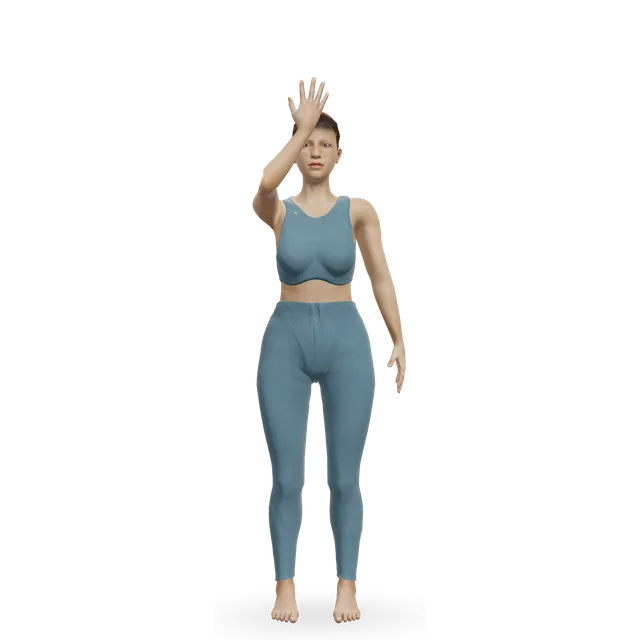
Neck CARs (controlled articular rotations) demonstrated on the 3D figure3D demoNeck CARs (controlled articular rotations)Beginner · No equipment

While the neck is sore, separate nods, tilts and turns: 2 to 3 of each at a time, every hour, adding 1 or 2 every few days towards about 10 · NHS inform's pacing; the move page says use separate movements with a sore neck. Its full circles (3 slow circles each way, once or twice a day, the move page's dose) come once those are comfortable

Harder: Rabbit pose (Sasangasana)

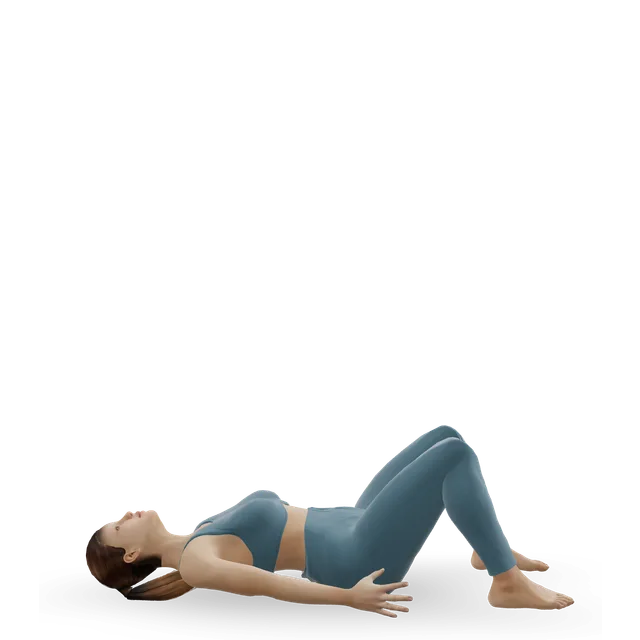
Lying chin tuck demonstrated on the 3D figure3D demoLying chin tuckBeginner · No equipment

5 to 10 gentle holds of up to 10 s, once or twice a day · As in our neck pain and push-up neck guides (editorial)

Harder: Chin tuck

Thoracic rotation demonstrated on the 3D figure3D demoThoracic rotationBeginner · No equipment

6 rotations per side, moving with the breath · The move page's dose

Easier: Side-lying open book · Harder: World's greatest stretch

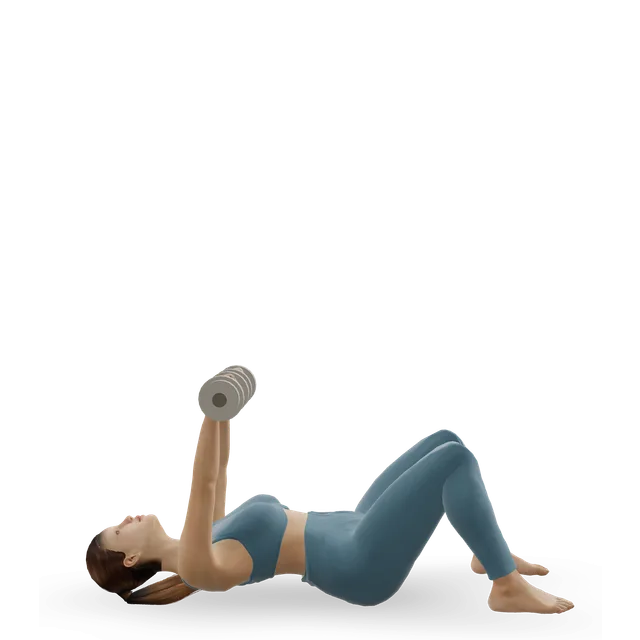
Dumbbell floor press demonstrated on the 3D figure3D demoDumbbell floor pressIntermediate · A dumbbell

2 to 3 sets of 8 to 12, stopping with 2 or 3 reps in reserve · The move page's dose (an editorial starting point). The back of your head rests on the floor

Easier: Chest press machine · Harder: Bench press with chains

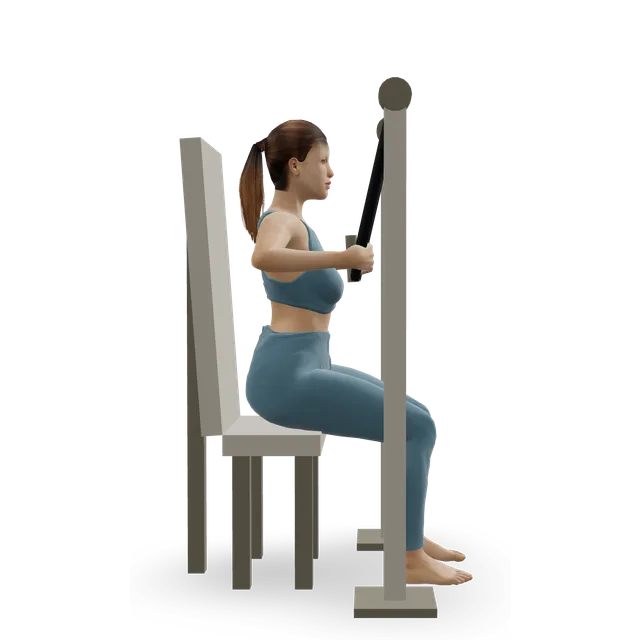
Chest press machine demonstrated on the 3D figure3D demoChest press machineBeginner · Strength machine

2 or 3 sets of 8 to 12, your head resting against the pad, breathing out as you press · Editorial, as in our bench press back, elbow and wrist guides

Harder: Barbell bench press

Band row demonstrated on the 3D figure3D demoBand rowBeginner · A band + An anchor point

3 sets of 10 to 15, stopping 2 to 3 reps short of failure, with 60 to 90 seconds' rest · The move page's dose (an editorial starting point)

Harder: Supported single-arm dumbbell row

Move on when: You can nod, tilt and turn within the pain rule, the floor press and machine pass it, and your neck is no worse the next morning (adapted from NHS inform; editorial).

Follow along: a timer, a cue and the next move, one step at a time.
Stage 2

Build the neck and shoulder blades, dumbbells on the bench

About weeks 1 to 4, 2 or 3 days a week: the neck and shoulder-blade strength the neck pain trials built, and a free-weight press on the bench with your head resting, not driving.

Chin tuck with head lift demonstrated on the 3D figure3D demoChin tuck with head liftIntermediate · No equipment

3 to 5 holds of 5 s, building to 10 holds of 10 s · As in our neck pain and push-up neck guides (editorial)

Easier: Chin tuck

Isometric neck press, front and back demonstrated on the 3D figure3D demoIsometric neck press, front and backBeginner · No equipment

Build to a 10-second press, 3 times in each direction, for 3 rounds (the North Cheshire and Mersey NHS leaflet), starting with light pressure. · The move page's dose

Easier: Chin tuck · Harder: Chin tuck with head lift

Prone Y-T-W raises demonstrated on the 3D figure3D demoProne Y-T-W raisesBeginner · No equipment

2 sets of 8 of each shape to start, building to 2 sets of 15, 3 times a week · As in our push-up neck guide: the 2 sets of 15 is a small neck pain trial's dose, the start is editorial

Easier: Wall angel · Harder: Bent-over reverse fly

Dumbbell shrug demonstrated on the 3D figure3D demoDumbbell shrugBeginner · A dumbbell

2 to 3 sets of 8 to 12, stopping with 2 or 3 reps in reserve (our editorial starting point). Pause for a second at the top of each rep. · The move page's dose. Lift straight up without poking your chin forward, and leave it out if it flares the neck

Harder: Snatch shrug

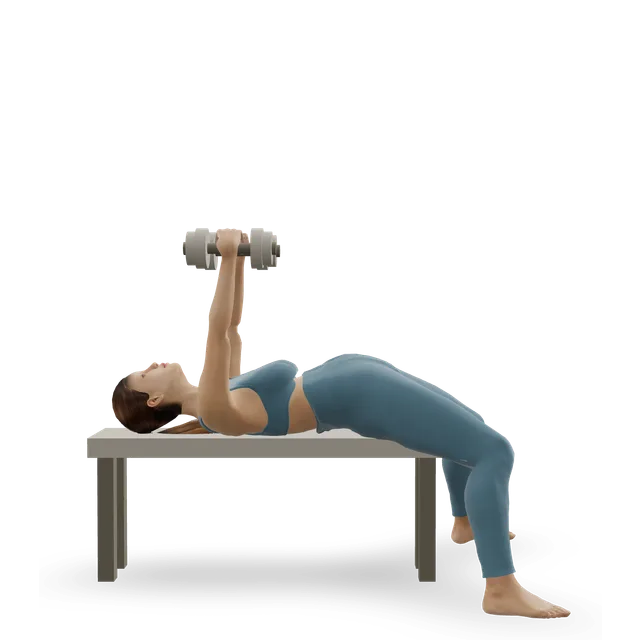
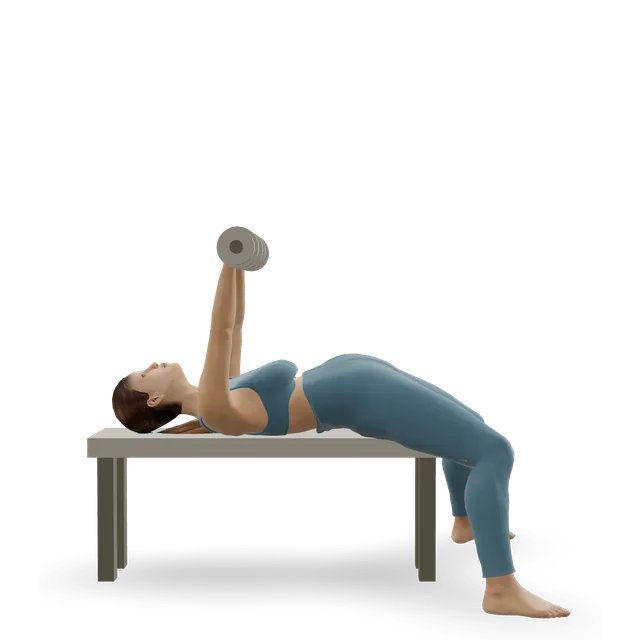
Neutral-grip dumbbell bench press demonstrated on the 3D figure3D demoNeutral-grip dumbbell bench pressIntermediate · A dumbbell + A bench or box

3 sets of 8 to 12 with 2 or 3 reps in reserve, your head resting on the bench · Editorial, as in our bench press back, shoulder and wrist guides

Easier: Barbell bench press · Harder: Bench press with bands

Scapular push-up (push-up plus) demonstrated on the 3D figure3D demoScapular push-up (push-up plus)Beginner · No equipment

2 sets of 10, on a bench or the floor · Our push-up progression workout's dose (editorial)

Easier: Dumbbell shoulder-blade punch · Harder: Push-up

Move on when: 10 head-lift holds of 10 s and 3 sets of dumbbell presses pass the pain rule, with your neck no worse the next morning and no headache, for a week (editorial).

Follow along: a timer, a cue and the next move, one step at a time.
Stage 3

Back to the bar

From about week 2 to 6, later after a trapped nerve or an exercise headache that has been checked: your usual bench press back, one change at a time, by the written steps below. No study has tested a return to the bench press after neck pain, so the order is editorial.

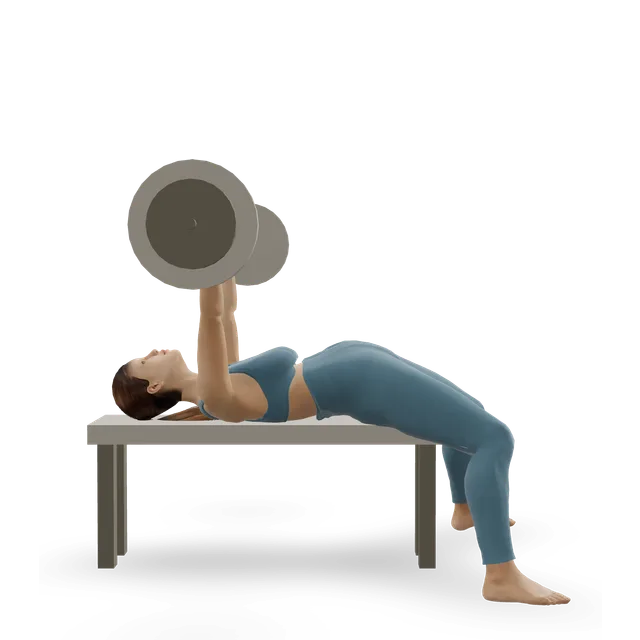
Barbell bench press demonstrated on the 3D figure3D demoBarbell bench pressIntermediate · A barbell + A bench or box

3 sets of 5 to 8 with 3 reps in reserve, from about half your old working weight, adding about 5% to 10% a week while the pain rule holds, inside a rack with the safety arms set · Editorial, as in our bench press back, elbow and wrist guides

Easier: Chest press machine · Harder: Dumbbell bench press

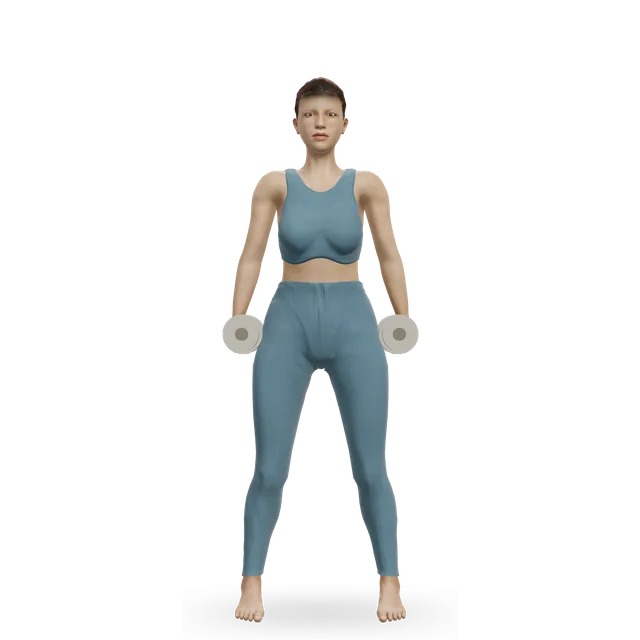
Dumbbell bench press demonstrated on the 3D figure3D demoDumbbell bench pressIntermediate · A dumbbell + A bench or box

3 sets of 8 to 12 with 2 or 3 reps in reserve · Editorial, as in our bench press back and wrist guides

Easier: Barbell bench press · Harder: Bench press with bands

Push-up demonstrated on the 3D figure3D demoPush-upIntermediate · No equipment

3 sets of 8 to 15, head in line, stopping about 2 reps short of failure · Our push-up progression workout's sets and reps; stopping short is editorial

Easier: Wall push-up · Harder: Close-grip push-up (close triceps position)

Face pull demonstrated on the 3D figure3D demoFace pullIntermediate · A band

3 sets of 12 to 15 · Editorial, as in our shoulder movement guides

Easier: Prone Y-T-W raises · Harder: Tuck back lever

Chin tuck with head lift demonstrated on the 3D figure3D demoChin tuck with head liftIntermediate · No equipment

10 holds of 10 s, twice a week · Editorial, as in our push-up and sit-ups neck guides: neck pain often comes back

Easier: Chin tuck

Move on when: Your usual bench sessions pass the pain rule for 2 weeks; then bring back heavier sets, then maximal singles and competition lifts. If a session flares your neck, go back a stage for a few days, not to nothing (editorial).

Follow along: a timer, a cue and the next move, one step at a time.

What to change for now

Your bench press for now (written steps)

Our 3D figure can't show where your head and eyes go, how hard you push your head into the bench or how you breathe. These steps come from the site's bench press guide, lab studies and the NHS; no trial has tested a change to the bench press for neck pain, and each step names its source or says it is our suggestion.

  • 1. Head: rest the back of your head on the bench, chin neither tucked hard nor lifted, and don't drive it down to push out of a sticking point (our suggestion, from the one lab study of the neck muscles).
  • 2. Eyes: under the bar as you set up, then on the ceiling above the bar; don't lift your head to watch the bar touch or to see a mirror (the site's bench press guide; our suggestion).
  • 3. Shoulders: blades back and down before you unrack, and keep them down at lockout rather than shrugging the bar up (the site's bench press guide; our suggestion).
  • 4. Breathing: breathe in and brace at the top, breathe out near the top of each rep, and don't hold your breath through a whole set (the site's bench press guide; our suggestion, from the blood pressure studies).
  • 5. Load: stop 2 or 3 reps short of failure, with no grinding reps or maximal singles for now (editorial).
  • 6. Safety: safety arms set just below your chest, or a spotter; never bench heavy alone without them, as the site's bench press guide says. With neither, use dumbbells.
  • 7. Swaps while it's sore: a floor press, a chest press machine with your head against the pad, or neutral-grip dumbbells (editorial).
  • 8. A headache that comes on during a set: rack the bar, stop the session and get it checked before you lift heavy again (the NHS).
  • 9. The rest of your week: shrugs, deadlifts and overhead presses also load the upper traps, so do them lighter and less often while your neck settles (our suggestion, as our workout neck guide says).

Sources 1, 16, 15, 14, 22, 23

Today: movement, heat or cold, and painkillers (written steps)

These come from the NHS and NHS inform.

  • 1. Keep your neck moving for short periods every hour, and carry on with your normal activities, even at a slower pace (NHS inform). Don't wear a neck collar: it's better to keep your neck moving (the NHS).
  • 2. Heat or cold: a pack of frozen peas wrapped in a tea towel for 5 minutes, 3 times a day, or a hot water bottle wrapped in a tea towel for 20 minutes, 2 to 3 times a day (the NHS).
  • 3. Paracetamol or ibuprofen, or ibuprofen gel, if you need them (the NHS). If you take other medicines or have a health condition, ask a pharmacist which suits you (our suggestion).
  • 4. Sleep with a low, firm pillow, your head at the same height as the rest of your body, and don't drive or cycle while you can't turn your neck (the NHS).

Sources 27, 8

Back to your usual training (written steps)

No study has tested how the bench press comes back after neck pain, so these steps are our suggestion unless a source is named.

  • 1. One change at a time: dumbbells on the bench, then the bar with lighter sets, then more weight, then heavier sets, then maximal singles.
  • 2. Add about 5% to 10% at a time, after a session that passed the pain rule.
  • 3. After a checked exercise headache: build back gradually, and stop for any headache that is sudden, severe or different.
  • 4. Desk and phone: short breaks, moving your neck every hour (NHS inform), with your screen at eye level.
  • 5. Keep a little neck and shoulder-blade work twice a week for a while: neck pain often comes back.

Sources 8, 27

Positions to swap, and why

Habit or positionWhy it mattersInstead
Driving the back of your head into the bench to push through a hard repThe neck muscles work hard during the press, and supporting the neck cut their activity in a lab study (our inference).Head resting, lighter sets stopped short; a floor press for now.Try: Dumbbell floor press
Lifting your head to watch the bar or a mirrorIt holds your neck bent up against gravity through the set (our reading; untested).Eyes on the ceiling above the bar.
Shrugging the bar up at lockoutShrugging isn't part of the press and works the upper traps (our reading).Shoulders down; push-up plus work for the shoulder blades.Try: Scapular push-up (push-up plus)
Holding your breath through the whole set, grinding reps and maximal singlesBlood pressure climbs to very high levels in heavy lifts.Breathe out near the top and stop 2 or 3 reps short.
Benching heavy alone without safety armsA dropped bar can land on your neck; two lifters broke their voice box this way.Safety arms, a spotter, or dumbbells.Try: Dumbbell bench press
Carrying on through a headache that came on with the liftThe first exercise headache needs checking, the NHS and the headache classification say.Stop the session and get it checked.
Pressing on through pins and needles down your armThat is a nerve, not a strain, and the neck hub's rule says make the movement smaller or leave it out.A machine or floor press, and get it assessed.Try: Chest press machine
A neck collar, or keeping your neck stillThe NHS says it's better to keep your neck moving.Gentle movement every hour.Try: Neck CARs (controlled articular rotations)
Heavy shrugs and neck bridges as a fixNo evidence they help bench press neck pain; gentle neck and shoulder-blade strength helps neck pain that lasts.Head lifts and band rows.Try: Chin tuck with head lift
Pulling your head down hard into a side neck stretchThe move page says let the weight of your head do the work rather than pulling.A gentle stretch with no pull.Try: Upper trap release

Routines to follow

More moves for this area

Questions people ask

Why does my neck hurt when I bench press?

Usually the muscles at the back of your neck working hard as you brace, especially if you drive your head into the bench or lift it to watch the bar, or the upper traps if your shoulders shrug up at lockout. A lab study found the neck muscles clearly working during the press, but none has tested head position. Rest your head on the bench, keep your shoulders down and stop 2 or 3 reps short.

Why do my traps hurt after bench press?

The upper trapezius helps hold your shoulders and neck steady, and works harder if you shrug the bar up or set up with your shoulders near your ears. An even ache a day or two after a new session is soreness and fades within about a week. Keep your shoulders down at lockout, and do shrugs and deadlifts lighter for a while.

Should my head be on the bench when I bench press?

Yes: head, upper back and buttocks on the bench and feet on the floor are the five points of contact in our bench press guide. Rest your head there rather than pushing it down, and keep your eyes up rather than lifting your head to watch the bar.

Why do I get a headache when I bench press?

Often it is an exercise headache, brought on by hard effort, which lasts under 48 hours and is usually harmless. But the first one needs an urgent GP appointment or NHS 111, and a sudden, extremely painful headache needs 999, because rarely it is a bleed on the brain. Don't carry on lifting through it: our headaches when lifting guide covers what to change.

I strained my neck benching. What should I do?

Keep it moving gently, use heat or cold and painkillers if you need them, and swap to a floor press or a machine for a few days. Most neck pain lasts only a few weeks, the NHS says. Weakness, numbness or pins and needles in an arm need checking.

What does neck pain with tingling down my arm mean?

It can be a trapped nerve in the neck, which causes a band of arm pain with pins and needles, numbness or weakness. Most improve over weeks to months. Arm weakness or numbness that is getting worse, or clumsy hands, needs help the same day.

Should I use a neck pillow or support for bench press?

One lab study found a neck support reduced the work of the neck muscles in 15 healthy lifters, but it didn't measure pain. It's fine if it feels better, but it isn't a treatment.

Can I keep benching with neck pain?

Usually, with changes: your head resting, lighter sets stopped short, breathing out near the top, or a floor press or machine for a while, keeping pain at 5 out of 10 or less and no worse the next morning. Not with a headache that came on with the lift, arm symptoms that are getting worse, or after a bar fell on your neck.

What if the bar fell on my neck?

Call 999 if your voice is hoarse or changed, breathing is noisy or hard, swallowing hurts or your neck swells, even if you feel all right. In two reported cases the voice box was broken and both lifters were monitored in hospital. Never bench heavy alone without safety arms or a spotter.

Do I need a scan?

Usually not: bulging discs show on scans in most people without neck pain. A scan or test matters for the first exercise headache, weakness or clumsy hands that are getting worse, or a bar that hit your neck.

How long does neck pain from benching last?

The NHS says most neck pain lasts a few weeks, and the biggest change usually comes in the first couple of weeks, though some neck pain lingers for months. No one can promise a date, so keep a little neck and shoulder-blade work in your week.

When should I see a doctor?

Call 999 for a sudden, extremely painful headache, weakness or numbness down one side, chest pain, or a bar that hit your throat with breathing or voice changes. Get help the same day for arm numbness or weakness that is getting worse or a headache that comes on with exercise, and see a GP if it hasn't eased after a few weeks. In the US, call 911 where this page says 999.

Other pain guides

Sources

  1. Baumgarten 2021 · A neck support and neck muscle activity during the bench press in 15 people (lab study, S D Med)
  2. Bengtsson 2018 · Injuries in powerlifting and the squat, bench press and deadlift (narrative review, BMJ Open Sport Exerc Med)
  3. Tung 2024 · Injuries in weightlifting and powerlifting: 17 reports (systematic review, BMJ Open Sport Exerc Med)
  4. Strömbäck 2018 · Injuries in 104 Swedish powerlifters (cross-sectional study, Orthop J Sports Med)
  5. Bernstorff 2023 · Pain and gym exercises in 1,387 recreational athletes (survey, Sports)
  6. Sharma 2024 · Head and neck injuries from barbell lifting in US emergency departments over 10 years (database study, OTO Open)
  7. Kerr 2010 · Weight training injuries in US emergency departments, 1990 to 2007 (database study, Am J Sports Med)
  8. NHS inform · Neck problems
  9. International Headache Society · ICHD-3, 4.2 Primary exercise headache (classification)
  10. Osiowski 2026 · How common primary exercise headache is: 12 studies (systematic review and meta-analysis, Neuroepidemiology)
  11. Pascual 2008 · Headaches brought on by coughing, exercise or sex in 6,412 headache patients (prospective study, J Headache Pain)
  12. Pascual 1996 · Cough, exertional and sexual headaches: 72 cases (case series, Neurology)
  13. Alvarez 2014 · Telling primary from secondary exercise headaches (review, Headache)
  14. NHS · Headaches
  15. MacDougall 1992 · What affects blood pressure during heavy lifting: 31 men (lab study, J Appl Physiol)
  16. MacDougall 1985 · Blood pressure during heavy resistance exercise in 5 bodybuilders (lab study, J Appl Physiol)
  17. Vlak 2011 · Triggers for a burst brain aneurysm in 250 people (case-crossover study, Stroke)
  18. NHS · Subarachnoid haemorrhage
  19. Engelter 2013 · Minor knocks and strains before a torn neck artery in 966 people (observational study, Neurology)
  20. Cho 2025 · A torn vertebral artery after a high-intensity CrossFit workout (case report, Cureus)
  21. Sahu 2023 · Torn carotid arteries on both sides after heavy lifting (case report, Cureus)
  22. Chiba 2023 · A broken voice box after a bar landed on the neck during a bench press (case report, J Am Coll Emerg Physicians Open)
  23. Kabaso 2026 · A broken voice box from a bench press accident (case report, Turk Arch Otorhinolaryngol)
  24. Nakashima 2015 · Neck MRI findings in 1,211 people without symptoms (cross-sectional study, Spine)
  25. NHS inform · Cervical radiculopathy
  26. NHS · Heart attack
  27. NHS · Neck pain (past its review date: reviewed April 2023, review due April 2026)
  28. Hush 2011 · How new neck pain usually goes: 7 studies (systematic review and meta-analysis, Arch Phys Med Rehabil)
  29. Wong 2014 · The course of a trapped nerve from a neck disc (systematic review, Spine J)
  30. Kuijper 2009 · A collar or physiotherapy against waiting for a new trapped nerve in the neck: 205 people (randomised trial, BMJ)
  31. Powell 1982 · Weight lifter's headache (case report, Ann Emerg Med)
  32. Gross 2015 · Exercises for neck disorders: 27 trials (Cochrane review)
  33. Guo 2026 · Types of exercise for neck pain disability: 51 trials (network meta-analysis, PeerJ)
  34. Mahmoud 2019 · Forward head posture and neck pain: 15 studies (systematic review and meta-analysis, Curr Rev Musculoskelet Med)
  35. Upadhyaya 2020 · Primary exercise headache (narrative review, Curr Neurol Neurosci Rep)
  36. NHS inform · Exercises for neck problems (including how to tell if you are exercising at the right level)
  37. Smith 2017 · Painful against pain-free exercise for long-lasting pain: 7 trials (systematic review and meta-analysis, Br J Sports Med)

Exercise education, not a diagnosis or treatment plan. It is written from the guidelines and studies listed above; review by a clinician is pending. If your pain follows an injury, is severe, is getting worse, or comes with any warning sign listed on this page, get it assessed. Health disclaimer.