Pain guide · Neck pain

Neck pain in older adults: arthritis, a trapped nerve, spinal cord pressure, a fall, and what helps

Neck pain is common in later life, and most of it comes from the neck's joints, discs and muscles, which change with age (cervical spondylosis, also called neck osteoarthritis). Those changes show on the scans of most people over 60 without pain, so a scan report rarely explains the pain on its own, and a diagnosis of neck arthritis doesn't mean permanent pain: most flare-ups improve within weeks, and keeping the neck moving and the neck and shoulder muscles strong helps, though most of the trials were in younger adults. A trapped nerve can send pain, pins and needles or numbness down one arm, and polymyalgia rheumatica can stiffen the neck, shoulders and hips each morning.

A few signs need help first. Call 999 for chest pain spreading to the neck or jaw, and call 999 or go to accident and emergency (A&E) for new problems walking, loss of bladder or bowel control or a sudden loss of coordination, which can mean pressure on the spinal cord, or after a fall with severe neck pain. At 65 or over, our suggestion is a same-day check through the National Health Service's 111 line (NHS 111) or A&E after even a minor fall. Clumsy hands or unsteady walking that is slowly getting worse needs your general practitioner (GP) or NHS 111 the same day, and a new headache with jaw pain when eating or problems with your sight needs a GP or NHS 111 immediately. This guide covers the causes and how common each is, what scans mean, what helps (exercise, painkillers, collars, injections and surgery), driving, reading, pillows and falls, and a three-stage plan with 3D demos.

When to get help first

Exercise is for pain that has been checked or is clearly mild and settling.

Get urgent medical help if

  • Call 999 or go to A&E after a neck injury if the person is unresponsive, has severe neck pain or cannot move their head, or fell from a height such as 5 or more stairs. Do not drive yourself. Being 65 or over, a dangerous fall or crash (from more than 1 metre or 5 steps, diving, a high-speed or rollover crash, being thrown from a vehicle, or a bike or horse-riding accident), or tingling in the arms or legs after an injury puts you at high risk of a broken neck: get checked.
  • Call 999 if you or someone else has fallen and may have hurt the head, back, neck or hip, or cannot get up. Get help from NHS 111 after a fall if you may be in pain, injured or unwell.
  • After a fall or a knock, even a minor one, new neck pain if you're 65 or over, or if you have ankylosing spondylitis or another condition that stiffens the spine: get checked the same day, through NHS 111 or A&E, and say you've fallen (our suggestion). The National Institute for Health and Care Excellence (NICE) counts being 65 or over as a high risk for a broken neck after an injury, and a stiffened spine can break after a minor knock.
  • Call 999 or go to A&E: new problems walking, loss of bladder or bowel control, or a sudden loss of coordination, such as difficulty doing up buttons. These can be signs of pressure on the spinal cord.
  • Call 999: chest pain that spreads to your arm, neck or jaw, especially with breathlessness, sweating or feeling sick. It could be a heart attack.
  • Call 999 or go to A&E: a headache that came on suddenly and is extremely painful; numbness or weakness in the face or body; a drooping face, or being unable to lift both arms and keep them up; difficulty speaking, swallowing, balancing, walking or remembering; double vision or loss of vision; drowsiness or confusion. A torn neck artery often starts with headache and neck pain, sometimes with dizziness or tingling, so head or neck pain unlike any you have had before needs checking.
  • Call 999 or go to A&E: a stiff neck and you can't look at bright lights; a very painful headache; a very high or very low temperature, feeling hot or cold to the touch, or shivering; confusion, slurred speech or not making sense; a rash that does not fade when you press a glass on it; or a first seizure (fit). These can be signs of meningitis. Call too for any other symptoms you're worried might be meningitis.
  • Contact a GP immediately, go to 111.nhs.uk or call NHS 111: a new or frequent headache that usually comes on suddenly (your scalp may also feel sore or tender), pain in the jaw muscles or tongue when eating or talking, or problems with your sight, such as double vision or loss of vision in 1 or both eyes. With pain and stiffness around the shoulders, these can be signs of temporal arteritis (giant cell arteritis), which up to 1 in 5 people with polymyalgia rheumatica develop. If you suddenly can't see from 1 or both eyes, call 999 or go to A&E.
  • Same day (urgent GP appointment or NHS 111): severe neck pain that starts suddenly or gets worse quickly; heaviness or weakness in the arms or legs; pins and needles in an arm along with neck or arm pain; or pain between the shoulder blades.
  • Same day: clumsiness, numbness, pins and needles or weakness in one or both arms that is getting worse; problems with balance or walking since the neck pain started; or neck pain with a severe headache.
  • Same day after a neck injury: tingling or weakness in the arms or legs, clumsy hands (dropping things, trouble with buttons or zips), changes in bladder or bowel control, changed feeling around the bottom or genitals, a history of osteoporosis or rheumatoid arthritis, or feeling generally unwell.
  • Get help from NHS 111: pain or tightness in your chest, neck, shoulders, jaw or arms that comes and goes, often brought on by exercise, stress, emotion or cold and easing after a few minutes' rest. It can be angina, a sign of a heart problem.

See a doctor or physiotherapist if

  • Neck pain or stiffness that has not eased after a few weeks, or after 8 weeks of looking after it yourself; painkillers are not helping; or you are worried. In many areas you can refer yourself to NHS physiotherapy.
  • Neck pain with feeling generally unwell, or that started while you were ill with another condition such as rheumatoid arthritis or cancer; or neck pain with blurred vision, ringing in the ears or dizziness.
  • Severe pain that is constant or disturbs your sleep, a fever or unexplained weight loss, or a history of cancer, inflammatory arthritis, tuberculosis (TB), a weakened immune system, neck surgery or a violent injury. Serious causes are very rare, but these need checking.
  • See a GP if you have pain and stiffness for more than a week, especially if you're over 50, it's in both shoulders (often the neck and hips too) and the stiffness lasts longer than 45 minutes in the morning. It can be polymyalgia rheumatica.
  • Swollen glands in your neck that are getting bigger or haven't gone down within 1 week, feel hard or don't move, or come with night sweats or a very high temperature: see a GP.
  • You are 60 or over with bone pain in your hips, back, ribs or shoulders that won't go away, especially with tiredness, feeling very thirsty or weight loss: see a GP. The National Institute for Health and Care Excellence (NICE) asks GPs to offer blood tests for myeloma in people 60 and over with persistent bone pain.
  • Sudden new back pain after a minor fall, lift, cough or sneeze, from 50 or past the menopause, or if you take long-term steroid tablets; or height loss, a curved spine or a change in posture: see a GP. It can be a spinal fracture.
  • Any fall or near-fall, new unsteadiness, or a new fear of falling: ask about a falls assessment.

Where does it hurt?

Location narrows the likely causes; it does not diagnose.

A stiff, achy neck that comes and goes, worse after staying in one position, sometimes with headaches from the back of the neck

Usually the neck's age-related changes (neck arthritis, or cervical spondylosis), which show on most people's scans after 60, with or without pain.

Read: Neck arthritis →
Woke up with a stiff neck, or stiff after a long spell in one position

Usually ordinary neck pain, which eases as you keep the neck moving. Our stiff neck guide covers the first few days.

Read: Stiff neck and wry neck →
Pain, pins and needles or numbness down one arm, in a band

Often a trapped nerve in the neck, most common at 50 to 54; most people improve over weeks to months.

Read: Pinched nerve in the neck →
Both hands clumsy or numb, buttons and handwriting harder, or walking getting unsteady

Possibly pressure on the spinal cord, which people often put down to age: get help the same day, or call 999 if it comes on suddenly (the warning signs).

The neck, both shoulders and the hips stiff for more than 45 minutes each morning

Possibly polymyalgia rheumatica, mostly over 65: see a GP (the warning signs). Our polymyalgia rheumatica exercise page covers staying active.

A new headache, a tender scalp, jaw pain when chewing, or problems with your sight

Possibly giant cell arteritis: contact a GP immediately or NHS 111, and call 999 if you suddenly can't see (the warning signs).

Sudden, severe neck pain and stiffness, or a stiff neck with a fever

A stiff neck with a very painful headache, dislike of bright lights, a rash or confusion is a 999 call (meningitis); severe neck pain that comes on suddenly needs a same-day check, and neck pain with a fever or feeling unwell needs a GP. Rarely in later life, an infection in the spine or calcium crystals at the top of the neck can cause it (the warning signs).

Neck pain after a fall or a knock, even a minor one

At 65 or over, a minor fall can break the neck: see the warning signs. Our whiplash guide covers neck pain after a car crash.

Neck or jaw pain with chest pain, or brought on by effort and eased by rest

Possibly the heart: call 999 for chest pain spreading to the neck or jaw, and get help from NHS 111 for pain that comes on with effort and eases with rest (the warning signs).

Neck pain when you wake, or with your pillow

Our neck pain from sleeping guide covers pillows and sleeping positions.

Read: Neck pain from sleeping →
Neck pain when you turn your head, or reverse the car

Our turning guide covers driving, screens and a plan.

Read: Neck pain turning your head →
A headache that starts at the back of the neck

Possibly a headache from the neck (cervicogenic headache); a pressing headache on both sides is usually a tension headache.

Read: Headaches from the neck →
A lump or swollen glands on the side of the neck

Usually glands swollen by an infection, which go down within 1 to 2 weeks; swollen glands are rarely caused by cancer.

Read: Side neck pain →
Neck and shoulder pain together

Our neck and shoulder guide covers the muscles between them, a trapped nerve, the shoulder joint and the heart.

Read: Neck and shoulder pain →
Neck pain in a woman, including older women

Our neck pain in women guide sorts the causes by stage of life.

Read: Neck pain in women →
Recovering from neck surgery

Our neck surgery guide covers the usual stages; your surgical team's plan comes first.

Read: Neck surgery →
A head that keeps dropping forward and is hard to hold up

Rare: possibly dropped head syndrome, from weak neck muscles. See a GP to look for the cause (our suggestion).

Shoulder pain too

Our shoulder pain in older adults guide covers the shoulder itself and a plan.

Read: Shoulder pain in older adults →
Back pain too

Our back pain in older adults guide covers spinal stenosis, spinal fractures from thin bones and a plan.

Read: Back pain in older adults →

Understand it

Common in later life, but not steadily rising with ageMixed evidence

Neck pain affected about 203 million people worldwide in 2020, more often women, and in modelled global estimates it was most common between the ages of 50 and 74. Surveys of people over 60 tell a slightly different story. A review of 12 population studies found no significant rise from middle age into the sixties; most found none later in life (2 reported a rise), and several found a fall in the oldest group (significantly in 3). In 4,486 Danish twins aged 70 to 102, 11% had neck pain alone and 11% neck and back pain together in the past month (about 1 in 5 in all, our sum), varying little between age groups. In 7,878 people aged 50 and over in North Staffordshire, most kinds of pain were less common in the older age groups, and the Chartered Society of Physiotherapy (CSP) says neck pain becomes less common as we grow older, while the changes seen on scans become more common.

What does rise is pain that gets in the way. "The prevalence of spinal pain with disability continues to rise into old age," concluded a UK survey mailed to 5,752 adults, in which 89% of people with neck pain also had pain elsewhere. In North Staffordshire, pain that interfered with daily activities became more common with age, up to the oldest group. In the Danish twins, neck and back pain came and went (63% of those in all four surveys had no episode or only one), and went with poorer self-rated health and physical function. That is a reason to treat it, not to accept it as part of getting older.

Sources 1, 2, 3, 4, 5, 6

Most of it is ordinary neck pain, and the neck's age-related changes are normalStrong evidence

Cervical spondylosis is the medical term for age-related changes in the neck's discs and joints, also known as neck osteoarthritis (NHS inform). It is common from 40, and when it causes symptoms they are neck and shoulder pain or stiffness that comes and goes, and headaches that often start at the back of the neck. The NHS calls it "a normal part of ageing" that many people have without any symptoms, and Arthritis UK describes the changes as the body naturally adapting to everyday use over many years.

Scans of people without symptoms show how normal the changes are. By 60 to 65, 95% of men and 70% of women had at least one such change on an X-ray (200 volunteers aged 20 to 65); 87.6% of 1,211 volunteers aged 20 to 70 had bulging discs on magnetic resonance imaging (MRI) scans, with the spinal cord pressed on in 5.3%; and in 497 volunteers, 86% to 89% of discs showed degeneration over the age of 60. Few people over 70 were scanned in these studies.

The changes and the pain are only weakly linked. In 205 people with neck pain followed for 10 years or more, their pain wasn't related to the changes on their X-rays. In 159 volunteers followed for 10 years, 15% developed neck pain, and changes low in the neck at the start predicted who did. The CSP says there isn't a strong link between scan findings and pain, and NHS inform says most people with these changes on scans have no neck pain, and that the diagnosis "does not necessarily mean you will have permanent neck pain".

Sources 7, 8, 9, 10, 11, 12, 13, 14, 5

A trapped nerve: pain down one armEmerging evidence

A nerve root pressed on by a disc or a bony change (cervical radiculopathy) usually sends sharp pain down one arm, often worse than the neck pain, with pins and needles, numbness or weakness; Arthritis UK says one or both arms. In Rochester, Minnesota, between 1976 and 1990, it was diagnosed in 83.2 people per 100,000 a year, most often at 50 to 54 (202.9 per 100,000), and 68.4% of cases were linked with spondylosis, a disc or both. 26% had surgery, and at the last follow-up 90% had no symptoms or were only mildly affected.

With a disc, substantial improvement tends to come within the first 4 to 6 months, and complete recovery took 24 to 36 months in about 83% of people, in a review of the best evidence. A scan matters when surgery is being considered for weakness in the arm or severe pain that won't go away, and the surgeon will ask for one (Arthritis UK). Our pinched nerve guide has its own plan.

Sources 15, 16, 9, 17

Pressure on the spinal cord: the cause most easily missedStrong evidence

When age-related changes narrow the space around the spinal cord enough to press on it (degenerative cervical myelopathy), the main clues are in the hands and the walking: clumsy hands (doing up buttons, using keys or a phone, handwriting, dropping things), numb hands, unsteady walking or more falls, bladder changes and, in severe cases, an electric-shock feeling down the spine when the neck bends. It usually gets slowly worse over months. A clinical review in the British Medical Journal (BMJ) asks doctors to consider it in anyone over 50 with symptoms like these that are getting worse, and notes that people may put them down to "getting older". It is usually first diagnosed in the 50s and is uncommon before 40.

How common it is can only be estimated. A review of 19 MRI studies estimated it at 2.3% (in 1,202 people), and UK modelling from scan data suggests about 2.2%, against 0.19% with a hospital diagnosis, a gap that is greatest in older people. These estimates put it at about 2% of adults, most of them undiagnosed. Diagnosis is slow: the average delay was 1 to 2 years in an online survey of about 780 people with it, with longer delays going with more disability, and 2.2 years and 5.2 consultations in a study of 42 people who had surgery, which the BMJ review cites.

Without surgery, 20% to 62% of people with symptoms get worse over 3 to 6 years. An international spine surgery guideline strongly recommends surgery for moderate and severe cases, and surgery or a supervised trial of structured rehabilitation for mild ones, and the BMJ review says treatment within 6 months of symptoms offers the best chance of recovery, with an urgent MRI scan when the problem is getting worse. That's why sudden signs are a 999 call and slowly worsening ones need a GP or NHS 111 the same day (the warning signs). Long-standing rheumatoid arthritis can also cause pressure on the spinal cord at the top of the neck, which the NHS describes as uncommon but serious.

Sources 18, 8, 19, 20, 21, 22, 23

Polymyalgia rheumatica and giant cell arteritis: later-life conditions with their own cluesStrong evidence

Polymyalgia rheumatica causes pain, stiffness and inflammation in the muscles around the shoulders, neck and hips, and its main symptom is morning stiffness that lasts longer than 45 minutes; extreme tiredness, loss of appetite, weight loss and depression can come with it. Most people diagnosed are over 65, it's very rare under 50, and it's more common in women (the NHS). In the UK about 96 in every 100,000 people over 40 are diagnosed each year, and the British Society for Rheumatology puts it at about 1% of the UK population. Steroid treatment usually lasts 12 months to 2 years (the NHS); in UK records, continuous treatment lasted a median of 15.8 months.

Neck aching doesn't tell it apart on its own. In the study behind its classification criteria, 57% of 125 people with polymyalgia rheumatica had neck aching, but so did 54% of 169 people with conditions that mimic it. Morning stiffness lasting more than 45 minutes (77% against 43%) and hip pain or limited hip movement (57% against 35%) told them apart better, while aching in both shoulders was near universal in both groups (99% and 96%).

Giant cell arteritis (temporal arteritis) inflames arteries in the head and neck. Up to 1 in 5 people with polymyalgia rheumatica develop it, the NHS says, while the British Society for Rheumatology's 2026 guideline gives about 5% to 10%, adding that many people with giant cell arteritis also have symptoms of polymyalgia rheumatica. It is uncommon: about 2.2 diagnoses for every 10,000 people a year in UK general practice in 1990 to 2001, and 1.0 per 10,000 people aged 50 and over a year in 2000 to 2011, highest (7.4) in women aged 70 to 79. Its signs are a new or frequent headache, a sore or tender scalp, pain in the jaw muscles or tongue when eating or talking, and sight problems, which need a GP immediately or NHS 111; suddenly being unable to see from 1 or both eyes needs 999 (the warning signs).

Sources 24, 25, 26, 27, 28, 29, 30, 31

After a fall: at 65 or over, even a minor one can break the neckStrong evidence

The National Institute for Health and Care Excellence (NICE) counts being 65 or over as a high-risk factor for a neck injury, using the Canadian C-spine rule. With a head injury, it asks for a computed tomography (CT) scan of the neck within 1 hour when a neck injury is suspected in someone 65 or over, or in someone with neck pain and a condition such as axial spondyloarthritis. After a neck injury, NHS inform says call 999 for severe neck pain, a head that can't be moved or a fall from 5 or more stairs, and call 111 for new numbness or weakness in the arms or legs, clumsy hands, or a history of osteoporosis or rheumatoid arthritis.

The pattern changes with age. Of 149 people aged 65 and over with neck injuries at one US trauma centre, 64% injured the upper neck. Car crashes were the main cause at 65 to 75, and falls from standing or sitting height over 75; over half had breaks that put the spinal cord at risk, even without nerve signs at first. Of 21,986 emergency neck CT scans at another US centre, fractures showed in 2.0% of people 65 and over and 1.6% of younger people, and 55.8% of the older group's fractures followed a fall from standing. In Finland, severe neck injuries from falls in people aged 50 and over rose from 59 in 1970 to 228 in 2004.

A spine stiffened by ankylosing spondylitis or a similar condition can break after a minor knock, mostly in the neck, and the diagnosis is often delayed, a review of 93 articles found. That's why our suggestion is a same-day check for neck pain after even a minor fall at 65 or over, or with a stiffened spine (the warning signs): how it feels doesn't rule out a break, and a scan decides.

Sources 32, 33, 34, 35, 36, 37, 38, 39

The heart can be felt in the neck or jawStrong evidence

Chest pain that spreads to the arms, neck or jaw is a 999 call (the NHS). Angina, a sign of a heart problem, is sudden pain in the chest, neck, shoulders, jaw or arms, often brought on by exercise, stress, emotion or cold; attacks usually last less than 10 minutes and ease with rest, and the NHS says get help from NHS 111 for symptoms that come and go.

Across 27 studies of people with a heart attack or unstable angina, women had 1.83 times the odds of neck pain and 1.75 times the odds of jaw pain compared with men, though chest pain was the commonest symptom in both (79% of men and 74% of women) and the symptoms overlapped a great deal. Neck or jaw pain that comes on with effort and eases with rest needs checking.

Sources 40, 41, 42

Rare causes: calcium crystals, infection, cancer and a dropped headEmerging evidence

Crowned dens syndrome is a flare of calcium crystals around the peg of bone at the top of the neck. It is uncommon, and no one has measured how often it happens: a review gathered 196 reported cases, with an average age of 73. Its clues are sudden, severe neck pain and stiffness, sometimes with a fever and a headache (all 8 people in one case series had both), and blood tests showing raised inflammation in most. It was most often first mistaken for meningitis (21.4%), and also for polymyalgia rheumatica or giant cell arteritis. A CT scan shows the calcium best (97.3% of cases, against 68.4% for MRI), and anti-inflammatory medicines were the commonest treatment (62.5%), with improvement in 96.6%. Calcium around the peg is common on the scans of older people with neck pain (29.2% of 195 neck CT scans at 40 and over, and nearly half of those over 70), but that isn't the same as the syndrome.

An infection in the spine is rare too: in a Danish county, it rose from 2.2 to 5.8 cases per 100,000 people a year between 1995 and 2008, and was several times more common over 70. In a review of 14 studies of 1,008 people, back pain and a fever were the commonest first symptoms, and the lower back was the part most often affected. With neck pain, a fever or feeling generally unwell needs a GP, severe neck pain that comes on suddenly needs a same-day check, and a stiff neck with a very painful headache, dislike of bright lights, a rash or confusion is a 999 call for meningitis (the warning signs).

Cancer is a rare cause. NICE asks GPs to offer blood tests for myeloma, a cancer of the bone marrow, to people aged 60 and over with persistent bone pain, particularly back pain, or an unexplained fracture, and the NHS lists bone pain in the back, hips, shoulders or ribs among its symptoms. Swollen glands in the neck usually come with an infection and go down within 1 to 2 weeks, and are rarely caused by cancer (the NHS). Dropped head syndrome, where weak neck muscles let the chin sink towards the chest, is rare; a GP can look for the cause (our suggestion).

Sources 43, 44, 45, 46, 47, 48, 49, 50, 51

How it usually goesEmerging evidence

For ordinary neck pain and flare-ups of neck arthritis, the biggest change usually comes in the first couple of weeks, and most problems improve within 8 weeks (NHS inform). It often comes back: in population studies, between half and three quarters of people with neck pain report it again 1 to 5 years later. Over the long run most people improve: of 205 people followed for 10 years or more, 79% had less pain and 43% none, though 32% still had moderate or severe pain. How it goes in later life has been studied less than in younger adults.

A trapped nerve usually improves substantially within 4 to 6 months, pressure on the spinal cord tends to get worse without treatment, and polymyalgia rheumatica usually needs steroids for 12 months to 2 years (above). No one can promise a timescale.

Sources 52, 8, 53, 13, 17, 22, 24

What helps, and how strong the evidence is

Keep moving, little and often, and skip the collarStrong evidence

The NHS says don't wear a neck collar unless a doctor tells you to, as it's better to keep your neck moving. NHS inform says move your neck for short periods every hour, avoid staying in one position for too long, and keep up your normal activities, even at a slower pace. A Canadian guideline from the Ontario Protocol for Traffic Injury Management (OPTIMa) Collaboration says clinicians shouldn't offer a collar for ordinary neck pain. Arthritis UK says self-help and a day or two's rest are often enough to clear up a spell of neck pain, and NHS inform says exercises "may be uncomfortable to start but they are safe to do".

The health services' exercise sheets start small. NHS inform's neck movements are held for 2 seconds, 2 to 3 at a time, every hour, adding 1 or 2 every few days towards about 10, and its cervical spondylosis strength exercises build from sets of 8, 2 to 3 times a day, to a maximum of 2 sets of 15. The NHS flexibility exercises hold a neck turn for 5 seconds, 3 times each side, and its sitting exercises hold an upper-body twist for 5 seconds, 5 times each side; Arthritis UK's neck exercises are held for 5 seconds, 5 times each side, sitting down for balance, or lying down if turning is uncomfortable. These are health-service starting points, not doses tested in trials.

Sources 54, 52, 55, 9, 8, 56, 57, 58, 59, 60

Strengthening has the best evidence, mostly from younger adultsEmerging evidence

In a Cochrane review of 27 trials, strength training for the neck, shoulder blades and arms reduced long-lasting neck pain by a moderate to large amount, straight after treatment and in the short term (moderate-quality evidence), while stretching alone may not change pain (low-quality evidence). Across 40 trials, motor control exercise, yoga, Pilates, tai chi, qigong and strengthening all beat no treatment by similar amounts, on very low quality evidence, so no single type is clearly best. These trials mostly enrolled working-age adults, so for later life the evidence is borrowed.

In a snapshot study, 93 older adults with long-lasting neck pain had weaker neck muscles and poorer balance than 93 without. It can't show which came first, but it fits a plan that strengthens the neck and trains balance.

Sources 61, 62, 63

In people aged 65 and over: one trial and a few small onesEmerging evidence

Only one trial has tested treatment for long-lasting neck pain in people aged 65 and over. In 241 people with neck pain for 12 weeks or more, 12 weeks of home exercise plus spinal manipulation gave a 10% greater fall in pain than home exercise alone; adding supervised exercise sessions made no clear difference, and there were no serious side effects from the treatments. There was no untreated group, so it can't show how much the home exercise itself helped, and only its summary was read for this guide.

Smaller studies point the same way. Traditional Chinese exercises such as Baduanjin, tai chi and qigong, added to usual care, eased pain in middle-aged and older people across 21 small trials in China, the US and Germany, and in 35 older adults, heat packs plus neck stabilising exercises eased pain more than the exercises alone over 5 days. Manipulation isn't for everyone: the BMJ review says it is "strictly contraindicated" with pressure on the spinal cord, and Arthritis UK says get advice first, as some therapies won't be recommended with a condition such as osteoporosis.

Sources 64, 65, 66, 18, 9

Strength and balance exercise prevents fallsStrong evidence

In a Cochrane review of 108 trials whose participants averaged 76, exercise cut the rate of falls by 23% (59 trials, 12,981 people, high-certainty evidence). NICE asks for falls prevention programmes that are progressive and tailored to the person. The NHS advises adults aged 65 and over to do activities that improve strength, balance and flexibility on at least 2 days a week; its strength exercises start with 5 slow sit-to-stands, and its balance exercises (sideways walking, heel-to-toe walking and one-leg stands) are done at least twice a week near a wall or a stable chair.

The NHS says see a GP after a fall or if you're worried about your balance. A fall at 65 or over matters for the neck as well as the hip (above).

Sources 67, 68, 69, 70, 71, 72

Painkillers: short courses, with a pharmacist's checkStrong evidence

The NHS suggests paracetamol or ibuprofen, or ibuprofen gel on the neck. Ibuprofen may not be suitable if you have or have had a stomach ulcer, or have asthma, a heart, liver or kidney condition or problems with blood clotting, or have had a stroke (the NHS). Arthritis UK suggests anti-inflammatory tablets as a short course of about 5 to 10 days, saying they're unlikely to help if they haven't within that time, and asks you to check with a pharmacist first, as they can interact with medicines such as warfarin. For severe symptoms from a pinched nerve, a doctor may prescribe medicines that target the nerve, such as gabapentin or pregabalin (Arthritis UK).

This is health-service advice: no trial of painkillers for neck pain in later life was reviewed for this guide.

Sources 54, 73, 9

A collar for a recent trapped nerve: a little faster, no better by 6 monthsEmerging evidence

In 205 adults aged 18 to 75 (average about 47) whose arm pain from a trapped nerve had started within the past month, arm pain fell by 19 points out of 100 over 6 weeks with wait and see, and by about 12 points more with a semi-hard collar and rest for 3 to 6 weeks, or with 6 weeks of physiotherapy and home exercises. By 6 months most people had little or no pain, and the groups didn't differ. No trial has tested this in later life, and for ordinary neck pain the advice is no collar (above).

Source 16

Injections and surgery: for a nerve or the spinal cord, not for scan changesStrong evidence

Arthritis UK says a local anaesthetic or steroid injection into the small facet joints of the neck may help "in a very small minority of cases", and that regular steroid injections are no longer advised. The NHS considers surgery only when a nerve is being pinched or there is a problem with the spinal cord, and says it "is not always a cure but it may stop your symptoms getting worse"; Arthritis UK says it is only rarely needed.

For a trapped nerve, in a trial of 63 people, 87% felt better a year after surgery plus physiotherapy against 62% after physiotherapy alone, but by 2 years the difference was no longer clear (81% against 69%), and the authors advise trying structured physiotherapy before choosing surgery. For moderate or severe pressure on the spinal cord, the international spine surgery guideline strongly recommends surgery (moderate-quality evidence), and its review found complications in 14.1% of people after surgery.

Sources 9, 7, 74, 22

Polymyalgia rheumatica and giant cell arteritis: steroids, fast, and staying activeStrong evidence

Steroids are the main treatment for both, and for giant cell arteritis they are started before it is confirmed, because of the risk to sight (the NHS). The British Society for Rheumatology calls giant cell arteritis a medical emergency: GPs should start steroids alongside an urgent referral, and a specialist should see the person ideally on the same working day, and within 3 working days in all cases. European recommendations from 2025 ask for specialist assessment within 24 hours, with steroids started without delay when the suspicion is strong. In one UK service, a fast-track pathway cut permanent sight loss from 37.0% to 9.0%, compared with earlier years (an observational study).

For polymyalgia rheumatica, the British Society for Rheumatology's 2026 guideline asks for information on self-care, including physical activity and pacing, for everyone with it. The exercise booklet from PMRGCAuk, the UK charity for polymyalgia rheumatica and giant cell arteritis, holds each stretch for up to 20 seconds, repeated 5 times, at least twice a day, and says stop neck turns if they make you dizzy. Its amounts were written with patients and health professionals; they haven't been tested in a trial.

Sources 24, 30, 75, 76, 77, 26, 78

Posture and pillows matter less than people thinkMixed evidence

The CSP says there is increasing evidence that posture plays a much smaller role in neck problems than once thought, so changing position often matters more than holding a perfect one; the NHS says don't keep your neck in the same position for a long time. For pillows, the NHS suggests a low, firm pillow with your head at the same height as the rest of your body, while Arthritis UK warns that a pillow that is too firm or thick can make neck pain worse and suggests one that fills the hollow between your neck and shoulders. Our neck pain guide found no pillow shown to be clearly best, so choose what keeps your head level and comfortable.

Sources 5, 54, 9

How much pain is OK while you exercise?

0 to 3 is minimal, 4 to 5 acceptable, 6 or more too much, and no worse the next morning; arm symptoms, dizziness and clumsy hands are the exceptionsEmerging evidence

Rate your neck pain from 0 to 10 during exercise. NHS inform's neck exercise advice calls 0 to 3 minimal, 4 to 5 acceptable and 6 to 10 excessive, and says "Aim to keep your pain within a rating of 0 to 5"; if it goes higher, do fewer repetitions, move more slowly or rest longer between movements. It is the same rule as our neck pain guide's, and it is health-service advice that hasn't been tested as a rule in older adults.

Exercise shouldn't make your neck worse overall. Soreness from a new exercise should ease quickly, and your pain should be "no worse the morning after you've exercised". Stop any exercise that makes your symptoms worse or causes new pain (NHS inform).

Arm symptoms are the exception: if a movement sends pain, tingling or numbness further down your arm, or the extra symptoms last more than an hour afterwards, make it smaller or leave it out (our neck pain guide's rule, from a hospital nerve-glide leaflet and the site's suggestion).

Dizziness is another: stop neck turns that make you dizzy (the PMRGCAuk booklet). NHS inform says contact your GP for neck pain with dizziness, and Arthritis UK says dizziness on looking up or turning can come from pinched arteries in the neck, and that blackouts need medical advice.

Clumsy hands, unsteady walking, new arm weakness, double vision, slurred speech, trouble swallowing, a new headache with jaw pain or sight problems, chest pain, or neck pain after a fall aren't pain-rule questions: see the warning signs. With known spinal cord pressure, ask your specialist team what exercise suits you before you start: the BMJ review says physiotherapy before surgery should be advised only by specialist services.

Sources 56, 57, 78, 52, 9, 18

The exercise plan: 3 stages

Start at the first stage. Each move opens a full guide with a 3D demo.

Stage 1

Keep the neck moving, little and often

About the first 2 weeks, daily. Keep the neck moving through its comfortable range, keep the upper back and shoulders moving, keep walking, and set up your chair, pillow and car (the written steps below). With any warning sign, get checked first; with a known trapped nerve, our pinched nerve guide's plan or your team's comes first, and with spinal cord pressure, a specialist's. Do every standing move next to a kitchen counter, a sturdy chair or a wall. No trial has tested this plan as a whole: it follows NHS inform's pacing, the strength-training evidence, our neck pain guide's stages and the NHS strength and balance exercises for older people.

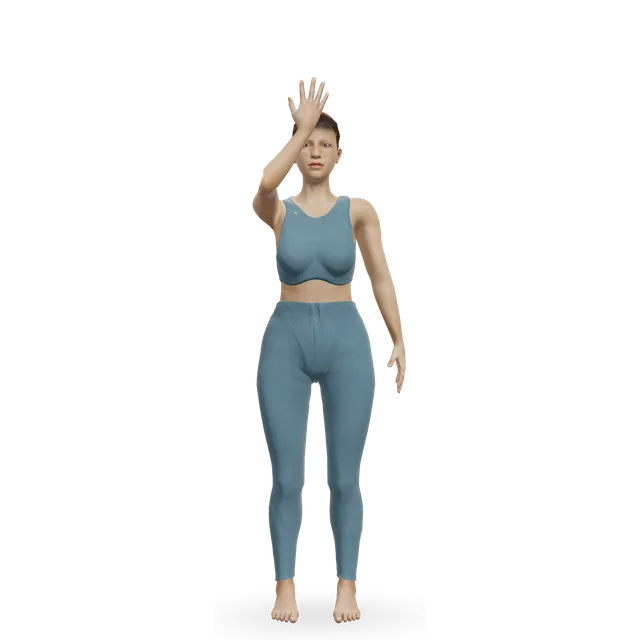
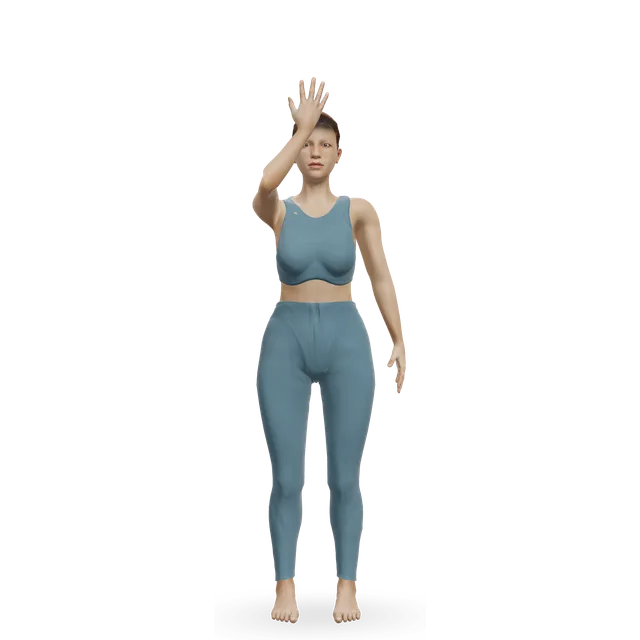
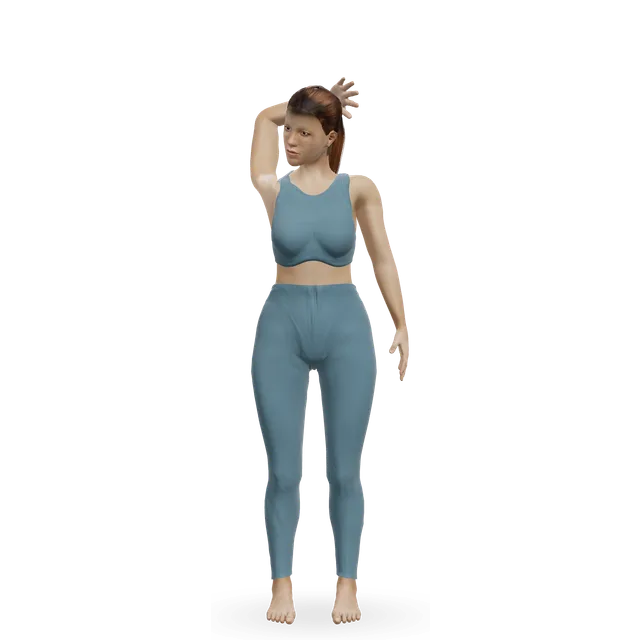
Neck CARs (controlled articular rotations) demonstrated on the 3D figure3D demoNeck CARs (controlled articular rotations)Beginner · No equipment

Separate turns, tilts and chin-to-chest nods rather than full circles, each held for 2 seconds: 2 to 3 at a time, every hour, adding 1 or 2 every few days towards about 10 · NHS inform's pacing, not the move page's full circles. For a stiff neck, the NHS flexibility exercises' neck turn (held for 5 seconds, 3 times each side, at least twice a week) suits too. Stop if a turn makes you dizzy, as the move page and the PMRGCAuk booklet say; with a trapped nerve, skip looking up and turning towards the sore side if they bring on arm symptoms (our pinched nerve guide)

Harder: Rabbit pose (Sasangasana)

Chin tuck demonstrated on the 3D figure3D demoChin tuckBeginner · No equipment

5 to 10 slow repetitions with a 5-second hold, 2 to 3 times a day · As in our neck pain guide (editorial). Draw the chin straight back without nodding, as the move page says

Easier: Lying chin tuck · Harder: Isometric neck holds (four-way)

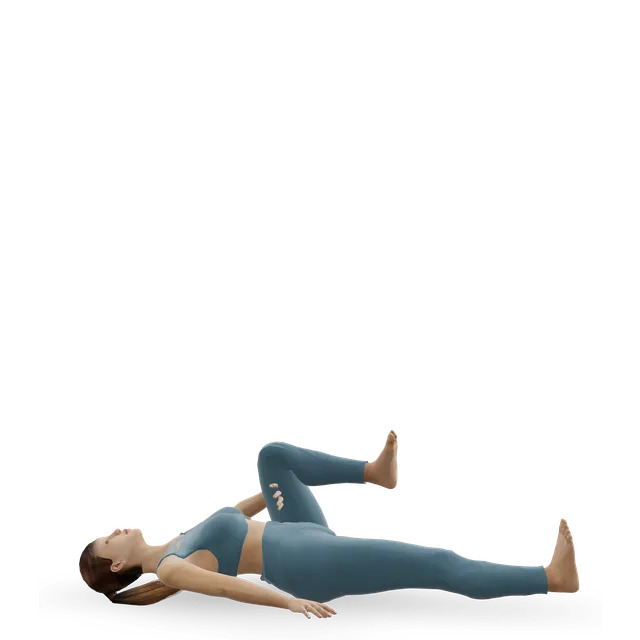
Lying chin tuck demonstrated on the 3D figure3D demoLying chin tuckBeginner · No equipment

5 to 10 gentle holds of up to 10 seconds, once or twice a day · As in our neck pain guide (editorial), with the back of your head resting on the floor or a thin folded towel, as the move page describes. NHS inform's cervical spondylosis exercises include a similar lying head press into the pillow, held for a few seconds

Harder: Chin tuck

Shoulder rolls demonstrated on the 3D figure3D demoShoulder rollsBeginner · No equipment

10 to 15 slow circles each way, once or twice through · The move page's dose, an editorial starting point

Harder: Shoulder CARs (controlled articular rotations)

Thoracic rotation demonstrated on the 3D figure3D demoThoracic rotationBeginner · No equipment

6 rotations each side, sitting, moving with the breath · The move page's dose. The NHS sitting exercises' upper-body twist holds for 5 seconds, 5 times each side

Easier: Side-lying open book · Harder: World's greatest stretch

Treadmill walking demonstrated on the 3D figure3D demoTreadmill walkingBeginner · Cardio machine

10 to 20 minutes a day at a comfortable pace · As in our neck pain guide (editorial); walking outdoors counts the same. The NHS asks adults aged 65 and over to be active every day

Harder: Treadmill jogging

Move on when: Turning, tilting and nodding feel easier, and your neck is no worse the next morning (our neck pain guide's check, editorial).

Follow along: a timer, a cue and the next move, one step at a time.
Stage 2

Build endurance and strength

About weeks 2 to 6: neck and upper-body strength 2 or 3 days a week, leg strength at least twice a week, and the stage 1 movements daily. Endurance for the neck muscles and strength for the shoulder blades and upper back, which have the best evidence, with leg strength for getting up and staying steady. Each dose is a starting point that names its source or says editorial.

Isometric neck press, front and back demonstrated on the 3D figure3D demoIsometric neck press, front and backBeginner · No equipment

Build to a 10-second press, 3 times each way, for 3 rounds, starting with light pressure · The move page's dose, which it credits to an NHS leaflet. Build the pressure slowly, never push suddenly, and ease off if a press brings on a headache, as the move page says

Easier: Chin tuck · Harder: Chin tuck with head lift

Isometric neck press, sides demonstrated on the 3D figure3D demoIsometric neck press, sidesBeginner · No equipment

The same: build to a 10-second press, 3 times each side, for 3 rounds · The move page's dose, from the same NHS leaflet

Easier: Chin tuck · Harder: Chin tuck with head lift

Chin tuck with head lift demonstrated on the 3D figure3D demoChin tuck with head liftIntermediate · No equipment

3 to 5 holds of 5 seconds, building to 10 holds of 10 seconds, once lying chin tucks are comfortable · As in our neck pain guide (editorial). Lift the head only about a finger's width, and stop if the chin pokes forward, as the move page says

Easier: Chin tuck

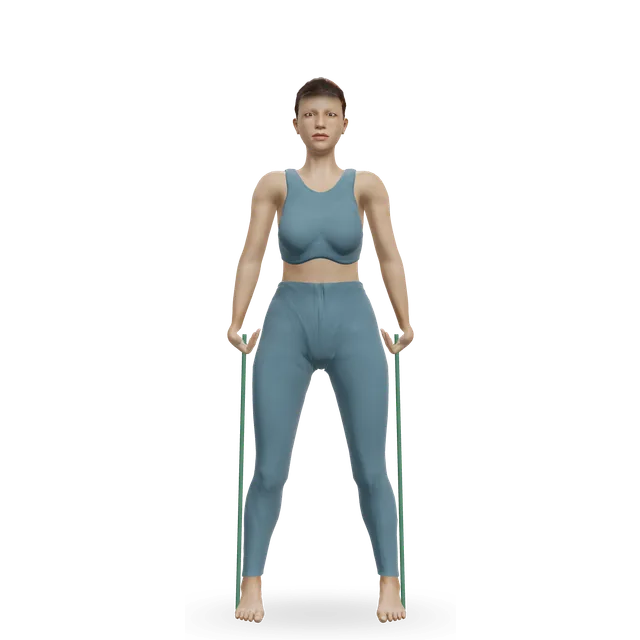
Band row demonstrated on the 3D figure3D demoBand rowBeginner · A band + An anchor point

3 sets of 10 to 15, stopping 2 to 3 repetitions short of failure · The move page's dose, an editorial starting point. Anchor the band to something that can't move, as the move page says

Harder: Supported single-arm dumbbell row

Seated upper-back lift (sit tall, shoulders back) demonstrated on the 3D figure3D demoSeated upper-back lift (sit tall, shoulders back)Beginner · A bench or box

3 to 5 repetitions, each held for 3 to 5 seconds, at least twice a week · The move page's dose, from UK consensus statements on exercise for people with thin bones. It suits a rounding upper back; stop if it brings on sharp pain, or pain that spreads round the ribs, as the move page says

Easier: Elbows back · Harder: Prone Y-T-W raises

Sit to stand from a chair demonstrated on the 3D figure3D demoSit to stand from a chairBeginner · A bench or box

5 slow repetitions, looking forward rather than down, building to 3 sets of 8 to 10 · The start is the NHS strength exercises' ("The slower the repetitions, the better"); the build is editorial. Use a firm chair that can't slide or tip, as the move page says

Easier: Sit to stand, pushing on the thighs · Harder: Bodyweight squat

Move on when: Every set passes the pain rule and your neck has settled by the next morning, and you can stand up 10 times without using your hands (editorial).

Follow along: a timer, a cue and the next move, one step at a time.
Stage 3

Stronger and steadier, then everyday life in full

From about week 6: 2 strength days and balance work on at least 2 days a week, then keep going. The shoulder and upper-back strength from the trapezius trials in our neck pain guide, balance for falls, and everything you did before, one thing at a time. Add a little load or a harder option every week or two while the pain rule holds (editorial). Longer drives, reading, gardening, bowls, golf, swimming, dancing and travel come back one at a time, a little less than before at first, adding a little every week or two while the pain rule holds (editorial); front crawl turns the neck to breathe, and our neck pain when swimming guide has the options. Keep building towards the NHS's 150 minutes a week of moderate activity, with strength and balance on at least 2 days; a class or a falls service programme can help you keep going, and NICE asks for falls programmes that are progressive and tailored.

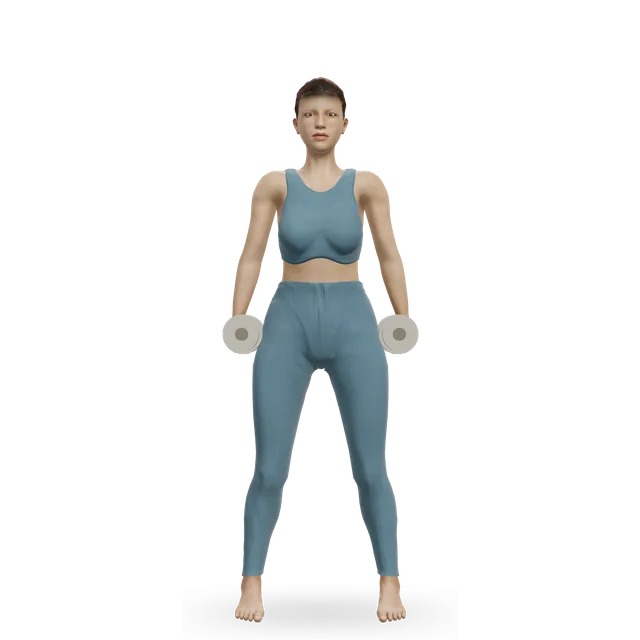
Dumbbell shrug demonstrated on the 3D figure3D demoDumbbell shrugBeginner · A dumbbell

2 to 3 sets of 8 to 12, pausing for a second at the top · The move page's dose, an editorial starting point. Lighten it if shrugging brings on headaches or arm tingling, as the move page says

Harder: Snatch shrug

Supported single-arm dumbbell row demonstrated on the 3D figure3D demoSupported single-arm dumbbell rowIntermediate · A dumbbell + A bench or box

3 sets of 8 to 12 each side, with one hand on a stable bench or a sturdy chair · As in our neck pain guide (editorial). Keep your back still rather than twisting, as the move page says

Easier: Incline ring row · Harder: Bent-over barbell row

Band lateral raise demonstrated on the 3D figure3D demoBand lateral raiseBeginner · A band

2 minutes a day, 5 days a week, moving to a stronger band as it gets easier · As in our neck pain guide, from a workplace trial in working-age adults; editorial for later life. Lift to about shoulder height, as the move page shows

Harder: Dumbbell lateral raise

Side-stepping (sideways walking) demonstrated on the 3D figure3D demoSide-stepping (sideways walking)Beginner · A wall

10 steps each way, next to a counter · The move page's dose, from the NHS balance exercises

Harder: Lateral band walk

Tandem stance and heel-to-toe walk demonstrated on the 3D figure3D demoTandem stance and heel-to-toe walkBeginner · A wall

At least 5 heel-to-toe steps beside a wall, looking forward, moving away from the wall as you improve · The NHS balance exercises' dose. Walk beside a wall or rail if you've fallen in the past year, as the move page says

Easier: Semi-tandem stance · Harder: Single-leg stand

Get up and down from the floor demonstrated on the 3D figure3D demoGet up and down from the floorBeginner · No equipment

5 to 8 slow cycles down and up, changing the leading leg · The move page's dose, an editorial starting point. The first few times, have someone with you and a sturdy chair close by, as the move page says. On hands and knees, keep your head in line with your back rather than looking up (our suggestion). The NHS's steps for getting up after a fall are in the written steps below

Easier: Sit to stand from a chair · Harder: Bodyweight get-up

Move on when: Our suggestion: a normal week of activity passes the pain rule. Then keep 2 strength days a week, with the stage 1 movements on busy desk or driving days. Neck pain often comes back, so drop back a stage for a week or two after a flare rather than stopping.

Follow along: a timer, a cue and the next move, one step at a time.

What to change for now

A flare: the first days (written steps)

Our 3D figure can't show these. Each step names its source.

  • 1. Take paracetamol or ibuprofen, or use ibuprofen gel on your neck (the NHS). Ask a pharmacist first if ibuprofen may not suit you, for example with a stomach ulcer, asthma, or a heart, liver or kidney condition (the NHS).
  • 2. Put a pack of frozen peas wrapped in a tea towel on your neck for 5 minutes, 3 times a day, or a hot water bottle wrapped in a tea towel for 20 minutes, 2 to 3 times a day (the NHS). Never put heat or ice straight on your skin, leave a few hours between treatments, and use neither if you have problems with circulation or feeling (NHS inform).
  • 3. Move your neck for short periods every hour, avoid staying in one position for too long, and keep up your usual activities, even at a slower pace (NHS inform).
  • 4. Don't wear a neck collar unless a doctor tells you to: it's better to keep your neck moving (the NHS).

Sources 54, 73, 8, 52

Pillows and sleep (written steps)

Each step names its source.

  • 1. Use a low, firm pillow and a firm mattress, keep your head at the same height as the rest of your body, don't sleep on your front, and don't twist your neck in bed (the NHS).
  • 2. If your pillow feels too firm or thick, change the number or position of your pillows so they fill the natural hollow between your neck and shoulders; a soft or moulded pillow, or a supportive roll inside the pillowcase, may help (Arthritis UK).
  • 3. If pain at night stops you getting to sleep, a painkiller such as paracetamol before bed can ease it for long enough to fall asleep (Arthritis UK).
  • 4. The NHS and Arthritis UK differ on how firm a pillow should be, so choose what keeps your head level and comfortable (editorial). Our neck pain from sleeping guide goes further.

Sources 54, 9

Sitting, screens, reading and the phone (written steps)

Each step names its source.

  • 1. Don't keep your neck in the same position for a long time, for example at a desk (the NHS). The CSP says posture plays a much smaller role than once thought, so changing position often matters more than holding a perfect one.
  • 2. Sit in a firm, upright chair rather than a low, soft sofa, with your feet flat on the floor and your knees slightly lower than your hips (Arthritis UK).
  • 3. Put a book or papers on a reading frame, check that your desk and screen aren't so low that your head is bent forward for long, and get up regularly to stretch and walk around (Arthritis UK).
  • 4. Don't cradle the phone between your ear and shoulder: use a headset, or hold the phone (Arthritis UK).
  • 5. If you tip your head back to read through the lower part of varifocal or bifocal glasses, or crane forward to see a screen, mention it at your next eye test (our suggestion; we found no study of glasses and neck pain).

Sources 54, 9, 5

Driving (written steps)

Each step names its source.

  • 1. Don't do anything that could be dangerous because you can't move your neck, such as driving (the NHS).
  • 2. Before you set off, adjust your seat, mirrors and head restraint (the Highway Code), and make sure the headrest isn't too low or pushed too far back (Arthritis UK).
  • 3. Before moving off, use all your mirrors, then look round to check the blind spots, the areas the mirrors don't show. When reversing, get someone to guide you if you can't see clearly (the Highway Code). Turning your shoulders with your head as you look round is our suggestion.
  • 4. You must tell the Driver and Vehicle Licensing Agency (DVLA) if a spinal condition affects your ability to drive, and check with your doctor before you drive again after spinal surgery (GOV.UK). The Highway Code says you must report any health condition likely to affect your driving.

Sources 54, 79, 9, 80, 81

Staying active, and work (written steps)

Each step names its source.

  • 1. Be active every day, even if it's just light activity, break up long spells of sitting, and do activities that improve strength, balance and flexibility on at least 2 days a week (the NHS's advice for adults aged 65 and over).
  • 2. If you work, you don't need to be free of pain and other symptoms to go back, and staying at or returning to work is usually the best way to get better (NHS inform).

Sources 69, 52

If you fall, and around the home (written steps)

These come from the NHS falls page, as in our hip and back pain in older adults guides.

  • 1. If you fall, try to stay calm, and take a couple of minutes to check for pain or injury. If you feel able to get up, take your time: roll onto your side, push up onto your hands and knees, crawl to something stable such as a heavy piece of furniture, put one foot flat on the floor and stand up slowly, holding on, then sit down and rest.
  • 2. If you can't get up, use a phone or personal alarm, or shout or bang on a wall or the floor for help; keep warm, keep moving gently, and try to change position about every 30 minutes. If someone else has fallen, keep them comfortable and warm, but don't try to lift them yourself.
  • 3. Call 999 if someone has fallen and may have hurt the head, back, neck or hip, or can't get up; get help from NHS 111 if they may be in pain, injured or unwell; and see a GP after a fall or if you're worried about your balance. In some areas you can refer yourself to a falls service.
  • 4. Around the home: shoes or slippers that fit well, don't slip off and grip; a personal alarm or a mobile phone with you; a non-slip mat in the bath or shower; rails on steps and grab rails in the bathroom; less clutter and nothing to trip on, such as loose wires or rugs; and help with tasks you find difficult, such as lifting or reaching. Your local council can do a free care needs assessment, including changes to make your home safer.
  • 5. Have regular eye tests, get your ears and hearing checked, as ear problems can affect your balance, and speak to a GP or pharmacist if you think your medicines could be affecting your balance (the NHS). Practising getting down to the floor and back up is the plan's last stage.

Source 72

Positions to swap, and why

Habit or positionWhy it mattersInstead
Wearing a soft collar for everyday neck painThe NHS says don't wear one unless a doctor tells you to, NHS inform doesn't recommend one, and the OPTIMa guideline says clinicians shouldn't offer one.Small neck movements, little and often.Try: Neck CARs (controlled articular rotations)
Holding the neck still until it stops hurtingNHS inform says move it for short periods every hour and keep up your activities.The stage 1 moves, such as chin tucks.Try: Chin tuck
Driving when you can't turn your head to check the blind spotsThe NHS says don't do anything that could be dangerous because you can't move your neck, such as driving, and the Highway Code asks you to look round before moving off.Wait until you can turn safely; turning the upper back helps.Try: Thoracic rotation
Full neck circles, or turning or tipping the head back into dizzinessThe PMRGCAuk booklet says stop neck turns that make you dizzy, NHS inform says see a GP for neck pain with dizziness, and Arthritis UK says blackouts need medical advice.Small, separate turns, tilts and nods within comfort, as in stage 1.
Neck manipulation with clumsy hands, unsteady walking or thin bonesA BMJ review says it is "strictly contraindicated" with pressure on the spinal cord, and Arthritis UK says some therapies won't be recommended with osteoporosis.Get assessed first; strength work such as the neck presses.Try: Isometric neck press, front and back
HeadstandIts move page says it isn't for anyone with neck problems.Leave it out; the seated upper-back lift works the upper back without loading the neck.Try: Seated upper-back lift (sit tall, shoulders back)
Shoulderstand and ploughTheir move pages say leave them out with a neck problem, and with osteoporosis, as the body's weight rests on a rounded neck and upper back.Leave them out; the seated upper-back lift instead.Try: Seated upper-back lift (sit tall, shoulders back)
Rolling or massaging the neck with a roller stick, ball or massage gunIts move page says rolling the neck isn't recommended as a treatment, and notes rare case reports of neck artery tears after massage balls or a massage gun were used on the neck.Work on the upper back and the tops of the shoulders instead.Try: Thoracic rotation
Cradling the phone between your ear and shoulderArthritis UK advises against it.A headset, or hold the phone.
Reading with your head bent down, or using a low screen, for long spellsArthritis UK suggests a reading frame, and a desk and screen that aren't too low.Raise the page or screen, take breaks, and do a few chin tucks.Try: Chin tuck
Sleeping on your front, or on a stack of high, firm pillowsThe NHS says don't sleep on your front and keep your head level with your body; Arthritis UK warns that a pillow that is too firm or thick can make neck pain worse.On your back or side with your head level, and lying chin tucks.Try: Lying chin tuck
Putting clumsy hands or unsteady walking down to agePeople often put the signs of pressure on the spinal cord down to getting older, and longer delays in diagnosis go with more disability.A same-day check with a GP or NHS 111 (the warning signs).
A scan to find the cause of ordinary neck painThe changes are common without pain, and NHS inform says scans won't change treatment for most people.Let the warning signs decide when a scan is needed.
Anti-inflammatory tablets for weeks without adviceArthritis UK suggests a short course of about 5 to 10 days and a pharmacist's check for interactions, such as with warfarin; the NHS lists who ibuprofen may not suit.Ask a pharmacist; ibuprofen gel on the neck is another option (the NHS).

Routines to follow

Neck and shoulder strength routine

Deep neck holds and shoulder-blade strength in under 20 minutes: one of the best-supported kinds of exercise for a stiff, sore neck.

18 minBeginner11 movesA band, An anchor point

Neck and shoulder stretches

Eight gentle neck and shoulder stretches for desk stiffness, done standing or seated in ten minutes.

10 minBeginner8 movesA wall

Chair exercises for seniors: a seated workout

A 20-minute seated workout for older adults who cannot stand for long: marching, leg and arm strength, posture, and sit-to-stands that lead back to standing.

20 minBeginner11 movesA bench or box, Something with weight

Strength and balance exercises for seniors

A 40-minute strength and balance session for over-65s, built from the Otago home programme and NHS exercises, using a chair, a counter and a step.

40 minBeginner18 movesA bench or box, Something with weight

Polymyalgia rheumatica exercises: daily stretches, then strength and balance

The stretches and light strength moves from a polymyalgia rheumatica self-help booklet written with patients, plus balance practice, built up slowly.

15 minBeginner15 movesA dumbbell, A bench or box

Seated chair yoga: 15 minutes, no standing

A 15-minute chair yoga routine done entirely sitting: slow breathing, neck, shoulder and wrist stretches, seated twists and side bends, and a calm finish.

15 minBeginner16 movesA bench or box

Balance exercises routine

Balance practice in 10 minutes: tandem stance, single-leg stands, marches, heel walks, tree pose and floor transfers.

10 minBeginner7 movesA wall, A bench or box

More moves for this area

Questions people ask

Why does my neck hurt more as I get older?

The joints and discs of the neck change with age (cervical spondylosis, or neck osteoarthritis), and the NHS calls this a normal part of ageing that often causes no symptoms. Surveys of people over 60 don't show neck pain rising steadily with age, but pain that limits daily life does become more common. Keeping the neck moving and the neck and shoulder muscles strong is the main treatment at any age, though most of the trials were in younger adults.

Is neck pain in older people just arthritis?

Usually it's ordinary neck pain alongside the neck's age-related changes, but a trapped nerve, pressure on the spinal cord, polymyalgia rheumatica, a broken neck after a fall and, less often, the heart, an infection or cancer can cause it too. Each has its own clues, and the warning signs say when to get help quickly. Scan changes are common without pain, so a scan report on its own doesn't explain the pain.

When should I worry about neck pain in later life?

Call 999 for new problems walking, loss of bladder or bowel control, a sudden loss of coordination, chest pain spreading to the neck or jaw, or severe neck pain or a head you can't move after a fall. Get help the same day for clumsy or numb hands, or unsteady walking, that is getting worse, and (our suggestion) for new neck pain after even a minor fall at 65 or over. A new headache with jaw pain when eating, or problems with your sight, needs a GP or NHS 111 immediately. These are uncommon, and most neck pain in later life isn't serious.

What are the signs of pressure on the spinal cord in the neck?

Clumsy hands (doing up buttons, using keys or writing), numb hands, unsteady walking or more falls, bladder changes and, in severe cases, electric-shock feelings down the spine when you bend your neck, often getting slowly worse over months. Scan studies estimate that about 2% of adults have it, most of them undiagnosed, and people often put the signs down to getting older. Slowly worsening signs need an urgent GP appointment or NHS 111 the same day, and sudden ones need 999.

Can polymyalgia rheumatica or giant cell arteritis cause neck pain?

Polymyalgia rheumatica causes pain and stiffness around the shoulders, neck and hips that lasts more than 45 minutes each morning, mostly in people over 65: see a GP if it lasts more than a week. Up to 1 in 5 people with it develop giant cell arteritis, the NHS says, whose signs are a new headache, a tender scalp, jaw pain when eating or talking, or sight problems: contact a GP immediately or NHS 111, and call 999 if you suddenly can't see. Fast treatment protects sight.

Can neck or jaw pain be a heart problem?

Sometimes. Chest pain that spreads to the neck or jaw is a 999 call, and pain in the neck or jaw that comes on with effort and eases after a few minutes' rest can be angina, which needs NHS 111. Women with a heart attack or unstable angina more often have neck or jaw pain than men, though chest pain is still the commonest symptom in both.

Can a minor fall break your neck?

It can in later life: NICE counts being 65 or over as a high risk for a broken neck after an injury, and in one large US series, more than half of neck fractures in people 65 and over followed a fall from standing height. A spine stiffened by ankylosing spondylitis can break after a minor knock. Call 999 for severe neck pain or if you can't move your head; otherwise, our suggestion is a same-day check after a fall at 65 or over, through NHS 111 or A&E.

Do I need an X-ray or MRI scan?

Usually not: NHS inform says scans won't change treatment for most people, and the changes show on the scans of most people over 60 without pain. A scan matters after an injury at 65 or over (NICE asks for a CT scan within 1 hour when a neck injury is suspected with a head injury), for signs of spinal cord pressure (an MRI scan), and when surgery is being considered for a trapped nerve.

What are the best neck exercises for older adults?

Gentle neck movements little and often, then neck holds and shoulder and upper-back strengthening, which had the best evidence for long-lasting neck pain, though mostly in younger adults. Start small: NHS inform begins with 2 to 3 movements at a time, every hour, and the NHS flexibility exercises hold a neck turn for 5 seconds, 3 times each side. Add balance work at least twice a week to stay steady; the plan above shows each move in 3D.

What pillow and sleeping position help neck pain?

The NHS suggests a low, firm pillow, your head level with the rest of your body, and not sleeping on your front. Arthritis UK warns that a pillow that is too firm or thick can make neck pain worse, and suggests filling the hollow between your neck and shoulders. No pillow has been shown to be clearly best, so choose what keeps your head level and comfortable.

Can I drive with a stiff or painful neck?

Not if you can't turn your head well enough to look round: the NHS says don't do anything that could be dangerous because you can't move your neck, such as driving, and the Highway Code asks you to check your blind spots before moving off. Tell the DVLA if a spinal condition affects your driving, and check with your doctor before driving after spinal surgery.

Which painkillers are safe, and will I need an injection or surgery?

The NHS suggests paracetamol or ibuprofen, or ibuprofen gel on the neck, but ibuprofen may not suit people with a stomach ulcer, asthma, or a heart, liver or kidney condition, so ask a pharmacist. Arthritis UK says an injection may help in a very small minority of cases, and the NHS considers surgery only for a pinched nerve or a problem with the spinal cord. Exercise and staying active come first.

Related exercise guides

Other pain guides

Sources

  1. GBD 2021 Neck Pain Collaborators 2024 · Global burden of neck pain, 1990 to 2020 (Lancet Rheumatology)
  2. Fejer 2012 · Does back and neck pain become more common as you get older? (systematic review of 12 population studies, Chiropr Man Therap)
  3. Hartvigsen 2004 · Back and neck pain in 4,486 Danish twins aged 70 to 102 (population study, Spine)
  4. Thomas 2004 · Pain and how much it interferes with life in 7,878 adults aged 50 and over (population survey, Pain)
  5. Chartered Society of Physiotherapy · Causes of neck pain (web page, last reviewed 2019)
  6. Webb 2003 · Intense, long-lasting and disabling neck and back pain in the UK population (survey of 5,752 adults, Spine)
  7. NHS · Cervical spondylosis (past its review date: reviewed August 2023, review due August 2026)
  8. NHS inform · Cervical spondylosis
  9. Arthritis UK · Neck pain: symptoms, causes, treatment and related conditions (web page)
  10. Gore 1986 · Neck X-ray findings in 200 people without symptoms aged 20 to 65 (X-ray study, Spine)
  11. Nakashima 2015 · Neck MRI findings in 1,211 people without symptoms (cross-sectional study, Spine)
  12. Matsumoto 1998 · Neck disc MRI findings in 497 people without symptoms (MRI study, J Bone Joint Surg Br)
  13. Gore 1987 · Neck pain followed for 10 years or more in 205 people (follow-up study, Spine)
  14. Gore 2001 · Neck X-ray changes in people without symptoms: a 10-year follow-up of 159 people (follow-up study, Spine)
  15. Radhakrishnan 1994 · A pinched nerve in the neck in a Minnesota population, 1976 to 1990 (population study, Brain)
  16. Kuijper 2009 · Collar or physiotherapy vs wait and see for recent cervical radiculopathy (RCT, BMJ)
  17. Wong 2014 · The course of a trapped nerve from a neck disc (systematic review, Spine J)
  18. Davies 2018 · Degenerative cervical myelopathy (clinical review, BMJ)
  19. Smith 2021 · How often MRI scans show a pressed spinal cord in the neck, with and without symptoms: 19 studies (systematic review and meta-analysis, Global Spine J)
  20. Grodzinski 2023 · Most degenerative cervical myelopathy in the UK is undiagnosed, especially in older people (modelling study, J Neurol)
  21. Pope 2020 · Delays in diagnosing degenerative cervical myelopathy, and the disability that follows (online survey, Spine)
  22. Fehlings 2017 · Guideline for managing degenerative cervical myelopathy (clinical practice guideline, Global Spine J)
  23. NHS · Rheumatoid arthritis: complications (past its review date: reviewed March 2023, review due March 2026)
  24. NHS · Polymyalgia rheumatica (past its review date: reviewed April 2023, review due April 2026)
  25. Partington 2018 · Polymyalgia rheumatica in the UK over two decades (population study, Ann Rheum Dis)
  26. Toyoda 2026 · The British Society for Rheumatology guideline for treating polymyalgia rheumatica (guideline, Rheumatology)
  27. Dasgupta 2012 · Classification criteria for polymyalgia rheumatica, with a cohort of 125 people (EULAR/ACR study, Ann Rheum Dis)
  28. Smeeth 2006 · Polymyalgia rheumatica and temporal arteritis diagnosed in UK general practice, 1990 to 2001 (population study, Ann Rheum Dis)
  29. Petri 2015 · Giant cell arteritis in UK general practice: how often it is diagnosed and who gets it (population study, Arthritis Care Res)
  30. NHS · Temporal arteritis (past its review date: reviewed August 2023, review due August 2026)
  31. NHS · Vision loss
  32. NICE NG41 · Spinal injury: assessment and initial management (2016)
  33. Stiell 2001 · The Canadian C-spine rule for neck imaging after injury (JAMA)
  34. NICE NG232 · Head injury: assessment and early management (2023)
  35. NHS inform · Neck injury
  36. Lomoschitz 2002 · Neck injuries in 149 people aged 65 and over: how age and the cause of injury shape them (retrospective study, AJR Am J Roentgenol)
  37. Radmard 2024 · Neck fractures in people younger or older than 65 on 21,986 emergency CT scans (retrospective study, AJNR Am J Neuroradiol)
  38. Kannus 2007 · The rise in neck injuries from falls in Finnish adults aged 50 and over, 1970 to 2004 (national registry study, J Gerontol A Biol Sci Med Sci)
  39. Westerveld 2009 · Spinal fractures in people whose spines are stiffened by ankylosing spondylitis or a similar condition (systematic review of 93 articles, Eur Spine J)
  40. NHS · Heart attack
  41. NHS · Angina
  42. van Oosterhout 2020 · Symptoms of a heart attack or unstable angina in women and men compared: 27 studies (systematic review and meta-analysis, J Am Heart Assoc)
  43. Hamdan 2025 · Crowned dens syndrome in 196 reported cases: its features and why it is missed (systematic review and meta-analysis, Rheumatol Int)
  44. Aouba 2004 · Crowned dens syndrome mistaken for polymyalgia rheumatica, giant cell arteritis, meningitis or spinal infection: 8 cases (case series, Rheumatology)
  45. Dor 2025 · Calcium deposits at the top of the neck on CT scans of 195 people with neck pain (retrospective study, J Clin Med)
  46. Kehrer 2014 · Spinal infection over 14 years in a Danish county (population study, J Infect)
  47. Mylona 2009 · Infection of the spinal bones: clinical features (systematic review, Semin Arthritis Rheum)
  48. NICE NG12 · Suspected cancer: recognition and referral (2015, updated 2026)
  49. NHS · Symptoms of myeloma
  50. NHS · Swollen glands (past its review date: reviewed September 2023, review due September 2026)
  51. Brandão 2025 · Treatments for dropped head syndrome (systematic review and meta-analysis, Neurosurg Rev)
  52. NHS inform · Neck problems
  53. Carroll 2008 · The course of neck pain in the general population (Bone and Joint Decade Task Force review, Spine)
  54. NHS · Neck pain (past its review date: reviewed April 2023, review due April 2026)
  55. Côté 2016 · Management of neck pain and associated disorders: the OPTIMa guideline (Eur Spine J)
  56. NHS inform · Exercises for neck problems (including how to tell if you are exercising at the right level)
  57. NHS inform · Exercises for cervical spondylosis
  58. NHS · Flexibility exercises
  59. NHS · Sitting exercises
  60. Arthritis UK · Exercises for the neck (web page)
  61. Gross 2015 · Exercises for mechanical neck disorders (Cochrane review)
  62. de Zoete 2020 · Exercise types for chronic neck pain compared (network meta-analysis of 40 RCTs, BJSM)
  63. Alshehri 2025 · Neck muscle strength, pain and balance in 93 older adults with long-lasting neck pain and 93 without (cross-sectional study, BMC Geriatr)
  64. Maiers 2014 · Spinal manipulation and exercise for long-lasting neck pain in 241 people aged 65 and over (RCT, Spine J)
  65. Kong 2022 · Traditional Chinese exercises for neck pain in middle-aged and older people: 21 trials (systematic review and meta-analysis, Front Aging Neurosci)
  66. Shin 2020 · Heat plus neck stabilisation exercise for long-lasting neck pain in 35 older adults (RCT, Int J Environ Res Public Health)
  67. Sherrington 2019 · Exercise for preventing falls in older people living in the community (Cochrane review)
  68. NICE NG249 · Falls: assessment and prevention in older people and in people 50 and over at higher risk (2025)
  69. NHS · Physical activity guidelines for older adults
  70. NHS · Strength exercises
  71. NHS · Balance exercises
  72. NHS · Falls
  73. NHS · Ibuprofen for adults
  74. Engquist 2013 · Surgery plus physiotherapy vs physiotherapy alone for cervical radiculopathy (RCT, Spine)
  75. Mackie 2020 · British Society for Rheumatology guideline on diagnosing and treating giant cell arteritis (guideline summary, Rheumatology)
  76. Mukhtyar 2026 · 2025 EULAR recommendations for managing polymyalgia rheumatica and large vessel vasculitis (recommendations, Ann Rheum Dis)
  77. Patil 2015 · A fast-track pathway reduces sight loss in giant cell arteritis (observational cohort study, Clin Exp Rheumatol)
  78. PMRGCAuk · Maintaining movement, activity and exercise with PMR: a self-help guide (booklet written with patients and health professionals, 2024)
  79. GOV.UK (Department for Transport) · The Highway Code: rules for drivers and motorcyclists, rules 89 to 102 (guidance)
  80. GOV.UK (Department for Transport) · The Highway Code: using the road, rules 159 to 203 (guidance)
  81. GOV.UK (Driver and Vehicle Licensing Agency) · Spinal conditions, injuries or spinal surgery and driving (guidance)
  82. NHS · Symptoms of a stroke
  83. NHS · Meningitis
  84. Gregson 2022 · UK clinical guideline for the prevention and treatment of osteoporosis (NOGG guideline, Arch Osteoporos)

Exercise education, not a diagnosis or treatment plan. It is written from the guidelines and studies listed above; review by a clinician is pending. If your pain follows an injury, is severe, is getting worse, or comes with any warning sign listed on this page, get it assessed. Health disclaimer.