Pain guide · Shoulder pain

Shoulder pain in older adults: rotator cuff tears, frozen shoulder, arthritis, falls and what helps

Shoulder pain is common in later life, and it usually comes from the rotator cuff, the group of tendons that lifts and turns the arm. Tears in those tendons become common with age and often cause no pain at all, so a tear on a scan isn't always the answer, and most shoulders improve with exercise, which is the first treatment at any age. A stiff shoulder (frozen shoulder) and arthritis of the joint are the next most common causes; polymyalgia rheumatica, a break after a fall and, rarely, the heart or the lung can show up as shoulder pain too, and each has its own clues.

Some shoulder pain needs help first: call 999 or go to accident and emergency (A&E) if a fall leaves your shoulder looking out of place or you can't move your arm, and call 999 for shoulder or arm pain with chest pain that feels tight or spreads to your arms, neck or jaw. Both shoulders stiff for more than 45 minutes each morning needs your general practitioner (GP), and with a new headache, jaw pain when eating or a change in your sight, contact a GP or the National Health Service's 111 line (NHS 111) immediately. This guide covers the causes and how common each is, what helps (exercise, painkillers, injections and surgery), reaching, carrying and sleep, falls, and a three-stage plan with 3D demos.

When to get help first

Exercise is for pain that has been checked or is clearly mild and settling.

Get urgent medical help if

  • Call 999 or go to A&E: after a fall or injury, your shoulder looks out of place or has changed shape, you cannot move your arm, or your shoulder is painful, bruised or swollen. Do not drive yourself, and do not try to put it back in yourself.
  • Call 999 or go to A&E after an injury (don't drive yourself) if the arm, wrist or hand is numb, tingling or has pins and needles; a bone is sticking out or a bad cut is bleeding heavily; or the arm or wrist has changed colour or shape, or is at an odd angle.
  • Call 999 if you or someone else has fallen and may have hurt the head, back, neck or hip, or cannot get up. Get help from NHS 111 after a fall if you may be in pain, injured or unwell.
  • Call 999: shoulder or arm pain with chest pain that feels tight or squeezing, or chest pain that spreads to your arms, neck or jaw, especially with shortness of breath, sweating or feeling sick. It could be a heart attack.
  • Get help from NHS 111: pain or tightness in your chest, neck, shoulders, jaw or arms that comes and goes, often brought on by exercise, stress, emotion or cold and easing after a few minutes' rest. It can be angina, a sign of a heart problem.
  • Call 999: you suddenly can't fully lift both arms and keep them there, because of weakness or numbness in one arm, especially if one side of your face droops or you slur your words or sound confused. It could be a stroke. Call even if the signs have stopped.
  • Same day (GP or NHS 111): sudden weakness lifting the arm after an injury or fall. A rotator cuff tear caused by an injury needs urgent referral to a shoulder specialist. After a dislocation in anyone over 40, the rotator cuff should be checked: about 40% have a tear.
  • Contact a GP immediately, go to 111.nhs.uk or call NHS 111: a new or frequent headache that usually comes on suddenly (your scalp may also feel sore or tender), pain in the jaw muscles or tongue when eating or talking, or problems with your sight, such as double vision or loss of vision in 1 or both eyes. With pain and stiffness around the shoulders, these can be signs of temporal arteritis (giant cell arteritis), which up to 1 in 5 people with polymyalgia rheumatica develop. If you suddenly can't see from 1 or both eyes, call 999 or go to A&E.
  • Same day (GP or NHS 111): the shoulder or arm is hot, swollen or red, or you have a high temperature (although not everyone has one) or feel unwell. A joint infection needs same-day care.
  • Same day (GP or NHS 111): sudden or very bad shoulder pain; you cannot move your arm; the arm or shoulder is badly swollen or has changed shape; pins and needles that do not go away; no feeling in the arm; the arm is hot or cold to the touch; pain that started after an injury such as a fall; or severe pain in both shoulders.
  • Go to A&E (call 999 if you can't get there, and don't drive yourself): after a fall, a clunk or an awkward movement, your shoulder looks out of place or has changed shape, or you suddenly can't move your arm. A replacement, especially a reverse one, can dislocate. Don't try to put it back in yourself.
  • A high temperature, or feeling hot, cold or shivery; or a wound that is red, hot, swollen or oozing: contact your surgical team, ask for an urgent GP appointment or get help from NHS 111. These can be signs of an infection. If you feel unwell and the wound looks infected, go to A&E.

See a doctor or physiotherapist if

  • Pain that is getting worse or has not improved after 2 weeks of looking after it yourself, or it is very hard to move your arm. In many areas you can refer yourself to physiotherapy.
  • See a GP if you have pain and stiffness for more than a week, especially if you're over 50, it's in both shoulders (often the neck and hips too) and the stiffness lasts longer than 45 minutes in the morning. It can be polymyalgia rheumatica.
  • A past history of cancer, an unexplained lump or swelling, weight loss, or pain that is constant and does not ease when you change position.
  • You smoke or used to, and have shoulder pain with a cough that will not go away, breathlessness or weight loss. See a GP if you've had a cough for longer than 3 weeks; if you've coughed up blood, ask for an urgent GP appointment or get help from NHS 111.
  • You are 60 or over with bone pain in your hips, back, ribs or shoulders that won't go away, especially with tiredness, feeling very thirsty or weight loss: see a GP. The National Institute for Health and Care Excellence (NICE) asks GPs to offer blood tests for myeloma in people 60 and over with persistent bone pain.
  • Pins and needles or a cold arm alongside neck pain, or a new loss of strength or feeling in the arm that you cannot explain (a possible nerve problem).
  • You're 50 or over and broke your shoulder or arm in a fall from standing height or less: ask your GP about a bone health check and a falls assessment.
  • Sudden new back pain after a minor fall, lift, cough or sneeze, from 50 or past the menopause, or if you take long-term steroid tablets; or height loss, a curved spine or a change in posture: see a GP. It can be a spinal fracture.
  • Any fall or near-fall, new unsteadiness, or a new fear of falling: ask about a falls assessment.
  • A rotator cuff tear, or weakness lifting the arm, that isn't clearly better after about 12 weeks of exercise, or strength that is getting worse: ask your GP or physiotherapist about a specialist opinion. This is our suggestion: in a large study of exercise for tears that came on without an injury, most people who chose surgery did so between 6 and 12 weeks.

Where does it hurt?

Location narrows the likely causes; it does not diagnose.

The outside of the shoulder and upper arm, sore lifting the arm, reaching behind or lying on it

Usually the rotator cuff, the commonest cause at any age; movement hurts but isn't blocked.

Read: Shoulder impingement (rotator cuff pain) →
Weakness lifting or turning the arm, or night pain, from your 60s

Possibly a rotator cuff tear, common with age and often painless; many improve with exercise. Sudden weakness after a fall needs checking the same day.

Read: Rotator cuff tear →
A deep ache, stiff in every direction, hard to do up a coat or reach a back pocket

Often a frozen shoulder, most common in your 50s and with diabetes; in later life an X-ray tells it from arthritis.

Read: Frozen shoulder →
An ache, stiffness and grinding that built up over years

Often arthritis of the shoulder joint.

Read: Shoulder arthritis →
On top of the shoulder, at the end of the collarbone

Often the acromioclavicular (AC) joint; changes there are common on scans and often painless.

Read: AC joint injury and pain →
After a fall onto the arm or shoulder, with severe pain, swelling and bruising down the arm

Often a break at the top of the arm bone: get an X-ray the same day. A shoulder out of shape, or an arm you can't move, needs 999 or A&E.

Read: Broken shoulder →
Both shoulders, often the neck and hips, stiff for more than 45 minutes each morning, over 50, tired

Possibly polymyalgia rheumatica: see a GP (the warning signs). Our polymyalgia rheumatica exercise page covers staying active.

At night, or lying on it

Our night guide covers how to sleep and a plan.

Read: Shoulder pain at night →
When you lift your arm or reach up

Our lifting guide covers the painful arc and reaching.

Read: Shoulder pain lifting your arm →
Neck and shoulder together, or tingling into the hand

Often the neck; a trapped nerve brings pins and needles down the arm.

Read: Neck and shoulder pain →
A replaced shoulder that becomes hot, more painful or suddenly can't move

Possibly an infection or a dislocation: see the warning signs. Our shoulder replacement guide covers recovery.

Read: Shoulder replacement →
Shoulder, arm, neck or jaw pain with chest pain, breathlessness or sweating, or that comes on with effort and eases with rest

Possibly the heart: 999, or NHS 111 for pain that comes and goes (the warning signs).

Constant shoulder pain in someone who smokes or used to, with a cough, weight loss or a weak hand

Rarely the top of the lung: see a GP (the warning signs).

A hot, swollen shoulder with a fever

Possibly a joint infection: same-day help (the warning signs).

Shoulder pain in women, including around the menopause

Our women's shoulder guide covers the causes at each stage of life.

Read: Shoulder pain in women →
Neck pain too

Our neck pain in older adults guide covers neck arthritis, a trapped nerve and a plan.

Read: Neck pain in older adults →
Hip, back or knee pain too

Our hip, back and knee pain in older adults guides cover arthritis, walking aids and falls.

Read: Hip pain in older adults →

Understand it

Common in later life, and often not mentionedStrong evidence

About 1 in 5 people over 70 had a shoulder problem in a UK community survey (21% of 644 people; 25% of women and 17% of men), about 70% of them involving the rotator cuff, and fewer than 40% had asked for medical help. About 3% to 4% of people aged 65 and over see a GP about a shoulder each year: in 12 English practices in 2006, 366 men and 398 women in every 10,000 aged 65 to 74 consulted about a shoulder, and 280 men and 343 women aged 75 and over. Across all adults, 2.36% consult each year, a rate that rises through adult life.

Figures vary with how pain is counted: across 18 studies, 6.9% to 26% of people had shoulder pain at the time they were asked and 4.7% to 46.7% at some point in a year, and in a Greater Manchester survey, 16% of adults had shoulder pain lasting more than a week in the past month. In 7,878 adults aged 50 and over in North Staffordshire, pain that got in the way of daily activities became more common with age, even though pain in most parts of the body other than the legs became less common in the oldest groups. In a US community study (average age 68), shoulder symptoms went with other health conditions, low mood and worse function, and lying on the sore side, dressing and reaching are the usual struggles, NHS inform says.

Sources 1, 2, 3, 4, 5, 6, 7, 8, 9

The rotator cuff comes first, and torn cuffs often don't hurtStrong evidence

The rotator cuff is the group of muscles and tendons that holds the top of the arm bone in its socket and lifts and turns the arm. It was involved in about 70% of shoulder problems in people over 70 in the UK survey, and the British Elbow and Shoulder Society's care pathway puts rotator cuff pain at up to 70% of all shoulder pain. It usually hurts at the top and outside of the shoulder and upper arm, worse lifting the arm out or overhead, reaching behind you (into a jacket sleeve) or lying on that side, often with a painful arc partway up. Movement hurts but isn't blocked: someone else can lift your arm higher than you can. It is often called impingement, though Arthritis UK says it comes from overuse or age-related changes in the tendons themselves, not from the tendons being trapped by bone, as was once thought. "As you get older, normal age-related changes can cause your shoulder problem to flare-up now and again, often for no reason," NHS inform says: a reason to keep the shoulder moving and strong, not a sign it is wearing out.

Tears in the rotator cuff become common with age, often without symptoms. In a Japanese village screened by ultrasound (664 people), full-thickness tears were found in 10.7% of people in their 50s, 15.2% in their 60s, 26.5% in their 70s and 36.6% in their 80s, and 65.3% of the tears caused no symptoms: half of those in people in their 50s, and two-thirds over 60. Among 411 German volunteers with no shoulder symptoms, 13%, 20%, 31% and 51% of those in their 50s, 60s, 70s and over 80 had a tear, and 7.6% of 420 Norwegians aged 50 to 79 without symptoms had a full-thickness tear. Across 30 studies (6,112 shoulders), rotator cuff changes rose from 9.7% at 20 and under to 62% at 80 and over, about as often in shoulders without symptoms as with them, which the authors describe as a common part of normal ageing. The exact rates depend on the scan and how a tear is defined.

A tear that doesn't hurt costs little: in one study, shoulders with a painless tear worked only slightly less well than shoulders with an intact cuff, a difference too small to matter. Tears that do cause trouble bring weakness: in a Japanese village study of 683 people, shoulders with a tear were weaker lifting the arm out to the side and turning it outwards. So a tear on a scan isn't proof that it is causing your pain.

Some painless tears start to hurt or grow over a few years, in small, selected groups followed over time: 23 of 45 (51%) became painful over an average of 2.8 years in people with a painful tear in the other shoulder; 44 of 195 people developed pain during yearly checks, and when pain started, 18% of full-thickness tears had grown by more than 5 millimetres; and 18 of 50 painless tears began to hurt over 3 years, and those had grown more (10.6 against 3.3 millimetres on average).

Sources 1, 10, 8, 11, 12, 13, 14, 15, 16, 17, 18, 19, 20, 21, 22

After a fall: a broken shoulder, a dislocation or a torn cuffStrong evidence

Breaks at the top of the arm bone (proximal humerus fractures) are the third commonest fracture from thin bones, after the wrist and the hip. In a Finnish town there were 82 a year for every 100,000 adults (114 in women and 47 in men; 73% were in women), rising with age and peaking in winter, and 78% were treated with a sling. In 1,027 breaks in Edinburgh, most were in older people the authors described as fit, and the rate was highest in women aged 80 to 89. The signs are severe pain, swelling and bruising that can spread down the arm, and not being able to lift it; a numb or tingling arm or hand, or an arm that has changed colour or shape, needs 999 or A&E, the NHS says.

A dislocation brings its own injuries. After one, about 40% of people over 40 have a torn rotator cuff (41% at 40 to 55, 71% at 56 to 70 and 100% over 70 in one study), and about 13.5% have a nerve injury; in 3,633 dislocations (average age 47.6), a third (33.4%) came with a cuff tear or a break of the bony point at the top of the arm bone. A tear caused by an injury needs urgent referral and should ideally be seen at the next available specialist clinic, the UK care pathway says, so sudden weakness lifting the arm after a fall needs a same-day check.

Thin bones make a break from a simple fall more likely. "If you're over 50 and have broken your arm or wrist, a fracture liaison service can help you prevent further broken bones," the NHS says, and the UK osteoporosis guideline asks for anyone with a fracture from thin bones to be checked for an underlying cause (a strong recommendation).

Sources 23, 24, 25, 26, 27, 28, 29, 10, 30

Stiff shoulders: frozen shoulder and arthritisMixed evidence

Frozen shoulder brings a deep ache and stiffness in every direction, especially turning the arm outwards, often worse at night. About 2.4 in every 1,000 people develop it each year and 2% to 5% are affected at some point, typically women aged 45 to 60, with a peak at 56, the 2025 UK frozen shoulder pathway says; in 2,190 people treated for it at a US hospital, the average age was 56.4. People with diabetes are about 5 times as likely to have it, a review of 18 studies found: 13.4% of people with diabetes have it, and 30% of people with frozen shoulder have diabetes. No study gives a rate after 70. The 2015 UK pathway asks for normal X-rays before frozen shoulder is diagnosed, to rule out arthritis, which looks similar; the 2025 update adds that in people over 40, a tumour can rarely be mistaken for frozen shoulder.

Arthritis of the shoulder joint (osteoarthritis) builds up over years, with an ache, stiffness, a grating or crackling feeling and a big loss of turning the arm outwards. On X-ray it was found in 17.4% of 541 Japanese villagers aged 40 and over (20.3% at 65 and over, more with age), in 16.1% of 679 Koreans aged 65 and over (mostly mild) and in 5% of 696 Koreans aged 65 and over graded more strictly, so the figures depend on the definition. It causes 2% to 5% of new shoulder pain in people over 45 seen by a GP, and the X-ray changes match symptoms only weakly.

The joint at the end of the collarbone, the acromioclavicular (AC) joint, changes with age too: arthritis changes were found in 48% of 953 shoulders examined after death and 70% of 210 magnetic resonance imaging (MRI) scans of shoulders without symptoms, more often with age, so a review says the diagnosis "should be made sparingly".

Sources 31, 32, 33, 34, 35, 36, 37, 38, 39, 40, 41, 12, 42

Polymyalgia rheumatica: both shoulders, stiff for hours each morningStrong evidence

Polymyalgia rheumatica causes pain, stiffness and inflammation in the muscles around the shoulders, neck and hips, and its main symptom is morning stiffness that lasts longer than 45 minutes. Most people diagnosed are over 65, it's very rare under 50 and it's more common in women, the NHS says. In 125 people with new polymyalgia rheumatica (average age 71.5), 99% had aching in both shoulders, and morning stiffness lasted a median of 2 hours, against 10 minutes in 52 people with other shoulder problems: the long morning stiffness is the clue.

In the UK, about 96 in every 100,000 people over 40 are diagnosed with it each year, and the lifetime risk was about 2.4% for women and 1.7% for men in a US population. Symptoms "typically respond dramatically" to steroid tablets, the British Society for Rheumatology's 2026 guideline says, and treatment usually lasts 12 months to 2 years (a median of 15.8 months of continuous treatment in UK records). The guideline asks for muscle strengthening and a review of fracture risk, including falls, to start soon after diagnosis, while noting that the evidence for exercise in polymyalgia rheumatica itself is lacking.

Other problems can look like it: shoulder arthritis, frozen shoulder and rotator cuff problems can, and so can calcium crystals, found on ultrasound in 25 of 52 people thought to have polymyalgia rheumatica in a French clinic. Up to 1 in 5 people with polymyalgia rheumatica develop temporal arteritis (giant cell arteritis), the NHS says, while the guideline gives 5% to 10%. Either way, a new headache, scalp tenderness, jaw pain when eating or a change in your sight needs a GP or NHS 111 immediately, and suddenly losing sight in 1 or both eyes needs 999 (the warning signs).

Sources 43, 44, 45, 46, 47, 48, 49, 50

Could it be the heart?Strong evidence

Rarely, shoulder pain comes from the heart. The NHS heart attack page's 999 signs include chest pain that feels tight or like squeezing, and chest pain spreading to your arms, neck or jaw; it doesn't name the shoulder, which is why our warning line ties shoulder or arm pain to chest pain. The NHS angina page does name the shoulders: angina's main symptom is sudden pain in your chest, neck, shoulders, jaw or arms, often brought on by exercise, stress, emotion or cold and easing with rest. Get help from NHS 111 if it comes and goes; the angina page's 999 signs include chest pain that doesn't go away, and pain that spreads to your arm, neck, jaw, shoulder, stomach or back.

In reviews of studies of people seeking care for chest pain, pain that spread to one or both shoulders or arms, or came on with effort, raised the odds of a heart cause 2.3 to 4.7 times, and chest pain spreading to both arms at once raised the odds of a heart attack 7.1 times. These studies were of chest pain, not shoulder pain on its own, and most shoulder pain in later life comes from the shoulder itself.

Sources 51, 52, 53, 54, 1

The lung, an infection, myeloma, a stroke and the neckEmerging evidence

A tumour at the top of the lung (a Pancoast tumour) is rare: 3% to 5% of lung cancers, linked mainly with smoking. Shoulder pain is its most common early symptom, often with pain down the arm, a weak hand or a drooping eyelid, and it is hard to see on a plain chest X-ray; computed tomography (CT) and MRI scans show it better. One case report describes 6 months of treatment for a rotator cuff problem before it was found. The NHS lists chest or shoulder pain among the symptoms of lung cancer, but the National Institute for Health and Care Excellence (NICE) criteria for a chest X-ray or referral from 40 (a cough, tiredness, breathlessness, chest pain, weight loss or loss of appetite, or coughing up blood) don't mention the shoulder. The clue is constant pain that doesn't change with position, in someone who smokes or used to, especially with a cough or weight loss. These figures come from one review and a case report.

A joint infection brings sudden severe pain, difficulty moving the joint, hot, swollen or red skin and usually a high temperature, although not everyone has one. It is rare but much more common in later life: in UK hospitals, infections of natural joints rose from 5.5 to 7.8 per 100,000 people a year between 1998 and 2013, and from 15 to 31 per 100,000 a year in people over 75. Myeloma, a cancer of the bone marrow, can cause bone pain in the back, hips, shoulders or ribs, with tiredness, thirst and weight loss, and NICE asks GPs to offer blood tests to people aged 60 and over with persistent bone pain or an unexplained fracture.

After a stroke, shoulder pain on the weak side is common: 29% of stroke survivors had it within a year in an Australian population study, peaking at 4 months, and 10% to 22% developed it across 18 studies; the stroke team can help. A sudden weak arm, especially with a drooping face or slurred speech, is a 999 call. Pain from the neck is common too, though no study gives a figure for older adults: tingling in the hand or arm with the shoulder pain is likely to come from the neck, Arthritis UK says, and NHS inform says you may feel pains around your shoulder and neck, and into your arm.

Sources 55, 56, 57, 58, 59, 60, 61, 62, 63, 64, 12, 13

When a scan or test helpsStrong evidence

Usually not at first. The NHS and NHS inform start with 2 to 6 weeks of looking after it at home, and the UK care pathway says an ultrasound or MRI scan of the rotator cuff "is rarely indicated in primary care" and that a tear on a scan "does not always correlate with symptoms". Scans find tears in many shoulders that don't hurt (above).

A scan changes what happens in some cases: an X-ray after a fall, for a break or a dislocation; X-rays when shoulder pain isn't improving with treatment, and before diagnosing frozen shoulder, to rule out arthritis; an ultrasound or MRI scan promptly for sudden weakness after an injury, and after a dislocation in anyone over 40, because a tear from an injury does best with early specialist review; and scans of the cuff in specialist care when surgery is being considered. Blood tests for inflammation help when polymyalgia rheumatica is suspected, and NICE's blood tests for myeloma are for people aged 60 and over with persistent bone pain. A tumour at the top of the lung can hide behind the collarbone on a plain chest X-ray, and CT shows it better. A suspected joint infection needs tests in hospital.

Sources 65, 13, 10, 17, 25, 27, 35, 28, 47, 58, 55, 59

How it usually goesEmerging evidence

"You usually need to do these things for 2 weeks before shoulder pain starts to ease. It can take 6 months or longer to recover from shoulder pain," the NHS says, and NHS inform says that in many cases a new pain or a flare should begin to settle within 6 weeks. In the GRASP trial of rotator cuff pain (708 adults), every group improved substantially over a year, and in a study of 452 people with tears that came on without an injury, physiotherapy worked for about 75% at 2 years.

Frozen shoulder takes months to years. In 223 people followed for an average of 4.4 years, 59% had normal or near-normal shoulders and 41% still had some symptoms, 94% of them mild, and a review found no evidence that it passes through set phases to a full recovery on its own. NHS inform says most people improve, but it can take more than 2 years, and longer with diabetes or thyroid problems.

After a broken shoulder, the sling or collar and cuff usually stays on for about 6 to 12 weeks, and most of the recovery comes in the first 6 weeks, an NHS trust says; movement can take 3 months or longer to come back, and strength up to a year. The bone's first healing takes about 3 to 6 weeks, another trust says. Polymyalgia rheumatica usually needs steroids for 12 months to 2 years. No one can promise a timescale.

Sources 65, 13, 66, 67, 68, 69, 9, 26, 70, 43, 45
What helps, and how strong the evidence is

Exercise first: one good advice session and a home programmeStrong evidence

In the UK's GRASP trial, 708 adults with rotator cuff pain (average age 55.5) had either one session of best practice advice with a home exercise programme or up to 6 physiotherapy sessions of progressive exercise over 16 weeks. Over 12 months the extra sessions did no better, every group improved substantially, there were no serious harms, and the results didn't differ for people aged 65 and over, a group the trial looked at separately. A specific programme for the cuff and shoulder-blade muscles, in 102 people aged 30 to 65 on waiting lists for surgery, did better than general exercises: 69% against 24% reported success, and 20% against 63% went on to choose surgery.

Adding hands-on treatment (manual therapy) to exercise has weak support: across 60 trials of 3,620 people the evidence was mostly low quality, and in the one high-quality trial against a placebo (120 people), pain fell 6.8 points more out of 100, a difference that could have been chance, and 57% against 41% reported success. Most of these trials recruited people in their 50s and 60s and few over 70, so the plan borrows their structure for later life.

Health-service doses start small. NHS inform's shoulder exercises start with 2 to 3 repetitions at a time, practised every hour, adding 1 or 2 every few days, then sets of 8, 2 to 3 times a day, up to a maximum of 2 sets of 15. Arthritis UK's band exercise for turning the arm outwards holds for a count of 10, 10 times, 3 times a day, and the NHS strength exercises' wall press-up is 3 sets of 5 to 10, at least twice a week. The NHS says don't stop using the shoulder completely, as "this can stop it getting better", and don't make up your own strenuous exercises or use heavy gym equipment.

Sources 66, 71, 72, 73, 74, 75, 65

A worn cuff tear: surgery or physiotherapy?Mixed evidence

The two longest trials disagree. In a Finnish trial of 180 shoulders in people over 55 (average age 65) with small tears that came on without an injury, physiotherapy alone, physiotherapy with an operation to shave the bone above the tendon (acromioplasty), and repair with acromioplasty and physiotherapy did equally well at 1 year, 2 years and an average of 6.2 years (150 shoulders, average age 71 by then). Only 8 shoulders in the physiotherapy group crossed over to repair, and surgery didn't protect against arthritis. No 10-year report was found.

A Norwegian trial of 103 adults who were younger (average ages 59 and 61 in its two groups) and had larger tears, up to 3 centimetres, found repair ahead at 1 year, by an amount that was "small and may be below clinical importance" at 5 years, still ahead at 10 years, and ahead by 11.8 points on a 100-point shoulder score and 1.8 centimetres on a 10-centimetre pain scale at 15 years. In that trial, 15 of 51 people in the physiotherapy group crossed over to surgery, and the unrepaired tears grew from 16.2 to 31.6 millimetres on average.

A Cochrane review of 9 trials (1,007 people, average ages 56 to 68), mostly of small worn tears, found that at a year surgery "probably provides little or no improvement in pain" (0.87 points better on a 0 to 10 scale; moderate certainty) and improved function by about 6 points out of 100 (low certainty); it may not apply to tears from an injury or to large tears. In a study of 452 people with tears that came on without an injury, treated with physiotherapy, fewer than 1 in 4 chose surgery, mostly between 6 and 12 weeks, and the programme worked for about 75% at 2 years, though there was no comparison group. So exercise first is reasonable at any age, with a specialist opinion if the shoulder isn't clearly better after about 12 weeks; a tear from an injury is different (above).

Sources 76, 77, 78, 79, 80, 81, 82, 83, 67

Decompression surgery: no better than placebo surgeryStrong evidence

An operation to shave bone from under the roof of the shoulder (subacromial decompression) is meant to make room for the tendon. In the UK's CSAW trial (313 people), it did no better than a keyhole look inside the joint alone, and both were better than no treatment by amounts that weren't clinically important. In the Finnish FIMPACT trial (210 people aged 35 to 65), it did no better than placebo surgery at 2 or 5 years, or than exercise at 5 years. An international guideline panel makes a "strong recommendation against surgery", though the NHS shoulder impingement page still lists it as an option.

Sources 84, 85, 86, 87, 11

Steroid injections: modest and short-livedStrong evidence

For rotator cuff pain, a steroid injection gave a "modest improvement in shoulder pain and function at 8 weeks" in GRASP, and no long-term benefit. The UK care pathway allows no more than two, because evidence is emerging that repeated frequent injections may damage the tendons, and NHS inform says injections help the pain but "won't cure your condition or reduce shoulder stiffness". For frozen shoulder, an injection into the joint was the one treatment clearly better in the short term across 65 studies of 4,097 people (by about 1 point on a 10-point pain scale), and the 2025 UK frozen shoulder pathway finds strong evidence that one improves symptoms faster than waiting. For arthritis, NICE says consider an injection into the joint when other medicines haven't helped, or to support exercise, explaining that the relief lasts 2 to 10 weeks.

Sources 66, 10, 8, 88, 31, 89

Frozen shoulder: gentle movement, and procedures add littleStrong evidence

In the UK FROST trial (503 adults), early structured physiotherapy with a steroid injection, manipulation under anaesthetic and keyhole release of the joint capsule scored 37.2, 38.3 and 40.3 out of 48 on a shoulder score at 12 months, differences too small to matter, and keyhole release had more serious side effects (8, against 2 with manipulation). The NHS says avoid movements that cause pain and only move the shoulder gently, and our frozen shoulder guide matches the exercises to how irritable the shoulder is; its plan comes first.

Sources 90, 88, 34

Arthritis of the shoulder: no shoulder trials, so NICE's general adviceMixed evidence

No trial has tested physiotherapist-led care without surgery for shoulder arthritis: a 2026 review found 4 trials, all around surgery. A US physiotherapy guideline says, as expert opinion, that physiotherapy "may benefit" people who haven't had a shoulder replacement. So the advice rests on NICE's osteoarthritis guideline, which covers all joints: exercise is a core treatment, joint pain may rise when you start and regular exercise still helps, and paracetamol and weak opioids aren't routinely offered. The UK shoulder surgeons' 2016 care pathway reported "strong evidence" for regular paracetamol, which NICE's 2022 guideline doesn't follow.

NICE suggests considering referral for a hip, knee or shoulder replacement when symptoms substantially affect your quality of life and non-surgical treatment isn't working or isn't suitable, and says no one should be ruled out because of their age. The National Joint Registry recorded 11,365 first-time shoulder replacements in 2025, and a reverse replacement, in which the ball and socket swap places, is the type used when the rotator cuff is torn or not working.

Sources 91, 92, 89, 39, 93

Painkillers: NICE's order, and care with ageStrong evidence

For osteoarthritis in joints other than the knee, such as the shoulder, NICE says consider an anti-inflammatory gel, then an anti-inflammatory tablet at the lowest dose for the shortest time, with a medicine to protect the stomach, taking account of age and the risks to the stomach, kidneys, liver and heart; it doesn't routinely offer paracetamol or weak opioids. For shoulder pain in general, the NHS suggests painkillers like paracetamol and ibuprofen so you can keep moving, and a pharmacist can help you choose. Ibuprofen may not suit you if you have or have had a stomach ulcer, or have asthma, a heart, liver or kidney condition or have had a stroke, and a gel or spray has fewer side effects, the NHS says; Arthritis UK says don't use painkillers for more than 2 weeks without asking for advice.

Sources 89, 65, 94, 12

A broken shoulder: a sling does as well as surgery for mostStrong evidence

In the UK's PROFHER trial (250 adults, average age 66, 77% women, with displaced breaks at the top of the arm bone), surgery gave no better shoulder scores over 2 years (39.07 against 38.32 out of 48), and no difference in complications, further operations or deaths, and the results were the same at 5 years. Across 10 trials of 717 people, there was high-certainty evidence of no important difference in function at a year, and low-certainty evidence of more further operations after surgery (about 38 more for every 1,000 people). From 50, ask about a bone health check: the NHS points to a fracture liaison service, and the UK osteoporosis guideline asks for a check for an underlying cause after any break from thin bones.

Sources 95, 96, 97, 25, 30

A massive tear that can't be repaired: a front-of-shoulder programmeEmerging evidence

When a large tear can't be repaired, the front of the deltoid muscle over the shoulder can learn to lift the arm. Success with physiotherapy programmes ranged from 32% to 96% in studies without comparison groups, and there are no trials. In 10 people (average age 75.5), a front-of-shoulder (anterior deltoid) programme improved a 12 to 60 shoulder score by an average of 9 points at 12 weeks, again with no comparison group. An NHS trust's leaflet asks for its programme at least 3 times a day for at least 3 months, set up by a physiotherapist (the written steps below). A reverse shoulder replacement is kept for arthritis that follows a cuff tear, or for older people whose cuff is torn or not working.

Sources 98, 99, 100, 39

Strength and balance exercise prevents fallsStrong evidence

A broken shoulder usually follows a fall. Across trials whose participants averaged 76 years old, exercise cut the rate of falls by 23% (59 trials, 12,981 people) and the number of people falling by 15% (63 trials, 13,518 people), both high-certainty evidence, and balance and functional exercises cut the rate of falls by 24%. NICE asks for falls programmes that are progressive and tailored, and the NHS advises adults aged 65 and over to do activities that improve strength, balance and flexibility on at least 2 days a week, alongside 150 minutes of moderate activity a week.

Sources 101, 102, 103, 24

How much pain is OK while you exercise?

Up to about 5 out of 10 while strengthening, back to its usual level by your next session; a frozen shoulder stays gentleEmerging evidence

During shoulder strengthening, pain up to about 5 out of 10 is acceptable, and a little is expected. By your next session it should be back to where it was before. If it isn't, use a lighter band or weight or a smaller range next time, not nothing.

This is how the Holmgren trial set each person's load: pain was not allowed above 5 out of 10 during the exercises, and any increase had to settle before the next session. NHS inform's shoulder exercise scale agrees: 0 to 3 is minimal pain, 4 to 5 acceptable and 6 to 10 excessive, and "your pain should be no worse the morning after you've exercised", though new exercises can cause short-term muscle pain that should ease quickly. For arthritis, NICE says joint pain may go up when you start exercising, and regular exercise still helps. The trial recruited people aged 30 to 65, and the rule hasn't been tested on its own in later life.

There are exceptions. A frozen shoulder stays gentle, to mild discomfort, matched to how irritable it is: the NHS says avoid movements that cause pain and only move the shoulder gently, and our frozen shoulder guide's rule applies. After a broken shoulder, your fracture team's plan and our broken shoulder guide's rule (no forcing at first) come first, and with polymyalgia rheumatica, our exercise page's pacing applies.

Sudden weakness, a shoulder that slips or clunks, tingling that spreads down the arm, or a hot, swollen shoulder isn't a pain-rule question (the warning signs). Pain or tightness in the chest, shoulders, neck, jaw or arms that comes on with effort means stop, and follow the angina line in the warning signs.

Sources 71, 73, 89, 34, 26, 52

The exercise plan: 3 stages

Start at the first stage. Each move opens a full guide with a 3D demo.

Stage 1

Settle: keep it moving, and wake up the cuff

About weeks 1 to 2: gentle movement daily, light strength 2 or 3 days a week, and walking on most days. Keep the shoulder moving without stirring it up, start light rotator cuff and shoulder-blade work within the pain rule, keep walking, and set up your home (the written steps below). New to exercise, or in a flare? NHS inform starts with 2 to 3 repetitions at a time, practised every hour, adding 1 or 2 every few days. Do every standing move next to a kitchen counter, a sturdy chair or a wall. With any warning sign, get checked first; with a known diagnosis (a frozen shoulder, a cuff tear, a broken shoulder, a shoulder replacement or polymyalgia rheumatica), that guide's plan or your team's comes first. No trial has tested this plan as a whole: it keeps the stages and doses of our shoulder pain and night guides, starts lower, as NHS inform does, and adds leg strength and balance for falls.

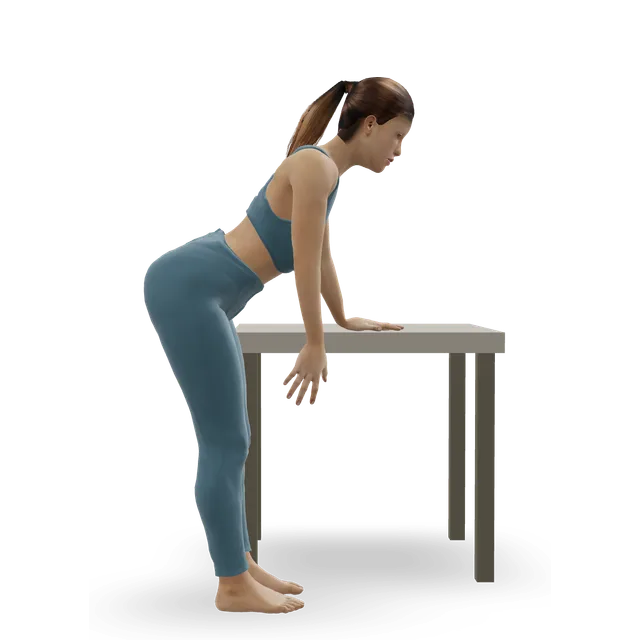
Pendulum exercise (Codman's pendulum) demonstrated on the 3D figure3D demoPendulum exercise (Codman's pendulum)Beginner · A bench or box

About 1 minute (10 small circles each way), 2 to 3 times a day · The move page's dose, an editorial starting point; NHS inform's shoulder exercises include pendulum swings, leaning on a table or chair. Stand up slowly if you feel light-headed, as the move page says. With poor balance, leave them out, as our broken shoulder guide does, and use the table slide instead

Harder: Table slide (seated forward reach)

Table slide (seated forward reach) demonstrated on the 3D figure3D demoTable slide (seated forward reach)Beginner · A bench or box

10 slow repetitions, 1 to 3 times a day · The move page's dose, an editorial starting point; Arthritis UK's table slide holds for 5 seconds at the far end. Done sitting, so it suits unsteady balance. Stay pain-free in the very painful stage of a frozen shoulder, as the move page says

Easier: Pendulum exercise (Codman's pendulum) · Harder: Overhead lat stretch at a bench (elbows on the bench)

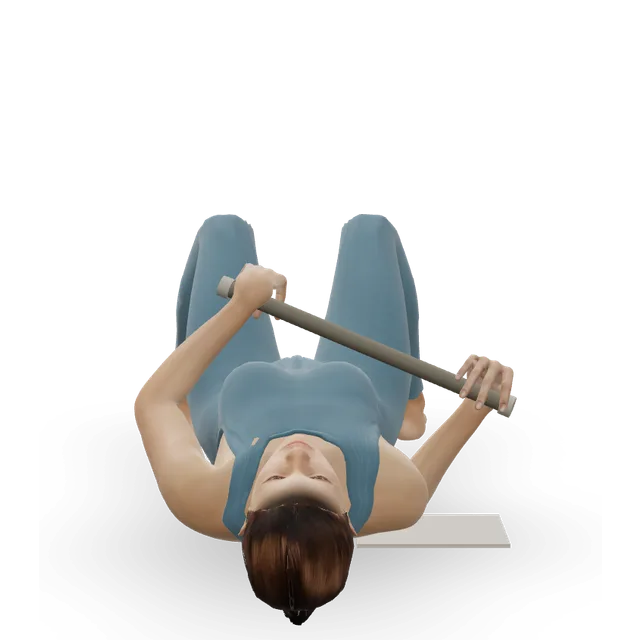
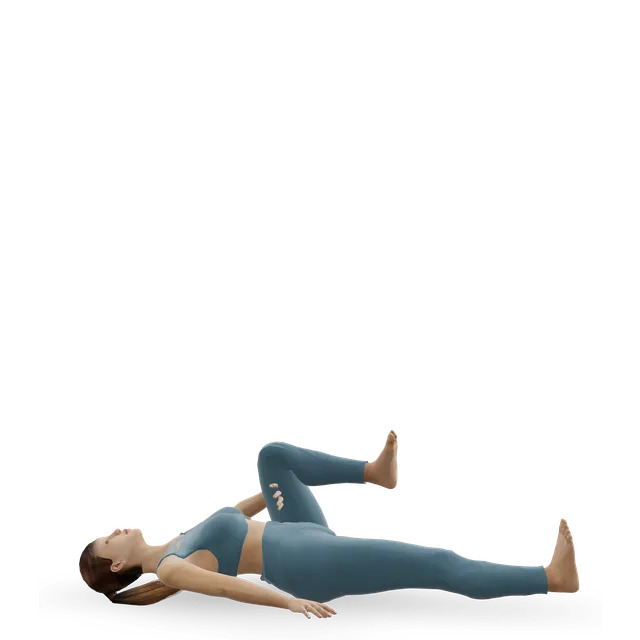
Stick-assisted external rotation (lying) demonstrated on the 3D figure3D demoStick-assisted external rotation (lying)Beginner · Other / check instructions

10 slow repetitions, pain-free, twice a day, lying on your bed with your knees bent · The move page's dose for a very irritable shoulder, an editorial starting point. Turning the arm outwards is the movement a stiff shoulder loses first

Harder: Standing band external rotation

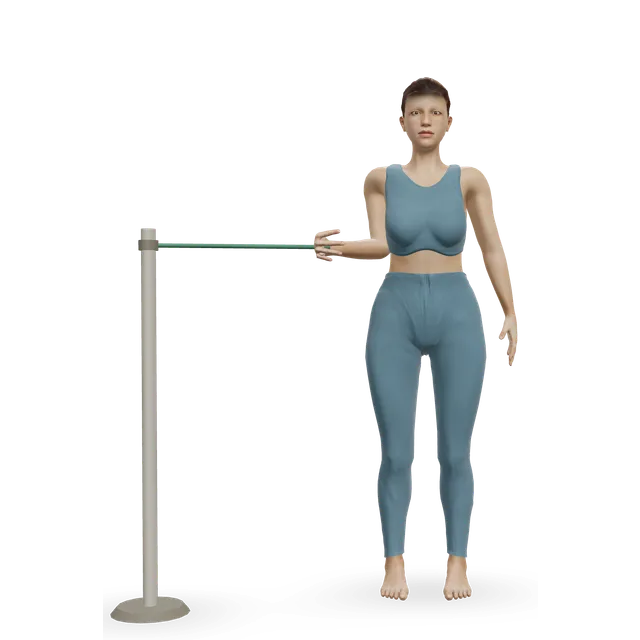
Standing band external rotation demonstrated on the 3D figure3D demoStanding band external rotationBeginner · A band + An anchor point

Lightest band, elbow at your side: 2 sets of 5 to 8, building to 2 sets of 10 to 15 · The end point is our shoulder pain guide's first-stage dose; the lower start is editorial. Arthritis UK's version holds for a count of 10, 10 times, 3 times a day

Easier: Stick-assisted external rotation (lying) · Harder: Side-lying external rotation

Band row demonstrated on the 3D figure3D demoBand rowBeginner · A band + An anchor point

2 sets of 12 to 15 with a light band · As in our shoulder pain guide (editorial); the move page's own dose, 3 sets of 10 to 15, is the next step once this is easy. Check the band and its anchor before every set, as the move page says

Harder: Supported single-arm dumbbell row

Treadmill walking demonstrated on the 3D figure3D demoTreadmill walkingBeginner · Cardio machine

10 to 20 minutes most days, arms swinging naturally · As in our shoulder pain guide (editorial); walking outdoors counts the same

Harder: Treadmill jogging

Move on when: Daily tasks feel a little easier, nights are settling, and the shoulder is back to its usual level by your next session (the pain rule).

Follow along: a timer, a cue and the next move, one step at a time.
Stage 2

Build: cuff, shoulder-blade and leg strength

About weeks 2 to 6: strength 2 or 3 days a week, and balance 3 or more days a week (editorial, as our hip pain in older adults guide does). Strengthen the rotator cuff and shoulder blade for reaching and lifting, and the legs and balance for falls. Balance and functional exercises cut the rate of falls by 24% in a Cochrane review (high certainty), the NHS advises strength and balance activities on at least 2 days a week, and NICE asks for falls programmes that are progressive and tailored.

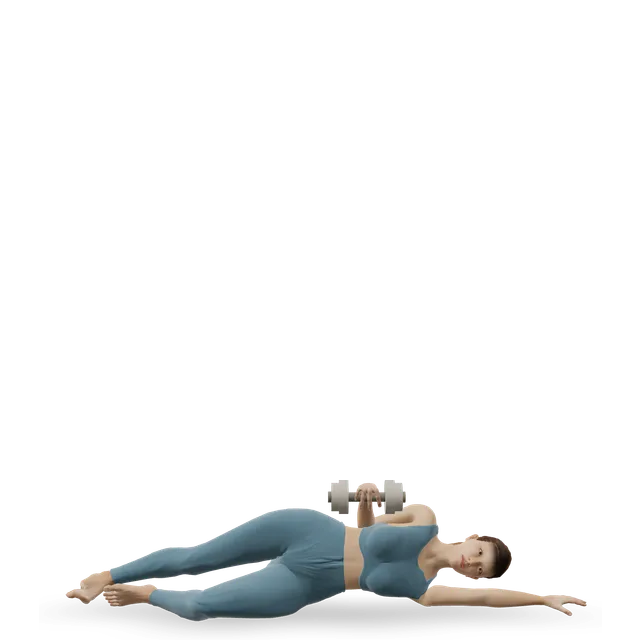
Side-lying dumbbell external rotation (on a bench) demonstrated on the 3D figure3D demoSide-lying dumbbell external rotation (on a bench)Beginner · A dumbbell + A bench or box

Lying on your good side, without a weight until the movement is easy, then a light one (a tin of beans works): 8 to 15 repetitions, working up to 3 sets · The move page's dose, from NHS Ayrshire & Arran; NHS inform's side-lying version builds to a maximum of 2 sets of 15. Lying on the other side suits a shoulder you can't lie on

Easier: Standing band external rotation · Harder: Incline reverse fly with external rotation

Band internal rotation demonstrated on the 3D figure3D demoBand internal rotationBeginner · A band + An anchor point

2 sets of 10 to 15 with a light band · As in our broken shoulder guide (editorial)

Harder: Side-lying external rotation

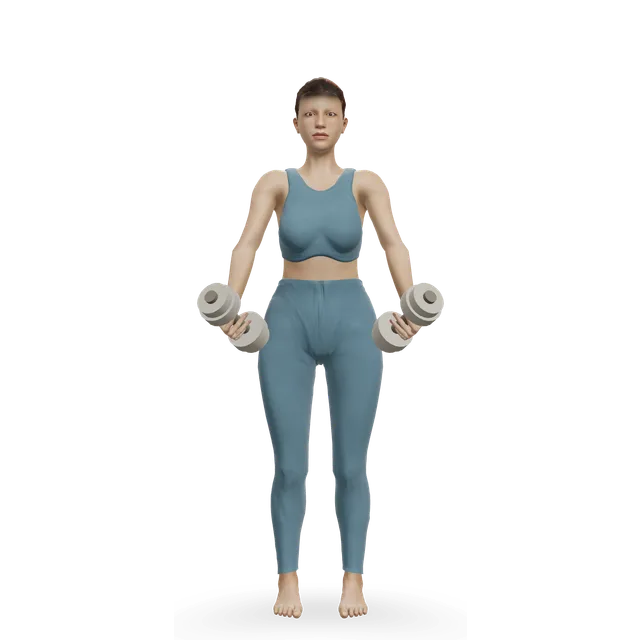
Scaption raise demonstrated on the 3D figure3D demoScaption raiseBeginner · A dumbbell

2 sets of 8, thumbs up, to shoulder height, lowering over 3 seconds, building to 3 sets of 10 to 15 · As in our shoulder pain at night guide (editorial); stop below any painful arc

Easier: Band lateral raise · Harder: Smith machine upright row

Wall push-up demonstrated on the 3D figure3D demoWall push-upBeginner · A wall

3 sets of 5 to 10, at least twice a week · The NHS strength exercises' wall press-up dose

Harder: Push-up

Sit to stand from a chair demonstrated on the 3D figure3D demoSit to stand from a chairBeginner · A bench or box

5 slow repetitions from a firm chair, building to 3 sets of 8 to 12 · The NHS strength exercises aim for 5 ("The slower the repetitions, the better"); the build is editorial, as in our hip pain in older adults guide. Push up with your legs, not the sore arm (editorial), and use a firm chair that can't slide or tip, as the move page says

Easier: Sit to stand, pushing on the thighs · Harder: Bodyweight squat

Side-stepping (sideways walking) demonstrated on the 3D figure3D demoSide-stepping (sideways walking)Beginner · A wall

10 steps each way, next to a counter · The move page's dose, from the NHS balance exercises. Keep a hand on the counter if you feel unsteady, as the move page says

Harder: Lateral band walk

Move on when: You can lift the arm to shoulder height with control, every set passes the pain rule, and you can do 12 sit-to-stands without your hands (editorial).

Follow along: a timer, a cue and the next move, one step at a time.
Stage 3

Strengthen, then full days back

From about week 6: 2 strength days and 3 balance sessions a week (editorial), then keep going. Pressing, pulling and carrying strength for shopping, cupboards and the garden, and steadier balance. Add a little load or a harder option every week or two while the shoulder stays within the pain rule (editorial, as our shoulder pain guide does). Everyday life then comes back in full, one activity at a time (editorial, as our shoulder pain guide does): reaching into higher cupboards, carrying shopping, gardening, decorating, swimming, bowls, golf and racket sports, each a little less than before at first, adding a little every week or two while the shoulder stays within the pain rule. The NHS's 150 minutes a week of moderate activity, with strength and balance on at least 2 days, is the long-term aim.

Shoulder press with a band demonstrated on the 3D figure3D demoShoulder press with a bandBeginner · A band

3 sets of 8 to 12, once reaching overhead is comfortable · As in our shoulder pain guide (editorial)

Harder: Push press

Chest-supported dumbbell row demonstrated on the 3D figure3D demoChest-supported dumbbell rowBeginner · A dumbbell + A bench or box

3 sets of 8 to 12 with light dumbbells · As in our shoulder pain guide (editorial); raise the incline if the pad presses on your ribs, as the move page says

Harder: Supported single-arm dumbbell row

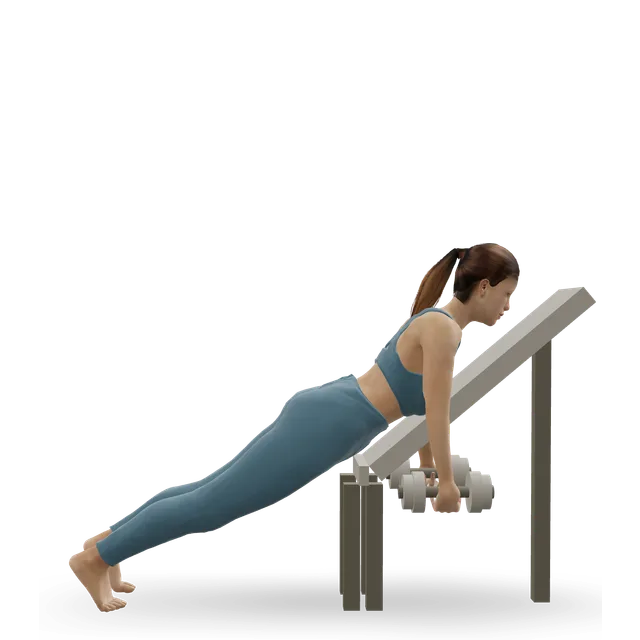
Incline push-up demonstrated on the 3D figure3D demoIncline push-upBeginner · A bench or box

3 sets of 8 to 12 against a kitchen counter · As in our shoulder pain guide (editorial); check the counter takes your weight and can't slide, as the move page says

Easier: Wall push-up · Harder: Push-up

Farmer's carry demonstrated on the 3D figure3D demoFarmer's carryIntermediate · A dumbbell + A kettlebell

3 walks of 20 to 30 m with a light weight in each hand · As in our broken shoulder guide (editorial): practice for shopping bags

Harder: Suitcase carry

Tandem stance and heel-to-toe walk demonstrated on the 3D figure3D demoTandem stance and heel-to-toe walkBeginner · A wall

Hold 10 to 30 seconds with a hand on the worktop, then without; then 10 heel-to-toe steps · As in our broken shoulder guide (editorial); walk beside a wall or rail if you've fallen in the past year, as the move page says

Easier: Semi-tandem stance · Harder: Single-leg stand

Get up and down from the floor demonstrated on the 3D figure3D demoGet up and down from the floorBeginner · No equipment

5 to 8 slow cycles down and up, changing the leading leg · The move page's dose, an editorial starting point. The first few times, have someone with you and a sturdy chair close by, as the move page says, and push up with the good arm if the sore one isn't ready (editorial). The NHS's steps for getting up after a fall are in the written steps below

Easier: Sit to stand from a chair · Harder: Bodyweight get-up

Move on when: Our suggestion: a normal week of activity passes the pain rule. Keep two strength days a week for the long term (the NHS suggests shoulder exercises for 6 to 8 weeks "to stop pain returning"), and drop back a stage for a week or two after a flare.

Follow along: a timer, a cue and the next move, one step at a time.

What to change for now

A flare: the first 48 hours (written steps)

Our 3D figure can't show these. Each step names its source.

  • 1. In the first 24 to 48 hours, reduce your activities but move as much as your symptoms allow, rest the arm in a supported position if it's comfortable, and move the shoulder gently for 10 to 20 seconds every hour while you're awake. After 48 hours, try to use the shoulder more (NHS inform).
  • 2. Heat or cold, whichever helps: a pack of frozen peas wrapped in a tea towel for up to 20 minutes, 3 times a day, or a hot water bottle wrapped in a tea towel for up to 20 minutes, 2 to 3 times a day (the NHS), leaving a few hours in between (NHS inform).
  • 3. Pain relief so you can keep moving: the NHS suggests painkillers like paracetamol and ibuprofen, and a pharmacist can suggest the best one, which might be tablets or a cream or gel. For arthritis, NICE's order is in the evidence above.
  • 4. Don't stop using the shoulder completely, as this can stop it getting better; don't do things that seem to make it worse; and don't make up your own strenuous exercises or use heavy gym equipment (the NHS).

Sources 13, 65, 89

Reaching, carrying and housework (written steps)

These come from Arthritis UK, unless they say otherwise.

  • 1. While it's very painful, avoid raising the arm above the shoulder or holding it away from your body. When you must, keep the elbow bent and at your side with the palm facing the ceiling, and lower the arm by bending the elbow, bringing the hand closer to your body; give yourself plenty of time, and ask someone to help.
  • 2. Move the things you use every day to shelves between waist and shoulder height, and don't climb on chairs or steps to reach high cupboards (our suggestion, from the NHS falls advice to get help with tasks such as lifting or reaching).
  • 3. Carry shopping in a trolley or a backpack, share the weight between two bags, one in each hand, or use bags with long straps worn across your body; have heavy or bulky shopping delivered.
  • 4. Vacuum with your upper body upright and the vacuum close to you, using short sweeping movements, and set the ironing board at waist height.

Sources 12, 104

Dressing, washing, sleeping and sitting (written steps)

Each step names its source.

  • 1. Put the sore arm into the sleeve first, and take the good arm out first when undressing. To wash under the sore arm, lean forward and rest the good arm on a worktop or sink, sitting down if your balance is poor (an NHS trust).
  • 2. Lie on your good side with a pillow under your neck, a folded pillow in front of you to support the painful arm and another behind your back to stop you rolling onto it, or on your back with one or two pillows under the painful arm (Arthritis UK).
  • 3. After a broken shoulder, keep the sling or collar and cuff on at night for as long as your team says, and sleep on the good side with pillows in front and behind, or on your back with a pillow under the elbow (NHS trusts).
  • 4. Sit with a cushion behind your lower back and rest the sore arm on a cushion in your lap; stand up straight with your shoulders down and gently back, and don't slouch (the NHS).

Sources 26, 12, 70, 65

If you fall, and around the home (written steps)

These come from the NHS falls page, with two additions of ours.

  • 1. Take a couple of minutes to check for pain or injury. If your shoulder looks out of place, or you can't move your arm, don't try to get up: call for help (our suggestion, from the warning signs).
  • 2. If you feel able to get up, take your time: roll onto your side, push up onto your hands and knees (leaning on the good arm if the other hurts: our suggestion), crawl to something stable such as a heavy piece of furniture, put one foot flat on the floor and stand up slowly, holding on, then sit down and rest.
  • 3. If you can't get up, use a phone or personal alarm, or shout or bang on a wall or the floor for help; keep warm, keep moving gently, and try to change position about every 30 minutes.
  • 4. Call 999 if someone has fallen and may have hurt the head, back, neck or hip, or can't get up; get help from NHS 111 if they may be in pain, injured or unwell; and see a GP after a fall or if you're worried about your balance.
  • 5. Around the home: shoes or slippers that fit well, don't slip off and grip; a phone or personal alarm with you; less clutter and nothing to trip on, such as loose wires or rugs; and help with tasks you find difficult, such as lifting or reaching. Your local council can do a free care needs assessment.

Source 104

After a broken shoulder: the first weeks and driving (written steps)

These come from one NHS trust's leaflet. Your fracture team's advice comes first.

  • 1. Wear the sling or collar and cuff as your team says, often day and night for the first 3 to 4 weeks, taking it off only to wash, dress and do your exercises.
  • 2. For the first 3 weeks, use the arm only for essentials such as washing and dressing, and avoid weight-bearing tasks such as pushing up from a chair, lifting, carrying, pushing and pulling. From 4 to 6 weeks, light housework, lifting nothing heavier than a cup of tea; from 6 weeks, medium tasks below shoulder level; from 3 to 6 months, heavy and overhead work.
  • 3. Don't drive for at least 4 to 6 weeks, and only when you're comfortable and safe to control the car; check with your insurer.

Source 26

A massive tear that can't be repaired: the front-of-shoulder programme (written steps)

An NHS trust's anterior deltoid programme, which a physiotherapist should set up for you. Our figure shows its first exercise, the table slide; its lying arm raise has no 3D demo yet.

  • 1. Table slides, sitting at a table with your hands on a towel, sliding it forwards as you lean from the hips; then with the sore arm alone.
  • 2. Lying on your back, lift the sore arm straight up with help from the other arm, then hold it there by itself, elbow straight, for as long as you can, lowering it with help at first.
  • 3. When that is easy, still lying down, move the straight arm slowly forwards and back, building the arc until it can touch the bed above your head and come back to your side, for up to 5 minutes or until the arm tires.
  • 4. Then hold a small weight, such as a tin of beans or a small bottle of water, and repeat. Later, move from lying to sitting and then standing, starting again without the weight each time you sit up more.
  • 5. Do the exercises at least 3 times a day for at least 3 months. Neck ache on that side means the shoulder is hitching up towards your ear: check its position, and tell your physiotherapist.

Source 100

Positions to swap, and why

Habit or positionWhy it mattersInstead
Resting the arm completely, or keeping it in a sling without a breakThe NHS says don't stop using the shoulder completely, as "this can stop it getting better". After a break, follow your fracture team on the sling.Gentle movement every hour, and the first-stage moves.Try: Pendulum exercise (Codman's pendulum)
Reaching up to high shelves with a straight arm, or standing on a chair to reachRaising the arm above the shoulder or holding it away from the body can be very painful, Arthritis UK says, and the NHS falls page suggests help with reaching.Elbow bent and palm up, everyday things moved lower, and table slides.Try: Table slide (seated forward reach)
Heavy shopping in one handArthritis UK suggests sharing the weight between two bags, or a trolley.Two lighter bags or a trolley, and carrying practice later.Try: Farmer's carry
Lying on the sore shoulderIt may be difficult to lie on the affected shoulder, which can disturb your sleep, NHS inform says.Your good side with pillows in front and behind, as Arthritis UK suggests.
Making up strenuous exercises or using heavy gym equipmentThe NHS advises against it.The staged plan, with a light band.Try: Band row
Forcing a stiff, painful frozen shoulder with the sleeper stretchThe NHS says move a frozen shoulder only gently, avoiding movements that cause pain, and the move page says skip it with a painful shoulder.Assisted turning within comfort.Try: Stick-assisted external rotation (lying)
The cross-body stretch with pain on top of the shoulderThe move page says it presses on the AC joint at the end of the collarbone.Table slides.Try: Table slide (seated forward reach)
Pendulums with poor balanceYou lean forward on one hand, and our broken shoulder guide leaves them out with poor balance.Seated table slides.Try: Table slide (seated forward reach)
Pushing up from a chair with a broken arm in the first weeksAn NHS trust advises avoiding weight-bearing tasks for the first 3 weeks.Stand up using your legs and the other arm.Try: Sit to stand from a chair
Lifting above shoulder height in the first 3 months after a broken shoulderThe same trust allows heavy and overhead work from 3 to 6 months.Work at waist and chest height first.
Repeated steroid injectionsThe UK care pathway says no more than two, as repeated frequent injections may damage the tendons.The exercise plan.Try: Standing band external rotation
Regular paracetamol as the main painkiller for shoulder arthritisNICE doesn't routinely offer it for osteoarthritis.NICE's order: a gel, then an anti-inflammatory tablet with care. Ask a pharmacist or GP.
Asking for decompression surgery for rotator cuff painIt did no better than placebo surgery in two trials.About 12 weeks of the plan, then a specialist opinion if it isn't improving.
Waiting for a scan before starting exerciseTears are common in shoulders that don't hurt, and exercise is the first treatment either way.Start stage 1, and have a scan when it would change your treatment.

Routines to follow

Shoulder mobility and stability routine (with a band)

A 25-minute band routine for healthy shoulders: move the shoulder and upper back through their range, then strengthen the rotator cuff and shoulder blades.

25 minBeginner12 movesA wall, A band

Chair exercises for seniors: a seated workout

A 20-minute seated workout for older adults who cannot stand for long: marching, leg and arm strength, posture, and sit-to-stands that lead back to standing.

20 minBeginner11 movesA bench or box, Something with weight

Strength and balance exercises for seniors

A 40-minute strength and balance session for over-65s, built from the Otago home programme and NHS exercises, using a chair, a counter and a step.

40 minBeginner18 movesA bench or box, Something with weight

Arthritis exercise routine: a joint-friendly circuit

A 30-minute joint-friendly circuit built like the GLA:D and ESCAPE-pain programmes: a gentle warm-up, chair, step and band strength moves, balance, then stretches.

30 minBeginner14 movesA bench or box, A step

Polymyalgia rheumatica exercises: daily stretches, then strength and balance

The stretches and light strength moves from a polymyalgia rheumatica self-help booklet written with patients, plus balance practice, built up slowly.

15 minBeginner15 movesA dumbbell, A bench or box

Step-by-step Pilates for a sore shoulder: a 20-minute class

A 20-minute Pilates class for a sore shoulder: gentle range first, then shoulder-blade and rotator cuff strength, then light weight on the arms, in steps.

20 minBeginner15 movesA bench or box, Other / check instructions

Balance exercises routine

Balance practice in 10 minutes: tandem stance, single-leg stands, marches, heel walks, tree pose and floor transfers.

10 minBeginner7 movesA wall, A bench or box

More moves for this area

Questions people ask

Why do my shoulders hurt more as I get older?

Usually the rotator cuff: its tendons change with age, tears become common, and NHS inform says normal age-related changes can make a shoulder flare up now and again, often for no reason. A stiff (frozen) shoulder peaks in the mid-50s, and arthritis of the joint becomes more common from the 60s. Exercise helps all three, at any age.

Is shoulder pain in older people always arthritis or a torn cuff?

No. Rotator cuff pain is the commonest cause, but frozen shoulder, a break after a fall, polymyalgia rheumatica, the neck and, rarely, the heart, an infection or the top of the lung can all cause shoulder pain. Where it hurts, what brings it on and what else is happening sort most of them, and the warning signs say when to get help quickly.

Do I need surgery for a torn rotator cuff?

Often not: in people over 55 with tears that came on without an injury, physiotherapy did as well as surgery to about 6 years, and a Cochrane review found little or no benefit from surgery at a year for worn tears. A trial of younger people with larger tears found repair slowly pulling ahead over 15 years, so the evidence is mixed. A tear after a fall or injury, with sudden weakness, needs a same-day check and early specialist referral, and if exercise hasn't helped after about 12 weeks, ask about a specialist opinion.

Am I too old for shoulder surgery or a replacement?

Age alone doesn't rule you out: NICE says no one should be excluded from referral for a joint replacement because of their age, and suggests considering it when symptoms substantially affect your quality of life despite other treatment. The National Joint Registry recorded 11,365 first-time shoulder replacements in 2025, and a reverse replacement is the type used when the rotator cuff is torn.

What are the best shoulder exercises for older adults?

Gentle movement first (pendulums and table slides), then rotator cuff and shoulder-blade strengthening with a light band or a tin of beans, built up slowly: NHS inform starts with 2 to 3 repetitions every hour and builds to a maximum of 2 sets of 15. Add leg strength and balance work, because falls break shoulders. The plan above shows each move in 3D.

Should I rest my shoulder or keep using it?

Keep using it gently: the NHS says stopping completely can stop it getting better. In a flare, move it gently for 10 to 20 seconds every hour, then use it more after 48 hours. Pain up to about 5 out of 10 while strengthening is acceptable if it settles by your next session.

How should I sleep with shoulder pain?

Lie on your good side with a pillow under your neck, a folded pillow in front to support the painful arm and another behind your back so you don't roll onto it, or on your back with one or two pillows under the painful arm. Our shoulder pain at night guide goes further, and pain that is there whatever position you lie in needs checking.

Could my shoulder pain be my heart?

Rarely, but call 999 for shoulder or arm pain with chest pain that feels tight, or chest pain spreading to your arms, neck or jaw. Pain in the chest, shoulders, neck, jaw or arms that comes on with exercise, stress or cold and eases with rest can be angina: get help from NHS 111. Most shoulder pain in later life comes from the shoulder itself.

Why are both my shoulders stiff and painful in the morning?

If you're over 50 and it lasts more than 45 minutes each morning and more than a week, see a GP: it can be polymyalgia rheumatica, which steroid tablets usually ease quickly. In one study, morning stiffness lasted a median of 2 hours in people with it, against 10 minutes in people with other shoulder problems. A new headache, jaw pain when eating or a change in your sight needs a GP or NHS 111 immediately.

I fell onto my shoulder. How do I know if it's broken?

Severe pain, swelling, bruising that spreads down the arm and not being able to lift it point to a break at the top of the arm bone, which needs an X-ray the same day. A shoulder that looks out of place, an arm you can't move, or a numb or tingling hand needs 999 or A&E. Most of these breaks heal in a sling, and from 50, ask about a bone health check.

Do I need an X-ray or a scan?

Not usually at first: the UK care pathway says scans of the rotator cuff are rarely needed from a GP, and they often show tears that don't hurt. An X-ray matters after a fall, or for a stiff, painful shoulder that isn't improving, to tell frozen shoulder from arthritis. An ultrasound or MRI scan matters for sudden weakness after an injury or a dislocation, or when a specialist is considering surgery.

Which painkillers or injections help?

The NHS suggests paracetamol or ibuprofen to keep you moving, and for arthritis NICE suggests an anti-inflammatory gel, then an anti-inflammatory tablet with care for the stomach, kidneys and heart, and doesn't routinely offer paracetamol. A steroid injection can ease pain for a few weeks but doesn't cure the problem, and the UK care pathway advises no more than two. Ask a pharmacist or GP which suits you.

Related exercise guides

Other pain guides

Sources

  1. Chard 1991 · Shoulder problems in 644 people over 70 (community survey, Arthritis Rheum)
  2. Jordan 2010 · How many people see a GP each year about pain in each part of the body, in 12 English practices (observational study, BMC Musculoskelet Disord)
  3. Linsell 2006 · Adults consulting for shoulder problems in UK general practice (population study, Rheumatology)
  4. Luime 2004 · How common shoulder pain is in the general population (systematic review, Scand J Rheumatol)
  5. Urwin 1998 · How common pain is at each site of the body, in three Greater Manchester practices (population survey, Ann Rheum Dis)
  6. Thomas 2004 · Pain and how much it interferes with life in 7,878 adults aged 50 and over (population survey, Pain)
  7. Wright 2015 · Neck and shoulder symptoms, other conditions and disability in 1,672 US adults (community cohort study, Myopain)
  8. NHS inform · Subacromial pain syndrome
  9. NHS inform · Frozen shoulder
  10. Kulkarni 2015 · Subacromial shoulder pain: the UK patient care pathway (BESS/BOA guidance, Shoulder Elbow)
  11. NHS · Shoulder impingement
  12. Arthritis UK · Shoulder pain
  13. NHS inform · Shoulder problems
  14. Minagawa 2013 · Rotator cuff tears with and without symptoms: ultrasound screening of 664 people in one village (population study, J Orthop)
  15. Tempelhof 1999 · Rotator cuff tears by age in 411 volunteers without shoulder symptoms (ultrasound study, J Shoulder Elbow Surg)
  16. Moosmayer 2009 · Rotator cuff tears in 420 people aged 50 to 79 without shoulder symptoms (ultrasound study, J Bone Joint Surg Br)
  17. Teunis 2014 · Rotator cuff changes with age: 30 studies, 6,112 shoulders (systematic review and pooled analysis, J Shoulder Elbow Surg)
  18. Keener 2010 · Rotator cuff tears without symptoms: who has them, and how well the shoulder works (cohort study, J Shoulder Elbow Surg)
  19. Yamamoto 2010 · Rotator cuff tears and their risk factors in 683 villagers in Japan (population study, J Shoulder Elbow Surg)
  20. Yamaguchi 2001 · What happens to rotator cuff tears without symptoms: 45 people followed for a few years (cohort study, J Shoulder Elbow Surg)
  21. Mall 2010 · When painless rotator cuff tears start to hurt: 195 people checked yearly (cohort study, J Bone Joint Surg Am)
  22. Moosmayer 2013 · What happens to painless rotator cuff tears: 50 tears over 3 years (cohort study, J Bone Joint Surg Am)
  23. Launonen 2015 · How common breaks at the top of the arm bone are in a Finnish town (population study, Arch Osteoporos)
  24. Court-Brown 2001 · 1,027 breaks at the top of the arm bone in Edinburgh (population study, Acta Orthop Scand)
  25. NHS · Broken arm or wrist
  26. Gloucestershire Hospitals NHS Foundation Trust · Proximal humeral fracture (patient information, 2024)
  27. NHS · Dislocated shoulder
  28. Brownson 2015 · Shoulder dislocation after an injury: the UK patient care pathway (BESS/BOA guidance, Shoulder Elbow)
  29. Robinson 2012 · Injuries that come with a dislocated shoulder in 3,633 people (cohort study, J Bone Joint Surg Am)
  30. Gregson 2022 · UK clinical guideline for the prevention and treatment of osteoporosis (NOGG guideline, Arch Osteoporos)
  31. Rupani 2025 · Frozen shoulder: the updated UK patient care pathway (BESS guidance, Shoulder Elbow)
  32. Zreik 2016 · Frozen shoulder and diabetes (meta-analysis of prevalence, Muscles Ligaments Tendons J)
  33. Kingston 2018 · Frozen shoulder in 2,190 people: who gets it, and who goes on to surgery (case-control study, J Shoulder Elbow Surg)
  34. NHS · Frozen shoulder
  35. Rangan 2015 · Frozen shoulder: the UK patient care pathway (BESS/BOA guidance, Shoulder Elbow)
  36. Kobayashi 2014 · Shoulder osteoarthritis in 541 villagers aged 40 and over in Japan (population study, J Shoulder Elbow Surg)
  37. Oh 2011 · Shoulder osteoarthritis in 679 Koreans aged 65 and over: risk factors and function (population study, J Shoulder Elbow Surg)
  38. Cho 2015 · Osteoarthritis of the spine, shoulder, hand, hip and knee in 696 Koreans over 65 living at home (population study, Clin Orthop Relat Res)
  39. Thomas 2016 · Arthritis of the shoulder joint: the UK patient care pathway (BESS/BOA guidance, Shoulder Elbow)
  40. Ibounig 2021 · Arthritis of the shoulder joint: causes and diagnosis (review, Scand J Surg)
  41. NHS · Osteoarthritis (past its review date: reviewed March 2023, review due March 2026)
  42. Rossano 2022 · How common AC joint arthritis is in people not seeking care (systematic review, J Orthop)
  43. NHS · Polymyalgia rheumatica (past its review date: reviewed April 2023, review due April 2026)
  44. Dasgupta 2012 · Classification criteria for polymyalgia rheumatica, with a cohort of 125 people (EULAR/ACR study, Ann Rheum Dis)
  45. Partington 2018 · Polymyalgia rheumatica in the UK over two decades (population study, Ann Rheum Dis)
  46. Crowson 2011 · Lifetime risk of rheumatoid arthritis, polymyalgia rheumatica and other rheumatic diseases (population study, Arthritis Rheum)
  47. Toyoda 2026 · The British Society for Rheumatology guideline for treating polymyalgia rheumatica (guideline, Rheumatology)
  48. Ottaviani 2020 · Calcium crystals on shoulder ultrasound in 52 people thought to have polymyalgia rheumatica (clinic study, Clin Exp Rheumatol)
  49. NHS · Temporal arteritis (past its review date: reviewed August 2023, review due August 2026)
  50. NHS · Vision loss
  51. NHS · Heart attack
  52. NHS · Angina
  53. Swap 2005 · What the chest pain history can and can't tell about a heart attack (systematic review, JAMA)
  54. Panju 1998 · Is this patient having a heart attack? What the history and examination show (systematic review, JAMA)
  55. Panagopoulos 2014 · Pancoast tumours: features and assessment before surgery (review, J Thorac Dis)
  56. Al Shammari 2020 · A tumour at the top of the lung: an overlooked cause of shoulder pain in people who smoke (case report, Am J Case Rep)
  57. NHS · Symptoms of lung cancer
  58. NICE NG12 · Suspected cancer: recognition and referral (2015, updated 2026)
  59. NHS · Septic arthritis
  60. Rutherford 2016 · Infections of natural joints in the UK, 1998 to 2013 (population study of hospital records, Rheumatology)
  61. NHS · Symptoms of myeloma
  62. Adey-Wakeling 2015 · Shoulder pain on the weak side after a stroke: 301 people followed for a year (population study, Arch Phys Med Rehabil)
  63. Anwer 2020 · How common shoulder pain on the weak side is after a stroke: 18 studies (systematic review, Int J Environ Res Public Health)
  64. NHS · Symptoms of a stroke
  65. NHS · Shoulder pain (past its review date: reviewed May 2023, review due May 2026)
  66. Hopewell 2021 · Progressive exercise against one advice session, with or without a steroid injection, in 708 people with rotator cuff problems: the GRASP trial (RCT, Lancet)
  67. Kuhn 2013 · Physiotherapy for full-thickness rotator cuff tears that came on without an injury: the MOON study of 452 people (cohort study, J Shoulder Elbow Surg)
  68. Hand 2008 · Long-term outcome of frozen shoulder in 223 people (cohort study, J Shoulder Elbow Surg)
  69. Wong 2017 · Natural history of frozen shoulder: fact or fiction? (systematic review, Physiotherapy)
  70. Sherwood Forest Hospitals NHS Foundation Trust · Proximal humerus fracture (patient leaflet, 2024, past its review date of March 2026)
  71. Holmgren 2012 · Specific exercise and the need for surgery in shoulder impingement, in 102 people (RCT, BMJ)
  72. Page 2016 · Manual therapy and exercise for rotator cuff disease: 60 trials (Cochrane review)
  73. NHS inform · Exercises for shoulder problems
  74. Arthritis UK · Exercises for the shoulders
  75. NHS · Strength exercises
  76. Kukkonen 2014 · Physiotherapy, acromioplasty or repair for rotator cuff tears that came on without an injury, in 180 shoulders: 1-year results (RCT, Bone Joint J)
  77. Kukkonen 2015 · Physiotherapy, acromioplasty or repair for rotator cuff tears that came on without an injury: 2-year results (RCT, J Bone Joint Surg Am)
  78. Kukkonen 2021 · Surgery or physiotherapy for small rotator cuff tears that came on without an injury, in people over 55: results after more than 5 years (RCT, J Shoulder Elbow Surg)
  79. Moosmayer 2010 · Tendon repair or physiotherapy for small and medium rotator cuff tears in 103 people: 1-year results (RCT, J Bone Joint Surg Br)
  80. Moosmayer 2014 · Tendon repair or physiotherapy for small and medium rotator cuff tears: 5-year results (RCT, J Bone Joint Surg Am)
  81. Moosmayer 2019 · Tendon repair or physiotherapy for small and medium rotator cuff tears: 10-year results (RCT, J Bone Joint Surg Am)
  82. Moosmayer 2024 · Tendon repair or physiotherapy for small and medium rotator cuff tears: 15-year results (RCT, J Bone Joint Surg Am)
  83. Karjalainen 2019 · Surgery for rotator cuff tears: 9 trials (Cochrane review)
  84. Beard 2018 · Decompression surgery, placebo keyhole surgery or no treatment for shoulder impingement in 313 people: the CSAW trial (placebo-controlled RCT, Lancet)
  85. Paavola 2018 · Decompression surgery against placebo surgery for shoulder impingement in 210 people: the FIMPACT trial (placebo-controlled RCT, BMJ)
  86. Paavola 2021 · Decompression surgery against placebo surgery for shoulder impingement: FIMPACT at 5 years (placebo-controlled RCT, Br J Sports Med)
  87. Vandvik 2019 · Subacromial decompression surgery for adults with shoulder pain (clinical practice guideline, BMJ)
  88. Challoumas 2020 · Comparison of treatments for frozen shoulder: 65 studies (systematic review and network meta-analysis, JAMA Netw Open)
  89. NICE NG226 · Osteoarthritis in over 16s: diagnosis and management (2022)
  90. Rangan 2020 · Physiotherapy with an injection, manipulation or keyhole release for frozen shoulder in 503 people: UK FROST (RCT, Lancet)
  91. Muhammad 2026 · Physiotherapy-led care for arthritis of the shoulder joint (systematic review, Shoulder Elbow)
  92. Michener 2023 · Physical therapy for arthritis of the shoulder joint (American Physical Therapy Association guideline, Phys Ther)
  93. National Joint Registry · 23rd annual report: key facts about joint replacement in 2025 (summary)
  94. NHS · Ibuprofen for adults
  95. Rangan 2015 · Surgery or a sling for a displaced break at the top of the arm bone in 250 adults: the PROFHER trial (RCT, JAMA)
  96. Handoll 2017 · Surgery or a sling for a displaced break at the top of the arm bone: PROFHER at 5 years (RCT, Bone Joint J)
  97. Handoll 2022 · Treatments for breaks at the top of the arm bone in adults: 47 trials (Cochrane review)
  98. Ó Conaire 2023 · Massive rotator cuff tears that can't be repaired: who does well with physiotherapy (narrative review, Int J Environ Res Public Health)
  99. Ainsworth 2006 · Physiotherapy for massive rotator cuff tears that can't be repaired, in 10 people (pilot study, Musculoskeletal Care)
  100. Royal Berkshire NHS Foundation Trust · Anterior deltoid strengthening exercises (physiotherapy leaflet, 2026)
  101. Sherrington 2019 · Exercise for preventing falls in older people living in the community (Cochrane review)
  102. NICE NG249 · Falls: assessment and prevention in older people and in people 50 and over at higher risk (2025)
  103. NHS · Physical activity guidelines for older adults
  104. NHS · Falls

Exercise education, not a diagnosis or treatment plan. It is written from the guidelines and studies listed above; review by a clinician is pending. If your pain follows an injury, is severe, is getting worse, or comes with any warning sign listed on this page, get it assessed. Health disclaimer.