Pain guide · Shoulder pain

Shoulder pain in men: dislocations and the gym, the rotator cuff later, and heart attack signs

Shoulder pain in men usually comes from the shoulder itself, and the likely cause changes with age. In young men it is often a shoulder that has come out of joint in contact sport or a fall, or an injury from the gym: men have far more shoulder dislocations than women, mostly in their late teens and twenties, and almost every torn pec tendon (the tendon of the big chest muscle) is in a man. From your 40s the rotator cuff tendons are the commonest cause. A stiff (frozen) shoulder is less common in men but strongly linked with diabetes, and pain from the neck and, later, arthritis are other common causes. Most of it gets better with the right exercise, and men made up most of the people in the dislocation trials and in the exercise trial that cut the need for surgery.

This guide starts with the warning signs, because the heart can cause pain in the shoulder or arm: call 999 for chest pain that feels tight or squeezing, or chest pain that spreads to your arms, neck or jaw, and get help from the National Health Service's 111 line (NHS 111) for pain or tightness in your chest, neck, shoulders, jaw or arms that comes and goes. Call 999 or go to accident and emergency (A&E) if, after a fall or injury, your shoulder looks out of place, you can't move your arm, or it is painful, bruised or swollen. Get help the same day, from a general practitioner (GP) or NHS 111, for a hot, swollen shoulder or sudden weakness lifting the arm after an injury, and from NHS 111 or an urgent treatment centre for a pop with bruising at the front of the armpit. Then the guide sorts the causes by age, covers the gym, contact sport, physical work, sleep and driving, and gives a three-stage plan with 3D demos back to lifting, sport and work.

When to get help first

Exercise is for pain that has been checked or is clearly mild and settling.

Get urgent medical help if

  • Call 999 or go to A&E: after a fall or injury, your shoulder looks out of place or has changed shape, you cannot move your arm, or your shoulder is painful, bruised or swollen. Do not drive yourself, and do not try to put it back in yourself.
  • Call 999: shoulder or arm pain with chest pain that feels tight or squeezing, or chest pain that spreads to your arms, neck or jaw, especially with shortness of breath, sweating or feeling sick. It could be a heart attack.
  • Get help from NHS 111: pain or tightness in your chest, neck, shoulders, jaw or arms that comes and goes, often brought on by exercise, stress, emotion or cold and easing after a few minutes' rest. It can be angina, a sign of a heart problem.
  • Call 999: you've been diagnosed with angina and have chest pain that does not stop after resting for a few minutes or after taking your angina medicine.
  • Call 999: you suddenly can't fully lift both arms and keep them there, because of weakness or numbness in one arm, especially if one side of your face droops or you slur your words or sound confused. It could be a stroke. Call even if the signs have stopped.
  • Call 999 or go to A&E if breathing suddenly becomes difficult, if pain in your chest or upper back comes on suddenly with breathlessness or a very fast heartbeat, or if someone passes out. These are the NHS's signs of a blood clot in the lungs (a pulmonary embolism) or another serious condition. Don't drive yourself.
  • Same day (GP or NHS 111): the shoulder or arm is hot, swollen or red, or you have a high temperature (although not everyone has one) or feel unwell. A joint infection needs same-day care.
  • Same day (GP or NHS 111): sudden or very bad shoulder pain; you cannot move your arm; the arm or shoulder is badly swollen or has changed shape; pins and needles that do not go away; no feeling in the arm; the arm is hot or cold to the touch; pain that started after an injury such as a fall; or severe pain in both shoulders.
  • Same day (GP or NHS 111): sudden weakness lifting the arm after an injury or fall. A rotator cuff tear caused by an injury needs urgent referral to a shoulder specialist. After a dislocation in anyone over 40, the rotator cuff should be checked: about 40% have a tear.
  • Same day (NHS 111 or an urgent treatment centre): a pop or tearing at the front of the armpit or chest during a lift, a dip or a tackle, followed by bruising into the chest or upper arm, a change in the shape of the chest or armpit (a thinner or lost armpit fold, or a chest or nipple that looks uneven), or weakness pushing. Don't wait for it to settle: it can be a torn pec tendon, and repairs done within about 6 weeks did better than later ones.
  • Contact a GP immediately, go to 111.nhs.uk or call NHS 111: a new or frequent headache that usually comes on suddenly (your scalp may also feel sore or tender), pain in the jaw muscles or tongue when eating or talking, or problems with your sight, such as double vision or loss of vision in 1 or both eyes. With pain and stiffness around the shoulders, these can be signs of temporal arteritis (giant cell arteritis), which up to 1 in 5 people with polymyalgia rheumatica develop. If you suddenly can't see from 1 or both eyes, call 999 or go to A&E.

See a doctor or physiotherapist if

  • Pain that is getting worse or has not improved after 2 weeks of looking after it yourself, or it is very hard to move your arm. In many areas you can refer yourself to physiotherapy.
  • See a GP if you have shoulder pain and stiffness that does not go away, or the pain is so bad it makes it hard to move your arm and shoulder. If you have diabetes, keep up your regular diabetes check-ups.
  • A past history of cancer, an unexplained lump or swelling, weight loss, or pain that is constant and does not ease when you change position.
  • You smoke or used to, and have shoulder pain with a cough that will not go away, breathlessness or weight loss. See a GP if you've had a cough for longer than 3 weeks; if you've coughed up blood, ask for an urgent GP appointment or get help from NHS 111.
  • Your shoulder has partly or fully come out of joint, or you worry it might.
  • Pins and needles or a cold arm alongside neck pain, or a new loss of strength or feeling in the arm that you cannot explain (a possible nerve problem).
  • See a GP if you have pain and stiffness for more than a week, especially if you're over 50, it's in both shoulders (often the neck and hips too) and the stiffness lasts longer than 45 minutes in the morning. It can be polymyalgia rheumatica.
  • Pain on top of the shoulder at the end of the collarbone that isn't settling after a few weeks of changed pressing: ask about weightlifter's shoulder (distal clavicle osteolysis), which often needs an MRI (magnetic resonance imaging) scan to confirm.

Where does it hurt?

Location narrows the likely causes; it does not diagnose.

Shoulder or arm pain with chest tightness, breathlessness, sweating or feeling sick, or that comes on with effort and eases with rest

Possibly the heart: call 999 for chest pain that feels tight or squeezing, or spreads to your arms, neck or jaw, and get help from NHS 111 for pain or tightness that comes and goes. See the warning signs at the top of this page; our heart disease exercise page covers training after a heart attack.

Out of place after a tackle or fall, or a shoulder that slips, clunks or gives you a dead arm

Possibly a dislocation: call 999 or go to A&E, don't drive yourself, and don't try to put it back in. See a GP about a shoulder that has partly come out or that you worry might; our shoulder stabilisation surgery guide covers recovery after an operation.

Read: Shoulder dislocation and instability →
The front of the armpit or chest after a pop while lifting, doing dips or tackling

Possibly a torn pec tendon, especially with bruising or a changed armpit fold: get help the same day from NHS 111 or an urgent treatment centre.

Read: Pec strain or tear →
One spot on top, at the end of the collarbone, after a fall onto the point of the shoulder or with heavy benching

Usually the acromioclavicular (AC) joint: a sprain or separation after a fall, or weightlifter's shoulder with heavy, frequent pressing. A step or bump that appears after a fall needs A&E.

Read: AC joint injury and pain →
Along the collarbone after a fall in sport or from a bike

Possibly a broken collarbone: after a fall, a shoulder that is painful, bruised or swollen needs A&E.

Read: Broken collarbone →
Pain bench pressing, doing dips or push-ups

Usually the rotator cuff or the AC joint. Our bench press guide covers grip, range and getting back to the bar.

Read: Shoulder pain when benching →
An ache after a workout: soreness or an injury?

Usually soreness, sometimes the rotator cuff or the AC joint. Our workout guide helps tell them apart.

Read: Shoulder pain after a workout →
The front of the shoulder, worse with curls, chin-ups or a deep bench

Possibly the biceps tendon at the front of the shoulder.

Read: Biceps tendinitis (shoulder) →
Deep pain with clicking or catching, in an overhead athlete or lifter

Possibly a tear at the top of the labrum, the rim of cartilage around the socket.

Read: SLAP tear →
The outside of the shoulder and upper arm, with a painful arc as you lift the arm and pain lying on it

Usually rotator cuff related pain (often called impingement), the commonest cause from your 40s.

Read: Shoulder impingement (rotator cuff pain) →
Pain lifting your arm or working overhead

Usually the rotator cuff. Our guide to pain lifting the arm brings overhead jobs back step by step.

Read: Shoulder pain lifting your arm →
Weakness lifting or turning the arm after a fall or a jerk, or from your 60s

Possibly a torn rotator cuff. Sudden weakness after an injury needs checking the same day.

Read: Rotator cuff tear →
Stiff in every direction and worse at night, especially with diabetes

Possibly a frozen shoulder, which is less common in men than in women but strongly linked with diabetes.

Read: Frozen shoulder →
A deep ache, stiffness and grinding from your 50s or 60s, or years after a dislocation

Possibly shoulder joint arthritis.

Read: Shoulder arthritis →
After a fall onto the arm in later life, with bruising down the arm

Possibly a broken top of the arm bone: after a fall, a shoulder that is painful, bruised or swollen, or that you can't move, needs A&E.

Read: Broken shoulder →
From the neck, over the shoulder blade and down the arm, with pins and needles

Possibly a trapped nerve in the neck, which is commoner in men. See the warning signs for pins and needles that don't go away or new weakness.

Read: Pinched nerve in the neck →
Across the top of the shoulders and the base of the neck

Usually the neck and shoulder muscles, or a stiff neck.

Read: Neck and shoulder pain →
A burning, dead arm straight after a tackle

Possibly a stinger (a burner). Our stingers guide says when it is a neck emergency, and the checks before you play again.

Read: Stingers and burners →
At night, or lying on it

Our shoulder pain at night guide covers positions and the causes.

Read: Shoulder pain at night →
In later life

Usually the rotator cuff, a frozen shoulder or arthritis. Our older adults guide covers tears, falls and a plan.

Read: Shoulder pain in older adults →
Both shoulders stiff for more than 45 minutes each morning, over 50

Possibly polymyalgia rheumatica, which is less common in men: see a GP. With a new headache, jaw pain when eating or problems with your sight, contact a GP immediately or NHS 111.

Constant pain that doesn't change with position, if you smoke or used to, with a cough, weight loss or a weak hand

Rarely, a tumour at the top of the lung: see a GP, and ask for an urgent appointment or get help from NHS 111 if you've coughed up blood.

Shoulder tip or right shoulder blade pain, with breathing or tummy symptoms

Possibly pain passed on from the diaphragm, the lining of the lungs or the gallbladder. Call 999 or go to A&E if breathing suddenly becomes difficult, or chest or upper back pain comes on suddenly with breathlessness or a very fast heartbeat.

Read: Pain under the shoulder blade →
A hot, swollen or red shoulder, with a high temperature or feeling unwell

Possibly a joint infection: get help the same day from a GP or NHS 111.

Understand it

Common, and mostly a problem of mid-life and laterStrong evidence

In 12 English general practices, women consulted about the shoulder a little more often than men (1.11 times as often), and men's consultations climbed with age: 59 per 10,000 men a year at 15 to 24, 177 at 25 to 44, 312 at 45 to 64 and 366 at 65 to 74. The gym and sport years bring injuries, but most men's shoulder consultations come in mid-life and later. Men see a GP less in general: across 446 UK practices, men's consulting rate was 32% lower than women's, most of all between 16 and 60, though it was similar when men and women had comparable illnesses.

The main causes are the same in men and women. In 766 people at a Norwegian hospital shoulder clinic, 45% of them men, the commonest diagnoses were rotator cuff related pain (36%), muscle pain (17%) and frozen shoulder (11%); full-thickness rotator cuff tears (8%) and shoulder joint arthritis (4%) came mostly after 60. Few differences were seen between the sexes, though arthritis was 6 times as frequent in men as in women at 50 to 69. A UK review names the rotator cuff, the shoulder joint, the acromioclavicular (AC) joint, where the collarbone meets the shoulder blade, and pain referred from the neck as the four commonest causes in general practice.

Sources 1, 2, 3, 4

Young men: a shoulder that comes outStrong evidence

In UK general practice records, 72% of shoulder dislocations were in men (40.4 against 15.5 per 100,000 a year), and the highest rate of all was in men aged 16 to 20 (80.5 per 100,000 a year). Men's rate was higher than women's at almost every age, until 61 to 70. In men, dislocations happen mostly during sport and recreation, and in women more often at home, a Dutch guideline says.

The chance of it happening again depends mostly on age. The UK care pathway's table, modelled from one Edinburgh cohort of 252 people aged 15 to 35, estimates that in men it comes out again within 2 years in about 86% after a first dislocation at 15, 72% at 20, 56% at 25, 41% at 30 and 29% at 35 (in women, 54%, 40%, 28%, 19% and 13%), and almost 90% of repeats come within those 2 years. Beyond 35 the risk keeps falling: people aged 40 or under had about 13 times the odds of a repeat of those over 40 in one meta-analysis.

Whether men's risk is higher than women's at the same age is mixed. Two meta-analyses found about 3 times the odds in men (odds ratios 3.18 and 2.68, the second from low-quality evidence), but a Swedish cohort of people aged 12 to 40, followed for 25 years, found no effect of sex, and 43% of its shoulders never came out again.

Sources 5, 6, 7, 8, 9, 10, 11

The gym and contact sportEmerging evidence

Weight training injuries are mostly in men: 82.3% of an estimated 970,801 visits to US emergency departments from 1990 to 2007. But lifting isn't especially risky: injury rates per hour of training in weightlifting and powerlifting were similar to other non-contact strength sports and low compared with contact sports. Some injuries are seen almost only in men. All 664 torn pec tendons in one pooled analysis were in men (average age 31), 63.2% of them during weight training, and 454 of 483 people with weightlifter's shoulder, a bone stress at the end of the collarbone, were men, with bench pressing the commonest activity (49.1%).

Acromioclavicular joint dislocations, mostly from sport and nearly half from cycling, affected 34.9 per 100,000 men a year against 4 per 100,000 women in Copenhagen, peaking at 20 to 24 and 55 to 59. In 142 male bodybuilders aged 35 to 55, 22% of those who had used anabolic steroids had ruptured a tendon, against 6% of non-users, and every upper-body rupture was in a user; 26% of the ruptures followed warning pain. In 77 men, signs of impingement went with lateral raises and upright rows taken above shoulder height, and were less common in men who trained their external rotators. These are surveys and records, not trials.

Sources 12, 13, 14, 15, 16, 17, 18

From your 40s: the rotator cuff, frozen shoulder, the neck and arthritisStrong evidence

Rotator cuff changes become nearly universal with age. On magnetic resonance imaging (MRI) of 602 Finnish adults aged 41 to 76, 98.7% had some, as often in men as in women, and full-thickness tears rose from 4% at 45 to 49 to 28% at 70 and over. In a Japanese village, full-thickness tears were found in 15.2% of people in their 60s and 26.5% in their 70s, two thirds of them without symptoms. Whether men have more tears is mixed: more men than women had them in their 50s and 60s in that village, but there was no difference between the sexes on Finnish MRI or in a meta-analysis of 6,653 people. A tear caused by an injury is different: those tears were in relatively young (average age 54.7), largely male patients after a fall or a forced arm.

Frozen shoulder is less common in men but not rare: there were 1.6 women for every man in 223 people followed over the years. Diabetes is the strongest link: 10.8% of people with diabetes had it against 2.3% without, in the UK care pathway's figures, and about 30% of people with frozen shoulder have diabetes. A trapped nerve in the neck was diagnosed in 107 per 100,000 men a year against 64 per 100,000 women in Rochester, Minnesota, from 1976 to 1990, peaking at 50 to 54, and NHS inform says shoulder pain can come from the neck "even when you don't feel pain in your neck".

Shoulder joint arthritis causes 2% to 5% of new shoulder pain over 45, came earlier in men than in women in the Norwegian clinic, and is common years after a dislocation: 25 years after a first dislocation at 12 to 40, 61% of shoulders showed some arthritis, 34% moderate to severe. Polymyalgia rheumatica (pain and stiffness in both shoulders, often the neck and hips too) is less common in men, with a lifetime risk of 1.7% against 2.4% in women in a US population; it is mostly over 65 and very rare under 50.

Sources 19, 20, 21, 22, 23, 24, 25, 26, 27, 28, 3, 29, 30, 31

Causes outside the joints: the heart, the lungs and the tummyStrong evidence

Coronary heart disease kills 1 in 8 men in the UK (1 in 15 women), and about 1.5 million UK men live with it; the NHS says angina is more likely in men from 45. The heart can cause shoulder or arm pain: across 27 studies of more than a million people having a heart attack or unstable angina, left arm or left shoulder pain was reported by 37% of men and 38% of women, and chest pain by 79% of men. In a US registry of 1,143,513 people having a heart attack, 30.7% of men (and 42.0% of women) had no chest pain. The British Heart Foundation says women and men generally have the same heart attack symptoms, and the review's authors say symptoms shouldn't be labelled typical or atypical. The NHS angina page lists pain that spreads to your left or right arm, or your neck, jaw, shoulder, stomach or back, among its signs to call 999.

In people with chest pain, pain spreading to one or both shoulders or arms, or brought on by exertion, made a heart cause more likely (likelihood ratios 2.3 to 4.7), and pain that was stabbing, worse on breathing in, changed with position or hurt to press made it less likely (0.2 to 0.3), but no single feature rules the heart in or out. We found no study of how often shoulder pain on its own, with no chest symptoms, comes from the heart. Most shoulder pain comes from the shoulder or the neck: in the Norwegian clinic, 8 of 766 people (1%) had a cause outside the shoulder, including a lung tumour and polymyalgia rheumatica.

Other causes outside the joint: a clot in the lungs, where breathing suddenly becomes difficult or chest or upper back pain comes on suddenly with breathlessness or a very fast heartbeat; pleurisy, a sharp chest pain on breathing in that can spread to the shoulders and back; and gallstones, where pain just under the right ribs can spread to the side or shoulder blade (NHS inform). Rarely, a tumour at the top of the lung (a Pancoast tumour) is the cause: it makes up 3% to 5% of lung cancers, is linked mainly with smoking, usually appears in the 50s and more often in men, and shoulder pain is its commonest early symptom. The NHS lists chest or shoulder pain among the symptoms of lung cancer.

Sources 32, 33, 34, 35, 36, 37, 3, 38, 39, 40, 41, 42

When a scan or test helpsStrong evidence

Usually not at first. The UK care pathway for rotator cuff pain says ultrasound or MRI of the cuff "is rarely indicated in primary care", X-rays can help if you aren't improving, and a tear on a scan "does not imply a definite need for surgery in every case". Cuff changes on MRI are close to universal after 40.

After a dislocation, X-rays before and after it is put back find breaks that the first X-ray can miss. Over 40, the UK pathway asks for the rotator cuff to be checked with an ultrasound or MRI scan. In small imaging studies, about 4 in 10 people over 40 had a rotator cuff tear on a scan after a dislocation (24 of 63 on ultrasound in one, and 41% at 40 to 55 in another), more with age, up to all of those over 70; the same pathway says clinically relevant tears, in people with weakness who were then investigated, are about 1 in 10, at an average age of 69. A scan with dye injected into the joint (an arthrogram), or a computerised tomography (CT) scan, helps when the shoulder keeps coming out or surgery is planned.

Other tests answer specific questions: an MRI for weightlifter's shoulder that isn't settling; X-rays to confirm arthritis in a stiff shoulder in later life, though routine X-rays for a suspected frozen shoulder rarely find anything else; a blood sugar check with a frozen shoulder (our suggestion, given the strength of the diabetes link); an electrocardiogram (ECG) and blood tests for a suspected heart attack; and a CT or MRI scan for a suspected tumour at the top of the lung.

Sources 43, 19, 6, 7, 44, 45, 15, 28, 24, 46, 41

How it usually goesStrong evidence

Most shoulder pain settles, slowly. The NHS says self-care usually takes 2 weeks to start helping, and recovery can take 6 months or longer; NHS inform says many new problems begin to settle within 6 weeks, and every group improved a lot over a year in a UK trial of 708 adults with rotator cuff pain. After a dislocation, recovery usually takes 6 to 12 weeks, and up to 16 weeks before some sports, "but for some recovery can take longer" (the NHS); the risk of it coming out again is highest in young men and mostly within the first 2 years.

With worn rotator cuff tears, physiotherapy worked for about 75% of 452 people followed for 2 years, and most of those who chose surgery did so at 6 to 12 weeks. With a frozen shoulder, 59% had normal or near-normal shoulders after an average of 4.4 years, and most of the rest had mild symptoms. With a trapped nerve in the neck, 90% had no symptoms or only mild ones at follow-up. No one can promise a timescale.

Sources 47, 27, 48, 49, 7, 50, 23, 26

What helps, and how strong the evidence is

Exercise comes first for rotator cuff painStrong evidence

In a UK trial of 708 adults with rotator cuff pain (average age 55.5), one physiotherapy session of advice with a home programme did as well as up to 6 sessions of progressive exercise over 12 months, and a steroid injection helped a little at 8 weeks but not at 6 or 12 months. In a Swedish trial of 102 people aged 30 to 65 on a waiting list for surgery (63% of those analysed were men), a specific programme of two rotator cuff and three shoulder-blade exercises, 3 sets of 15 twice a day, improved a 100-point shoulder score by 24 points against 9 with general exercises, and 20% chose surgery afterwards against 63%. The programme had only one stretch, for the back of the shoulder.

Shaving bone to make room for the tendon (decompression surgery) did no better than placebo surgery in two trials, of 313 people in the UK and 210 in Finland, the Finnish trial followed for 10 years. A frozen shoulder needs gentler work: the UK care pathway says a steroid injection into the joint eases symptoms faster than waiting, with physiotherapy afterwards, and the NHS says physiotherapy usually lasts at least 6 weeks and that keeping the shoulder still will make the pain worse.

Sources 48, 51, 52, 53, 24, 54

After a first dislocation, early surgery cuts repeats in young menStrong evidence

In 4 trials of 163 mostly young, active people (77% to 100% men, average age 22 to 24), early stabilisation surgery cut later instability by about three quarters (risk ratio 0.25). In one of them, of 40 people under 30, the shoulder came out again in 47% without surgery against 15.9% with it at 2 years; at an average of 75 months, general shoulder function scores were similar, though a score for shoulder instability still favoured surgery a little. Across 22 trials, repairing the rim of cartilage around the socket (the labrum) cut the risk of another dislocation (risk ratio 0.15), and 47% of shoulders treated without surgery didn't dislocate again.

So surgery is a decision, not a rule. The UK care pathway says the evidence supports early keyhole repair for young men, particularly in contact sport or jobs with overhead work, and a Dutch guideline suggests discussing surgery, as a shared decision, with people under 40, contact athletes and people with bone loss. The trials were small and mostly in young men, many in sport or the military.

Sources 55, 56, 57, 58, 7, 6

Rehabilitation after a dislocation: a good start, a short sling and a phased returnEmerging evidence

In a UK trial of 482 adults (66% of them men, average age 45) after a first dislocation treated without surgery, one physiotherapy session of advice with a home programme did as well at 6 months as adding a course of physiotherapy (a difference of 1.5 points, which could be chance), and repeat dislocations were few in that time (3% and 1%). It says less about young contact athletes: 27% of people didn't give the main result, and they were more often men under 40. Its home programme moved from lifting the arm forwards, lifting it out at an angle and turning it out, to holds and then light weights, in sets of 10, 3 times a day, adjusted to pain and what was achievable, with a phased return to sport, typically within 6 months.

Keeping the arm still for longer doesn't lower the risk of it coming out again: in people under 30, it came out again in 41% after a week or less in a sling and 37% after 3 weeks or more, and the UK pathway doesn't recommend a brace holding the arm turned outwards. Going back in the same season is risky: of 45 US college contact athletes, 73% returned after a median of 5 days, but 64% of those had another dislocation or partial dislocation, and only 27% of the 45 finished the season without one.

Sources 59, 60, 61, 7, 62

Worn rotator cuff tears: exercise first, and repair is debatedMixed evidence

In a Finnish trial of 180 shoulders in people over 55 with small, worn tears, physiotherapy alone did as well as repair after an average of 6.2 years. In a Norwegian trial of 103 people (73 of them men), repair was ahead by 11.8 points on a 100-point shoulder score at 15 years, though 15 of the 51 people given physiotherapy had crossed over to surgery. In a US cohort of 452 people with worn full-thickness tears, physiotherapy worked for about 75% over 2 years. A tear caused by an injury, with sudden weakness, is different: the UK care pathway asks for urgent referral, ideally to the next available clinic.

Sources 63, 64, 50, 43

The gym: change the lift rather than stopEmerging evidence

No trial has tested gym changes for shoulder pain. A hospital sports medicine handout advises lighter loads with more reps, no sets to muscle failure, pressing and pulling in front of the head, dips no deeper than a 90 degree elbow bend and a bench grip no wider than the shoulders, and says "Do not 'work-through' pain in the shoulder joint". In a computer model of 10 experienced lifters, bench grips narrower than 1.5 times the width across the shoulders, and pulled-back shoulder blades, lowered the loads on the shoulder joints. In 77 men who lift, impingement signs went with raises and upright rows above shoulder height and were less common in those who trained their external rotators, and in a review of 483 people with weightlifter's shoulder, most recovered with changed training and about 16% had surgery.

Sources 65, 66, 18, 15

Physical work: change the job, and keep workingEmerging evidence

The link is consistent: in reviews of workers, overhead work, force, repetition and vibration went with rotator cuff related pain (for example lifting more than 20 kg more than 10 times a day, or working with the hands above shoulder level), and in Denmark's working population the risk of impingement surgery rose with years of arm elevation, repetition and force, in men and women alike. What to change is less clear. A 2015 review found no study of ways to prevent shoulder problems at work; it reports low-quality evidence that changes to the work reduced pain in the long term, and calls strength training at work with kettlebells, dumbbells and bands "promising".

The Health and Safety Executive (HSE) guideline weights for men are lowest above shoulder height, 10 kg held close to the body and 5 kg with the arms out, and it says they are not "safe limits". NHS inform says staying at, or returning to, work is "the best way to get better".

Sources 67, 68, 69, 70, 27

How much pain is OK while you exercise?

Up to about 5 out of 10, back to its usual level by the next session; stop at any feeling of slippingEmerging evidence

Strengthening, in the plan and in the gym: pain up to about 5 out of 10 is acceptable during the exercises, and by your next session it should be back to where it was. If it isn't, use a lighter band or weight or a smaller range next time, not nothing. This is how the Swedish trial set each person's load, and NHS inform's shoulder exercise page uses the same scale (0 to 3 minimal, 4 to 5 acceptable, 6 to 10 excessive) and asks that pain is no worse the morning after.

After a dislocation, stop an exercise, or shrink its range, at any feeling that the shoulder is about to slip (editorial, as in the shoulder hub and our dislocation guide); the UK trial's programme asked people to adjust each exercise to their pain and what they could manage. With a frozen shoulder, keep to mild discomfort, matched to how irritable it is (borrowed from our frozen shoulder guide); stop exercises that make your symptoms worse or cause new pain (NHS inform), but keep moving, because keeping it still will make the pain worse (the NHS).

Heavy lifts: the hospital handout says "Do not 'work-through' pain in the shoulder joint". Our reading, borrowed from our bench press guide: an ache in the working muscles is fine, but sharp pain in the joint, a catch or a feeling of slipping means stop the set. Judge a heavy working day like a session: if the shoulder is worse the next morning, make the next day lighter, with fewer overhead jobs and more breaks, rather than stopping work (our suggestion, as in our lower back pain in men guide); NHS inform says stay at, or return to, work. The 5 out of 10 figure comes from rotator cuff trials and hasn't been tested as a rule for every cause.

Never a pain-rule question: pain with chest tightness, breathlessness, sweating or feeling sick; arm, neck, jaw or shoulder pain that comes on with effort and eases with rest; a pop with bruising; sudden weakness; a shoulder out of place; a hot, swollen shoulder; or constant pain with weight loss. See the warning signs.

Sources 51, 71, 60, 54, 65, 27

The exercise plan: 3 stages

Start at the first stage. Each move opens a full guide with a 3D demo.

Stage 1

Settle: keep it moving and wake up the cuff

About weeks 0 to 2: the movement daily, and the cuff work 5 days a week, as in the UK rotator cuff trial. Keep the shoulder moving and start rotator cuff and shoulder-blade work within the pain rule, while your legs, trunk and cardio training carry on; no heavy pressing, overhead lifting or contact for now. After a dislocation, follow your clinic's sling advice, keep the elbow below shoulder height, and avoid the arm out to the side and turned back; the UK dislocation trial's first exercises were lifting the arm forwards, lifting it out at an angle and turning it out, helped by the other arm if needed. With a diagnosis (a frozen shoulder, a tear after an injury, a pec tear, an AC joint separation or a broken bone), that guide's plan comes first, and after surgery your surgical team's plan does.

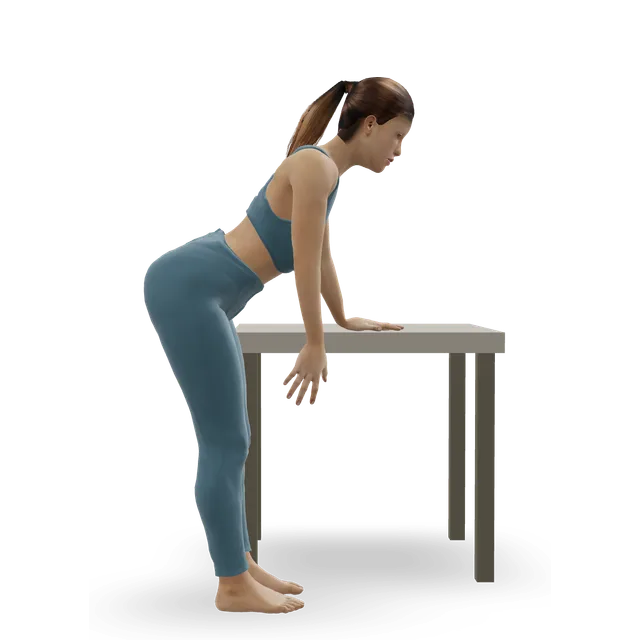
Table slide (seated forward reach) demonstrated on the 3D figure3D demoTable slide (seated forward reach)Beginner · A bench or box

10 slow reps, 1 to 3 times a day · The move page's dose (editorial). After a dislocation, keep the hand below shoulder height until your clinician says otherwise, as the move page says

Easier: Pendulum exercise (Codman's pendulum) · Harder: Overhead lat stretch at a bench (elbows on the bench)

Pendulum exercise (Codman's pendulum) demonstrated on the 3D figure3D demoPendulum exercise (Codman's pendulum)Beginner · A bench or box

About 1 minute (10 small circles each way), 2 to 3 times a day, only if the shoulder is very painful or stiff · The move page's dose (editorial). Stand up slowly if you feel light-headed, as the move page says

Harder: Table slide (seated forward reach)

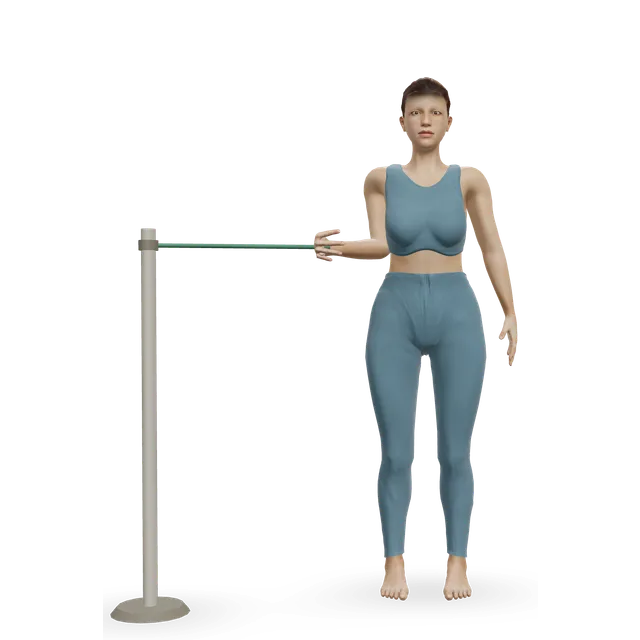
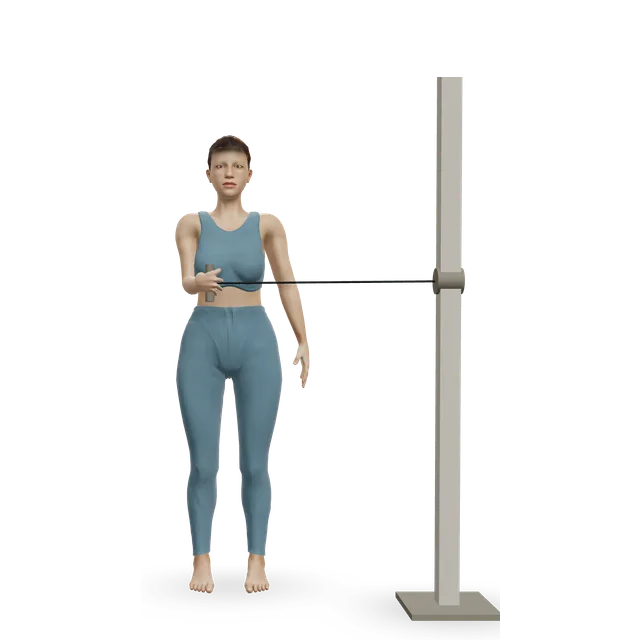
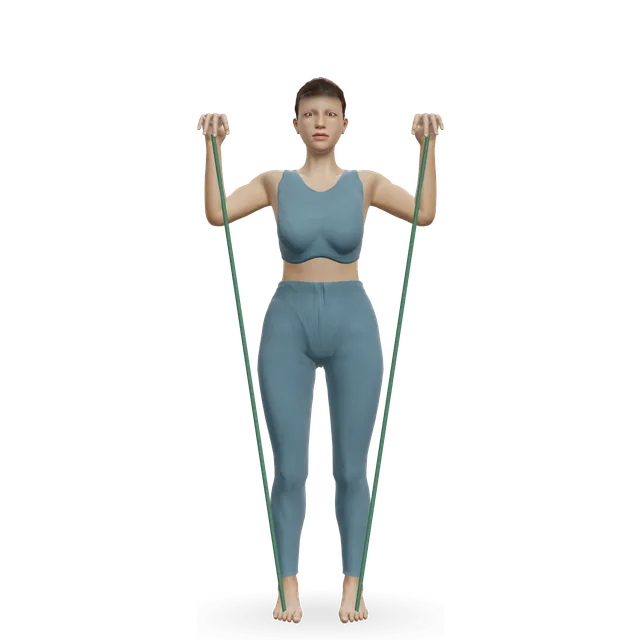
Standing band external rotation demonstrated on the 3D figure3D demoStanding band external rotationBeginner · A band + An anchor point

2 to 3 sets of 15 with a light band, elbow at your side, slow return · 3 sets of 15 is the Swedish trial's dose; the band version is our shoulder guides' choice (editorial). After a dislocation, stop short of any feeling of slipping, as our dislocation guide says

Easier: Stick-assisted external rotation (lying) · Harder: Side-lying external rotation

Band row demonstrated on the 3D figure3D demoBand rowBeginner · A band + An anchor point

3 sets of 10 to 15, stopping 2 to 3 reps short of failure · The move page's dose (editorial). Check the band and the anchor before every set, as the move page says

Harder: Supported single-arm dumbbell row

Dumbbell shoulder-blade punch demonstrated on the 3D figure3D demoDumbbell shoulder-blade punchBeginner · A dumbbell + A bench or box

2 sets of 10 to 15, lying, with no weight · The shoulder-blade punch, as in our impingement and dislocation guides (editorial)

Harder: Scapular push-up (push-up plus)

Thoracic rotation demonstrated on the 3D figure3D demoThoracic rotationBeginner · No equipment

6 rotations each side, moving with the breath · The move page's dose

Easier: Side-lying open book · Harder: World's greatest stretch

Move on when: Daily tasks feel a little easier and the shoulder is back to its usual level by the next session (the shoulder hub's check); after a dislocation, the moves bring no feeling of slipping and your clinic is happy for you to move on (our dislocation guide's check).

Follow along: a timer, a cue and the next move, one step at a time.
Stage 2

Build: the rotator cuff and the shoulder blade

About weeks 2 to 8: the cuff work once or twice a day, as in the Swedish trial, and the rest 3 days a week. The specific rotator cuff and shoulder-blade programme that beat general exercise, within the pain rule, with pushing back in a short range.

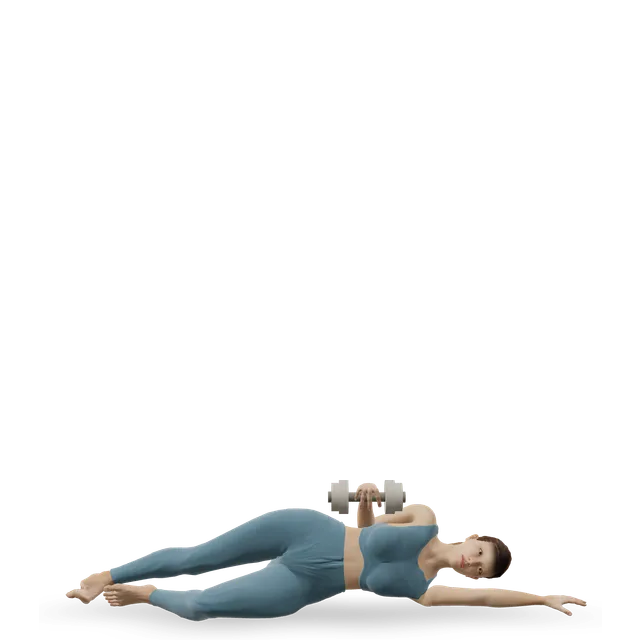
Side-lying external rotation demonstrated on the 3D figure3D demoSide-lying external rotationBeginner · A dumbbell

3 sets of 15, lowering over about 3 s · The Swedish trial's sets and reps: twice a day for 8 weeks, then once a day

Easier: Standing band external rotation · Harder: Cuban rotation

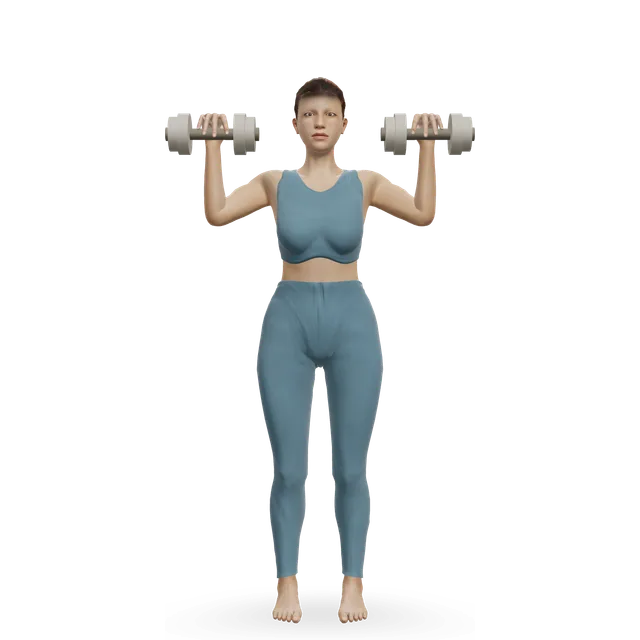
Scaption raise demonstrated on the 3D figure3D demoScaption raiseBeginner · A dumbbell

3 sets of 15, thumbs up, to shoulder height, lowering over 3 s · As in our impingement guide (editorial), modelled on the trial's lowering work

Easier: Band lateral raise · Harder: Smith machine upright row

Prone Y-T-W raises demonstrated on the 3D figure3D demoProne Y-T-W raisesBeginner · No equipment

2 to 3 rounds of 8 of each shape · As in our impingement guide (editorial). Keep the neck long and the face down, as the move page says. After a dislocation, do the Y and T in a comfortable range and leave out the W for now, as our dislocation guide does

Easier: Wall angel · Harder: Bent-over reverse fly

Scapular push-up (push-up plus) demonstrated on the 3D figure3D demoScapular push-up (push-up plus)Beginner · No equipment

3 sets of 10, on a wall or bench first · As in our impingement and dislocation guides (editorial). Use an incline or drop to the knees if your low back sags or your wrists complain, as the move page says

Easier: Dumbbell shoulder-blade punch · Harder: Push-up

Band internal rotation demonstrated on the 3D figure3D demoBand internal rotationBeginner · A band + An anchor point

2 to 3 sets of 15 · As in our impingement guide (editorial)

Harder: Side-lying external rotation

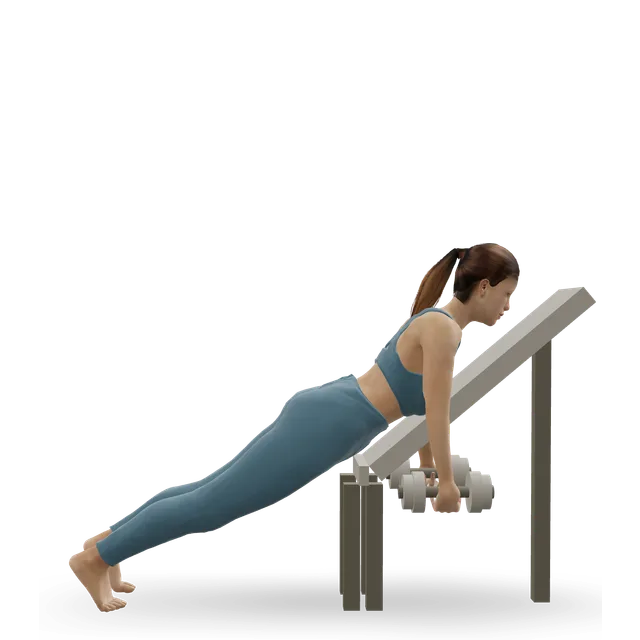
Incline push-up demonstrated on the 3D figure3D demoIncline push-upBeginner · A bench or box

2 to 3 sets of 8 to 12, a short range at first · As in our bench press guide (editorial). Check the bench or counter takes your weight and can't slide, as the move page says

Easier: Wall push-up · Harder: Push-up

Move on when: Every set passes the pain rule, lifting your arm to shoulder height is comfortable, and side-lying external rotation is comfortable at 3 sets of 15 (our bench press guide's check); after a dislocation, there is no apprehension (our dislocation guide's check).

Follow along: a timer, a cue and the next move, one step at a time.
Stage 3

Strengthen, then back to the gym, contact sport and work

From about week 6 to 8: 2 or 3 sessions a week, then twice a week for the long term. Pressing, pulling and carrying strength, then the bench, contact sport, the job itself and driving, by the written steps below. Add load one change at a time, in steps of 5% to 10% every 10 to 14 days while the shoulder passes the pain rule, as the hospital sports medicine handout advises.

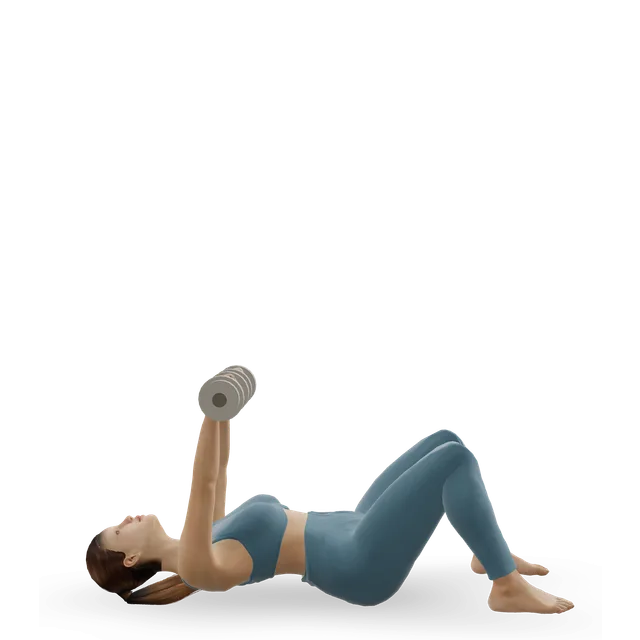
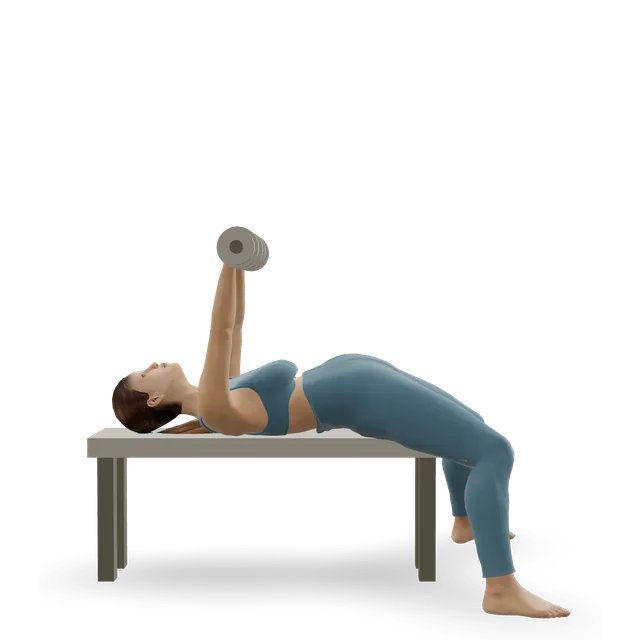
Dumbbell floor press demonstrated on the 3D figure3D demoDumbbell floor pressIntermediate · A dumbbell

2 to 3 sets of 8 to 12, stopping with 2 or 3 reps in reserve · The move page's dose (editorial). The floor stops the elbows, the first step back to the bench, as in our bench press guide

Easier: Chest press machine · Harder: Bench press with chains

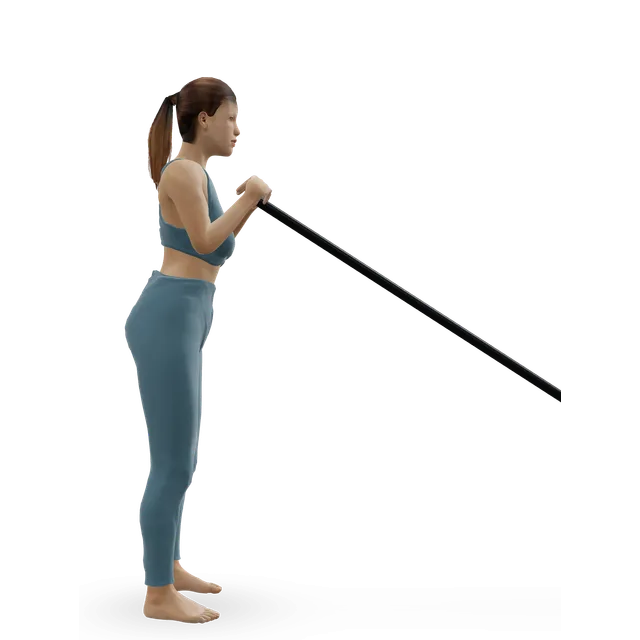
Landmine jammer demonstrated on the 3D figure3D demoLandmine jammerIntermediate · A barbell

3 sets of 8 to 12, pressed without the dip, as a landmine press · As in our impingement guide (editorial), not the move page's power dose. Check the bar's end can't slip out of its landmine, as the move page says

Easier: Kettlebell halo · Harder: Barbell clean and press

Chest-supported dumbbell row demonstrated on the 3D figure3D demoChest-supported dumbbell rowBeginner · A dumbbell + A bench or box

3 sets of 8 to 12 · As in the shoulder hub (editorial). On other days, face pulls, 3 sets of 12 to 15, as the hub does

Harder: Supported single-arm dumbbell row

Push-up demonstrated on the 3D figure3D demoPush-upIntermediate · No equipment

3 sets of 8 to 12, once incline push-ups are easy · As in the shoulder hub (editorial). Go back to an incline if your lower back arches or your hips drop, as the move page says

Easier: Wall push-up · Harder: Close-grip push-up (close triceps position)

Cable external rotation demonstrated on the 3D figure3D demoCable external rotationBeginner · A cable machine

3 sets of 10 to 12, heavier · As in the shoulder hub (editorial)

Harder: Side-lying external rotation

Farmer's carry demonstrated on the 3D figure3D demoFarmer's carryIntermediate · A dumbbell + A kettlebell

3 walks of 30 to 40 m · As in the shoulder hub (editorial): practice for carrying at work. Have clear floor space to put the weights down, as the move page says

Harder: Suitcase carry

Move on when: Our suggestion: your usual lifting, sport and working week leave the shoulder no worse the next morning. Keep rotator cuff and shoulder-blade work going twice a week for the long term (editorial): the Swedish trial asked people to keep the home exercises going for another 2 months, and the NHS suggests shoulder exercises for 6 to 8 weeks to stop pain returning. Our workout plans for men over 40 and over 50 are a long-term home.

Follow along: a timer, a cue and the next move, one step at a time.

What to change for now

The first days, pain relief and sleep (written steps)

Our 3D figure can't show these. Each step names its source or is our suggestion.

  • 1. In the first 24 to 48 hours, reduce your activities but move as much as your symptoms allow, rest the arm in a supported position if that's comfortable, and move the shoulder gently for 10 to 20 seconds every hour while you're awake; after 48 hours, use it more (NHS inform).
  • 2. Don't stop using the shoulder completely, as that can stop it getting better, and don't make up your own strenuous exercises or use heavy gym equipment while it hurts (the NHS). For now, don't carry on with activities that involve repeatedly lifting your arm above your head (the NHS).
  • 3. Use pain relief so you can keep moving: paracetamol or ibuprofen tablets, or ibuprofen gel, and a pharmacist can suggest the best one for you (the NHS). Try a pack of frozen peas wrapped in a tea towel for up to 20 minutes, 3 times a day, or a wrapped hot water bottle for up to 20 minutes, 2 to 3 times a day (the NHS).
  • 4. Sleeping: lie on your good side with a pillow under your neck, a folded pillow in front to support the painful arm and another behind your back, or on your back with one or two pillows under the painful arm (Arthritis UK). No trial has tested sleeping positions, and none was linked with shoulder pain in 761 workers.

Sources 27, 47, 72, 73, 74

In the gym, and back to the bench (written steps)

These come from a hospital sports medicine handout, one computer model, studies of men who lift and our sibling guides; no trial has tested them.

  • 1. Keep training your legs, trunk and cardio while the shoulder settles (our suggestion).
  • 2. Go lighter: the handout starts with 3 sets of 15 to 20, and advises against training to the point of muscle failure.
  • 3. Bench with a grip no wider than about 1.5 times the width across the bony points of your shoulders, with your shoulder blades pulled back: in the model, narrower grips and pulled-back shoulder blades lowered the loads on the shoulder joints. The handout goes further, with a grip no wider than your shoulders.
  • 4. Press and pull in front of your head, never behind the neck, and stop dips where your elbows reach a 90 degree bend (the handout).
  • 5. Take lateral raises and upright rows no higher than shoulder height, and train your external rotators (from the study of 77 men who lift).
  • 6. Do rotator cuff and shoulder-blade exercises as one set of 15 before a weights session, or 2 to 3 times a week (the handout).
  • 7. Back to the barbell bench: start at about half your old working weight (our bench press guide's starting point), and add 5% to 10% every 10 to 14 days while the shoulder passes the pain rule (the handout). Bring dips back last. The handout says getting back to high-level lifting "will take over six months of cautious, gradual progression".
  • 8. Overhead pressing comes back as a band press, then the landmine press, then a dumbbell press, always in front of your head (editorial, as in our impingement guide).
  • 9. Have fewer heavy pressing days if the top of your shoulder aches: bench pressing more than 1.5 times body weight was linked with weightlifter's shoulder in one study.
  • 10. Don't use anabolic steroids: in bodybuilders, users had about 9 times the rate of tendon ruptures, and every upper-body rupture was in a user (our suggestion, from that study). A pop with bruising needs checking the same day.

Sources 65, 66, 18, 15, 17

After a first dislocation, and contact sport (written steps)

Your clinic's advice comes first. Otherwise these come from the NHS, an NHS trust's leaflet, the UK and Dutch guidance and the trials.

  • 1. Wear the sling as your clinic says. The NHS says for the first few weeks; a Dutch guideline uses one as needed for about a week, and one NHS trust usually for 2 weeks. Keeping the arm still for longer than about a week doesn't lower the risk of it coming out again (the UK pathway).
  • 2. Put the injured arm in first when dressing and take it out last, and sleep propped up with pillows, or on your other side hugging a pillow (an NHS trust's leaflet).
  • 3. In the first week's exercises, keep your elbow below shoulder height (the same leaflet).
  • 4. One good advice session with a home programme is a reasonable start: it did as well as a course of physiotherapy at 6 months in a UK trial.
  • 5. If you're young and play contact or collision sport, or work with your arms overhead, ask about surgery as a shared decision (the UK pathway and the Dutch guideline).
  • 6. Come back to sport in phases: contact and overhead drills, then full training, then part of a match, typically within 6 months in the UK trial's advice, at a time your clinic agrees. Going back in the same season often ended in another dislocation or partial dislocation in US college athletes.
  • 7. After stabilisation surgery, your surgeon's plan sets the timings; our shoulder stabilisation surgery guide covers the usual stages.

Sources 49, 6, 75, 7, 59, 60, 62

At work, and driving (written steps)

These come from the HSE, a review of shoulder problems at work, NHS inform and the NHS, except where a step is our suggestion.

  • 1. The HSE's guideline weights for men are lowest above shoulder height (10 kg held close to the body, 5 kg with the arms out), and they are not "safe limits".
  • 2. Plan the lift, keep the load close to your waist, don't twist, and don't lift more than you can easily manage (the HSE's good handling technique).
  • 3. Bring heavy loads back between waist and shoulder height first, and above shoulder height last (our suggestion, built on the HSE's weights).
  • 4. Cut combined overhead, forceful and repetitive work where you can: break long overhead jobs into short spells, rotate tasks, use a platform or step to bring the work lower, and store heavy items between waist and shoulder height (our suggestion, built on the HSE's guidance and the studies of workers).
  • 5. Ask about occupational health and changes to your duties (our suggestion). NHS inform says stay at, or return to, work, and you don't need to be free of symptoms first.
  • 6. Driving: after a dislocation, your doctor or physiotherapist will advise (the NHS). Otherwise, drive once you're out of any sling and can turn the wheel and do an emergency stop without pain, and check with your insurer (our suggestion, in line with the advice in our AC joint and broken collarbone guides).

Sources 70, 76, 69, 27, 49

The heart and diabetes (written steps)

These come from the NHS and the bench press move page.

  • 1. If pain or tightness in your chest, arms, neck, jaw or shoulders comes on with exercise and eases after a few minutes' rest, stop and get help from NHS 111. Call 999 for chest pain that feels tight or squeezing or spreads to your arms, neck or jaw, or chest pain with sweating, feeling sick, light-headedness or breathlessness (the NHS).
  • 2. With heart disease, check with your cardiac team before lifting heavy, and never hold your breath on the effort, as the bench press move page says. Our heart disease exercise page covers training after a heart attack.
  • 3. With a stiff, painful shoulder and diabetes, keep up your regular diabetes check-ups (the NHS).

Sources 33, 46, 54

Positions to swap, and why

Habit or positionWhy it mattersInstead
Keeping the arm still, or in a sling, for ordinary shoulder painThe NHS says don't stop using your shoulder completely, as that can stop it getting better.Gentle use, and the first stage of the plan.Try: Table slide (seated forward reach)
A sling for weeks after a dislocation, to be safeKeeping the arm still for longer than about a week didn't lower the risk of it coming out again.Your clinic's sling advice, then the cuff work in stage 1.Try: Standing band external rotation
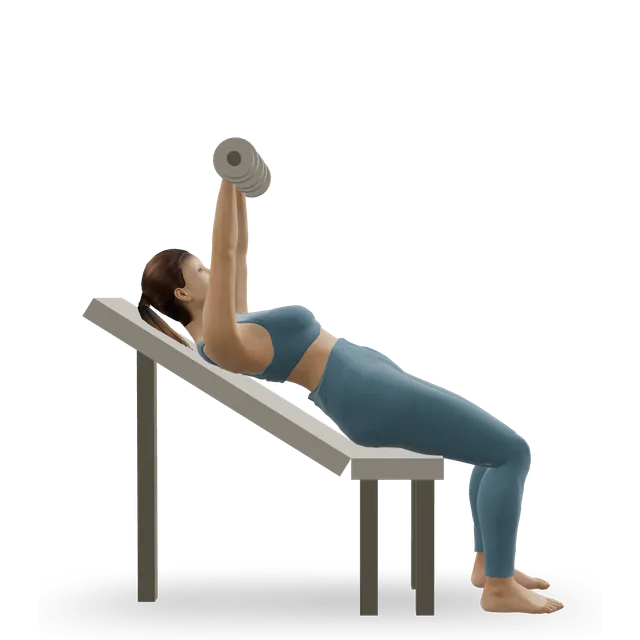
Heavy wide-grip bench pressing through painWide grips raised the loads on the shoulder joints in a computer model, and the move page says keep the grip no wider than your shoulders while the shoulder is sore.The dumbbell floor press, then the bench with a narrower grip.Try: Dumbbell floor press
Deep or weighted dipsGoing deeper than upper arms parallel loads the front of the shoulder heavily, the move page says.Incline push-ups; dips come back last, no deeper than a 90 degree elbow bend.Try: Incline push-up
Behind-the-neck presses and pulldownsThe move page says leave the press out with shoulder pain or after a dislocation, and the hospital handout says always avoid both.Press in front of your head, starting with the landmine press.Try: Landmine jammer
Upright rows and lateral raises above shoulder heightThey went with impingement signs in men who lift, and the move page says leave the upright row out with shoulder pain.Face pulls, and raises no higher than your shoulders.Try: Face pull
Hanging from a bar after a dislocationThe move page says leave it out after a recent dislocation, or if the shoulder feels unstable or slips.Band rows.Try: Band row
Long overhead jobs, or heavy lifts above shoulder height, while it's soreThe NHS says don't carry on with activities that involve repeatedly lifting your arm above your head, and the HSE's guideline weights are lowest there.Short spells, a platform to bring the work lower, and carries in stage 3.Try: Farmer's carry
Back to contact sport in the same season after the shoulder came outIn college contact athletes, the shoulder often slipped or came out again after an in-season return.A phased return, at the time your clinic agrees.
Putting arm or shoulder pain with chest tightness, breathlessness or sweating down to the gymIt can be the heart, in men and women alike.Call 999.

Routines to follow

More moves for this area

Questions people ask

What causes shoulder pain in men?

Usually the rotator cuff tendons, especially from your 40s, then a stiff (frozen) shoulder, the neck and, later, arthritis. In young men, a dislocation in contact sport and gym injuries such as a torn pec tendon or weightlifter's shoulder are more likely. Rarely it is the heart, the lungs or the diaphragm, and those come with other clues.

Could my left or right shoulder pain be a heart attack?

It can be, though most shoulder pain comes from the shoulder or the neck: left arm or shoulder pain was reported by 37% of men having a heart attack or unstable angina, and pain in the right arm or shoulder happens too. Call 999 for chest pain that feels tight or squeezing, or chest pain that spreads to your arms, neck or jaw, especially with breathlessness, sweating or feeling sick. Get help from NHS 111 for pain or tightness in your chest, neck, shoulders, jaw or arms that comes and goes, often brought on by exercise and easing after a few minutes' rest. Shoulder pain that changes as you move your arm, with none of these signs, points to the shoulder itself.

What does heart attack shoulder pain feel like?

It usually comes with chest pain or discomfort that feels tight, squeezing, like pressure or like indigestion, and can spread to the arms, neck or jaw, often with breathlessness, sweating or feeling sick. Angina is often brought on by exercise, stress or cold and eases within a few minutes of rest. Not everyone has chest pain: 30.7% of men in a large US registry of heart attacks didn't. Pain that changes as you move your arm, is sharp or hurts to press makes the heart less likely, but doesn't rule it out.

Why does my shoulder hurt in my 40s or 50s?

Most often the rotator cuff: changes in the tendons become common from your 40s, often without pain, and NHS inform says normal age-related changes can make a shoulder flare up now and again, often for no reason. A frozen shoulder usually starts in mid-life and is far more likely with diabetes, and a trapped nerve in the neck peaks at 50 to 54. Exercise is the first treatment for the commonest causes.

I dislocated my shoulder playing rugby. Will it happen again, and do I need surgery?

The younger you are, the likelier it is: the UK care pathway's modelled estimates for men are about 72% within 2 years after a first dislocation at 20 and 41% at 30, though studies disagree on whether men's risk is higher than women's at the same age. Early keyhole surgery cuts the risk, and UK guidance supports discussing it if you're young and play contact sport. Without surgery, one good advice session with a home programme did as well as a course of physiotherapy in a UK trial, and the return to rugby is phased, from drills to full training to part of a match, at a time your clinic agrees.

Why does my shoulder hurt when I bench press?

Where it hurts is the clue: the outside of the shoulder points to the rotator cuff, one spot on top to the AC joint (including weightlifter's shoulder), and the front of the armpit after a pop to the pec tendon. Heavy, frequent, wide-grip pressing is the usual suspect, though no trial has tested changing it. Our bench press guide covers grip, range and getting back to the bar.

I felt a pop in my chest or armpit while lifting. What now?

If bruising, a change in the shape of your chest or armpit, or weakness pushing follows, get it checked the same day through NHS 111 or an urgent treatment centre: it can be a torn pec tendon, and repair did better than non-surgical care in pooled studies. Chest pain that feels tight or squeezing, or spreads to your arms, neck or jaw, is a 999 call, even mid-set.

Can I keep going to the gym with shoulder pain?

Usually yes, with changes: lighter loads, a shorter range, a narrower grip, pressing in front of your head and no sets to failure, keeping pain to 5 out of 10 or less and back to normal by the next session. Add rotator cuff and shoulder-blade work, as the trials did. These gym swaps come from a hospital handout, a computer model and studies of men who lift, not from trials.

Is my job causing my shoulder pain?

It can play a part: work with your arms above shoulder height, heavy force, lots of repetition or vibration goes with rotator cuff related pain in studies of workers. Keep heavy loads between waist and shoulder height, break up overhead jobs and ask about changes at work. NHS inform says staying at, or returning to, work is the best way to get better.

What does shoulder tip pain mean in a man?

Pain at the point of the shoulder usually comes from the shoulder itself, such as the AC joint or the rotator cuff. Pain at the very tip with breathing or tummy symptoms can be passed on from the diaphragm, the lining of the lungs or the gallbladder, which can also cause pain under the right ribs spreading to the shoulder blade. Call 999 or go to A&E if breathing suddenly becomes difficult, or chest or upper back pain comes on suddenly with breathlessness or a very fast heartbeat.

Do I need a scan?

Not usually at first: rotator cuff changes show up in nearly everyone's shoulders after 40, painful or not, and the UK care pathway says a scan of the cuff is rarely needed from a GP. An X-ray matters after a dislocation or a fall, and an ultrasound or MRI scan after sudden weakness following an injury, or after a dislocation over 40. A tear on a scan doesn't always mean you need an operation.

When should a man see a doctor about shoulder pain?

Call 999 for the heart signs, and call 999 or go to A&E if, after a fall or injury, your shoulder looks out of place, you can't move your arm, or it is painful, bruised or swollen. Get help the same day for sudden weakness lifting the arm after an injury, a pop with bruising at the front of the armpit, or a hot, swollen shoulder, and see a GP if it isn't easing after 2 weeks of looking after it yourself. Men see GPs less often than women, so book the check rather than waiting; in the US, call 911 where this page says 999.

Related exercise guides

Other pain guides

Sources

  1. Jordan 2010 · How many people consult a GP each year about each body region, by age and sex, in 12 English practices (observational study, BMC Musculoskelet Disord)
  2. Wang 2013 · Do men consult less than women? Consultation rates in 446 UK general practices (cross-sectional study, BMJ Open)
  3. Juel 2014 · A year of shoulder diagnoses in 766 people at a Norwegian hospital clinic (cohort study, BMC Musculoskelet Disord)
  4. Mitchell 2005 · Shoulder pain: diagnosis and management in primary care (clinical review, BMJ)
  5. Shah 2017 · How often shoulders dislocate in the UK, by age and sex, 1995 to 2015 (population cohort study, BMJ Open)
  6. Van Gastel 2026 · Treating a first shoulder dislocation caused by an injury (Dutch multidisciplinary guideline, Acta Orthop)
  7. Brownson 2015 · UK care pathway after a shoulder dislocation caused by an injury (British Elbow and Shoulder Society and British Orthopaedic Association pathway, Shoulder Elbow)
  8. Robinson 2006 · Repeat instability after a first dislocation in 252 people aged 15 to 35 (cohort study, J Bone Joint Surg Am)
  9. Olds 2015 · Risk factors for repeat instability after a first shoulder dislocation (systematic review and meta-analysis of 10 studies, Br J Sports Med)
  10. Wasserstein 2016 · How often a shoulder dislocates again without surgery, and what predicts it (systematic review of 15 studies, Arthroscopy)
  11. Hovelius 2008 · 25 years after a first dislocation treated without surgery at 12 to 40 (cohort study, J Bone Joint Surg Am)
  12. Kerr 2010 · Weight training injuries seen in US emergency departments, 1990 to 2007 (national injury surveillance study, Am J Sports Med)
  13. Aasa 2017 · Injuries in weightlifters and powerlifters (systematic review of 9 studies, Br J Sports Med)
  14. Bodendorfer 2020 · Surgery or no surgery for a torn pec tendon, in 664 injuries (systematic review and meta-analysis, Orthop J Sports Med)
  15. Wilkinson 2026 · Weightlifter's shoulder (distal clavicle osteolysis) without an injury: risk factors and treatment in 483 people (scoping review, Shoulder Elbow)
  16. Haugaard 2023 · Acromioclavicular joint dislocations in Copenhagen over a year, by age, sex and cause (prospective cohort study, Shoulder Elbow)
  17. Kanayama 2015 · Tendon ruptures in 142 male bodybuilders who did or didn't use anabolic steroids (cohort study, Am J Sports Med)
  18. Kolber 2014 · Signs of shoulder impingement and exercise choice in 77 men who lift weights (case-control study, J Strength Cond Res)
  19. Ibounig 2026 · Rotator cuff changes on MRI in 602 Finnish adults aged 41 to 76, with and without shoulder pain (population study, JAMA Intern Med)
  20. Minagawa 2013 · Rotator cuff tears with and without symptoms in 664 villagers in Japan (ultrasound screening study, J Orthop)
  21. Sayampanathan 2017 · Risk factors for rotator cuff tears in 6,653 people (systematic review and meta-analysis, J Orthop Surg)
  22. Mall 2013 · Rotator cuff tears caused by an injury: who gets them and how they do (systematic review, Arthroscopy)
  23. Hand 2008 · The long-term outcome of frozen shoulder in 223 people (cohort study, J Shoulder Elbow Surg)
  24. Rupani 2025 · UK care pathway for frozen shoulder (British Elbow and Shoulder Society pathway, Shoulder Elbow)
  25. Zreik 2016 · Frozen shoulder and diabetes (systematic review and meta-analysis, Muscles Ligaments Tendons J)
  26. Radhakrishnan 1994 · How common a trapped nerve in the neck is, by sex and age, in Rochester, Minnesota, 1976 to 1990 (population study, Brain)
  27. NHS inform · Shoulder problems
  28. Thomas 2016 · UK care pathway for shoulder joint arthritis (British Elbow and Shoulder Society and British Orthopaedic Association pathway, Shoulder Elbow)
  29. Hovelius 2016 · The long-term outlook, including arthritis, after a first dislocation at 40 or younger (cohort study, Knee Surg Sports Traumatol Arthrosc)
  30. Crowson 2011 · The lifetime risk of inflammatory rheumatic diseases, including polymyalgia rheumatica, in women and men (population study, Arthritis Rheum)
  31. NHS · Polymyalgia rheumatica (past its review date: reviewed April 2023, review due April 2026)
  32. British Heart Foundation · UK cardiovascular disease factsheet (July 2026)
  33. NHS · Angina
  34. van Oosterhout 2020 · Symptoms of heart attacks and unstable angina in women and men across 27 studies (systematic review and meta-analysis, J Am Heart Assoc)
  35. Canto 2012 · Heart attacks without chest pain, by age and sex, in 1,143,513 US patients (registry study, JAMA)
  36. British Heart Foundation · Are heart attack symptoms different for men and women? (2023)
  37. Swap 2005 · What the chest pain history can and can't tell about a heart attack or unstable angina (systematic review, JAMA)
  38. NHS · Pulmonary embolism
  39. NHS · Pleurisy
  40. NHS inform · Gallstones
  41. Panagopoulos 2014 · Tumours at the top of the lung (Pancoast tumours): features and assessment (review, J Thorac Dis)
  42. NHS · Symptoms of lung cancer
  43. Kulkarni 2015 · UK care pathway for subacromial (rotator cuff related) shoulder pain (British Elbow and Shoulder Society and British Orthopaedic Association pathway, Shoulder Elbow)
  44. Toolanen 1993 · Nerve and rotator cuff injuries after a dislocation in 65 people over 40 (ultrasound and nerve study, Acta Orthop Scand)
  45. Simank 2006 · Rotator cuff tears after a dislocation in 87 older people (prospective study, Arch Orthop Trauma Surg)
  46. NHS · Heart attack
  47. NHS · Shoulder pain (past its review date: reviewed May 2023, review due May 2026)
  48. Hopewell 2021 · Progressive exercise or one advice session, with or without a steroid injection, for rotator cuff pain in 708 adults: GRASP (randomised trial, Lancet)
  49. NHS · Dislocated shoulder
  50. Kuhn 2013 · Physiotherapy for worn full-thickness rotator cuff tears in 452 people (cohort study, J Shoulder Elbow Surg)
  51. Holmgren 2012 · A specific exercise programme for shoulder impingement, against general exercise, in 102 people (randomised trial, BMJ)
  52. Beard 2018 · Decompression surgery against placebo surgery or no treatment in 313 people: CSAW (randomised trial, Lancet)
  53. Kanto 2025 · Decompression surgery against placebo surgery, 10 years on, in 210 people: FIMPACT (randomised trial, BMJ)
  54. NHS · Frozen shoulder
  55. Handoll 2004 · Surgery or no surgery after a first shoulder dislocation (Cochrane review)
  56. Kirkley 1999 · Immediate keyhole stabilisation or rehabilitation after a first dislocation in 40 people under 30 (randomised trial, Arthroscopy)
  57. Kirkley 2005 · The same trial at an average of 75 months (randomised trial, long-term follow-up, Arthroscopy)
  58. Kavaja 2018 · Treatments after a shoulder dislocation compared across 22 trials (systematic review with network meta-analysis, Br J Sports Med)
  59. Kearney 2024 · One advice session, with or without added physiotherapy, after a first dislocation in 482 adults: ARTISAN (randomised trial, BMJ)
  60. Liew 2021 · The ARTISAN advice session and home exercise programme after a first dislocation (intervention development study, Physiotherapy)
  61. Paterson 2010 · How long, and in what position, to keep the arm still after a first dislocation (systematic review and meta-analysis, J Bone Joint Surg Am)
  62. Dickens 2014 · Returning in the same season after shoulder instability, in 45 US college contact athletes (cohort study, Am J Sports Med)
  63. Kukkonen 2021 · Surgery or physiotherapy for small worn rotator cuff tears over 55, after more than 5 years (randomised trial, J Shoulder Elbow Surg)
  64. Moosmayer 2024 · Tendon repair or physiotherapy for small to medium rotator cuff tears, 15 years on (randomised trial, J Bone Joint Surg Am)
  65. Massachusetts General Hospital Sports Medicine · Strength training for the shoulder (patient handout)
  66. Noteboom 2024 · Bench press grip width, shoulder blade position and the loads on the shoulder, in 10 lifters (computer model study, Front Physiol)
  67. van Rijn 2010 · Work factors and specific shoulder disorders (systematic review, Scand J Work Environ Health)
  68. Dalbøge 2014 · Years of arm elevation, repetition and force at work and impingement surgery in Denmark (nationwide cohort study, Occup Environ Med)
  69. Linaker 2015 · Shoulder disorders and work (review, Best Pract Res Clin Rheumatol)
  70. Health and Safety Executive · Manual handling at work: a brief guide (INDG143, 2020)
  71. NHS inform · Exercises for shoulder problems
  72. NHS · Shoulder impingement
  73. Arthritis UK · Shoulder pain
  74. Holdaway 2018 · Sleeping position and shoulder pain in 761 workers (cross-sectional study, BMC Musculoskelet Disord)
  75. Oxford University Hospitals NHS Foundation Trust · Shoulder dislocation: advice leaflet (2026)
  76. Health and Safety Executive · Manual handling at work: good handling technique

Exercise education, not a diagnosis or treatment plan. It is written from the guidelines and studies listed above; review by a clinician is pending. If your pain follows an injury, is severe, is getting worse, or comes with any warning sign listed on this page, get it assessed. Health disclaimer.