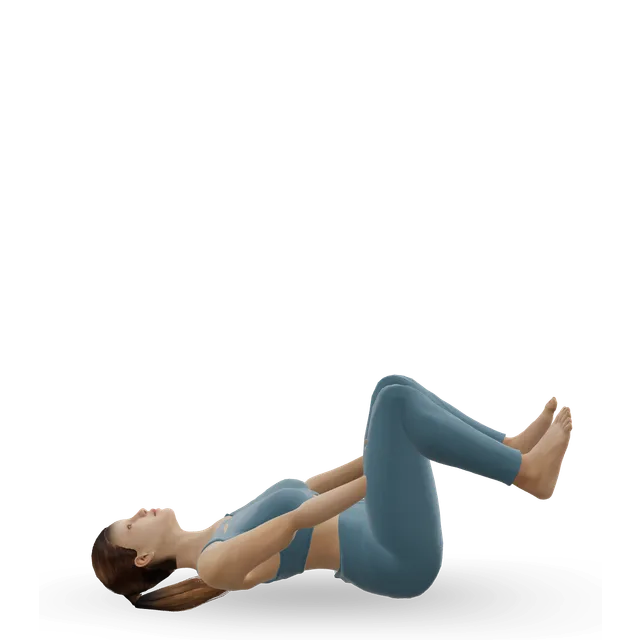
Pain guide · Back pain

Lower back pain in men: the back itself, lifting at work, the kidneys, the prostate and an aneurysm

Lower back pain in men is usually the back itself: a strained muscle or joint, a disc, or no single cause a scan can find, and the National Health Service (NHS) says back pain usually improves within a few weeks. Heavy and frequent lifting at work goes with a little more back pain, and men see a general practitioner (GP) less often than women do. Less often the pain comes from a kidney stone or infection, the prostate, inflammatory back pain or, from 65, an aortic aneurysm, and these usually bring other clues, such as a fever, trouble peeing or waves of pain into the groin.

This guide starts with the signs that need help, from a 999 call or accident and emergency (A&E) to the NHS's 111 line (NHS 111) or a GP: numbness around the genitals or bottom, new trouble peeing or controlling your bladder or bowels, or new problems with erections; sudden, severe tummy or back pain; back pain with a fever or blood in your pee; and sudden pain in a testicle. Then it explains what helps at work (changing the job, not a lifting lecture), how the kidneys and prostate differ from the back, and a three-stage plan with 3D demos that ends with lifting at work and in the gym.

When to get help first

Exercise is for pain that has been checked or is clearly mild and settling.

Get urgent medical help if

  • Call 999 or go to A&E: loss of feeling or numbness around the genitals or bottom, new trouble peeing or controlling your bladder or bowels, changes in genital sensation during sex or problems with erections or orgasm, or pain, tingling, weakness or numbness in both legs. These are signs of cauda equina syndrome, which needs treating in hospital urgently. Don't drive yourself.
  • Call 999 or go to A&E: back pain with chest pain, or back pain that started after a serious accident, such as a car crash.
  • Call 999: sudden, severe pain in the tummy or back, which can come with breathlessness, pale or grey skin, or collapse. It can be a burst abdominal aortic aneurysm, most common in men aged 65 or over and in people who smoke or used to smoke.
  • Call 999 or go to A&E: pain spreading from the tummy to the back, with vomiting.
  • Same day (GP or NHS 111): back pain and you feel hot, cold, shivery or generally unwell, or severe pain that starts suddenly or is getting worse quickly.
  • Same day (urgent GP appointment or NHS 111): you think you may have a kidney infection (pain in your lower back or side, often with a high temperature, burning or stinging when you pee or needing to pee more often), and you have a very high temperature or feel hot, cold or shivery, a very low temperature (below 36C), pain in the lower tummy or in the back just under the ribs, or blood in your pee, or you're feeling or being sick, haven't had a pee all day or are pregnant. Call 999 or go to A&E if you're confused, drowsy or have difficulty speaking. Don't take ibuprofen for it unless a doctor advises you to.
  • Same day (urgent GP appointment or NHS 111): severe pain that usually starts in the side of your tummy or your lower back, may spread to the area at the top of your inner thigh (groin), your testicles or the area around the opening of your vagina, and may come and go, or this pain with a high temperature or feeling hot, cold or shivery. It can be a kidney stone.
  • Ask for an urgent GP appointment or get help from NHS 111 if you have blood in your pee, or think you may have. It may look bright pink, red or dark brown.
  • Urgent GP appointment or NHS 111: pain in your back, under your ribs, that doesn't go away, a lump or swelling in your back or under your ribs, or blood in your pee. These need checking, as they can be signs of a kidney problem.
  • Go to A&E or call 999 for sudden, severe pain in a testicle, testicle pain with feeling or being sick or tummy pain, or testicle pain that has lasted more than an hour or continues at rest. It can be a twisted testicle (testicular torsion), which needs treating straight away. For a lump, swelling or a change in a testicle's size or shape, ask for an urgent GP appointment or get help from NHS 111.
  • With symptoms of prostatitis (pain when peeing, difficulty peeing, needing to pee more often, pain in your penis, scrotum, testicles or bottom, pain when you ejaculate, or a high temperature): ask for an urgent GP appointment or get help from NHS 111 if you can't pee, or you've taken antibiotics for prostatitis for 48 hours and you're not better. Go to A&E or call 999 if you suddenly feel confused, have slurred speech, have blue, grey, pale or blotchy skin, lips or tongue, have a rash that doesn't fade when you roll a glass over it, or have severe difficulty breathing. These may mean a serious infection or sepsis.
  • Same day: you have or have had cancer, and new back pain that is severe and doesn't let up, is getting steadily worse, is worse at night and disturbs your sleep, is worse when you cough, sneeze or strain, or comes with tenderness over the spine. Contact your cancer team or GP urgently. With cancer, new weakness, difficulty walking, numbness or bladder or bowel problems are an emergency.
  • Same day: leg weakness that is getting worse.
  • Same day (urgent GP appointment or NHS 111): new difficulty lifting the front of your foot or toes (foot drop), or a foot that slaps down or catches as you walk, especially if it is getting worse. Weakness in both legs, or with numbness around the genitals or bottom or bladder or bowel changes, is the 999 emergency above.

See a doctor or physiotherapist if

  • Back pain that hasn't improved after a few weeks of looking after it at home, stops you doing day-to-day activities, or worries you.
  • Pain that doesn't improve with rest or is worse at night, or pain that is worse when you sneeze, cough or poo.
  • Unexplained weight loss, or a lump, swelling or change in the shape of your back.
  • Back pain that started before 45 and has lasted more than 3 months, especially if it wakes you in the second half of the night, comes with buttock pain, eases with movement or within 48 hours of anti-inflammatories, or you have psoriasis or a parent, sibling or child with spondyloarthritis. These can point to inflammatory back pain (axial spondyloarthritis, such as ankylosing spondylitis); the National Institute for Health and Care Excellence (NICE) refers people with four or more of these features to a rheumatologist.
  • Tummy or back pain that doesn't go away or keeps coming back, or a lump you can feel in your tummy: see a GP.
  • Needing to pee more often or urgently, difficulty starting to pee or a weak flow, or blood in your pee or semen, especially with lower back pain or weight loss you can't explain: see a GP. These can be symptoms of prostate cancer, though an enlarged prostate, which isn't cancer, is a more common cause.
  • Pain in your penis, scrotum, testicles or bottom, pain when peeing or ejaculating, or needing to pee more often: see a GP. It can be prostatitis.
  • Unexplained back pain with muscle spasms, loss of height, or a curved spine or change in posture: a possible osteoporotic spinal fracture, more likely with older age or long-term steroid tablets.
  • You're 50 or over, or past the menopause, and have broken a bone: ask your GP about a fracture risk assessment. The National Institute for Health and Care Excellence (NICE) offers a bone density scan after a spinal fragility fracture.
  • Pain, tingling or numbness spreading below the knee that isn't settling after a few weeks, is getting worse or stops your normal activities: see a GP.

Where does it hurt?

Location narrows the likely causes; it does not diagnose.

Across the low back or to one side, stiff and sore to move, after lifting, bending or nothing in particular

Usually the back itself: a strain or a spasm, which usually settles within weeks.

Read: Back spasm and pulled back muscle →
Low back pain during or after deadlifts

Our deadlift guide covers the load, the hinge and getting back to the bar.

Read: Back pain after deadlifts →
Low back pain during or after squats

Our squat guide covers depth, bar position and squatting again.

Read: Lower back pain after squats →
When you bend forward, pick something up or lift at work

Usually ordinary back pain; our bending guide brings lifting back step by step.

Read: Back pain when bending →
Down one leg below the knee, with tingling or numbness

Usually sciatica, an irritated nerve, often from a disc.

Read: Sciatica →
A scan report says a bulging or herniated disc

Disc changes are common in people without pain; our disc guide explains what they mean.

Read: Herniated or bulging disc →
Both buttocks and legs on standing or walking, easing when you sit or bend forward, usually from 50

Possibly spinal stenosis.

Read: Lumbar spinal stenosis →
The side or back under the ribs, with waves of pain into the groin or testicles

Possibly a kidney stone: get an urgent GP appointment or help from NHS 111. Our one-sided guide sets out how kidney pain and back pain differ.

Read: Lower back pain on one side →
With a high temperature, burning or difficulty peeing, or pain in the penis, testicles or behind the scrotum

Possibly a kidney or prostate infection: see the warning signs at the top of this page.

Sudden, severe pain in a testicle

Possibly a twisted testicle: go to A&E or call 999.

Read: Groin pain →
Back and buttock stiffness that wakes you in the second half of the night and eases with exercise, starting before 45

Possibly inflammatory back pain (axial spondyloarthritis): see a GP.

Read: Back pain in the morning →
Sudden, severe tummy or back pain, especially from 65 or if you smoke or used to

Possibly a burst abdominal aortic aneurysm: call 999.

Back pain that catches when you sneeze or cough

Our back pain when sneezing or coughing guide covers why, and how to brace.

Read: Back pain when sneezing →
Back pain that has lasted more than 3 months, or keeps coming back

Our long-lasting back pain guide covers it.

Read: Chronic low back pain →

Understand it

It is usually the back itselfStrong evidence

For nearly all low back pain no single damaged structure can be found, and only a small proportion has a cause such as a fracture, cancer or an infection; the NHS names a pulled muscle as a common cause. In 1,172 people with new back pain in Australian primary care, 0.9% had a serious cause.

Men report somewhat less back pain than women at every age: about 5,520 against 9,330 per 100,000 worldwide in 2020, in estimates modelled from population data. Men also see their GP less: across 446 UK general practices, men's consulting rate was 32% lower than women's, most of all between 16 and 60, though it was similar when men and women had comparable illnesses, and women were slightly more likely to seek care for back pain in 11 surveys.

Sources 1, 2, 3, 4, 5, 6

Work and liftingMixed evidence

Work carries more of men's back pain in the modelled estimates: work factors such as lifting, bending and long spells sitting or standing accounted for 34.3% of the low back pain burden in men aged 15 to 49, the highest share of any group, and smoking for 28.8% in men aged 50 to 69. These are modelled estimates with wide uncertainty, not measurements of any one man's back.

In 8 studies that followed workers over time, the odds of new back pain rose by about 11% for every extra 10 kg lifted and 9% for every extra 10 lifts a day. But a review of 35 studies found conflicting evidence that lifting at work causes back pain, so whether it does is still debated. In the short term, a heavy load was a strong trigger for a new episode, more so in younger people (the odds were about 13.6 times higher at 20 and 2.7 times at 60), and being distracted during a task was the strongest trigger of all.

Sources 4, 7, 8, 9

The kidneys and the testicles

Kidney stones were reported by 10.6% of US men against 7.1% of women in a national survey. They cause severe pain that comes and goes in waves, starting in the side or lower back and sometimes spreading to the groin or testicles. Urine infections are less common in men than in women, but a kidney infection causes the same pain in the side or back with a high temperature and pee symptoms. Blood in your pee always needs an urgent GP appointment or NHS 111, and the NHS kidney cancer page adds a pain in your back under the ribs that doesn't go away.

A twisted testicle (testicular torsion) causes sudden, severe testicle pain, sometimes with tummy pain and being sick, and needs A&E straight away. Epididymitis, an inflamed tube behind the testicle, causes testicle pain and swelling, and testicular cancer usually causes a lump or swelling, sometimes with an ache in the back or lower tummy.

Sources 10, 11, 12, 13, 14, 15, 16, 17, 18

The prostateEmerging evidence

Prostatitis, an inflamed prostate, is common: symptoms affect about 8 in 100 men in population surveys, and about a third clear within a year. The NHS prostatitis page lists pain in the penis, scrotum, testicles or bottom, pain when peeing or ejaculating, difficulty peeing and a high temperature; it doesn't list back pain. Prostate Cancer UK does: it lists the lower back among the places long-lasting prostatitis (chronic pelvic pain syndrome) can hurt, and among the places sudden bacterial prostatitis can hurt, along with a high temperature.

Prostate cancer often has no symptoms at first. The NHS says lower back pain and losing weight without trying may be symptoms of advanced prostate cancer, and the National Institute for Health and Care Excellence (NICE) suggests a prostate-specific antigen (PSA) blood test for urinary symptoms, erection problems or visible blood in the pee, not for back pain alone.

Sources 19, 20, 21, 22, 23, 24

Inflammatory back pain, an aneurysm and your bones

Inflammatory back pain (axial spondyloarthritis, which includes ankylosing spondylitis) is diagnosed more often in men, but NICE says it affects a similar number of women as men, and in a pooled analysis men were diagnosed about 7 months sooner. It usually starts in early adulthood, is worse in the morning and at night, and eases with exercise rather than rest.

An abdominal aortic aneurysm, a swelling of the main blood vessel in the tummy, often causes no symptoms. It is most common in men aged 65 or over and in people who smoke or used to, so the NHS invites men for one ultrasound scan in the year they turn 65, and about 1 in 80 men screened has a small one. A burst aneurysm causes sudden, severe pain in the tummy or back and is a 999 emergency. NICE adds that in women, aneurysms are more likely to burst.

Men get osteoporosis too: the NHS links it with low testosterone, steroid tablets and heavy drinking, about 31% of hip fractures in England are in men, and NICE names hormone treatment for prostate cancer that lowers testosterone (androgen deprivation therapy) as a fracture risk factor.

Sources 25, 26, 27, 28, 29, 30, 31, 32, 33, 34

When a scan or test helpsStrong evidence

Ordinary back pain doesn't need a scan: NICE advises against routine imaging, and disc bulges were found in 30% of pain-free 20-year-olds and 84% of 80-year-olds. Tests answer specific questions: a urine test for an infection; a computerised tomography (CT) scan for a suspected kidney stone; a PSA test and an examination when there are urinary symptoms, erection problems or visible blood in the pee; an urgent ultrasound for unexplained or lasting testicle symptoms; a tummy ultrasound for an aneurysm, offered once to men at 65; and hospital care straight away for the cauda equina warning signs.

Sources 35, 36, 13, 11, 24, 29

How it usually goesStrong evidence

New back pain usually improves a lot within 6 weeks: across 33 studies, average pain fell from 52 out of 100 to 23 at 6 weeks and 6 at a year. It often comes back: 69% of people who had recovered had another episode within a year, and more than 5 hours' sitting a day was one of the things that predicted it. Prostatitis symptoms clear within a year in about a third of men, bacterial prostatitis usually feels better within 2 weeks of starting antibiotics, and most kidney stones can be treated at home with medicine, taking a few weeks to pass. No one can promise a timescale.

Sources 37, 38, 19, 20, 11

What helps, and how strong the evidence is

Keep moving, and keep working if you canStrong evidence

The NHS says stay active and don't stay in bed for long periods. Advice to stay active did slightly better than bed rest for new low back pain in a Cochrane review (2 trials, 401 people), and NICE asks for a return to work and normal activities to be supported rather than delayed until the pain has gone.

Sources 1, 39, 35

Exercise is the main treatment for back pain that lastsStrong evidence

For long-lasting low back pain, exercise cut pain by about 15 points out of 100 against no treatment, usual care or placebo (moderate certainty, 249 trials), and no single type of exercise is clearly best. NICE suggests a group exercise programme. Many backs have a direction that eases them: in one trial, 74% of 312 people did, and exercises matched to that direction did better.

Sources 40, 35, 41

At work, change the job before the techniqueStrong evidence

In 9 trials of 20,101 workers, training in lifting technique, with or without lifting aids, didn't prevent back pain (moderate quality), and bending the lower back while lifting wasn't a risk factor for back pain (low-quality evidence). So the Health and Safety Executive (HSE) asks employers to avoid hazardous lifting where they can, assess what can't be avoided, and reduce the risk with aids and lighter, closer loads, and it says good technique is no substitute for those changes.

Sources 42, 43, 44, 45

More lifting goes with more back pain, but cause isn't provenMixed evidence

In 8 studies that followed workers over time, more weight and more lifts a day went with modestly more new back pain (about 11% higher odds per extra 10 kg and 9% per extra 10 lifts), and lifting more than 25 kg, or more than 25 times a day, was estimated to raise the yearly rate by 4.3% and 3.5%. A review of 35 studies found conflicting evidence, and no study met more than two of its tests for cause. The 34.3% share of young men's back pain put down to work comes from modelled estimates. Building lifting back gradually, rather than avoiding it, is our suggestion.

Sources 7, 8, 4

A belt won't prevent back painStrong evidence

Lumbar supports and belts were no better than nothing at preventing back pain (7 trials, 14,437 people; moderate evidence), and NICE says don't offer belts or corsets for low back pain.

Sources 46, 35

How much pain is OK while you exercise?

Up to about 5 out of 10, settled within an hour, no worse the next morning, including after a working dayEmerging evidence

During the exercise, pain up to about 5 out of 10 is acceptable. It should settle within an hour or so, and your back should be no worse the next morning. If it is worse, do less next time (fewer repetitions, a smaller range, a lighter load), not nothing. NHS inform's back exercise page uses the same 0 to 10 scale and the same next-morning check, and in trials of long-lasting muscle and joint pain, exercise that allowed some pain did no worse than pain-free exercise.

Judge a heavy working day the way you judge a session: if your back is worse the next morning, make the next day lighter, with split loads, aids and more breaks, rather than stopping work (our suggestion); NICE asks for a return to work to be supported. Leg symptoms are the exception: stop or shrink any movement that sends pain, pins and needles or numbness further down your leg. Back pain with a fever, pee symptoms or testicle pain isn't a pain-rule question: see the warning signs. The 5 out of 10 figure matches the site's back guides and hasn't been tested as a rule.

Sources 47, 48, 35

The exercise plan: 3 stages

Start at the first stage. Each move opens a full guide with a 3D demo.

Stage 1

The first days: keep moving

About the first 2 weeks, daily. Settle the pain without resting in bed, and find whether bending forward or arching back eases it. No heavy lifting at work or in the gym for now: train what doesn't hurt (our suggestion, as in our deadlift guide).

Treadmill walking demonstrated on the 3D figure3D demoTreadmill walkingBeginner · Cardio machine

5 to 10 min, several times a day · As in our back pain guide (editorial)

Harder: Treadmill jogging

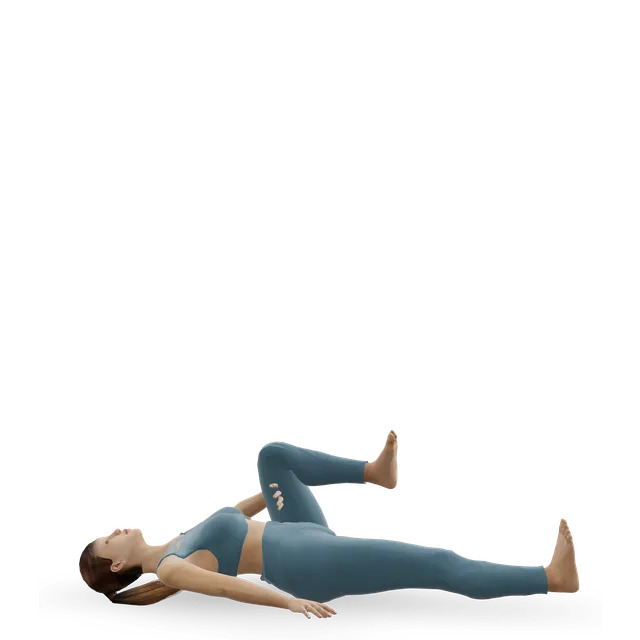
Single knee-to-chest stretch demonstrated on the 3D figure3D demoSingle knee-to-chest stretchBeginner · No equipment

Hold 20 to 30 s, 2 to 4 times each side · The move page's dose (editorial). Only if bending forward eases your pain; leave it out if it sends pain down a leg, as the move page says

Harder: 90/90 hip lift-off

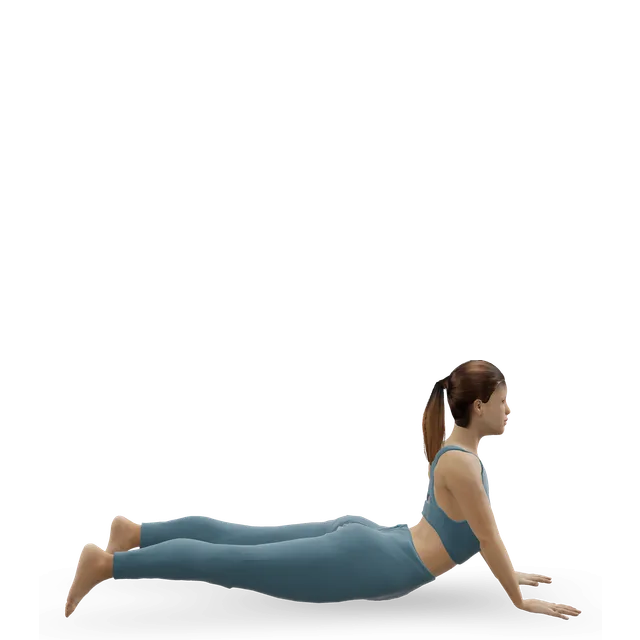
Prone press-up (McKenzie press-up) demonstrated on the 3D figure3D demoProne press-up (McKenzie press-up)Beginner · No equipment

10 slow reps, 3 to 5 times a day, while it helps · The move page's dose (editorial). Only if arching eases your pain; skip it with spinal stenosis or if arching brings on leg symptoms, as the move page says

Easier: Sphinx pose (Salamba Bhujangasana)

Hip windshield wipers demonstrated on the 3D figure3D demoHip windshield wipersBeginner · No equipment

10 slow passes side to side, 2 rounds · The move page's dose (editorial)

Easier: Supine heel slide · Harder: 90/90 switch

Cat-cow demonstrated on the 3D figure3D demoCat-cowBeginner · No equipment

8 waves, slower than feels natural · The move page's dose

Harder: Half lord of the fishes (Ardha Matsyendrasana)

Pelvic tilt into bridge demonstrated on the 3D figure3D demoPelvic tilt into bridgeBeginner · No equipment

The tilt first, 2 or 3 at a time, building to sets of 8 · NHS inform's pelvic tilt, with its pacing

Harder: Glute bridge

Move on when: You can walk for 15 to 20 minutes and get in and out of bed and the car without catching pain, and the pain is easing day by day (as the back hub and our deadlift guide check).

Follow along: a timer, a cue and the next move, one step at a time.
Stage 2

Build: hinge, brace and carry light

About weeks 2 to 6: 2 or 3 days a week. Build trunk and hip strength and a pain-free hinge, the movements that lifting at work and in the gym are built on.

Glute bridge demonstrated on the 3D figure3D demoGlute bridgeBeginner · No equipment

2 to 3 sets of 10 · As in our back pain guide (editorial)

Easier: Pelvic tilt into bridge · Harder: Single-leg glute bridge

Bird dog demonstrated on the 3D figure3D demoBird dogBeginner · No equipment

2 to 3 sets of 6 to 8 each side, with 3 to 5 s holds · As in our back pain guide (editorial). Make fists if your wrists complain, as the move page says

Easier: Bird dog, one limb at a time · Harder: Bear crawl

Knee side plank demonstrated on the 3D figure3D demoKnee side plankBeginner · No equipment

3 holds of 15 to 20 s each side · As in our back pain guide (editorial)

Harder: Side plank

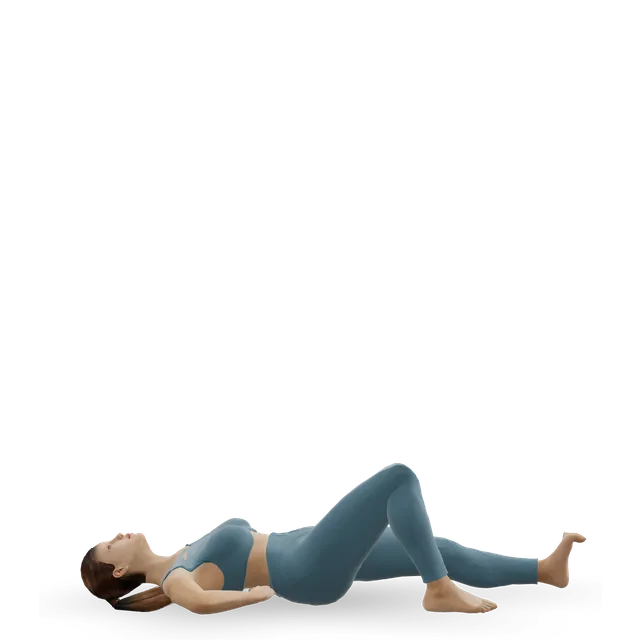
Dead bug heel taps demonstrated on the 3D figure3D demoDead bug heel tapsBeginner · No equipment

2 sets of 6 to 8 each side · As in our back pain guide (editorial); then the full dead bug

Easier: Bent-knee fall-out · Harder: Forearm plank

Hip-hinge practice demonstrated on the 3D figure3D demoHip-hinge practiceBeginner · No equipment

2 to 3 sets of 10 · As in our back pain guide (editorial)

Harder: Dumbbell Romanian deadlift

Farmer's carry demonstrated on the 3D figure3D demoFarmer's carryIntermediate · A dumbbell + A kettlebell

3 walks of 20 to 30 m, light · As in our back pain guide (editorial): both hands, the easier carry

Harder: Suitcase carry

Move on when: You can do every set with good control, and your back is no worse the next morning (the back hub's check).

Follow along: a timer, a cue and the next move, one step at a time.
Stage 3

Strengthen, then lifting at work and in the gym

From about week 6, and ongoing: the back hub's last stage. Lifting at work comes back by the HSE's steps below, and gym lifting by our deadlift and squat guides.

Kettlebell deadlift demonstrated on the 3D figure3D demoKettlebell deadliftBeginner · A kettlebell

3 sets of 8 to 10, light to start · As in our back pain guide (editorial); then the dumbbell Romanian deadlift

Easier: Hip-hinge practice · Harder: Dumbbell Romanian deadlift

Dumbbell goblet squat demonstrated on the 3D figure3D demoDumbbell goblet squatIntermediate · A dumbbell

3 sets of 8 to 10 · As in our back pain guide (editorial)

Easier: Bodyweight squat · Harder: Barbell front squat

Suitcase carry demonstrated on the 3D figure3D demoSuitcase carryIntermediate · A dumbbell + A kettlebell

3 walks of 20 to 30 m each side · As in our back pain guide (editorial). If you can't stay level, the weight is too heavy, as the move page says

Easier: Farmer's carry · Harder: Overhead carry (waiter's walk)

Side plank demonstrated on the 3D figure3D demoSide plankIntermediate · No equipment

3 holds of 20 to 30 s each side · As in our back pain guide (editorial). With heart disease, keep breathing and ask your cardiac team before long holds, as the move page says

Easier: Knee side plank · Harder: Side plank with leg lift

Half-kneeling Pallof press demonstrated on the 3D figure3D demoHalf-kneeling Pallof pressBeginner · A band + An anchor point

2 to 3 sets of 8 to 10 each side · As in our back pain guide (editorial): it trains resisting a twist, as when you carry or turn with a load

Harder: Pallof press

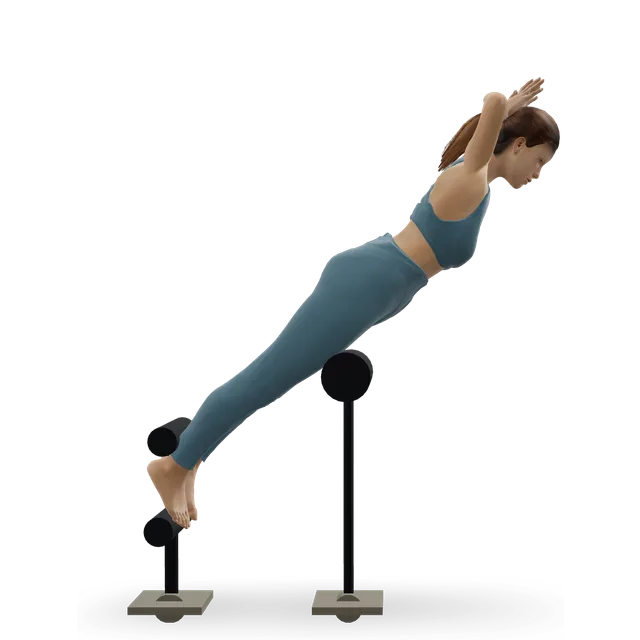
Back extension on a 45-degree bench demonstrated on the 3D figure3D demoBack extension on a 45-degree benchIntermediate · A bench or box

2 to 3 sets of 8 to 12 · As in our back pain guide (editorial). Move slowly, and never fling into the top position, as the move page says

Easier: Ball back extension · Harder: Horizontal back extension (hyperextension, Roman chair)

Move on when: Our suggestion: a full working day and your usual lifting leave your back no worse the next morning. Keep two strength days a week, because back pain often comes back; our workout plans for men over 40 and over 50 are a long-term home.

Follow along: a timer, a cue and the next move, one step at a time.

What to change for now

Lifting at work (written steps)

Our 3D figure can't show these. They are the HSE's good handling technique.

  • 1. Think before you lift: where is it going, do you need help or an aid, and is the way clear? For a long lift, from the floor to shoulder height, rest the load halfway on a bench to change your grip.
  • 2. Keep the load close to your waist for as long as possible, with the heaviest side next to your body; if you can't get close, slide it towards you first.
  • 3. Put your feet apart, with one leg slightly forward, ready to move your feet.
  • 4. Start with a slight bend of your back, hips and knees, rather than a full stoop or a full squat, and don't bend your back further as you lift.
  • 5. Don't twist or lean sideways while your back is bent; turn by moving your feet, and keep your head up once you have a secure hold.
  • 6. Move smoothly, without jerking or snatching the load.
  • 7. Don't lift more than you can easily manage; put it down first, then adjust its position.

Source 45

The weights, and changing the job (written steps)

These come from the HSE, the trials and NICE, except where a step is our suggestion.

  • 1. The HSE asks employers to avoid hazardous handling where they can, assess what can't be avoided, and reduce the risk with lifting aids and changes to the task, the load or the workplace.
  • 2. Its guideline weights for men are 20 to 25 kg held close to the body between mid-lower-leg and elbow height, against 10 kg below mid-lower-leg height. They are risk filters for work, not safe limits, and not targets for someone in pain.
  • 3. Training in lifting technique on its own didn't prevent back pain in trials, so the job matters more than the lecture.
  • 4. Split heavy or repeated lifts with breaks and a change of task, and lift less when you're rushed, tired or distracted, the strongest short-term triggers in one study (our suggestion, from that study).
  • 5. Break up long spells of driving or sitting: more than 5 hours' sitting a day went with back pain coming back.
  • 6. After a flare, lighter or modified duties beat waiting to be pain-free: NICE asks for a return to work to be supported, and our back pain when bending guide brings lifting back step by step.

Sources 44, 49, 42, 9, 38, 35

The first days and pain relief (written steps)

These come from the NHS.

  • 1. Keep up your daily activities, and don't stay in bed for long periods.
  • 2. Use a heat pack or hot water bottle wrapped in a tea towel for stiffness or muscle spasms, or an ice pack wrapped in a tea towel for pain and swelling.
  • 3. An anti-inflammatory such as ibuprofen may help if it suits you; paracetamol on its own isn't recommended for back pain, but it may be used with another painkiller. With a fever or pee symptoms, don't take ibuprofen for a possible kidney infection unless a doctor advises it.
  • 4. The NHS says smoking can increase your risk of sciatica.

Sources 1, 13, 50

Medicines and other treatments

For back pain, NICE suggests an anti-inflammatory at the lowest effective dose for the shortest time, not paracetamol on its own, no routine opioids, belts or corsets, and manual therapy only alongside exercise. Prostatitis is treated with antibiotics, and long-lasting prostatitis may need a specialist (a urologist), medicines, talking therapy or physiotherapy. Most kidney stones can be treated at home with medicine, and larger ones need a procedure. Ankylosing spondylitis is treated with exercise and physiotherapy alongside anti-inflammatories and other medicines. Surgery for back pain is for specific problems, such as a slipped disc that hasn't settled, with weakness that is getting worse.

Sources 35, 20, 11, 27, 51

Positions to swap, and why

Habit or positionWhy it mattersInstead
Bed rest, or staying off work until it's pain-freeStaying active does better than bed rest, and NICE asks for a return to work to be supported.Keep moving, with lighter or modified duties.Try: Treadmill walking
Lifting with the load far from your bodyThe HSE's advice starts with keeping the load close to your waist.Slide it close first, then lift.Try: Hip-hinge practice
Twisting while you liftThe HSE says turn by moving your feet, not by twisting.Move your feet, and practise resisting a twist.Try: Half-kneeling Pallof press
Counting on a back beltSupports didn't prevent back pain in 7 trials, and NICE says don't offer them.Trunk strength.Try: Side plank
Heavy deadlifts or squats in the first daysOur deadlift and squat guides bring the bar back in steps.Hinge practice, then build back.Try: Hip-hinge practice
Rushing a lift when you're tired or distractedDistraction and heavy loads were the strongest short-term triggers in one study.Plan the lift, and use a lighter load, an aid or a second person.
Putting pee symptoms, blood in your pee or testicle pain down to 'just my back'These need their own checks.The warning signs at the top of this page.
Long drives or desk days without a breakMore than 5 hours' sitting a day went with back pain coming back.A short walk every so often (our suggestion).Try: Treadmill walking

Routines to follow

More moves for this area

Questions people ask

What causes lower back pain in men?

Usually the back itself: a strained muscle or joint, a disc, or no single cause. Lifting and work carry more of men's back pain in modelled estimates, though whether lifting causes back pain is still debated. Kidney stones, prostate problems, inflammatory back pain and, from 65, an aortic aneurysm are less common causes, each with its own clues.

Can prostate problems cause lower back pain?

Sometimes. Prostatitis is common, and Prostate Cancer UK lists the lower back among the places it can hurt, though the NHS prostatitis page lists pain around the penis, testicles and bottom and when peeing or ejaculating, not back pain. Prostate cancer often has no symptoms at first, and lower back pain with weight loss you can't explain may be a sign of advanced cancer, so see a GP if you have trouble peeing or other prostate symptoms.

Lower back pain and testicle pain: what could it be?

A kidney stone can send waves of pain from the back to the groin or testicles, and prostatitis can cause both. Sudden, severe testicle pain, or testicle pain with feeling sick or lasting more than an hour, needs A&E or 999.

Why does my lower back hurt after ejaculation?

Pain when ejaculating is a symptom of prostatitis, which Prostate Cancer UK says can also cause lower back and pelvic pain. See a GP, and ask for an urgent GP appointment or call NHS 111 if you can't pee.

Lower back pain and needing to pee often: what is it?

A urine or kidney infection, a kidney stone or prostatitis can cause both. With a high temperature, burning or blood in your pee, ask for an urgent GP appointment or call NHS 111.

Is it my back or my kidneys?

Back pain usually changes with movement and position. Kidney pain sits in the side or just under the ribs and comes with a high temperature, pee symptoms or severe waves of pain into the groin. A pain in your back under your ribs that doesn't go away, or blood in your pee, needs an urgent GP appointment or NHS 111.

Does lifting at work cause back pain?

Lifting more weight, more often, goes with a modestly higher risk, about 11% higher odds for every extra 10 kg, but whether lifting causes back pain is still debated. Training in lifting technique on its own didn't prevent back pain in trials, so the HSE puts lifting aids, lighter loads and planning first.

How should I lift with a bad back?

Plan the lift, keep the load close to your waist with your feet apart, start with a slight bend of your back, hips and knees, don't twist, and don't lift more than you can easily manage, as the HSE advises. Build back up gradually; our back pain when bending guide takes you through it.

I'm over 60 and my back hurts. Should I worry?

Usually it's the back, but sudden, severe tummy or back pain is a 999 call for a burst aneurysm, which is most common in men from 65. Men are invited for an aneurysm scan at 65, and new back pain with weight loss, trouble peeing or a history of cancer needs a GP.

Could it be ankylosing spondylitis?

Back and buttock pain that started before 45, wakes you in the second half of the night and eases with exercise rather than rest can be inflammatory back pain, so see a GP. It's diagnosed more often in men, but NICE says it affects a similar number of women, and women wait longer for the diagnosis.

Should I wear a back belt for lifting?

Not to prevent or treat back pain: supports didn't prevent it in 7 trials, and NICE says don't offer them. Building trunk and hip strength, as in the plan on this page, is the better investment.

When should a man see a doctor about back pain?

Call 999 for numbness around the genitals or bottom, new bladder or bowel trouble, new problems with erections or orgasm, or pain, tingling, weakness or numbness in both legs. Get help the same day for a fever, blood in your pee or testicle pain, and see a GP if it isn't better after a few weeks. Men see GPs less often than women, so book the check rather than waiting.

Related exercise guides

Other pain guides

Sources

  1. NHS · Back pain
  2. Hartvigsen 2018 · What low back pain is and why we need to pay attention (review, Lancet)
  3. Henschke 2009 · Serious causes in 1,172 people with new low back pain in primary care (cohort study, Arthritis Rheum)
  4. GBD 2021 Low Back Pain Collaborators 2023 · Low back pain worldwide, 1990 to 2020, its risk factors and projections (Global Burden of Disease modelling study, Lancet Rheumatol)
  5. Wang 2013 · Do men consult less than women? (study of UK general practice records, BMJ Open)
  6. Ferreira 2010 · Who seeks care for low back pain (meta-analysis of population surveys, Eur J Pain)
  7. Coenen 2014 · Lifting at work and low back pain (dose-response meta-analysis of 8 cohort studies, Occup Environ Med)
  8. Wai 2010 · Does lifting at work cause low back pain? (systematic review, Spine J)
  9. Steffens 2015 · What triggers an episode of acute low back pain? (case-crossover study of 999 people, Arthritis Care Res)
  10. Scales 2012 · How common kidney stones are in the United States (national survey, Eur Urol)
  11. NHS · Kidney stones
  12. NHS · Urinary tract infections (UTIs)
  13. NHS · Kidney infection
  14. NHS · Blood in urine
  15. NHS · Symptoms of kidney cancer
  16. NHS · Testicle pain
  17. NHS · Epididymitis
  18. NHS · Symptoms of testicular cancer
  19. Krieger 2008 · How common prostatitis is (review of population surveys, Int J Antimicrob Agents)
  20. NHS · Prostatitis
  21. Prostate Cancer UK · Prostatitis
  22. Prostate Cancer UK · Prostatitis signs and symptoms
  23. NHS · Symptoms of prostate cancer
  24. NICE NG12 · Suspected cancer: recognition and referral, by site of cancer (2015, updated 2026)
  25. NICE NG65 · Spondyloarthritis in over 16s: diagnosis and management (2017)
  26. Jovaní 2017 · How long women and men wait for a spondyloarthritis diagnosis (systematic review and meta-analysis, J Rheumatol)
  27. NHS · Ankylosing spondylitis (past its review date: reviewed January 2023, review due January 2026)
  28. NHS · Abdominal aortic aneurysm (past its review date: reviewed June 2023, review due June 2026)
  29. NHS · Abdominal aortic aneurysm (AAA) screening
  30. NHS England · Your screening results: you have a small abdominal aortic aneurysm (AAA) (2026)
  31. NICE · Abdominal aortic aneurysm: diagnosis and management (NG156, guideline)
  32. NHS · Osteoporosis (past its review date: reviewed October 2022, review due October 2025)
  33. National Hip Fracture Database · Annual report 2025: hip fracture in 2024 (national audit, Royal College of Physicians)
  34. NICE NG259 · Osteoporosis: risk assessment, fragility fracture risk assessment (2026)
  35. NICE NG59 · Low back pain and sciatica in over 16s: assessment and management (2016, updated 2026)
  36. Brinjikji 2015 · Spine scan findings in people without symptoms (systematic review, AJNR)
  37. Menezes Costa 2012 · How new and persistent low back pain usually goes (meta-analysis of 33 cohorts, CMAJ)
  38. da Silva 2019 · How often low back pain comes back (inception cohort of 250 people, J Physiother)
  39. Dahm 2010 · Advice to rest in bed or to stay active for new low back pain and sciatica (Cochrane review)
  40. Hayden 2021 · Exercise therapy for chronic low back pain (Cochrane review of 249 trials)
  41. Long 2004 · Does it matter which exercise? Exercise matched to the direction that eases back pain (randomised trial of 312 people, Spine)
  42. Verbeek 2011 · Lifting advice and aids for preventing and treating back pain in workers (Cochrane review)
  43. Saraceni 2020 · Bending the low back while lifting and low back pain (systematic review and meta-analysis, J Orthop Sports Phys Ther)
  44. Health and Safety Executive · Manual handling at work
  45. Health and Safety Executive · Manual handling at work: good handling technique
  46. van Duijvenbode 2008 · Lumbar supports for preventing and treating low back pain (Cochrane review)
  47. NHS inform · Exercises for back pain
  48. Smith 2017 · Should exercises be painful in chronic musculoskeletal pain? (systematic review and meta-analysis, Br J Sports Med)
  49. Health and Safety Executive · Manual handling at work: a brief guide (INDG143, 2020)
  50. NHS · Sciatica
  51. NHS · Slipped disc

Exercise education, not a diagnosis or treatment plan. It is written from the guidelines and studies listed above; review by a clinician is pending. If your pain follows an injury, is severe, is getting worse, or comes with any warning sign listed on this page, get it assessed. Health disclaimer.