Pain guide · Hip pain

Groin pain in men: strains, hernias, the hip, the testicles and prostate, and the signs to act on

Groin pain in men is common and usually not serious. In active men it most often comes from the inner thigh muscles, the lower tummy wall just above the groin crease or the pubic bone, in sports with kicking, sprinting and turning, where men get more than twice as many groin injuries as women in the same sport. The hip joint is another common source, with arthritis from about 45. An inguinal hernia is far commoner in men: in Oxford data from 1976 to 1986, an estimated 27% of men and 3% of women had one repaired in their lifetime. The testicles, the prostate and kidney stones add causes of their own, and most are benign or treatable.

A few signs need help quickly, so this guide starts with them. Go to accident and emergency (A&E) or call 999 for sudden, severe pain in a testicle, testicle pain with feeling or being sick or tummy pain, or testicle pain that has lasted more than an hour or continues at rest, as a twisted testicle needs treating straight away, and for a femoral hernia with very bad tummy pain, being sick or not being able to fart or poo. Get help from the National Health Service's 111 line (NHS 111) for a painful hernia, and ask for an urgent appointment with a general practitioner (GP) or get help from NHS 111 for kidney stone pain, blood in your pee, pain when you pee, or a testicle lump, swelling or ache you're worried about. Then come the causes by spot, side and age, and a three-stage plan with 3D demos back to football, the gym and work.

When to get help first

Exercise is for pain that has been checked or is clearly mild and settling.

Get urgent medical help if

  • Go to A&E or call 999 for sudden, severe pain in a testicle, testicle pain with feeling or being sick or tummy pain, or testicle pain that has lasted more than an hour or continues at rest. It can be a twisted testicle (testicular torsion), which needs treating straight away. Don't drive yourself. For aching or discomfort in your testicles that you're worried about, a lump, swelling or a change in a testicle's size, shape or feel, ask for an urgent GP appointment or get help from NHS 111.
  • Call 999 or go to A&E now if you have a femoral hernia (a small lump at the top of your thigh, in your groin) and very bad tummy pain, you feel sick or you're being sick, you cannot fart or poo, you have a high temperature or you feel hot, cold or shivery, or you've suddenly become confused. Do not drive to A&E. With any other hernia and pain in or around it, a bloated tummy, feeling or being sick, vomiting blood or vomit that looks like coffee grounds, constipation, a high temperature or feeling hot, cold or shivery, or sudden confusion, get help from NHS 111.
  • Call 999 or go to A&E: tummy pain that started suddenly and is severe, you're vomiting blood or your vomit looks green or like ground coffee, there's a lot of blood coming from your bottom or your poo is black and sticky, you cannot pee at all, you cannot poo or fart at all, you have spots or a rash that does not fade when you press it (it may be harder to see on brown or black skin), or you're struggling to breathe. Don't drive yourself.
  • Same day (urgent GP appointment or NHS 111): severe pain that usually starts in the side of your tummy or your lower back, may spread to the area at the top of your inner thigh (groin), your testicles or the area around the opening of your vagina, and may come and go, or this pain with a high temperature or feeling hot, cold or shivery. It can be a kidney stone.
  • Ask for an urgent GP appointment or get help from NHS 111 if you have blood in your pee, or think you may have. It may look bright pink, red or dark brown.
  • Ask for an urgent GP appointment or get help from NHS 111 if you're a man and think you have a urine infection (pain or burning when you pee, needing to pee more often or more urgently, or cloudy pee), especially with a very high or low temperature, pain low in your tummy or in your back just under the ribs, or blood in your pee. Call 999 or go to A&E if you're confused, drowsy or have difficulty speaking.
  • With symptoms of prostatitis (pain when peeing, difficulty peeing, needing to pee more often, pain in your penis, scrotum, testicles or bottom, pain when you ejaculate, or a high temperature): ask for an urgent GP appointment or get help from NHS 111 if you can't pee, or you've taken antibiotics for prostatitis for 48 hours and you're not better. Go to A&E or call 999 if you suddenly feel confused, have slurred speech, have blue, grey, pale or blotchy skin, lips or tongue, have a rash that doesn't fade when you roll a glass over it, or have severe difficulty breathing. These may mean a serious infection or sepsis.
  • Call 999 or go to A&E: severe hip pain after a fall or injury, or you cannot stand, walk or put weight on the leg. In an older adult this can be a broken hip; the leg may be at an odd angle or look shorter. Don't drive yourself.
  • Ask for an urgent GP appointment or get help from NHS 111 if you have severe hip pain that started suddenly but you've not had a fall or injured your hip, your hip is swollen and feels hot, the skin around your hip has changed colour, or you have hip pain, feel generally unwell and have a high temperature (or feel hot, cold or shivery). A hot, swollen hip with a high temperature can be a joint infection.
  • Groin or pubic pain with a high temperature, or feeling hot, cold, shivery or generally unwell; severe pain that started suddenly; or you can't move the leg or put weight on it: ask for an urgent GP appointment or get help from NHS 111. An infected pubic joint can look like osteitis pubis and needs treating quickly, usually in hospital. It's more likely after pelvic, bladder or incontinence surgery, with a weakened immune system, or if you inject drugs.
  • Same day, and stop running now: groin or front-of-hip pain in a runner, sometimes felt in the thigh or knee, that builds with running, hurts with every step or at night, or hurts when the hip is turned to the end of its range. Keep weight off the leg, using crutches if you have them, and get an urgent GP appointment or help from NHS 111 the same day: a stress fracture of the hip (femoral neck) needs urgent imaging.
  • Same day: a teenager with sudden pain at the front or top of the hip bone after a sprint, kick or jump, often with a pop. A piece of growth plate can pull off the pelvis (an avulsion fracture), and it needs an X-ray the same day.
  • Ask for an urgent GP appointment or get help from NHS 111 the same day if your child or teenager has pain in the hip, groin, thigh or knee and is limping; call 999 or go to A&E if they can't put any weight on their leg. Hip problems can sometimes be felt in the thigh or knee, and some children with a slipped growth plate only have knee pain. Don't let them walk, run or play sport on it while you wait.
  • Call 999 or go to A&E: loss of feeling or numbness around the genitals or bottom, new trouble peeing or controlling your bladder or bowels, changes in genital sensation during sex or problems with erections or orgasm, or pain, tingling, weakness or numbness in both legs. These are signs of cauda equina syndrome, which needs treating in hospital urgently. Don't drive yourself.
  • Ask for an urgent GP appointment or get help from NHS 111 if you have mumps and painful or swollen testicles, or tummy or back pain.
  • After groin surgery, including a hernia repair: a wound that is leaking pus or is painful, swollen, warm or red; a high temperature, or feeling hot, cold or shivery; a swollen or painful tummy that is getting worse; or a throbbing or cramping pain in your leg. Get help from NHS 111. Call 999 for chest pain, severe breathlessness or coughing up more than a few spots of blood: it can be a blood clot in the lungs.

See a doctor or physiotherapist if

  • Hip pain that stops normal activities or disturbs sleep, keeps getting worse or keeps coming back, or has not improved after 2 weeks of looking after it at home.
  • A lump in the groin, upper thigh or tummy, especially one that appears when you cough or strain and goes when you lie down: see a GP, as it may be a true hernia. A femoral hernia (a small lump at the top of the thigh, mainly in women over 50, though it can happen to anyone) needs treating in hospital.
  • Tender lumps in the groin that are getting bigger or haven't gone down within a week, feel hard or don't move when you press them, or come with night sweats, a very high temperature or no other sign of infection: see a GP. They may be swollen glands.
  • Groin pain with no clear link to sport: see a GP, as it's unlikely to be a sports injury. With blood in your pee or pain when you pee, ask for an urgent GP appointment or get help from NHS 111.
  • Pain in your penis, scrotum, testicles or bottom, pain when peeing or ejaculating, or needing to pee more often: see a GP. It can be prostatitis.
  • Needing to pee more often or urgently, difficulty starting to pee or a weak flow, problems getting or keeping an erection, or blood in your pee or semen, especially with lower back pain or weight loss you can't explain: see a GP. These can be symptoms of prostate cancer, though an enlarged prostate, which isn't cancer, is a more common cause.
  • Painful catching or locking deep in the groin, or a hip that gives way: get it assessed.
  • Hip or groin pain that hasn't settled after 6 weeks, especially with a normal X-ray, or new hip pain if you take high-dose steroids, drink heavily, or have sickle cell disease or lupus: ask your GP about an MRI (magnetic resonance imaging) scan and a hip specialist. It can be avascular necrosis, which an X-ray can miss early on.
  • Burning, tingling or numbness in the groin or inner thigh, especially after a hernia repair, or inner thigh pain that comes on with exercise and spreads down the inside of the thigh: see a GP or sports physician. A nerve may be irritated or trapped (our suggestion).
  • Pain or numbness in the groin that lasts more than 3 months after a hernia repair: see your GP or your surgical team. The NHS lists it as a possible complication.

Where does it hurt?

Location narrows the likely causes; it does not diagnose.

Sudden, severe pain in a testicle, or testicle pain with feeling or being sick or tummy pain

Possibly a twisted testicle (testicular torsion): go to A&E or call 999 now, and don't drive yourself. It is uncommon, but it needs treating straight away.

The inner thigh close to the pubic bone, worse squeezing your knees together, kicking, sprinting or turning

Usually an inner thigh (adductor) strain or tendon problem, the commonest cause in sport.

Read: Groin strain →
The front of the hip and groin when you lift your knee, kick or run uphill

Often the hip flexors (iliopsoas-related groin pain).

Read: Hip flexor pain →
Just above the groin crease, worse sprinting, with sit-ups, coughing or sneezing, with no lump

Often called a sports hernia, which isn't a true hernia.

Read: Sports hernia →
Right on the pubic bone, often on both sides, in a kicking or turning sport

Possibly pubic-related groin pain (osteitis pubis), which is slow to settle.

Read: Osteitis pubis →
A lump in the groin that gets bigger when you cough or strain and smaller when you lie down, sometimes reaching the scrotum

Possibly an inguinal hernia: see a GP, or get help from NHS 111 if it's painful. Our exercise with a hernia guide covers staying active.

A small, grape-sized lump at the top of the thigh, in the groin crease

Possibly a femoral hernia, which happens in men too and needs treating in hospital: see a GP. Call 999 with very bad tummy pain, being sick, or not being able to fart or poo.

A deep groin pinch when you bend deeply, sit low or get out of a car, in a younger active man

Possibly hip impingement.

Read: Hip impingement (FAI) →
Deep groin pain with clicking, catching or locking

Possibly a labral tear in the hip; painful catching or locking needs assessing.

Read: Hip labral tear →
A deep groin and front-of-thigh ache from about 45, worse walking and stiff after rest

Often hip arthritis.

Read: Hip arthritis →
Groin or front-of-hip pain that builds with every run or march, then hurts at rest or at night

Possibly a stress fracture of the hip: stop running and get it checked the same day.

Read: Stress fracture →
A teenage boy with sudden pain at the front of the hip bone after a sprint or kick, often with a pop

Possibly a piece of growth plate pulled off the pelvis (an avulsion fracture): an X-ray the same day.

Read: Hip pointer →
A boy of about 10 to 16 with groin, thigh or knee pain and a limp

Possibly a slipped growth plate at the hip: an urgent GP appointment or NHS 111 the same day, or 999 if he can't put any weight on the leg.

Read: SUFE (slipped hip growth plate) →
Severe waves of pain from the side or lower back into the groin or a testicle

Possibly a kidney stone: ask for an urgent GP appointment or get help from NHS 111 the same day.

Read: Lower back pain on one side →
An ache, heaviness, a lump, swelling or a change in a testicle, including an ache that lasts after a vasectomy

Most causes are benign or treatable, such as a cyst, fluid (a hydrocele) or swollen veins (a varicocele), and testicular cancer is uncommon, but each needs checking: ask for an urgent GP appointment or get help from NHS 111.

Testicle pain with a warm, swollen, tender scrotum over hours or days, sometimes with a discharge or pain when you pee

Possibly epididymitis, usually an infection treated with antibiotics: an urgent GP appointment, NHS 111 or a sexual health clinic.

Pain between the scrotum and the back passage, in the penis or low in the tummy, worse sitting or after ejaculating

Possibly prostatitis, most often the long-lasting kind (chronic pelvic pain syndrome): see a GP, and get urgent help if you can't pee or have a high temperature.

Pain or burning when you pee, needing to pee often, cloudy pee or blood in it

In a man, a urine infection or another urinary cause needs an urgent GP appointment or NHS 111.

Burning, tingling or numbness in the groin, inner thigh or scrotum after a hernia repair

Possibly an irritated nerve: see your GP or surgical team, especially if it lasts more than 3 months.

Deep groin, buttock or thigh pain with heavy drinking or high-dose steroids

Possibly avascular necrosis, a loss of blood supply to the top of the thighbone: uncommon, in women as well as men, and an X-ray can be normal early on.

Read: Avascular necrosis (hip) →
Groin pain with back pain, or pins and needles down the leg

The lower back can be felt in the groin; our back pain and sciatica guides cover it.

Read: Back pain →

Understand it

Common in sport, and men see a doctor lessStrong evidence

Half (49%) of 695 Danish sub-elite male footballers reported hip or groin pain during a season, 31% of them for more than 6 weeks, and in the same sport men had about 2.4 times women's rate of groin injury (in pooled studies, many at high risk of bias). Outside sport, we found no count of groin pain in men in general; the figures are for its causes, and kidney stones, for one, are commoner in men (10.6% of US men had had one, against 7.1% of women).

Men also see a doctor less: across 446 UK general practices, men's consultation rate was 32% lower than women's, most of all between 16 and 60, though it was similar when illness was comparable. In a UK study of 45 men with testicular cancer, some delayed because they didn't recognise the signs, were embarrassed or didn't want to seem weak.

Sources 1, 2, 3, 4, 5

In sport: the inner thigh, the lower tummy wall, the pubic bone, the hip and the boneStrong evidence

The Doha agreement, an international consensus, sorts athletes' groin pain into four patterns by the history and examination: adductor-related (the inner thigh near the pubic bone), iliopsoas-related (the front of the hip), inguinal-related (just above the groin crease, with no hernia to feel) and pubic-related (right on the pubic bone). In 207 athletes at one groin clinic, 196 of them men, adductor-related pain was the main problem in 58% and iliopsoas-related pain in about a third, and a third had more than one source. Groin injuries were commoner on the dominant (kicking) leg in 998 sub-elite male footballers, but otherwise the side rarely names the cause.

Doha adds that the hip joint "should always be considered": it was the commonest single source (56%) in 894 sports clinic patients, 73% of them men, and it was felt in the groin by 55% of 51 people whose hip pain was confirmed by an injection. A cam shape (a bony bump where the ball of the thighbone meets its neck, linked with impingement) showed on scans in 24.7% of men without symptoms against 5.4% of women, so a scan finding has to fit the examination. From about 45, hip pain that is worse walking, with stiffness after moving, is often osteoarthritis, the NHS says.

Two bone problems are uncommon but matter. A stress fracture of the neck of the thighbone (about 3 in 100 stress fractures in sport) causes groin pain that builds with exercise until it hurts at rest and at night; about half never show on X-rays, and a delay makes it more likely the bone shifts, so magnetic resonance imaging (MRI) comes next. Avascular necrosis, a loss of blood supply to the top of the thighbone, affects women as well as men, mostly young to middle-aged adults, is linked with heavy drinking, steroid treatment and sickle cell disease, among other things, and may not show on an X-ray early on.

Sources 6, 7, 8, 9, 10, 11, 12, 13, 14

Hernias: common in men, and femoral hernias aren't only women'sStrong evidence

An inguinal hernia is a bulge where the leg meets the tummy that may get bigger when you cough or strain and smaller when you lie down. In Oxford data from 1976 to 1986, an estimated 27% of men and 3% of women had one repaired in their lifetime, and in Denmark 88.6% of 46,717 groin hernia repairs were in males, peaking in boys under 5 and men aged 75 to 80. A femoral hernia is a small, grape-sized lump at the top of the thigh in the groin crease. The NHS says these mainly happen in women over 50 but "can happen to anyone": men had 37% of 3,980 femoral hernia repairs in a Swedish register from 1992 to 2006, and 28% of the men's were emergencies.

A hernia that usually goes back but suddenly won't, with more pain, a fever, being sick or no poo or wind, needs urgent help, the British Hernia Society and the international guideline's advice for patients say; in NHS terms that is 999 for a femoral hernia or if you can't poo or fart at all, and NHS 111 for any other painful hernia. Whether heavy lifting causes hernias isn't settled: the British Hernia Society lists frequent heavy lifting among the risk factors, but a review of 23 studies found too little evidence that physical work causes them, and the international guideline says heavy lifting "may predispose" to one.

After a repair, an irritated nerve can cause burning, tingling or numbness from the lower tummy to the inner thigh or scrotum, and the NHS lists groin pain or numbness lasting longer than 3 months among the possible complications.

Sources 15, 16, 17, 18, 19, 20, 21, 22, 23, 24

The testicles: an uncommon emergency, and mostly benign lumpsStrong evidence

A twisted testicle (testicular torsion) causes sudden, severe testicle pain, often with feeling or being sick, and the pain can spread to the groin or lower tummy; some men have had similar pain that settled on its own before. It is uncommon, and commonest in babies and teenagers: in US and Korean national data, torsion affects about 4 to 7 in 100,000 boys under 18 or 19 a year, and about 1.3 in 100,000 men over 18 in US data; there is no UK figure. In case series, mostly of children, about 97 in 100 testicles were saved within 6 hours, against about 43 in 100 at 19 to 24 hours; in Korean data, men over 50 lost the testicle more often.

Epididymitis, a swollen, painful tube behind the testicle, comes on suddenly or gradually with a tender, warm, swollen scrotum; it is usually a sexually transmitted infection under 35 and a urine infection over 35, and it is treated with antibiotics. Most lumps and swellings are benign, such as a cyst, fluid (a hydrocele) or swollen veins (a varicocele, found in about 15 in 100 men, mostly on the left, sometimes with a dull ache or heaviness); a review advises a check of the tummy for a varicocele on the right on its own. Long-term pain after a vasectomy is uncommon and usually treated with anti-inflammatory or nerve-pain medicines, the NHS says.

Testicular cancer is uncommon (about 2,320 UK cases a year, a lifetime risk under 1 in 100, and 96.5% surviving 10 years or more) and usually shows as a lump or swelling. The NHS says pain by itself is not usually a sign of it, but "the first symptom for some men is a sharp pain", Cancer Research UK says, so any lump, swelling or change needs checking.

Sources 25, 26, 27, 28, 29, 30, 31, 32, 33, 34, 35, 36

The prostate, the kidneys and the bladderStrong evidence

Prostatitis, an inflamed prostate, causes pain in the penis, scrotum, testicles or bottom, pain when peeing or ejaculating, and needing to pee more often; symptoms affect about 8 in 100 men in population surveys, and about a third are better within a year. About 9 in 10 men with it have the long-lasting kind, chronic pelvic pain syndrome, felt between the scrotum and the back passage, low in the tummy, at the tip of the penis or in the inner thighs, sometimes with erection problems. The American Urological Association (AUA) guideline says it "is not due to an ongoing infection" and can be worse with long sitting or after ejaculating. Sudden bacterial prostatitis comes on quickly with a high temperature and pain in the groin and lower back, and Prostate Cancer UK says to get medical advice straight away; about 1 in 10 men with it suddenly can't pee.

Prostate cancer often has no symptoms at first. The NHS lists changes in peeing, erection problems, and blood in the pee or semen, with lower back pain and weight loss as possible signs of advanced cancer; Prostate Cancer UK adds back, hip or pelvic pain, and says these symptoms are "usually caused by other things". Kidney stone pain usually starts in the side or lower back, can spread to the groin or a testicle, and comes and goes. Urine infections are less common in men, so the NHS asks any man who thinks he has one to ask for an urgent GP appointment or get help from NHS 111, as it does for blood in the pee.

Sources 37, 38, 39, 40, 41, 42, 43, 44, 31, 45, 46

When a scan or test helpsStrong evidence

For the muscles and tendons, the examination decides, and "abnormal" scan findings are common in athletes without pain; in sudden adductor injuries, the MRI grade didn't change the return time unless the tendon was completely torn. A family-medicine review suggests a pelvic MRI when adductor or pubic pain is unclear or not improving, and an ultrasound while you strain to rule out a true hernia when the pain is just above the crease. An examination confirms most inguinal hernias.

A suspected twisted testicle goes straight to an operation to check, because an ultrasound "is not reliable enough to make a diagnosis of testicular torsion in all settings", the UK guideline on epididymitis says. For a lump or lasting testicle symptoms, the doctor may shine a torch through the scrotum, and the National Institute for Health and Care Excellence (NICE) suggests an urgent ultrasound. NICE offers a low-dose computed tomography (CT) scan within 24 hours for suspected kidney stone pain, and suggests a prostate-specific antigen (PSA) blood test for pee symptoms, erection problems or visible blood in the pee; groin pain isn't on that list.

Sources 6, 47, 48, 21, 26, 32, 49, 50

How it usually goesEmerging evidence

Most men with a sudden adductor strain were back in full team training in a median of 18 days on a criteria-based plan, though complete tears took a median of 78. Long-standing adductor pain took a median of 18.5 weeks to a pain-free return in the trial. Pain just above the crease often settles with 4 to 6 weeks of physiotherapy, the American Academy of Orthopaedic Surgeons (AAOS) says, and pubic-related pain took about 10.5 weeks on average with rehabilitation in a review of mostly weak studies.

Most men watching an inguinal hernia go on to a repair within about 5 to 10 years; recovery from a repair usually takes up to 4 to 6 weeks, and 10% to 12% have lasting pain that eases over time. Epididymitis feels better within days of antibiotics but can take up to 3 months to settle fully, prostatitis symptoms clear within a year in about a third of men, and most kidney stones pass at home within a few weeks. After surgery for a twisted testicle, a Cambridge leaflet tells teenagers that nothing they did caused it, and that if a testicle is removed, the difference in fertility is only minimal. No one can promise a timescale.

Sources 47, 51, 52, 53, 21, 54, 55, 24, 31, 38, 44, 56

What helps, and how strong the evidence is

Long-standing adductor pain: active training beat passive treatment, and the effect lastedEmerging evidence

In a trial of 68 male athletes aged 18 to 50 with adductor-related groin pain for a median of 40 weeks, 8 to 12 weeks of active training for the strength and coordination of the muscles round the pelvis got 23 back to their sport without groin pain, against 4 after physiotherapy without active training, and the benefit was still there 8 to 12 years later. The men had been injured for a median of 9 months and 75% had stopped their sport, so rest hadn't fixed it; NHS inform says too much rest can slow down recovery.

It is one trial, all in men, but the Doha consensus rates the evidence for supervised active training over passive treatment as moderate, and a 2025 family-medicine review recommends it first for adductor and pubic-related pain. The programme left out adductor stretching, yet hip movement improved as much as in the group that stretched, and its author concluded that the results "do not support a recommendation to use stretching as a treatment".

Sources 57, 51, 58, 6, 48, 59

A sudden adductor injury: move on by milestones, not the calendarEmerging evidence

In 81 male athletes aged 18 to 40 with a sudden adductor injury, a criteria-based programme had those with partial injuries pain-free in a median of 13 days and back in full team training in 18; complete tears or tendons pulled off the bone took 55 and 78 days. Re-injury in the next year was 8%: 5% in men who reached the pain-free milestone before moving on, against 21% in those who didn't. Anti-inflammatories were discouraged, and nobody moved up a phase while taking pain medication. It was a cohort without a comparison group, so it shows what to expect rather than proving the plan.

Source 47

Prevention: one strengthening exercise cut groin problems in footballersEmerging evidence

In 652 semi-professional male footballers in 35 Norwegian teams, a programme built on one exercise, the Copenhagen adduction, done 3 times a week through 6 to 8 weeks of pre-season and once a week through a 28-week season, cut the average share of players with groin problems from 21.3% to 13.5% (41% lower odds). In 24 young footballers, 8 weeks of it raised eccentric adductor strength by 35.7%, with muscle soreness of 0 to 2 out of 10. It is one prevention trial, in men's football, and the exercise that worked builds strength rather than stretching.

Sources 60, 61

Pain above the crease or on the pubic bone: rehabilitation first, and the surgery evidence is mixedMixed evidence

A sports hernia isn't a true hernia: a British Hernia Society consensus prefers the name inguinal disruption because "no true hernia exists", and recommends tailored physiotherapy first. The AAOS suggests rest and ice for 7 to 10 days, then physiotherapy, and says 4 to 6 weeks of it resolves the pain in many athletes.

Surgery is unsettled. In the only trial, 27 of 30 athletes were back in sport 3 months after keyhole mesh surgery against 8 of 30 after physiotherapy, and Doha rates that evidence as moderate, but a review of 56 mostly weak studies found similar return rates, and a faster return with rehabilitation for pubic-related pain (10.5 against 23.1 weeks). For pain on the pubic bone, a 2026 review advises cutting back high-speed running, long kicking, repeated cutting, deep side lunges and lots of tummy work rather than stopping everything, as complete rest can lower the tissues' capacity and delay return.

Sources 62, 52, 63, 6, 53, 64

Inguinal hernias: waiting is safe at first, but most men go on to a repairMixed evidence

For a painless or barely painful inguinal hernia in men, watchful waiting is safe in the short term: in a US trial of 720 men, trapped hernias came at 1.8 per 1,000 men a year. But most men who wait go on to a repair, mostly because of pain: 68% by 11.5 years in the US trial's long-term follow-up (79% of those over 65), and 72% at 7.5 years in a trial of men aged 55 or over; the international guideline puts it at about 70% within 5 years.

The NHS says a repair may be done if a hernia causes symptoms such as pain, and recommends surgery for a femoral hernia, which doesn't usually get better by itself. A support garment can ease pain while you wait, the British Hernia Society says, but "the only way to repair a hernia and close the hole is through surgery".

Sources 65, 54, 55, 21, 24, 18, 20

Long-lasting pelvic pain: acupuncture and shockwave helped for a while, and repeated antibiotics don'tStrong evidence

In a Cochrane review, acupuncture eased chronic prostatitis symptoms by 5.79 points on a symptom score against a sham procedure (3 trials, 204 men) and shockwave therapy by 6.18 points (3 trials, 157 men): meaningful short-term effects on high-certainty evidence, though shockwave's may not last. The AUA guideline asks clinicians not to repeat courses of antibiotics when urine and sexual health tests are negative, offers alpha blocker medicines for pee symptoms, and suggests relaxation techniques and pelvic floor physiotherapy for tight pelvic floor muscles.

Exercise has less behind it: in one Italian trial of men whose symptoms hadn't responded to treatment, 18 weeks of aerobic exercise (40 minutes of fast walking 3 times a week) did better than stretching, but the effect was small (2.5 points, under half the 6-point change the review counted as meaningful), many dropped out and the evidence is low-certainty. In 20,918 US men followed for over 20 years, the most active were less likely to develop it, and cycling wasn't linked with it.

Sources 66, 41, 67

How much pain is OK while you exercise?

3 out of 10 or less at first, then up to about 5; Copenhagen soreness isn't groin pain; possible bone pain must be pain-freeEmerging evidence

Borrowed from our groin pain guide: during an exercise, pain up to about 5 out of 10 is acceptable, as long as it settles within an hour or so and you're no worse that night or the next morning; if you are worse, do less next time, not nothing. NHS inform's hip exercises use the same 0 to 5 band and next-morning check, and in stage 1, keep pain at 3 out of 10 or less, as our groin strain guide does. The 5 out of 10 figure hasn't been tested in groin pain, but in trials of long-lasting muscle and joint pain, exercise that allowed some pain did no worse than pain-free exercise.

After a sudden adductor injury, the men in one study worked to about 2 out of 10, raised the load at 1 or less and lowered it at 3 or more, and didn't move on while taking painkillers. Copenhagen soreness stayed at 0 to 2 out of 10 when built up gradually; soreness isn't groin pain, and a sharp pain at the pubic bone or in the groin means stop that exercise (our suggestion). With pain above the crease, if coughing, sneezing or sitting up from lying are worse the next morning, drop back a step (our suggestion, as in our sports hernia guide).

Possible bone pain must be pain-free during, after and the day after loading, and groin pain that builds with each run means stop and get checked (our suggestion, as in our groin pain guide). With a hernia, stop a movement that hurts and try again another time (the British Hernia Society); after a repair, if lifting hurts, avoid it until the discomfort has fully gone (Guy's and St Thomas'); with pelvic pain, pace yourself (Prostate Cancer UK). Testicle pain or swelling, a painful hernia, waves of pain from the side, pain when you pee, blood in the pee, a fever or a limp in a teenager are never pain-rule questions: see the warning signs.

Sources 68, 69, 47, 61, 20, 70, 71

The exercise plan: 3 stages

Start at the first stage. Each move opens a full guide with a 3D demo.

Stage 1

Settle: squeeze, support and keep moving

About the first 2 weeks: the holds daily, walking most days. Keep walking within the pain rule, drop kicking, sprinting, sudden turns, sit-ups and wide, deep squats for now, and keep pain at 3 out of 10 or less. The plan is for the muscles, tendons, pubic bone or hip with no warning signs, not the testicles, kidneys or prostate; with a diagnosis, that guide's plan comes first, and after groin surgery, your surgical team's.

Lying adductor ball squeeze demonstrated on the 3D figure3D demoLying adductor ball squeezeBeginner · Other / check instructions

5 to 10 holds of 5 to 10 s · As in our groin strain and groin pain guides (editorial): only as hard as you can without bringing on the pain. The active training trial began with 10 holds of 30 s

Harder: Copenhagen plank

Glute bridge demonstrated on the 3D figure3D demoGlute bridgeBeginner · No equipment

2 sets of 10 · As in our groin strain guide (editorial)

Easier: Pelvic tilt into bridge · Harder: Single-leg glute bridge

Knee side plank demonstrated on the 3D figure3D demoKnee side plankBeginner · No equipment

3 holds of 15 to 20 s each side · As in our groin strain guide (editorial)

Harder: Side plank

Dead bug heel taps demonstrated on the 3D figure3D demoDead bug heel tapsBeginner · No equipment

2 sets of 6 to 8 each side · As in our groin pain and sports hernia guides (editorial): trunk control without curling up

Easier: Bent-knee fall-out · Harder: Forearm plank

Stationary cycling demonstrated on the 3D figure3D demoStationary cyclingBeginner · Cardio machine

20 to 30 min, easy, if it's pain-free · As in our groin pain guide (editorial); the trial allowed pain-free cycling. Not with possible bone pain. If the saddle makes you numb between the legs, stand on the pedals every 10 minutes or so and set the handlebars level with or above the saddle, as the move page says

Easier: Recumbent exercise bike · Harder: Air bike intervals

Treadmill walking demonstrated on the 3D figure3D demoTreadmill walkingBeginner · Cardio machine

Short walks, little and often, building the total within the pain rule · Editorial, as in our inner thigh pain guide; walking outdoors counts

Harder: Treadmill jogging

Move on when: A firm squeeze is pain-free and walking and stairs are comfortable; with pain above the crease, coughing, sneezing and sitting up in bed no longer hurt (our groin pain and sports hernia guides' checks).

Follow along: a timer, a cue and the next move, one step at a time.
Stage 2

Build: inner thigh, outer hip and trunk strength

About weeks 2 to 6, 3 times a week, with walking or cycling on other days: strength for the muscles round the pelvis, especially the adductors, as in the active training trial. Gym leg work only if it leaves the groin pain-free, as in the sudden-injury programme.

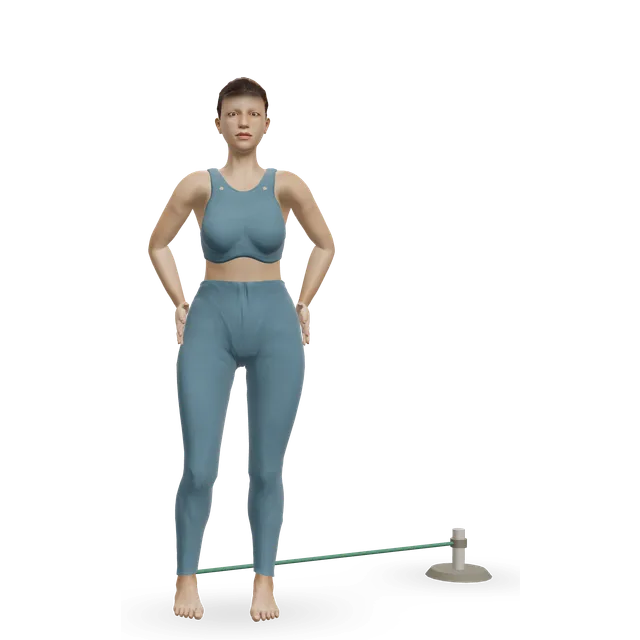
Standing band hip adduction demonstrated on the 3D figure3D demoStanding band hip adductionBeginner · A band + An anchor point

3 sets of 10 to 12 each side · As in our groin strain and groin pain guides (editorial); the trial included standing adduction against a load

Easier: Lying adductor ball squeeze · Harder: Copenhagen plank

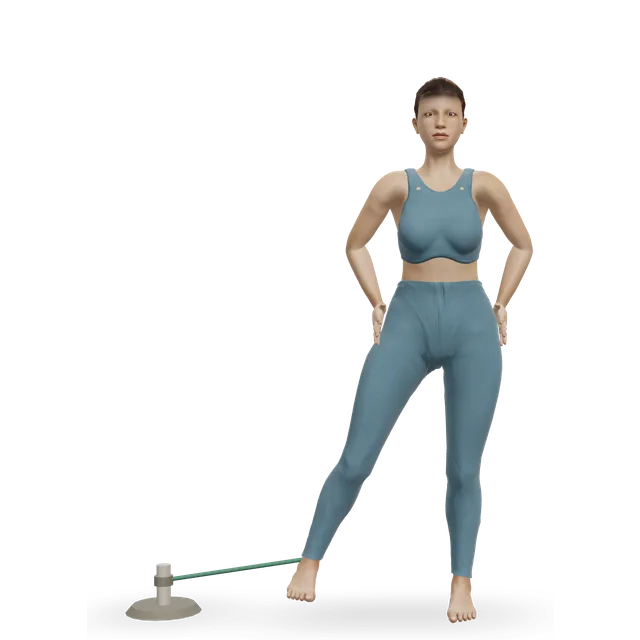
Standing band hip abduction demonstrated on the 3D figure3D demoStanding band hip abductionBeginner · A band + An anchor point

3 sets of 10 to 12 each side · As in our groin strain guide (editorial): a standing band hip abduction, for balance

Easier: Hip abduction machine · Harder: Lateral band walk, band at the feet

Side plank demonstrated on the 3D figure3D demoSide plankIntermediate · No equipment

3 holds of 20 to 30 s each side · As in our groin pain and sports hernia guides (editorial); a steady 30 s side plank is the Copenhagen plank's starting point, as that move page says

Easier: Knee side plank · Harder: Side plank with leg lift

Dead bug demonstrated on the 3D figure3D demoDead bugBeginner · No equipment

3 sets of 8 each side · As in our sports hernia guide (editorial)

Easier: Dead bug heel taps · Harder: Forearm plank

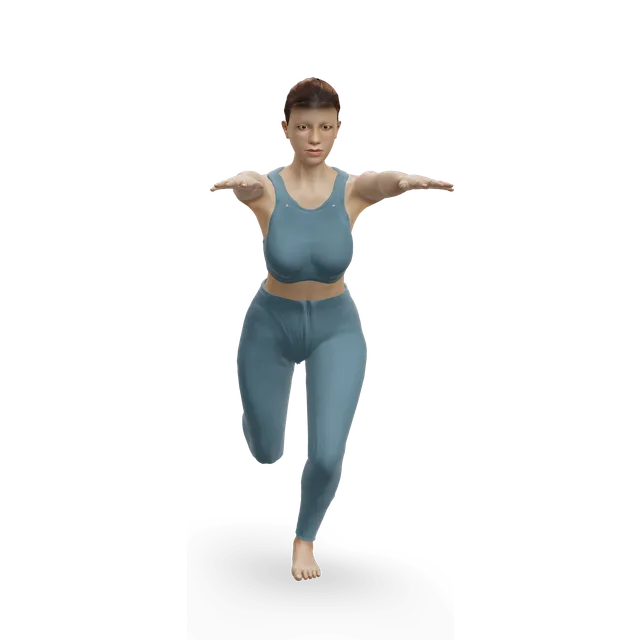
Split squat demonstrated on the 3D figure3D demoSplit squatIntermediate · No equipment

3 sets of 8 each side, a short range first · As in our groin strain guide (editorial). Pad the back knee and shorten the range rather than push through knee pain, as the move page says

Easier: Bodyweight squat · Harder: Reverse lunge

Half-kneeling Pallof press demonstrated on the 3D figure3D demoHalf-kneeling Pallof pressBeginner · A band + An anchor point

3 sets of 10 each side · As in our sports hernia guide (editorial): resisting a twist without curling up. Pad the knee or stand in a split stance if kneeling irritates it, as the move page says

Harder: Pallof press

Move on when: Side-to-side moves and squeezing your knees together are pain-free, a resisted sit-up no longer hurts if your pain was above the crease, and 30 minutes of fast walking is pain-free, the NHS running leaflet's starting point.

Follow along: a timer, a cue and the next move, one step at a time.
Stage 3

Copenhagen, then running, kicking, the gym and work

From about week 6: strength 2 or 3 times a week, the Copenhagen plank 3 times a week then weekly, and running through walk-jog weeks, with speed, turning and kicking last. Sport, the gym, physical work and driving come back by the written steps below.

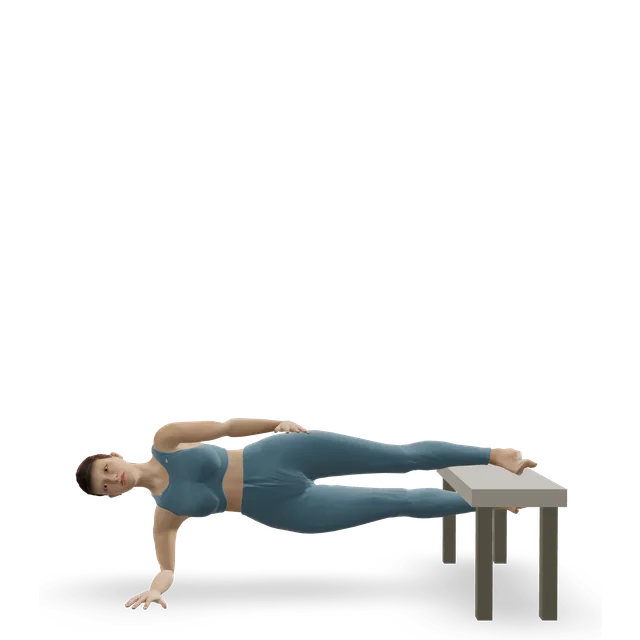
Copenhagen plank demonstrated on the 3D figure3D demoCopenhagen plankAdvanced · A bench or box

Short lever (the top knee on the bench) first: 1 set of 3 to 15 each side, starting with 3 to 5 slow reps and building over the weeks; 3 times a week, then once a week · As in our groin pain guide and our hamstring and groin workout's levels (editorial), at the football trial's frequency. Avoid it during acute groin pain, as the move page says

Easier: Hip adduction machine

Single-leg Romanian deadlift demonstrated on the 3D figure3D demoSingle-leg Romanian deadliftAdvanced · A dumbbell

3 sets of 8 each leg · As in our groin pain guide (editorial). Learn it with your fingertips on a wall or rail, as the move page says

Easier: Dumbbell Romanian deadlift

Treadmill jogging demonstrated on the 3D figure3D demoTreadmill joggingIntermediate · Cardio machine

Every other day for 30 min: jog 1 and walk 1 minute in week 1, then jog 2, 4, 9 and 15 minutes with a minute's walk in weeks 2 to 5, and 30 minutes' jogging in week 6 · The NHS running leaflet's programme: up a level after a pain-free week, down a level with pain, and at least one rest day a week

Easier: Treadmill walking · Harder: Sprint intervals

Skipping demonstrated on the 3D figure3D demoSkippingBeginner · No equipment

3 runs of 20 m, then strides · As in our groin pain guide (editorial). Leave it out with a suspected stress fracture, as the move page says

Easier: Ankle bounces (mini pogo) · Harder: Alternate-leg bounding

Lateral bound (skater jump) demonstrated on the 3D figure3D demoLateral bound (skater jump)Beginner · No equipment

3 sets of 6 to 8 bounds (3 or 4 on each leg), resting a minute between sets · The move page's dose (editorial). Last, once side-to-side moves are pain-free; not with knee or ankle pain, as the move page says

Harder: Bench jump-over

Suitcase carry demonstrated on the 3D figure3D demoSuitcase carryIntermediate · A dumbbell + A kettlebell

3 walks of 20 to 30 m each side · As in our lower back pain in men guide (editorial), for physical work. If you can't stay level, it's too heavy, as the move page says

Easier: Farmer's carry · Harder: Overhead carry (waiter's walk)

Move on when: Our suggestion: running, sprinting, turning and kicking are pain-free at full effort, on the day and the next morning, then full training before matches, and a working day or a gym session leaves you no worse the next morning. Keep the Copenhagen plank weekly through the season, as in the football trial, and two strength days a week; our hamstring and groin injury prevention workout and our workout plans for men and men over 40 suit the long term.

Follow along: a timer, a cue and the next move, one step at a time.

What to change for now

Sport and the gym (written steps)

Our 3D figure can't show these. They come from the trials, a review, the AAOS, the British Hernia Society and NHS leaflets; where a step is our suggestion, it says so.

  • 1. Now: keep walking, and cycle if it's pain-free, as the active training trial allowed. Drop kicking, sprinting, sudden turns and sit-ups while they hurt (our suggestion); with pain on the pubic bone, also cut back long kicking, deep side lunges and lots of tummy work, and keep fit with cycling, pool work and upper-body training (a 2026 review).
  • 2. A sudden pain just above the groin crease: rest and ice for 7 to 10 days, then physiotherapy (the AAOS).
  • 3. The gym: in the sudden-injury programme, extra hip, hamstring and calf exercises were allowed only if they caused no groin pain. Sit-ups were in the trial programme for adductor pain from week 1, but leave them out while they bring on pain above the crease or on the pubic bone (our suggestion).
  • 4. With a hernia: keep exercising with lighter weights and more repetitions, and stop a movement that hurts (the British Hernia Society); breathe out on the effort rather than holding your breath and straining (our suggestion, as in our exercise with a hernia guide).
  • 5. Football: after a sudden adductor injury, the study's milestones were pain-free squeezes, band and Copenhagen adductions, full-speed sprints and an agility test, then controlled training, then full training. Kicking comes last: short passes with the inside of the foot, then longer passes, then crossing and shooting (our suggestion, as in our sports hernia guide). After week 6 of the walk-jog weeks, add no more than about 10% running a week (the NHS running leaflet).
  • 6. Contact sport: back after full training without a flare, wearing a box or cup (our suggestion); after losing a testicle, a Cambridge hospital leaflet says always wear protective clothing in contact sports.

Sources 51, 64, 52, 47, 20, 72, 56

Lifting at work (written steps)

Our 3D figure can't show these. They are the good handling technique of the Health and Safety Executive (HSE), which says technique is no substitute for lifting aids and changes to the task or load.

  • 1. Plan the lift: where is the load going, do you need help or a lifting aid, and is the way clear?
  • 2. Keep the load close to your waist, heaviest side next to you, with your feet apart and one leg slightly forward.
  • 3. Start with a slight bend of your back, hips and knees, rather than a full stoop or a full squat.
  • 4. Don't twist or lean sideways, especially while you're bent; turn by moving your feet, move smoothly, and don't lift more than you can easily manage.
  • 5. Lifting isn't proven to cause hernias, and no trial has tested lifting at work with one. After a repair, the NHS says 1 to 2 weeks off work, or up to 6 if your job involves heavy lifting, and the British Hernia Society says employers should make reasonable adjustments if needed.

Sources 73, 22, 24, 20

After a hernia repair (written steps)

These come from the NHS, an NHS hospital trust, the international guideline and a Danish study. UK advice is more cautious than the international guideline, so follow your own surgical team.

  • 1. Walk from the start and build up slowly; hold your hand over the wound when you cough or sneeze, and don't bath or swim until it has healed, usually about 2 weeks (the NHS).
  • 2. Heavy lifting and strenuous activity: the NHS says none for at least 4 to 6 weeks, and Guy's and St Thomas' says none for 2 weeks after keyhole surgery and 4 after open surgery. The international guideline recommends going back to normal activities without restrictions as soon as you feel comfortable, and says no study has shown that an early return makes the hernia come back.
  • 3. If it hurts when you try to lift something, avoid lifting until the discomfort has fully gone (Guy's and St Thomas'). In 34,822 Danish men, heavier lifting at work after a repair wasn't linked with more reoperations, though it went with longer sick leave.
  • 4. Driving: wait until you're free of pain and can do an emergency stop quickly and safely, usually within 1 to 2 weeks, and check with your insurer (Guy's and St Thomas'); the NHS says check with your healthcare team and insurer first.
  • 5. Groin pain or numbness that lasts longer than 3 months is a possible complication: see your GP or surgical team.

Sources 24, 70, 21, 74

Sitting, driving, cycling and underwear (written steps)

These come from the NHS, Prostate Cancer UK, guidelines, a hospital leaflet and one small trial; where a step is our suggestion, it says so.

  • 1. Sitting: with hip pain, don't sit in low chairs (the NHS). With pelvic pain, use a soft or inflatable cushion during a flare-up, change position, and stand or walk around every 30 minutes (Prostate Cancer UK), as long sitting can make it worse.
  • 2. Driving with a groin strain hasn't been tested: being able to do an emergency stop without pain, the test used after a hernia repair, is a sensible guide (our suggestion).
  • 3. Cycling: with pelvic pain, Prostate Cancer UK suggests avoiding activities that press on the area behind the scrotum, such as cycling, or trying a gel saddle, though cycling wasn't linked with developing it in 20,918 US men. After surgery for a twisted testicle, avoid riding a bike for 3 to 4 weeks (the Cambridge leaflet).
  • 4. Supportive underwear: advised with epididymitis (the NHS and the UK guideline), for two weeks after surgery for a twisted testicle ("brief style" pants rather than loose boxers, the Cambridge leaflet), and possibly helpful with long-lasting scrotal pain (the AUA). No source supports it for a groin strain; zoned compression shorts eased pain during agility and shooting tests in one small trial of 34 male footballers, and some people with a small groin hernia find compression underwear helps (the British Hernia Society).
  • 5. Long-lasting pelvic pain: build towards the aerobic trial's 40 minutes of fast walking 3 times a week, pacing yourself. Relaxation breathing on our pelvic floor relaxation page (the move page's dose: 5 to 10 slow breaths, 1 to 3 times a day) can sit alongside a pelvic health physiotherapist's plan, but, as the move page says, it doesn't diagnose or treat pelvic pain on its own.

Sources 12, 71, 41, 67, 56, 31, 26, 75, 20

Painkillers, treatment and checks (written steps)

These steps come from the NHS, NHS inform and NICE. Treating the cause is your doctor's job: a repair for a hernia that causes symptoms, an emergency operation for a twisted testicle, antibiotics for epididymitis or bacterial prostatitis, and a range of treatments for long-lasting pelvic pain and kidney stones.

  • 1. A strain: for the first 2 to 3 days, an ice pack wrapped in a tea towel for up to 20 minutes every 2 to 3 hours; paracetamol, then ibuprofen gel, then tablets if needed, asking a pharmacist what suits you (the NHS). NHS inform says anti-inflammatories may have limited value and may slow early healing, and the sudden-injury programme discouraged them.
  • 2. Epididymitis: a cold pack or frozen peas wrapped in a tea towel on the groin, with paracetamol or ibuprofen, alongside the antibiotics (the NHS).
  • 3. With a fever or pee symptoms, don't take ibuprofen for a possible kidney infection unless a doctor advises it (the NHS); for kidney stone pain, NICE offers an anti-inflammatory first. After a stone, drink 2.5 to 3 litres of water a day, add fresh lemon juice, and avoid lots of fizzy drinks and too much salt (the NHS).
  • 4. Check your testicles about once a month from puberty, during or after a warm bath or shower: hold your scrotum in your palm, roll each testicle between your thumb and fingers, and feel the soft tubes at the back. It's common for one to be slightly bigger or hang lower (the NHS).
  • 5. At the GP: "Try not to be embarrassed. The doctor will be used to talking about these symptoms," the NHS says. You can ask for a male or female doctor or nurse and have someone with you, and sexual health clinics treat epididymitis, many as walk-in services.

Sources 76, 59, 47, 31, 77, 50, 44, 78, 37, 42, 24, 56, 41

Positions to swap, and why

Habit or positionWhy it mattersInstead
Kicking, sprinting, sudden turns and sit-ups while they hurtThey load the adductors and the lower tummy wall, which the Doha examination tests with resisted squeezing and resisted sit-ups.Walking or cycling, and the ball squeeze.Try: Lying adductor ball squeeze
Resting completely for weeksActive training beat passive treatment for long-standing adductor pain, and most sudden adductor injuries were back in full training in about 18 days on a plan.The staged plan from the first week.Try: Glute bridge
Hard adductor stretching as the fixThe trial that worked left out adductor stretching, and the programme that prevented groin problems was a strengthening exercise.Squeezes and band work.Try: Standing band hip adduction
Cossack squats and deep side lunges while the inner thigh is soreThe move page says leave it out while a groin strain is painful.A short-range split squat.Try: Split squat
Long-lever Copenhagen planks while the groin is acutely painfulThe move page says avoid it during acute groin pain.The ball squeeze now, and the short lever later.Try: Lying adductor ball squeeze
Running through groin pain that builds with every step or hurts at nightIt can be a stress fracture of the hip, and a delay makes it more likely the bone shifts.Stop, and get it checked the same day.
Waiting to see whether sudden testicle pain settlesIn case series, about 97 in 100 twisted testicles were saved within 6 hours, against about 43 in 100 at 19 to 24 hours.A&E or 999 now.
Extra pelvic floor squeezes with pelvic painThe move page says don't add more squeezes with pelvic pain: the muscles may need to relax instead.Relaxation breathing, alongside a pelvic health physiotherapist's advice.Try: Pelvic floor relaxation (reverse Kegel)

Routines to follow

Hamstring and groin injury prevention

The Nordic hamstring and Copenhagen adduction programmes from the football trials: a 10-week build, three adductor levels, then once a week in season.

15 minIntermediate6 movesA wall, An anchor point

FIFA 11+ warm-up

FIFA's 11+ injury prevention warm-up as its manual sets it out: running drills, strength, balance and jumping at three levels, then faster running.

20 minBeginner20 movesCardio machine, A wall

Beginner core workout

A 15-minute beginner core workout on the floor: dead bugs, bird dogs, knee planks, side planks and curl-ups.

15 minBeginner6 movesNo equipment

Run-walk intervals for beginners

A 30-minute beginner run-walk session: a brisk walk, then 1-minute jogs with 1-minute walks, building to 3-minute runs over your first three weeks.

30 minBeginner5 movesCardio machine, A wall

Ice hockey warm-up: hips and groins off the ice

A 15-minute ice hockey warm-up: a jog or bike, skips and shuffles, leg swings, Cossack squats, band walks, bridges, ball squeezes, side planks and bounds.

15 minBeginner14 movesCardio machine, A wall

Activate rugby warm-up: the adult sample phase

England Rugby's and World Rugby's Activate warm-up, the manual's adult sample phase: running, balance, partner holds, hops, sprints and neck holds.

25 minBeginner15 movesCardio machine, A wall

Gaelic games warm-up (built on the GAA 15)

A 15-minute warm-up built on the GAA 15: running drills, bridges, lunges, squats, planks, partner balance, jumps, Nordic lowers, then sprints and cuts.

15 minBeginner20 movesCardio machine, A wall

Pelvic floor relaxation exercises

An 8-minute routine for a tight pelvic floor: slow breathing and comfortable positions to help the muscles let go, with no strengthening squeezes.

8 minBeginner5 movesFirm cushion

More moves for this area

Questions people ask

What causes groin pain in men?

In active men it's usually the inner thigh muscles, the hip flexors, the lower tummy wall just above the groin crease or the pubic bone, often more than one at once, and the hip joint is another common source. An inguinal hernia, a kidney stone, the testicles and the prostate can all be felt in the groin too. Where it hurts and what brings it on are the best clues, and an examination decides.

Is groin pain in men serious, and when is it an emergency?

Usually it isn't serious. Go to A&E or call 999 for sudden, severe testicle pain, testicle pain with feeling or being sick or tummy pain, or testicle pain lasting more than an hour or continuing at rest, and for a femoral hernia with very bad tummy pain, being sick or not being able to fart or poo. A painful hernia needs NHS 111, and kidney stone pain, blood in your pee or a possible urine infection needs an urgent GP appointment or NHS 111.

Why does my groin hurt on the right side, or the left?

The side rarely names the cause. Groin injuries in football are commoner on the kicking leg, and a hernia, the hip or a kidney stone can be on either side. A varicocele is usually on the left, and one on the right on its own needs checking; testicle pain on either side follows the warning signs.

Why does my groin pain come and go?

Kidney stone pain comes in waves, an inguinal hernia gets bigger when you cough or strain and smaller when you lie down, and a femoral hernia's ache comes and goes. Long-lasting pelvic pain has flare-ups. Sudden testicle pain that settled on its own can be a twist that untwisted, so ask for an urgent GP appointment or get help from NHS 111.

Groin and testicle pain together: what could it be?

A kidney stone, an inguinal hernia reaching the scrotum, epididymitis, long-lasting prostatitis and, less often, a twisted testicle felt in the groin can all do it. Sudden, severe testicle pain is an A&E or 999 matter, and an ache, lump or swelling you're worried about needs an urgent GP appointment or NHS 111.

Is it a groin strain or a hernia?

A strain hurts on the inner thigh near the pubic bone, especially squeezing your knees together, after a kick, sprint or turn. An inguinal hernia is a lump that gets bigger when you cough or strain and smaller when you lie down, while pain above the crease with no lump is often called a sports hernia, which isn't a true hernia. See a GP about any lump; if a hernia that usually goes back suddenly won't, with pain, a fever or being sick, get help from NHS 111, or call 999 if it's a femoral hernia or you can't poo or fart at all.

Why does my groin hurt after sex or ejaculation?

Pain when you ejaculate is a symptom of prostatitis, and the long-lasting kind can also cause erection problems and pain between the scrotum and the back passage. See a GP, and ask for an urgent GP appointment or get help from NHS 111 if you can't pee, or have pain when you pee or a high temperature. It isn't a pain to train through.

Can a urine infection, the prostate or a kidney stone cause groin pain?

Yes. Kidney stone pain spreads from the side or back to the groin or a testicle, and prostatitis can cause pain in the groin, the area behind the scrotum, the testicles or the penis. Urine infections are less common in men, and the NHS asks any man who thinks he has one to ask for an urgent GP appointment or get help from NHS 111.

Groin pain in men over 50 or 60: what is it likely to be?

Common causes are the hip joint, an inguinal hernia, which in Denmark was most often repaired at 75 to 80, a kidney stone or a prostate problem. Femoral hernias also become more common with age in men, and severe hip pain after a fall, or not being able to stand or put weight on the leg, is a 999 call. Prostate cancer often has no symptoms at first, and hip or back pain is usually caused by other things, but pee symptoms, erection problems or weight loss you can't explain need a GP.

How long does a groin strain take, and when can I play football again?

Men with a sudden adductor injury on a criteria-based plan were back in full team training in a median of 18 days, while complete tears took a median of 78 days. Long-standing adductor pain needed 8 to 12 weeks of active training in a trial, and a median of 18.5 weeks to a pain-free return. Go by the milestones (a pain-free squeeze, running, turning, then kicking), not the calendar.

What exercises help groin pain in men?

Strengthening: ball squeezes and bridges, then band adduction and side planks, then the Copenhagen plank, which cut groin problems by 41% in male footballers. In men with long-standing adductor pain, an active programme got 23 back to sport without pain, against 4 after passive treatment. Hard stretching isn't the answer, and the plan on this page builds up in three stages.

When should a man see a doctor about groin pain, and which doctor?

Call 999 (911 in the US) or go to A&E for the emergency signs above, and ask for an urgent GP appointment or get help from NHS 111 for testicle changes, kidney stone pain or pain when you pee. Otherwise see a GP for a groin lump, or for pain that hasn't improved after 2 weeks of looking after it, and a sexual health clinic can treat epididymitis. Men see GPs about a third less often than women, so book the check rather than wait; doctors are used to these questions, and you can ask for a male or female doctor.

Related exercise guides

Other pain guides

Sources

  1. Thorborg 2017 · Hip and groin pain in a season in 695 sub-elite male footballers (cross-sectional study, Scand J Med Sci Sports)
  2. Waldén 2015 · Groin injuries in senior football, in men and in women (systematic review of 34 studies, Br J Sports Med)
  3. Scales 2012 · How common kidney stones are in the United States (national survey, Eur Urol)
  4. Wang 2013 · Do men consult less than women? Consultation rates in 446 UK general practices (cross-sectional study, BMJ Open)
  5. Chapple 2004 · Why men with testicular cancer delay seeking treatment (qualitative study of 45 men, Br J Gen Pract)
  6. Weir 2015 · The Doha agreement on terms and definitions for groin pain in athletes (consensus statement, Br J Sports Med)
  7. Hölmich 2007 · Three main patterns of long-standing groin pain in 207 athletes (prospective study, Br J Sports Med)
  8. Hölmich 2014 · Groin injuries in a season of sub-elite male football, and how they present (cohort study of 998 players, Br J Sports Med)
  9. Rankin 2015 · The hip joint as a leading cause of groin pain in 894 sports clinic patients (6-year review, Am J Sports Med)
  10. Lesher 2008 · Where hip joint pain is felt, in 51 people confirmed by injection (descriptive study, Pain Med)
  11. Hack 2010 · Cam-type hip shape on scans of 200 volunteers without symptoms (cross-sectional study, J Bone Joint Surg Am)
  12. NHS · Hip pain in adults
  13. Robertson 2017 · Stress fractures of the neck of the thighbone in sport (review, Sports Med Int Open)
  14. Royal National Orthopaedic Hospital NHS Trust · A patient's guide to avascular necrosis (AVN)
  15. NHS · Hernia
  16. Primatesta 1996 · Inguinal hernia repairs in the Oxford region, 1976 to 1986 (population study, Int J Epidemiol)
  17. Burcharth 2013 · Groin hernia repairs across Denmark by age and sex (national register study, PLoS One)
  18. NHS · Femoral hernia
  19. Dahlstrand 2009 · Femoral hernia repairs, and how many were emergencies, in the Swedish Hernia Register, 1992 to 2006 (register study, Ann Surg)
  20. British Hernia Society · Living with a hernia: frequently asked questions for patients (2025)
  21. HerniaSurge Group 2018 · International guidelines for groin hernia management (guideline, Hernia)
  22. Svendsen 2013 · Physical work and the risk of inguinal hernia (systematic review of 23 studies, Scand J Work Environ Health)
  23. Cesmebasi 2015 · Genitofemoral nerve pain (review, Clin Anat)
  24. NHS · Inguinal hernia repair
  25. NHS · Testicle pain
  26. Chirwa 2021 · UK national guideline for the management of epididymo-orchitis, 2020 (British Association for Sexual Health and HIV guideline, Int J STD AIDS)
  27. Zhao 2011 · Testicular torsion in US children: a national database study (cohort study, J Urol)
  28. Choi 2022 · Testicular torsion and testicles saved in Korea over 10 years (national population study, Investig Clin Urol)
  29. Greear 2021 · Testicular torsion at all ages in US emergency departments (national database study, Int J Impot Res)
  30. Mellick 2019 · How long a twisted testicle survives (systematic review of 30 case series, Pediatr Emerg Care)
  31. NHS · Epididymitis
  32. NHS inform · Testicular lumps and swellings
  33. Langan 2022 · Scrotal masses (review, Am Fam Physician)
  34. NHS · Complications of a vasectomy
  35. Cancer Research UK · Testicular cancer statistics
  36. Cancer Research UK · Symptoms of testicular cancer
  37. NHS · Prostatitis
  38. Krieger 2008 · How common prostatitis is (review of population surveys, Int J Antimicrob Agents)
  39. Prostate Cancer UK · Prostatitis
  40. Prostate Cancer UK · What are the signs and symptoms of prostatitis?
  41. Lai 2025 · Male chronic pelvic pain, parts I to III (American Urological Association guideline, J Urol)
  42. NHS · Symptoms of prostate cancer
  43. Prostate Cancer UK · Know your prostate: a guide to common prostate problems (booklet, 2024)
  44. NHS · Kidney stones
  45. NHS · Urinary tract infections (UTIs)
  46. NHS · Blood in urine
  47. Serner 2020 · Return to sport after criteria-based rehabilitation of sudden adductor injuries in 81 male athletes (cohort study, Orthop J Sports Med)
  48. Maloy 2025 · Groin pain and injuries: evaluation and management (review, Am Fam Physician)
  49. NICE NG12 · Suspected cancer: recognition and referral, by site of cancer (2015, updated 2026)
  50. NICE NG118 · Renal and ureteric stones: assessment and management (2019)
  51. Hölmich 2015 · Groin injuries in athletes: clinical entities, treatment and prevention (doctoral thesis summary with the trial programme, Dan Med J)
  52. American Academy of Orthopaedic Surgeons (OrthoInfo) · Sports hernia (athletic pubalgia)
  53. King 2015 · Surgery against rehabilitation for athletic groin pain (systematic review and meta-analysis of 56 studies, Br J Sports Med)
  54. Fitzgibbons 2013 · Watchful waiting for a minimally painful inguinal hernia in men, up to 11.5 years on (randomised trial follow-up, Ann Surg)
  55. Chung 2011 · Observation or repair for a painless inguinal hernia in 160 men aged 55 or over, 7.5 years on (randomised trial follow-up, Br J Surg)
  56. Cambridge University Hospitals NHS Foundation Trust · Testicular torsion: information for teenagers (2025)
  57. Hölmich 1999 · Active training against physiotherapy without it for long-standing adductor-related groin pain in 68 athletes (randomised trial, Lancet)
  58. Hölmich 2011 · The active training trial for adductor-related groin pain, 8 to 12 years on (randomised trial follow-up, Am J Sports Med)
  59. NHS inform · Soft tissue injury advice
  60. Harøy 2019 · An adductor strengthening programme to prevent groin problems in 652 male footballers (cluster randomised trial, Br J Sports Med)
  61. Ishøi 2016 · Eccentric adductor strength gains with the Copenhagen adduction exercise in 24 young footballers (randomised trial, Scand J Med Sci Sports)
  62. Sheen 2014 · Treating the sportsman's groin: the British Hernia Society's position statement from the Manchester consensus (consensus statement, Br J Sports Med)
  63. Paajanen 2011 · Keyhole surgery or non-surgical treatment for long-standing groin pain in 60 athletes (randomised trial, Surgery)
  64. Massè 2026 · Osteitis pubis in athletes: diagnosis, rehabilitation and when to consider surgery (review, J Clin Med)
  65. Fitzgibbons 2006 · Watchful waiting or repair for a minimally painful inguinal hernia in 720 men (randomised trial, JAMA)
  66. Franco 2018 · Non-drug treatments for chronic prostatitis and chronic pelvic pain syndrome (Cochrane review of 38 trials)
  67. Zhang 2015 · Physical activity and chronic prostatitis in 20,918 US men (cohort study, Med Sci Sports Exerc)
  68. NHS inform · Exercises for hip problems
  69. Smith 2017 · Should exercise be painful in long-lasting muscle and joint pain? 7 trials, 385 people (systematic review and meta-analysis, Br J Sports Med)
  70. Guy's and St Thomas' NHS Foundation Trust · Recovery after inguinal hernia repair
  71. Prostate Cancer UK · Prostatitis treatments
  72. Oxford University Hospitals NHS Foundation Trust · Return to running programme (OxSport patient leaflet, 2024)
  73. Health and Safety Executive · Manual handling at work: good handling technique
  74. Vad 2015 · Physical work and reoperation after inguinal hernia repair in 34,822 Danish men (register cohort study, Hernia)
  75. Otten 2019 · Compression shorts for groin pain in 34 male footballers (randomised trial, Phys Ther Sport)
  76. NHS · Sprains and strains
  77. NHS · Kidney infection
  78. NHS · How to check your testicles

Exercise education, not a diagnosis or treatment plan. It is written from the guidelines and studies listed above; review by a clinician is pending. If your pain follows an injury, is severe, is getting worse, or comes with any warning sign listed on this page, get it assessed. Health disclaimer.