Pain guide · Leg pain

Inner thigh pain: a groin strain, the hip joint, a hernia, a trapped nerve, pregnancy and a clot

Inner thigh pain is common, and in active people it most often comes from the adductors, the inner thigh muscles that pull your legs together, close to the groin after sprinting, kicking or a sudden change of direction. Where it hurts and what sets it off are the best clues: close to the groin and worse squeezing your knees together points to the adductors, a deep groin and thigh ache from mid-life to the hip joint, a lump at the top of the thigh to a hernia, and pain spreading from the pubic bone in pregnancy to pelvic girdle pain.

This guide starts with the signs that need help today, in the National Health Service's (NHS) words, from a 999 call or accident and emergency (A&E) to NHS 111 or a general practitioner (GP): one swollen, throbbing leg, breathlessness, a painful hernia and severe pain after a fall. It then maps the causes by the exact spot, sets out what helps (strengthening rather than stretching, and what the trials found), and gives a three-stage plan that ends with running, kicking and turning.

When to get help first

Exercise is for pain that has been checked or is clearly mild and settling.

Get urgent medical help if

  • Call 999: calf or leg pain or swelling with breathlessness or chest pain. It could be a clot that has reached the lungs. Do not drive yourself to A&E.
  • Call 999 or go to A&E: severe hip pain after a fall or injury, or you cannot stand, walk or put weight on the leg. In an older adult this can be a broken hip; the leg may be at an odd angle or look shorter. Don't drive yourself.
  • Tingling or loss of feeling in the hip or leg after an injury.
  • Call 999 or go to A&E now if you have a femoral hernia (a small lump at the top of the thigh, in the groin) and very bad tummy pain, you feel sick or are being sick, you cannot fart or poo, you have a high temperature or feel hot, cold or shivery, or you've suddenly become confused. It may be strangulated, which is an emergency. Don't drive yourself.
  • Call 999 or go to A&E if you have sciatica on both sides, weakness or numbness in both legs that's severe or getting worse, or numbness around or under your genitals, or around your bottom (anus); if you find it hard to start peeing, cannot pee or cannot control when you pee; or if you do not notice when you need to poo or cannot control when you poo, and this is not normal for you. These could be symptoms of a serious back problem that needs to be treated in hospital as soon as possible.
  • Go to A&E or call 999 for sudden, severe pain in a testicle, testicle pain with feeling or being sick or tummy pain, or testicle pain that has lasted more than an hour or continues at rest. It can be a twisted testicle (testicular torsion), which needs treating straight away. For a lump, swelling or a change in a testicle's size or shape, ask for an urgent GP appointment or get help from NHS 111.
  • Get help from NHS 111 if you have a hernia (a lump in the groin or tummy) and pain in or around it, a bloated tummy, you feel sick or are being sick, your vomit looks like coffee grounds, you're constipated, you have a high temperature or feel hot, cold or shivery, or you've suddenly become confused.
  • Same day (urgent GP appointment or NHS 111): severe pain that usually starts in the side of your tummy or your lower back, may spread to the area at the top of your inner thigh (groin), your testicles or the area around the opening of your vagina, and may come and go, or this pain with a high temperature or feeling hot, cold or shivery. It can be a kidney stone.
  • Same day (urgent GP appointment or NHS 111): throbbing pain in one leg (rarely both), usually the calf or thigh; swelling in one leg (rarely both); red, blue or darkened skin around the painful area, which may be harder to see on brown or black skin; or swollen veins. This can be a deep vein thrombosis (DVT). It is more likely after surgery, a hospital stay, 3 or more days in bed, a journey of over 4 hours, pregnancy or a recent birth, cancer, a previous clot, or oestrogen-containing contraception or hormone replacement therapy (HRT).
  • Ask for an urgent GP appointment or get help from NHS 111: throbbing or cramping pain or sudden swelling in your leg (or arm), warm, red or darkened skin around the painful area, or swollen veins that are hard or sore when you touch them. It may be phlebitis (an inflamed vein near the surface), and the NHS says to get it checked in case it's something more serious, like a deep vein thrombosis.
  • Ask for an urgent GP appointment or get help from NHS 111 if you have severe hip pain that started suddenly but you've not had a fall or injured your hip, your hip is swollen and feels hot, the skin around your hip has changed colour, or you have hip pain, feel generally unwell and have a high temperature (or feel hot, cold or shivery). A hot, swollen hip with a high temperature can be a joint infection.
  • Same day, and stop running now: groin or front-of-hip pain in a runner, sometimes felt in the thigh or knee, that builds with running, hurts with every step or at night, or hurts when the hip is turned to the end of its range. Keep weight off the leg, using crutches if you have them, and get an urgent GP appointment or help from NHS 111 the same day: a stress fracture of the hip (femoral neck) needs urgent imaging.
  • Call a doctor or NHS 111 straight away: new pain, weakness or discomfort in your thigh, hip or groin while you're taking a bisphosphonate bone medicine, such as alendronic acid. The NHS says this happens rarely but may be an early sign of a possible broken thigh bone, and the UK medicines regulator asks everyone taking these medicines to report thigh, hip or groin pain.
  • Throbbing or cramping pain and swelling in one leg, usually the calf or thigh: ask for an urgent GP appointment or get help from NHS 111, or call your maternity unit. With breathlessness or chest pain, call 999 and don't drive yourself. Moving much less because of pelvic girdle pain raises the risk of a clot.
  • Sudden, severe hip or groin pain, or being unable to put weight on a leg, especially late in pregnancy: get help the same day. A rare thinning of the hip bone in pregnancy (transient osteoporosis) or a fracture needs a scan.
  • Ask for an urgent GP appointment or get help from NHS 111 the same day if your child gets sudden pain in their hip, thigh or knee (hip problems can sometimes be felt in the thigh or knee), or is limping or cannot put any weight on 1 leg. This applies to teenagers too, and in some children knee pain is the only sign.

See a doctor or physiotherapist if

  • Hip pain that stops normal activities or disturbs sleep, keeps getting worse, or has not improved after 2 weeks of looking after it at home.
  • Contact your GP practice, or phone NHS 111 if it's closed: your thigh is hot, swollen or tender, especially if you can't remember an injury, or you can't put any weight through your leg.
  • A lump in the groin, upper thigh or tummy, especially one that appears when you cough or strain and goes when you lie down: see a GP, as it may be a true hernia. A femoral hernia (a small lump at the top of the thigh, mainly in women over 50) needs treating in hospital.
  • Tender lumps in the groin that are getting bigger or haven't gone down within a week, feel hard or don't move when you press them, or come with night sweats, a very high temperature or no other sign of infection: see a GP. They may be swollen glands.
  • A pop high on the inner thigh, then a large bruise, a dent or a gap you can feel, or weakness squeezing your legs together: get it assessed within days. It can be a complete tear of an adductor tendon. In one small series, athletes recovered without surgery, but the tear should be confirmed by an examination or a scan before you load it (our suggestion).
  • Burning, tingling or numbness in the groin or inner thigh, especially after a hernia repair, or inner thigh pain that comes on with exercise and spreads down the inside of the thigh: see a GP or sports physician. A nerve may be irritated or trapped (our suggestion).
  • Pain or numbness in the groin that lasts more than 3 months after a hernia repair: see your GP or your surgical team. The NHS lists it as a possible complication.
  • Call your midwife or GP if you have pelvic pain and it's hard for you to move around, it hurts to get out of a car or turn over in bed, or it's painful going up or down stairs.
  • Varicose veins with pain, itching or swelling in your legs, or a sore on your leg that hasn't healed after 2 weeks: see a GP.
  • Pain in one spot on the pubic bone, or low back or buttock pain on one side, brought on by running in a distance runner, especially if your periods have stopped or become irregular, you've lost weight or you've had a stress fracture before: stop running and see a GP. It can be a stress fracture of the pelvis or the sacrum, and a magnetic resonance imaging (MRI) scan is the usual test.
  • Bone pain that is constant or worse at night, especially with a lump, unexplained weight loss, fever or tiredness, or a past history of cancer.
  • Talk to a healthcare professional if your symptoms haven't improved within 6 weeks of following this advice, or they get worse. In many areas you can get physiotherapy from NHS community musculoskeletal (MSK) services without a GP referral.

Where does it hurt?

Location narrows the likely causes; it does not diagnose.

The inner thigh close to the groin, worse squeezing the knees together, kicking, sprinting or changing direction, and tender on the tendon

Usually adductor-related groin pain, often called a groin strain: the commonest cause in athletes.

Read: Groin strain →
A sudden, sharp pull in the inner thigh during a sprint, a kick or a change of direction

A sudden adductor injury.

Read: Groin strain →
A pop high on the inner thigh, then a large bruise, a dent or a gap you can feel, and weakness squeezing the legs together

A possible complete tear of the adductor longus tendon: get it checked within days.

Read: Groin strain →
Both inner thighs sore and stiff a day or two after new squats, lunges, riding or a new class, easing day by day

Muscle soreness after unfamiliar exercise (delayed onset muscle soreness). Our muscle soreness guide covers what helps.

The front of the hip and groin when lifting the knee, kicking or running uphill

The hip flexors (iliopsoas-related groin pain).

Read: Hip flexor pain →
Just above the groin crease, worse sprinting, with sit-ups, coughing or sneezing, with no lump

Inguinal-related groin pain, often called a sports hernia, though it isn't a true hernia.

Read: Sports hernia →
Right on the pubic bone at the front, often both sides, in a kicking or turning sport

Pubic-related groin pain (osteitis pubis).

Read: Osteitis pubis →
A lump where the top of the inner thigh meets the tummy, bigger when you cough or strain and smaller when you lie down

An inguinal hernia: see a GP. Our groin pain guide covers hernias, and our exercise with a hernia guide covers staying active with one.

Read: Groin pain →
A small, grape-sized lump at the top of the thigh in the groin, mainly in women over 50

A possible femoral hernia, which needs treating in hospital: see a GP, and see the warning signs.

Several small, tender lumps in the groin crease, with an infection nearby or a cold

Usually swollen glands, which go down within 1 to 2 weeks. See a GP if they last longer than a week, feel hard or don't move.

A deep ache in the groin and the front or inside of the thigh from mid-life, worse walking, with short-lived morning stiffness

Possibly hip arthritis: the hip joint is often felt in the groin and thigh.

Read: Hip arthritis →
A deep groin pinch with deep bending, sitting low or getting out of a car, or clicking or catching, in a younger active adult

Possibly hip impingement or a labral tear.

Read: Hip impingement (FAI) →
Pain that comes on with exercise, starts near the adductor tendon at the top of the thigh and spreads down the inside of the thigh

An uncommon cause is a trapped obturator nerve: see a sports physician if a groin strain plan doesn't help.

Read: Groin strain →
Burning, tingling or numbness in the groin or inner thigh, especially after a hernia repair

An irritated nerve in the groin: see a GP or your surgical team.

Pins and needles, or sharp, hot or burning pain in the thigh, with or without back pain, or weakness or numbness spreading on the front or inside of the thigh

A nerve from the back.

Read: Sciatica →
In pregnancy or after giving birth: over the pubic bone, spreading to the inner thighs, worse walking, on stairs, standing on one leg and moving your legs apart

Pelvic girdle pain. It won't harm your baby, and it can be treated at any stage.

Read: Pelvic girdle pain (SPD) →
One leg throbbing and swollen, usually the calf or thigh, with red, blue or darkened skin or swollen veins

A possible blood clot (DVT): get help the same day, and call 999 if you're also breathless or have chest pain.

A vein near the surface that is hard, sore and swollen, with warm, red or darkened skin over it, often with varicose veins

Phlebitis, which needs a same-day check in case it is a clot in a deeper vein.

Heavy, aching legs with bulging veins, worse after standing

Varicose veins: see a GP if they hurt, itch or swell. Our exercise with varicose veins guide covers staying active.

Severe pain in the side or lower back that comes and goes and spreads to the top of the inner thigh, the testicles or the vagina

A possible kidney stone: get help the same day.

Read: Lower back pain on one side →
Men: sudden, severe testicle pain, or a dull ache, lump or change in a testicle

Sudden severe pain is a 999 call; our groin pain guide covers the testicles.

Read: Groin pain →
Groin or inner thigh pain in a runner or walker that builds with every step, then hurts at rest or at night

A possible stress fracture of the hip or the pubic bone: stop and get it checked the same day.

Read: Stress fracture →
A dull ache in the thigh or groin while taking a bisphosphonate such as alendronic acid

Rarely an early sign of a break in the thigh bone: call a doctor or NHS 111 straight away.

Severe groin or thigh pain after a fall in later life, and you can't stand or put weight on the leg

A possible broken hip or pelvis: call 999 or go to A&E.

A child or teenager with a limp, or sudden groin, thigh or knee pain

The hip in children needs an urgent GP appointment or NHS 111 the same day; a slipped growth plate is one cause.

Read: SUFE (slipped hip growth plate) →
Just above or below the inner knee, or the inner knee itself

Our inner knee pain guide maps the causes there.

Read: Inner knee pain →
Inner thigh or groin pain mostly when you run

Our groin pain when running guide.

Read: Groin pain when running →
Inner thigh or groin pain mostly when you cycle

Our hip pain when cycling guide.

Read: Hip pain when cycling →
New groin or thigh pain after a hip replacement

Your surgical team first; our hip replacement guide covers the stages.

Read: Hip replacement →

Understand it

Where it hurts is a clue, not a diagnosisStrong evidence

The inner thigh meets the groin at the top, and the NHS calls the groin the top of your inner thigh, so most inner thigh pain near the groin is groin pain by another name. An international agreement on athletes' groin pain, made in Doha, sorts the common sports causes by the spot and the tests that bring the pain on, keeps the hip joint in mind every time, and lists other conditions not to miss, from hernias and trapped nerves to stress fractures and problems in the tummy and pelvis.

So this guide says a spot points to a cause rather than proving it, and an examination decides.

Sources 1, 2, 3

Close to the groin: the adductorsEmerging evidence

The Doha agreement calls pain from the inner thigh muscles adductor-related groin pain: tenderness over the adductors and pain when you squeeze your knees together against resistance. It was the main finding in 58% of 207 athletes at one clinic (69% of the footballers), and a third had more than one cause.

A sudden adductor injury is a sharp pull during a sprint, a kick or a change of direction; most of 81 male athletes with one were pain-free in about 2 weeks. Nearly all of this research is in men, including the 652 footballers in the prevention trial.

Sources 1, 4, 5, 6

A pop, a dent or a gap: a complete tearEmerging evidence

In 81 male athletes with sudden adductor injuries, a dent or gap you could feel on the inner thigh always meant a complete tear on a magnetic resonance imaging (MRI) scan, and the examination could rule a complete tear in or out. Complete tears of the adductor longus tendon were treated with exercise in a small series of 16 athletes (see what helps), but they need confirming first.

Sources 7, 8

Both inner thighs sore after something newEmerging evidence

Soreness on both sides a day or two after new squats, lunges, riding or a new class, with no single sore spot and easing day by day, is delayed onset muscle soreness. A review says it follows unfamiliar exercise, especially lowering work; gentle exercise eases it for a while, and stretching doesn't.

Source 9

The hip jointEmerging evidence

In 51 people whose hip joint was confirmed as the source by an injection, 55% felt the pain in the groin, 57% in the thigh and 71% in the buttock. NHS inform says hip problems can be felt in the buttock, groin, back, thigh or knee. No study we read says the inner thigh in particular, so this guide says the groin and thigh.

The National Institute for Health and Care Excellence (NICE) diagnoses osteoarthritis without a scan from 45 if the pain comes with activity and any morning stiffness lasts 30 minutes or less, and the NHS hip page links pain that is worse when walking, over 45, with osteoarthritis.

Sources 10, 11, 12, 13

NervesEmerging evidence

NHS inform says thigh and hip problems can come from the back even when your back doesn't hurt, felt as pins and needles, or sharp, hot or burning pain.

An uncommon cause is a trapped obturator nerve, the nerve that supplies the inner thigh muscles. A 1997 series of 32 athletes described pain that came on with exercise, started near the adductor tendon and spread down the inside of the thigh; all of them had surgery, so how often it causes inner thigh pain, and whether treatment without surgery helps, is unknown. After a groin hernia repair, the NHS lists pain or numbness in the groin lasting longer than 3 months as a possible complication, and the Doha agreement names the groin's other nerves among the causes not to miss.

Sources 14, 11, 15, 2, 1

A lump: a hernia or swollen glandsStrong evidence

An inguinal hernia is a lump where the leg joins the tummy that may get bigger when you cough or strain and smaller when you lie down, sometimes with a heavy, dragging feeling in the leg; pain in or around a smaller hernia can be a sign it is being squeezed. A femoral hernia is a small lump at the top of the thigh, in the groin, about the size of a grape, mainly in women over 50; most become tightly squeezed (strangulated), and it needs treatment in hospital. The international guideline says an examination alone confirms most groin hernias.

Tender lumps in the groin crease with an infection nearby are usually swollen glands, which go down within 1 to 2 weeks (an NHS page past its review date).

Sources 16, 17, 18, 19

Veins and clotsStrong evidence

The NHS's signs of a deep vein thrombosis (DVT), a clot in a deep vein, name the thigh: throbbing pain in one leg (rarely both), usually in the calf or thigh, with swelling, red, blue or darkened skin around the painful area, or swollen veins. A DVT is more likely in pregnancy and the 6 weeks after a birth, after surgery or a hospital stay, and on long journeys.

Phlebitis is inflammation of a vein near the surface: pain, tenderness or swelling over the vein, warm and itchy skin, and red, thick or hard skin over it, most often with varicose veins. The NHS says it's not usually serious and often gets better on its own after 1 or 2 weeks, but asks for a same-day check in case it is a DVT. Varicose veins themselves can cause aching or heaviness.

Sources 20, 21, 22

How often phlebitis hides a deeper clotEmerging evidence

In a French study of 844 people with phlebitis of the leg who were referred to vascular specialists, about a quarter (24.9%) already had a clot in a deep vein or the lungs. These were specialist referrals, so people seen by a GP may have a lower risk, but it is why the NHS asks for the same-day check.

Source 23

PregnancyStrong evidence

Pelvic girdle pain (PGP) affects up to 1 in 5 pregnant women. The NHS describes pain over the pubic bone, across the lower back, between the vagina and anus, and spreading to the thighs, worse walking, on stairs, standing on one leg, turning over in bed and moving your legs apart (a page past its review date). The Royal College of Obstetricians and Gynaecologists (RCOG) says it won't harm your baby and can be treated at any stage, and a European guideline puts it at about 20% of pregnant women at any one time; a review found that pain in the lower back and pelvis was severe enough to disable about 8% of pregnant women.

Pregnancy and the 6 weeks after a birth also raise the chance of a DVT, so one swollen, throbbing leg needs the same-day check.

Sources 24, 25, 26, 27, 20

Bone, and causes outside the muscles and jointsStrong evidence

Stress fractures of the hip (the femoral neck) and the pubic bone are on the Doha agreement's list not to miss, which is why groin or inner thigh pain in a runner that builds with every step needs checking the same day. Bisphosphonate bone medicines rarely cause an unusual break of the thigh bone, often after weeks to months of a dull ache in the groin or thigh, and the UK medicines regulator asks everyone taking them to report thigh, hip or groin pain.

Kidney stone pain usually starts in the side of the tummy or the lower back and may spread to the top of the inner thigh, the testicles or the area around the opening of the vagina.

Sources 1, 28, 29, 3

When a scan or test helpsStrong evidence

The Doha agreement relies on the story and an examination, because scans often show changes in athletes who have no pain. After a sudden adductor injury, the examination could find or rule out a complete tear, and the MRI grade didn't change the return time for most partial injuries. A hernia rarely needs a scan, and NICE diagnoses hip osteoarthritis without one when the pattern fits.

A suspected DVT needs an ultrasound scan, usually within 24 hours, the NHS says, and a runner's suspected stress fracture needs imaging the same day. People taking a bisphosphonate who have thigh, hip or groin pain should be checked for an incomplete break, in both thigh bones, the regulator says.

Sources 1, 7, 6, 18, 12, 20, 28

How it usually goesEmerging evidence

In 81 male athletes with a sudden adductor injury on a criteria-based plan, most were pain-free in a median of 13 days and back in full team training in 18; complete tears took a median of 55 and 78 days, and 8% were injured again within a year. Long-standing adductor pain, present for a median of 40 weeks, needed an 8 to 12 week programme in a trial, and complete tears of the adductor longus treated with exercise returned to sport in a median of 69 days in a small series.

NHS inform expects new thigh and hip problems to begin to settle within 6 weeks. Phlebitis and swollen glands often settle in 1 or 2 weeks, recovery from a hernia repair usually takes up to 4 to 6 weeks, and pelvic girdle pain usually improves after the birth, though the RCOG says around 1 in 10 women still have pain. No one can promise a date.

Sources 6, 30, 8, 14, 11, 21, 19, 2, 25
What helps, and how strong the evidence is

Long-standing adductor pain: active strengthening beat passive treatmentEmerging evidence

In 68 athletes with adductor-related groin pain for a median of 40 weeks, an 8 to 12 week programme of active training for the strength and coordination of the muscles around the pelvis, especially the adductors, did far better than physiotherapy without active training: 23 in the training group against 4 got back to sport without groin pain. It is one trial in athletes, nearly all men, and the summary we read doesn't list the exercises.

Source 30

A sudden adductor injury: move on by milestonesEmerging evidence

In 81 male athletes following a criteria-based plan with three milestones (pain-free, then controlled sports training, then full team training), partial injuries reached them in a median of 13, 17 and 18 days. Re-injury in the next year was lower in those who were pain-free before moving on (5% against 21%). It was a cohort study, not a trial, so it shows what to expect rather than proving the plan.

Source 6

Complete tears: exercise first, in one small seriesEmerging evidence

In 16 male athletes with a complete tear of the adductor longus tendon treated with exercise alone, the median return to sport was 69 days; at a year, function and adductor strength were normal and the tendon had partly or fully reattached on MRI. The authors recommend trying treatment without surgery first. It is a small series with no comparison group, and the tear has to be confirmed before you load it.

Source 8

Preventing groin problems: the Copenhagen adduction exerciseEmerging evidence

In 652 semi-professional male footballers in 35 teams, one exercise, the Copenhagen adduction, done three times a week in pre-season and once a week in season, cut the average share of players with groin problems from 21.3% to 13.5% (41% lower odds). The programme that prevented groin problems was a strengthening exercise, not a stretch.

Source 5

The hip joint: exercise firstStrong evidence

For hip arthritis, NICE makes therapeutic exercise a core treatment and warns that pain may go up a little at first, while regular exercise still helps. The NHS hip page says keep moving without overdoing it, don't carry anything heavy and don't sit in low chairs. NHS inform's hip exercises (a bridge, a standing hip extension, a standing hip abduction and a sit-to-stand to a chair) are a gentle start, paced from 2 to 3 repetitions at a time up to 2 sets of 15.

Sources 12, 13, 31

Pelvic girdle pain: information, exercises and supportStrong evidence

A European guideline recommends information, reassurance and individual exercises in pregnancy. The NHS describes physiotherapy with exercises for the pelvic floor, stomach, back and hip muscles, with a support belt or crutches if needed, and the RCOG adds that treatment is safe at any stage of pregnancy. Our pelvic girdle pain guide has the plan.

Sources 26, 24, 25
Hernias, clots and phlebitis are for the health serviceStrong evidence

The NHS says some hernias improve on their own but others need surgery, and it recommends surgery for a femoral hernia because it doesn't usually get better by itself and can have serious complications. After an inguinal hernia repair, recovery usually takes up to 4 to 6 weeks: walk from the start, but no heavy lifting or strenuous activity for at least 4 to 6 weeks. Exercise can't close a hernia; our exercise with a hernia guide covers staying active with one.

Phlebitis is treated with an anti-inflammatory gel for a small area, stockings only if a health professional recommends and fits them, and sometimes blood-thinning medicine, once a clot in a deeper vein has been ruled out. Keep using the leg and raise it when you rest.

Sources 16, 17, 2, 21

How much pain is OK while you exercise?

3 out of 10 or less at first, then up to about 5; Copenhagen soreness isn't groin pain; possible bone pain must be pain-freeEmerging evidence

This guide uses the hip hub's rule. During the exercise, pain up to about 5 out of 10 is acceptable. It should settle within an hour or so, and your hip should be no worse that night or the next morning. If it is, do less next time (fewer repetitions, a smaller range, a lighter load), not nothing. NHS inform's hip exercises use the same 0 to 5 limit, and guidelines for arthritis say pain can go up a little when you start.

In the first stage, keep pain at 3 out of 10 or less, as our groin strain guide does, and move on only when a firm squeeze is pain-free: after sudden adductor injuries, reaching a pain-free point before moving on went with fewer re-injuries. Expect muscle soreness in the first fortnight of the Copenhagen exercise, but soreness isn't groin pain: a sharp pain at the pubic bone or in the groin means stop that exercise (our suggestion).

Groin or inner thigh pain that builds with every run, or hurts at night, isn't a pain to manage: stop and get it checked the same day. With any possible bone pain, the rule is no pain during, after or the day after loading. Stop any movement that brings on burning, tingling or numbness, or makes it spread (our suggestion). In pregnancy, our pelvic girdle pain guide's stricter rule applies: an exercise is fine if your pelvic pain doesn't rise during it and isn't worse later that day or the next morning.

The 5 out of 10 figure borrows from pain-monitoring studies in tendon pain and arthritis; it hasn't been tested for inner thigh pain. In trials of long-lasting muscle and joint pain, exercise that allowed some pain did no worse than pain-free exercise. A swollen, throbbing leg, breathlessness, a painful lump, testicle pain or a fever are never pain-rule questions: see the warning signs.

Sources 31, 12, 6, 32, 33

The exercise plan: 3 stages

Start at the first stage. Each move opens a full guide with a 3D demo.

Stage 1

Settle: squeeze, support and keep walking

About the first 2 weeks: in the first 24 to 48 hours, reduce your activities but keep moving, moving the leg gently for 10 to 20 seconds every hour (NHS inform); keep walking within the pain rule; drop sprinting, kicking, sudden turns, sit-ups and wide, deep squats for now, as our groin strain and groin pain guides do, and keep pain at 3 out of 10 or less. Warning signs come first. The hip joint, pregnancy, a hernia, a burning patch on the outer thigh and pain just above the groin crease have their own guides, whose plans can replace this one.

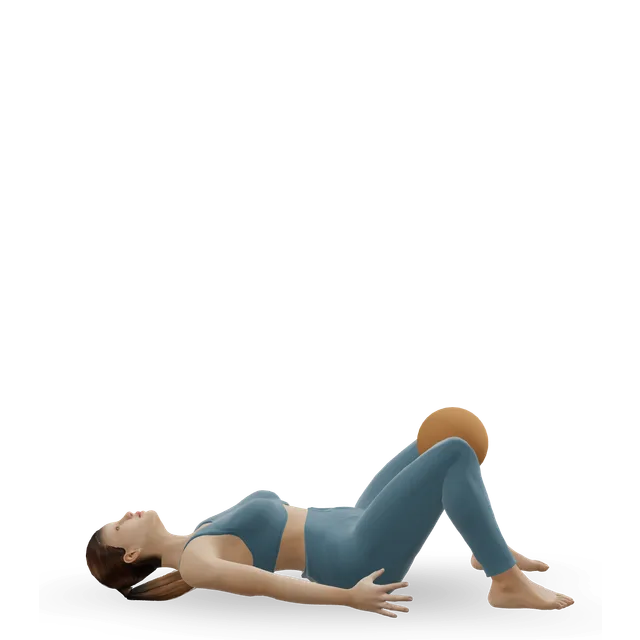
Lying adductor ball squeeze demonstrated on the 3D figure3D demoLying adductor ball squeezeBeginner · Other / check instructions

5 to 10 holds of 5 to 10 s · As in our groin strain and groin pain guides; squeeze only as hard as you can without bringing on the pain. In pregnancy, after the first trimester, keep time flat on your back to a few minutes (the move page)

Harder: Copenhagen plank

Supine heel slide demonstrated on the 3D figure3D demoSupine heel slideBeginner · No equipment

10 slow reps each side, once or twice a day · The move page's dose, which it labels an editorial starting point

Harder: Hip windshield wipers

Glute bridge demonstrated on the 3D figure3D demoGlute bridgeBeginner · No equipment

2 sets of 10 · As in our groin strain guide; NHS inform's bridge is the same movement

Easier: Pelvic tilt into bridge · Harder: Single-leg glute bridge

Knee side plank demonstrated on the 3D figure3D demoKnee side plankBeginner · No equipment

3 holds of 15 to 20 s each side · As in our groin strain guide

Harder: Side plank

Treadmill walking demonstrated on the 3D figure3D demoTreadmill walkingBeginner · Cardio machine

Short walks, little and often, building the total within the pain rule · Editorial; walking outdoors or around the house counts

Harder: Treadmill jogging

Stationary cycling demonstrated on the 3D figure3D demoStationary cyclingBeginner · Cardio machine

20 to 30 min, easy, if it's pain-free · As in our groin pain guide; not with possible bone pain

Easier: Recumbent exercise bike · Harder: Air bike intervals

Move on when: A firm squeeze is pain-free, and walking and stairs are comfortable (our groin strain and groin pain guides' checks).

Follow along: a timer, a cue and the next move, one step at a time.
Stage 2

Build: inner thigh, outer hip and trunk strength

About weeks 2 to 6, three times a week: strength for the muscles around the pelvis, especially the adductors, which was the focus of the active training trial. Keep walking or cycling on the other days.

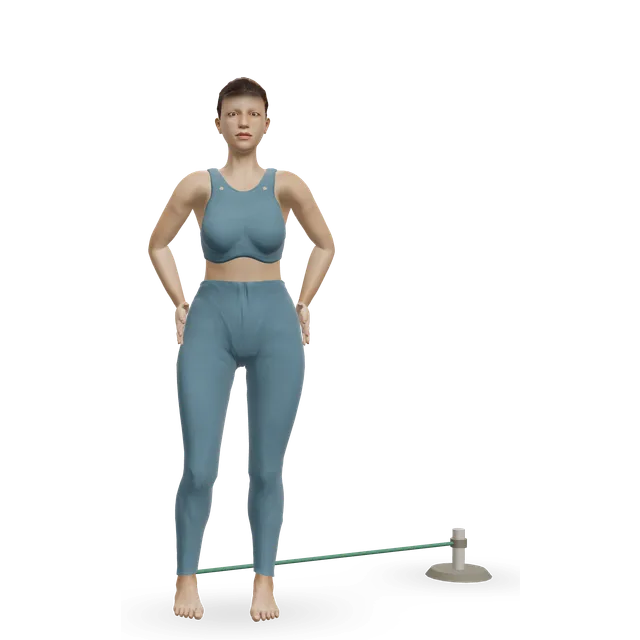
Standing band hip adduction demonstrated on the 3D figure3D demoStanding band hip adductionBeginner · A band + An anchor point

3 sets of 10 to 12 each side · As in our groin strain guide

Easier: Lying adductor ball squeeze · Harder: Copenhagen plank

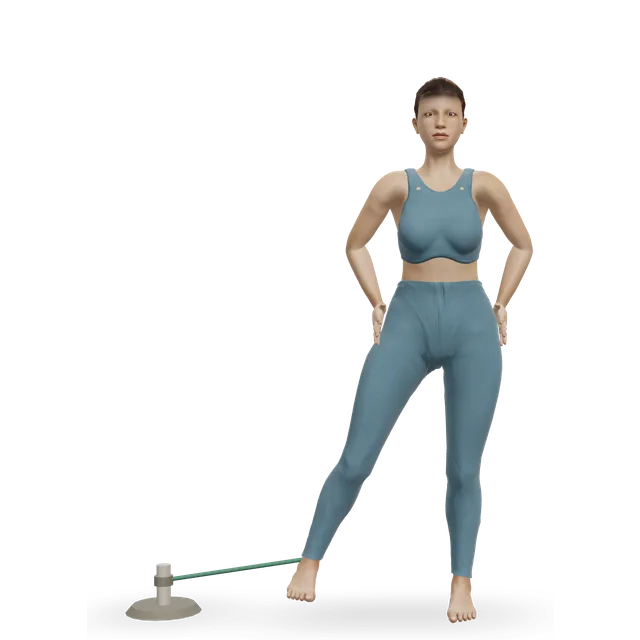
Standing band hip abduction demonstrated on the 3D figure3D demoStanding band hip abductionBeginner · A band + An anchor point

3 sets of 10 to 12 each side · As in our groin strain guide: a standing band hip abduction, for balance. NHS inform's standing hip abduction is the version without a band

Easier: Hip abduction machine · Harder: Lateral band walk, band at the feet

Sit to stand from a chair demonstrated on the 3D figure3D demoSit to stand from a chairBeginner · A bench or box

2 to 3 at a time, building to sets of 8, 2 to 3 times a day, up to 2 sets of 15 · NHS inform's sit-to-stand to a chair, with its pacing

Easier: Sit to stand, pushing on the thighs · Harder: Bodyweight squat

Side plank demonstrated on the 3D figure3D demoSide plankIntermediate · No equipment

3 holds of 20 to 30 s each side · As in our groin pain guide, once the side plank from the knees is easy

Easier: Knee side plank · Harder: Side plank with leg lift

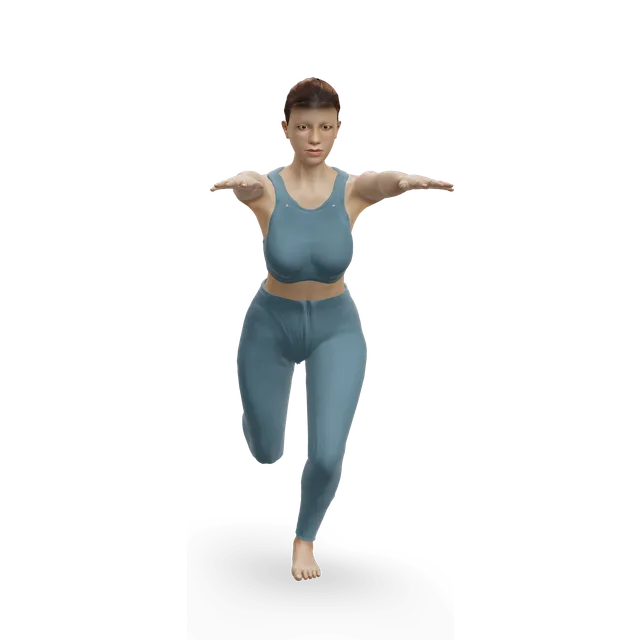
Split squat demonstrated on the 3D figure3D demoSplit squatIntermediate · No equipment

3 sets of 8 each side · As in our groin strain guide. With pelvic girdle pain in pregnancy, skip it or keep the stance narrow (the move page)

Easier: Bodyweight squat · Harder: Reverse lunge

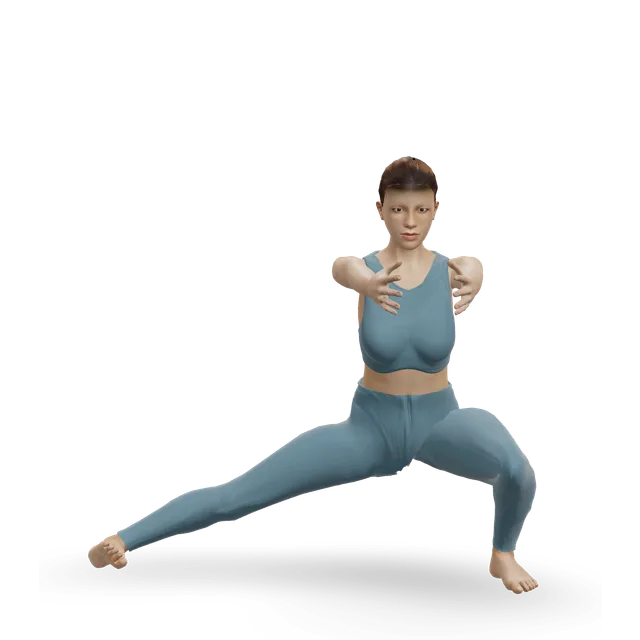
Cossack squat demonstrated on the 3D figure3D demoCossack squatIntermediate · No equipment

2 sets of 5 each side, only as deep as is comfortable · As in our groin strain guide; the move page's own dose, 6 slow shifts a side, is more than this stage needs (our suggestion)

Easier: Sit squat (partial squat) · Harder: Pistol squat

Move on when: Side-to-side moves and squeezing the knees together are pain-free (our groin strain guide's check), a 30-second side plank is steady (the Copenhagen plank's starting point), and 30 minutes of fast walking is pain-free, the NHS sports medicine service's starting point for running.

Follow along: a timer, a cue and the next move, one step at a time.
Stage 3

Copenhagen, then running, kicking and turning

From about week 6: the Copenhagen adduction exercise three times a week, then once a week to keep it, the frequency the football trial used. Running comes back through the NHS sports medicine service's walk-jog weeks, with speed changes, kicking and sharp turns last, by the written steps below.

Copenhagen plank demonstrated on the 3D figure3D demoCopenhagen plankAdvanced · A bench or box

Short lever (the top knee on the bench) first: 1 set of 3 to 15 each side, 3 times a week, then once a week · The dose our groin pain guide uses, starting with the short lever as our groin strain guide does; it isn't the football trial's own dose. Not during acute groin pain; expect soreness for a fortnight (the move page)

Easier: Hip adduction machine

Single-leg Romanian deadlift demonstrated on the 3D figure3D demoSingle-leg Romanian deadliftAdvanced · A dumbbell

3 sets of 8 each leg · As in our groin pain guide; learn it with your fingertips on a wall (the move page)

Easier: Dumbbell Romanian deadlift

Treadmill jogging demonstrated on the 3D figure3D demoTreadmill joggingIntermediate · Cardio machine

Every other day for 30 min: jog 1 and walk 1 minute in week 1, jog 2 and walk 1 in week 2, jog 4 and walk 1 in week 3, jog 9 and walk 1 in week 4, jog 15 and walk 1 in week 5, then 30 minutes' jogging in week 6 · The NHS sports medicine service's programme: up a level after a week without pain, down a level with pain. Flat ground outdoors counts

Easier: Treadmill walking · Harder: Sprint intervals

Skipping demonstrated on the 3D figure3D demoSkippingBeginner · No equipment

3 runs of 20 m, then strides · As in our groin pain guide

Easier: Ankle bounces (mini pogo) · Harder: Alternate-leg bounding

Lateral bound (skater jump) demonstrated on the 3D figure3D demoLateral bound (skater jump)Beginner · No equipment

3 sets of 6 to 8 bounds (3 or 4 on each leg), resting a minute between sets · The move page's dose, which it labels an editorial starting point. Last, once side-to-side moves are pain-free

Harder: Bench jump-over

Move on when: Our suggestion: running, sprinting, turning and kicking are pain-free at full effort, on the day and the next morning; then full training before matches. If pain still stops you training after 2 to 3 months of good rehab, see a sports medicine specialist, as our sports hernia guide advises.

Follow along: a timer, a cue and the next move, one step at a time.

What to change for now

What to change for now (written steps)

Our 3D figure can't show these changes. They come from NHS inform and the NHS; where a step is our suggestion, it says so.

  • 1. The first 2 days: reduce your activities but keep moving; move the leg gently for 10 to 20 seconds every hour, and avoid long periods on your feet (NHS inform).
  • 2. Stairs: lead with your good leg going up and your sore leg coming down, and use the handrail (NHS inform).
  • 3. After 48 hours: use the leg more, and stay at or return to work; you don't need to be free of symptoms first (NHS inform).
  • 4. Load: keep walking, but drop sprinting, kicking, sudden turns, sit-ups and wide, deep squats while the inner thigh is sore (our suggestion, as our groin strain and groin pain guides advise).
  • 5. The hip joint: keep moving without overdoing it, don't carry anything heavy, don't sit in low chairs, and wear comfortable, shock-absorbing shoes with a soft sole (the NHS).
  • 6. Pregnancy: keep active but avoid what makes the pain worse; stand with your weight on both legs, sit down to get dressed, keep your knees together getting in and out of the car, and sleep with a pillow between your legs (the NHS).
  • 7. After a hernia repair: walk from the start, with no heavy lifting or strenuous activity for at least 4 to 6 weeks, and follow your surgical team's advice (the NHS).
  • 8. Phlebitis, once a clot in a deeper vein has been ruled out: keep using the leg, raise it when you rest, and put a warm, moist flannel over the sore area (the NHS).

Sources 14, 13, 24, 2, 21

Running, kicking and turning come back (written steps)

No trial has tested how to bring these back after inner thigh pain as a location. These steps are our suggestion unless a source is named.

  • 1. Running: start once 30 minutes of fast walking is pain-free, then follow the walk-jog weeks in stage 3, every other day, with at least one rest day a week (the OxSport leaflet).
  • 2. From week 7: make your runs no more than 10% longer or harder each week (the OxSport leaflet).
  • 3. Speed: strides, then sprints, building speed over sessions rather than within one.
  • 4. Turning: wide, unhurried turns first, then sharper cuts, sideways and diagonal running.
  • 5. Kicking: short passes with the inside of the foot, then longer passes, then shooting, last of all.
  • 6. Keep the Copenhagen exercise going once a week in season (the football trial); our hamstring and groin injury prevention workout and the FIFA 11+ warm-up suit this stage.
  • 7. After a sudden adductor injury, move on by the milestones, not the calendar: most male athletes were back in full training in a median of 18 days, but complete tears took 2 to 3 months.

Sources 34, 5, 6

Positions to swap, and why

Habit or positionWhy it mattersInstead
Kicking, sprinting, sudden turns and sit-ups through inner thigh painThey load the adductors hard, and the Doha examination brings adductor pain on with resisted squeezing.Walking or cycling within the pain rule, and the ball squeeze.Try: Lying adductor ball squeeze
Stretching a sore groin hard as the fixThe programmes that treated and prevented adductor pain built strength, not range, and the side-lying groin stretch's page says skip it after a recent groin strain.Ball squeezes and band work now; gentle stretching once it no longer hurts.Try: Lying adductor ball squeeze
Deep frog or wide straddle stretches while the inner thigh is soreThey take the sore tendon to the end of its range (our suggestion), and the programmes that helped built strength rather than range.Sit-to-stands now, and Cossack squats only as deep as is comfortable in stage 2.Try: Sit to stand from a chair
Long-lever Copenhagen planks while the groin is acutely painfulThe move page says avoid it during acute groin pain, and start with tiny volume.The ball squeeze now; the short lever in stage 3.Try: Lying adductor ball squeeze
Foam rolling or deep massage on a recent groin strainNo source we read tested it for inner thigh pain, and our groin pain guide leaves it out.The stage 1 holds and walking.Try: Supine heel slide
Running through groin or inner thigh pain that builds with every step or hurts at nightIt can be a stress fracture of the hip or the pubic bone, which needs checking the same day.Stop running and get it checked the same day.
Low chairs and carrying heavy things with pain from the hip jointThe NHS hip page says don't carry anything heavy and don't sit in low chairs, which can put extra pressure on your hips.A firm, higher seat, and sit-to-stands to build strength.Try: Sit to stand from a chair
Split squats, standing on one leg and wide-legged moves with pelvic girdle pain in pregnancyThe NHS lists standing on one leg, stairs and moving your legs apart among the triggers, and the split squat's page says skip it or keep the stance narrow.Knees together, even weight on both legs, and our pelvic girdle pain guide's plan.Try: Sit to stand from a chair
Putting a groin lump, a hard, sore vein or a swollen, throbbing leg down to a strainA hernia, phlebitis or a clot needs a GP or a same-day check.See the warning signs, and don't massage or exercise it until it's checked (our suggestion).
Heavy lifting or strenuous exercise soon after a hernia repairThe NHS says not for at least 4 to 6 weeks after an inguinal hernia repair.Walk from the start, and follow your surgical team's advice.Try: Treadmill walking
Resting completely until it stops hurtingActive training beat passive treatment for long-standing adductor pain, and NHS inform says use the leg more after the first 48 hours.The stage 1 plan from the first week.Try: Lying adductor ball squeeze

Routines to follow

Hamstring and groin injury prevention

The Nordic hamstring and Copenhagen adduction programmes from the football trials: a 10-week build, three adductor levels, then once a week in season.

15 minIntermediate6 movesA wall, An anchor point

FIFA 11+ warm-up

FIFA's 11+ injury prevention warm-up as its manual sets it out: running drills, strength, balance and jumping at three levels, then faster running.

20 minBeginner20 movesCardio machine, A wall

Beginner core workout

A 15-minute beginner core workout on the floor: dead bugs, bird dogs, knee planks, side planks and curl-ups.

15 minBeginner6 movesNo equipment

Pilates for hip pain: a 20-minute class that spares the hip

A 20-minute Pilates class for hip pain: bridges, outer-hip holds, standing leg work and balance, without deep bends, crossed legs or lying on the sore side.

20 minBeginner14 movesA band, A wall

Run-walk intervals for beginners

A 30-minute beginner run-walk session: a brisk walk, then 1-minute jogs with 1-minute walks, building to 3-minute runs over your first three weeks.

30 minBeginner5 movesCardio machine, A wall

Low-impact leg workout (no jumping)

A gentle leg strength routine with no jumping: sit-to-stands, step-ups, wall sits, bridges and calf raises.

20 minBeginner7 movesA bench or box, A step

Pregnancy Pilates workout (no lying on your back)

A 20-minute Pilates workout for any trimester: seated, standing, all-fours and side-lying moves, with no lying on your back or front and no jumping.

20 minBeginner15 movesA wall, A bench or box

More moves for this area

Questions people ask

What causes pain on the inside of the thigh?

In active people it's most often the adductor muscles close to the groin, the main finding in 58% of 207 athletes with groin pain at one clinic. The hip joint, a hernia, a trapped nerve, pelvic girdle pain in pregnancy and, less often, a blood clot can all be felt there too. Where it hurts and what sets it off narrow it down, and an examination decides.

How do I know if I've pulled my groin?

A strain usually comes on suddenly while sprinting, kicking or changing direction, with pain close to the groin that's worse when you squeeze your knees together against resistance. A pop followed by a large bruise, a dent you can feel or real weakness can mean a complete tear, which needs an examination or a scan. Most sudden adductor injuries in athletes were pain-free within about 2 weeks.

Could inner thigh pain be a blood clot?

Occasionally. The NHS's signs of a DVT are throbbing pain in one leg, usually in the calf or thigh, with swelling, red, blue or darkened skin or swollen veins: get an urgent GP appointment or call NHS 111, and call 999 if you're also breathless or have chest pain. A hard, sore vein near the surface with warm, red skin can be phlebitis, which the NHS also asks to be checked the same day in case it's a clot in a deeper vein.

Is a lump at the top of my inner thigh a hernia?

It might be. An inguinal hernia is a lump where the leg joins the tummy that can get bigger when you cough and smaller when you lie down, and a femoral hernia is a small lump at the top of the thigh, mainly in women over 50, that needs treating in hospital; swollen glands are another common cause. See a GP about any new lump, and call 999 if a femoral hernia comes with very bad tummy pain, being sick or not being able to fart or poo.

Why does my inner thigh hurt in pregnancy?

It's often pelvic girdle pain, which affects up to 1 in 5 pregnant women and can spread from the pubic bone to the thighs, worse walking, on stairs and moving your legs apart. It won't harm your baby and can be treated at any stage, with physiotherapy, a support belt or crutches. Pregnancy also raises the chance of a clot, so one swollen, throbbing leg needs a same-day check.

Can hip arthritis cause inner thigh pain?

Yes: of people whose pain came from the hip joint, 55% felt it in the groin and 57% in the thigh. It usually starts after 45, with pain that is worse when walking and morning stiffness that lasts no more than about 30 minutes. Avoid low chairs and heavy carrying, and keep exercising, which NICE makes a core treatment.

Should I stretch a pulled groin?

Not hard, and not at first. The programmes that helped long-standing groin pain and prevented groin problems in footballers were strengthening programmes, not stretching. Gentle stretching once it no longer hurts is fine.

What is the Copenhagen exercise, and should I do it?

It's a side plank with your top leg resting on a bench, which works the inner thigh muscles hard; in 652 footballers, a programme of it cut the odds of groin problems by 41%. Start with the knee on the bench, expect muscle soreness for a fortnight, and leave it out while the groin is acutely painful.

When can I run and play football again?

When a firm squeeze and side-to-side moves are pain-free and 30 minutes of fast walking doesn't hurt, start the NHS walk-jog programme, moving up a level after each pain-free week. Male athletes with sudden adductor injuries were back in full team training in a median of 18 days, but complete tears took a median of 78. Nobody can promise a date.

Can a trapped nerve cause inner thigh pain?

Yes. An uncommon cause is a trapped obturator nerve, described in a small series of athletes as pain during exercise that starts near the top of the inner thigh and spreads down it; how often it happens is unknown. Nerves from the back can cause pins and needles or burning thigh pain without back pain, and pain or numbness lasting more than 3 months after a hernia repair needs your GP or surgical team.

Can a kidney stone cause inner thigh pain?

Yes: the NHS says kidney stone pain usually starts in the side of the tummy or the lower back and may spread to the top of the inner thigh, the testicles or the area around the opening of the vagina. It's often severe and comes and goes; get an urgent GP appointment or call NHS 111, especially with a high temperature.

I take alendronic acid and my thigh hurts. Is that serious?

Get it checked straight away. The NHS says call a doctor or NHS 111 for new pain, weakness or discomfort in your thigh, hip or groin while taking alendronic acid, because rarely it's an early sign of a broken thigh bone.

Related exercise guides

Other pain guides

Sources

  1. Weir 2015 · The Doha agreement on terms and definitions for groin pain in athletes (consensus statement, Br J Sports Med)
  2. NHS · Inguinal hernia repair
  3. NHS · Kidney stones
  4. Hölmich 2007 · Long-standing groin pain in 207 athletes falls into three main patterns (prospective study, Br J Sports Med)
  5. Harøy 2019 · The Copenhagen adduction programme in 652 male footballers (cluster RCT, Br J Sports Med)
  6. Serner 2020 · Return to sport after criteria-based rehab of acute adductor injuries in 81 male athletes (cohort study, Orthop J Sports Med)
  7. Serner 2021 · Examination findings and MRI injury extent in 81 male athletes with acute adductor injuries (cross-sectional study, J Sci Med Sport)
  8. Serner 2021 · Exercise-based treatment for complete adductor longus tendon tears in 16 male athletes: one-year follow-up (case series, Am J Sports Med)
  9. Cheung 2003 · Delayed onset muscle soreness: treatment strategies and performance factors (review, Sports Med)
  10. Lesher 2008 · Where pain from the hip joint is felt, in 51 people (descriptive study, Pain Med)
  11. NHS inform · Hip problems
  12. National Institute for Health and Care Excellence (NICE) · Osteoarthritis in over 16s: diagnosis and management (NG226, guideline)
  13. NHS · Hip pain in adults
  14. NHS inform · Thigh problems
  15. Bradshaw 1997 · Obturator nerve entrapment in 32 athletes (case series, Am J Sports Med)
  16. NHS · Hernia
  17. NHS · Femoral hernia
  18. HerniaSurge Group 2018 · International guidelines for groin hernia management (guideline, Hernia)
  19. NHS · Swollen glands (past its review date: reviewed September 2023, review due September 2026)
  20. NHS · DVT (deep vein thrombosis)
  21. NHS · Phlebitis (superficial thrombophlebitis)
  22. NHS · Varicose veins
  23. Decousus 2010 · Superficial vein thrombosis and deeper clots in 844 people seen by vascular specialists (prospective cohort, Ann Intern Med)
  24. NHS · Pelvic pain in pregnancy (past its review date: reviewed December 2022, review due December 2025)
  25. Royal College of Obstetricians and Gynaecologists · Pelvic girdle pain and pregnancy (patient information, June 2015)
  26. Vleeming 2008 · European guidelines for the diagnosis and treatment of pelvic girdle pain (guideline, Eur Spine J)
  27. Wu 2004 · Pregnancy-related pelvic girdle pain: terms, symptoms and how common it is (systematic review, Eur Spine J)
  28. Medicines and Healthcare products Regulatory Agency (MHRA) · Bisphosphonates: atypical femoral fractures (Drug Safety Update, June 2011)
  29. NHS · Side effects of alendronic acid
  30. Hölmich 1999 · Active training for long-standing adductor-related groin pain in 68 athletes (RCT, Lancet)
  31. NHS inform · Exercises for hip problems
  32. Smith 2017 · Should exercise be painful? 7 trials of long-lasting muscle and joint pain (systematic review and meta-analysis, Br J Sports Med)
  33. Silbernagel 2007 · Carrying on with running and jumping under a pain-monitoring model in 38 people with Achilles tendon pain (RCT, Am J Sports Med)
  34. Oxford University Hospitals NHS Foundation Trust (OxSport) · Return to running programme (patient leaflet, September 2024)
  35. NHS · Septic arthritis
  36. NHS · Symptoms of bone cancer

Exercise education, not a diagnosis or treatment plan. It is written from the guidelines and studies listed above; review by a clinician is pending. If your pain follows an injury, is severe, is getting worse, or comes with any warning sign listed on this page, get it assessed. Health disclaimer.