Pain guide · Hip pain

Groin pain when walking: the hip joint, a strain, a hernia, pregnancy and a stress fracture

Groin pain that comes on or builds as you walk is most often the hip joint from mid-life, felt deep in the groin and often in the thigh or buttock too. In active people, the inner thigh muscles, the hip flexors, the lower tummy wall, the pubic bone or the shape of the hip are common causes, and a hernia, pelvic girdle pain in pregnancy and, rarely, a stress fracture of the hip can all hurt when you walk. It isn't always a pulled muscle, and for most causes, resting until it stops hurting isn't the answer.

Call 999 or go to accident and emergency (A&E) for severe pain after a fall or not being able to put weight on the leg, a femoral hernia with very bad tummy pain or being sick, or sudden, severe testicle pain. Get help the same day, through an urgent general practitioner (GP) appointment or the National Health Service's 111 line (NHS 111), for groin pain that builds with every step or hurts at night after much more walking or running than usual, a hot, swollen hip with a fever, or a child or teenager with a limp. This guide helps you tell the causes apart, covers what to change today (shorter, flatter walks, a stick in the opposite hand and stairs one at a time) and gives a three-stage plan with 3D demos.

When to get help first

Exercise is for pain that has been checked or is clearly mild and settling.

Get urgent medical help if

  • Call 999 or go to A&E: severe hip pain after a fall or injury, or you cannot stand, walk or put weight on the leg. In an older adult this can be a broken hip; the leg may be at an odd angle or look shorter. Don't drive yourself.
  • Call 999 or go to A&E: tingling or loss of feeling in the hip or leg after an injury.
  • Call 999 or go to A&E now if you have a femoral hernia (a small lump at the top of the thigh, in the groin) and very bad tummy pain, you feel sick or are being sick, you cannot fart or poo, you have a high temperature or feel hot, cold or shivery, or you've suddenly become confused. It may be strangulated, which is an emergency. Don't drive yourself.
  • Get help from NHS 111 if you have a hernia (a lump in the groin or tummy) and pain in or around it, a bloated tummy, you feel sick or are being sick, your vomit looks like coffee grounds, you're constipated, you have a high temperature or feel hot, cold or shivery, or you've suddenly become confused.
  • Go to A&E or call 999 for sudden, severe pain in a testicle, testicle pain with feeling or being sick or tummy pain, or testicle pain that has lasted more than an hour or continues at rest. It can be a twisted testicle (testicular torsion), which needs treating straight away. For a lump, swelling or a change in a testicle's size or shape, ask for an urgent GP appointment or get help from NHS 111.
  • Same day, and stop the long walks or runs now: groin or front-of-hip pain, sometimes felt in the thigh or knee, that builds with every step, hurts at rest or at night, or came on after much more walking, marching or running than usual, especially if you have thin bones, have had a stress fracture before, or your periods have stopped. Keep weight off the leg, using crutches if you have them, and get an urgent GP appointment or help from NHS 111 the same day: a stress fracture of the hip (femoral neck) needs urgent imaging (our extension of the hip hub's runner line to walkers).
  • Call a doctor or NHS 111 straight away: new pain, weakness or discomfort in your thigh, hip or groin while you're taking a bisphosphonate bone medicine, such as alendronic acid. The NHS says this happens rarely but may be an early sign of a possible broken thigh bone, and the UK medicines regulator asks everyone taking these medicines to report thigh, hip or groin pain.
  • Same day: groin, hip or pubic pain after a fall in later life that makes walking hard, even if you can still walk or an X-ray was normal: ask for an urgent GP appointment or get help from NHS 111. A broken hip or pelvis can be missed at first, and NICE advises an MRI (magnetic resonance imaging) scan if a break is still suspected (our suggestion, from the NHS and NICE).
  • Ask for an urgent GP appointment or get help from NHS 111 if you have severe hip pain that started suddenly but you've not had a fall or injured your hip, your hip is swollen and feels hot, the skin around your hip has changed colour, or you have hip pain, feel generally unwell and have a high temperature (or feel hot, cold or shivery). A hot, swollen hip with a high temperature can be a joint infection.
  • Call 999 or go to A&E if your child gets sudden pain in their hip, knee or thigh (hip problems can sometimes be felt in the thigh or knee) or cannot put any weight on their leg. If your child is limping, ask for an urgent GP appointment or get help from NHS 111 the same day. This applies to teenagers too, and in some children knee pain is the only sign.
  • Ask for an urgent GP appointment or get help from NHS 111 the same day if your child or teenager has pain in the hip, groin, thigh or knee and is limping; call 999 or go to A&E if they can't put any weight on their leg. Hip problems can sometimes be felt in the thigh or knee, and some children with a slipped growth plate only have knee pain. Don't let them walk, run or play sport on it while you wait.
  • Same day (urgent GP appointment or NHS 111): severe pain that usually starts in the side of your tummy or your lower back, may spread to the area at the top of your inner thigh (groin), your testicles or the area around the opening of your vagina, and may come and go, or this pain with a high temperature or feeling hot, cold or shivery. It can be a kidney stone.
  • Call 999 or go to A&E: you have pelvic pain (pain low in your tummy) and it's severe, getting worse or hurts when you move or touch the area, or you feel faint, dizzy or lightheaded or pass out, have pain in the tip of your shoulder, have difficulty breathing, have heavy bleeding from your vagina, or suddenly feel confused. Don't drive yourself.
  • Call 999 or go to A&E if you have sciatica on both sides, weakness or numbness in both legs that's severe or getting worse, or numbness around or under your genitals, or around your bottom (anus); if you find it hard to start peeing, cannot pee or cannot control when you pee; or if you do not notice when you need to poo or cannot control when you poo, and this is not normal for you. These could be symptoms of a serious back problem that needs to be treated in hospital as soon as possible.

See a doctor or physiotherapist if

  • Hip pain that stops normal activities or disturbs sleep, keeps getting worse, or has not improved after 2 weeks of looking after it at home.
  • Stiffness lasting more than 30 minutes after waking.
  • A lump in the groin, upper thigh or tummy, especially one that appears when you cough or strain and goes when you lie down: see a GP, as it may be a true hernia. A femoral hernia (a small lump at the top of the thigh, mainly in women over 50) needs treating in hospital.
  • Tender lumps in the groin that are getting bigger or haven't gone down within a week, feel hard or don't move when you press them, or come with night sweats, a very high temperature or no other sign of infection: see a GP. They may be swollen glands.
  • Call your midwife or GP if you have pelvic pain and it's hard for you to move around, it hurts to get out of a car or turn over in bed, or it's painful going up or down stairs.
  • Hip or groin pain that hasn't settled after 6 weeks, especially with a normal X-ray, or new hip pain if you take high-dose steroids, drink heavily, or have sickle cell disease or lupus: ask your GP about an MRI (magnetic resonance imaging) scan and a hip specialist. It can be avascular necrosis, which an X-ray can miss early on.
  • Bone pain that is constant or worse at night, especially with a lump, unexplained weight loss, fever or tiredness, or a past history of cancer.
  • Pain in one spot on the pubic bone, or low back or buttock pain on one side, brought on by running in a distance runner, especially if your periods have stopped or become irregular, you've lost weight or you've had a stress fracture before: stop running and see a GP. It can be a stress fracture of the pelvis or the sacrum, and a magnetic resonance imaging (MRI) scan is the usual test.
  • A stress fracture from ordinary activity, more than one stress fracture, periods that have stopped or become irregular, or worries that you're eating too little for your training: see a GP about bone health and energy intake.
  • Leg ache when you walk that goes after a few minutes' rest: possible peripheral arterial disease (narrowed leg arteries), especially if you smoke or have diabetes.
  • Groin pain with blood in your pee, pain when you pee, or no clear link to sport: see a GP, as it's unlikely to be a sports injury.
  • Painful catching or locking deep in the groin, or a hip that gives way: get it assessed.

Where does it hurt?

Location narrows the likely causes; it does not diagnose.

Deep in the groin, sometimes the front of the thigh or the knee, building as you walk and stiff after sitting, usually from about 45

Usually osteoarthritis of the hip joint.

Read: Hip arthritis →
A deep groin pinch with deep bending, sitting low or getting out of a car, in younger, active people

Possibly hip impingement, from the shape of the hip.

Read: Hip impingement (FAI) →
Clicking, catching or locking deep in the groin, or a hip that gives way

Possibly a tear of the hip socket's rim (the labrum): get it assessed.

Read: Hip labral tear →
The inner thigh close to the groin, worse squeezing your knees together, kicking or changing direction

Usually the adductor muscles and tendons.

Read: Groin strain →
The front of the hip and groin when you lift the knee, climb stairs or walk uphill

Often the hip flexors (iliopsoas).

Read: Hip flexor pain →
Just above the groin crease with no lump, worse sprinting, with sit-ups, coughing or sneezing

Inguinal-related groin pain, sometimes called a sports hernia.

Read: Sports hernia →
On the pubic bone at the front, often both sides, in kicking or turning sports

Pubic-related groin pain (osteitis pubis).

Read: Osteitis pubis →
A lump in the groin that comes and goes, bigger when you cough or strain and smaller when you lie down

Possibly an inguinal hernia: see a GP. A painful hernia needs NHS 111. Our groin pain guide covers hernias.

Read: Groin pain →
A small, grape-sized lump at the top of the thigh, with discomfort when you walk, mainly in women over 50

Possibly a femoral hernia, which needs treating in hospital: see a GP. With very bad tummy pain or being sick, call 999.

Groin or front-of-hip pain that builds with every step after much more walking or running than usual, later at rest or at night

A possible stress fracture of the hip: get help the same day, as the warning signs say.

Read: Stress fracture →
Groin, hip or pubic pain after a fall in later life, with walking very hard

A possible broken hip or pelvis, which can be missed at first.

Read: Broken pelvis →
A dull thigh, hip or groin ache while taking a bisphosphonate, such as alendronic acid

Call a doctor or NHS 111 straight away, as the warning signs say.

Over the pubic bone in pregnancy or after a birth, worse walking, on stairs and standing on one leg

Usually pelvic girdle pain.

Read: Pelvic girdle pain (SPD) →
A sharp cramp low on one side of the tummy in pregnancy, when you move or get up

Often ligament pain. Call your midwife if you're worried.

A child or teenager with groin, thigh or knee pain and a limp

Irritable hip, Perthes disease or a slipped growth plate: the same day, as the warning signs say.

Read: SUFE (slipped hip growth plate) →
Buttock and thigh ache when you walk that goes after a few minutes' rest

Possibly narrowed leg arteries (peripheral arterial disease), especially if you smoke or have diabetes.

Read: Calf pain when walking →
Pain from the side or lower back spreading to the groin, coming in waves

Possibly a kidney stone: get help the same day.

Sudden or severe pain in a testicle

Go to A&E or call 999, as the warning signs say.

The outer hip rather than the groin, worse lying on that side

Usually the tendons on the outside of the hip: our hip pain when walking guide covers them.

Read: Hip pain when walking →
Groin pain when you run

Our groin pain when running guide covers it.

Read: Groin pain when running →
The inner thigh rather than the groin

Our inner thigh pain guide maps it.

Read: Inner thigh pain →
Hip or groin pain at night

Our hip pain at night guide covers it.

Read: Hip pain at night →

Understand it

The hip joint: the commonest cause from mid-lifeStrong evidence

The NHS links hip pain that is worse when you walk, with stiffness after moving, in people over 45, to osteoarthritis, and NHS inform says hip osteoarthritis is felt in or around the hip, the groin, the buttock or the front of the thigh, and is worse with activity, stairs, getting up from a chair and getting out of a car. Arthritis UK says hip problems are felt in the groin, down the front of the leg and in the knee. In 51 people whose pain was confirmed to come from the hip joint, 55% felt it in the groin, 57% in the thigh and 71% in the buttock.

NICE diagnoses osteoarthritis without a scan in people aged 45 or over whose joint pain comes with activity and whose morning stiffness lasts 30 minutes or less.

Sources 1, 2, 3, 4, 5

Muscles, tendons and the hip's shape in active peopleEmerging evidence

An international agreement on groin pain in athletes, made in Doha, sorts it into four types (adductor-related, iliopsoas-related, inguinal-related and pubic-related) plus groin pain from the hip joint and other causes. The patterns in this guide's map come from our groin pain guide: inner thigh pain worse squeezing the knees together, front-of-hip pain lifting the knee, pain just above the groin crease with sit-ups or coughing, and pain on the pubic bone in kicking sports.

Hip impingement is diagnosed only when symptoms, examination findings and imaging agree, another international agreement says, and it's treated with physiotherapy, rehabilitation or surgery; our hip impingement guide describes a groin pinch with deep bending, sitting low or getting out of a car. The evidence on these causes comes mostly from athletes.

Sources 6, 7, 8

HerniasStrong evidence

An inguinal hernia is a lump where your leg joins your tummy that may get bigger when you cough or strain and smaller when you lie down, sometimes with a heavy, dragging feeling in the leg; an international guideline lists being male, older age and a family history among the risks. A femoral hernia is a small, grape-sized lump at the top of the thigh, with aching that comes and goes and discomfort when you walk; it mainly happens in women over 50 and needs treating in hospital, because it can become strangulated, which is an emergency.

The NHS says to get help from NHS 111 for a hernia that becomes painful, or comes with being sick, constipation, a high temperature or sudden confusion, and to call 999 for a femoral hernia with very bad tummy pain, being sick or not being able to poo or fart.

Sources 9, 10, 11, 12

Bone stress and broken bonesEmerging evidence

Stress fractures of the neck of the thigh bone (the femoral neck) make up 3% of sport-related stress fractures, most often from marathon and long-distance running, and exercise-related groin pain is the commonest symptom; delays in diagnosis are common and make it more likely the break moves out of place, which makes the outcome worse. Stress fractures are seen in athletes and military recruits, typically after a sudden increase in exercise, and those on the side of the femoral neck that is pulled apart as you load it (the tension side) are high risk, a review says. The evidence comes from runners and recruits, so applying it to people who have suddenly walked much more is our extension.

In people taking a bisphosphonate bone medicine, a dull or aching thigh, hip or groin pain can come weeks to months before an unusual break of the thigh bone, the UK medicines regulator (MHRA) says. After a fall in later life, a broken hip causes pain in the hip, upper leg or groin, and NICE advises a magnetic resonance imaging (MRI) scan if a break is still suspected after a normal X-ray.

Sources 13, 14, 15, 16, 17, 18

PregnancyStrong evidence

Pelvic girdle pain affects up to 1 in 5 pregnant women, the NHS says: pain over the pubic bone at the front, across the lower back, in the area between the vagina and the anus, or spreading to the thighs, worse walking, on stairs, standing on one leg, turning over in bed and moving your legs apart. It isn't harmful to your baby, and most women with it can have a vaginal birth. A sharp cramp low on one side of the tummy can be ligament pain.

Sources 19, 20

Children and teenagersStrong evidence

In a child or teenager, groin, hip, thigh or knee pain with a limp can be irritable hip, Perthes disease or a slipped growth plate at the top of the thigh bone (slipped upper femoral epiphysis). The NHS says a limp with no obvious cause should always be checked, and sudden hip, knee or thigh pain, not being able to put weight on the leg, or a limp with a high temperature and feeling unwell is a 999 or A&E matter.

Sources 21, 22

Causes that aren't the hip or the groin musclesStrong evidence

A kidney stone causes severe pain starting in the side of the tummy or the lower back that can spread to the groin, the testicles or the vagina. Testicle problems can cause groin pain, and sudden, severe testicle pain is an emergency. Swollen glands in the groin usually follow an infection. Narrowed leg arteries cause an ache in the buttock, thigh or calf when you walk that goes after a few minutes' rest.

A hot, swollen hip with a high temperature can be a joint infection, and severe pelvic pain with feeling faint, shoulder tip pain or heavy bleeding from the vagina is a 999 call. Rarely, bone pain that is constant or worse at night comes from a bone tumour.

Sources 23, 24, 25, 26, 1, 27, 28, 29

Tests and scansEmerging evidence

Many causes don't need a scan at first. NICE diagnoses osteoarthritis from the symptoms in people over 45, an inguinal hernia can usually be confirmed by an examination, and hip impingement needs symptoms, examination findings and imaging together. A suspected stress fracture of the hip needs an urgent X-ray and then an MRI scan, and after a fall in later life, NICE advises an MRI if a hip fracture is still suspected despite a normal X-ray. A child or teenager with a limp needs to be seen the same day, and our slipped growth plate guide asks for a hip X-ray.

Sources 5, 7, 11, 13, 18, 21

How it usually goesEmerging evidence

Osteoarthritis comes and goes, doesn't necessarily get worse and can sometimes gradually improve, the NHS says, and exercise eases the pain a little. Long-standing adductor pain in athletes responded to 8 to 12 weeks of active training. Most men with a hernia that caused few symptoms did well waiting, though about a quarter had surgery within a few years.

Femoral neck stress fractures found early do well, and in a review of 103 people from case reports, 71% of those followed long term returned to their full activity; displaced breaks do much worse. Pelvic girdle pain tends not to get completely better until the baby is born, but treatment can ease it. No one can promise a timescale.

Sources 30, 31, 8, 12, 13, 32, 19

What helps, and how strong the evidence is

Exercise is a core treatment for hip osteoarthritisStrong evidence

NICE makes exercise a core treatment for osteoarthritis, and warns that joint pain may go up a little when you start, but regular exercise will still help. In a 2014 Cochrane review, high-quality evidence from 9 trials (549 people) found exercise eased hip osteoarthritis pain by about 8 points on a 100-point scale and improved function by about 7, with 1 extra person helped for every 6 who exercised. NHS inform's hip exercises (a bridge, standing hip extension, standing hip abduction and sit squats to a chair) build up from 2 or 3 at a time.

Sources 5, 31, 33

Walking: keep going, shorter and flatterEmerging evidence

The NHS says keep moving without overdoing it, wear comfortable, shock-absorbing shoes with a soft sole, and avoid low chairs and heavy carrying. NICE suggests considering walking aids, and NHS inform says a walking stick may help if it's used on the opposite side to the sore leg, and to lead with the good leg going upstairs and the sore leg coming down. No trial has tested how far to walk with groin pain, so the build in this guide is editorial, as in our hip pain when walking guide.

Sources 1, 5, 2

Long-standing adductor pain: active training beat passive care in athletesEmerging evidence

In a trial of 68 athletes with long-standing adductor-related groin pain (a median of 40 weeks), 8 to 12 weeks of active strength and coordination training for the muscles round the pelvis returned 23 to sport without groin pain, against 4 after physiotherapy without active training. The trial was in athletes, so for walkers the evidence is borrowed.

Sources 8, 6

Hernias: waiting is safe for men with few symptoms; repair for the restStrong evidence

In a trial of 720 men with an inguinal hernia that caused few symptoms, pain limiting activity at 2 years was similar with watchful waiting or repair (5.1% against 2.2%); 23% of the waiting group went on to have surgery, and a hernia got stuck in about 1.8 per 1,000 people a year. An international guideline says hernias that cause symptoms should be repaired. A femoral hernia needs treating in hospital. No source we read recommends a hernia support (a truss) in place of seeing a doctor, so a support is only something to use on medical advice.

Sources 12, 11, 10, 34

A stress fracture of the hip: stop, and get it checked the same dayEmerging evidence

Treatment depends on which side of the femoral neck the crack is and whether it has moved, and a displaced fracture does much worse, so carrying on walking or running through it is the risk. Tension-side fractures are high risk and need aggressive treatment, a review says. In a review of 103 people, most of those followed long term returned to full activity. This evidence comes from athletes and military recruits.

Sources 13, 14, 32

Pelvic girdle pain in pregnancyStrong evidence

The NHS says a physiotherapist can help with exercises for the pelvic floor, stomach, back and hip muscles, and may suggest a pelvic support belt or crutches. Keep active but avoid what makes it worse: keep your knees together getting in and out of a car, sit down to get dressed, put a pillow between your legs in bed, and avoid long spells of sitting or standing and going up and down stairs too often.

Source 19

How much pain is OK while you exercise?

Up to about 5 out of 10, settled within an hour and no worse that night or the next morning; pain that builds with every step is differentEmerging evidence

During the exercise, pain up to about 5 out of 10 is acceptable. It should settle within an hour or so, and your hip should be no worse that night or the next morning. If it is, do less next time (fewer repetitions, a smaller range, a lighter load), not nothing. This is the hip hub's rule; NHS inform's hip exercises use the same ceiling (0 to 3 is minimal, 4 to 5 acceptable and 6 to 10 too much), and NICE says joint pain may go up when you start, but regular exercise still helps.

Walking follows the same rule: if a walk leaves the groin worse the next morning, make the next one shorter or flatter (our suggestion).

Exceptions: groin pain that builds with every step, hurts at rest or at night, or came on after much more walking or running than usual isn't a pain-rule question, so stop and get it checked the same day. A painful hernia lump is a warning sign. For adductor pain early on, our groin pain guide keeps it to about 3 out of 10, and with pelvic girdle pain in pregnancy, stay within comfort and avoid wide stances and standing on one leg.

Sources 33, 5, 35

The exercise plan: 3 stages

Start at the first stage. Each move opens a full guide with a 3D demo.

Stage 1

Settle: shorter, flatter walks and gentle hip loading

About the first 1 to 2 weeks: walks within the pain rule (shorter, flatter and split through the day, with a stick in the opposite hand if you limp, as the written steps below say), and NHS inform's hip exercises with its pacing. With any warning sign, get checked first. In pregnancy, after the first trimester, keep time flat on your back to a few minutes, as the bridge, heel slide and ball squeeze pages say.

Supine heel slide demonstrated on the 3D figure3D demoSupine heel slideBeginner · No equipment

10 slow reps each side, once or twice a day; for stiffness, in bed before you get up · The move page's dose, an editorial starting point

Harder: Hip windshield wipers

Glute bridge demonstrated on the 3D figure3D demoGlute bridgeBeginner · No equipment

2 or 3 slow reps at a time, building to sets of 8, 2 to 3 times a day, up to 2 sets of 15 · NHS inform's bridge, with its pacing

Easier: Pelvic tilt into bridge · Harder: Single-leg glute bridge

Sit squat (partial squat) demonstrated on the 3D figure3D demoSit squat (partial squat)Beginner · No equipment

Lower until your bottom just touches a chair behind you: 2 or 3 at a time, building to sets of 8 · NHS inform's sit squat, with its pacing

Harder: Bodyweight squat

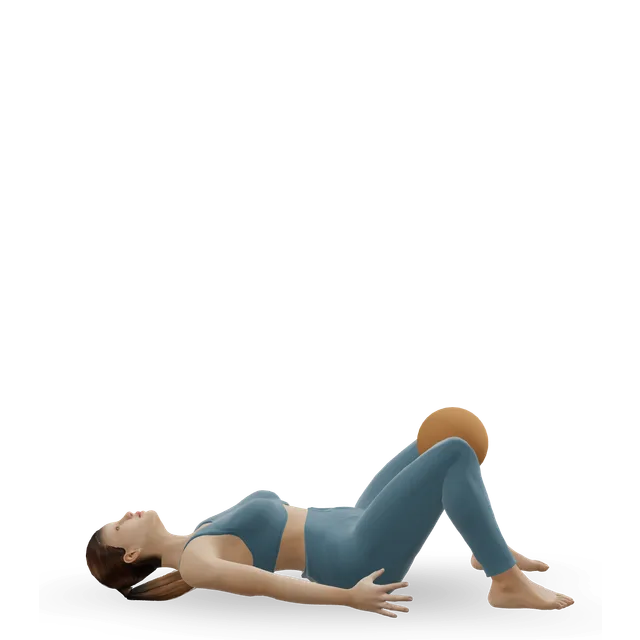
Lying adductor ball squeeze demonstrated on the 3D figure3D demoLying adductor ball squeezeBeginner · Other / check instructions

For inner groin pain: 5 to 10 holds of 5 to 10 s, only as hard as you can without bringing on the groin pain · As in our groin pain and groin strain guides (editorial)

Harder: Copenhagen plank

Treadmill walking demonstrated on the 3D figure3D demoTreadmill walkingBeginner · Cardio machine

About 10 minutes at a comfortable pace on the flat, once or twice a day, within the pain rule · The editorial starting point our hip pain when walking guide uses; walking outdoors counts the same

Harder: Treadmill jogging

Recumbent exercise bike demonstrated on the 3D figure3D demoRecumbent exercise bikeBeginner · Cardio machine

10 to 20 minutes at a moderate effort, building towards 30 · The move page's dose, an editorial starting point. Not with possible bone pain

Harder: Stationary cycling

Move on when: You can walk 15 to 20 minutes on the flat within the pain rule and be no worse the next morning (our hip pain when walking guide's check).

Follow along: a timer, a cue and the next move, one step at a time.
Stage 2

Build: hip strength, balance and longer walks

About weeks 2 to 6: strength work 3 or 4 days a week and walking on most days, adding a few minutes a week and gentle slopes (our suggestion).

Sit to stand from a chair demonstrated on the 3D figure3D demoSit to stand from a chairBeginner · A bench or box

2 or 3 at a time, building to sets of 8, up to 2 sets of 15 · NHS inform's pacing, as our groin pain guide uses it

Easier: Sit to stand, pushing on the thighs · Harder: Bodyweight squat

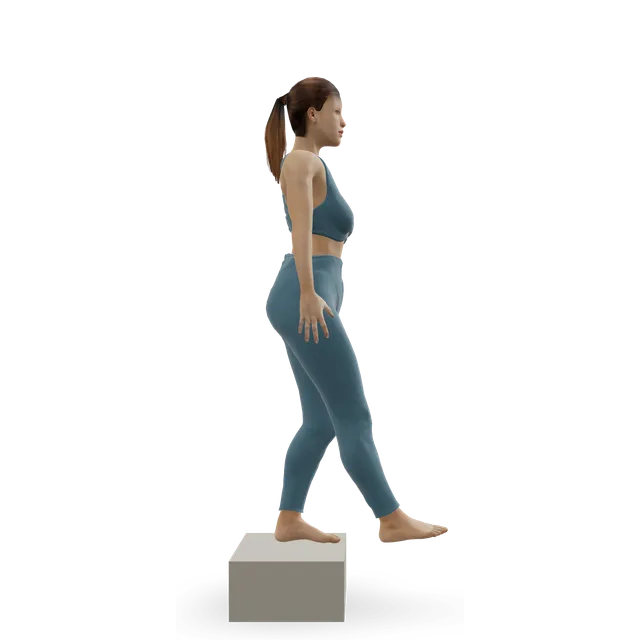
Step-up demonstrated on the 3D figure3D demoStep-upBeginner · A step

Lead with the sore leg onto a low step: 2 or 3 at a time, building to sets of 8, up to 2 sets of 15, keeping the pelvis level · NHS inform's pacing, as our hip pain when walking guide uses it. With pelvic girdle pain in pregnancy, skip it if stairs hurt and keep to sit-to-stands, as the move page says

Easier: Low step-up · Harder: Dumbbell step-up

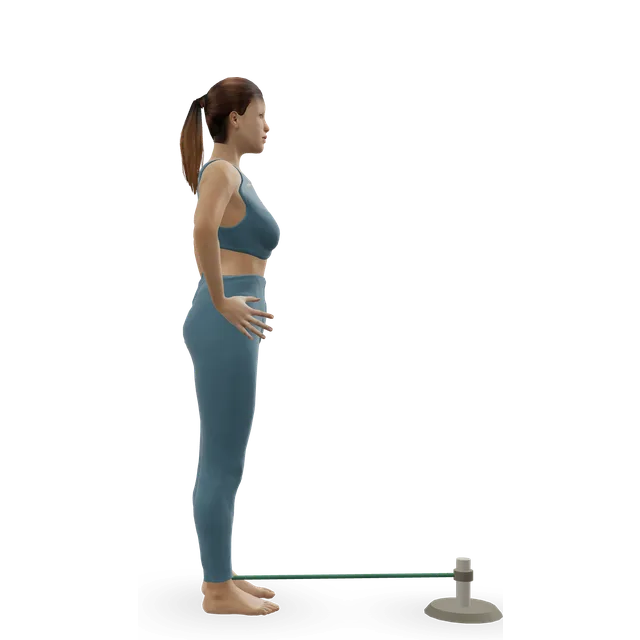
Standing band hip extension demonstrated on the 3D figure3D demoStanding band hip extensionBeginner · A band + An anchor point

2 to 3 sets of 8 to 12 each side, stopping with 2 or 3 reps in reserve · The move page's dose, an editorial starting point; NHS inform's standing hip extension, holding a chair, is the version without a band

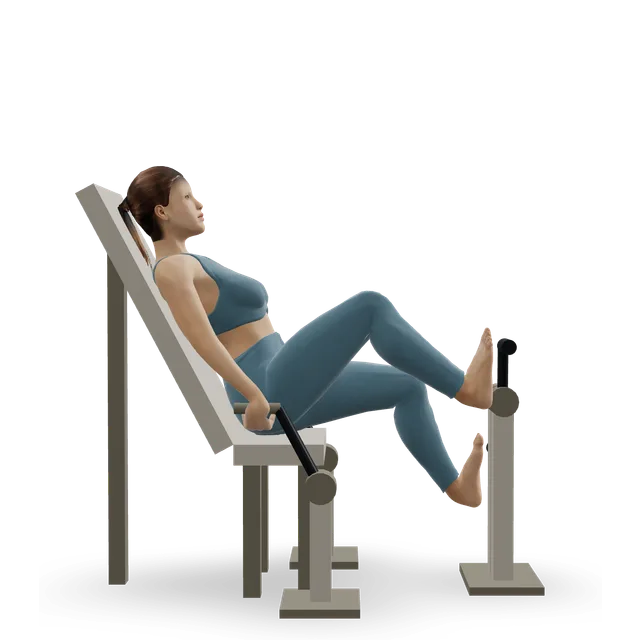
Harder: Back extension on a 45-degree bench

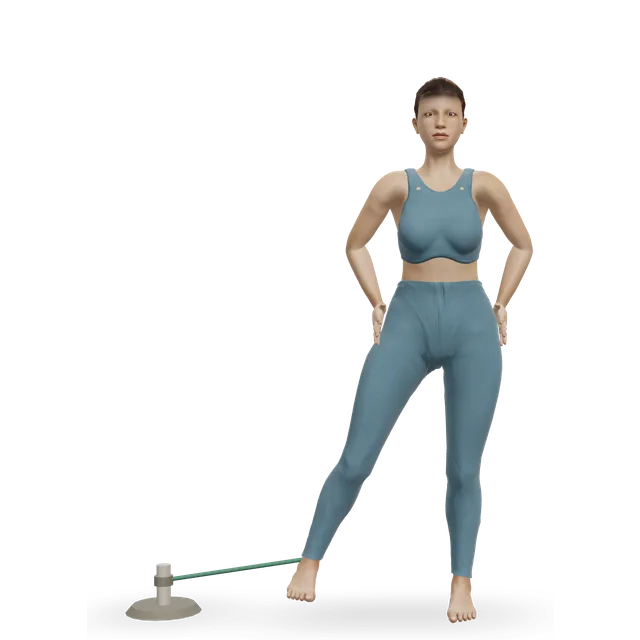
Standing band hip abduction demonstrated on the 3D figure3D demoStanding band hip abductionBeginner · A band + An anchor point

3 sets of 10 to 12 each side (a standing band hip abduction) · As in our groin strain guide (editorial); NHS inform's standing hip abduction is the version without a band

Easier: Hip abduction machine · Harder: Lateral band walk, band at the feet

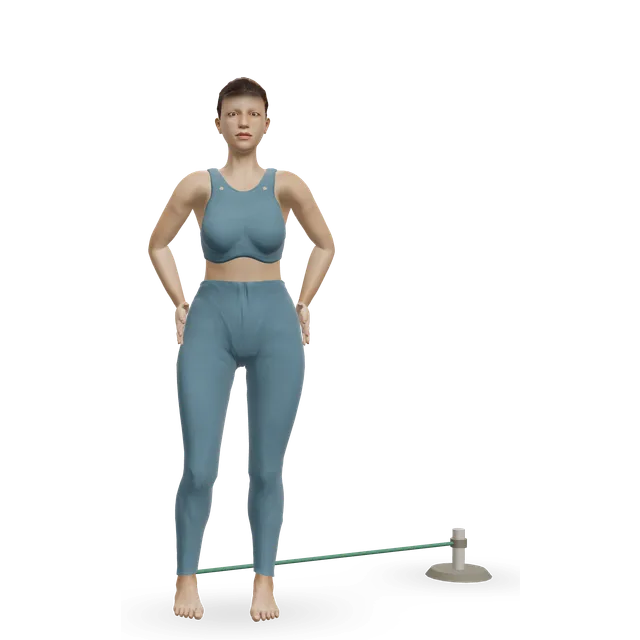
Standing band hip adduction demonstrated on the 3D figure3D demoStanding band hip adductionBeginner · A band + An anchor point

For inner groin pain: 3 sets of 10 to 12 each side · As in our groin pain and groin strain guides (editorial)

Easier: Lying adductor ball squeeze · Harder: Copenhagen plank

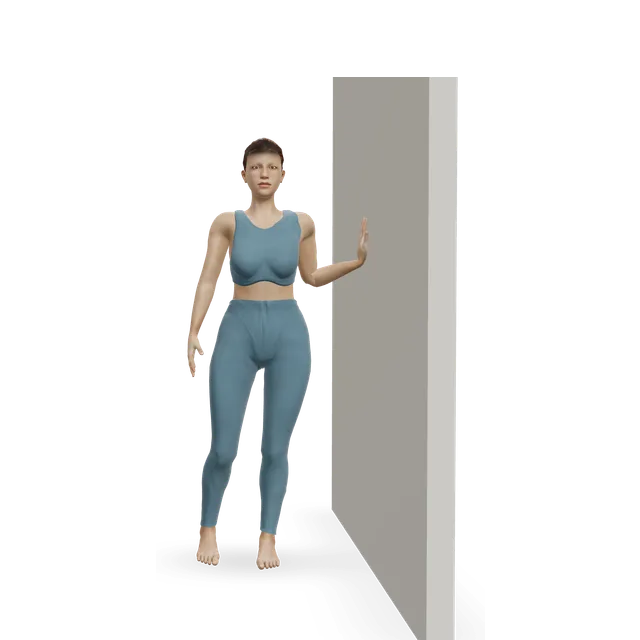
Single-leg stand demonstrated on the 3D figure3D demoSingle-leg standBeginner · A wall

3 holds of 10 to 30 s each side, pelvis level, a hand near a support · As in our hip pain when walking guide (editorial). Skip it with pelvic girdle pain in pregnancy, as the move page says

Easier: Tandem stance and heel-to-toe walk · Harder: Single-leg reach matrix

Move on when: You can stand on the sore leg for 30 s with the pelvis level and walk for 30 minutes on the flat within the pain rule (our hip pain when walking guide's checks).

Follow along: a timer, a cue and the next move, one step at a time.
Stage 3

Strengthen, and your usual walks, hills, stairs and sport back

From about week 6: strength 2 or 3 days a week, and your usual walking back by the written steps below. Sport through our groin pain and groin pain when running guides.

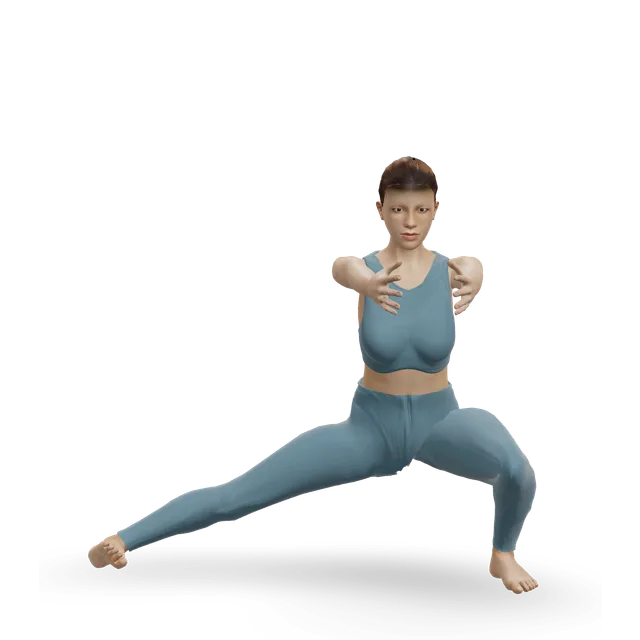
Split squat demonstrated on the 3D figure3D demoSplit squatIntermediate · No equipment

3 sets of 6 to 10 each side · As in our hip pain guide (editorial). With pelvic girdle pain in pregnancy, skip it or keep the stance narrow, as the move page says

Easier: Bodyweight squat · Harder: Reverse lunge

Patrick step-down demonstrated on the 3D figure3D demoPatrick step-downIntermediate · A step

2 to 3 sets of 8 each side · As in our hip pain guide (editorial): practice for walking downhill and downstairs

Easier: Bodyweight squat · Harder: Skater squat

Tandem stance and heel-to-toe walk demonstrated on the 3D figure3D demoTandem stance and heel-to-toe walkBeginner · A wall

3 holds of 20 to 30 s · As in our hip pain when walking guide (editorial): balance for paths and uneven ground

Easier: Semi-tandem stance · Harder: Single-leg stand

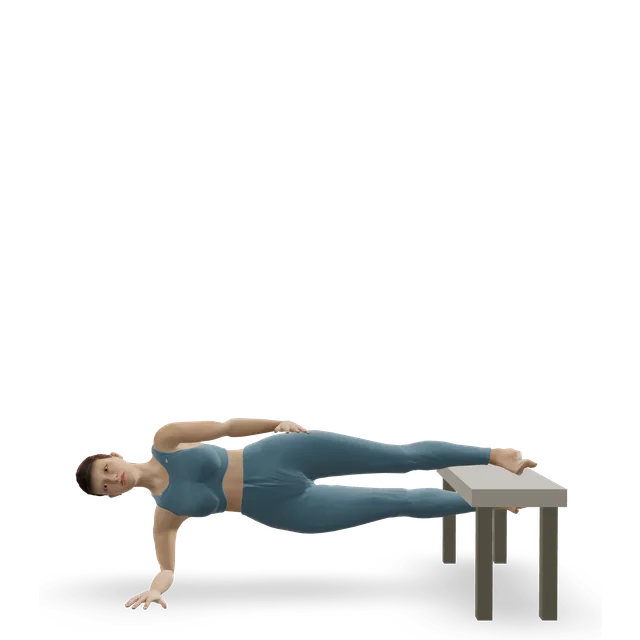
Copenhagen plank demonstrated on the 3D figure3D demoCopenhagen plankAdvanced · A bench or box

For sport only: short lever (the top knee on the bench) first, 1 set of 3 to 15 each side, 3 times a week, then once a week · As in our groin pain guide, from our hamstring and groin workout's levels. Not during acute groin pain, as the move page says

Easier: Hip adduction machine

Treadmill walking demonstrated on the 3D figure3D demoTreadmill walkingBeginner · Cardio machine

Build towards 30 minutes on most days, adding one of distance, pace, hills or rough ground at a time · Our hip pain when walking guide's build (editorial)

Harder: Treadmill jogging

Move on when: Our suggestion: keep adding a few minutes a week while the next morning stays no worse, and keep two strength days a week. If a walk flares the groin, go back to the last walk that was fine for a week, rather than stopping. Groin pain that builds with every step is a warning sign, not a flare.

Follow along: a timer, a cue and the next move, one step at a time.

What to change for now

How to walk for now (written steps)

Our 3D figure can't show these changes. They come from the NHS, NHS inform and NICE, with our suggestions marked.

  • 1. Keep moving without overdoing it (the NHS): shorter, flatter walks split through the day, building by a few minutes a week (our suggestion, as our hip pain when walking guide does).
  • 2. If you limp, a walking stick held in the hand opposite the sore hip may help (NHS inform); NICE suggests considering walking aids.
  • 3. On stairs, use a handrail, lead with the good leg going up and the sore leg coming down, one step at a time (NHS inform).
  • 4. Wear comfortable, shock-absorbing shoes with a soft sole, and avoid low chairs and heavy carrying (the NHS); low seats tend to make hip pain worse (NHS inform).

Sources 1, 2, 5

Pregnancy (written steps)

These come from the NHS's pelvic pain in pregnancy page.

  • 1. Keep active, but avoid the things that make the pain worse, and rest when you can.
  • 2. Keep your knees together getting in and out of a car, sit down to get dressed or undressed, and put a pillow between your legs in bed.
  • 3. Wear supportive shoes, put equal weight on each leg when standing, and avoid long spells of sitting or standing, going up and down stairs too often and lifting heavy shopping.
  • 4. Call your midwife or GP if it's hard to move around, it hurts to get out of a car or turn over in bed, or stairs are painful: a physiotherapist can help, and may suggest a support belt or crutches.

Source 19

Hernias, bone pain and medicines (written steps)

These come from the NHS, an international hernia guideline, a review of hip stress fractures and the MHRA, with our suggestions marked.

  • 1. See a GP about any new lump in the groin or at the top of the thigh; a femoral hernia needs treating in hospital (the NHS).
  • 2. Use a hernia support only on medical advice, not in place of being checked (our suggestion: no source we read recommends one instead of assessment).
  • 3. Stop walking or running through groin pain that builds with every step or hurts at night, keep weight off the leg and get it checked the same day (the review, and the hip hub's warning line).
  • 4. If you take a bisphosphonate such as alendronic acid, report any new thigh, hip or groin pain straight away (the MHRA).

Sources 9, 10, 11, 13, 15

Your usual walks come back (written steps)

No trial has tested how to build walking back with groin pain. These steps are our suggestion, as in our hip pain when walking guide, except where a source is named.

  • 1. Add a few minutes a week while the next morning stays no worse, changing one thing at a time: distance, pace, hills or rough ground.
  • 2. Keep two strength days a week for the long term; NHS inform's exercises build to 2 sets of 15.
  • 3. If a walk flares the groin, go back to the last walk that was fine for a week, rather than stopping.
  • 4. Running and kicking sport come back through our groin pain and groin pain when running guides.

Sources 1, 33

Positions to swap, and why

Habit or positionWhy it mattersInstead
One long walk, hills or rough ground on a bad dayThe NHS says keep moving without overdoing it.Shorter, flatter walks split through the day, building by a few minutes a week.Try: Treadmill walking
Resting until it stops hurtingExercise is a core treatment for hip osteoarthritis, and active training beat passive care for long-standing adductor pain in athletes.NHS inform's hip exercises, with their pacing.Try: Glute bridge
Walking or running through groin pain that builds with every step or hurts at nightIt can be a stress fracture of the hip, and delay makes a worse outcome more likely.Stop, keep weight off the leg and get it checked the same day.
Deep squats and sitting in low chairs or on low sofasThe NHS says avoid low chairs with hip pain, and our hip impingement guide says deep bending and sitting low make impingement catch.A higher, firm chair, and sit squats to a chair you can rise from easily.Try: Sit squat (partial squat)
Taking stairs two at a time, or leading up with the sore legNHS inform says lead with the good leg going up and the sore leg coming down.One step at a time, using a handrail.
In pregnancy, wide steps, getting out of a car with your knees apart, or standing on one leg to dressThese make pelvic girdle pain worse, the NHS says.Knees together in and out of the car, sit down to dress, and a pillow between your legs in bed.
Heavy carryingThe NHS advises against carrying anything heavy with hip pain.Split the load into smaller trips (our suggestion).
Hard groin stretches to loosen itThe trial that worked was built on strengthening; stretching hasn't been shown to fix groin pain.Squeezes and band work within the pain rule.Try: Lying adductor ball squeeze
Sit-ups with pain just above the groin crease or on the pubic bonePain just above the groin crease is typically worse with sit-ups, coughing and sprinting, as our groin pain guide says.Bridges and dead bugs now; sit-ups, sprinting and kicking later, through our sports hernia and osteitis pubis guides.Try: Dead bug
Pushing a lump back yourself and waiting, or relying on a hernia beltNo source we read recommends a support in place of being checked, and a femoral hernia needs treating in hospital.See a GP, and follow the 999 and NHS 111 lines in the warning signs.
A child or teenager walking, running or playing sport on a limpIt can be a slipped growth plate, which gets worse if they keep walking on it.Get them seen the same day, as the warning signs say.

Routines to follow

Hip mobility routine

A 15-minute hip opener: 90/90 switches, windshield wipers, CARs, Cossack squats, frog and pigeon.

15 minIntermediate8 movesA wall

Glute workout at home

A 25-minute glute workout with bodyweight and a mini band: bridges, clamshells, band walks, kickbacks and lunges.

25 minBeginner9 movesA wall, A band

Arthritis exercise routine: a joint-friendly circuit

A 30-minute joint-friendly circuit built like the GLA:D and ESCAPE-pain programmes: a gentle warm-up, chair, step and band strength moves, balance, then stretches.

30 minBeginner14 movesA bench or box, A step

Strength and balance exercises for seniors

A 40-minute strength and balance session for over-65s, built from the Otago home programme and NHS exercises, using a chair, a counter and a step.

40 minBeginner18 movesA bench or box, Something with weight

Interval walking workout: 3 minutes fast, 3 minutes easy

A 40-minute walk alternating 3 minutes fast and 3 minutes easy, five times over: the interval walking tested in Japanese trials, built up from three rounds.

40 minBeginner3 movesCardio machine, A wall

Hamstring and groin injury prevention

The Nordic hamstring and Copenhagen adduction programmes from the football trials: a 10-week build, three adductor levels, then once a week in season.

15 minIntermediate6 movesA wall, An anchor point

Pregnancy strength workout (no lying on your back)

A 30-minute strength workout for any trimester with dumbbells and a band: squats, rows, hinges, presses and side-lying hip work, none on your back.

30 minBeginner14 movesA dumbbell, A bench or box

More moves for this area

Questions people ask

Why does my groin hurt when I walk?

From mid-life, the commonest reason is the hip joint, usually osteoarthritis, which is felt in the groin and often in the thigh and buttock too. In active people, the inner thigh muscles, the hip flexors, the lower tummy wall, the pubic bone or the shape of the hip are common causes. A hernia, a stress fracture and pelvic girdle pain in pregnancy also hurt when you walk.

Is it my hip or a pulled muscle?

Hip joint pain is usually a deep groin ache that builds as you walk, with stiffness after resting and difficulty with stairs, getting up from a chair or getting out of a car, often from about 45. A muscle problem usually follows a sprint, a kick or a change of direction, and hurts when you squeeze your knees together or lift the knee. A physiotherapist or GP can tell them apart by examining you.

Could groin pain when walking be a hernia?

It can. An inguinal hernia is a lump in the groin that may get bigger when you cough or strain and smaller when you lie down, sometimes with a heavy, dragging feeling in the leg; a femoral hernia is a small lump at the top of the thigh, mainly in women over 50, that can cause discomfort when you walk and needs treating in hospital. See a GP about any new groin lump, and call 999 if a femoral hernia comes with very bad tummy pain, being sick or not being able to poo or fart.

When is groin pain an emergency?

Call 999 or go to A&E for severe hip or groin pain after a fall or not being able to put weight on the leg, a femoral hernia with very bad tummy pain or being sick, or sudden, severe testicle pain. Get help the same day for groin pain that builds with every step or hurts at night after much more walking or running than usual, a hot, swollen hip with a fever, or a child or teenager with a limp.

Why does my groin hurt when walking in pregnancy?

Usually pelvic girdle pain, which affects up to 1 in 5 pregnant women: pain over the pubic bone, sometimes spreading to the thighs, worse walking, on stairs and standing on one leg. It isn't harmful to your baby, and a physiotherapist, a support belt or crutches can help. A sharp cramp low on one side of the tummy is often ligament pain; call your midwife or GP if moving is hard or you're worried.

Is groin pain when walking different for women and men?

Most causes are shared, especially the hip joint. Femoral hernias mainly happen in women over 50 and pelvic girdle pain comes with pregnancy, while being male is a risk for an inguinal hernia, and testicle problems can cause groin pain in men; sudden, severe testicle pain is an emergency. Severe pelvic pain with feeling faint, heavy bleeding from the vagina or pain in the tip of the shoulder is a 999 call.

Should I keep walking?

Usually yes, within the pain rule: the NHS says keep moving without overdoing it, and NICE makes exercise a core treatment for hip osteoarthritis while warning that pain may go up a little at first. Split walks into shorter, flatter ones through the day and build up a few minutes a week. The exception is pain that builds with every step or hurts at night after much more activity than usual: stop and get it checked the same day.

Does a walking stick help, and which hand do I use?

It may, held in the hand opposite the sore hip, NHS inform says, and NICE suggests considering walking aids for osteoarthritis. On stairs, go up with the good leg first and down with the sore leg first, using a handrail.

Why does my groin hurt going up stairs?

Stairs are one of the things hip osteoarthritis and pelvic girdle pain commonly make harder. Take them one step at a time, leading up with the good leg. Pain at the front of the hip as you lift the knee to climb can also come from the hip flexors.

Why does my groin hurt after sitting, then ease as I walk?

Stiffness after rest that eases once you're moving is typical of hip osteoarthritis, and its morning stiffness usually lasts 30 minutes or less. See a GP if hip stiffness lasts more than 30 minutes after waking. Low seats tend to make it worse, so a higher, firm chair helps.

Can walking a lot cause a stress fracture?

It can, though hip stress fractures are rare: they're seen in athletes and military recruits after a sudden increase in exercise, most often in distance runners, and exercise-related groin pain is the commonest symptom. Pain that builds with every step, hurts at rest or at night, or comes with thin bones or periods that have stopped needs a same-day check, because delay makes things worse. People taking a bisphosphonate should report any new thigh, hip or groin pain straight away.

Do I need a scan?

Often not at first: NICE diagnoses osteoarthritis from the symptoms in people over 45, and an inguinal hernia can usually be confirmed by an examination. A suspected stress fracture needs an urgent X-ray and then an MRI scan, and after a fall, NICE advises an MRI if a hip fracture is still suspected despite a normal X-ray.

Related exercise guides

Other pain guides

Sources

  1. NHS · Hip pain in adults
  2. NHS inform · Osteoarthritis of the hip
  3. Arthritis UK · Hip pain
  4. Lesher 2008 · Where hip joint pain is felt, in 51 people (descriptive study, Pain Med)
  5. NICE · Osteoarthritis in over 16s: diagnosis and management (NG226, guideline)
  6. Weir 2015 · The Doha agreement on terms for groin pain in athletes (consensus, Br J Sports Med)
  7. Griffin 2016 · The Warwick Agreement on femoroacetabular impingement syndrome (international consensus, Br J Sports Med)
  8. Hölmich 1999 · Active training against physiotherapy without it for long-standing adductor groin pain in 68 athletes (RCT, Lancet)
  9. NHS · Hernia
  10. NHS · Femoral hernia
  11. HerniaSurge Group 2018 · International guidelines for groin hernia management (guideline, Hernia)
  12. Fitzgibbons 2006 · Watchful waiting against repair in 720 men with a minimally symptomatic inguinal hernia (RCT, JAMA)
  13. Robertson 2017 · Femoral neck stress fractures in sport (current concepts review, Sports Med Int Open)
  14. Boden 2000 · High-risk stress fractures (review, J Am Acad Orthop Surg)
  15. MHRA · Bisphosphonates: atypical femoral fractures (Drug Safety Update)
  16. NHS · Side effects of alendronic acid
  17. NHS · Broken hip
  18. NICE · Hip fracture: management (CG124, guideline)
  19. NHS · Pelvic pain in pregnancy (past its review date: reviewed December 2022, review due December 2025)
  20. NHS · Stomach pain in pregnancy
  21. NHS · Limping in children
  22. NHS · Hip pain in children (irritable hip)
  23. NHS · Kidney stones
  24. NHS · Testicle pain
  25. NHS · Swollen glands (past its review date: reviewed September 2023, review due September 2026)
  26. NHS · Peripheral arterial disease (PAD)
  27. NHS · Septic arthritis
  28. NHS · Symptoms of bone cancer
  29. NHS · Pelvic pain
  30. NHS · Osteoarthritis (past its review date: reviewed March 2023, review due March 2026)
  31. Fransen 2014 · Exercise for osteoarthritis of the hip: 9 trials, 549 people (Cochrane review)
  32. Yang 2023 · Returning to activity after a femoral neck stress fracture: 103 people from case reports and series (systematic review, J Orthop)
  33. NHS inform · Exercises for hip problems (including how to tell if you're exercising at the right level)
  34. NHS · Inguinal hernia repair
  35. Smith 2017 · Should exercises be painful in chronic musculoskeletal pain? (systematic review and meta-analysis, Br J Sports Med)

Exercise education, not a diagnosis or treatment plan. It is written from the guidelines and studies listed above; review by a clinician is pending. If your pain follows an injury, is severe, is getting worse, or comes with any warning sign listed on this page, get it assessed. Health disclaimer.