Pain guide · Shoulder pain

Exercises after shoulder stabilisation surgery: recovery after a Bankart repair or Latarjet

Shoulder stabilisation surgery is for a shoulder that keeps dislocating. A Bankart repair reattaches the torn rim of cartilage and tightens the stretched ligaments at the front of the socket, usually by keyhole surgery. A Latarjet moves a small piece of bone, with the muscles attached to it, to the front of the socket when bone has been lost. Recovery comes in stages: a sling for the first weeks, movement in a protected range, then strength. In studies, most athletes went back to sport, at about 6 months on average.

Your surgeon's plan comes first: hospitals differ on how long the sling stays on and when each movement starts, and the timing of contact sport is their decision. This guide sets out the usual stages from NHS hospital plans and the British Elbow and Shoulder Society (BESS), with a 3D demo of each exercise, what the sling and the safe positions are for, the chance of the shoulder slipping again, and the warning signs.

When to get help first

Exercise is for pain that has been checked or is clearly mild and settling.

Get urgent medical help if

  • Call 999 or go to A&E: after a fall or injury, your shoulder looks out of place or has changed shape, or you cannot move your arm. Do not drive yourself, and do not try to put it back in yourself.
  • Call 999: shoulder or arm pain with chest pain that feels tight or squeezing, or chest pain that spreads to your arms, neck or jaw, especially with shortness of breath, sweating or feeling sick. It could be a heart attack.
  • Arm pain or swelling with breathlessness or chest pain: call 999 or go to A&E, and do not drive yourself. It can be a blood clot that has reached the lungs.
  • A high temperature, or feeling hot, cold or shivery; or a wound that is red, hot, swollen or oozing: contact your surgical team, ask for an urgent GP appointment or get help from NHS 111. These can be signs of an infection. If you feel unwell and the wound looks infected, go to A&E.
  • Throbbing pain and swelling in the arm, with red, blue or darker skin and swollen veins: ask for an urgent GP appointment or get help from NHS 111. It could be a blood clot.
  • Same day (your surgical team or NHS 111): once the nerve block has worn off, usually within a day or two, your arm or hand stays numb, you have pins and needles that don't go away or weakness you can't explain, or your hand turns cold, pale or blue.
  • Same day (GP or NHS 111): throbbing pain and swelling in one leg, usually the calf or thigh, with red, blue or darker skin or swollen veins. It could be a blood clot (deep vein thrombosis, DVT), which is more likely while you're moving about much less than usual or after a hospital stay.

See a doctor or physiotherapist if

  • Your shoulder has partly or fully come out of joint, or you worry it might. After stabilisation surgery, tell your surgical team promptly rather than waiting for your next appointment.
  • The shoulder is getting stiffer rather than freer, or isn't reaching the movement your team expected: tell your physiotherapist or surgical team.
  • Pain from an exercise that stays intense for more than about 30 minutes, even after you've made it gentler: ask your physiotherapist.
  • Numbness over the outer upper arm, or weakness that isn't improving weeks after the operation: tell your team. Nerve injury is uncommon: reviews of the Latarjet put it at about 1 to 2 in 100.
  • Months later, pain, clicking or a feeling that the shoulder might come out (apprehension) with everyday reaching or overhead tasks: see your team.
  • You're not sure what your limits are, or you're not reaching the stage your team expected: ask them rather than guess.

Understand it

What the operations are

When the shoulder dislocates forwards, the rim of cartilage around the socket (the labrum) and the ligaments at the front of the joint can tear or stretch: this is called a Bankart lesion. A Bankart repair reattaches the labrum to the socket with small anchors carrying stitches, and tightens the stretched capsule. It is usually keyhole (arthroscopic) surgery, sometimes done through a small open cut.

A Latarjet is used when bone has been lost from the front of the socket, usually after repeated dislocations. The surgeon moves the tip of the coracoid, a hook of bone on the shoulder blade, with the muscles attached to it, onto the front of the socket and fixes it with screws. Because one of the biceps tendons is attached to the coracoid, one NHS plan avoids resisted biceps work for 6 weeks after a Latarjet.

Open operations usually go through the subscapularis, the muscle at the front of the shoulder, and one NHS trust says therapy "goes even slower after surgeries where the front shoulder muscles have been cut". European experts see a role for adding bone when the socket has lost more than about 20% of its bone, and from 10% to 15% in some cases, especially if the ball of the joint is dented too.

Sources 1, 2, 3, 4, 5, 6, 7

Who has it

The NHS says that after a dislocation, surgery is sometimes needed to reduce the risk of the same shoulder dislocating again. It's for shoulders that keep dislocating or slipping, usually after an injury. For instability without a significant injury, one NHS trust doesn't recommend surgery unless a long course of physiotherapy hasn't worked. Our shoulder dislocation guide covers that decision, including how the risk of it happening again changes with age.

Sources 8, 3, 6

What the sling and the safe positions are for

The sling protects the repair while the labrum heals back onto the bone. NHS plans keep it on for about 3 weeks, or for 3 to 6 weeks day and night, taking it off only to wash, dress and exercise. A UK consensus says up to 3 weeks, and that it can come off earlier if you can manage.

The safe zone is the range you can move in during those weeks: lifting the arm in front of you, usually no higher than shoulder height, with the forearm turned out no further than pointing straight ahead. The position to avoid is the arm out to the side and turned back, as in throwing or putting your hands behind your head. It's the position a shoulder dislocates forwards in, and it stretches the front of the joint where the repair is healing, so NHS plans keep you out of it for about 12 weeks.

Sources 9, 10, 11, 3, 1, 4

What recovery usually looks like

The British Elbow and Shoulder Society's 2026 practice guideline sets out five phases. Your own team's plan and timings come first.

  • Weeks 0 to 3: protecting the repair and learning what to do, in the sling.
  • Weeks 3 to 6: movement and early strengthening, as you come out of the sling.
  • Weeks 6 to 12: building strength and full movement.
  • After 12 weeks: the return to sport, then high-level activity.
  • Day to day: desk work from about 2 weeks, driving at about 6 weeks, and manual or overhead work from about 8 to 12 weeks in NHS plans. One NHS trust says full recovery can take up to 6 months.

Sources 12, 3, 4, 1, 6

Could it slip out again?Emerging evidence

It can, though much less often than before surgery. In a review of 1,652 repairs followed for at least 5 years, the shoulder dislocated again after 15.1% of keyhole Bankart repairs, 7.7% of open Bankart repairs and 2.7% of Latarjets. Ten or more years after a keyhole Bankart repair, about a third had some instability again (16% a full dislocation), and in a more recent series 21% had it again at about 14 years, more often in people aged 20 or under at the time of surgery.

Contact and collision sports raise the risk. After a keyhole Bankart repair, 7% to 29% of these athletes had it again, against 0% to 14% of other athletes, with wide differences between sports. In contact athletes, an open Bankart repair (7%) or a Latarjet (7%) had fewer recurrences than a keyhole Bankart repair (15% to 18%). These are mostly observational studies.

Sources 13, 14, 15, 16, 17, 18

What a scan after surgery does and doesn't meanEmerging evidence

After a Latarjet, scans often show some thinning of the bone that was moved. Across 22 studies it was reported in 7.5% to 100% of shoulders, while the operation failed in up to 7.5%. In one series, severe thinning around a screw (in 27% of 62 scans) made no difference to how people rated their shoulder.

Ten years after a keyhole Bankart repair, X-rays showed signs of wear in 59%, moderate or severe in 11%. A finding on a scan describes the bone. Pain, slipping and apprehension are what matter, and your team reads a scan alongside them.

Sources 19, 20, 14

What helps, and how strong the evidence is

Moving early, within limits: no more dislocations in a small trialEmerging evidence

In a randomised trial of 62 people after a keyhole Bankart repair, staged movement and strengthening from the first day did as well as 3 weeks immobilised: no one dislocated again in either group, and the early group got their movement back faster, with less pain early on. A review of 14 studies found that accelerated rehab may be comparable to a conventional plan after keyhole repair, and in a series of 34 professional footballers, accelerated rehab got them back to play at an average of 11 weeks. The BESS evidence review recommends early movement during the sling period, within the safe zone.

These are small studies, and the operations and the people in them differ, so how soon you move is your surgeon's call.

Sources 21, 5, 22, 9

The sling after a Latarjet: one trialEmerging evidence

In a randomised trial at one hospital, 86 people had an open Latarjet and then either no sling, with exercises from the start, or 3 weeks in a sling. They did the same at 6 months, and the no-sling group scored better on two shoulder scores at 2 years; the 2 repeat dislocations were both in the sling group. Only the abstract was available, and the trial covers the open Latarjet only. It's a finding, not advice: your surgeon's sling plan comes first.

UK practice varies. In a survey of 138 UK clinicians, 80% routinely use a sling, for different lengths of time. The BESS consensus is up to 3 weeks, and European experts see only a limited role for keeping the arm still.

Sources 23, 10, 24, 7

Going back to sport: most do, and it isn't a set dateEmerging evidence

In a review of 874 athletes, 94% went back to sport and 68% at the same level or higher, at about 6 months. In another review of 1,850 athletes, 79% made a full return: 92% after a Latarjet and 71% after a Bankart repair. Return took from 11 weeks to 8.4 months across studies. These reviews pool mostly low-quality studies.

International experts say no minimum safe time before contact sport is known, and look instead at strength, movement, the sense of where the arm is, pain, apprehension and confidence. European experts expect these to be met at about 4 to 6 months. Clinics use many different tests, and because most studies were case series, it isn't known whether passing them lowers the risk of another dislocation; 5% to 10% dislocated again after going back. UK advice on contact sport ranged from 6 weeks to 6 months, which is why the timing is your surgeon's call.

Sources 25, 26, 27, 28, 29, 7, 24

A Bankart repair or a LatarjetEmerging evidence

Across 21 studies (13,176 shoulders), a keyhole Bankart repair carried about 3 times the risk of the shoulder coming out again, or needing another operation, compared with a Latarjet, while complications were about 47% lower. In contact athletes, recurrence was 7% after a Latarjet against 15% after a Bankart repair, and complications 8% against 2%, with a similar return to sport.

Complications after a Latarjet were about 6% to 16% in recent reviews, including nerve injury in about 1% to 2%; a 2013 review of the older Bristow-Latarjet operations found 30%. Some loss of turning the arm outwards is common. Your surgeon chooses the operation for your shoulder, mainly by how much bone has been lost.

Sources 30, 18, 31, 32, 33, 7

Blood clots: medicine for someStrong evidence

The National Institute for Health and Care Excellence (NICE) says medicine to prevent clots is generally not needed after arm surgery under a local or regional anaesthetic, and should be considered when you're under a general anaesthetic for more than 90 minutes or the operation makes it hard to get about.

Source 34

How much pain is OK while you exercise?

Guided by your pain, and never into the slipping positionEmerging evidence

One NHS plan says: don't push through pain, don't trade quality of movement for range, and don't overstretch into the arm-out-and-turned-back position. Another says to be guided by your pain throughout, and not to force, stretch or stress the repair before the times it gives.

So, in the first weeks: move within your limits and only as far as is comfortable, ease off if pain builds, and stop short of any feeling that the shoulder might slip. That last part is our shoulder dislocation guide's rule, and it's editorial.

From the strength stages, borrowed from our rotator cuff guides: pain up to about 5 out of 10 during strengthening, and back to your usual level by the next session, or a lighter load next time. It comes from rotator cuff trials, not stabilisation surgery, and the slipping rule always comes first. An ache that stays intense for more than about 30 minutes after a session is a reason to ask your physiotherapist.

Sources 11, 4, 3

The exercise plan: 4 stages

Start at the first stage. Each move opens a full guide with a 3D demo.

Stage 1

The sling and the safe zone (about weeks 0 to 3, as your team allows)

As your team allows, from the day of surgery. Wear the sling for as long as your team says: up to 3 weeks in the BESS consensus, and 3 to 6 weeks, day and night, in some NHS plans. Take it off only to wash, dress and exercise. Keep the hand, wrist, elbow and neck moving. Move the shoulder only in the safe zone: lifting in front no higher than your team allows (often up to shoulder height), with the forearm turned out no further than pointing straight ahead, and never out to the side and turned back. Do each exercise about 10 times, 3 times a day, and walk daily, or use an exercise bike, in the sling.

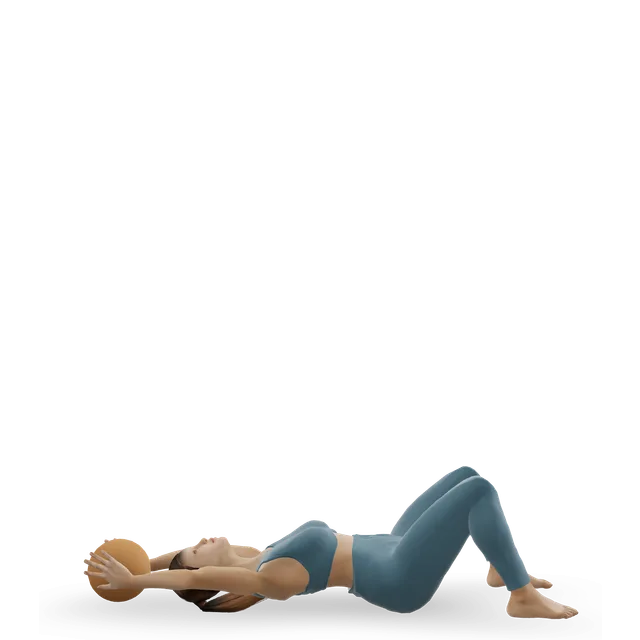
Ball squeeze demonstrated on the 3D figure3D demoBall squeezeBeginner · Other / check instructions

10 squeezes, 3 times a day, in or out of the sling · An NHS trust's count and frequency

Easier: Tendon glides (hand tendon gliding exercises) · Harder: Band finger extension

Wrist & forearm flow demonstrated on the 3D figure3D demoWrist & forearm flowBeginner · No equipment

Wrist bends, side tilts and circles, and palm-up, palm-down turns with the elbow bent at your side: 10 of each, 3 times a day · An NHS trust's dose

Easier: Wrist circles · Harder: Wrist flexor stretch

Elbow bend and straighten (elbow range of motion) demonstrated on the 3D figure3D demoElbow bend and straighten (elbow range of motion)Beginner · No equipment

10 slow repetitions, 3 times a day, with the upper arm by your side; no resistance for 6 weeks after a Latarjet · An NHS trust's dose (the move page gives up to 4 times a day)

Harder: Dumbbell biceps curl

Seated upper-back lift (sit tall, shoulders back) demonstrated on the 3D figure3D demoSeated upper-back lift (sit tall, shoulders back)Beginner · A bench or box

Set the shoulder blades gently back and down and hold 3 to 5 s, 10 times, 3 times a day, with the arm resting in the sling · An NHS trust's count; the hold is the move page's

Easier: Elbows back · Harder: Prone Y-T-W raises

Table slide (seated forward reach) demonstrated on the 3D figure3D demoTable slide (seated forward reach)Beginner · A bench or box

Only if your team includes assisted lifting: slide the hand forward, staying below shoulder height (to about 70° in the first days and below 90° to 3 weeks, in one NHS plan); 10 slow slides, up to 3 times a day · The move page's dose; the range limits are an NHS trust's

Easier: Pendulum exercise (Codman's pendulum) · Harder: Overhead lat stretch at a bench (elbows on the bench)

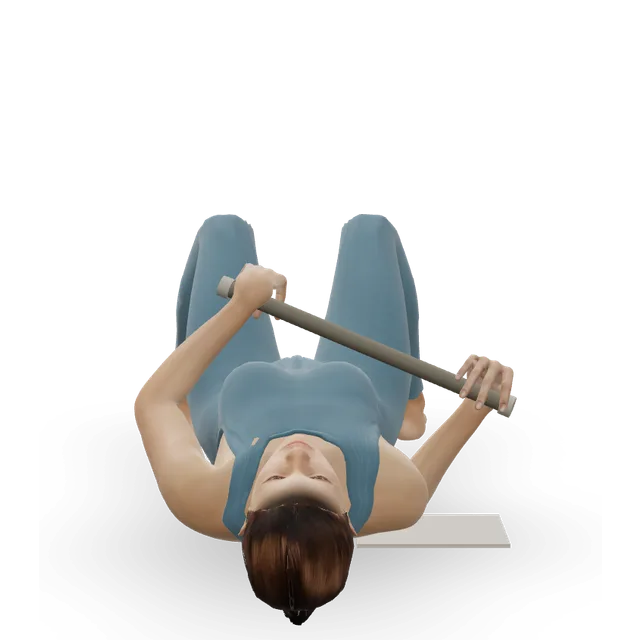
Stick-assisted external rotation (lying) demonstrated on the 3D figure3D demoStick-assisted external rotation (lying)Beginner · Other / check instructions

Elbow tucked at your side; turn the forearm out only as far as pointing straight ahead for the first 3 weeks; 10 slow repetitions, 3 times a day, never forced · The range is NHS plans'; the count is an NHS trust's, not the move page's frozen shoulder dose

Harder: Standing band external rotation

Move on when: Your team says the sling can come off (often at about 3 weeks, or up to 6 weeks in some plans), and you can move in the safe zone without pain or a feeling that the shoulder might slip.

Follow along: a timer, a cue and the next move, one step at a time.
Stage 2

Out of the sling: lifting to shoulder height and turning out to about 30° (about weeks 3 to 6, as your team allows)

As your team allows. Wean off the sling, around the house first. Lift the arm yourself up to about shoulder height, and turn it out to about 30° with the elbow at your side, if your team allows. Still no arm out to the side and turned back. Light lifting and gentle holds against your own hand are in the written steps. Driving usually waits until about 6 weeks. Don't push through pain.

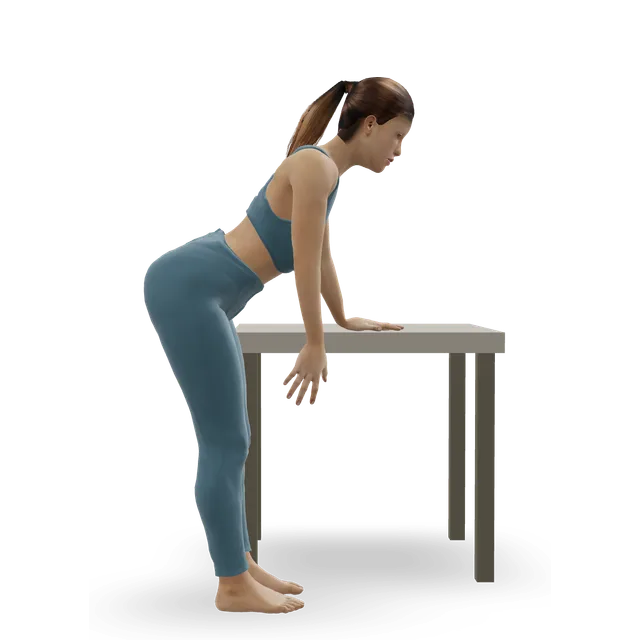
Pendulum exercise (Codman's pendulum) demonstrated on the 3D figure3D demoPendulum exercise (Codman's pendulum)Beginner · A bench or box

Small circles each way, 10 times, 3 times a day · An NHS trust's dose, close to the move page's

Harder: Table slide (seated forward reach)

Scaption raise demonstrated on the 3D figure3D demoScaption raiseBeginner · A dumbbell

No weight, thumbs up, to shoulder height only; 10 slow repetitions, 3 times a day · An NHS trust's count; the height limit is NHS plans'

Easier: Band lateral raise · Harder: Smith machine upright row

Stick-assisted external rotation (lying) demonstrated on the 3D figure3D demoStick-assisted external rotation (lying)Beginner · Other / check instructions

Now to about 30°, as allowed; 10 repetitions, 3 times a day · NHS plans' range and count

Harder: Standing band external rotation

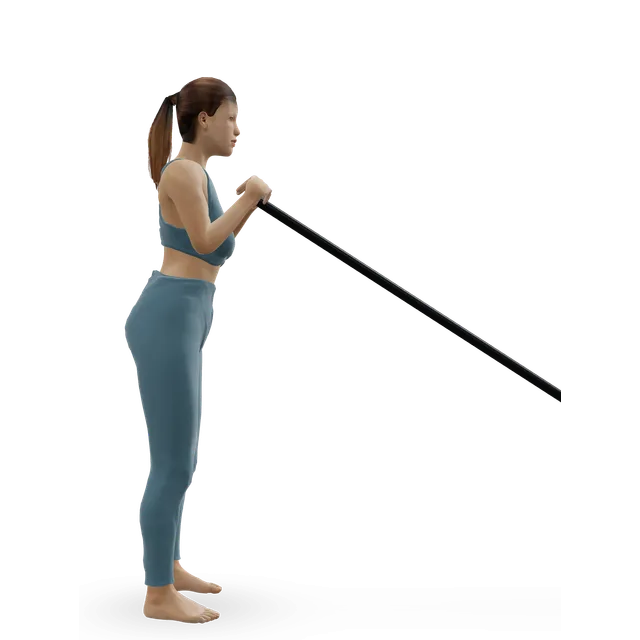
Band row demonstrated on the 3D figure3D demoBand rowBeginner · A band + An anchor point

Lightest band, 2 sets of 10, the elbows stopping at your sides · Editorial dose, lighter than the move page's

Harder: Supported single-arm dumbbell row

Wall push-up demonstrated on the 3D figure3D demoWall push-upBeginner · A wall

Only if your team includes weight through the arm: hands below shoulder height, a small range, 2 sets of 10 · Editorial dose; one NHS plan adds a little weight through the arm against a wall in the early weeks

Harder: Push-up

Stationary cycling demonstrated on the 3D figure3D demoStationary cyclingBeginner · Cardio machine

20 to 30 minutes, easy, with the hands resting lightly · Editorial dose

Easier: Recumbent exercise bike · Harder: Air bike intervals

Move on when: The sling is off, you can lift to shoulder height smoothly and turn out to about 30° without pain or apprehension, and your team agrees, often at about 6 weeks.

Follow along: a timer, a cue and the next move, one step at a time.
Stage 3

Full movement and strength (about weeks 6 to 12, as your team allows)

As your team allows. Regain full movement gradually. Start loading the rotator cuff with light bands once you have about two-thirds of the other side's movement, and add planks and light throws, as one NHS plan does. Strength sessions 2 to 3 times a week. Breaststroke from about 6 to 8 weeks. The arm out to the side and turned back still waits until your team allows, often at about 12 weeks. Doses are editorial unless named.

Band internal rotation demonstrated on the 3D figure3D demoBand internal rotationBeginner · A band + An anchor point

Lightest band, 2 to 3 sets of 10 to 15; after an open operation, only when your team allows · Editorial dose

Harder: Side-lying external rotation

Scaption raise demonstrated on the 3D figure3D demoScaption raiseBeginner · A dumbbell

0.5 to 1 kg, to shoulder height, 2 sets of 10 to 15 · Editorial dose

Easier: Band lateral raise · Harder: Smith machine upright row

Scapular push-up (push-up plus) demonstrated on the 3D figure3D demoScapular push-up (push-up plus)Beginner · No equipment

Hands on a wall, then a bench: 2 sets of 10 · Editorial dose

Easier: Dumbbell shoulder-blade punch · Harder: Push-up

Straight-arm plank (high plank) demonstrated on the 3D figure3D demoStraight-arm plank (high plank)Intermediate · No equipment

3 holds of 15 to 30 s; start with a knee plank if a full one is too much · The move page's dose

Easier: Knee hover (Pilates tabletop hover) · Harder: Leg pull front (Pilates leg pull down)

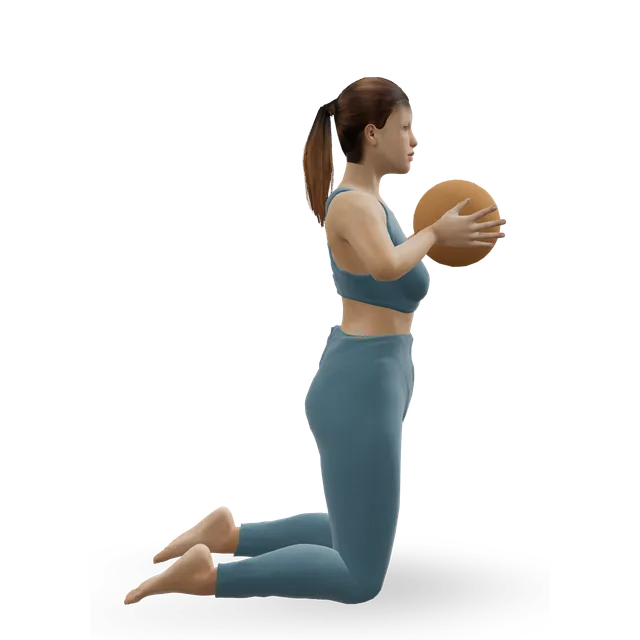
Medicine-ball chest push demonstrated on the 3D figure3D demoMedicine-ball chest pushBeginner · Medicine ball

A light ball, 2 sets of 5 to 8, from about 10 weeks · Editorial dose

Harder: Two-hand overhead throw

Move on when: You have full movement (at least 80% of the other side's turning out by 12 weeks, in one NHS plan) and a normal movement pattern, and your team allows the arm-out-and-turned-back position and heavier work.

Follow along: a timer, a cue and the next move, one step at a time.
Stage 4

From about 12 weeks: power, overhead work and the road back to sport (as your team allows)

As your team allows. Add the arm out to the side and turned back, then overhead and faster work. Manual work, front-crawl swimming, golf and heavy lifting usually come back from about 3 months in NHS plans, and throwing from about 16 weeks in one. Contact sport is your surgeon's decision: from 3 months at the consultant's discretion in one NHS plan, and 6 months or more in others. Doses are editorial unless named.

Push-up demonstrated on the 3D figure3D demoPush-upIntermediate · No equipment

3 sets of 8 to 12, from an incline at first · Editorial dose

Easier: Wall push-up · Harder: Close-grip push-up (close triceps position)

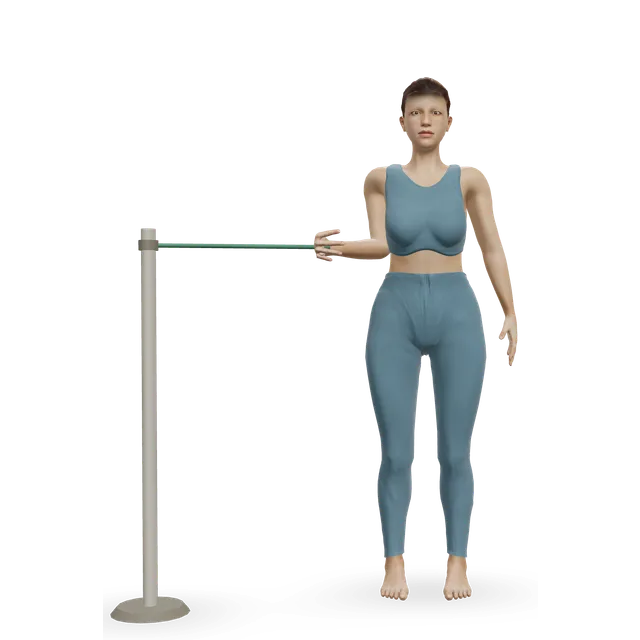
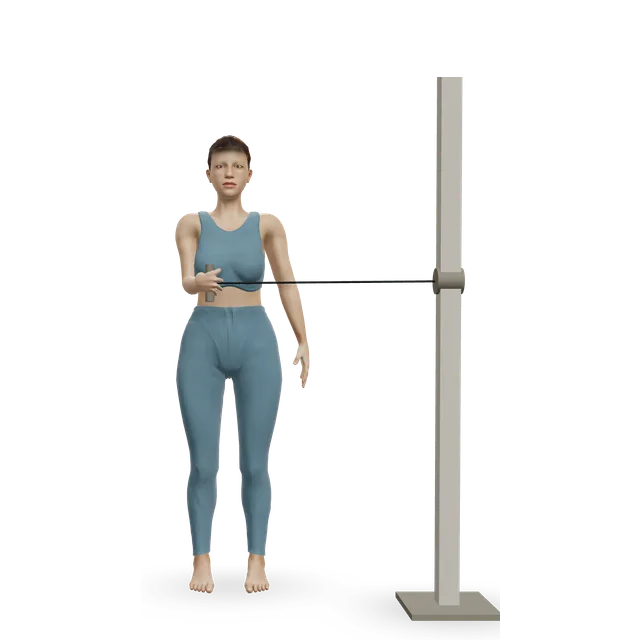
Cable external rotation demonstrated on the 3D figure3D demoCable external rotationBeginner · A cable machine

2 to 3 sets of 10 to 12, with the elbow at your side first; with the arm out to the side only once your team allows that position · Editorial dose

Harder: Side-lying external rotation

Landmine jammer demonstrated on the 3D figure3D demoLandmine jammerIntermediate · A barbell

As a plain landmine press first, without the dip: 3 sets of 8 to 10, light. Then the jammer itself, 3 to 5 sets of 2 to 5 · The press is editorial; the jammer dose is the move page's

Easier: Kettlebell halo · Harder: Barbell clean and press

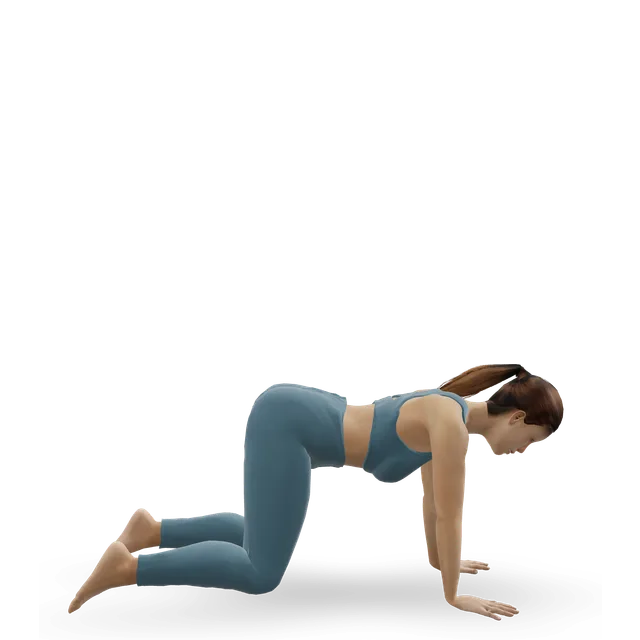
Bear crawl demonstrated on the 3D figure3D demoBear crawlIntermediate · No equipment

4 crawls of 8 to 10 m, forwards and back · The move page's dose

Easier: Knee hover (Pilates tabletop hover) · Harder: Spider crawl (low push-up knee drive)

Move on when: Your surgeon clears you for your sport, ideally after tests of strength, stability and confidence. One NHS plan uses more than 21 touches in 15 seconds on a plank touch test, a one-arm hop, a balance reach test and a psychological readiness scale. No test has been shown to prevent another dislocation, so keep 1 to 2 strength sessions a week going.

Follow along: a timer, a cue and the next move, one step at a time.

What to change for now

Typical timings, which your team may change

These come from NHS hospital plans and the BESS consensus, and they differ. Your own team's timings come first.

  • The sling: up to 3 weeks in the BESS consensus, and 3 to 6 weeks in some NHS plans.
  • Driving: at about 6 weeks, once you're out of the sling and in full control of the car.
  • Desk work: from about 2 weeks, or as soon as you're comfortable.
  • Light lifting: from about 3 weeks in one plan. Heavy lifting: from about 3 months.
  • Manual, lifting or overhead work: from about 8 to 12 weeks, or after 12 weeks.
  • Swimming: breaststroke from about 6 to 8 weeks, and front crawl from about 8 to 12 weeks or 3 months.
  • Cycling on the road: from about 8 to 12 weeks in one plan.
  • Golf and racquet sports: from about 3 months. Throwing: from about 16 weeks in one plan.
  • Contact sport: from 3 months at the consultant's discretion in one plan, to 6 months or more in others.

Sources 1, 3, 11, 4, 10, 6

Living with the sling, and the safe zone (written steps)

From the University Hospitals Birmingham and Royal Berkshire NHS leaflets, with the daily tasks from the BESS consensus.

  • 1. Wear the sling day and night, including in bed, for as long as your team says. Take it off only to wash, dress and do your exercises.
  • 2. Washing: with the sling off, keep the arm close to your body. Lean forward slightly to wash and dry under the armpit, and dry it well. Keep the dressings dry; some plans ask for a strip wash for the first 3 weeks.
  • 3. Dressing: wear loose clothes, put the operated arm into a top first, and take it out last.
  • 4. Sleeping: don't lie on the operated shoulder. Keep the sling on in bed, with pillows to support the arm and your posture.
  • 5. Posture: try not to hitch the shoulder up or slump.
  • 6. Ice: wrapped in a damp towel, for 10 to 15 minutes at a time. One plan says up to 10 minutes, with at least 20 minutes between.
  • 7. In the safe zone, the BESS consensus allows using cutlery, lifting a drink, slicing bread, using kitchen utensils, wiping a table, light dusting, pulling up clothing, and washing and drying dishes. Avoid closing car doors and draining saucepans with that arm.

Sources 1, 4, 10

Gentle holds for the rotator cuff (written steps)

One NHS plan starts gentle rotator cuff holds (isometrics) in the first 3 weeks, and another starts light holds at about 3 to 4 weeks. Start only when your team says. The steps and dose are our suggestion.

  • 1. Stand or sit tall with the operated elbow bent to a right angle and tucked against your side.
  • 2. Turning out: press the back of your wrist gently outwards against a door frame or your other hand, so that nothing moves. Hold for 5 seconds.
  • 3. Turning in: press your palm gently inwards against your other hand. After an open operation, which goes through the muscle at the front of the shoulder, do this one only when your team allows.
  • 4. Use gentle effort, never a strain: 5 of each, building to 10, once or twice a day (our suggestion).

Sources 3, 5, 6

Routines that fit, and what to leave out

Easy cardio (walking) fits in the sling. The push-up progression fits from about 3 months, with wall and incline push-ups only at first. The shoulder mobility and stability routine fits from about 3 to 4 months: leave out its doorway chest opener, wall angel and shoulder circles, and the W of the face-down Y-T-W raises, until your team allows the arm out to the side and turned back. The upper body workout fits from about 4 to 6 months, with the same exceptions.

Positions to swap, and why

Habit or positionWhy it mattersInstead
The arm out to the side and turned back (the throwing or hands-behind-the-head position) before your team allows, often about 12 weeksIt's the position a shoulder dislocates forwards in, and it stretches the front of the joint where the repair is healing.Work in front of the body, and with the elbow at your side.Try: Standing band external rotation
Doorway chest stretchesThey take the arm out to the side and back, the position the shoulder came out in.Band rows with the elbows low.Try: Band row
Overhead strap pass-throughs (shoulder dislocates)Their own page says to leave them out after a dislocation or with an unstable shoulder.Lifting in front of you, to the height your team allows.Try: Scaption raise
Wall angels in the first monthsThey take the arm out to the side and turned back.Setting the shoulder blades back and down while sitting tall.Try: Seated upper-back lift (sit tall, shoulders back)
Hanging from a barIts own page says to leave it out after a recent dislocation, or if a shoulder feels unstable.Rows, once your team allows.Try: Band row
Deep dipsGoing deeper than the upper arms level with the floor loads the front of the shoulder heavily, its page says.Incline push-ups, later in the plan.Try: Incline push-up
Biceps curls with a weight in the first 6 weeks after a LatarjetA biceps tendon is attached to the bone that was moved.Bending and straightening the elbow with no weight.Try: Elbow bend and straighten (elbow range of motion)
Lying on the operated side, or taking the sling off in bed, in the sling weeksOne NHS trust asks you to keep the sling on in bed and not to lie on the operated shoulder.Pillows to support the arm and your posture.
Closing car doors or draining saucepans with the operated arm in the sling weeksThe UK consensus lists them as tasks to avoid.Use your other hand.
Pushing into a stretch to get the turning-out back quicklyNHS plans warn against overstretching into the position the shoulder dislocates in.Gentle assisted turning within the range your team allows.Try: Stick-assisted external rotation (lying)
Going back to contact sport by the calendarNo minimum safe time is known; strength, stability and confidence matter, and your surgeon decides.Your team's tests and clearance.

Routines to follow

More moves for this area

Questions people ask

How long is recovery after a Bankart repair or Latarjet?

Expect a sling for about 3 to 6 weeks, movement work to about 12 weeks, then strength. Driving is usually possible at about 6 weeks and manual work at about 3 months. One NHS trust says full recovery can take up to 6 months, and athletes in studies went back to sport at about 6 months on average.

How long do I need to wear the sling?

As long as your surgeon says. It's up to 3 weeks in a UK consensus, which allows it to come off earlier if you can manage, and 3 to 6 weeks, day and night, in some NHS plans. Take it off only to wash, dress and do your exercises.

What is the safe zone?

It's the range you can move in while the repair heals: lifting the arm in front of you, usually no higher than shoulder height, with the forearm turned out no further than pointing straight ahead. Light tasks like eating, drinking and washing up are fine. Don't take the arm out to the side and turned back until your team allows, often at about 12 weeks.

Why should I avoid the arm out to the side and turned back?

It's the position in which a shoulder usually dislocates forwards, so it stretches the front of the joint where the repair is healing. NHS plans keep you out of it for about 12 weeks and then build it in gradually.

When can I drive after shoulder stabilisation surgery?

Usually at about 6 weeks, once you're out of the sling and in full control of the car, including emergency manoeuvres. Check with your team and your insurer first.

When can I go back to work?

Desk work is often possible from about 2 weeks. Manual, lifting or overhead work usually waits 8 to 12 weeks or more, and your team will tailor it to your job.

When can I go back to contact sport, and who decides?

Your surgeon decides, using how much bone was lost, the operation, your sport and how the shoulder is doing. NHS plans range from 3 months, at the consultant's discretion, to 6 months or more. International experts say no minimum safe time is known, and they look at strength, movement, stability and confidence instead.

Could my shoulder dislocate again after surgery?

It can, though it's much less likely. Over 5 years or more, it happened after about 15% of keyhole Bankart repairs and 3% of Latarjets, and the risk is higher in young people who play collision sports. A shoulder that slips needs your team, or A&E if it stays out.

Is a Bankart repair or a Latarjet better?

They suit different shoulders: a Latarjet is used when bone has been lost from the socket. In studies, the Latarjet had fewer recurrences but more complications, and a similar return to sport. Your surgeon chooses the operation for your shoulder.

How should I sleep after shoulder stabilisation surgery?

In the early weeks, keep the sling on in bed, don't lie on the operated shoulder, and use pillows to support the arm. Many people find sleeping propped up more comfortable at first.

When can I swim, cycle or play golf?

In NHS plans, breaststroke from about 6 to 8 weeks, front crawl from about 8 to 12 weeks or 3 months, road cycling from about 8 to 12 weeks, and golf and racquet sports from about 3 months. Always as your team allows.

Related exercise guides

Other pain guides

Sources

  1. University Hospitals Birmingham NHS Foundation Trust · Anterior shoulder stabilisation (physiotherapy leaflet, 2025)
  2. AAOS OrthoInfo · Chronic shoulder instability and dislocation
  3. The Robert Jones and Agnes Hunt Orthopaedic Hospital NHS Foundation Trust · Rehabilitation guide after a Bankart repair or Latarjet procedure (2024)
  4. Royal Berkshire NHS Foundation Trust · Exercises following Latarjet repair (physiotherapy leaflet, 2022)
  5. Lloyd 2021 · Rehabilitation after surgery for anterior shoulder instability (systematic review, Sports Med Arthrosc Rev)
  6. The Dudley Group NHS Foundation Trust · Instability of the shoulder (leaflet, 2025)
  7. Alentorn-Geli 2026 · Treatment and return to sport for traumatic anterior shoulder instability (ESSKA-ESA consensus, Knee Surg Sports Traumatol Arthrosc)
  8. NHS · Dislocated shoulder
  9. Wong 2026 · Rehabilitation after keyhole shoulder stabilisation: evidence synthesis for the British Elbow and Shoulder Society (consensus, Br J Sports Med)
  10. Willmore 2024 · Rehabilitation after keyhole shoulder stabilisation (Delphi consensus, Physiotherapy)
  11. Royal United Hospitals Bath NHS Foundation Trust · Guidelines after Bankart, Latarjet and SLAP repair (physiotherapy protocol, 2021)
  12. Wong 2026 · British Elbow and Shoulder Society guidelines: rehabilitation after traumatic anterior shoulder dislocation (practice guideline, Shoulder Elbow)
  13. Rollick 2017 · Long-term outcomes of Bankart and Latarjet repairs (systematic review, Open Access J Sports Med)
  14. Murphy 2019 · Keyhole Bankart repair at 10 years (systematic review, J Shoulder Elbow Surg)
  15. Do 2025 · A modern keyhole Bankart repair after at least 10 years (case series, Am J Sports Med)
  16. Pasqualini 2024 · Recurrence after keyhole Bankart repair in contact and collision athletes (systematic review, Arthroscopy)
  17. Hurley 2026 · Open against keyhole stabilisation in contact and collision athletes (systematic review, Knee Surg Sports Traumatol Arthrosc)
  18. Peckston 2026 · Keyhole Bankart repair against the Latarjet in contact athletes (meta-analysis, Am J Sports Med)
  19. Jackson 2024 · Graft thinning and joint wear after a primary Latarjet (systematic review, Arthroscopy)
  20. Ting 2024 · Does bone thinning around a Latarjet graft matter? (clinical and imaging review, JSES Int)
  21. Kim 2003 · Accelerated rehabilitation after keyhole Bankart repair (randomised trial, Arthroscopy)
  22. Gibson 2016 · Accelerated rehabilitation after keyhole Bankart repair in professional footballers (case series, Shoulder Elbow)
  23. Goetti 2026 · Self-rehabilitation with or without a sling after an open Latarjet (randomised trial, J Bone Joint Surg Am)
  24. Maher 2024 · Rehabilitation after keyhole shoulder stabilisation: UK practice (survey, Shoulder Elbow)
  25. Noyes 2025 · Return to sport after Bankart repair against Latarjet (systematic review, Orthop J Sports Med)
  26. Baur 2026 · Return to sport after shoulder stabilisation in athletes (meta-analysis, Orthop J Sports Med)
  27. Fails 2025 · Return to competitive sport after anterior shoulder stabilisation, and clearance criteria (scoping review, Int J Sports Phys Ther)
  28. Högberg 2026 · Clinical tests before return to sport with shoulder instability (scoping review, Knee Surg Sports Traumatol Arthrosc)
  29. Matache 2022 · Anterior shoulder instability: rehabilitation, return to play and follow-up (international consensus, Arthroscopy)
  30. Hossein Zadeh 2024 · Keyhole Bankart repair against the Latarjet (meta-analysis, J Shoulder Elbow Surg)
  31. Griesser 2013 · Complications and reoperations after Bristow-Latarjet stabilisation (systematic review, J Shoulder Elbow Surg)
  32. Cho 2023 · Complications of Latarjet stabilisation (systematic review, Am J Sports Med)
  33. Hurley 2021 · Short-term complications of the Latarjet (systematic review, J Shoulder Elbow Surg)
  34. NICE NG89 · Venous thromboembolism in over 16s: reducing the risk of hospital-acquired DVT or pulmonary embolism (2018, updated 2019)
  35. NHS · DVT (deep vein thrombosis)

Exercise education, not a diagnosis or treatment plan. It is written from the guidelines and studies listed above; review by a clinician is pending. If your pain follows an injury, is severe, is getting worse, or comes with any warning sign listed on this page, get it assessed. Health disclaimer.