Supported shoulderstand (Salamba Sarvangasana)
Upside down on the shoulders with the hands supporting the back and the legs stacked over the shoulders; folded blankets under the shoulders protect the neck's curve.
Shoulderstand family
Supported shoulderstand (Salamba Sarvangasana)
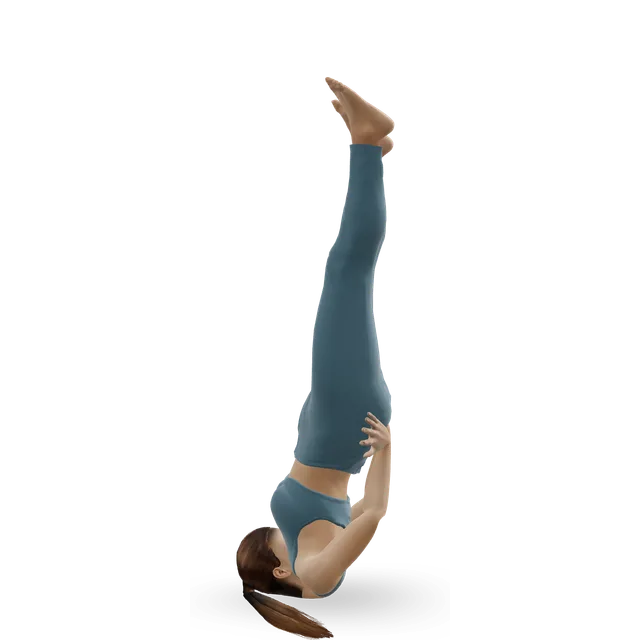
Loading the 3D figure…
Source-researched guide.
How to move
- Lie on the back with folded blankets under the shoulders and the head on the floor beyond them.
- Swing the hips up, support the back with both hands and walk the hands toward the shoulder blades, elbows in.
- Straighten the legs up over the shoulders, hold briefly, then lower the hips slowly with the hands still supporting the back.
Form cues
- Keep the head still and looking straight up; never turn it while up.
- Start with short holds and build up gradually.
Practice and cautions
No universal dose is assigned. Choose a manageable amount for your current capacity, leave room for controlled repetitions, and allow recovery. A clinician’s individual plan takes priority.
Avoid with any neck or disc problem, glaucoma, or uncontrolled high blood pressure, and never turn your head while you are up. Many teachers now prefer legs up the wall for this reason. With rheumatoid arthritis that affects your neck, leave this out: the NHS says long-standing rheumatoid arthritis raises the risk of an uncommon but serious problem at the top of the spine (cervical myelopathy). Avoid it with osteoporosis: the body's weight rests on a rounded neck and upper back. Not one to start or practise in pregnancy: balancing upside down carries a risk of falling. With proliferative or severe non-proliferative diabetic retinopathy, or after recent eye laser treatment or surgery, leave out head-down positions until your eye team says they are safe. With a stiff or fused spine from ankylosing spondylitis, leave this out (our reading): UK guidance from the National Institute for Health and Care Excellence (NICE) says people with axial spondyloarthritis may be prone to fractures, and a fused spine can break after a minor injury, most often in the neck. With vertigo or BPPV, head-down positions, lying back quickly and tipping your head back can bring on a spin: move into and out of them slowly, sit up slowly, and leave them out during a bad spell. With Down syndrome, leave out moves that put weight through the head and neck, such as headstands, shoulderstands, the plough and roll-overs, unless a doctor has checked your neck (our suggestion, from the advice on neck instability). This is movement education, not an assessment or treatment prescription. Stop for sharp or increasing pain, dizziness, numbness or tingling; seek individual guidance for symptoms, injury or restrictions.
Sources and review status
Sources support the educational description; they do not establish that this exercise is suitable for you.
- Yoga Journal · Supported shoulderstand (an intermediate to advanced pose) ↗
- Yoga International · Legs up the wall (one of the simplest inversions; headstand and shoulderstand more difficult) ↗
- NHS · Rheumatoid arthritis: complications, including cervical myelopathy, an uncommon but serious problem at the top of the spine (past its review date: reviewed March 2023, review due March 2026) ↗
No variation is labeled clinically validated.
What it works
Muscles
Main: Abs, Shoulders. Also: Back.
Anatomy: Rectus abdominis, Obliques, Transversus abdominis, Deltoid, Rotator cuff, Supraspinatus.
Equipment
None: body weight and floor space.
Level
Advanced. See the easier and harder options above.
Guides that use it
- Yoga guide
- Yoga for back pain guide
- Yoga for seniors guide
- Yoga in pregnancy guide
- Ashtanga yoga guide
- Iyengar yoga guide
- Yoga for neck pain guide
- Yoga for headaches and migraine guide
Show all 81 guidesShow fewer guides
- Yoga for kids guide
- Yoga for hip pain guide
- Yoga for high blood pressure guide
- Yoga for sciatica guide
- Yoga for scoliosis guide
- Yoga for shoulder pain guide
- Yoga for arthritis guide
- Yoga for menopause guide
- Yoga for period pain guide
- Yoga for thyroid problems guide
- Yoga for posture guide
- Morning yoga guide
- Yoga for balance guide
- Yoga for depression guide
- Yoga for upper back pain guide
- Yoga for osteoporosis guide
- Yoga for MS guide
- Yoga for heart health guide
- Yoga for Parkinson's guide
- Yoga for stroke recovery guide
- Yoga for height guide
- Yoga for hair growth guide
- Yoga for glowing skin guide
- Yoga for memory and concentration guide
- Yoga for acid reflux guide
- Yoga for kyphosis guide
- Yoga for a herniated disc guide
- Yoga for surfers guide
- Yoga for baseball players guide
- Yoga for spondylolisthesis guide
- Yoga for degenerative disc disease guide
- Yoga for cervical spondylosis guide
- Yoga for whiplash guide
- Yoga for high cholesterol guide
- Yoga for fatty liver guide
- Yoga for low blood pressure guide
- Yoga for ovarian cysts guide
- Yoga for a hernia guide
- Yoga for bipolar disorder guide
- Yoga for Down syndrome guide
- Yoga for cerebral palsy guide
- Yoga for polymyalgia rheumatica guide
- Yoga for myasthenia gravis guide
- Yoga for muscular dystrophy guide
- Yoga for horse riders guide
- Yoga for triathletes guide
- Yoga for cricketers guide
- Yoga for hockey players guide
- Yoga for figure skaters guide
- Yoga for gymnasts guide
- Yoga for pickleball players guide
- Yoga for CrossFit guide
- Yoga for wrestlers guide
- Yoga for bodybuilders guide
- Yoga for skateboarders guide
- Yoga for badminton players guide
- Yoga for nurses guide
- Yoga for veterans guide
- Yoga for firefighters guide
- Yoga over 50 guide
- Yoga for Crohn's and colitis guide
- Yoga after spinal fusion guide
- Yoga for teens guide
- Yoga for atrial fibrillation guide
- Yoga for breast cancer guide
- Yoga for heart failure guide
- Yoga for prostate cancer guide
- Yoga for prolapse guide
- Yoga for lymphoedema guide
- Yoga for rounded shoulders guide
- Yoga for chronic pain guide
- Yoga for shoulder mobility guide
- Yoga for joint pain guide
Similar moves
 Scale pose (Tolasana)Advanced · A stepCrane pose (Bakasana, straight arms)Advanced · No equipmentSide crow (Parsva Bakasana)Advanced · No equipment
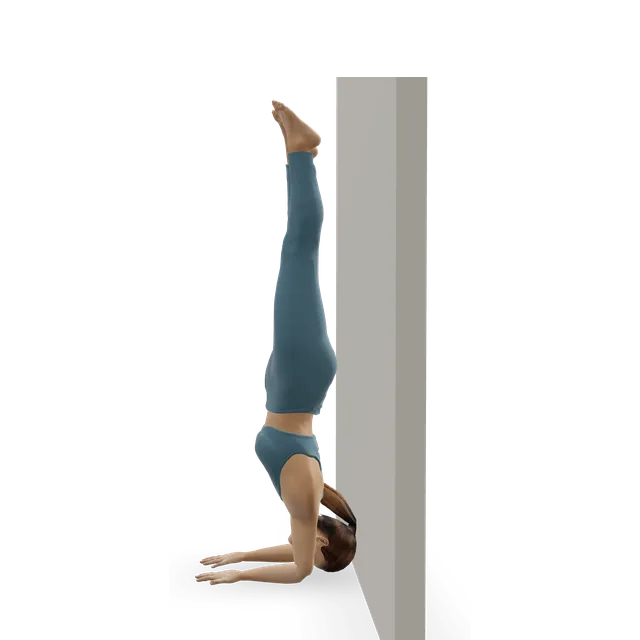 3D demoForearm stand (Pincha Mayurasana)Advanced · A wall
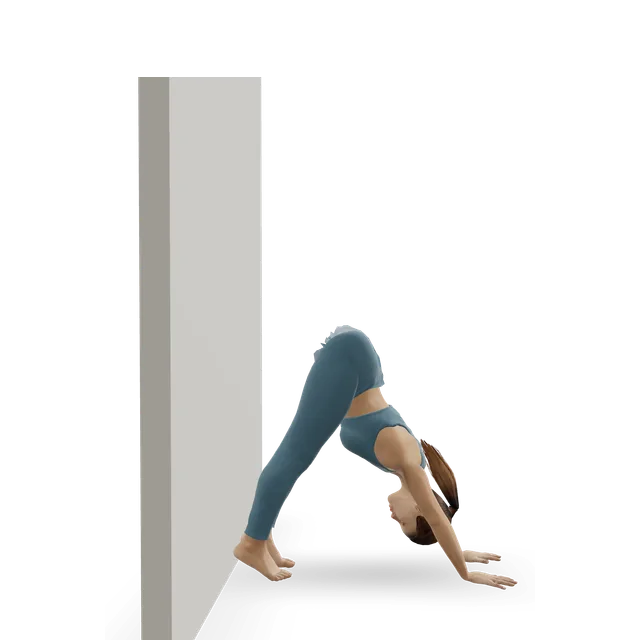 3D demoHalf handstand at the wall (Ardha Adho Mukha Vrksasana)Intermediate · A wall
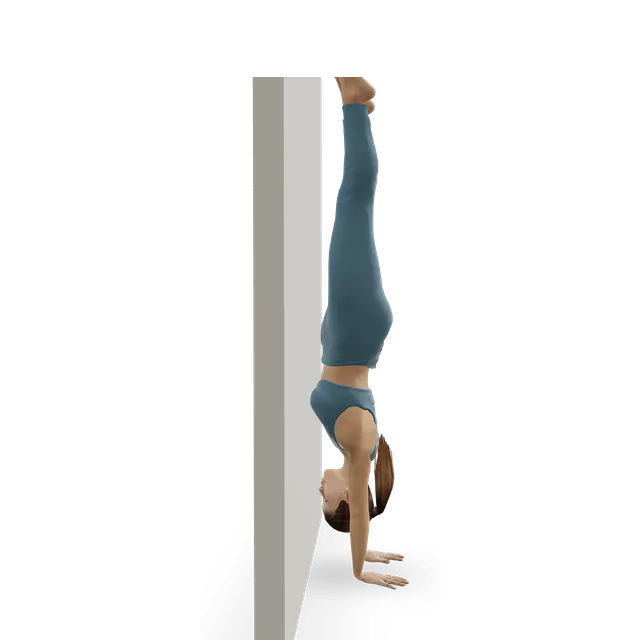 3D demoHandstand at the wall (Adho Mukha Vrksasana, chest to wall)Advanced · A wall
Browse more
Questions people ask
What muscles does the Supported shoulderstand (Salamba Sarvangasana) work?
Mainly the abs and shoulders, with help from the back.
What equipment do I need for the Supported shoulderstand (Salamba Sarvangasana)?
No equipment: your body weight and a little floor space.
Is the Supported shoulderstand (Salamba Sarvangasana) good for beginners?
It is an advanced move. Build up to it with the Legs up the wall (Viparita Karani) first.
What is an easier alternative to the Supported shoulderstand (Salamba Sarvangasana)?
Try the Legs up the wall (Viparita Karani) or the Dolphin pose (Ardha Pincha Mayurasana). Both are written steps in the same progression.
How do I make the Supported shoulderstand (Salamba Sarvangasana) harder?
Progress to the Supported headstand (Salamba Sirsasana). Follow that guide’s technique and any stated timing.