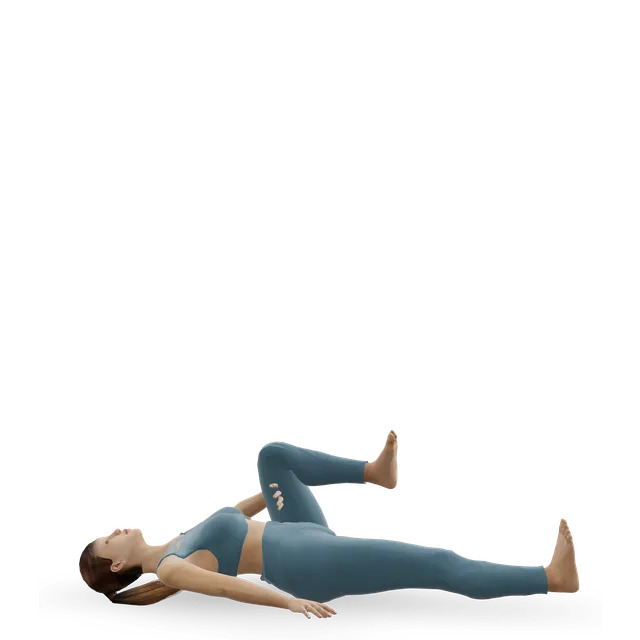
NICE recommends exercise of any typeStrong evidence
NICE: "Offer a supervised group exercise programme to people aged 16 years and over to manage chronic primary pain." Exercise "reduced pain (23 studies) and improved quality of life (22 studies) compared with usual care", and the committee "did not specify what type of exercise should be used". Its evidence review named yoga and tai chi as mind-body exercise, found a benefit for pain from very low and low quality evidence, and "could not infer if one type of exercise had more benefit than another".
Sources 1, 5, 6
Other guidelines for back painStrong evidence
For low back pain, NICE says to consider group exercise that can be biomechanical, aerobic or mind-body, and the World Health Organization (WHO) says a structured exercise programme "may be offered", with yoga among the types considered. The American College of Physicians lists yoga among the first non-drug treatments to try. The US NCCIH (National Center for Complementary and Integrative Health) sums it up: "For low-back pain, a large amount of research has been done, and the evidence suggests a slight benefit."
Sources 22, 23, 24, 25
Long-lasting back pain: small benefitsStrong evidence
In the Cochrane review (21 trials, 2,223 people), yoga improved function by 1.69 points on the 24-point Roland-Morris scale (low certainty) and pain by 4.53 points out of 100 (moderate certainty) at 3 months, compared with no exercise. Both are below the differences the review counted as noticeable (5 and 15 points). All the trials were at high risk of bias because people knew which group they were in. Another review of 27 trials and an overview of 13 reviews came to similar conclusions, and a US review rated the evidence that yoga improves function in the short term as moderate.
Sources 7, 26, 27, 28
About as good as other exerciseStrong evidence
Against other back exercise (8 trials, 912 people), "There is probably little or no difference" for function. In 228 adults, yoga "was not superior to conventional stretching exercises at any time point"; in 320 lower-income adults, 12 weekly classes were as good as 15 physiotherapy sessions. A 2026 review of 7 trials found yoga "was not statistically superior to exercise comparators" for pain.
Sources 7, 29, 30, 31
Gains held for months in the larger trialsEmerging evidence
In the UK trial of 313 adults at 13 community venues, 12 weekly classes improved back function by 2.2 points at 3 months and by about 1.5 to 1.6 points at 6 and 12 months against usual care, though pain scores were similar between the groups. In the Boston trial, people in the yoga and physiotherapy groups used less pain medicine than those given a book, and gains held at a year. Live-streamed classes eased pain by 1.5 points out of 10 more than a waiting list in 140 adults.
Sources 32, 29, 30, 33
Not every trial helpedMixed evidence
In 120 veterans with many health conditions, weekly classes were no better than an education book for pain or disability, though more people in the yoga group felt much improved (39% against 19%). In 150 veterans, twice-weekly classes improved disability at 6 months but not at 12 weeks. In Germany (274 people), yoga, eurythmy and physiotherapy exercise did equally well, and none reached a clinically meaningful change.
Sources 34, 35, 36
Neck pain: short-term benefit in small trialsMixed evidence
In 3 small trials (188 people), yoga eased neck pain and disability more than usual care in the short term, and a review of 10 trials drew "a very cautious conclusion" of benefit. An analysis of 40 trials concluded "There is not one superior type of physical exercise for people with chronic non-specific neck pain" (very low quality). Our yoga for neck pain guide has more.
Sources 8, 37, 38
Fibromyalgia: sleep and mood more clearly than painMixed evidence
Across 7 trials (362 people) of yoga, tai chi and qigong, sleep, tiredness, low mood and quality of life improved, but pain didn't overall, and "only Yoga yielded significant effects on pain" in subgroups. Cochrane rated the evidence for movement therapies very low quality, and a 2025 review found only 3 yoga trials (116 women). European guidelines give exercise their only strong recommendation. Our yoga for fibromyalgia guide covers it.
Sources 9, 39, 40, 41
Knee arthritis and older adults: low certaintyMixed evidence
In knee osteoarthritis, yoga eased pain at low certainty across 14 studies, and an online programme improved function but not knee pain. In middle-aged and older people with chronic pain, tai chi, yoga and qigong eased pain by a moderate amount at low certainty, but "were not superior to traditional physical exercises". Six small trials reported large improvements in low mood and anxiety with yoga, at low to very low certainty.
Sources 10, 42, 11, 43, 44
How yoga compares with exercise in generalEmerging evidence
Exercise of any kind eased chronic back pain by about 15 points out of 100 against no treatment in another Cochrane review, and across 157 reviews of all kinds of pain, "Aerobic, resistance, yoga, Pilates, and tai chi were effective". These come from different sets of trials, so read yoga's smaller figure as small and no larger than other exercise, not as worse. Analyses that rank exercise types are low certainty; their authors advise people to do "the exercise that they enjoy to promote adherence". No treatment for long-lasting back pain had a clinically important long-term effect, and there's no single best dose.
Sources 45, 46, 47, 48, 49, 50, 51
SafetyStrong evidence
Across 94 yoga trials (8,430 people), "yoga appears as safe as usual care and exercise". In back pain trials, yoga brought more side effects than no exercise (43 against 9 in 1,000 people, mostly more back pain) but about the same as other exercise; in the UK trial, 12 of 156 people in the yoga group reported one, mostly increased pain. Across 70 reviews of exercise for back pain, side effects were mostly soreness and short-lived increases in pain, mainly in yoga studies.
Sources 52, 7, 32, 53