Yoga guide

Yoga for chronic fatigue and ME/CFS: pacing first, gentle lying and seated yoga, and when to stop

With myalgic encephalomyelitis or chronic fatigue syndrome (ME/CFS), yoga has to fit inside pacing, not the other way round. The defining feature of ME/CFS is post-exertional malaise: a worsening of symptoms after even small physical, mental, emotional or social effort, often a day or two later. The National Institute for Health and Care Excellence (NICE) advises against general exercise programmes and graded exercise, and says not to push through. The only yoga tested in ME/CFS is a very gentle, mostly lying-down form called isometric yoga, which eased fatigue alongside usual care in two small trials from one research group.

This guide covers how ME/CFS differs from everyday tiredness, what post-exertional malaise means for any yoga, what the trials did and found, gentle lying and seated movement, breathing, dizziness on standing, long COVID, and when to stop and get help. There's no class to follow here, for the reason NICE gives.

The short version

ME/CFS isn't everyday tiredness

NICE suspects ME/CFS when fatigue that gets worse with activity and isn't relieved by rest, post-exertional malaise, unrefreshing sleep and "brain fog" have lasted at least 6 weeks, with activity well below what it was. If you're tired all the time and don't know why, see a GP: anaemia, diabetes, thyroid problems and sleep apnoea are among the causes. For everyday tiredness, our yoga for energy guide fits better.

Sources 1, 2

Pacing comes first, and nobody should push you to exercise

NICE says not to advise exercise outside a programme overseen by an ME/CFS specialist team, not to offer general exercise programmes or ones with fixed increases such as graded exercise therapy, and that people shouldn't "'push through' their symptoms". The NHS says graded exercise therapy "is not recommended".

Sources 1, 3

Judge yoga over 2 to 3 days, not straight afterwards

"Symptoms can typically worsen 12 to 48 hours after activity and last for days or even weeks", after even small amounts of physical, mental, emotional or social activity. A class can be all four at once: the journey, the session, the conversation, and the light and noise.

Source 1

One very gentle kind of yoga has been tested

In Japan, 30 people whose ME/CFS hadn't improved with usual care added 20-minute seated isometric yoga sessions; fatigue fell in the yoga group but not the usual-care group. NICE rated that trial very low quality and said the evidence couldn't be generalised to other types of yoga. In 48 people, including some mostly in bed, 12 weeks of lying-down isometric yoga improved daily functioning and fatigue more than usual care alone; people knew which group they were in.

Sources 4, 5, 6

Start lying down or seated, and keep breathing slow

Dizziness, palpitations or fainting on standing are common with ME/CFS, so standing flows and sun salutations are the parts most likely to set them off (our suggestion). NICE suggests relaxation at the start of each rest; keep breathing slow and gentle, and leave out fast, forceful breathing such as breath of fire.

Sources 1, 3, 7

When to stop and get help

If symptoms get worse during a session or over the next 2 to 3 days, drop back and rest. Don't assume new symptoms are ME/CFS: see a GP. If you're struggling with your mental health, help is there now. The full lists are in the warning signs below.

Sources 1, 8, 2, 9

ME/CFS, everyday tiredness and long COVID

ME/CFS, in plain words

ME/CFS is a long-term illness whose defining feature is post-exertional malaise (PEM): a worsening of symptoms after even small effort, typically 12 to 48 hours later, lasting days or weeks. NICE suspects it when debilitating fatigue that gets worse with activity and isn't relieved by rest, PEM, unrefreshing sleep and brain fog have lasted at least 6 weeks in an adult. There's no test and, as yet, no cure.

Over 250,000 people in England and Wales have it, about 2.4 times as many women as men, and about a quarter are housebound or bedbound; the NHS also says 1 in 4 have severe symptoms. Other symptoms can include dizziness, palpitations, sensitivity to light and sound, and feeling dizzy, sick or faint when standing up.

Sources 1, 10, 11, 12

Chronic fatigue in searches covers more than ME/CFS

Many people searching for chronic fatigue are tired for other reasons: too little sleep, stress, low mood, hormonal changes, illness or medicines, and conditions such as sleep apnoea, iron deficiency anaemia, diabetes or an overactive thyroid. See a GP if you've been tired for a few weeks and don't know why, or if it affects your daily life. For everyday tiredness, our yoga for energy guide has poses and classes.

Source 2

Long COVID

Many people with long COVID have post-exertional symptoms too, and the same pacing rules apply: World Physiotherapy asks for a check for them before any exercise. Our exercise for long COVID guide covers it; the long COVID section below covers yoga.

Sources 13, 14

Pacing comes first

Energy management, led by youStrong evidence

NICE's energy management covers "all types of activity (cognitive, physical, emotional and social)". It's led by you, with a sustainable level agreed that "may mean reducing activity", rest built in before you need it, and "activity is never automatically increased but is maintained or adjusted": upwards after a stable spell, downwards when symptoms are worse. It can take weeks, months or sometimes years.

Source 1

No general exercise programmesStrong evidence

NICE: "Do not advise people with ME/CFS to undertake exercise that is not part of a programme overseen by an ME/CFS specialist team, such as telling them to go to the gym or exercise more, because this may worsen their symptoms." It also says don't offer exercise as a cure, "generalised physical activity or exercise programmes", or programmes with fixed increases such as graded exercise therapy. A personalised programme is an option only if you feel ready and would like one, overseen by a physiotherapist in a specialist team. The NHS says don't take up vigorous unsupervised exercise, such as going to the gym or for a run.

Sources 1, 3

Rest isn't the whole answer eitherStrong evidence

NICE asks for ways to keep up joint movement, muscle flexibility, balance and circulation, "carried out in small amounts and spread out throughout the day". The NHS says that for "resting completely, there's no evidence this helps", and that a doctor may suggest limiting each rest to 30 minutes and teach relaxation techniques such as breathing exercises.

Sources 1, 3

Where yoga fits, when you're improvingStrong evidence

The ME Association's pacing booklet says: "always stop an activity before you feel you are doing too much". When improvement is happening, it suggests "Another form of gentle muscle-stretching exercise that may be suitable is yoga", built up gradually and flexibly, and adds: "A sudden return to any form of more vigorous physical activity is not recommended."

Source 8

Post-exertional malaise and yoga

What PEM isStrong evidence

NICE: "The worsening of symptoms that can follow minimal cognitive, physical, emotional or social activity, or activity that could previously be tolerated. Symptoms can typically worsen 12 to 48 hours after activity and last for days or even weeks, sometimes leading to a relapse." The NHS adds that it can be triggered by socialising or studying, and it can take weeks to recover.

Sources 1, 12

Why a class counts as more than exerciseStrong evidence

Travelling to a class, following instructions, talking to people, music and bright lights all draw on the same limited energy, and NICE lists heightened sensitivity to light, sound and touch among ME/CFS symptoms. The yoga trials were one-to-one, with the room's light, sound and temperature adjusted.

Sources 1, 4, 6

Feeling fine afterwards doesn't mean it was fineStrong evidence

Because PEM is delayed, a session can feel fine at the time and still cause a crash a day or two later. Check how you feel that evening, the next day and the day after, and if anything gets worse, drop back. Our ME/CFS guide has a 5-question PEM check.

Sources 1, 8

What the evidence says

Seated isometric yoga: one small trialEmerging evidence

In 30 adults whose fatigue hadn't improved after 6 months of usual care (they could sit for 30 minutes and didn't need help with daily activities), about 9 weeks of usual care plus 20-minute one-to-one isometric yoga sessions at hospital visits every 2 to 3 weeks, with home practice on most days, lowered fatigue scores in the yoga group (25.9 to 19.2) but not the usual-care group. After the first session, 1 person felt dizzy and 2 felt tired; there were no serious side effects.

NICE's evidence review rated this trial very low quality, with fatigue 6.6 points lower on a 0 to 42 scale. Its committee noted that "isometric yoga is a specific type of yoga and that the evidence could not be generalised to other types of yoga", and NICE's recommendations don't mention yoga.

Sources 4, 5

Lying-down isometric yoga: one small open-label trialEmerging evidence

In 48 adults (41 women) whose ME/CFS hadn't improved after 3 months of usual care, including people mostly in bed and people with fibromyalgia, half added about 12 weeks of lying-down isometric yoga: 25-minute one-to-one sessions with an instructor at hospital visits, mostly every 4 weeks, and practice at home on other days "if they could" (about 4 times a week, by their diaries). The main outcome was daily functioning, scored from 0 to 9 (performance status), and it improved more than with usual care alone, as did fatigue.

"No serious adverse events were reported after the patients became accustomed to the yoga procedures, including PEM"; one person had a short-lived worsening early on. People knew which group they were in, the trial came from the same research group as the earlier one, and there was no follow-up beyond 12 weeks. In an earlier 12-person pilot without a control group, everyone who had tried the seated version preferred lying down.

Sources 6, 15

Small studies of how it might workMixed evidence

In 15 people, one seated session lowered fatigue and raised vigour, with lower levels of the stress hormone cortisol and an inflammation marker. After 2 months, fatigue and low mood scores fell in another 15. In 10 women, 2 with postural tachycardia syndrome (PoTS) had a normal heart rate response to standing after 12 weeks of lying-down isometric yoga. None of these had a control group.

Sources 16, 17, 18

Wider reviews: small effects, weak evidenceMixed evidence

Across 13 trials (661 people) in ME/CFS and post-COVID syndrome, qigong, tai chi and yoga eased fatigue (SMD, standardised mean difference, -0.44), with low or very low certainty and most trials at moderate or high risk of bias. An earlier review of 12 studies of mind-body treatments in ME/CFS found similar signals from small studies. In an observational study of 155 people with unexplained chronic fatigue, doing yoga went with later improvement, which needs testing in trials.

Sources 19, 20, 21, 22

The graded exercise debateMixed evidence

A 2025 network analysis of 20 trials ranked graded exercise best for short-term fatigue, with yoga, qigong and others showing modest benefits, and its authors said graded exercise's wider endorsement "remains controversial". A Cochrane review found exercise therapy probably reduces fatigue at the end of treatment, but its searches ran only to 2014, long-term effects and harms are very uncertain, all its trials used criteria that didn't require PEM, and its update was discontinued. NICE weighed these trials and the harms people reported, and advises against graded exercise. Our ME/CFS guide sets this out.

Sources 23, 24, 1, 5

What isometric yoga is not

It isn't a class, a flow or a stretching session. It's brief, slow pressing at half your strength or less, with long rests, adjusted to how you are each day, taught one-to-one at first, alongside medical care. Most "yoga for chronic fatigue" advice online, with standing poses, downward dog and fast breathing, looks nothing like it.

Sources 4, 15, 6

What an isometric yoga session looks like

The lying-down version

About 25 minutes on a bed or mat in a quiet, dim, comfortable room: settling the body and breath, then five poses pressing gently against your own hands, the bed or the floor at 30% to 50% of your strength, "performed very slowly while breathing", such as pressing the back of your head into your hands, or pulling a knee towards your chest while pushing it away. Then deep rest and a slow return, with fewer repetitions or poses skipped on bad days. People were also encouraged to use what they noticed to spot their limits and avoid crashes.

Sources 15, 6

The seated version

Twenty minutes in a chair: a minute of noticing the breath, then six poses repeated 4 to 6 times at about half strength with the breath (pressing the palms together, pulling them apart, pressing the feet together, pressing the knees in against the hands, a twist, and stretching the arms behind the back), then a minute of tummy breathing.

Source 4

Ask your ME/CFS team first

The trial programme has been published as a video and booklet, but in the trials it was taught one-to-one and adjusted each session by an instructor and a doctor, and NICE says any physical activity programme should be overseen by an ME/CFS specialist team. Ask your team before you try it.

Sources 1, 6

Rest and breathing, lying down

Slow breathing: a few minutes to start a rest, with no holds (our ME/CFS guide's editorial starting point); corpse pose as part of a planned rest (the NHS mentions limiting rests to about 30 minutes); reclining bound angle with a support under each thigh: 2 to 5 minutes, if comfortable (the move's page; editorial for ME/CFS); legs up the wall, or legs on cushions: 2 minutes, coming up slowly (our long COVID gentle routine).

Gentle movement, lying down

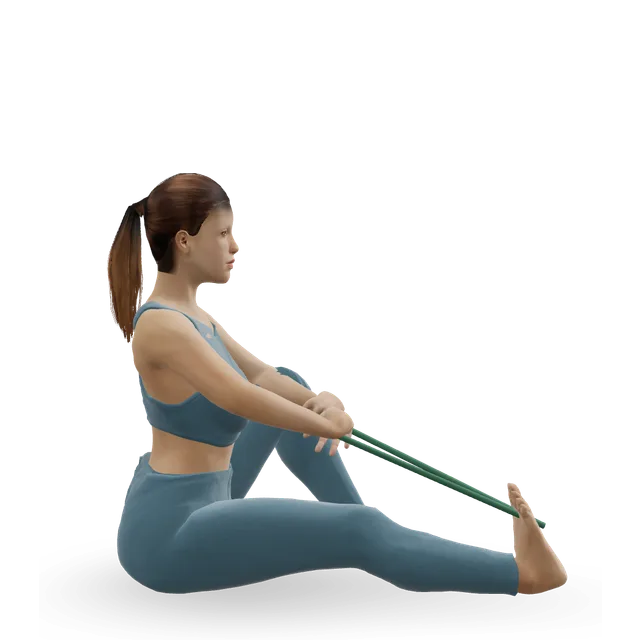
Only on a stable day and within your energy limit: 3 to 5 slow repetitions of ankle circles, heel slides and shoulder circles, and 2 to 3 slow breaths in each side of the twist and the strap hamstring stretch, with your knees supported, spread through the day (our ME/CFS guide's editorial starting point). The move pages' own doses are for people without ME/CFS.

Seated, for dizzy days

For days when standing makes you dizzy: 30 seconds of seated marching, or 3 to 5 of each move, with 2 to 3 slow breaths in the calf stretch (our ME/CFS guide's editorial starting point).

When you're stable, with your ME/CFS physiotherapist

Only as part of a plan agreed with your ME/CFS team: 3 to 5 small, slow bridges (close to the trials' slow, small hip lift) and 3 to 5 sit-to-stands if standing is comfortable (our ME/CFS guide's editorial starting point), judged by how you feel over the next 2 to 3 days.

What to leave out

Classes and flows designed for healthy people

Sun salutations, standing sequences, downward dog, and vinyasa, power or Ashtanga classes are the "generalised physical activity or exercise programmes" NICE advises against. A 60 or 75-minute class is a long day out, and long floor holds in yin or restorative classes can make getting up hard and dizzy; short supported rests at home suit better (our suggestion).

Source 1

Quick changes between the floor and standing

If you get dizzy on standing, leave out folding forward and coming up, and moving between the floor and standing, and change position slowly (our suggestion).

Sources 1, 12

Hot yoga

NICE lists sensitivity to temperature among ME/CFS symptoms, and no study has tested hot yoga in ME/CFS. We'd avoid it.

Sources 1, 25

Fast, forceful breathing and long breath holds

Leave out breath of fire (kapalabhati) and bellows breath (bhastrika): the US National Center for Complementary and Integrative Health (NCCIH) tells beginners to avoid forceful breathing, and side effects were more common with fast than slow techniques in a review. Use breath holds such as box breathing only if they feel easy; otherwise keep to slow breathing.

Sources 7, 26

Why there's no class here

NICE advises against general exercise programmes

NICE says don't offer generalised physical activity or exercise programmes for ME/CFS, and any programme should be personalised and overseen by an ME/CFS specialist team. The trial programmes were one-to-one and adjusted each session, and NICE judged the evidence very low quality and specific to that method. So this page offers moves and amounts, not a class to follow, as our ME/CFS guide does.

Sources 1, 5

Routines that may fit, with conditions

The slow breathing in our breathing exercises to relax routine, at the start of a rest (leave out the holds). Our long COVID gentle routine only if you have long COVID without post-exertional symptoms, or your long COVID team agrees. A short version of our restorative yoga sequence on a rest day, only if you're stable and lying still and getting down to the floor are easy (our suggestion).

Sources 1, 13

Long COVID

Check for post-exertional symptoms firstStrong evidence

World Physiotherapy asks for a check for post-exertional symptom exacerbation (the same thing as PEM) before recommending physical activity, and for heart problems and oxygen levels that drop on exertion to be ruled out. With post-exertional symptoms, "'Stop. Rest. Pace', activity management or pacing, and heart rate monitoring may be effective". NICE's long COVID guideline asks for a personalised rehabilitation plan, with symptoms that may come and go.

Sources 13, 14

Yoga for long COVID: being studiedMixed evidence

A 12-week yoga programme designed with patients was feasible in 29 adults, with no serious side effects, but showed no difference in quality of life against health promotion, in a trial too small to be sure. Two larger trials are under way, one of them measuring PEM. With post-exertional symptoms, the ME/CFS approach on this page applies.

Sources 27, 28, 29, 19

Severe ME/CFS and dizziness

Severe or very severe ME/CFS

NICE describes very severe ME/CFS as being in bed all day and very sensitive to sensory stimuli. Any change in activity needs to be smaller and any increase much slower, with a specialist physiotherapist or occupational therapist. The lying-down trial included people mostly in bed, but not people who need full care.

Sources 1, 6

Dizziness on standing

NICE lists orthostatic intolerance ("dizziness, palpitations, fainting, nausea on standing or sitting upright") among ME/CFS symptoms, including PoTS; it's one reason the trial team moved the programme from sitting to lying. Practise lying or seated, change position slowly, keep the room cool, and lie with your legs raised if you feel faint (our suggestions; our PoTS guide has more).

Sources 1, 12, 6

Sensitivity to light, sound or touch

A dim, quiet room, no music, no hands-on adjustments, and a recording you can pause at home rather than a busy class (our suggestion, from how the trials ran).

Sources 1, 6

Warning signs: when to stop and get help

These follow our ME/CFS guide, word for word where it says so, and the NHS. A&E means accident and emergency. In the US, call 911 for 999.

Call 999 (911 in the US)

Call 999 if you or someone else has any of these, and don't drive yourself to A&E:

  • Sudden chest pain that doesn't go away, or that spreads to the arms, neck, jaw, stomach or back.
  • Fainting while exercising or while lying down, or not waking up within 1 minute.
  • Palpitations that don't go away, or that come with chest pain, shortness of breath or fainting.

Sources 30, 31, 32

See your GP or ME/CFS team

  • New symptoms or a change in your symptoms: NICE says not to assume they're caused by ME/CFS.
  • A flare-up or relapse you can't manage with your plan.
  • You think you might have ME/CFS: there's no test, and other conditions need ruling out.
  • You get dizzy, have palpitations or feel faint when you stand up.
  • Before starting any exercise programme.

Sources 1, 33, 12

See a GP about these

  • You've been feeling tired for a few weeks and you're not sure why, your tiredness affects your daily life, you have other symptoms such as weight loss or mood changes, or you've been told you make gasping, snorting or choking noises when you're asleep.
  • Night sweats that wake you up regularly or worry you, night sweats with a very high temperature (or feeling hot, cold or shivery), a cough or diarrhoea, or night sweats with weight loss you can't explain.
  • Shortness of breath that gets worse when you've been doing your normal activities, or when you lie down. Contact NHS 111 if you have difficulty breathing.

Sources 2, 34, 35

If you spend most of your time in bed

Ask your team about protecting your skin, joints and circulation. Throbbing pain and swelling in one leg needs an urgent GP appointment or NHS 111, and if it comes with breathlessness or chest pain, call 999: it can be a blood clot (from our ME/CFS guide).

Source 3

If you're struggling with your mental health

If you are thinking about suicide or can't keep yourself safe, call 999 or go to A&E. For urgent help, call Samaritans free on 116 123, any time, or in England call 111 and select the mental health option. In the US, call or text 988.


Sources 9, 36, 37

Stop and step back

If your symptoms get worse during an activity or over the next 2 to 3 days, drop back and rest, and don't return to your usual level until the flare-up has settled. If a session leaves you dizzy, sit or lie down with your legs raised until it passes, and get up slowly next time. If a relaxation recording leaves you distressed, stop it and tell your team (our suggestions).

Sources 1, 8

Myths

"Push through the fatigue to build stamina"Strong evidence

NICE says people with ME/CFS shouldn't use more energy than they have or push through their symptoms; PEM typically comes 12 to 48 hours later and can last days or weeks, and activity is never automatically increased.

Source 1

"Yoga can cure chronic fatigue syndrome"Strong evidence

NICE says there is currently no cure, and not to offer any exercise-based therapy as a cure. Two small trials of a very gentle isometric yoga found less fatigue alongside usual care; NICE rated the first very low quality and said it can't be generalised to other yoga.

Sources 1, 5, 4, 6

"Any gentle yoga class is safe with ME/CFS"Strong evidence

NICE advises against generalised programmes; the class itself, the journey, the conversation, and the light and noise all count as effort, and PEM is delayed. The tested yoga was one-to-one, lying or seated, at half strength or less.

Sources 1, 4, 6

"Rest all day and do nothing"Strong evidence

The NHS says there's no evidence that resting completely helps, and NICE asks for small amounts of movement through the day for joints, muscles, balance and circulation.

Sources 3, 1

"Yoga fixes adrenal fatigue"Emerging evidence

Adrenal fatigue isn't a recognised medical condition: a review of 58 studies found "no substantiation" for it. Tiredness that lasts needs a GP to look for its cause.

Sources 38, 2

"Breath of fire gives you energy"Emerging evidence

NCCIH tells beginners to avoid forceful breathing, and side effects were more common with fast than slow techniques. NICE and the NHS suggest slow relaxation and breathing at rest.

Sources 7, 26, 1, 3

"Yoga nidra or restorative yoga is proven for ME/CFS"Mixed evidence

We found no trial of yoga nidra, restorative or yin yoga in ME/CFS. As a lying rest, a short recording may fit a rest period if you find it restful.

Sources 39, 22

Questions people ask

Is yoga good for chronic fatigue syndrome (ME/CFS)?

Only very gentle yoga has been tested: in two small Japanese trials, seated or lying-down isometric yoga eased fatigue alongside usual care. NICE rated that evidence very low quality and specific to that method, and advises against general exercise programmes for ME/CFS. Ask your ME/CFS team first.

What is isometric yoga?

Very slow poses where you press gently against your own hands, the bed or the floor at 30% to 50% of your strength, with the breath, then rest, for about 20 to 25 minutes, adjusted on bad days. In the trials it was taught one-to-one, with practice at home on other days if people could manage it.

Can yoga make ME/CFS worse?

Yes, if it's more than your body can manage: post-exertional malaise can follow even small physical, mental, emotional or social effort, usually 12 to 48 hours later. Judge any session over the next 2 to 3 days, and drop back if your symptoms get worse.

Is restorative or yin yoga OK with ME/CFS?

They haven't been tested in ME/CFS. Supported rest lying down fits NICE's advice on rest and relaxation, but a 60 to 75-minute class, getting down to the floor and up again, and long holds can be a lot. Short rests at home suit better.

What about chair yoga?

Seated moves suit days when standing makes you dizzy, in small amounts within your energy limit. The isometric yoga trials began seated and moved to lying down because many people found sitting hard.

Can I go to a yoga class?

NICE says not to offer people with ME/CFS exercise programmes designed for healthy people, and travelling, talking, light and noise all use energy. If you're stable and want to try, a short private or home session, lying or seated, is closer to what was tested; agree it with your ME/CFS team.

Are breathing exercises good for chronic fatigue?

Slow, gentle breathing at the start of a rest can help you relax, as NICE and the NHS suggest. Leave out fast, forceful breathing such as breath of fire.

Is yoga nidra good for chronic fatigue?

It hasn't been tested in ME/CFS. As a lying relaxation it may fit a rest period if you find it restful; our yoga nidra guide has scripts.

Is yoga the same as graded exercise therapy?

No. Graded exercise therapy uses fixed step-by-step increases, which NICE advises against. Any yoga with ME/CFS should stay within your energy limit, go up only after a stable spell and in small steps, and come down when symptoms get worse.

Can yoga help long COVID fatigue?

It's being studied: a 29-person pilot found a yoga programme feasible but showed no difference in quality of life, and two larger trials are under way. With post-exertional symptoms, pace first, as World Physiotherapy advises.

How do I know if it's ME/CFS or just tiredness?

ME/CFS means fatigue that isn't relieved by rest, post-exertional malaise, unrefreshing sleep and brain fog, lasting at least 6 weeks, with a big drop in what you can do. If you've been tired for weeks without knowing why, see a GP: there are many other causes.

When should I get help?

See your GP or ME/CFS team for new symptoms or a flare you can't manage, and a GP for weight loss you can't explain, night sweats with a fever, or breathlessness that's getting worse. If you are thinking about suicide or can't keep yourself safe, call 999 or go to A&E. For urgent help, call Samaritans free on 116 123, any time, or in England call 111 and select the mental health option. In the US, call or text 988.

Sources

  1. NICE NG206 · ME/CFS: diagnosis and management, recommendations (2021)
  2. NHS · Tiredness and fatigue (past its review date: reviewed June 2023, review due June 2026)
  3. NHS · ME/CFS: treatment (last reviewed May 2024)
  4. Oka 2014 · Seated isometric yoga in chronic fatigue syndrome: 30 people (randomised trial, Biopsychosoc Med; full text read)
  5. NICE NG206 evidence review G · Non-drug management of ME/CFS, including one isometric yoga trial (October 2021; pages 176, 368 and 391 read)
  6. Oka 2025 · Lying-down isometric yoga and daily functioning in ME/CFS: 48 adults (open-label randomised trial, Biopsychosoc Med; full text read)
  7. NCCIH 2023 · Yoga: effectiveness and safety (US National Center for Complementary and Integrative Health)
  8. ME Association · Pacing: activity and energy management for people with ME/CFS and Long Covid (booklet, May 2023)
  9. NHS · Where to get urgent help for mental health (past its review date: reviewed April 2023, review due April 2026)
  10. NICE NG206 · ME/CFS: context (2021)
  11. NHS · Myalgic encephalomyelitis or chronic fatigue syndrome (ME/CFS) (last reviewed May 2024)
  12. NHS · ME/CFS: symptoms (last reviewed May 2024)
  13. World Physiotherapy 2021 · Safe rehabilitation for people living with long COVID: physical activity and exercise (briefing paper 9)
  14. NICE NG188 · Managing the long-term effects of COVID-19, chapter 5: management (updated January 2024)
  15. Oka 2017 · Developing a lying-down isometric yoga programme for severe ME/CFS: 12 people (pilot study without a control group, Biopsychosoc Med; full text read)
  16. Oka 2018 · Fatigue and blood markers after one seated isometric yoga session: 15 people (study without a control group, Biopsychosoc Med)
  17. Oka 2019 · Two months of seated isometric yoga: 15 people (study without a control group, Biopsychosoc Med)
  18. Oka 2025 · Lying-down isometric yoga and the heart rate response to standing: 10 women (pilot study without a control group, Biopsychosoc Med)
  19. Fricke-Comellas 2024 · Qigong, tai chi and yoga in ME/CFS and post-COVID syndrome: 13 trials, 661 people (systematic review and meta-analysis, Healthcare (Basel))
  20. Khanpour Ardestani 2021 · Mind-body treatments for ME/CFS: 12 studies (systematic review, Medicina (Kaunas))
  21. Bentler 2005 · Treatments people used for unexplained chronic fatigue: 155 people (observational study, J Clin Psychiatry)
  22. PubMed · Search for yoga and chronic fatigue syndrome or ME/CFS: 31 records, the isometric yoga studies and reviews (27 October 2026)
  23. Liao 2025 · Exercise therapies for chronic fatigue syndrome: 20 trials, 2,831 people (network meta-analysis, iScience)
  24. Larun 2024 · Exercise therapy for chronic fatigue syndrome: 8 trials, 1,518 people (Cochrane review, Cochrane Database Syst Rev)
  25. PubMed · Search for hot, Bikram or heated yoga and carpal tunnel, heel pain, chronic fatigue or ADHD: 1 record, a pilot in women with ADHD symptoms (27 October 2026)
  26. Mütze 2025 · Pranayama for mental disorders, including side effects of fast and slow breathing (systematic review and meta-analysis, Front Psychiatry)
  27. Welfordsson 2026 · A yoga programme for post-COVID condition: 29 adults (feasibility trial, Complement Ther Med)
  28. Cramer 2025 · Yoga or health education for fatigue after COVID-19: 100 people (trial protocol, BMJ Open)
  29. Brodén 2024 · Yoga or health promotion for post-COVID-19 condition: 88 people (trial protocol, BMJ Open)
  30. NHS · Chest pain (past its review date: reviewed August 2023, review due August 2026)
  31. NHS · Fainting (last reviewed August 2026)
  32. NHS · Heart palpitations (last reviewed March 2026)
  33. NHS · ME/CFS: diagnosis (last reviewed May 2024)
  34. NHS · Night sweats (last reviewed November 2023)
  35. NHS · Shortness of breath (last reviewed January 2024)
  36. Samaritans · Contact a Samaritan: 116 123, free, any time
  37. 988 Suicide and Crisis Lifeline (US): call, text or chat, any time
  38. Cadegiani 2016 · Adrenal fatigue does not exist: 58 studies (systematic review, BMC Endocr Disord)
  39. PubMed · Search for yoga nidra and chronic fatigue or ADHD: 1 record, unrelated (27 October 2026)

Exercise education, not a personal prescription, and clinical review of these guides is pending. If you are pregnant, have a health condition such as glaucoma, high blood pressure or osteoporosis, or have had recent surgery, check with a doctor, midwife or physiotherapist before starting, and stop for sharp or increasing pain. Health disclaimer.