Exercise guide

Exercise with long COVID: check for post-exertional malaise, then pace

Long COVID means symptoms that carry on for weeks or months after COVID-19, most often extreme tiredness, breathlessness, aching and trouble thinking clearly. Many people find that doing more makes them worse a day or two later. That delayed crash is called post-exertional malaise (PEM), and it changes the exercise advice: if you have it, the World Health Organization (WHO) advises pacing your energy rather than building up on a fixed schedule.

The honest picture: in trials, rehabilitation helped some people by a modest amount, mostly people who had been in hospital and who weren't checked for PEM. How best to help people with PEM is still being studied.

This guide starts with a 5-question check for PEM and the heart and lung problems to rule out first. It then explains pacing, how to return to activity if you don't have PEM, what to do about dizziness on standing and breathlessness, and the warning signs that need help. It ends with a gentle routine that starts lying down.

The short version

Check for post-exertional malaise first

PEM is a worsening of your symptoms after even small physical, mental, emotional or social effort, usually starting 12 to 72 hours later and lasting days or weeks. World Physiotherapy advises screening for it before any exercise advice. Our 5-question check is adapted from a questionnaire tested in myalgic encephalomyelitis or chronic fatigue syndrome (ME/CFS), not in long COVID, so use it to talk things through with your GP or long COVID team.

Sources 1, 2, 3

With PEM, pace rather than exercise

The WHO says rehabilitation based on fixed step-by-step increases in activity, or graded exercise, should not be offered to people with PEM. It recommends pacing, and keeping your symptoms stable, for example for a month, before you try to do more. World Physiotherapy puts it as "Stop. Rest. Pace."

Sources 1, 2, 4

Rule out heart and lung problems first

Before any exercise training, the WHO says oxygen levels that drop when you exert yourself, and heart problems, should be ruled out and managed. The National Institute for Health and Care Excellence (NICE) asks for urgent referral for low oxygen on exercise, signs of severe lung disease or heart-type chest pain.

Sources 1, 5

Without PEM, a cautious return can help

In 585 adults with long COVID after a hospital stay, an 8-week online programme of exercise and psychological support improved quality of life a little more than one advice session, at 3 and 12 months. Reviews of smaller trials found better walking distance and less breathlessness, but the trials were short and rarely checked for PEM.

Sources 6, 7, 8

Dizziness and breathlessness change how you move

Postural tachycardia syndrome (PoTS), where your heart races and you feel dizzy when you stand up, is more likely with long COVID: start lying down or seated. Breathlessness can come from a change in your breathing pattern, which a physiotherapist can help with, but new or worsening breathlessness needs checking first.

Sources 9, 10, 11

Talk to a GP before you start

The NHS says not to start exercising again before talking to a GP or specialist. Call 999 (911 in the US) for chest pain that feels tight or spreads to your arms, neck or jaw, or severe difficulty breathing.

Sources 12, 13

What long COVID is

The definitions

NICE uses "long COVID" for symptoms that carry on or start after COVID-19: from 4 to 12 weeks it calls this ongoing symptomatic COVID-19, and after 12 weeks, when no other diagnosis explains it, post-COVID-19 syndrome. The NHS uses the name for symptoms lasting more than 12 weeks. The WHO's post COVID-19 condition usually starts within 3 months of the infection and lasts at least 2 months.

Symptoms often come in clusters, can affect any part of the body, and can fluctuate and change over time.

Sources 5, 12, 14

How common it is

In early 2024, 3.3% of people in England and Scotland, about 2 million, said they had long COVID. For three in four of them it affected daily life, and for one in five it limited daily life a lot. Of those who knew when it started, 71% had had symptoms for at least a year.

The WHO estimates that about 6 in 100 people who have COVID-19 develop it. Symptoms generally improve over 4 to 9 months, but about 15 in 100 still had symptoms at a year (estimates from 2022). NICE says most people's symptoms settle by 12 weeks.

Sources 15, 14, 5

Symptoms

The NHS lists the most common as extreme tiredness (fatigue), shortness of breath, joint pain and aching muscles, and problems with memory and concentration (brain fog). Others include chest pain or tightness, a pounding heartbeat (palpitations), dizziness, poor sleep, headaches, pins and needles, tummy problems, anxiety and depression. The NHS adds that symptoms may get worse if you're stressed or have been more active.

Sources 12, 5

Post-exertional malaise

PEM, also called post-exertional symptom exacerbation (PESE), is a worsening of your symptoms after physical, mental, emotional or social effort, even effort you used to manage easily. The WHO says it typically starts 12 to 72 hours later and can last days or weeks, sometimes leading to a relapse. People often call it a crash.

Triggers can be as ordinary as a shower, a social event, a walk, reading or desk work, an emotional conversation, or a loud or bright room. In an online survey of 3,762 people from long COVID support groups, nearly 3 in 4 of those who had been ill for at least 6 months still had PEM; that group wasn't typical of everyone with long COVID, but PEM is clearly common.

Sources 1, 2, 4, 16

PEM isn't the same as normal soreness

Sore muscles after new exercise are local, peak a day or two later and fade within about a week (our muscle soreness guide explains them). PEM is a wider worsening of your usual symptoms, such as exhaustion, brain fog, pain or breathlessness, often delayed and out of proportion to the effort.

Sources 4, 1

What's known about the body

The causes aren't settled. Researchers have found signs of virus persisting in the body, changes in the immune system and tiny blood clots, among other problems. New heart problems, such as inflammation of the heart muscle, and new lung problems have been found in people who were and weren't in hospital, which is why they need ruling out before exercise.

In 31 people with long COVID and PEM, aerobic fitness was 21% lower than in similar people without it, and 62% had signs of muscle problems on testing. In 25 people with PEM, one all-out cycling test brought on PEM in every one of them, lasting up to 7 days, with more muscle damage the next day. Both studies are small. Together they suggest that lost fitness is part of the picture for some people, but that PEM isn't just being out of shape.

Sources 14, 1, 17, 18

Who it affects

In the 2024 survey, long COVID was a little more common in women (3.6%) than men (3.0%), and most common at 45 to 64. The WHO lists women, older adults, smokers, people living with overweight, people with other long-term conditions, repeated infections and severe COVID-19 as raising the risk. NICE says it isn't linked to how ill you were at first, including whether you were in hospital.

That matters for the evidence: the largest exercise trial only included people who had been in hospital, while most people with long COVID were not, and only 11% of its participants were from non-white ethnic groups.

Sources 15, 14, 5, 6

Check for post-exertional malaise first

The 5 questions

World Physiotherapy suggests these 5 questions, adapted from the DePaul Symptom Questionnaire, which was tested in ME/CFS, not in long COVID. For each one, think about the past 6 months: how often has it happened (none of the time, a little of the time, about half the time, most of the time, or all of the time), and how much has it bothered you (not at all, mildly, moderately, severely or very severely)?

  • Dead, heavy feeling after starting to exercise.
  • Next day soreness or fatigue after non-strenuous, everyday activities.
  • Mentally tired after the slightest effort.
  • Minimum exercise makes you physically tired.
  • Physically drained or sick after mild activity.

Sources 2, 3

Reading your answers

If any of these happens about half the time or more, and bothers you moderately or more, the questionnaire's authors say that points to PEM. It's a way to talk it through with your GP or long COVID team, not a diagnosis. Until you've talked it through, treat a positive answer as PEM: pace first, and hold off any exercise programme.

Sources 3, 2

Why it can miss PEM

If you already avoid activity because it makes you worse, you may score low; the full questionnaire also asks whether you avoid exercise for that reason. The WHO notes that people often don't mention PEM unless they're asked about it, because the idea is unfamiliar.

Sources 3, 1

Rule out heart and lung problems too

The WHO's one strong recommendation on rehabilitation is that oxygen dropping on exertion, and heart problems, should be ruled out and managed before exercise training. Doctors may use a 1-minute sit-to-stand test with a finger oxygen monitor (pulse oximeter), and measure your blood pressure and heart rate lying down and standing up.

Don't test your oxygen by exercising hard at home: the WHO says quick exercise tests shouldn't be done outside a supervised setting if your resting reading is below 96%. NICE notes that some pulse oximeters can read too high or too low, and that readings that are too high have been reported in people with dark skin.

Sources 1, 5, 2

What the evidence says

The guidance on PEM and exerciseStrong evidence

The WHO's 2023 guideline says rehabilitation based on fixed step-by-step increases in activity, or graded exercise, should not be offered to people with PEM, and recommends pacing. World Physiotherapy says graded exercise or fixed activity prescriptions should not be used. NICE's long COVID guideline asks for a personalised rehabilitation plan, with managing fatigue as a key part, and lists the effectiveness of exercise as a research question. For ME/CFS, NICE's own guideline advises against graded exercise therapy.

These are expert recommendations: the WHO found no direct trials of rehabilitation for PEM in long COVID.

Sources 1, 2, 5, 19

Online rehabilitation after a hospital stayEmerging evidence

The REGAIN trial included 585 adults (average age 56) who had left hospital nearly a year earlier. 8 weeks of live online group exercise, plus 6 group sessions of psychological support, improved quality of life by 0.03 on a 0 to 1 scale more than one 30-minute advice session, at 3 and 12 months. That's slightly below the 0.04 usually thought noticeable, though people who attended fully did better. Fatigue, low mood and pain improved more; thinking problems didn't. No PEM was seen, and 1 of 21 serious adverse events may have been linked to the programme.

An independent review rated this kind of programme as probably improving overall health and quality of life, but found no convincing benefit on fatigue, pain or breathlessness.

Sources 6, 20

Reviews of rehabilitation trialsEmerging evidence

Across 14 trials with 1,244 people, rehabilitation (mostly breathing exercises, alone or with exercise) improved walking distance (moderate certainty) and breathlessness (low certainty) after about 6 weeks; fatigue couldn't be combined, and whether it caused harm was very uncertain. A larger review of 51 trials (4,026 people) found exercise training added about 83 metres to a 6-minute walk, but many of the trials were at risk of bias. In one trial of 110 people, short bouts of aerobic exercise 3 to 5 times a week improved physical function more than continuous exercise.

Sources 7, 21, 20

Who the trials left outMixed evidence

In a review of 8 exercise trials (39 to 119 people each, followed for 2 to 28 weeks), none measured post-exertional symptoms, though only 1 of 252 people stopped because of a side effect (chest pain). The largest trial and a large telerehabilitation trial only included people who had been in hospital, and the telerehabilitation trial left out the most breathless. Another trial left out people whose heart rate didn't rise normally with effort. So the trials tell us little about people with PEM.

Sources 8, 6, 22, 23

Smaller supervised trialsEmerging evidence

In 120 adults who were still breathless after a hospital stay, 6 weeks of home exercise by smartphone, with heart rate monitoring, added 65 metres to a 6-minute walk, still 69 metres at 28 weeks. In 39 adults who hadn't been in hospital, 8 weeks of supervised strength and interval training improved fitness, quality of life, fatigue and mood more than a WHO advice leaflet. In 80 adults who hadn't been in hospital, a similar programme improved strength, breathlessness and fatigue more than the leaflet or breathing-muscle training alone. All three trials were small.

Sources 22, 23, 24

Exercise and PEM in the labEmerging evidence

In 31 people with PEM who hadn't been in hospital, single sessions of interval training, moderate cycling or strength training didn't worsen fatigue 2 days later any more than in healthy people, though they brought more muscle pain or concentration problems. In 25 people with PEM, one all-out cycling test set off PEM in all of them, lasting up to 7 days, with muscle damage on biopsy. Both are small, and neither tested a training programme.

Sources 17, 18

PacingEmerging evidence

The WHO recommends pacing for PEM on expert opinion and says it's considered safe. The first large trial, in 250 adults, tested a pacing app with a wearable tracker that sent messages as people approached their daily activity allowance; after 6 months, PEM scores were no different from those of people given a simpler app without the tracker or messages. The authors think the high rate of recovery in long COVID, and the trial's wide entry criteria, may have hidden an effect.

Sources 1, 25

Talking therapyEmerging evidence

In one trial of 114 people, an online cognitive behavioural therapy (CBT) programme probably reduced fatigue and helped concentration (moderate certainty). The NHS lists CBT to help with anxiety, depression and fatigue, and the WHO describes it as support for coping with fatigue. It helps people cope with a physical illness; it isn't a sign the illness is in the mind.

Sources 20, 12, 1

Medicines and supplementsStrong evidence

NICE found a lack of evidence for medicines to treat long COVID itself, though established treatments can ease individual symptoms. In trials, the antidepressant vortioxetine didn't improve thinking problems. NICE says it isn't known whether over-the-counter vitamins and supplements help, harm or do nothing.

Sources 5, 20

Research under way

A large US trial, RECOVER-ENERGIZE, is testing structured pacing for people with PEM and supervised heart and lung rehabilitation for people without significant PEM, over 12 weeks. Its design has been published; there are no results yet.

Source 26

Pacing: stop, rest, pace

What pacing is

Pacing means balancing activity and rest so you stay within your energy limits and avoid crashes. It covers mental, emotional and social effort as well as physical, and it's guided by your symptoms. World Physiotherapy stresses that pacing "is not an activity avoidance strategy": the aim is to keep doing the things that matter to you without setting off PEM.

Sources 2, 27, 1

Stop. Rest. Pace.

World Physiotherapy's advice: stop trying to push your limits, because overexertion may harm your recovery. Rest is your most important tool, and don't wait until you feel symptoms to rest. Pace your daily activities and your thinking tasks too.

Source 4

How to start

Find a level of activity you can keep up without your symptoms getting worse, which may mean doing less at first. Plan your day and week, prioritise what matters, and break big tasks into smaller ones with planned rests in between. Keep a diary of what you do and how you feel, including over the next 2 to 3 days, to spot your triggers. Asthma + Lung UK calls this the 3 Ps: pace, plan and prioritise.

Sources 1, 28, 2

When to do more

The WHO says symptoms should be stable for a while, for example a month, before you try to do more, and that activity should never go up in fixed steps. When you do increase, make it a small step you can undo. NICE describes the same approach for ME/CFS: activity is never increased automatically, but adjusted up after a period of stability, or down when symptoms are worse.

Sources 1, 19

Heart rate monitors

The WHO and World Physiotherapy include heart rate monitoring as a pacing tool, and a phone or watch can help you notice when you're overdoing it. There's no agreed heart rate limit for long COVID, so agree one with your rehabilitation team rather than using a number from the internet.

Sources 1, 2

If you crash

Cut back for a while, rest, look for what triggered it, and don't go back to your usual level until the flare-up has settled. It can take days or weeks.

Sources 1, 4

Severe PEM

If you're housebound or need help with daily tasks, you need a specialist team rather than an exercise plan. The WHO suggests aids and changes at home, such as a perching stool, a shower seat or a wheelchair, to save energy.

Source 1

If you don't have PEM: a cautious return

Who this is for

People whose PEM check is negative, or whose long COVID team agrees, and whose chest pain, breathlessness or palpitations have been checked. The WHO's phrase is "a cautious return to symptom-titrated physical exercise training": activity at a level your symptoms allow, adjusted up or down as they change. World Physiotherapy adds that it should never make your symptoms worse during or in the days after.

Sources 1, 2

What the trial programmes looked like

REGAIN's weekly online sessions ranged from breathing exercises, Pilates, yoga and light seated activity to upright exercise at a moderate to high effort, chosen for each person. The telerehabilitation trial used breathing exercises, aerobic exercise and leg strength 3 to 4 times a week, starting at a light effort. A supervised trial used 2 strength and interval sessions and 1 light session a week. Short bouts with rests did better than continuous exercise in one trial.

Sources 6, 22, 23, 20

How much: our editorial starting point

Start below what you think you can do: for example 5 to 10 minutes of easy walking or cycling on a recumbent bike, at a pace where you can still talk in full sentences, on 2 or 3 days a week, and one round of 3 or 4 strength moves (sit-to-stands, wall push-ups, band rows) at 5 to 8 easy repetitions on 2 days. Check how you feel that evening, the next day and the day after.

Keep the same amount for at least a week, and add a little, such as a few minutes or one more set, only if nothing got worse. That week is our editorial rule for people without PEM; for people with PEM, the WHO suggests symptoms are stable for longer, for example a month, before trying to do more. Any sign of PEM: drop back and pace.

Sources 1, 2, 10

Getting back to sport

If your heart was affected, you need a heart check before you exercise again, and the WHO says to return to sport gradually with a health professional's guidance. It also advises avoiding strenuous effort at work until heart and breathing symptoms have settled. Expect to be less fit than before: aerobic fitness was 21% lower in one study. Our suggestion: easy cardio first, then strength, with hard intervals last.

Sources 1, 2, 17

Mood

The WHO recommends exercise built up in line with your symptoms, alongside psychological treatments, to help with anxiety and low mood. See our anxiety and depression guides.

Source 1

Dizziness and a racing heart: PoTS

What PoTS is

In PoTS, your heart rate goes up when you stand, and you can feel dizzy or light-headed, with palpitations, chest pain, breathlessness, shaking and sweating, or fainting or nearly fainting. You may be more likely to have it if you have long COVID. Heat, standing still, large meals, not drinking enough, alcohol, resting too much and exercise can make it worse. See a GP to get it checked.

Source 9

The NHS advice

Drink plenty of fluids until your pee is pale, and try gentle exercise such as walking, Pilates and swimming, stopping if you get symptoms. Don't stand for too long, and don't get up too quickly after lying down. Raising the head of your bed and wearing support tights help some people.

Source 9

PoTS UK's exercise advice

Start low and go slow: a starting point can be as little as 60 seconds of exercise. Build up to 3 to 4 sessions a week, mostly aerobic, with 1 to 2 strength sessions. Lying, seated and reclined exercise, such as a recumbent bike, rowing, swimming or walking in a pool, is usually easier than upright exercise, though warm pools can make symptoms worse. Drink two glasses of water before you start, wait an hour after a meal, keep cool, cool down gradually, and lie or sit with your legs up afterwards. It can take 6 to 12 weeks to notice a change.

Source 10

The WHO's advice

Avoid hot places, hot showers, straining, standing up suddenly and large meals. Tensing your thigh muscles or crossing your legs can help when you're upright, and compression garments help some people. Without PEM, exercise lying down or seated, for example on a recumbent bike. A perching stool can make standing tasks easier.

Source 1

If you feel faint

Lie down and raise your legs until you feel better. If you can't lie down, cross your legs, rock up and down on your toes, clench your buttock and tummy muscles, or clench your fists. If you faint while exercising, call 999 (911 in the US).

Sources 9, 29

The order of a session: our editorial suggestion

Lying moves first, then seated ones, and standing moves only if you're steady. Change position slowly, cool down gradually, and finish with your legs raised. Our gentle routine follows this order.

Sources 10, 1

Breathlessness and breathing

Get it checked first

New or worsening breathlessness, breathlessness with chest pain, or oxygen dropping when you exert yourself needs a medical check before you try to train it. The warning signs are below.

Sources 30, 5

A gentle start

Slow, relaxed breathing, in through your nose with your shoulders loose, is a gentle way to start. The WHO suggests learning nasal breathing and pacing, and breathing control or tummy (diaphragmatic) breathing if your breathing pattern has changed. Asthma + Lung UK says breathing control and different positions can help you recover when you're breathless.

Sources 1, 28

Techniques and positions

For people who are breathless while recovering from COVID-19, the WHO lists positions such as lying on your side propped up and sitting leaning forward, and techniques such as pursed-lip breathing and box breathing. Our COPD guide shows the recovery positions. If breathlessness is severe and doesn't ease with positions and breathing techniques, get it checked.

Source 1

Signs of a breathing pattern disorder

Sometimes breathing changes after an illness and doesn't settle back: breathing with the upper chest or through the mouth, or breathing more than you need to. An NHS physiotherapy leaflet lists signs such as feeling you can't fill your lungs, breathlessness with very little exercise, frequent sighing and yawning, palpitations, pins and needles in the hands or mouth, light-headedness and exhaustion. These are a reason to ask your GP for a physiotherapy referral. Retraining starts at rest, then carries into daily life.

Sources 11, 2

How strong is the evidence?Mixed evidence

The WHO rates the evidence for breathing treatments in long COVID as very low certainty. Training the breathing muscles improved their strength in one review, but another found no convincing benefit. Breathing techniques help many people feel more in control; on their own they may not reduce breathlessness much.

Sources 1, 21, 20

Breathing

Practise sitting or lying down when you're calm, a few minutes at a time. Pursed-lip breathing has no 3D demo, because the figure can't show the lips: follow the written steps.

Lying and seated moves

Do fewer repetitions than the move pages suggest, about 5 of each to start (our editorial starting point), check how you feel over the next 2 to 3 days, and with PEM use them only with your long COVID team's agreement.

Strength and cardio when you're stable

Only without PEM, or with your team's agreement: start with 1 set of 5 to 8 and about 5 minutes of easy cycling or walking (our editorial starting point), and use the recumbent bike first if you get dizzy.

Workouts to follow

Start with the gentle routine, which begins lying down, once the PEM check is negative or your long COVID team agrees. With PEM, use any of these only with your team's agreement, as part of a paced day. The chair workouts suit dizzy days, and the starter and easy cardio workouts come later. If a breathing exercise makes you light-headed, go back to normal breathing.

Long COVID: a gentle lying and seated routine

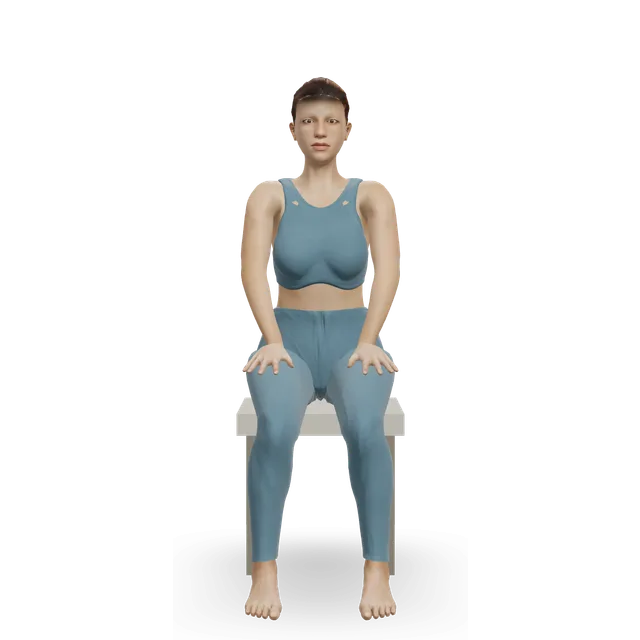
A 12-minute routine for long COVID that starts lying down and stays mostly seated: breathing, gentle leg and arm moves, and legs up to finish.

12 minBeginner13 movesA bench or box, Something with weight

Chair exercises for seniors: a seated workout

A 20-minute seated workout for older adults who cannot stand for long: marching, leg and arm strength, posture, and sit-to-stands that lead back to standing.

20 minBeginner11 movesA bench or box, Something with weight

Chair Pilates workout

A 20-minute chair Pilates workout for beginners and older adults: breathing, sitting tall, gentle spine and leg moves, and a standing finish at the chair.

20 minBeginner14 movesA bench or box, Something with weight

Chair yoga for seniors

A free 20-minute chair yoga class for older adults: slow breathing, gentle seated stretches and twists, standing poses holding the chair, and a calm finish.

20 minBeginner18 movesA bench or box, Something with weight

Seated workout for MS: cardio, strength and stretches from a chair or wheelchair

A 25-minute workout done sitting, in a chair or wheelchair: seated cardio intervals, light strength work, posture and stretches, with pacing and cooling built in.

25 minBeginner14 movesA bench or box, A dumbbell

Breathing exercises to relax

A 6-minute breathing routine: slow breathing, crocodile breathing, alternate nostril breathing, box breathing and 4-7-8 breathing.

6 minBeginner5 movesNo equipment

10-minute starter workout

A 10-minute session for low-energy days: marching, sit-to-stands, wall push-ups, step-ups and bridges, then a short walk. Doing a little counts.

10 minBeginner7 movesA bench or box, A wall

Easy cardio workout

A steady 30 to 45 minute cardio session at talk-but-not-sing pace: walk, cycle, row or cross-train, counting toward weekly activity guidelines.

40 minBeginner3 movesCardio machine, A wall

Warning signs: when to get help

Call 999 (911 in the US)

Call 999 if you or someone else has any of these, and don't drive yourself to A&E:

  • Chest pain that feels tight or like squeezing, or that spreads to the arms, neck, jaw or back.
  • Severe difficulty breathing: gasping, choking or not able to get words out.
  • Lips or skin that are pale, blue or grey (on brown or black skin, this may be easier to see on the palms of the hands).
  • Sudden confusion.
  • Fainted while exercising or while lying down, or can't be woken within 1 minute.
  • Pain and swelling in one leg with breathlessness or chest pain, which can mean a blood clot has reached the lungs.

Sources 13, 30, 29, 31

Get medical advice the same day

If a pulse oximeter shows your oxygen falling when you move, or you get chest pain when you exert yourself, stop and get medical advice the same day. NICE asks for urgent referral for low oxygen on exercise, signs of severe lung disease and heart-type chest pain.

Sources 5, 1

Call NHS 111 or ask for an urgent GP appointment

  • You're suddenly more short of breath than usual.
  • You have chest pain and feel sick, or your heart feels like it's racing, going too slowly, skipping or fluttering.
  • You're coughing up blood.
  • You have throbbing pain and swelling in one leg, which can be a deep vein thrombosis (DVT).

Sources 13, 30, 31

See a GP

  • You think you might have long COVID, or you have new, ongoing or worsening symptoms more than 4 weeks after COVID-19.
  • You get dizzy, have palpitations or faint when you stand up.
  • Your breathlessness gets worse with your normal activities or when you lie down, or comes with swollen ankles.
  • Before you start exercising again.

Sources 12, 5, 9, 30

If you're struggling with your mental health

NICE asks for urgent mental health assessment for severe symptoms or a risk of self-harm. If you're thinking about suicide or can't keep yourself safe, call 999 or go to A&E. For urgent help, call Samaritans free on 116 123, any time, or in England call 111 and select the mental health option. In the US, call or text 988.

Source 5

Stop and step back

If symptoms come back or new ones appear during or in the days after activity, stop and seek advice. After a crash, cut back, rest, and don't return to your usual level until it has settled.

Sources 2, 1, 4

Myths

"Exercise is the cure: push through it"Strong evidence

The WHO warns that doing too much too early and pushing through symptoms can cause harm, and says graded exercise shouldn't be offered to people with PEM. In 25 people with PEM, one all-out exercise test set off PEM in all of them. Rehabilitation helped some groups by a modest amount, but those trials rarely checked for PEM.

Sources 1, 18, 6, 8

"Long COVID tiredness is just being out of shape"Emerging evidence

Lost fitness is part of it for some people: in one study, aerobic fitness was 21% lower. But in people with PEM, exercise set off muscle damage and worse energy production in the muscles, and the heart wasn't what limited them. Both studies are small.

Sources 17, 18

"Pacing means resting all day"Strong evidence

Pacing isn't avoiding activity: it's balancing activity and rest so you can keep doing what matters. The NHS suggests getting up and moving around regularly, or short walks if you can, and resting too much can make PoTS worse.

Sources 2, 12, 9

"If I feel fine straight after exercise, it did no harm"Strong evidence

PEM usually shows 12 to 72 hours later and can last days or weeks. Judge any session by how you feel over the next 2 to 3 days.

Source 1

"Only people who were very ill with COVID get long COVID"Strong evidence

NICE says the chance of long COVID isn't linked to how ill you were with COVID-19, including whether you were in hospital.

Source 5

"If they offer CBT, they think it's all in my head"Strong evidence

CBT is offered to help people cope with fatigue, anxiety and low mood, as it is for other long-term physical illnesses. Physical changes in the heart, lungs, nerves and muscles have been found in long COVID.

Sources 12, 1, 20, 14, 18

"Breathing exercises will fix long COVID breathlessness"Mixed evidence

Breathing techniques can help you feel in control, and retraining helps people with a breathing pattern disorder, but the evidence in long COVID is very low certainty and the reviews disagree. New, worsening or severe breathlessness needs checking first.

Sources 1, 21, 20, 30

"Supplements will speed my recovery"Strong evidence

NICE says it isn't known whether over-the-counter vitamins and supplements help, harm or do nothing for long COVID.

Source 5

Questions people ask

Should I exercise if I have long COVID?

Check two things first: whether you get post-exertional malaise (a crash a day or more after effort), and whether any chest pain, breathlessness or palpitations have been checked by a doctor. If you do get PEM, pacing comes first, and the WHO says graded exercise shouldn't be used. If you don't, a cautious return to activity, guided by your symptoms, can help. The NHS says to talk to a GP or specialist before you start exercising again.

What is post-exertional malaise (PEM)?

It's a worsening of your symptoms after physical, mental, emotional or social effort, even small effort, that usually starts 12 to 72 hours later and can last days or weeks. It's also called post-exertional symptom exacerbation (PESE), or a crash. Triggers can be as ordinary as a shower, a conversation or desk work.

How do I know if I have PEM?

World Physiotherapy suggests 5 questions adapted from the DePaul Symptom Questionnaire: a dead, heavy feeling after starting to exercise; next-day soreness or fatigue after everyday activities; mental tiredness after the slightest effort; physical tiredness after minimal exercise; and feeling drained or sick after mild activity. If any happens about half the time or more and bothers you moderately or more, that points to PEM. The questionnaire was tested in ME/CFS, not long COVID, so use it to talk things through with your GP or long COVID team: it isn't a diagnosis.

Is graded exercise therapy recommended for long COVID?

Not if you have PEM. The WHO's 2023 guideline says rehabilitation based on fixed step-by-step increases in activity, or graded exercise, should not be offered to people with PEM, and World Physiotherapy says the same. For ME/CFS, NICE advises against graded exercise therapy.

What is pacing, and how do I start?

Pacing means balancing activity and rest so you stay within your energy limits and avoid crashes, including mental and social effort. Start by finding a level you can manage without your symptoms getting worse, plan rests before you need them, break tasks into small chunks, and keep a diary. Only try to do more once you've been stable for a while (the WHO suggests, for example, a month), and never on a fixed schedule.

What exercise is best for long COVID if I don't have PEM?

Gentle activity guided by your symptoms, as the WHO puts it: for example short walks or a recumbent bike at a pace where you can still talk, and a few light strength moves such as sit-to-stands and wall push-ups, built up slowly. Trial programmes mixed breathing exercises, light seated activity, strength and walking or cycling. Short bouts with rests can be easier than continuous exercise.

Why do I get dizzy or my heart races when I stand up or exercise?

It may be postural tachycardia syndrome (PoTS), which is more likely after long COVID, so see a GP to get it checked. Exercise lying down or seated first, such as on a recumbent bike or rowing machine, drink two glasses of water beforehand, keep cool and cool down slowly. If you feel faint, lie down and raise your legs; if you faint while exercising, call 999 (911 in the US).

Do breathing exercises help long COVID?

They can help you feel more in control of breathlessness: slow, relaxed breathing through your nose is a gentle start, and the WHO lists breathing control, pursed-lip breathing and helpful positions. If your breathing pattern has changed, for example you sigh or yawn a lot or feel you can't fill your lungs, ask your GP about a physiotherapy referral. The evidence in long COVID is weak, and new or worsening breathlessness should always be checked first.

Can I go back to the gym or running after long COVID?

Yes, once you've been free of PEM for a while and any heart or lung symptoms have been checked; if your heart was affected, you need a heart check first, and the WHO says to return to sport gradually. Our suggestion is easy cardio first, then strength, with hard intervals last. If symptoms come back during or in the days after, step back.

Should I use a heart rate monitor for pacing?

It can help: the WHO and World Physiotherapy include heart rate monitoring in pacing. There's no agreed heart rate limit for long COVID, so agree one with your rehabilitation team rather than using a number from the internet.

Does exercise help long COVID recovery?

For some people. In 585 adults who had been in hospital, an 8-week online exercise and support programme improved quality of life a little more than advice, at 3 and 12 months, and reviews show better walking distance and less breathlessness. But the trials rarely checked for PEM, and the first large pacing trial found no difference either, so how best to help people with PEM is still being studied.

When should I get medical help?

Call 999 (911 in the US) for chest pain that feels tight or spreads to your arms, neck or jaw, severe difficulty breathing, pale, blue or grey lips or skin, or fainting while exercising. Call NHS 111 if you're suddenly more short of breath than usual, cough up blood, or have one painful, swollen leg. See a GP if you think you might have long COVID, or have new, ongoing or worsening symptoms more than 4 weeks after COVID-19.

Sources

  1. WHO 2023 · Clinical management of COVID-19: living guideline, with recommendations on rehabilitation for post COVID-19 condition
  2. World Physiotherapy 2021 · Safe rehabilitation approaches for people living with long COVID: physical activity and exercise (briefing paper 9)
  3. Cotler 2018 · A brief questionnaire to assess post-exertional malaise (validation study, Diagnostics)
  4. World Physiotherapy 2021 · Fatigue and post-exertional symptom exacerbation (information sheet)
  5. NICE NG188 · COVID-19 rapid guideline: managing the long-term effects of COVID-19 (last updated January 2024)
  6. McGregor 2024 · Online group rehabilitation for 585 adults with long COVID after a hospital stay: the REGAIN trial (RCT, BMJ)
  7. Pouliopoulou 2023 · Rehabilitation for post-COVID-19 condition: 14 trials (systematic review and meta-analysis, JAMA Network Open)
  8. McDowell 2025 · Effectiveness and tolerance of exercise for long COVID: 8 trials (systematic review, BMJ Open)
  9. NHS · Postural tachycardia syndrome (PoTS)
  10. PoTS UK 2024 · Important lifestyle changes: PoTS and exercise
  11. North Bristol NHS Trust · Breathing pattern disorder: physiotherapy appointment (patient information, 2024)
  12. NHS · Long COVID
  13. NHS · Heart attack
  14. WHO · Post COVID-19 condition (long COVID): fact sheet (February 2025)
  15. ONS 2024 · Self-reported COVID-19 infections and associated symptoms, England and Scotland: November 2023 to March 2024 (Office for National Statistics)
  16. Davis 2021 · Long COVID symptoms over 7 months in an online survey of 3,762 people (international cohort, eClinicalMedicine)
  17. Tryfonos 2024 · Single exercise sessions in 31 people with long COVID and post-exertional malaise (randomised crossover trial, JAMA Network Open)
  18. Appelman 2024 · Muscle changes after post-exertional malaise in 25 people with long COVID (case-control study, Nature Communications)
  19. NICE NG206 · Myalgic encephalomyelitis (or encephalopathy)/chronic fatigue syndrome: diagnosis and management (2021)
  20. Zeraatkar 2024 · Treatments for long COVID: 24 trials (living systematic review, BMJ)
  21. Tan 2025 · Treatments for long COVID: 51 trials (meta-analysis, eClinicalMedicine)
  22. Li 2022 · Home telerehabilitation for 120 adults after a COVID-19 hospital stay: the TERECO trial (RCT, Thorax)
  23. Jimeno-Almazán 2022 · Supervised exercise for 39 adults with post-COVID-19 condition (RCT, Scandinavian Journal of Medicine and Science in Sports)
  24. Jimeno-Almazán 2023 · Exercise and breathing-muscle training for 80 adults with post-COVID-19 condition: the RECOVE trial (RCT, Journal of Applied Physiology)
  25. Sanal-Hayes 2026 · A pacing app and activity tracker for 250 adults with long COVID (RCT, Nature Communications)
  26. Friedly 2026 · The design of RECOVER-ENERGIZE, a trial of pacing and rehabilitation for exercise intolerance in long COVID (protocol, medRxiv preprint)
  27. Long COVID Physio · Pacing
  28. Asthma + Lung UK · Managing long COVID symptoms
  29. NHS · Fainting
  30. NHS · Shortness of breath
  31. NHS · DVT (deep vein thrombosis)

Exercise education, not a diagnosis or treatment plan, and clinical review of these guides is pending. Stop and get advice for chest pain, unusual breathlessness, dizziness or fainting, or new pain, and check with your doctor or midwife first if they have told you to limit activity. Health disclaimer.




























