Yoga for endometriosis: what it does for pain, flare days, and how it fits with your treatment
Yoga may ease some endometriosis symptoms, but it isn't a treatment for the condition. In the largest trial, 334 people with endometriosis pain did 8 weeks of online yoga, online cognitive behavioural therapy (CBT) or education material: yoga didn't improve quality of life more than education, though it eased period symptoms and pain with sex, and about 40% dropped out.
Treatment rests on painkillers, hormones and sometimes surgery, and European guidance makes no recommendation for or against any specific non-medical approach. Gentle, supported yoga and slow breathing are things you might enjoy alongside that care, on your own terms.
This guide covers what the trials show, the pelvic floor and pain with sex, how to pace yoga on flare days, which styles suit, fertility and surgery, and the NHS signs that need urgent help. It links to free gentle routines for good days and bad.
Treatment rests on painkillers, hormones and sometimes surgery. The European guideline makes no recommendation for any specific non-medical approach, exercise included, "as the potential benefits and harms are unclear", while asking doctors to discuss non-medical ways to look after quality of life.
In 334 people, 8 weekly 60-minute online yoga classes didn't improve quality of life more than education material. Yoga eased period symptoms and pain with sex, but these were secondary results, and about 40% dropped out. Online CBT did better for quality of life and pain.
In a Brazilian trial of 40 women, daily pain fell more with twice-weekly hatha yoga, but a review judged it poor quality: the groups differed at the start, the controls also had physiotherapy, and 30% of the yoga group dropped out.
Pelvic pain often goes with pelvic floor muscles that are "overworked, shortened and painful", Endometriosis UK's exercise leaflet says, and relaxation-focused physiotherapy comes first. Its pain booklet says yoga and Pilates can help "either strengthening pelvic floor muscles or helping to relax tension/spasm in these muscles".
Start with very small amounts, work within limits that "may change from day to day", and "Allow a recovery day between each session to check your body coped okay and you haven't flared". On a bad day, heat, your usual painkillers and gentle movement help many people.
"Look for a beginner's class or chair-based yoga where the postures are supported", Endometriosis UK says, or try yoga nidra, a guided relaxation lying down.
"Endometriosis is where cells similar to those in the lining of the womb (uterus) grow in other parts of the body", most often around the womb, ovaries, fallopian tubes and the lining of the pelvis. Symptoms include severe period pain that stops your normal activities, heavy periods, pain in your lower tummy and back, pain when you poo or pee, pain during or after sex, and extreme tiredness.
Painkillers, hormonal treatment and sometimes surgery, with pain management services if these don't help enough. NICE (the National Institute for Health and Care Excellence) suggests keeping a pain and symptom diary and trying paracetamol or an anti-inflammatory for a short time first. No guideline recommends yoga as a treatment.
The HaPPI trial used weekly 60-minute online group classes (postures for all levels, breath awareness and breathing techniques, relaxation and meditation) for 8 weeks, plus a personal 15 to 20 minute home practice on at least 3 days a week. The Brazilian trial used 90-minute hatha classes twice a week for 8 weeks.
Symptoms vary from day to day, and NICE suggests a pain and symptom diary. In an Australian survey of 484 women with endometriosis, about a third reported side effects from exercise, so pacing matters as much as the poses.
Anyone with diagnosed or suspected endometriosis or adenomyosis, including trans and non-binary people who have a womb; the NHS says it can affect anyone who has or had a womb. We found no yoga trial in adenomyosis.
Quality of life: the largest trial found no benefitMixed evidence
In HaPPI, 334 people with endometriosis and pain for 6 months or more were randomised to online yoga, online CBT (cognitive behavioural therapy) or emailed education. Yoga didn't improve endometriosis or general health-related quality of life, the trial's main measure, more than education. CBT improved quality of life and pain. The authors suggest online delivery may have blunted yoga's effect; classes in person weren't tested.
In the same trial, yoga improved menstrual symptoms and pain with sex more than education, with medium effects, and there were trends for period pain and sleep. These were secondary results, and about 40% of the yoga and CBT groups dropped out (30% of the education group). Side effects were few and mild.
In 40 women (28 doing hatha yoga twice a week for 8 weeks, 12 controls), daily pain fell more with yoga and several quality of life areas improved. A 2021 review judged it poor quality: the groups differed at the start, the controls also had physiotherapy, and 30% of the yoga group dropped out, against none of the controls. In interviews, 15 of the women said the breathing especially helped them manage pain.
In 42 women, pain and quality of life scores were better after 8 weeks of online "endometriosis yoga" than after 8 weeks of usual treatment. In 50 women, looked at afterwards, 12 yoga sessions with 2 pelvic floor physiotherapy sessions went with small improvements, including deep pain with sex (7.1 to 6.4 out of 10). Without a randomised comparison group, these can't show that yoga caused the change.
Reviews of mind-body and complementary treatments found no trials of gold-standard design and inconclusive results. Reviews of exercise found too little evidence to judge (3 studies), or better quality of life in 2 pooled trials, and a 2026 review of lifestyle approaches called the evidence limited.
In the best exercise trial, 81 women with confirmed endometriosis did supervised exercise with pelvic floor training. Day-to-day pelvic and genital pain was about 1 point out of 10 lower at 4 months and 1.5 points at 12 months, but worst pain didn't improve.
ESHRE (the European Society of Human Reproduction and Embryology): "no recommendations can be made for any specific non-medical intervention (Chinese medicine, nutrition, electrotherapy, acupuncture, physiotherapy, exercise and psychological interventions) to reduce pain or improve quality of life measures in women with endometriosis, as the potential benefits and harms are unclear". NICE's endometriosis guideline makes no exercise or yoga recommendation.
In 484 Australian women, heat (70%), rest (68%) and meditation or breathing (47%) were the commonest kinds of self-care. Yoga, Pilates and stretching were rated less effective, and side effects were common with exercise (34%). It's a survey of what people report, not a trial.
A tight pelvic floor is common with pelvic painStrong evidence
In expert consensus, a too-tight (high-tone) pelvic floor is found in 80% of women with chronic pelvic pain, and relaxation-focused pelvic floor physiotherapy is the first treatment. Endometriosis UK's exercise leaflet says people with pelvic pain commonly have pelvic floor muscles that are "overworked, shortened and painful".
In 34 women with deep endometriosis and pain at the entrance of the vagina during sex, 5 sessions of pelvic floor physiotherapy cut pain by a median of 3 points out of 10, against no change, and the muscles relaxed more on ultrasound. It's one small trial.
"Certain types of physical activity, such as yoga and Pilates, can help with either strengthening pelvic floor muscles or helping to relax tension/spasm in these muscles, which can help to relieve pain." For pain with sex, its pain booklet describes a pelvic health physiotherapist's approach, including mindful breathing to relax the pelvic floor.
With pelvic pain or pain with sex, don't add pelvic floor squeezes or hold mula bandha (yoga's pelvic floor lift) until a pelvic health physiotherapist has assessed you: the muscles may need to relax rather than strengthen. Our yoga for the pelvic floor guide covers both halves.
For period pain, the NHS suggests a heat pad or hot water bottle, painkillers such as paracetamol or ibuprofen, and "some gentle exercise like yoga, swimming, walking or cycling". Heat and rest were the commonest self-care in the Australian survey. On a flare day, our suggestion is slow breathing and supported rest poses only, or rest.
We found no study of yoga on flare days, so this is guidance, not tested advice. Keep a note of what you did and how you felt over the next day or two, alongside the pain and symptom diary NICE suggests.
The trials used one or two classes a week for 8 weeks. Our editorial starting point: our gentle endometriosis routine or a gentle class 2 or 3 times a week, with a recovery day between sessions, building up only if you haven't flared.
Skip lying face down on days you feel bloated, and use all fours or lying on your side instead (our endometriosis exercise guide's swap).
Which style suits?
Gentle and supported
Endometriosis UK: "Look for a beginner's class or chair-based yoga where the postures are supported"; yoga nidra is another option, and "The evidence is limited for endometriosis specifically". Restorative yoga uses cushions and bolsters so you can rest in each pose.
Yin's long, still holds suit many people, but ease off any deep hip pose that pulls on a painful pelvis: Endometriosis UK's leaflet says not to push into discomfort or pain.
We found no study of hot yoga in endometriosis. NCCIH (the US National Center for Complementary and Integrative Health) notes hot yoga's "special risks related to overheating and dehydration", so a gentle class at room temperature is the safer start (our suggestion).
We found no yoga trial in adenomyosis. A 2026 review of lifestyle approaches covered endometriosis and adenomyosis together and called the evidence limited.
The European guideline found no non-medical intervention shown to raise the chance of pregnancy with endometriosis. Our yoga for fertility guide covers what yoga can and can't do when you're trying to conceive.
Endometriosis UK says that after surgery, gentle exercises, yoga or Pilates "can be helpful to support your recovery". Follow your surgical team's timeline for core work and lifting. Our endometriosis exercise guide covers recovery times and the NHS warning signs after a laparoscopy (keyhole surgery).
Some medicines that switch off oestrogen, such as gonadotrophin-releasing hormone (GnRH) medicines, can thin your bones, so ask your doctor about protecting them. Our endometriosis exercise guide and yoga for osteoporosis guide cover bone-friendly exercise.
Breathe and let go (any day)
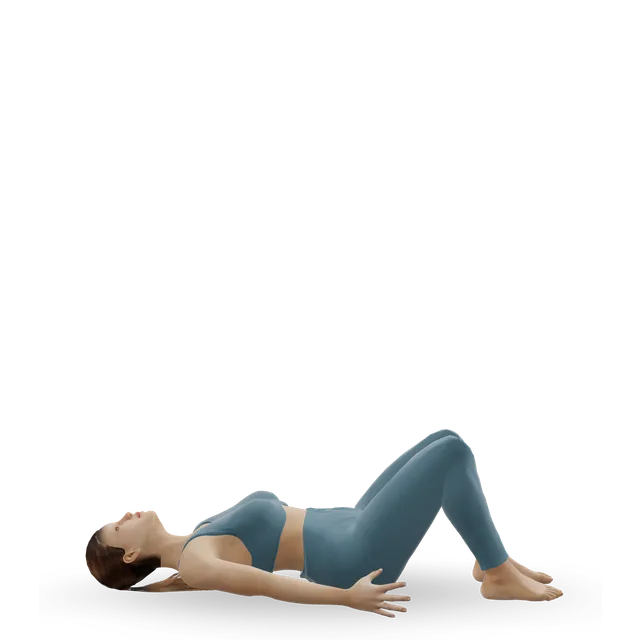
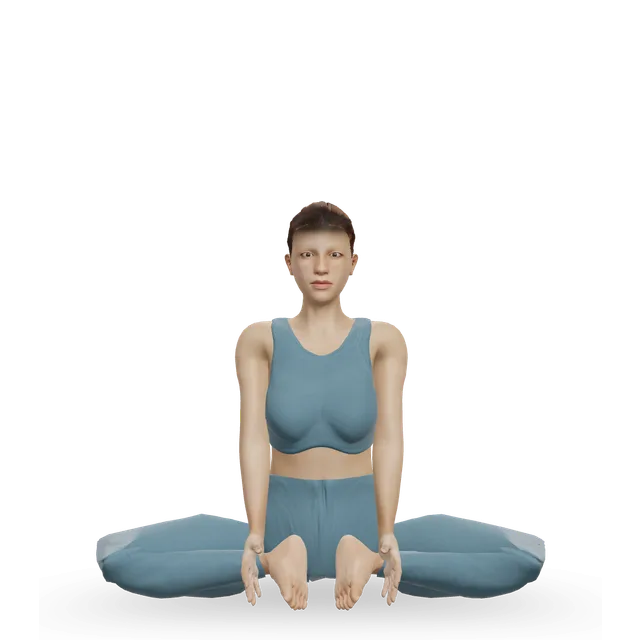
Slow breathing: 2 minutes to settle (our endometriosis exercises), or at least 5 minutes on its own (the move's page). Pelvic floor relaxation: 5 to 10 slow breaths, 1 to 3 times a day; reclining bound angle: rest 2 to 5 minutes with a support under each thigh; happy baby: hold 30 to 60 seconds, about 5 to 10 slow breaths, 2 rounds; corpse pose: at least 5 minutes, up to 10 (the moves' pages). Child's pose: 60 seconds, knees wide, with a cushion under your chest (our endometriosis exercises).
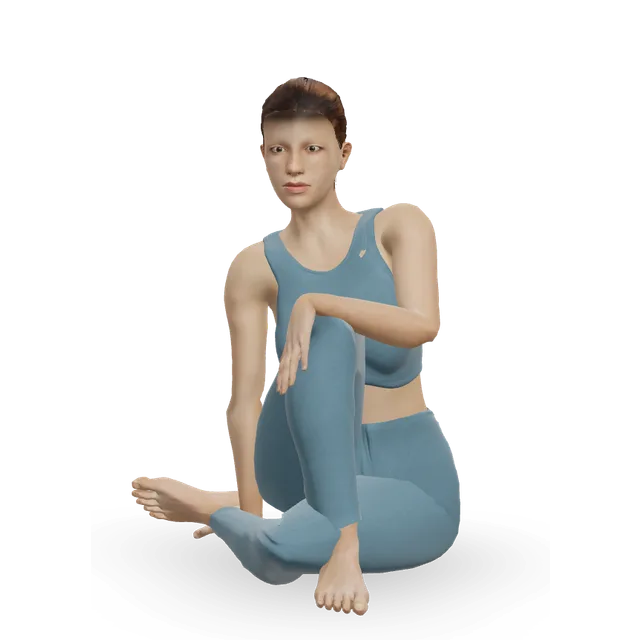
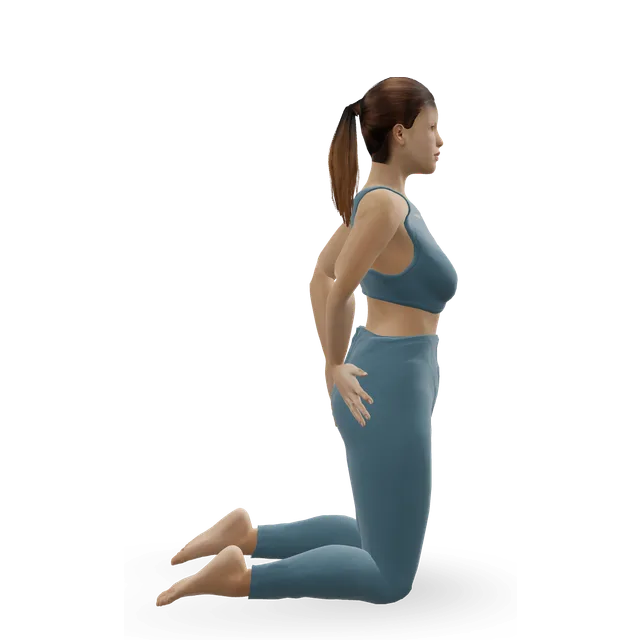
Cat-cow: 6 slow waves; glute bridge: 8 reps; bird dog, one limb at a time: 4 each arm and leg, with a 3-second hold; reclined figure four and the lying twist: 30 to 45 seconds each side (our endometriosis exercises). Bound angle: 60 seconds; low cobra: 8 lifts with 3 slow breaths at the top (our period pain exercises); skip lying face down if you're bloated.
Mountain pose: 5 slow breaths; chair pose: 2 holds of 3 to 5 breaths; warrior II: 3 to 5 breaths each side; tree pose: 2 holds of 20 to 30 seconds each side, fingertips on a wall (our gentle yoga for beginners).
Deep twists, deep backbends and hard core holds: stop if they sharpen your pain, and leave them out on flare days (our suggestion, following Endometriosis UK's advice not to push into discomfort or pain).
There's no special yoga sequence for endometriosis. The gentle endometriosis routine suits better days; the pelvic floor relaxation and flare-up routines suit bad days; the restorative sequence gives long, supported rest. In yin yoga, ease off any hip pose that pulls on a painful pelvis.
Our endometriosis exercise guide lists the NHS warning signs after a laparoscopy, including when to call 999.
During yoga
Stop any pose that sharpens pelvic pain, and don't push through pain in a twist, a deep hip opener or a backbend. If a class leaves you flaring for days, take a recovery day between sessions and do less next time. Pain during or after pelvic floor exercises needs a pelvic health physiotherapist (our suggestions, following Endometriosis UK's leaflet).
No guideline recommends any specific non-medical treatment, because the benefits and harms are unclear, and treatment rests on painkillers, hormones and sometimes surgery. The largest yoga trial didn't improve quality of life more than education.
"Yoga is proven to relieve endometriosis pain"Mixed evidence
One large trial helped period symptoms and pain with sex, not quality of life, with about 40% dropout; the positive Brazilian trial was judged poor quality. Yoga is fine if you enjoy it; it isn't a proven pain treatment.
"Upside-down poses on your period cause endometriosis"Strong evidence
Blood flows back into the pelvis around periods in about 90% of women with open fallopian tubes, whatever they do. Inversions on your period aren't a cause; skip them if they don't feel right.
"Exercise or yoga makes endometriosis worse"Emerging evidence
No study shows the disease getting worse with exercise, and Endometriosis UK says "Exercise won't do you any harm". Some moves can aggravate pain on a bad day, which is a reason to adjust, not to stop.
It may help some symptoms. In the largest trial, 334 people, 8 weeks of online yoga eased period symptoms and pain with sex more than education, but didn't improve quality of life, and about 40% dropped out. It goes alongside medical treatment, not instead of it.
Can yoga cure endometriosis?
No. No guideline recommends any specific non-medical treatment, because the benefits and harms are unclear, and treatment rests on painkillers, hormones and sometimes surgery.
Which yoga poses help endometriosis pain?
No pose has been shown to work better than others. Slow breathing and supported rest poses are the gentlest place to start, and Endometriosis UK suggests a beginner's or chair-based class where the postures are supported. Stop anything that sharpens your pain.
Can I do yoga during an endometriosis flare-up?
Keep to slow breathing and supported rest poses, or rest; heat and your usual painkillers help many people. Endometriosis UK suggests working within limits that change from day to day and leaving a recovery day between sessions.
Can yoga help pain with sex?
In the largest trial, yoga eased pain with sex with a medium effect, though it was a secondary result. Pain with sex often goes with a tight pelvic floor, and in a small trial, relaxation-focused pelvic floor physiotherapy eased it.
Should I do pelvic floor exercises with endometriosis?
Not until you've been assessed if you have pelvic pain or pain with sex: the muscles may need to relax rather than strengthen. A pelvic health physiotherapist can tell you which you need.
Is it safe to do yoga on my period, or go upside down?
Yes, if it feels comfortable. Upside-down poses don't cause endometriosis: blood flows back into the pelvis around periods in about 90% of women with open fallopian tubes anyway. Skip them if they don't feel right.
Can yoga help me get pregnant with endometriosis?
No non-medical treatment has been shown to raise the chance of pregnancy with endometriosis. Our yoga for fertility guide covers what yoga can and can't do.
Is yoga safe after endometriosis surgery?
Endometriosis UK says gentle exercise, yoga or Pilates can help your recovery. Follow your surgical team's timeline before core work and lifting.
Is yoga better than other exercise for endometriosis?
There's no evidence it is. In the same trial, online CBT did better than yoga, and the best exercise trial, general exercise with pelvic floor training, eased day-to-day pain a little. Choose what you enjoy and can keep up.
What about yin, restorative or hot yoga for endometriosis?
Gentle, supported styles fit Endometriosis UK's advice. We found no study of hot yoga in endometriosis, and NCCIH notes its risks of overheating and dehydration.
When should I see a doctor?
See a GP if you think you might have endometriosis or your symptoms affect your daily life. Call 999 or go to A&E for pelvic pain that is severe, or comes with feeling faint, pain in the tip of your shoulder, heavy bleeding or difficulty breathing.
Exercise education, not a personal prescription, and clinical review of these guides is pending. If you are pregnant, have a health condition such as glaucoma, high blood pressure or osteoporosis, or have had recent surgery, check with a doctor, midwife or physiotherapist before starting, and stop for sharp or increasing pain. Health disclaimer.