Exercise on your period
It's fine, and the NHS suggests gentle exercise such as yoga, swimming, walking or cycling to ease period pain. On average, performance changes across the cycle are trivial.
Exercise guide
You can exercise at any point in your cycle, including on your period. On average your cycle makes little or no difference to strength or fitness, and the best trial found that timing training to your cycle, often called cycle syncing, gave no extra gains. How you feel on the day matters more, and that varies from person to person and month to month.
Regular exercise may also ease period pain, alongside painkillers and heat, though the trials are small. This guide covers what the research shows, gentle moves and a routine for period pain, heavy periods and iron, the pill, and why missed periods are a reason to see a GP, not a sign of fitness.
It's fine, and the NHS suggests gentle exercise such as yoga, swimming, walking or cycling to ease period pain. On average, performance changes across the cycle are trivial.
There's no good evidence that timing your training to your cycle builds more muscle or strength. In a 2026 trial that checked cycle phases with hormone tests, focusing training in either half of the cycle gave similar gains to spreading it evenly.
Most exercising women have cycle symptoms such as cramps and tiredness, and these do change training. Adjust on the day: lighter, shorter or a different activity.
Regular exercise about three times a week through the month may reduce period pain by about 25 points on a 100-point scale, but the trials are small and low quality, so the real benefit may be smaller. Painkillers such as ibuprofen and the combined pill have stronger evidence, so use exercise alongside them, not instead of them.
Missing periods is not a sign of fitness. See a GP if you miss 3 periods in a row or your periods haven't started by 15. Eating too little for your training is a common cause in active women.
A cycle usually lasts 21 to 35 days, and a period 2 to 7 days, usually about 5, with about 20 to 90 ml of blood. Researchers divide the cycle into the early follicular phase (your period, when oestrogen and progesterone are both low), the late follicular phase around ovulation (oestrogen high) and the luteal phase after ovulation (oestrogen and progesterone both high).
In 32,595 women tracking 75,981 cycles, only 12% actually had a 28-day cycle, over half had cycles that varied by 5 days or more, and ovulation in 28-day cycles fell across about 10 days. Even in women chosen for regular cycles and checked with hormone tests, the first half of the cycle lasted 10 to 27 days and the second half 6 to 24 days. Equations based on dates missed ovulation by about 4 days on average.
In 6,812 exercising women, 91% reported mood changes or anxiety around their cycle, 86% tiredness, 84% stomach cramps and 83% breast tenderness. Period pain is the most common period symptom in young women. Most women have PMS (premenstrual syndrome) at some point, and a small number have a severe form, PMDD (premenstrual dysphoric disorder).
Core body temperature is slightly higher in the second half of the cycle, before and after exercise in the heat, but sweating and heart rate don't differ.
Source 18
A review of 78 studies with 1,193 women found that performance might be trivially lower in the early follicular phase, around your period, than at other times. Most studies were low quality, and the authors concluded that general guidance on changing exercise across the cycle isn't warranted: a personal approach is better.
Source 2
Strength measures changed minimally across the cycle in 21 studies. In 19 studies that confirmed phases with hormone tests, maximum and explosive strength were largely unaffected. In 28 women who already trained, bar speed during real training sessions barely varied across the cycle, and motivation predicted performance better than phase did.
A 2024 review of 22 studies with 433 women found small to medium strength advantages later in the follicular phase and around ovulation, compared with the days of your period. But more than half of its studies didn't check cycle phases with blood tests.
Source 22
In elite athletes with hormone-checked phases, aerobic fitness did not differ between the start of the cycle and the second half (5 studies). How hard aerobic exercise feels didn't change across the cycle in 17 studies.
A review of 19 studies suggested more soreness and strength loss after unaccustomed hard exercise during your period. An umbrella review called the training advice drawn from it unfounded, because the studies varied so much.
In a 2026 randomised trial, 24 women trained each leg differently for three cycles, about 12 weeks, with phases checked by hormone tests: one leg did most of its training in the follicular phase, or in the luteal phase, or evenly through the cycle. All three gave similar gains in muscle and strength, with no significant differences between them.
Source 3
In 12 women, muscle built protein at the same rate after resistance exercise in the follicular and luteal phases. An umbrella review of the research concluded that it is premature to say cycle hormones appreciably affect strength or muscle growth.
Older small trials favoured follicular-phase training: in 20 women, the leg trained mostly in that half gained more strength and muscle. But these trials timed phases by calendar or body temperature and didn't match the amount of training. A Swedish trial in 59 women found that frequent leg training concentrated in either half of the cycle didn't harm hormones, body fat or spine bone density. One review argues for follicular-phase training; another called the evidence conflicting.
In 49 endurance-trained women, a block of 8 sprint-interval sessions in the follicular phase improved exercise capacity, while the same block in the luteal phase lowered fitness. It was one short trial and hasn't been repeated, so it isn't a reason to restructure your training.
Source 30
Only 12% of women tracking their cycles had a 28-day cycle, and ovulation varies by about 10 days, so a plan that changes your training on fixed days can't reliably match your actual phase. Researchers advise against using calendar counting alone when the phase matters.
Experts rated 160 cycle-syncing videos on TikTok, with 18.9 million views, as poor in educational quality. Nearly all were positive about cycle syncing, 80% promoted a product, and 9% were made by health professionals.
Source 31
Track how you feel, not which phase you're in. The NHS suggests keeping a symptom diary for at least 2 cycles for PMS; the same diary shows which days you usually feel worse, so you can plan easier sessions then if you want to (our suggestion). If planning around your cycle helps you, it's harmless, but there's no need.
The NHS suggests gentle exercise to ease period pain, and on average your period makes only a trivial difference to performance and none to how hard exercise feels. Train as usual if you feel well, and choose something gentler if you don't.
Our suggestions: use whichever period product you trust (pads, tampons, a cup, period underwear or period swimwear), carry a spare, and on a heavy first day choose a shorter or lower-impact session if that feels better.
Swimming is one of the activities the NHS suggests for period pain. No study shows harm from yoga inversions during a period. The worry is that blood flows backwards into the pelvis, but that happens in about 90% of women with open fallopian tubes whatever they do. Skip any pose that feels uncomfortable.
A Cochrane review of 12 trials with 854 women found that exercise may reduce period pain by about 25 points on a 100-point scale compared with no exercise (pooling 9 trials with 632 women), a large effect but on low-quality evidence. A second review of 15 trials rated the evidence moderate quality. The trials were small and the women knew whether they were exercising, so expectation could explain part of the effect.
In a comparison of 49 trials with 3,129 women, every type of exercise was linked with less pain, with the clearest effects for strength training and mixed programmes, and relief appeared after 4 to 8 weeks. Other reviews found larger effects with strength training and with Pilates. The certainty of the evidence is low to very low.
Three yoga poses, cobra, cat and fish, practised in the second half of the cycle reduced period pain in 92 students. Fifteen minutes of stretching 3 times a week, a 5-minute warm-up and six belly and pelvic stretches, worked as well as the painkiller mefenamic acid over two cycles in 122 students. Treadmill training reduced pain in 70 women, and strength training and stretching worked equally well in 54.
The Cochrane trials used about 45 to 60 minutes, 3 or more times a week, at any intensity, regularly through the month. Our suggestion: exercise you enjoy about three times a week all month, building towards that, and gentle movement on painful days if it helps. Expect any benefit after 4 to 8 weeks.
Anti-inflammatory painkillers gave good pain relief to about half of women, against 18% on a dummy pill, across 80 trials, with more side effects. The combined pill reduced period pain moderately, on high-quality evidence. Only one trial, rated very low quality, has compared exercise with a painkiller, so exercise is an extra, not a replacement. The NHS also suggests heat, a warm bath and massage.
See a GP if your periods become more painful or heavier, or the pain stops you doing everyday things. Pain that hasn't improved after 3 to 6 months of treatment needs checking for a cause such as endometriosis.
Do them about three times a week through the month and, on painful days, whichever feel good; skip lying face down if you feel bloated, and skip fish pose with a neck problem or migraine.
 3D demoTreadmill walkingBeginner · Cardio machine
 3D demoStationary cyclingBeginner · Cardio machine
 3D demoCat-cowBeginner · No equipment
 3D demoLow cobra (Bhujangasana)Beginner · No equipment
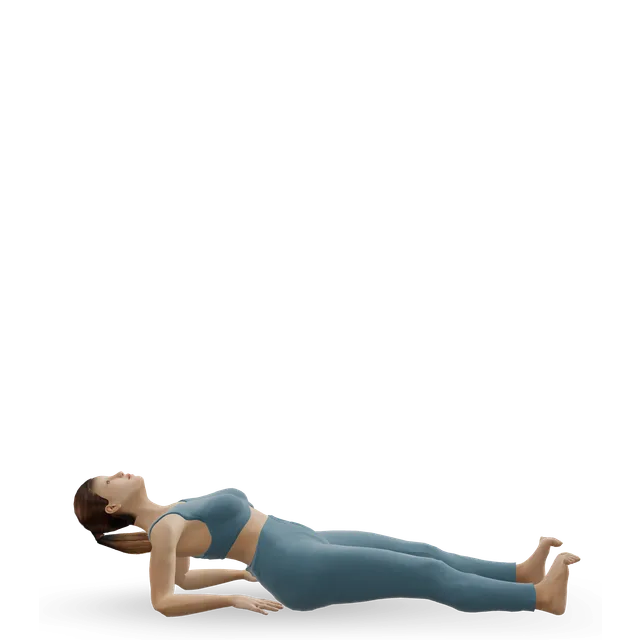 3D demoFish Pose (Matsyasana)Intermediate · No equipment
 3D demoChild's Pose (Balasana)Beginner · No equipment
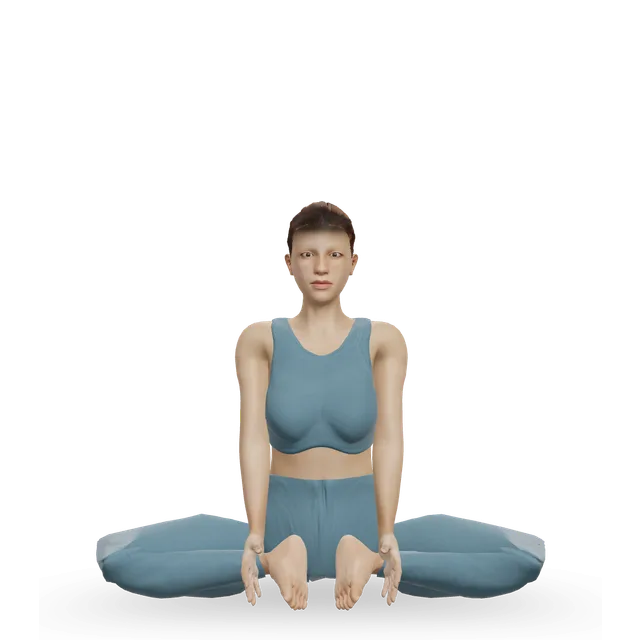 3D demoBound angle pose (Baddha Konasana)Beginner · No equipment
 3D demoReclining Bound Angle (Supta Baddha Konasana)Beginner · No equipment
 3D demoSupine spinal twist (Supta Matsyendrasana)Beginner · No equipment
 3D demoLow lunge (Anjaneyasana)Beginner · No equipment
 3D demoGlute bridgeBeginner · No equipment
 3D demoBird dogBeginner · No equipment
 3D demoSlow breathing (6 breaths a minute)Beginner · No equipment
Start with the gentle routine for period pain, about three times a week; cardio, yoga, Pilates or strength sessions on other days count too.
A gentle 20-minute routine for period pain: an easy walk, then cat-cow, cobra, supported fish, child's pose, bound angle, a twist and bridges.
20 minBeginner9 movesCardio machineA steady 30 to 45 minute cardio session at talk-but-not-sing pace: walk, cycle, row or cross-train, counting toward weekly activity guidelines.
40 minBeginner3 movesCardio machine, A wallA 25-minute standing cardio circuit with no jumping: marching, step jacks, sit-to-stands, punches, step-ups and wall push-ups, with a seated option for most moves.
25 minBeginner9 movesA bench or box, A stepA 20-minute beginner yoga sequence: mountain, chair, warrior II, triangle, tree, down dog, cobra and child's pose.
20 minBeginner9 movesA stepA 20-minute mat Pilates workout for complete beginners. It covers breathing, spine position and the foundation moves, each with an easier option.
20 minBeginner13 movesNo equipmentSeven gentle stretches and mobility moves for a stiff lower back, done lying and kneeling.
12 minBeginner7 movesA wallA 35-minute full-body strength workout with dumbbells: goblet squats, presses, rows, Romanian deadlifts and carries.
35 minIntermediate9 movesA band, A dumbbellHeavy periods were reported by 36% of London Marathon runners, 37% of elite athletes and 54% of women answering online. A third reported having had anaemia in the past, and only 22% had asked for medical advice.
Source 42
The NHS lists:
Source 43
NICE (the National Institute for Health and Care Excellence) asks doctors to judge heavy periods by their effect on your life rather than by blood loss, and to offer a full blood count to everyone with them. Treatments include an IUS (intrauterine system, a hormonal coil), the combined pill and tranexamic acid, and iron tablets if you are anaemic.
Studies estimate that 15% to 35% of female athletes are low in iron. In iron-deficient female athletes, iron improved endurance performance. Tiredness has many causes, so get a blood test rather than guessing. We found no trial showing that exercise makes periods lighter or heavier.
Across 42 studies with 590 women, any difference in performance between pill users and women not using it was most likely trivial, and performance was steady across the pill packet. Most of the studies were low quality.
Source 48
In 8 studies with 325 women, the pill made no difference to gains in muscle, strength or power from resistance training. Muscle built protein at the same rate in active-pill and pill-free weeks. Other hormonal methods haven't been studied for training.
Using the contraceptive injection for more than a year can weaken bones, which usually recover after you stop. Choose contraception for contraception and for your symptoms, not for performance.
Source 51
The pill can hide whether your own periods have stopped or come back, and it doesn't fix under-eating or stress. The Endocrine Society advises against starting the pill just to bring periods back, and says bone loss can continue while the energy shortfall does.
Source 12
Do a pregnancy test first if you could be pregnant. See a GP if you've missed 3 periods in a row, your periods haven't started by 15, they've become irregular, or you've missed periods along with weight change, tiredness, facial hair or skin changes.
The NHS lists pregnancy, stress, sudden weight loss, being overweight, doing too much exercise, some hormonal contraception, breastfeeding, the perimenopause and PCOS (polycystic ovary syndrome, which the NHS now calls polyendocrine metabolic ovarian syndrome, or PMOS). Our guide to exercise for PCOS covers that condition.
Source 10
In 3,705 active women, 16% had 10 or fewer periods a year. Training more than about 5 to 7 hours a week went with about 1.4 times the odds of missed or infrequent periods, whatever the intensity.
Source 52
The International Olympic Committee (IOC) calls the effects of eating too little for your training RED-S (relative energy deficiency in sport): missed periods, weaker bones, stress fractures, low energy and poorer performance. Periods that stop for this reason, often with stress or weight loss, are called functional hypothalamic amenorrhoea. Screening surveys flag about 4 in 10 active women as at risk, though a screening score isn't a diagnosis.
Some researchers argue that the energy balance behind RED-S can't be measured accurately outside a lab, and that its signs have many possible causes, so every cause should be checked. Either way, missed periods and stress fractures need a doctor's assessment.
The Endocrine Society recommends correcting the energy shortfall: eating more or better, exercising less, or both, which often means regaining some weight, with support for stress and any worries about food. It advises a bone scan if periods have been missing for 6 months or more. Any hormone treatment to protect bone is a decision for a specialist.
The NHS suggests regular exercise for PMS. In 15 trials, women who exercised reported fewer PMS symptoms, but most trials were at high risk of bias, so the size of the benefit is uncertain. A newer review of running, Pilates and yoga found less low mood, pain and tiredness. If PMS affects your daily life, a GP can offer treatments such as the pill, CBT (cognitive behavioural therapy) or antidepressants.
The European Society of Human Reproduction and Embryology (ESHRE) guideline makes no recommendation for or against exercise for endometriosis pain, because the benefits and harms are unclear, and NICE makes none either. Reviews found only a handful of small trials, too varied to pool.
In 81 women with endometriosis, adding supervised exercise and pelvic floor training to pain management eased their current pelvic pain by about 1 point out of 10, lasting to a year, but not their worst pain. A 9-week supervised programme improved quality of life in 31 women. Staying active in ways that feel manageable is reasonable; treatment rests on painkillers, hormones and sometimes surgery.
Call 999 or go to A&E if you have symptoms of premenstrual dysphoric disorder and are feeling suicidal. In the US, call 911, or call or text 988.
Source 17
Ask for an urgent GP appointment or contact NHS 111 if pelvic or period pain is severe or worse than usual, and painkillers haven't helped.
Source 1
The NHS suggests gentle exercise to ease period pain, average changes in performance are trivial, and regular exercise may reduce period pain.
No evidence supports this. Strength barely changes across the cycle, and in women who already trained, bar speed hardly varied. Do what feels right on the day.
The best trial found similar gains whichever half of the cycle training was focused in, and muscle builds protein equally in both. Most cycle-syncing videos are low quality and many sell products.
Counting days can't: in one large study only 12% of women tracking their cycles had a 28-day cycle, ovulation varied by about 10 days, and prediction equations missed it by about 4 days.
No trial shows exercise, or cycle syncing, "balancing" hormones in healthy cycles. Exercise is good for you in many ways; too much exercise on too little food does the opposite and can stop periods.
Pill users built muscle and strength just as well, and performance differences were trivial.
It's common, but common isn't the same as healthy. It needs a GP's assessment and often more food or less training.
One trial, rated very low quality, found that stretching matched a painkiller, while 80 trials show that anti-inflammatory painkillers relieve period pain well in about half of women, against 18% on a dummy pill. Exercise is a useful extra, not a replacement.
Guidelines make no recommendation, because the evidence is too thin. Staying active is fine if it helps, but it isn't an established treatment.
The plan for women keeps the same sessions all month, with a note on adjusting for symptoms on the day.
Yes. There's no need to stop, and the NHS suggests gentle exercise such as yoga, swimming, walking or cycling to ease period pain. On heavy or painful days you may prefer something shorter or lower impact, which is fine.
On average, hardly at all. A review of 78 studies found performance might be trivially lower around the start of a period, on mostly low-quality evidence, and strength reviews found minimal changes. People differ, so notice how you feel rather than following a rule.
There's no good evidence that it builds more muscle or strength. In a 2026 trial, women made similar gains whether training was focused in the first half of the cycle, the second half, or spread evenly. If planning around your cycle helps you stick with exercise, that's fine, but you don't need to.
Not because of your hormones: muscle builds protein equally in both halves of the cycle, and phase-focused training didn't change results. Many women feel more tired or bloated before a period, and on those days a lighter or shorter session is a sensible personal choice.
Whatever you'll do regularly. In trials, yoga, stretching, aerobic exercise and strength training all reduced period pain compared with no exercise, though the evidence is low quality. The trials used about 45 to 60 minutes, three or more times a week, through the whole month.
In a Cochrane review, exercise cut period pain by about 25 points on a 100-point scale, which the reviewers called a large effect, but the trials were small and low quality, so the real benefit may be smaller. Benefits built over 4 to 8 weeks in trials. Painkillers such as ibuprofen and the combined pill have stronger evidence, and exercise works alongside them.
A lot of training, especially without enough food, can make periods irregular or stop them. In a survey of 3,705 active women, longer weekly training was linked with missed periods. If you miss 3 periods in a row and aren't pregnant, see a GP.
Not in any meaningful way, as far as studies show. Pill users built muscle and strength as well as women not using it, and performance differences were most likely trivial. Choose contraception for contraception and your symptoms, and know that the injection can thin bone if used for more than a year.
See a GP: heavy periods are a common cause of iron deficiency anaemia, and NICE recommends a blood count for anyone with heavy periods. Treatments can make periods lighter, and iron tablets treat anaemia. Signs of heavy periods include changing a pad or tampon every 1 to 2 hours or passing large clots.
It may. The NHS suggests regular exercise, and trials found fewer PMS symptoms with exercise, though most trials were at high risk of bias. If PMS affects your daily life, a GP can offer treatments such as CBT or the pill.
The evidence is too thin to say. Guidelines make no recommendation for or against exercise, and only a few small trials exist, though one recent trial found a small, lasting easing of current pelvic pain, but not of the worst pain. Staying active in ways that feel manageable is reasonable; treatment rests on painkillers, hormones and sometimes surgery.
Yes, if they feel comfortable. No study shows harm from inversions; the worry about blood flowing backwards doesn't hold, because that happens in most women anyway. Swimming is one of the activities the NHS suggests for period pain.
Exercise education, not a diagnosis or treatment plan, and clinical review of these guides is pending. Stop and get advice for chest pain, unusual breathlessness, dizziness or fainting, or new pain, and check with your doctor or midwife first if they have told you to limit activity. Health disclaimer.