Happy baby pose (Ananda Balasana)
Lying on your back, you hold the outer edges of your feet with your knees drawn wide toward your armpits and your ankles stacked over your knees. It works like a squat turned onto its back: Yoga International suggests it for people who can't squat with their weight on their knees. The floor supports the whole spine while the inner thighs and hips stretch.
Movement guide
Happy baby pose (Ananda Balasana)
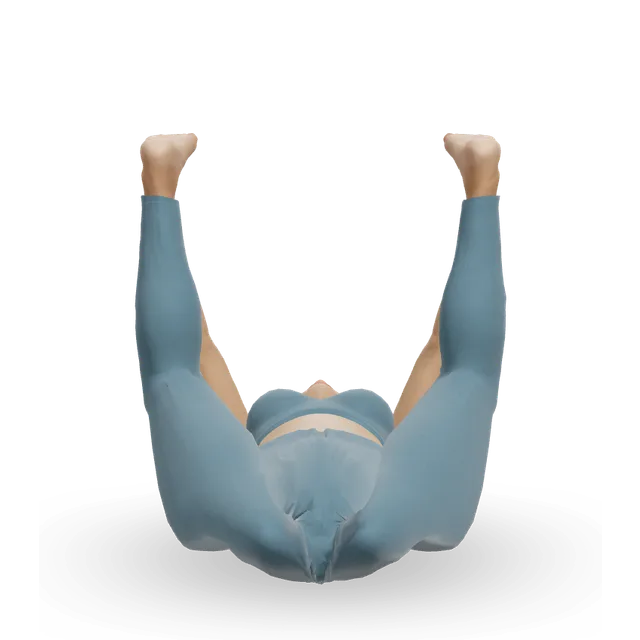
Loading the 3D figure…
Make it easier or harder
Choose a version that fits your control and comfort.
Easier option
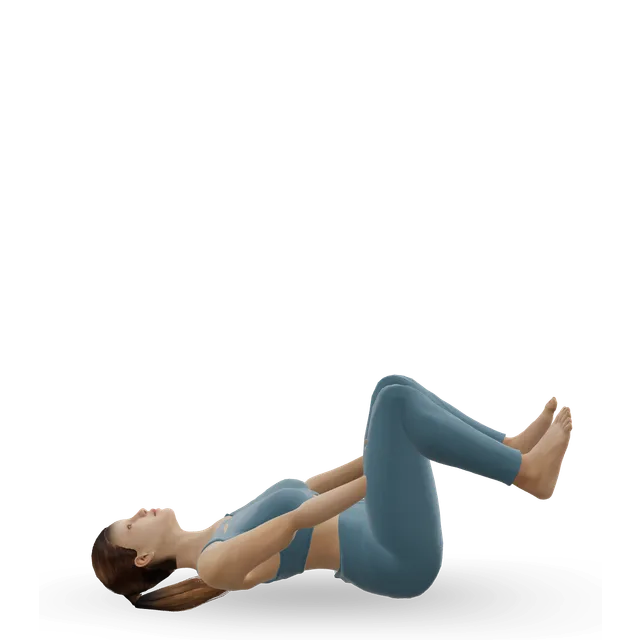 3D demoDouble knee-to-chest stretchBeginner · No equipment
Suggested next step, beginner grade.
Harder option
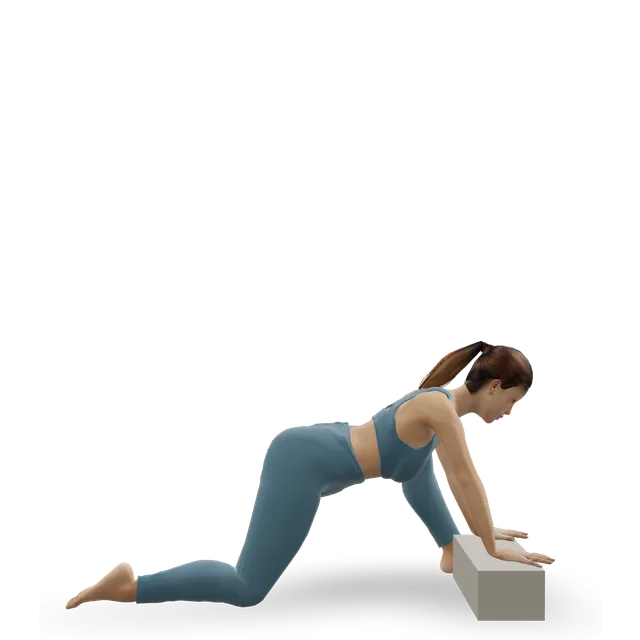 3D demoLizard pose (Utthan Pristhasana)Intermediate · No equipment
Similar move, intermediate grade.
Source-researched guide.
How to move
- Lie on your back and draw your knees toward your chest.
- Take hold of the outer edges of your feet, or loop a strap over each foot, and open your knees a little wider than your body, toward your armpits.
- Stack each ankle over its knee so the shins point up and the soles face the ceiling, feet flexed.
- Gently draw your knees down toward the floor beside your ribs, keeping your tailbone and the back of your head on the floor. Hold, easing off a little whenever you need to.
- To come out, let go of your feet and lower them to the floor one at a time.
Form cues
- Press your feet up into your hands as your hands draw down.
- Rock gently from side to side if that feels good.
- Avoid: lifting your head or tailbone to reach your feet; hold your shins or the backs of your thighs instead.
Practice and cautions
Hold 30 to 60 seconds, about 5 to 10 slow breaths, 2 rounds (our editorial starting point). The ACSM suggests about 60 seconds of stretching in all per exercise, on at least 2 days a week.
Keep the tailbone and the back of the head on the floor rather than hauling on the feet. Hold behind the thighs instead with knee trouble, and skip it in later pregnancy once lying flat becomes uncomfortable. This is movement education, not an assessment or treatment prescription. Stop for sharp or increasing pain, dizziness, numbness or tingling; seek individual guidance for symptoms, injury or restrictions.
Sources and review status
Sources support the educational description; they do not establish that this exercise is suitable for you.
- Yoga Journal · Happy baby pose (how-to: knees toward the armpits, ankles over the knees; a strap, or holding the calves or thighs, instead) ↗
- Yoga International · Ananda balasana (how-to, one leg then both; like a reclining squat, for people who can't squat with weight on their knees) ↗
- Garber 2011 · ACSM position stand: flexibility exercise for each major muscle group, about 60 seconds in all per exercise, on 2 or more days a week (Med Sci Sports Exerc) ↗
No variation is labeled clinically validated.
What it works
Workouts that use it
- Lower back stretch routine · 12 min
- Bedtime stretch routine · 10 min
- Yoga for tight hips · 25 min
- Pelvic floor relaxation exercises · 8 min
- Yin yoga for beginners · 35 min
- Yin yoga sequence: a 60-minute class · 60 min
- Morning routine for constipation: a walk, knee hugs and letting go · 25 min
- Yoga for kids: a 20-minute animal adventure · 20 min
Show all 11 workoutsShow fewer workouts
- Yoga for the pelvic floor: a 30-minute class with the squeeze built in · 30 min
- Floor yoga for PoTS: a 25-minute lying, side-lying and seated class with one slow stand at the end · 25 min
- Bedtime yoga: a 20-minute wind-down on the mat, with slow breathing, gentle lying poses and no breath holds · 20 min
Guides that use it
- Yoga for anxiety and sleep guide
- Yoga in pregnancy guide
- Yin yoga guide
- Yoga for kids guide
- Yoga for digestion guide
- Yoga for period pain guide
- Hip-opening yoga guide
- Yoga for the pelvic floor guide
Show all 26 guidesShow fewer guides
- Yoga for endometriosis guide
- Yoga for PTSD guide
- Yoga for glutes guide
- Yoga for a hip labral tear guide
- Yoga for an enlarged prostate guide
- Yoga for piles guide
- Yoga for PoTS guide
- Yoga for autism guide
- Yoga for hockey players guide
- Yoga after ACL surgery guide
- Yoga for hip arthritis guide
- Yoga for prolapse guide
- Yoga for insomnia guide
- Pelvic floor guide
- Yoga for fascia guide
- Pelvic floor exercises (Kegels) for women and men
- Exercise for endometriosis
- Exercise for constipation
Similar moves
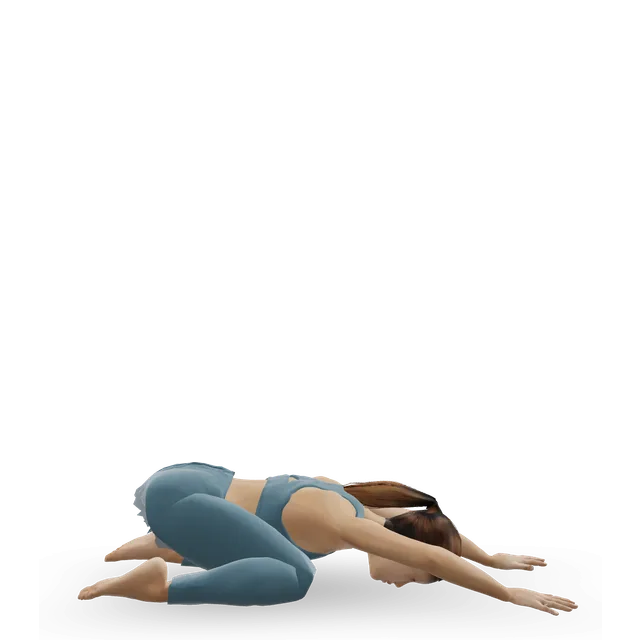 3D demoChild's Pose (Balasana)Beginner · No equipment
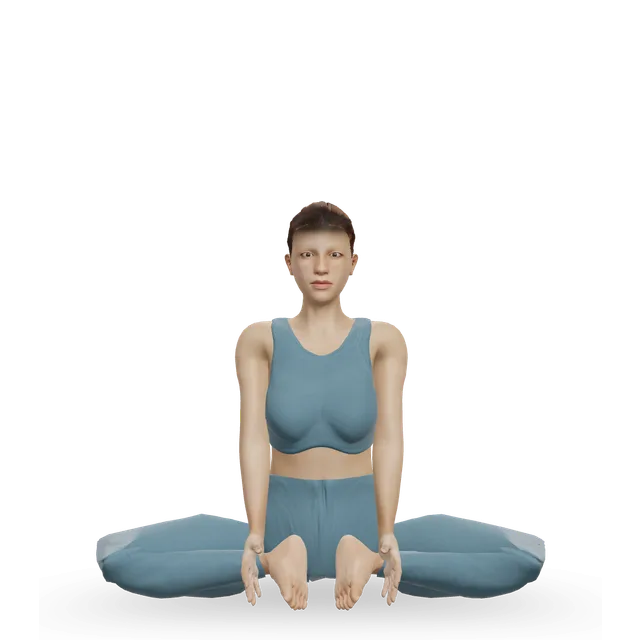 3D demoBound angle pose (Baddha Konasana)Beginner · No equipment
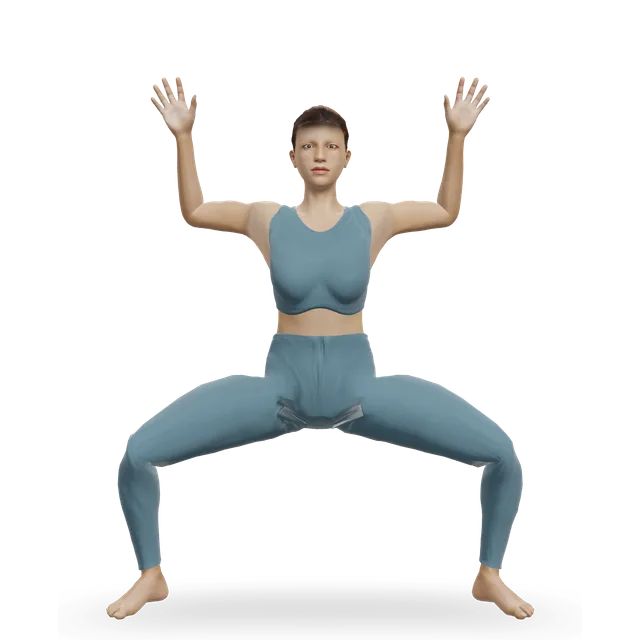 3D demoGoddess pose (Utkata Konasana)Beginner · No equipment
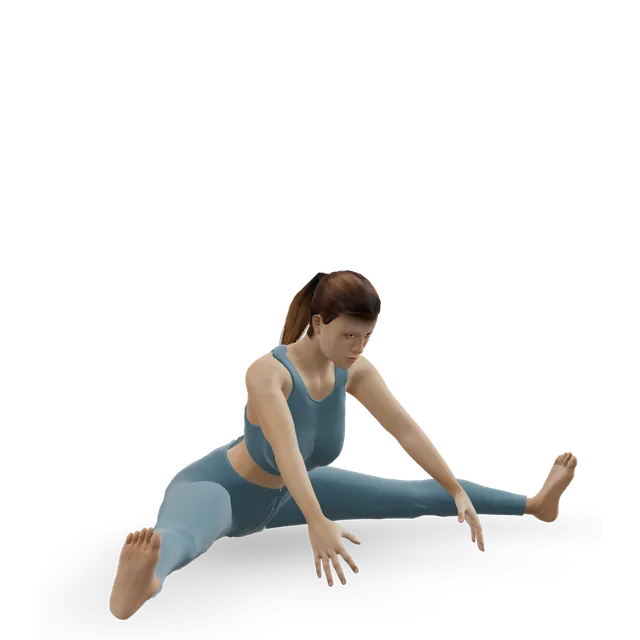 3D demoWide-angle seated forward fold (Upavistha Konasana)Intermediate · No equipment
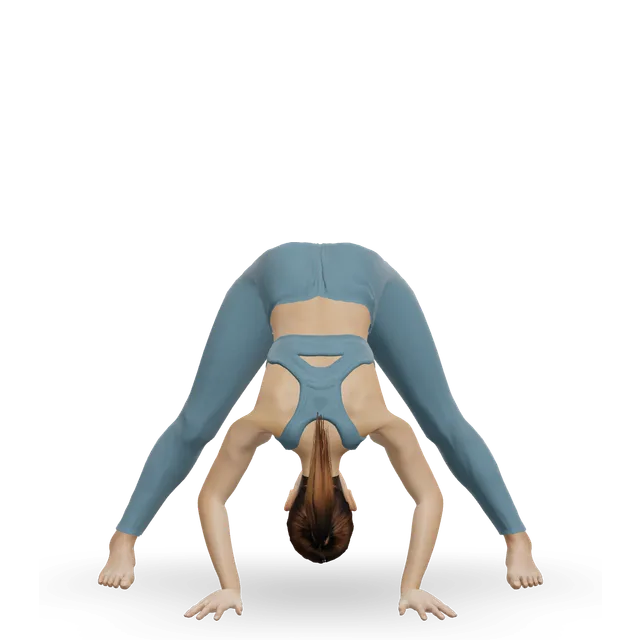 3D demoWide-legged standing forward fold (Prasarita Padottanasana)Beginner · No equipment
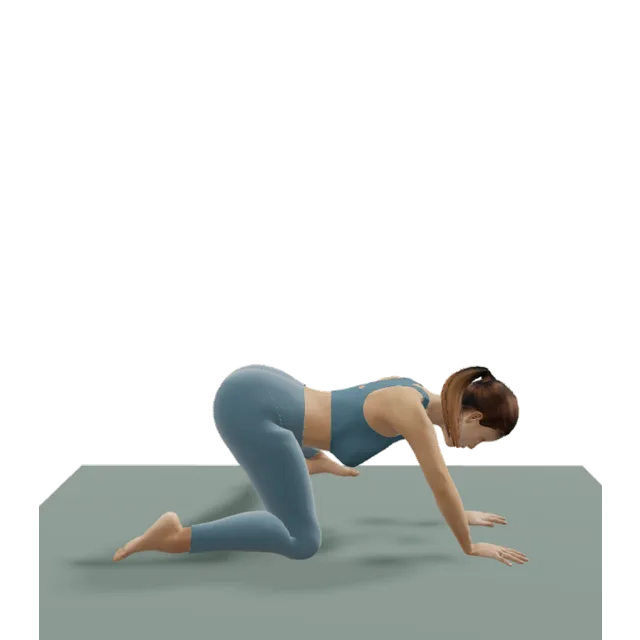 Adductor rock-backBeginner · No equipment
Browse more
Questions people ask
What muscles does the Happy baby pose (Ananda Balasana) work?
Mainly the adductors, with help from the glutes and back.
What equipment do I need for the Happy baby pose (Ananda Balasana)?
No equipment: your body weight and a little floor space.
Is the Happy baby pose (Ananda Balasana) good for beginners?
It is graded beginner, so it suits most people starting out. When it feels easy, try the Lizard pose (Utthan Pristhasana).
What is an easier alternative to the Happy baby pose (Ananda Balasana)?
Try the Double knee-to-chest stretch. It is the suggested step down from this move.
How do I make the Happy baby pose (Ananda Balasana) harder?
Progress to the Lizard pose (Utthan Pristhasana) or the Supported 90/90 hip rotation. Follow that guide’s technique and any stated timing.