Yoga for autism: autistic children and adults, sensory needs, routine and visual cues, movement skills, anxiety and sleep, and a class
Yoga can suit autistic children and adults well: it can be done the same way every time, shown rather than explained, done alone or with one other person, and set up for the senses. Small studies in autistic children found better whole-body coordination, and exercise more broadly has helped with anxiety and sleep. But autism isn't an illness, and yoga isn't a treatment for it: the aims are movement, calm, sleep and enjoyment.
This guide covers what the research shows and where it is thin, how to make a class predictable and sensory-friendly, stimming and overload, movement differences, body signals, epilepsy and very bendy joints, autistic adults, and a free 20-minute same-order class with a 3D demo of every move.
The NHS (National Health Service): "It's not an illness and there is no treatment or cure, but there are ways of managing it and getting support." This page is about what yoga can offer autistic children and adults: movement skills, calm, sleep, a way to manage anxiety, and enjoyment.
Reviews call the evidence "inconclusive", and in one, the typical study had 6 participants. The largest trial, 43 children in Indian special schools, is reported across three papers. We found no meta-analysis of yoga in autistic people.
In 24 children matched into groups (not randomised), creative yoga improved whole-body (gross motor) coordination, while the comparison group, doing academic activities, improved fine motor skills. In the 43-child trial, gross motor skills improved too, but the raters knew which children did yoga. Exercise programmes in general improved movement skills and fitness (29 studies, 1,009 young people).
Exercise reduced anxiety in 12 small trials (482 children) and improved sleep as parents reported it. A yoga-based programme with parts of cognitive behavioural therapy (CBT) reduced some sleep problems in a pilot trial in children aged 8 to 12.
The same order every time, shown first; each pose named and shown; plain words; and time to take instructions in. The National Autistic Society: "it's useful to give six seconds before saying anything else". Check lighting, smells and noise, welcome ear defenders, give personal space and never touch without asking.
"If stimming is harmless, there is no reason to prevent an autistic person from doing it." (the National Autistic Society) Plan for overload: a quiet corner, fewer words and time to recover.
The NHS: "Autism is a difference in how your brain develops that affects how you see and experience the world. It is often called a type of neurodivergence." and "It can also affect how you think, learn and pay attention to things and how you respond to light, sounds, smells, tastes and touch." We say "autistic person", which the National Autistic Society says "is preferred by most autistic people because they see being autistic as integral to who they are"; it also says to ask people how they'd like to be described.
The National Autistic Society lists balance and movement, "spatial awareness ('proprioception'), knowing where your body is in relation to other objects" and "awareness of internal states ('interoception'), knowing whether you are hungry, thirsty, hot or cold, need the toilet, are ill or injured." The NHS says autistic children may "actively look for sensations that feel calming or enjoyable, such as movement, pressure, sounds and textures" and may "not like brightly lit or noisy rooms". A yoga class touches all of these: balances, cues about the body, lighting, music, incense, touch and mats close together.
In a review of 27 studies, most found that half to almost 9 in 10 autistic children had significant movement (motor) difficulties on standard tests. In a US parent survey of 11,814 autistic children, 86.9% were at risk of a movement difficulty, yet "only 31.6% of children were receiving physical therapy services".
The National Autistic Society says around 40 to 50% of autistic people may be diagnosed with anxiety, and: "A meltdown is not the same as a temper tantrum. It is not bad or naughty behaviour."
The NHS: "Autistic people are more likely to have some physical and mental health conditions, such as epilepsy, anxiety, eating disorders or depression." Joint hypermobility (very bendy joints) was found in about 22% of autistic people across studies, and 31% when joints were examined, though a school study of 207 children aged 11 found no link.
The yoga studies are few, small and mostly in children; none tests yoga as a treatment for autism itself, and none should. Exercise in general has more evidence, still of low certainty.
Reviews: inconclusive, with small studiesStrong evidence
A 2019 review of 8 studies called the evidence for yoga and mindfulness in young autistic people "inconclusive", with "small sample sizes, no fidelity measures, and no control groups". A review of 16 studies of mind-body therapies (4 of yoga) found "only three of the studies were randomized controlled trials", with a median of 6 participants. Our search found no meta-analysis of yoga in autistic people.
In 24 children aged 5 to 13, matched rather than randomised, 8 weeks of creative yoga (4 sessions a week, 2 with a physical therapist and 2 with a parent) improved gross motor performance and imitation of yoga poses; the authors note the small sample and no long-term follow-up. In 43 children in 4 Indian special schools, 12 weeks of 45-minute yoga sessions improved gross but not fine motor skills; the raters knew the groups and the randomisation method isn't given. A 2026 analysis ranked mind-body exercise, including yoga (8 studies, 217 people), best for movement skills, with a very wide margin of uncertainty.
The same 43 children are reported in three papers, without cross-reference or a trial registration number; the third reported better teacher-rated social communication, irritability and withdrawal. Count it as one small trial with raters who knew the groups.
Classroom behaviour: teachers saw a change, parents didn'tMixed evidence
In a daily classroom yoga routine over 16 weeks (25 children against 24, not randomised), teachers rated behaviour that disrupted class as better, but parents saw no change, and the teachers knew which classes did yoga.
Exercise in general: moderate gains, low certaintyEmerging evidence
Across 29 studies (1,009 young people), activity programmes had a moderate overall effect, with gains in movement skills, fitness, strength and social functioning. A review of 41 studies rated the evidence low quality and found "motor skill acquisition improved with visual, versus verbal, instructions". One umbrella review found no clear effect on social communication or movement skills; another, of 20 reviews, says "the overall certainty of evidence is low". About 1 in 4 dropped out, the same as in comparison groups.
Anxiety: exercise helped; yoga's own effect is uncertainMixed evidence
In 12 trials (482 children), exercise reduced anxiety by a moderate amount. For yoga, a programme with CBT parts improved only self-reported performance anxiety, in a pilot that left out children who don't speak, and a co-designed yoga nidra in 13 children found "no statistically significant changes in anxiety over time".
Regular activity had "a large positive effect on parent-reported general sleep problems". In the yoga-based pilot, parents reported fewer sleep problems, though the authors say "the results need to be interpreted with caution."
Our search found no yoga trial in autistic adults. In Stockholm clinics, an adapted mindfulness course that kept "The mindfulness and yoga based exercises" was finished by 34 of 43 adults, and perceived stress fell; but "This study was an open feasibility study, limiting any definite conclusions about effectiveness." A 42-person trial of adapted mindfulness, without yoga, reduced depression, anxiety and rumination.
The NHS suggests you "keep to routines they're familiar with and let them know about changes as soon as you can". Show the order before you start, as a list or pictures, and tick moves off as you go (our sensory movement break's tip). Keep the same time and place each week where you can.
The National Autistic Society: "Avoid phrases like 'pull your socks up' or 'run like the wind' which may confuse." Visual instructions helped autistic children learn movement skills more than spoken ones, so demonstrate, or use the 3D figure. Animal names suit many children, but explain any image: "sit back as if onto a chair" (our suggestion).
"it's useful to give six seconds before saying anything else", the National Autistic Society says. Give one instruction at a time, and don't rush the change from one pose to the next.
A first session with one teacher or parent is easier than a group (our suggestion). For adults, NICE (the National Institute for Health and Care Excellence) asks that leisure activities have "a focus on the interests and abilities of the participant(s)"; for a child who loves animals or numbers, name the poses or count the breaths that way.
The NHS: "make their surroundings as comfortable for them as possible, for example by managing levels of light and noise". NICE's advice for adults includes personal space of "at least an arm's length". In a yoga room that means natural or dim light rather than bright or flickering lights, quiet music or none, no incense or scented oils, a normal temperature, and ear defenders welcome (our suggestion).
Some autistic people find deep pressure calming; others find any touch hard. The National Autistic Society says to touch only "in ways you know are helpful (for example, if deep pressure is known to soothe them)".
You can say no to any hands-on adjustment, and a teacher registered with Yoga Alliance must get your explicit consent each time.
"If stimming is harmless, there is no reason to prevent an autistic person from doing it." The NHS: "do not try to change how they behave, unless it's harmful to them or others". Rocking, flapping or moving between poses is fine.
Learn the early signs of sensory overload, such as going quiet, closing off, stimming more, pacing or rocking. If it happens, remove the trigger or move somewhere quieter, keep talking to a minimum, don't stop self-calming stims, and allow time to recover.
The National Autistic Society: "Give them some time" and "Build relaxation time into the routine."
The National Autistic Society: "It isn't clear how effective current sensory therapies and interventions for autistic people are." It notes that the Royal College of Occupational Therapists recommends an occupational therapist assesses the use of weighted blankets. Our class uses an ordinary folded blanket over the legs, only if wanted.
Many autistic children find balance and copying movements hard. Do balances with fingertips on a wall, use a wider stance, show each move and give more time; balance is often the hardest part, as our yoga class for children with attention deficit hyperactivity disorder (ADHD) notes.
Some autistic people don't notice when they're hot, thirsty, tired or hurt. The National Autistic Society: "Be vigilant in checking for injuries, as some autistic people may carry on participating, unaware that they have sustained an injury." Offer water, check in with a simple question or a picture scale, and stop if anyone limps or moves differently.
In a yoga nidra study, autistic children raised the theme "Thinking About the Body is Hard". Rest with eyes open, sitting up, or with a few slow breaths instead (our suggestion).
NICE suggests "a group-based structured leisure activity programme" or an individual one, with "the provision of structure and support." A regular class at a fixed time can fit that (our reading); NICE doesn't name yoga, and no trial has tested yoga in autistic adults.
The Stockholm course was adapted with "concrete communication free from metaphors", among other changes, and kept its gentle yoga. Ask a teacher for the order of the class in advance, a spot near the door, and to skip any part without explaining.
Autistic young adults interviewed in the US "shifted toward more independent activities (e.g. running, yoga)". Home practice with the 3D figure, or a small class, both count. Our trauma-sensitive class is chair-supported and eyes-open, and every pose in it is optional.
Mountain pose: 3 slow breaths; slow breathing: 5 breaths, or about 1 minute, no holding (our yoga for ADHD class), optional, as our autism exercise guide says to skip it if focusing on your breath feels uncomfortable. March on the spot: 1 minute; step jacks: 30 seconds, the quiet version of star jumps; wall push-ups: 8 slow; bear crawl: 2 short lengths (our sensory movement break).
Tree pose: 3 to 5 breaths each side, fingertips on a wall; single-leg stand: about 20 seconds each side, a hand on the wall, then a finger, then none; warrior II: 3 breaths each side; chair pose: 3 breaths, twice (our yoga for ADHD class).
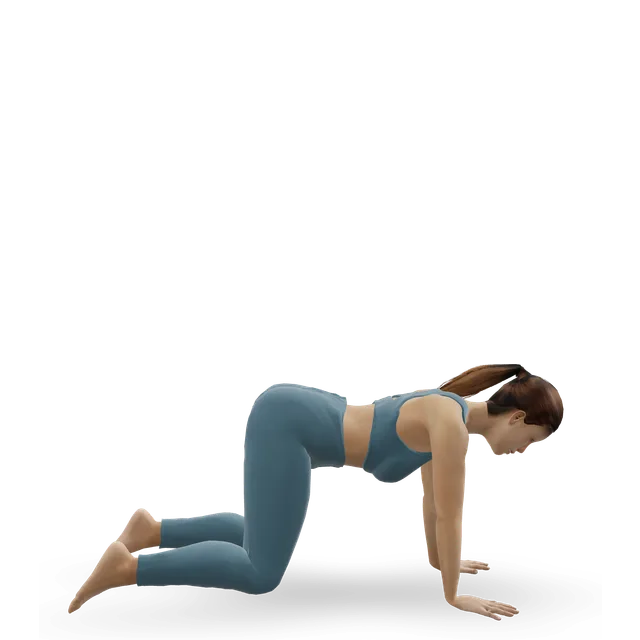
Cat-cow: 6 slow rounds; downward dog: 3 breaths, knees bent; low cobra: 3 breaths, twice (our yoga for ADHD class). Bridge: 8, squeezing for 2 counts (our sensory movement break). With glaucoma, do downward dog with your hands on a wall or chair seat, as its move page suggests. With Down syndrome, our yoga for kids guide leaves out headstands, shoulder stands and the plough unless a doctor has checked the neck.
Child's pose: 1 minute, or lie on your back if kneeling is uncomfortable (our sensory movement break). Happy baby: 30 seconds (our yoga for kids class). Corpse pose: 2 to 3 minutes, eyes open is fine (our yoga for ADHD class), shorter than the move page's dose. A folded blanket over the legs can add gentle pressure if wanted (our suggestion, from the NHS's "movement, pressure" as calming sensations).
Fast breathing, breath holds, headstands and shoulder stands
Leave them out for children and beginners, as our yoga for kids class does.
With glaucoma, or high blood pressure that isn't under control, skip headstands, shoulder stands and long head-down holds. With osteoporosis, swap deep forward folds for a flat-back hinge from the hips, and twist smoothly. In pregnancy, our yoga in pregnancy guide covers the changes. NCCIH advises beginners to avoid headstands, shoulder stands, the lotus position and forceful breathing.
Classes to follow
Our same-order class runs in the same order every time, with plain cues, no jumping and an optional quiet rest; its structure is our editorial choice and hasn't been tested. The sensory movement break is the autism exercise guide's own routine. The kids and ADHD classes suit many autistic children (swap star jumps for step jacks); the trauma-sensitive class, written for post-traumatic stress disorder (PTSD), suits many autistic adults; the gentle class is for anyone new to yoga.
Autistic people are more likely to have epilepsy. Follow our yoga for epilepsy guide: slow breathing only, no fast breathing or hot rooms, and a plan if a seizure happens.
Our yoga for ADHD and yoga for anxiety and sleep guides cover these in more depth.
Get help: where to go and warning signs
These are the lines from our exercise for autism guide and our yoga guides, word for word. This is general information, not a diagnosis. A&E means accident and emergency; in the US, call 911 for 999.
If you need help now
Autistic people are more likely to have anxiety and depression. If you or someone you care for is in crisis:
Call 999 or go to A&E if a life is at risk, for example someone has seriously hurt themselves or can't keep safe.
For urgent help in England, call 111 and choose the mental health option, or use 111 online.
Call Samaritans free on 116 123, any time. If you're under 19, you can also call Childline on 0800 1111.
In the US, call or text 988, the 988 Suicide and Crisis Lifeline, any time.
If you think your child, or you, may have had a seizure for the first time and didn't go to hospital. Some seizures look like staring into space, so mention these too.
If someone limps, guards a limb or changes how they move, stop and check for an injury. If they show signs of sensory overload, stop, move somewhere quieter and let them recover before carrying on.
A joint pain that is sharp, gets worse during a session, lingers into the next day or changes how you move is a reason to use an easier version, and to see a GP or physiotherapist if it keeps happening (the rule in our plans). Muscle soreness for a day or two after something new is normal. In a hot class, stop if you feel dizzy, sick or unwell; our hot yoga guide lists the signs of heat illness.
You can say no to any hands-on adjustment, and a teacher registered with Yoga Alliance must get your explicit consent each time.
Chest pain or collapse: call 999
Call 999 if:
You get sudden pain or discomfort in your chest that doesn't go away; it can feel like squeezing or pressure, burning or indigestion.
The pain spreads to your left or right arm, or your neck, jaw, stomach or back.
You have chest pain and feel sweaty, sick, light-headed or short of breath.
Someone faints while exercising, can't be woken within 1 minute, or has chest pain or a pounding, fluttering or irregular heartbeat.
The NHS advises getting advice from a healthcare professional first if you have a health problem, an injury or symptoms, or have recently had a heart attack or an operation.
Myths
"Yoga can cure autism, or reduce autism severity"Strong evidence
Autism isn't an illness, and the National Autistic Society says it "cannot be 'treated' or 'cured'". The studies that measured "severity of autism" used parent checklists, with parents who knew their child was doing yoga.
"Yoga is proven to improve social skills"Mixed evidence
One small trial found better teacher-rated social communication, with raters who knew the groups; an umbrella review of exercise trials found no clear effect on social communication.
Yoga can help autistic children and adults with movement skills, calm and possibly sleep, if the class is predictable and sensory-friendly. It isn't a treatment for autism, which isn't an illness, and the research is small.
What does the research show about yoga for autistic children?
Small studies in children found better whole-body coordination and some teacher-rated benefits, though raters often knew which children did yoga. Reviews call the evidence inconclusive, and no trial has tested yoga in autistic adults.
Can yoga help anxiety in autistic people?
Exercise in general reduced anxiety in 12 small trials in children; yoga's own effect is uncertain, and a yoga nidra pilot found no significant change. The National Autistic Society lists yoga among relaxation methods to try.
Can yoga help an autistic child sleep?
Regular activity improved sleep as parents reported it in small studies, and one yoga-based programme reduced some sleep problems. Do it earlier in the day, as part of a regular routine.
What are the best yoga poses for autistic children?
Simple standing and balance poses at a wall (mountain, tree, warrior II, chair), floor poses (cat-cow, cobra, bridge), heavy-work moves such as wall push-ups and bear crawls, and child's pose to finish. Keep the same order every time.
How do I teach yoga to an autistic child?
Show the order first, name and demonstrate each pose, use plain words, and give time to take instructions in. Start one-to-one, keep the room quiet and let them stim or take a break.
Is yoga good for autistic adults?
It can be, though no trial has tested it. A regular class at a predictable time, with plain instructions, fits NICE's description of a structured leisure activity, and an adapted mindfulness course with gentle yoga lowered stress.
What is sensory yoga?
There's no agreed definition. It usually means yoga set up for sensory needs: dim or natural light, quiet, no scents, ear defenders allowed, and moves that give pressure or movement. The National Autistic Society says it isn't clear how well sensory therapies work.
Should my child close their eyes in relaxation?
Only if they want to. Eyes open is fine, and some autistic children find thinking about the body hard; a blanket over the legs or a few slow breaths sitting up can work instead.
What if my child stims or leaves the mat?
That's fine: harmless stimming shouldn't be stopped, and it often helps with calm. If they show signs of overload, move somewhere quieter and let them recover.
Is yoga safe for an autistic child with epilepsy?
Usually, with the changes in our yoga for epilepsy guide: slow breathing only, no hot rooms, and a plan if a seizure happens. Autistic people are more likely to have epilepsy.
How often should we do yoga?
Two or three times a week at the same time and place is a good start; the trials ran sessions several times a week for 8 to 16 weeks. Yoga is one part of an active week, alongside play and sport.
Exercise education, not a personal prescription, and clinical review of these guides is pending. If you are pregnant, have a health condition such as glaucoma, high blood pressure or osteoporosis, or have had recent surgery, check with a doctor, midwife or physiotherapist before starting, and stop for sharp or increasing pain. Health disclaimer.