Yoga guide

Yoga for hypermobility and EDS: stability before stretch, protecting your joints, and a safer practice

Yoga can suit hypermobile people, but only if it builds strength, balance and control rather than more flexibility. The NHS says the main treatment for joint hypermobility syndrome is building muscle strength and fitness, and not to overextend your joints just because you can; the Ehlers-Danlos Society warns that overstretching can make joints unstable; and the Hypermobility Syndromes Association calls yoga that focuses on strength and control worth trying. No trial has tested yoga in hypermobility, so this advice comes from health services, charities and physiotherapy research.

This guide explains the difference between being bendy and having hypermobility spectrum disorder (HSD) or hypermobile Ehlers-Danlos syndrome (hEDS), why hypermobile people often feel a stretch late, which poses to change or leave out, how to practise if you get dizzy when you stand (postural tachycardia syndrome, PoTS), and the signs that need a GP. It ends with a free 25-minute stability-first class with a 3D demo of every move.

The short version

Being bendy is common and usually fine

Joint hypermobility affects about 1 in 30 people (the NHS) to about 1 in 10 (the Hypermobility Syndromes Association, HMSA), depending on how it's measured. Without symptoms it needs no treatment; trouble comes with unstable joints, pain, tiredness or dizziness.

Sources 1, 2, 3

Stability before stretch

The NHS: "The main treatment is improving muscle strength and fitness so your joints are better protected", and "do not overextend your joints just because you can". The Ehlers-Danlos Society says overstretching "may lead to instability", and the HMSA suggests "Yoga (focused on strengthening and control rather than increasing flexibility)".

Sources 4, 5, 6

No yoga trials yet

We found no trial of yoga in hypermobility, although more than half of people with HSD or Ehlers-Danlos syndrome (EDS) in one survey had tried it. The advice here comes from health services, charities and physiotherapy trials.

Sources 7, 8

You may feel a stretch late

In a small study, hypermobile women's muscles were no less stiff, but they went much further before stopping. The HMSA lists repeated stretching in "yoga enthusiasts and gymnasts" as one route into symptoms. So stop at a position, not a feeling.

Sources 9, 2

Dizziness on standing is common

About half of adults with hEDS or HSD had PoTS on testing. Start lying and sitting, keep cool, and get up slowly.

Sources 10, 11

Know the warning signs

See a GP for joints that keep dislocating, ongoing pain, or dizziness and palpitations when you stand. Call 999 if someone faints while exercising or lying down. The full list is in the warning signs below.

Sources 4, 12, 13

Bendy, HSD and hEDS

Hypermobility on its ownStrong evidence

The Ehlers-Danlos Society: being "flexible," "bendy," or "double-jointed" "is not usually a problem, and for some, like dancers or gymnasts, it is an advantage... The problem occurs when joints are not just hypermobile but are also unstable." In a survey of 12,853 UK adults, 18.3% were hypermobile. It's more common in women and children, and in gymnasts, dancers and musicians.

Sources 3, 14, 2

The Beighton scoreStrong evidence

Doctors use a 9-point check of the little fingers, thumbs, elbows, knees and spine, including whether you can put your palms flat on the floor with straight knees. A score of 5 or more counts as widespread hypermobility in adults (6 before puberty, 4 over 50). It misses the jaw, neck, shoulders, hips, ankles and feet, and someone can be hypermobile with a low score.

Sources 15, 3, 16

HSD and hEDSStrong evidence

Hypermobile Ehlers-Danlos syndrome is diagnosed from a doctor's history and examination under international criteria from 2017: there's no laboratory test for it. Hypermobility spectrum disorder is the label for hypermobility that causes symptoms but doesn't meet those criteria, and the NHS says it "is treated in the same way as hEDS".

Sources 17, 1, 18

Updated criteria are expectedEmerging evidence

In a review study of 326 people, no single measure clearly separated hEDS from HSD. The Ehlers-Danlos Society expects to publish updated criteria, and says the timing and terms may change, so check with your doctor if you're being assessed.

Sources 19, 20

How commonEmerging evidence

The NHS gives joint hypermobility as about 1 in 30 people. The Ehlers-Danlos Society estimates HSD and hEDS together at about 1 in 600 to 1 in 900 and thinks that's too low; in Wales, about 1 in 500 people had a diagnosis of EDS or joint hypermobility syndrome.

Sources 1, 21, 22

What can come with itStrong evidence

The NHS lists tiredness even after rest, joint and muscle pain and stiffness, frequent sprains, joints that "pop out", poor balance, thin stretchy skin, and bladder or bowel problems, plus dizziness and a fast heart rate after standing up. Anxiety is more common with symptomatic hypermobility (32 studies), and joint position sense is often poorer.

Sources 4, 1, 23, 24

Vascular EDS is different

Vascular EDS is rarer and "often considered to be the most serious" type. With it, keep exercise easy, don't hold your breath, and get specialist advice first.

Source 1

Stability before stretch

What the NHS saysStrong evidence

Do gentle exercise ("not doing any exercise can make your symptoms worse"), "do not overextend your joints just because you can", and take regular breaks rather than repeating one movement for long. With EDS, it's important to be careful with activities that put a lot of strain on your joints, "But it's also important not to be overprotective".

Sources 4, 1

What the Ehlers-Danlos Society saysStrong evidence

"Exercises that focus on movement control and strengthening the stabilizing muscles are generally suitable", with a low load, starting "low" and going "slow". "People with unstable joints should avoid... sports that focus on flexibility." Gentle stretching can help muscles that are genuinely tight, but "Overstretching beyond the normal range of motion can be harmful. It may lead to instability".

Source 5

What the HMSA says about yogaStrong evidence

"Keep your joints moving without overstretching - Yoga (focused on strengthening and control rather than increasing flexibility), Pilates exercises, and Tai Chi are worth trying." It also suggests static strengthening, balance work, breathing with your diaphragm, and a daily upper-back twist, because keeping movement through your range still matters.

Source 6

You may feel the stretch lateEmerging evidence

In 9 women with joint hypermobility syndrome and 9 others, the muscles resisted stretch equally, but the hypermobile women went much further before stopping, which the authors called "a greater subjective tolerance to passive stretch". So "go until you feel a stretch" can take a hypermobile body too far (our reading).

Source 9

Repeated stretching can be part of the problemEmerging evidence

The HMSA lists "repeated stretching/training (for example in yoga enthusiasts and gymnasts)" among the causes of symptomatic hypermobility, and the Ehlers-Danlos Society lists "repeated or excessive stretching" among the reasons joints slip out. No study has measured this in yoga.

Sources 2, 5

How far to moveMixed evidence

Experts advise working in the middle of your range. That's a sensible starting point rather than a tested rule: the two trials that compared ranges found no harm from going further in strength exercises. Neither tested long, passive end-range stretches.

Sources 6, 25, 26

What the evidence says

No yoga trialsMixed evidence

Our searches found no trial of yoga in hypermobility. One small rehabilitation programme of about 80 hours over 9 weeks, which included yoga among about 9 parts, improved exercise capacity, balance, tiredness and quality of life in 25 people with hEDS, but it had no separate comparison group, so yoga's part can't be separated.

Sources 7, 27, 28

Exercise programmes: people improveMixed evidence

Reviews of 11 and 10 studies found that people improve over time with exercise and physiotherapy, but controlled evidence is weak; across 330 people, one non-serious side effect was reported. In 6 small trials (20 to 57 people each), pain or joint sense improved whatever the type of exercise.

Sources 29, 30, 31

Strength trainingEmerging evidence

In 100 adults with hypermobile, painful shoulders, 16 weeks of heavier strengthening through the full range improved shoulder function a little more than light work in the middle of the range, but not by a meaningful amount, and the difference had gone at a year. Pain during the exercises stayed below 0.5 out of 10 in both groups. In 38 women, 8 weeks of trunk stability exercise eased pain and improved balance.

Sources 26, 32, 33, 34

Joint sense and balance can be trainedEmerging evidence

In 5 studies (254 people), joint position sense in the legs was poorer in hypermobility syndrome, and hypermobile adults sway more, fall more and fear falling more. In small studies, 8 weeks of joint-sense and balance exercise improved joint sense, pain and balance.

Sources 24, 35, 36, 37

Pilates has one larger trialEmerging evidence

In an online Pilates programme (420 people analysed), the impact of hypermobility on daily life improved more than in the comparison group, and 17.1% of 251 people reported some extra pain or a flare they put down to the Pilates. No study has compared yoga and Pilates. Our Pilates for hypermobility guide has the detail.

Source 38

Is yoga safe?

Yoga's injury recordEmerging evidence

In 94 trials, yoga had no more side effects than usual care or other exercise. Outside trials, among 1,702 people who do yoga, hand, shoulder and head stands were linked with 29.4% of short-term side effects, and practising on your own without guidance raised the risk. Published case reports most often named headstand, shoulder stand, the lotus position and forceful breathing.

Sources 39, 40, 41

Hypermobility and injury in sport and danceMixed evidence

Hypermobile athletes had about 3 times the odds of a shoulder injury (low certainty) and more knee injuries in contact sport, but no more ankle injuries. In dancers, 72% of 85 were hypermobile, and hypermobility mostly didn't predict injury; in one small study, poor movement control did.

Sources 42, 43, 44, 45, 46

Protect your neckStrong evidence

The Ehlers-Danlos Society says forceful neck and spine manipulation is not safe with EDS or HSD, because of the risks to blood vessels, spinal fluid and an unstable neck. International experts advise avoiding weight on the head when the upper neck may be unstable. No study has tested headstand or shoulder stand in hypermobile people; leaving them out is our reading of this advice.

Sources 5, 47

Choosing a class, and how much to do

Which style

No style has been tested. Choose slower, strength-based classes with props and a teacher who works with hypermobility (our suggestion). Take care with yin yoga's long passive holds and fast flows with lots of weight on the hands, and avoid hot yoga if you get dizzy.

Sources 7, 6, 12

Tell your teacher

Say that you're hypermobile and which joints give you trouble, and ask not to be adjusted, especially at the neck. In a study of 354 yoga students, about 1 in 10 had pain caused by yoga over a year, and the authors suggest telling teachers about any injuries.

Sources 5, 48

How much: our editorial starting point

Two or 3 times a week, starting with about 20 minutes, and notice how you feel over the next 48 hours, as our Pilates for hypermobility guide suggests. The physiotherapy trials ran for 4 to 16 weeks; give it 8 to 12 weeks before judging it (our exercise for hypermobility guide's suggestion), and with PoTS, PoTS UK says it can take 6 to 12 weeks to notice a change.

Sources 11, 31

Cues that help

In 32 hypermobile adults, cues that focus on something outside the body, such as "press the floor away", improved balance more than cues about the body itself. Stop at a position (knees over the middle of your feet, a soft bend in every joint) rather than at a feeling.

Source 49

Warrior II with soft joints, step by step

The 15 to 20 seconds is the lower part of our yoga for flexibility guide's editorial 15 to 30 seconds for control poses. The soft-joint and mid-range cues follow the NHS, the Ehlers-Danlos Society and the HMSA.

  1. Stand with your feet a short step wider than your hips, a chair or wall beside you if you like.
  2. Turn your front foot to point forward and your back foot slightly in.
  3. Bend your front knee so it sits over the middle of your foot, not past your toes and not falling inwards. Keep it a shallow bend to start.
  4. Keep your back knee soft rather than pushed straight, and press both feet into the floor.
  5. Raise your arms to shoulder height with soft elbows, or rest your hands on your hips.
  6. Hold for 15 to 20 seconds, breathing easily, then step your feet together and change sides.

See the movement on the 3D figure: Warrior II (Virabhadrasana II)

PoTS and dizziness

Common with hypermobilityEmerging evidence

48% of 102 adults with hEDS or HSD had PoTS on testing, and at a UK fainting clinic, 82% of 218 hypermobile patients had an abnormal tilt test. The NHS says PoTS is more likely with joint hypermobility syndrome: your heart rate rises when you get up, often making you dizzy or light-headed.

Sources 10, 50, 12

What PoTS UK advisesStrong evidence

Exercise on the floor, seated or lying tends to suit people with PoTS better. Drink two glasses of water first, wait an hour after a meal, keep cool, avoid standing still for long or stopping suddenly, and lie with your legs raised afterwards. Getting too hot is a recognised trigger, so skip heated classes.

Sources 11, 12, 51

Slow breathing on standingEmerging evidence

In 30 people with PoTS, breathing at 6 breaths a minute during a 10-minute tilt cut the rise in heart rate by about 7 beats a minute and eased symptoms. It was one session, alongside standard care.

Source 52

Exercise training helpsEmerging evidence

In 19 people with PoTS, 3 months of exercise training improved quality of life, while a heart rate medicine (propranolol) didn't. The study was small and people weren't randomly assigned to exercise.

Source 53

Breathe and settle

Slow breathing: at least 5 minutes, done regularly (the move's page), or 2 minutes at the start of a session (our editorial starting point). Let the breath be easy rather than strong.

Lying: control before range

Heel slides: 10 each side (the move's page). Dead bug heel taps: 8 each side; bridge: 10 slow lifts with a 2-second squeeze, only as high as your back stays still (our hypermobility strength and control routine). Belt press: 3 to 5 holds of 5 to 10 seconds at a light effort (the move's page).

All fours and planks

Cat-cow: 6 slow, small rounds (our editorial starting point, within the move's page's 8 waves). Bird dog, one limb at a time: 6 each, 3-second hold; knee plank: 3 holds of 15 seconds (our hypermobility strength and control routine). Elbows soft, and fists or forearms if your wrists bend back too far.

Standing poses with soft joints

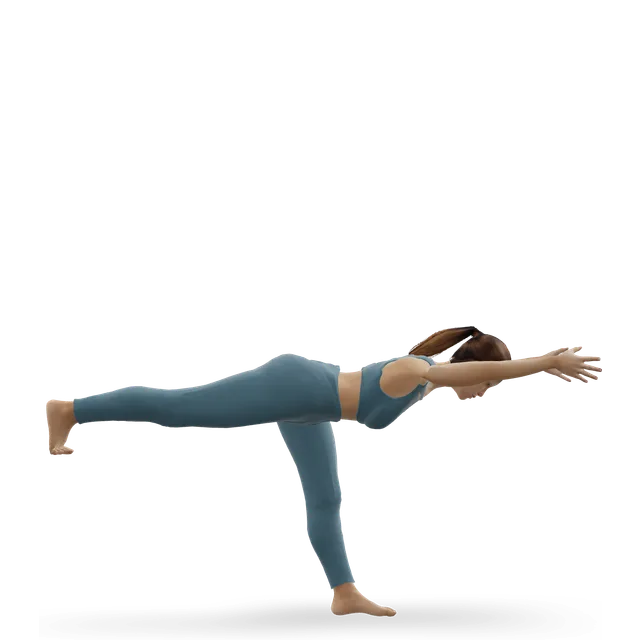
Mountain pose: 5 to 10 slow breaths, knees soft (the move's page). Chair pose, warrior II, warrior III (hands on a wall or chair) and locust: hold each for 15 to 30 seconds with your joints soft rather than locked (our yoga for flexibility guide's editorial starting point).

Balance

Single-leg stand: 2 holds of 20 seconds each leg, next to a counter; semi-tandem stance: 20 seconds with each foot forward (our hypermobility strength and control routine). Tree pose: 3 to 5 breaths each side, foot on your ankle or calf, hand on a wall (our yoga for stress class).

Gentle movement and rest

Thoracic rotation: 6 each side, hips still (the move's page). Strap hamstring stretch: only if the backs of your thighs feel genuinely tight, about 30 seconds to a mild pull (our exercise for hypermobility guide). Reclining bound angle: 2 to 5 minutes with a support under each thigh (the move's page). Corpse pose: at least 5 minutes, up to 10, calves on a chair if you get dizzy on standing (the move's page).

Poses to change or leave out

These rest on expert advice rather than trials. Most poses can be swapped for a supported, mid-range version.

End-range stretches

Front splits, deep pigeon, deep forward folds with locked knees, lotus and half lotus, and deep kneeling with your heels beside your hips (hero pose). Our yoga for flexibility guide already says to avoid deep splits, deep backbends and long passive yin holds.

Sources 5, 4

Locked knees and elbows

In triangle, forward folds, downward dog, plank and arm balances, keep a soft bend and push the floor away. If your wrists bend back too far, use fists or your forearms, as our yoga for wrists guide says.

Source 4

Weight on your head and neck

Leave out headstand, shoulder stand and plough. Our Pilates for hypermobility guide leaves out weight on the neck for the same reason.

Sources 47, 40

Deep backbends, binds and hanging

Choose bridge pose instead of wheel, skip binds and deep shoulder openers, and don't hang in downward dog. Our yoga for swimmers guide gives the same advice for shoulders.

Source 42

Long passive yin holds

Stay in the middle of your range, keep your muscles lightly working and keep holds short, as our yin yoga guide says.

Hot yoga

Heat is a recognised trigger for PoTS, and more range is the wrong goal for hypermobile joints.

Sources 12, 51

Hands-on adjustments and forceful breathing

Say no to adjustments, especially at the neck. Keep breathing easy rather than holding your breath or forcing it.

Source 5

Free classes

Start with our 25-minute stability-first yoga class 2 or 3 times a week, on days that aren't back to back (our editorial starting point). The Pilates class and the strength and control routine cover the same ground; the balance routine and chair yoga suit days when the floor or long standing is hard. With PoTS, the lying and seated session follows our exercise for PoTS guide.

Warning signs: when to get help

These follow our exercise for hypermobility guide word for word. This is general information, not a diagnosis. A&E means accident and emergency.

Call 999 (911 in the US)

Call 999 if someone:

  • Fainted while exercising, or while lying down.
  • Isn't breathing, can't be woken within 1 minute, or hasn't fully recovered or has trouble speaking or moving.
  • Has chest pain or a pounding, fluttering or irregular heartbeat.
  • Is shaking or jerking (a seizure), or was seriously hurt before or after fainting.

Source 13

Go to A&E

Go to A&E after an injury if any of these apply, and call 999 if you can't get there yourself:

  • Your shoulder looks out of place or has changed shape, you can't move your arm, or it's painful, bruised or swollen. Don't try to put it back yourself.
  • Your knee has changed shape, swells very quickly, you felt a pop or snap, bone is showing, or it's bleeding heavily.

Sources 54, 55

Get help from NHS 111

After a knee injury, if:

  • You think your kneecap came out and went back into place.
  • It's very painful, swollen or bruised, or you can't stand up or move your knee.

Source 55

A knee that locks or gives way

Get advice from NHS 111 now: the knee locks, gives way or clicks painfully. Painless clicking is normal.

Source 56

See a GP

  • You think you or your child has joint hypermobility syndrome: joints that keep dislocating, ongoing joint or muscle pain and stiffness, frequent sprains, tiredness even after rest, poor balance or coordination, thin stretchy skin, or bladder or bowel problems.
  • Several symptoms of EDS are troubling you. A GP may refer you to a rheumatologist for joint problems, or to a genetics service if a rarer type is possible.
  • You get dizzy, have palpitations or feel faint when you stand up, or you have fainted.
  • Your skin bruises very easily, is thin with visible small blood vessels, or splits easily and leaves wide scars. These can be signs of the rarer types of EDS, so hold off strength training until you've been assessed (our suggestion).

Sources 4, 1, 12, 13

Talk to your physiotherapist

Talk to them about high pain, pain in new areas, other symptoms getting worse, or changes in what you can do. After a diagnosis, a GP can refer you to physiotherapy, podiatry or pain management.

Source 5

If you feel faint

Lie down with your legs raised. If you can't, sit with your head lowered between your knees. Crossing your legs while standing, rocking up and down on your toes, clenching your fists, or, with PoTS, clenching your buttocks and tummy muscles can help.

Sources 13, 12

During practice

Stop a move, or make it smaller, if a joint feels about to slip. Sore muscles for a day or two are normal when you start; sharp joint pain, pain in new places or a joint slipping are not.

Source 5

Myths

"Hypermobile people should stretch more"Strong evidence

It's the other way round: build strength and control, and stretch only what's genuinely tight. The NHS says don't overextend your joints, and the Ehlers-Danlos Society says overstretching may lead to instability. This rests on consistent expert advice rather than trials, as our exercise for hypermobility guide says.

Sources 4, 5, 6

"Being very flexible means you're good at yoga"Mixed evidence

Hypermobile people tolerate more stretch before they feel it, repeated stretching is one route into symptoms, and in one dance study, movement control, not flexibility, predicted injury. Control is the skill.

Sources 9, 2, 46

"Hypermobility is just being bendy"Strong evidence

Without symptoms, it needs no treatment. With HSD or hEDS, it can bring pain, tiredness, dizziness on standing, gut and bladder problems and anxiety.

Sources 3, 4, 1

"Yoga will tighten loose joints"Emerging evidence

Exercise improves strength, control and joint sense, not the ligaments themselves. Our Pilates for hypermobility guide grades "Pilates will tighten loose joints" the same way.

Sources 24, 36

"Hypermobile people shouldn't do yoga"Emerging evidence

The HMSA calls strength-and-control yoga worth trying, and PoTS UK lists yoga among types of exercise. No study shows harm or benefit specifically. The style and the teacher matter.

Sources 6, 11, 7

"Hot yoga helps because warm muscles stretch further"Strong evidence

Heat is a recognised PoTS trigger, and more range is the wrong goal for hypermobile joints.

Sources 12, 51

"Palms flat on the floor means you have hEDS"Strong evidence

The Beighton score is a screening check. hEDS needs the full criteria and other conditions ruled out, and a joint can be hypermobile and still look "normal".

Sources 17, 15, 16

"If it hurts after class, stop exercising altogether"Emerging evidence

Sore muscles for a few days are normal, and the NHS says not exercising can make symptoms worse. In the shoulder trial, pain during exercise stayed low even with heavier loads. Sharp joint pain or a joint slipping is different: change the move.

Sources 5, 4, 33

"Headstands are fine if you're flexible"Mixed evidence

Experts advise avoiding weight on the head when the upper neck may be unstable, forceful neck manipulation isn't safe with EDS or HSD, and hand, shoulder and head stands were linked with the most side effects in a large survey of people who do yoga.

Sources 47, 5, 40

Questions people ask

Is yoga good or bad for hypermobility?

It can be good if it builds strength and control rather than flexibility: the Hypermobility Syndromes Association calls that kind of yoga worth trying. Classes that reward going deeper into stretches are the problem, because overstretching can lead to unstable joints. No trial has tested yoga in hypermobility.

Can you do yoga with EDS or HSD?

Most people with hypermobile EDS or HSD can, with changes: keep your joints in the middle of their range, keep knees and elbows soft, use support, and leave out weight on the head and neck. With unstable joints, start with physiotherapy-led strength work. Vascular EDS needs specialist advice first.

Should hypermobile people stretch?

Only what's genuinely tight, gently. The Ehlers-Danlos Society says gentle stretching can help tight muscles but overstretching beyond the normal range can be harmful, and the bendy part should be held still. Keeping your upper back moving with a daily twist is still worthwhile.

Which type of yoga is best for hypermobility?

No style has been tested. Choose slower, strength-based classes with props and a teacher who knows hypermobility. Take care with yin yoga's long passive holds and fast flows with lots of weight on the hands, and avoid hot yoga if you get dizzy.

Is yoga or Pilates better for hypermobility?

No study has compared them. Pilates has one larger trial in hypermobility and yoga has none, and the Hypermobility Syndromes Association suggests both, and tai chi, if they focus on strength and control. Choose the one you'll keep doing.

Which yoga poses should hypermobile people avoid?

End-range stretches such as the splits, deep pigeon, lotus and deep kneeling; locked knees or elbows; headstand, shoulder stand and plough; deep backbends such as wheel; and binds that wrench the shoulders. This rests on expert advice rather than trials, and most poses can be swapped for a supported, mid-range version.

How do I know how far to go if I don't feel the stretch?

Hypermobile people often feel a stretch late, so stop at a position rather than a feeling: knees over the middle of your feet, a soft bend in every joint, and well short of your end range. Cues like "press the floor away" also helped balance in hypermobile adults.

Is yoga safe with PoTS?

Gentle yoga can be, if you start lying and sitting: PoTS UK says floor-based and seated exercise suits people better, with water first, a cool room and your legs raised afterwards. Slow breathing at about 6 breaths a minute eased the rise in heart rate on standing in one study. Get up slowly, and skip hot classes.

Can yoga cause hypermobility?

The Hypermobility Syndromes Association lists repeated stretching or training, for example in yoga enthusiasts and gymnasts, as one route into symptomatic hypermobility. No study has measured this in yoga, but it's a reason not to chase ever-deeper stretches.

Is hot yoga safe for hypermobility?

It isn't a good fit. Heat is a recognised trigger for PoTS, which is common with hypermobility, and extra range is the wrong goal for hypermobile joints.

Can yoga fix hypermobility?

No: there's no cure, and the NHS says the main treatment is improving muscle strength and fitness so your joints are better protected. Yoga can be one way to build that strength and balance, and physiotherapy-led exercise has the most evidence.

When should I see a doctor about hypermobility?

See a GP for joints that keep dislocating, ongoing pain, frequent sprains, tiredness after rest or poor balance, and if you feel dizzy or faint when you stand up. Go to A&E for a shoulder that looks out of place, and call 999 if someone faints while exercising or lying down.


Sources

  1. NHS · Ehlers-Danlos syndromes (past its review date: reviewed October 2022, review due October 2025)
  2. Hypermobility Syndromes Association · What are hypermobility syndromes?
  3. The Ehlers-Danlos Society · What is HSD?
  4. NHS · Joint hypermobility syndrome (past its review date: reviewed August 2023, review due August 2026)
  5. The Ehlers-Danlos Society · Physical therapy
  6. Hypermobility Syndromes Association · Pain management, by a physiotherapist (reviewed June 2021)
  7. Europe PMC · Search for yoga and hypermobility, Ehlers-Danlos syndrome or joint laxity: 5 records, no trial (29 October 2026)
  8. Guedry 2023 · Use of complementary therapies, including yoga, in 353 people with HSD or EDS (survey, Disabil Rehabil)
  9. Magnusson 2001 · Muscle stiffness and stretch tolerance in joint hypermobility syndrome: 9 women and 9 controls (lab study, J Rheumatol)
  10. Celletti 2020 · PoTS in 102 adults with hypermobile EDS or HSD (retrospective study, Monaldi Arch Chest Dis)
  11. PoTS UK · PoTS and exercise (October 2024)
  12. NHS · Postural tachycardia syndrome (PoTS) (last reviewed July 2026)
  13. NHS · Fainting (last reviewed August 2026)
  14. Mulvey 2013 · Joint hypermobility and pain in 12,853 UK adults (population survey, Arthritis Care Res)
  15. The Ehlers-Danlos Society · Assessing joint hypermobility
  16. Hypermobility Syndromes Association · Hypermobility disorders: a clinician's guide (updated July 2021; review was due July 2024)
  17. The Ehlers-Danlos Society · Hypermobile Ehlers-Danlos syndrome (hEDS), with the 2017 criteria
  18. Castori 2017 · A framework for classifying joint hypermobility and related conditions (consensus paper, Am J Med Genet C)
  19. The Ehlers-Danlos Society · Review of the 2017 criteria for hEDS and HSD: 326 people (preliminary findings)
  20. The Ehlers-Danlos Society · The Road to 2026: updating the classification (timelines may change)
  21. The Ehlers-Danlos Society · Are EDS and HSD rare or common?
  22. Demmler 2019 · Diagnosed EDS and joint hypermobility syndrome in Wales: 6,021 people (national cohort study, BMJ Open)
  23. van Die-de Vries 2025 · Anxiety and joint hypermobility: 32 studies, 12,116 people (systematic review, Arch Rehabil Res Clin Transl)
  24. Smith 2013 · Joint position sense in joint hypermobility syndrome: 5 studies, 254 people (systematic review and meta-analysis, Rheumatol Int)
  25. Pacey 2013 · Exercise into the hypermobile or neutral range for knee pain: 26 children (randomised trial, Pediatr Rheumatol)
  26. Liaghat 2022 · Heavy against light shoulder strengthening for hypermobile shoulders: 100 adults (randomised trial, Br J Sports Med)
  27. ClinicalTrials.gov · NCT04680793: a 9-week rehabilitation programme for Ehlers-Danlos syndrome that included yoga (registry record)
  28. Hakimi 2023 · A 9-week rehabilitation programme in hEDS: 25 people (controlled study without a separate group, Arch Phys Med Rehabil)
  29. Palmer 2021 · Conservative treatments for symptomatic hypermobility: 11 studies (systematic review, Clin Rheumatol)
  30. Buryk-Iggers 2022 · Exercise and rehabilitation in EDS: 10 studies, 330 people (systematic review, Arch Rehabil Res Clin Transl)
  31. Reychler 2021 · Physiotherapy for hypermobile EDS: 6 trials (systematic review, Am J Med Genet A)
  32. Liaghat 2024 · Heavy against light shoulder strengthening for hypermobile shoulders: results at 1 year (randomised trial, Br J Sports Med)
  33. Liaghat 2025 · Pain during heavy and light shoulder exercise in hypermobile shoulders (secondary analysis of a randomised trial, Scand J Pain)
  34. Toprak Celenay 2017 · Spinal stabilisation exercise in women with joint hypermobility syndrome: 38 women (randomised trial, Rheumatol Int)
  35. Wang 2025 · Falls and balance in adults with joint hypermobility: 19 studies (scoping review, BMC Musculoskelet Disord)
  36. Ferrell 2004 · Joint-sense exercise in joint hypermobility syndrome: 18 people (uncontrolled study, Arthritis Rheum)
  37. Sahin 2008 · Knee joint sense and joint-sense exercise in joint hypermobility syndrome (controlled study, Rheumatol Int)
  38. Russek 2026 · An online Pilates programme for hypermobility: 420 people analysed (pragmatic trial, J Multidiscip Healthc; full text read)
  39. Cramer 2015 · The safety of yoga: 94 trials, 8,430 people (systematic review and meta-analysis, Am J Epidemiol)
  40. Cramer 2019 · Side effects of yoga in 1,702 people who do it (national survey, BMC Complement Altern Med)
  41. Cramer 2013 · Harm linked with yoga: 76 published cases (systematic review, PLoS One)
  42. Liaghat 2021 · Joint hypermobility and shoulder injuries in athletes: 6 studies, 2,335 athletes (systematic review and meta-analysis, BMC Musculoskelet Disord)
  43. Pacey 2010 · Joint hypermobility and leg joint injuries in sport: 18 studies (systematic review and meta-analysis, Am J Sports Med)
  44. Chan 2018 · Hypermobility in 85 elite Australian dancers (cross-sectional study, Phys Ther Sport)
  45. van Rijn 2021 · Joint hypermobility and injuries in 185 pre-professional dancers (cohort study, J Clin Med)
  46. Roussel 2009 · Movement control, hypermobility and injury in 32 dancers (cohort study, Man Ther)
  47. Russek 2022 · Upper neck instability in symptomatic hypermobility (international expert consensus, Front Med; full text read)
  48. Campo 2018 · Pain caused by yoga in 354 studio students over a year (cohort study, J Bodyw Mov Ther)
  49. Zorlular 2025 · Attention cues, strength and balance in 32 hypermobile adults (crossover trial, Res Q Exerc Sport)
  50. Abu Orabi 2025 · Palpitations, dizziness and fainting in 218 hypermobile patients at a UK clinic (clinic study, J Clin Med)
  51. The Ehlers-Danlos Society · Dysautonomia
  52. Stick 2024 · Slow deep breathing during a tilt test in 30 people with PoTS (crossover study, Eur J Neurol)
  53. Fu 2011 · Exercise training against propranolol for PoTS: 19 people (clinical study, Hypertension)
  54. NHS · Dislocated shoulder (last reviewed September 2026)
  55. NHS · Dislocated kneecap (last reviewed March 2026)
  56. NHS · Knee pain (last reviewed December 2023)

Exercise education, not a personal prescription, and clinical review of these guides is pending. If you are pregnant, have a health condition such as glaucoma, high blood pressure or osteoporosis, or have had recent surgery, check with a doctor, midwife or physiotherapist before starting, and stop for sharp or increasing pain. Health disclaimer.