Yoga for POTS (PoTS): floor poses first, slow transitions, fluids and compression, POTS with EDS, and a 25-minute floor class
Postural tachycardia syndrome (PoTS; in the US, POTS, postural orthostatic tachycardia syndrome) makes your heart race and can leave you dizzy or light-headed when you stand up. Exercise is one of its main treatments, and the programmes that help start lying down or seated, then move upright over months. Floor yoga fits that start: lying and side-lying poses that work your legs, slow breathing and a rest with your legs raised. But no trial has tested yoga in PoTS, so it works best as the strength part of a plan that also has lying or seated cardio.
This guide covers what the evidence shows, how to order a class so you change position as little as possible, the poses and transitions to change, slow breathing, fluids, salt and compression, hot rooms, PoTS with Ehlers-Danlos syndrome (EDS) or hypermobility, and post-exertional malaise (PEM), with a free 25-minute floor class and what to do if you feel faint. Yoga goes alongside your PoTS care, never instead of it.
Our searches found one tiny report: 2 women with ME/CFS (myalgic encephalomyelitis or chronic fatigue syndrome) and PoTS, both long bedridden, whose heart rate rise on standing fell after 12 weeks of lying-down yoga, with no comparison group. That can't show that yoga treats PoTS.
The Heart Rhythm Society: "A regular, structured, and progressive exercise program for patients with POTS can be effective", starting with exercise that isn't upright. The Children's Hospital of Philadelphia (CHOP) programme keeps the first months lying down or seated. Our reading: floor yoga with leg work can be one of the 1 to 2 strength sessions a week that PoTS UK suggests, beside lying or seated cardio such as a recumbent bike or rowing.
The NHS (National Health Service) says "do not get up too quickly after lying down". So order a class lying, then on your side, then sitting, with one slow stand at the end. Sun salutations, folding forward and standing up again, standing still for long and long holds with your arms overhead are the parts to change.
In 30 people tilted upright, breathing at 6 breaths a minute lowered the rise in heart rate by about 7 beats a minute, in one session. It's a tool to try with your doctor's advice, not a treatment.
Fluids and compression go alongside; skip hot yoga
"Drink plenty of fluids until your pee is pale" (the NHS); take extra salt only if your doctor agrees; and compression that reaches the tummy worked best in a lab trial. Getting too hot is the first trigger on the NHS list, and CHOP says "Please note exercise in the heat is not recommended for patients with POTS".
The NHS: "Although there's currently no cure, it can be managed with changes to your lifestyle or with medicines." Get symptoms checked by a GP, follow your specialist's plan, and never stop or change a medicine yourself.
"Postural tachycardia syndrome (PoTS) is when your heart rate increases after getting up from sitting or lying down, often making you feel dizzy or lightheaded." (the NHS) Doctors diagnose it when the heart rate rises by more than 30 beats a minute within 10 minutes of standing (at least 40 at ages 12 to 19), usually without a fall in blood pressure, with symptoms for at least 3 months. It is one kind of dysautonomia, a problem with the nervous system that runs the body's automatic functions (our wording).
The Heart Rhythm Society: "Most patients present with POTS between the ages of 15 and 25 years", and more than 3 in 4 are female. A 2026 review in JAMA puts it at about 9 in 10 female, and "In 30% to 40% of cases, symptoms began within 3 months after infections".
Many people with PoTS have less blood in circulation: a US expert meeting found "up to 70% of patients exhibiting deficits in plasma volume and red blood cell volume". In the Dallas studies, people with PoTS had smaller hearts and lower fitness than healthy people, and training increased both. The racing heart isn't caused by anxiety.
The NHS lists "getting too hot", "standing or sitting upright for long periods of time", "not drinking enough fluids", "resting too much" and "exercise". PoTS UK adds moving quickly from lying or sitting to standing, and having your hands over your head for a long time, and suggests waiting an hour after a meal before you exercise. So in yoga the pinch points are coming up from a fold, getting up from the floor, standing still in a held pose, long overhead-arm poses, a warm room and practising soon after eating.
The NHS: "You may be more likely to have PoTS if you have a condition such as long COVID, myalgic encephalomyelitis (ME) or chronic fatigue syndrome (CFS), or joint hypermobility syndrome." In one US study, 28 of 91 people with PoTS (31%) met the criteria for hypermobile Ehlers-Danlos syndrome (hEDS).
PoTS UK: "Types of Yoga can be variable with some focusing on relaxation, flexibility, or resistance training." A floor class with leg work is close to what the PoTS programmes ask for at the start; a flowing class with repeated sun salutations, or a hot class, is the opposite (our reading).
No trial has tested yoga in PoTS. Exercise programmes have guideline support from small studies; fluids, salt and compression have small, short studies.
No yoga trial in PoTSStrong evidence
Our searches of PubMed, Europe PMC and ClinicalTrials.gov found no trial. The only data: in a Japanese pilot of 12 weeks of 30-minute lying-down isometric yoga in 10 women with ME/CFS, 2 had PoTS, and their heart rate rise on standing fell from 37 to 22 and from 40 to 29 beats a minute. There was no comparison group, both had been bedridden for a long time, and some took a medicine to raise blood pressure during the study. The programme "intentionally excluded standing postures to avoid the development of POTS".
Exercise programmes are recommendedStrong evidence
The Heart Rhythm Society: "Initially, exercise should be restricted to non-upright exercises including the use of rowing machines, recumbent cycles, and swimming to minimize orthostatic stress on the heart." A US expert meeting: "Exercise training should be a component of any POTS treatment plan." A 2026 review lists structured, supervised aerobic training among the first treatments to try, while noting that the evidence comes from small studies.
In uncontrolled studies, many who finished improvedEmerging evidence
In Dallas, 19 of 25 people finished 3 months of training that began on a recumbent bike, rowing or swimming, and 10 of the 19 no longer met the criteria for PoTS; extra salt and water were encouraged too, which muddies the result. In a community registry, 71% of those who finished no longer qualified, but 59% didn't finish. A 2025 review of 7 studies rated five at high risk of bias, with dropout of 10% to 59%.
Randomised trials: fitness up, overall symptoms less clearMixed evidence
In 60 people, exercise training improved fitness and symptoms on standing, but the total symptom score didn't improve more than with usual care. In 60 people with PoTS after COVID-19, nearly all with post-exertional malaise, "Tailored exercise did not outperform standard care" and went with less time upright. A review of 21 randomised trials of any PoTS treatment found many small trials of different treatments.
In a lab study of 13 people with PoTS and 13 without, exercise lying down produced a normal heart rate response, while upright exercise sent the heart rate too high. CHOP: "We believe it is critical for patients with POTS to begin cardio and strength training exercises in a horizontal or seated position". An expert review adds that the starting position can be chosen by assessment rather than always starting flat.
In 30 people with PoTS, each tilted upright twice for 10 minutes, breathing at 6 breaths a minute (5 seconds in, 5 out) gave a heart rate rise about 7 beats a minute lower (95% confidence interval 3 to 12) and fewer symptoms. One session, one centre, no blinding. The authors warn that "improper implementation could potentially exacerbate symptoms". Fast breathing practices haven't been studied in PoTS.
What people with PoTS say about yogaEmerging evidence
In focus groups and a survey of US adults with PoTS, "several participants shared that they cannot tolerate yoga or tai chi, while others reported liking yoga and finding it helpful"; one found the positions made them dizzy. In a survey of 227 people treated for PoTS as children, yoga was among the therapies they rated most helpful, though the people who answered chose to take part.
Yoga for fainting is a different conditionMixed evidence
Two small Indian trials, of 97 and 55 people, found fewer faints with yoga in reflex (vasovagal) fainting, and a review of 4 studies pooled about 2 fewer episodes. Neither abstract reports blinding, and none included PoTS, where blood pressure doesn't usually fall on standing.
Lying, then side-lying, then sitting, then one slow stand
CHOP: "Months 1-4 you should only exercise in a horizontal position". PoTS UK: "Posture, ground based, seated, and recumbent forms of exercise tend to be tolerated better by people with PoTS." Our suggestion: do every lying pose together, then the side-lying ones, then all fours and sitting, so you change position as few times as you can, and stand up once, slowly, at the end.
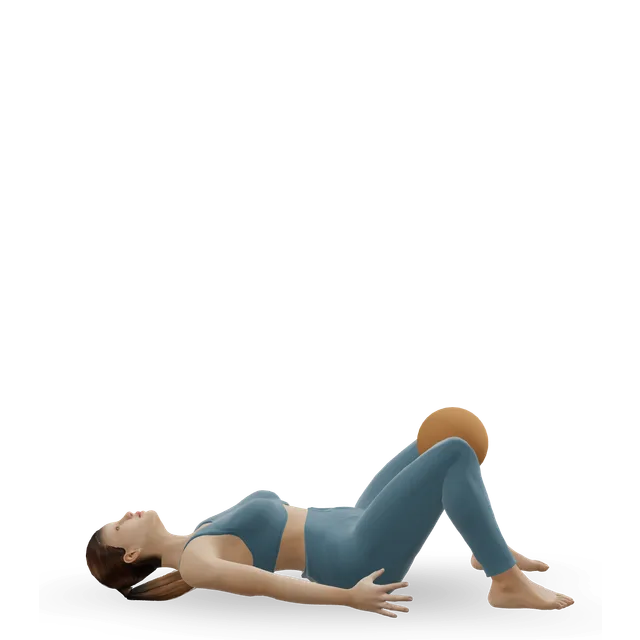
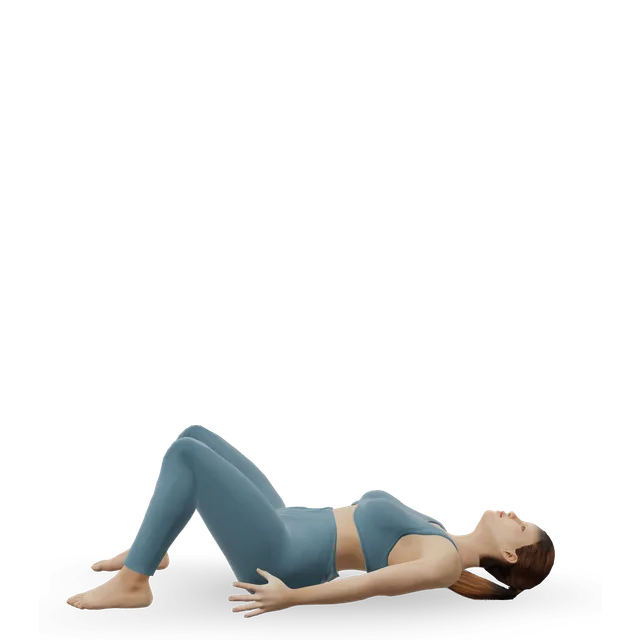
The PoTS programmes build leg and core strength from the start, because the leg muscles help pump blood back to the heart. The Dallas team suggests core work on the floor, including "anything Pilates based that they can do on the floor". In yoga, bridge, leg raises, a squeeze with a cushion between your knees and side-lying leg lifts do that job; lying stretches alone don't.
PoTS UK suggests building to 3 to 4 exercise sessions a week, mostly aerobic, with 1 to 2 strength sessions, and says a starting point can be as little as 60 seconds. Our editorial starting point: our 25-minute floor class on 1 or 2 days, with a lying or seated cardio session on others; if 25 minutes is too much, the first block on its own is a session. CHOP adds upright exercise from about month 4 or 5; that's when standing poses at a counter come in.
CHOP: "If you are taking beta blockers (Examples: metropolol, nebivolol, etc.) use the RPE scale and not the heart rate scale for your training zone". RPE means rate of perceived exertion: how hard it feels, out of 10. Never stop or change a medicine yourself.
Word for word from our Pilates for PoTS and Pilates for hypermobility guides, which took them from the NHS PoTS and fainting pages, PoTS UK and a Pilates teacher's case report; rolling onto your side to sit up is our suggestion.
Finish all your lying moves before you sit up, so you change position as few times as you can.
Roll onto your side, then push yourself up to sitting with your arms.
Sit for a minute or so before you kneel or stand.
Stand up slowly, with a chair or counter within reach.
Pause before you walk off. If you feel light-headed, cross your legs or clench your buttocks and tummy muscles.
If you still feel faint, lie down with your legs raised.
Slow breathing: 2 minutes on your back, knees bent, in for about 4 and out for about 6, with no holds (our yoga for low blood pressure class); take smaller breaths if you feel light-headed, as its move page says. Breath reach: 5 breaths, exhale longer than inhale (the move page's dose), sitting, with your arms to shoulder height only (our suggestion, from PoTS UK's advice against having your hands over your head for long).
Ankle pumps and circles: 10 pumps, then 5 circles each way; heel slides: 8 each side; dead bug heel taps: 6 each side (our Pilates for PoTS class). Bridge: 8 to 10, holding each up to 10 seconds; straight-leg raise: 8 to 10 each leg; cushion squeeze: 8 to 10, holding each 5 seconds (our PoTS lying and seated starter session, from CHOP's home list). Count out loud so you keep breathing.
Side-lying leg raise and clamshell: 8 to 10 each side (our PoTS lying and seated starter session, from CHOP). Keep the top leg in line with your body or slightly behind it.
Reclined figure four and a lying twist: 45 seconds each side (our gentle yoga for beginners class). Happy baby: 30 seconds (our yoga for kids class). Reclining bound angle: rest 2 to 5 minutes with a support under each thigh (the move page's dose). Lying down keeps your head and heart at the same height (our suggestion: the yoga poses that need no standing).
Cat-cow: 6 slow rounds (our gentle yoga for beginners class), head level with your back. Thoracic rotation: 5 each side with 5-second holds, sitting (our yoga for low blood pressure class). Seated march: 1 minute; seated calf raise: 15 (both from that class), to pump the calves before you stand.
Legs up the wall: 2 to 3 minutes, or with your calves on a chair seat (our Pilates for PoTS class); PoTS UK: "Laying down or sitting with the leg raised higher than the hips can use gravity to help blood return to the heart". Corpse pose with your calves on a chair seat: 4 minutes (our yoga for hypermobility class), shorter than the move page's "at least 5 minutes, up to 10". Its caution: "Come out slowly: roll to your side and sit for a moment before you stand."
From about month 4 or 5, when CHOP adds upright exercise, use the standing block of our yoga for low blood pressure class: 5 slow sit-to-stands, squeezing thighs and buttocks as you rise; mountain pose for 5 slow breaths, twice, legs gently working, fingertips on a counter; then a calf raise, chair pose with arms forward, warrior II and tree pose at the counter, with 1 minute of marching between them rather than standing still. PoTS UK: "fidgeting is the key".
No pose has been tested in PoTS. These changes follow the PoTS triggers and programmes; each is our suggestion unless a source is named.
Sun salutations
They fold forward and stand up again, over and over. Leave them out in the early months; later, do half rounds slowly from a chair. PoTS UK lists rapidly moving from lying or sitting to standing as a trigger.
Come up in stages, knees bent and legs squeezing, or keep your head at or above your heart with your hands on a chair seat, as our low blood pressure guide suggests. Pause before the next pose.
No study shows they help with PoTS, and coming back up is the risky moment. Leave them out. If you have glaucoma or high blood pressure that isn't controlled, these were already off the list.
With glaucoma, or high blood pressure that isn't under control, skip headstands, shoulder stands and long head-down holds. With osteoporosis, swap deep forward folds for a flat-back hinge from the hips, and twist smoothly. In pregnancy, our yoga in pregnancy guide covers the changes. NCCIH advises beginners to avoid headstands, shoulder stands, the lotus position and forceful breathing.
PoTS UK advises "Avoiding having your hands over your head for a prolonged time." Take your arms forward or to your hips in warrior I, high lunge and chair pose. In standing poses, shift your weight, march or step between poses rather than standing still.
Box breathing and 4-7-8 breathing hold the breath, and their pages say holds can make you light-headed. Kapalabhati, bhastrika and breath of fire are fast breathing, which hasn't been studied in PoTS. Use slow breathing with no holds instead.
Camel pose and wheel pose: the camel page says "Feeling dizzy or oddly emotional on the way out is common, so come up slowly". Leave them for later, and come out of them slowly.
A long rest, then a quick stand
The end of a class is when many people stand up too fast. Use the getting-up steps above, every time.
PoTS UK suggests drinking two glasses of water before exercise and waiting an hour after a meal. Wear your compression if you use it, keep the room cool, and have water and a chair within reach.
Keep breathing in every pose, move between positions slowly, and keep your legs working when you're upright. If symptoms build, go back to a lying or seated version: CHOP tells people to return to the horizontal or seated mode if a more upright one brings on unbearable symptoms.
If you feel faint, stop, lie down and raise your legs. Use the counter-manoeuvres if you can't lie down.
Rest with your legs raised for a few minutes, then use the getting-up steps. Drink again. Feeling more tired in the first weeks is common; if you crash a day or two later, see the PEM note below.
Our exercise for PoTS guide covers these in full. They go alongside a class, never instead of seeing a doctor.
FluidsEmerging evidence
The NHS: "Drink plenty of fluids until your pee is pale". PoTS UK: "Adults are advised to have 2-3 litres of fluid a day." The Heart Rhythm Society says 2 to 3 litres of water a day "may be considered".
In 14 people with PoTS, 6 days of a high-salt diet raised blood volume and lowered the heart rate rise against a very low-salt diet, though it stayed higher than in healthy people. PoTS UK: "If you have heart or kidney disease or high blood pressure, please ask your doctor for advice on how much salt and fluid you should have." Children need their paediatrician's advice.
In 30 people tilted upright, the heart rate averaged 109 beats a minute with no compression, 103 with leg compression, 97 with tummy and thigh compression and 92 with both; a 2026 trial found tummy-only garments helped too. PoTS UK: "Compression garments can be harmful for people who have conditions which reduce the blood supply to the legs (e.g. peripheral vascular disease, diabetes, lower limb trauma or infection)."
Crossing your legs and squeezing your leg, buttock and tummy muscles can stop or delay a faint when you get a warning: in a trial of 223 people with reflex fainting, faints came back in 32% of those trained in the moves against 51% with usual treatment. Of 45 studies in a review, only 1 was in PoTS. They don't work without a warning, and the NHS lists them for PoTS.
Getting too hot is the first trigger on the NHS list, and CHOP says "Please note exercise in the heat is not recommended for patients with POTS". In a small pilot, heat intolerance went with poorer quality of life in PoTS. No study has tested hot yoga in PoTS, but the advice is consistent: choose a cool room, and leave any class that's too warm. Our hot yoga guide lists the signs of heat illness.
About 3 in 10 people with PoTS have hEDS. A 2024 review found "a paucity of higher-level studies documenting exercise for POTS management in people with joint hypermobility and related conditions."
CHOP: "If you have joint hypermobility then you should consult with a physical therapist prior to beginning your exercise program." The Dallas team suggests starting "non-weight bearing". PoTS UK: "Additional modifications to exercise to promote balance while avoiding joint pain, subluxations, and dislocations is essential for these individuals." In yoga, that means working in the middle of your range, keeping joints soft rather than locked, and skipping deep end-range stretches; our yoga for hypermobility guide covers the joints.
A crash a day or two later changes the planEmerging evidence
Post-exertional malaise (PEM) is a flare of symptoms a day or more after effort. PoTS UK: "People with ME/CFS are especially prone to PESE/PEM." and "Graded Exercise Therapy (GET) is not recommended." In the 2026 trial in PoTS after COVID-19, progression paused whenever symptoms lasted more than 24 hours, and exercise still added nothing to standard care.
If exercise is followed by a crash a day or more later that's out of proportion to what you did, stop increasing and talk to your specialist: it may be PEM.
Keep sessions short, stop well before you're tired, and don't add more until you've had several steady weeks. Our yoga for chronic fatigue and yoga for long COVID guides have the checks.
Our floor yoga for PoTS class keeps you lying, on your side and sitting, with one slow stand at the end; its structure is our editorial choice and hasn't been tested. Do the lying and seated starter session (bike and rowing) for cardio on other days. The Pilates for PoTS class is another floor option. Once standing is easier, the yoga for low blood pressure class adds a standing block at a counter. With hEDS, use the hypermobility class; with long COVID, the gentle routine after its PEM check; on harder days, chair yoga.
These are the lines from our exercise for PoTS guide, word for word.
Lie down and raise your legs
Lie down and raise your legs until you feel better. If you can't lie down, sit, if possible with your head lowered between your knees, and drink some water.
Cross one leg in front of the other while standing, then tense your leg muscles and clench your buttock and tummy muscles. You can also rock up and down on your toes, or clench your fists. Keep breathing while you hold the squeeze, sit or lie down as soon as you can, and practise when you're well so the moves come quickly (our suggestions).
These are the warning signs from our exercise for PoTS guide and our yoga guides, word for word. This is general information, not a diagnosis. A&E means accident and emergency; in the US, call 911 for 999.
Call 999 (911 in the US)
Call 999 if someone has any of these, and don't drive yourself to A&E:
Fainted while exercising, or while lying down.
Isn't breathing, can't be woken within 1 minute, or hasn't fully recovered or has trouble speaking or moving.
Has chest pain or a pounding, fluttering or irregular heartbeat with fainting.
Is shaking or jerking, or was seriously hurt when they fainted.
Has palpitations that don't go away, or palpitations with chest pain, shortness of breath or feeling faint.
Has sudden chest pain that doesn't go away, or that spreads to the arms, neck, jaw, stomach or back.
If exercise is followed by a crash a day or more later that's out of proportion to what you did, stop increasing and talk to your specialist: it may be PEM.
If you feel faint, stop, lie down and raise your legs. Use the counter-manoeuvres if you can't lie down.
A joint pain that is sharp, gets worse during a session, lingers into the next day or changes how you move is a reason to use an easier version, and to see a GP or physiotherapist if it keeps happening (the rule in our plans). Muscle soreness for a day or two after something new is normal. In a hot class, stop if you feel dizzy, sick or unwell; our hot yoga guide lists the signs of heat illness.
You can say no to any hands-on adjustment, and a teacher registered with Yoga Alliance must get your explicit consent each time.
A teacher shouldn't move you quickly from lying to standing (our suggestion).
Call 999 or go to A&E (accident and emergency) straight away for severe difficulty breathing (gasping, choking or not able to get words out), a chest that feels tight or heavy, pain that spreads to your arms, back, neck and jaw, lips or skin turning very pale, blue or grey, or sudden confusion. If you're more short of breath than usual, or your heart is racing, fluttering or skipping beats, contact NHS 111.
After the first trimester, keep time flat on your back to a few minutes, as the bridge and heel slide pages say: prop your upper body up, or use a side-lying version. Our yoga in pregnancy guide has the changes.
Before you start
The NHS advises getting advice from a healthcare professional first if you have a health problem, an injury or symptoms, or have recently had a heart attack or an operation.
Myths
"Yoga cures PoTS"Strong evidence
No trial has tested it, and the only data are 2 women in an uncontrolled pilot. The NHS: "Although there's currently no cure, it can be managed with changes to your lifestyle or with medicines."
"Push through the dizziness to get fit"Strong evidence
Upright exercise sends the heart rate too high in PoTS. The programmes start horizontal, and CHOP tells people to go back to lying or seated exercise if an upright one brings on unbearable symptoms.
No study has tested upside-down poses in PoTS, and coming back up is the risky moment. Resting with your legs raised after exercise is useful, as PoTS UK says, followed by a slow, staged return to standing.
It can be, if you start on the floor and change position slowly. No trial has tested yoga in PoTS, but exercise that starts lying or seated is a recommended treatment, and floor yoga with leg work fits that start.
What are the best yoga poses for POTS?
Poses on your back or side that work your legs, such as bridge, leg raises and a squeeze with a cushion between your knees, then gentle lying stretches and legs up the wall to finish. Standing poses come later, at a counter, once upright exercise is easier.
Which yoga poses should I avoid with POTS?
Early on, sun salutations, standing forward folds and coming up quickly, headstands and shoulder stands, long holds with your arms overhead, and standing still for long. Change them rather than giving up: come up in stages, arms forward, legs moving.
Is hot yoga OK with POTS?
We'd avoid it. Getting too hot is the first trigger on the NHS list, and one PoTS programme doesn't recommend any exercise in the heat.
Can breathing exercises help POTS?
Slow breathing at about 6 breaths a minute lowered the rise in heart rate on standing by about 7 beats a minute in one lab session. Try it with your doctor's advice, keep it slow with no holds, and leave out fast breathing such as kapalabhati.
Is yoga or Pilates better for POTS?
Neither has been tested in PoTS. Both can be done on the floor as the strength part of your week; what matters most is starting lying or seated and adding cardio such as a recumbent bike or rowing. Our Pilates for PoTS guide has a floor class too.
How often should I do yoga with POTS?
PoTS UK suggests building to 3 to 4 exercise sessions a week, mostly aerobic, with 1 to 2 strength sessions; a floor yoga class can be one of the strength sessions. Start small: PoTS UK says a starting point can be 60 seconds.
Why do I feel dizzy after yoga?
Usually it's getting up from lying, coming up from a fold, standing still or a warm room. Lie down with your legs raised until it passes, use the getting-up steps at the end of class, and see a GP if it keeps happening.
What should I do if I feel faint in a yoga class?
Stop, lie down and raise your legs. If you can't lie down, cross your legs and squeeze your buttock and tummy muscles, or clench your fists. Call 999 (911 in the US) if someone faints while exercising.
Is yoga good for POTS and EDS?
It can be, with care: hEDS is common with PoTS, and few exercise studies include it. Work in the middle of your range, keep joints soft, skip deep stretches, and see a physiotherapist first, as one PoTS programme advises.
Can yoga cure POTS?
No. No trial has tested it, and the NHS says there's no cure at present, though PoTS can be managed with lifestyle changes or medicines. Yoga sits alongside your PoTS care, never instead of it.
Is yoga good for dysautonomia?
Dysautonomia means a problem with the nervous system that runs the body's automatic functions, and PoTS is one type. For PoTS, the advice on this page applies: start lying or seated, change position slowly and keep cool. Low blood pressure on standing has its own guide.
Exercise education, not a personal prescription, and clinical review of these guides is pending. If you are pregnant, have a health condition such as glaucoma, high blood pressure or osteoporosis, or have had recent surgery, check with a doctor, midwife or physiotherapist before starting, and stop for sharp or increasing pain. Health disclaimer.