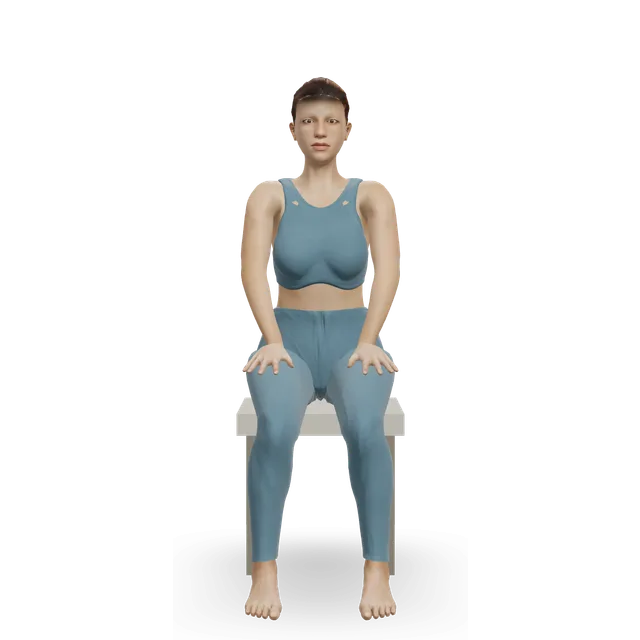
Yoga for long COVID: check for post-exertional malaise first, then pace, with gentle lying and seated yoga and breathing
With long COVID, the first question isn't which yoga, but whether you get post-exertional malaise (PEM): a worsening of your symptoms after even small physical, mental, emotional or social effort, often a day or two later. If you do, pacing comes first. The World Health Organization (WHO) says activity shouldn't increase on a fixed schedule, and the National Institute for Health and Care Excellence (NICE) says people with this pattern in ME/CFS shouldn't "push through" their symptoms. Yoga can then only fit inside a paced day, as short lying or seated rest and slow breathing, agreed with your long COVID team.
Yoga for long COVID is being studied, not proven: the only trial so far, in 29 people, found a programme feasible but made no difference to quality of life. This guide covers PEM and pacing, what NICE and the WHO say, what the yoga and breathing trials found, breathlessness and dizziness on standing, what to leave out, and when to stop and get help. There's no class to follow here, for the reasons NICE and the WHO give; our exercise for long COVID guide has a 5-question PEM check and a gentle routine that starts lying down.
PEM is a worsening of symptoms after even small physical, mental, emotional or social effort. NICE describes it in ME/CFS as typically worsening 12 to 48 hours after activity and lasting days or even weeks; the WHO gives 12 to 72 hours for long COVID. Our exercise for long COVID guide has a 5-question check.
The WHO says graded exercise, or fixed step-by-step increases, should not be offered to people with PEM, and recommends pacing. NICE says not to use more energy than you have or "push through" your symptoms. World Physiotherapy puts it as "Stop. Rest. Pace."
A 12-week yoga programme was feasible in 29 adults but made no difference to quality of life, in a trial too small to be sure. Two larger trials are under way.
In a trial of online qigong and self-acupressure, there were 52 reports of symptoms getting worse linked to the qigong. Judge any session by how you feel over the next 2 to 3 days, not straight afterwards.
Dizziness on standing (postural tachycardia syndrome, PoTS) is more likely with long COVID, and lying and seated exercise is usually easier. Leave out sun salutations, standing flows, hot yoga and fast breathing.
The NHS says don't start exercising again before talking to a GP or specialist, and NICE asks for symptoms that could affect safe rehabilitation, such as chest pain or low oxygen on exertion, to be checked first. The warning signs are below.
The NHS uses the name long COVID for symptoms lasting more than 12 weeks: most often extreme tiredness, shortness of breath, joint and muscle aches, and problems with memory and concentration (brain fog), and it says symptoms may get worse if you're stressed or have been more active. NICE says symptoms can fluctuate and change over time and affect any part of the body.
In early 2024, an estimated 3.3% of people in England and Scotland, about 2 million, reported long COVID, and for three in four of them it affected daily life. The WHO estimates that about 6 in 100 people who have COVID-19 develop it, and that symptoms generally improve over 4 to 9 months.
NICE, in its ME/CFS guideline: "The worsening of symptoms that can follow minimal cognitive, physical, emotional or social activity, or activity that could previously be tolerated. Symptoms can typically worsen 12 to 48 hours after activity and last for days or even weeks, sometimes leading to a relapse." The WHO uses the same description for long COVID, with 12 to 72 hours, and says people may not mention PEM unless they're asked about it.
In 213 people with long COVID, 58.7% met the PEM thresholds used in ME/CFS. World Physiotherapy lists everyday triggers: a shower, a social event, a walk, reading or desk work, an emotional conversation, or a loud or bright room.
Feeling fine afterwards doesn't mean it was fineStrong evidence
Because PEM is delayed, you might feel fine during a session and much worse a day or two later. Check how you feel that evening, the next day and the day after. Our exercise for long COVID guide has a 5-question check to talk through with your GP or long COVID team.
PEM isn't just being out of shapeEmerging evidence
In people with long COVID and PEM, one all-out exercise test set off PEM, with signs of muscle damage. It's a small study, but it's one reason not to test your limits.
No fixed increases, and stability before moreStrong evidence
The WHO: rehabilitation based on fixed step-by-step increases in activity, or graded exercise, "should not be offered to people experiencing PESE" (post-exertional symptom exacerbation, another name for PEM). It recommends pacing, and says symptoms should be stable for a while, for example a month, before you try to do more.
NICE's ME/CFS guideline asks people not to use more energy than they perceive they have and not to "push through" their symptoms, and says activity is never automatically increased. The WHO warns of harm from doing too much too early and pushing through symptoms. World Physiotherapy: "STOP trying to push your limits", and "Do not wait until you feel symptoms to rest."
World Physiotherapy says pacing "is not an activity avoidance strategy": it's balancing activity and rest so you stay within your energy limits and avoid crashes, including mental and social effort. Asthma + Lung UK calls it the 3 Ps: pace, plan and prioritise.
What NICE's long COVID guideline saysStrong evidence
NICE's long COVID guideline asks for a personalised rehabilitation plan, with managing fatigue a key part, once anything that could affect starting rehabilitation safely has been checked. It doesn't recommend any particular exercise, and lists the effectiveness of exercise as a research question.
Long Covid UK says gentle movement can help stiffness, circulation and pain, but "If you experience PEM, be cautious with any plan that steadily increases exercise". With PEM, yoga fits as short lying or seated rest and slow breathing within a paced day, and anything more with your long COVID team. Without PEM, the WHO's phrase is a cautious return to activity guided by your symptoms.
Yoga: one small trial, no differenceMixed evidence
In Sweden, 29 adults with long COVID were randomly given a 12-week yoga programme co-designed with yoga experts, patients and researchers, or health promotion. The yoga was feasible, with no serious side effects, but quality of life didn't differ between the groups, and the trial was too small to be sure. Trials of 100 people (measuring PEM) and 88 people are under way.
Online yoga: feasible, with some flare-upsMixed evidence
In 11 people, live online yoga twice a week was feasible, but only about half joined more than half the sessions, 60 minutes was too long for some, and some people's symptoms increased during sessions. There was no comparison group.
Qigong, tai chi and yoga for fatigueMixed evidence
Across 13 trials with 661 people with ME/CFS or post-COVID syndrome, qigong, tai chi and yoga eased fatigue by a small to moderate amount, but the certainty was low or very low and most trials were at risk of bias.
Qigong and acupressure: 52 reports of symptoms worseningMixed evidence
In 235 people with fatigue after COVID-19, 8 weeks of online qigong and self-acupressure didn't improve physical function significantly more than a self-care leaflet, and PEM scores didn't differ. Qigong was linked to 52 reports of symptoms getting worse: that's 52 reports, not 52 people. People with severe PEM weren't included.
Rehabilitation helped some peopleEmerging evidence
In 585 adults after a COVID-19 hospital stay, an online group programme of exercise and psychological support improved quality of life a little, with less fatigue, depression and pain interference. Reviews found better walking distances after rehabilitation, but the trials rarely checked for PEM, and our exercise for long COVID guide covers them in detail.
A singing-based breathing programmeEmerging evidence
In 150 people referred by long COVID clinics, a 6-week online breathing programme using singing techniques improved the mental health side of quality of life and breathlessness when running, but not the physical side, against usual care. In 1,413 people using it outside a trial, breathlessness and anxiety improved, but breathlessness at rest didn't.
In a 34-person trial, online yogic breathing for breathing problems after COVID-19 made no clear difference against usual care. The WHO suggests nasal breathing and pacing, and breathing control for a changed breathing pattern, on very low-certainty evidence.
Signs of a breathing pattern disorderEmerging evidence
An NHS physiotherapy leaflet lists breathing with your upper chest or through your mouth, over-breathing, feeling you can't fill your lungs, sighing and yawning, and pins and needles. In 51 people with long COVID and lasting breathlessness, about 3 in 10 had a dysfunctional breathing pattern. These are a reason to ask your GP for a physiotherapy referral.
With breathing exercises, Long Covid UK says to "go gently and stop if symptoms worsen". Keep to slow, quiet breathing, and leave out breath of fire and other fast, forceful breathing, which caused more side effects than slow breathing in trials.
In PoTS, your heart rate goes up when you stand, and you may feel dizzy or light-headed, with palpitations, breathlessness or fainting. The NHS says you may be more likely to have it with long COVID, and that heat, standing for long, large meals high in carbohydrates and exercise can bring on symptoms, and resting too much can make it worse. See a GP to get it checked.
PoTS UK says ground-based, seated and reclined exercise is usually easier, and a starting point can be as little as 60 seconds. The WHO advises avoiding hot rooms, hot showers, straining and standing up suddenly. Practise lying or seated, change position slowly, sit for a while before you stand, and finish with your legs raised (our suggestion, after these sources).
Lie down and raise your legs until you feel better. If you can't lie down, cross your legs, rock up and down on your toes, clench your buttock and tummy muscles, or clench your fists.
Slow breathing: a few minutes to start a rest, with no holds (our ME/CFS guide's editorial starting point); corpse pose as part of a planned rest; reclining bound angle: 2 to 5 minutes with a support under each thigh, if comfortable (the move's page); legs up the wall, or legs on cushions: 2 minutes, coming up slowly (our long COVID gentle routine).
Pursed-lip breathing: 5 to 10 breaths sitting down, once or twice a day, to learn it; lateral breathing: 5 to 8 breaths (the moves' pages). Practise when you're calm, and go back to normal breathing if you feel light-headed.
Only on a stable day and within your energy limit: 3 to 5 slow heel slides, ankle circles and shoulder circles, and 2 to 3 slow breaths each side in the twist with your knees supported; seated, 30 seconds of marching or 3 to 5 calf raises, rotations and chin tucks (our ME/CFS guide's editorial starting point, as on our yoga for chronic fatigue guide). Any doses on the move pages are for people without PEM.
When you're stable without PEM, or with your team's agreement
3 to 5 small, slow bridges and 3 to 5 sit-to-stands if standing is comfortable (our ME/CFS guide's editorial starting point), judged by how you feel over the next 2 to 3 days. Cat-cow: 3 to 5 slow waves, on all fours or seated (our editorial starting point, below the move's page).
Sun salutations, standing sequences, vinyasa, power or Ashtanga classes, and long classes. In ME/CFS, NICE advises against generalised exercise programmes, including ones designed for healthy people, and the WHO advises against fixed increases with PEM.
If you get dizzy on standing, leave out folding forward and coming up, and moving between the floor and standing; change position slowly (our suggestion).
Long holds in yin or long restorative classes can make getting up hard and dizzy; short supported rests suit better (our suggestion, as on our chronic fatigue guide).
Why there's no class here
Classes don't fit pacing
A follow-along class of fixed length would be wrong for many people with PEM: NICE advises against generalised programmes in ME/CFS, and the WHO against fixed increases. So this page offers moves and amounts, not a class, as our chronic fatigue guide does.
With PEM: the slow breathing in our breathing exercises to relax routine, at the start of a rest, leaving out the holds. Without PEM, or with your long COVID team's agreement, after chest pain, breathlessness or palpitations have been checked: our long COVID gentle routine, which starts lying down, then seated chair yoga. With PoTS: our PoTS exercises, gated the same way.
Only with the conditions above. Keep the same amount for at least a week before adding a little (our exercise for long COVID guide's editorial rule for people without PEM); with PEM, the WHO suggests symptoms are stable for longer, for example a month, before doing more. Judge every session over the next 2 to 3 days.
Throbbing pain and swelling in one leg (rarely both) can be a deep vein thrombosis (DVT), a blood clot: ask for an urgent GP appointment or call NHS 111, and call 999 if you're also short of breath or have chest pain.
If a pulse oximeter shows your oxygen falling when you move, or you get chest pain when you exert yourself, stop and get medical advice the same day. NICE asks for urgent referral for low oxygen on exercise.
The NHS says a mental health emergency should be taken as seriously as a physical one, and that you will not be wasting anyone's time.
NICE asks for urgent mental health assessment for people with long COVID and severe symptoms or a risk of self-harm.
Call 999 or go to A&E if your life is at risk: for example, you have seriously harmed yourself or taken an overdose, or you feel you can't keep yourself safe.
For urgent help in England, call 111 and select the mental health option, or use 111 online.
Call Samaritans on 116 123. It is free, any time, day or night.
In the US, call or text 988, the 988 Suicide and Crisis Lifeline, any time.
If symptoms get worse during a session or over the next 2 to 3 days, stop and rest. The WHO says to reduce activity for a while, look for what triggered it, and not return to your usual level until the flare-up has settled. Never push through.
"Push through the fatigue to build stamina"Strong evidence
The WHO warns of harm from doing too much too early and pushing through symptoms, World Physiotherapy says stop trying to push your limits, and NICE says not to push through in ME/CFS.
"Yoga is gentle, so it can't cause a crash"Strong evidence
PEM can follow any kind of effort, 12 to 72 hours later. In trials of gentle practices, some people's symptoms got worse, including 52 reports linked to qigong in one trial.
The only yoga trial found no difference in quality of life, the wider evidence for mind-body exercise is weak, and the NHS says there's no cure yet, though treatment can ease symptoms.
"Pranayama fixes breathlessness after COVID"Mixed evidence
Breathing techniques may help some people feel more in control, and a singing-based programme helped breathlessness when running, but the evidence is very low certainty, and a yogic breathing trial found no clear difference.
Pacing isn't avoiding activity; it's balancing activity and rest. The NHS suggests moving around regularly or short walks if you can, and resting too much can make PoTS worse.
After a COVID-19 hospital stay, daily yoga nidra or music improved sleep and wellbeing in one trial, but no trial has tested yoga nidra in long COVID. As a lying rest, a short recording may fit a rest period.
It's being studied, not proven. A 29-person trial found a yoga programme feasible but no difference in quality of life, and larger trials are under way. Check for post-exertional malaise first: it decides what's safe.
What is post-exertional malaise (PEM)?
A worsening of your symptoms after even small physical, mental, emotional or social effort, usually a day or two later, that can last days or weeks. NICE gives 12 to 48 hours in ME/CFS, and the WHO 12 to 72 hours in long COVID. Our exercise for long COVID guide has a 5-question check.
Can I do yoga if I have PEM?
Pacing comes first. Short lying or seated rest and slow breathing can be part of a paced day; anything more should be agreed with your long COVID team, and nothing should increase on a fixed schedule.
Is yoga the same as graded exercise?
No. Graded exercise increases activity in fixed steps, which the WHO says shouldn't be offered to people with PEM. Any yoga with long COVID should be guided by your symptoms and go down as well as up.
What yoga is best for long COVID?
Short, gentle, lying or seated practice, with slow breathing and rest. Classes designed for healthy people, sun salutations and hot yoga are the parts to leave out.
Is restorative or yin yoga OK with long COVID?
Neither has been tested in long COVID. Supported rest lying down fits pacing, but long holds and getting up from the floor can make dizziness worse, so keep rests short and come up slowly.
Is yoga nidra good for long COVID?
It hasn't been tested in long COVID. After a COVID-19 hospital stay, daily yoga nidra or music improved sleep and wellbeing in one trial, and as a lying rest, a short recording may fit a rest period.
Do breathing exercises help long COVID?
They can help you feel more in control. An online singing-based breathing programme improved breathlessness and the mental side of quality of life in a trial, but overall the evidence is very low certainty. Go gently, and stop if your symptoms get worse.
Why do I get dizzy doing yoga with long COVID?
It may be PoTS, which is more likely with long COVID. Practise lying or seated, change position slowly, and lie down with your legs raised if you feel faint; see a GP to get it checked.
Should I push through to get my stamina back?
No. The WHO warns that doing too much too early and pushing through symptoms can cause harm, and World Physiotherapy's advice is "Stop. Rest. Pace."
How do I know if a yoga session was too much?
Watch how you feel that evening and over the next 2 to 3 days: if your usual symptoms get worse, that's a crash. Cut back, rest, and don't go back to your usual level until it has settled.
When should I get medical help?
Call 999 for chest pain that feels tight or spreads, severe difficulty breathing, or fainting. Get advice the same day if your oxygen falls when you move, and see a GP for new or worsening symptoms or dizziness on standing.
Exercise education, not a personal prescription, and clinical review of these guides is pending. If you are pregnant, have a health condition such as glaucoma, high blood pressure or osteoporosis, or have had recent surgery, check with a doctor, midwife or physiotherapist before starting, and stop for sharp or increasing pain. Health disclaimer.