Yoga flows
Yoga for low blood pressure: a 25-minute head-up class that wakes up your legs before you stand
A 25-minute class for low blood pressure or dizziness when you stand up. It goes from lying to sitting to standing at a counter and back to sitting, wakes your legs up before every stand, teaches a squeeze as you rise, keeps your legs working in the standing poses, and never takes your head below your heart. In small studies, moving and tensing the legs before and while standing reduced the drop in blood pressure; no trial has tested this class or any yoga for low blood pressure, so the structure is our editorial choice. Do it 2 or 3 times a week and on any day you feel well. If you keep getting dizzy or fainting, see a GP as well.
Lying: wake up your legs (about 6 minutes)
- Beginner · 3D demoLie on your back, knees bent. In for about 4, out for about 6, no holds. Take smaller breaths if you feel light-headedEasier: Breath reachHarder: Crocodile breathing (prone diaphragmatic breathing)
- Ankle circles10 pumps, then 5 circles each way, each footBeginner · Calves, Shins · 3D demoPoint your toes away, then pull them towards your shinsHarder: Ankle CARs (controlled articular rotations)
- Supine heel slide10 slow each sideBeginner · Hip flexors, Hamstrings, Quads · 3D demoSlide one heel towards you, then push it away firmlyHarder: Hip windshield wipers
- Glute bridge2 sets of 8Beginner · Glutes, Hamstrings, Abs · 3D demoBreathe out as you lift; your head stays on the floorEasier: Pelvic tilt into bridgeHarder: Single-leg glute bridge




Up to sitting (about 5 minutes)
- Seated march1 minBeginner · Hip flexors, Quads, Abs · 3D demoRoll to your side, push up to sitting and move to a firm chair. Then march your kneesHarder: Standing march
- Beginner · Calves · 3D demoLift both heels as high as you can, then lower slowlyHarder: Slow calf raise
- Breath reach5 breaths, exhale longer than inhaleBeginner · 3D demoArms only as high as is comfortableHarder: Slow breathing (6 breaths a minute)
- Thoracic rotation5 each side, 5 s holdsBeginner · 3D demoSeated (the demo shows it standing): arms crossed, hips facing forwardEasier: Side-lying open bookHarder: World's greatest stretch




Stand up with a squeeze (about 2 minutes)
- Sit to stand, pushing on the thighs5 slow repsBeginner · Quads, Glutes, Triceps · 3D demoPump your feet first. Squeeze your thighs and buttocks as you rise, then wait a moment with your hands on the counter before you let goHarder: Bodyweight squat
Standing at a counter, legs working (about 8 minutes)
- Mountain pose (Tadasana)5 slow breaths, twiceBeginner · Calves, Back, Abs · 3D demoWeight spread through both feet, legs gently working; fingertips on the counterHarder: Tree pose (Vrksasana)
- Slow calf raise2 sets of 10 to 15Beginner · Calves · 3D demoHold the counter; rise right up, pause, then lower slowlyEasier: Seated bent-knee calf raise (soleus raise)Harder: Standing dumbbell calf raise
- Chair pose (Utkatasana)3 holds of 20 to 30 sBeginner · Quads, Glutes, Shoulders · 3D demoSit back as if onto a tall stool, arms forward. Rest between holdsHarder: Revolved chair pose (Parivrtta Utkatasana)
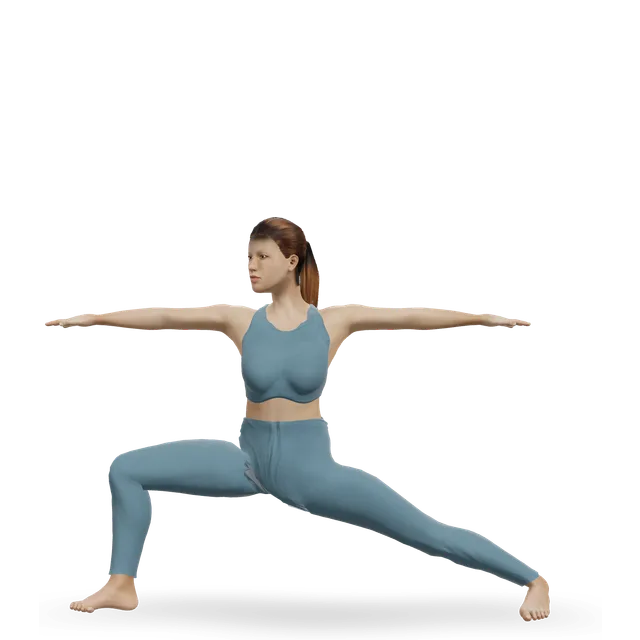
- Warrior II (Virabhadrasana II)5 breaths each sideIntermediate · Quads, Glutes, Adductors · 3D demoSide-on to the counter, one hand on it, short stanceEasier: Chair pose (Utkatasana)Harder: Extended side angle (Utthita Parsvakonasana)
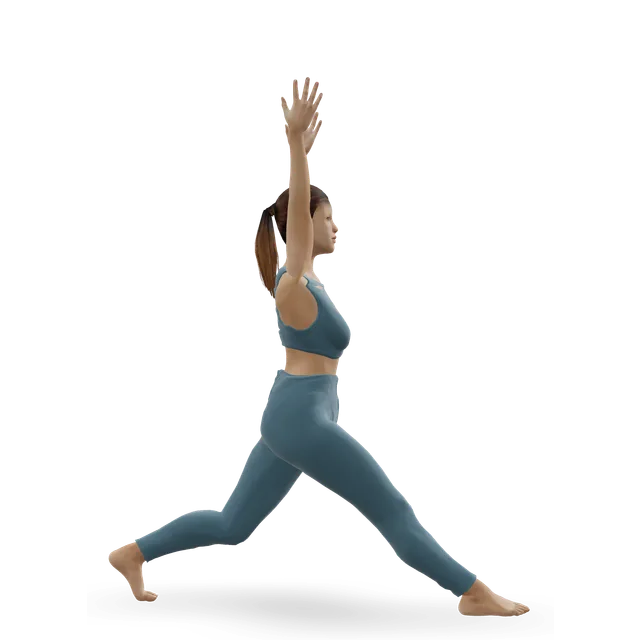
- High lunge (crescent lunge, Ashta Chandrasana)5 breaths each sideIntermediate · Quads, Glutes, Hip flexors · 3D demoBack heel lifted, so your back calf works. Lower the back knee if balance is the limitEasier: Low lunge (Anjaneyasana)Harder: Warrior III (Virabhadrasana III)
- Tree pose (Vrksasana)30 s each sideBeginner · Glutes, Hip abductors, Calves · 3D demoFingertips on the counter; foot on your ankle or calf, never pressed into the side of your kneeEasier: Mountain pose (Tadasana)Harder: Standing hand-to-big-toe pose (Utthita Hasta Padangusthasana)
- Standing march1 minBeginner · Hip flexors, Abs, Glutes · 3D demoKeep moving rather than standing still. Before you sit, cross your legs and squeeze for a few breaths to practise the counter-manoeuvreEasier: Seated marchHarder: Standing band hip flexion






Back to sitting (about 4 minutes)
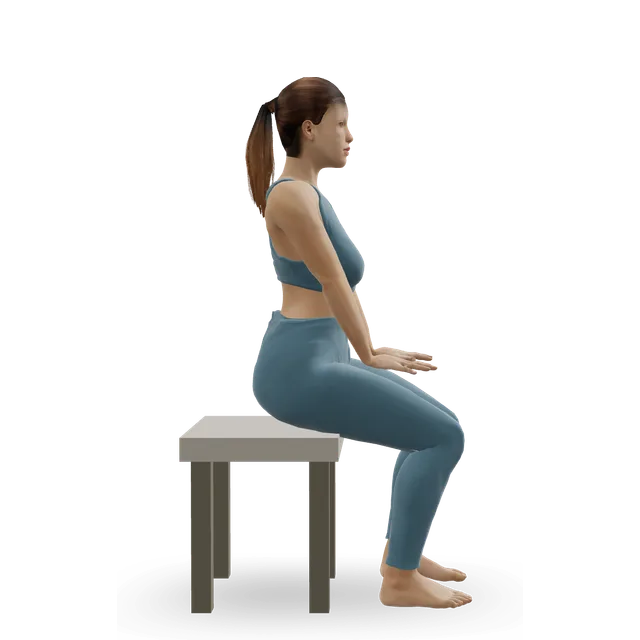
- Table slide (seated forward reach)8 slow repsBeginner · Shoulders, Back · 3D demoA seated forward bend with a long back: hands sliding along your thighs, head no lower than your heartEasier: Pendulum exercise (Codman's pendulum)Harder: Overhead lat stretch at a bench (elbows on the bench)
- Beginner · 3D demoSitting. Before you get up at the end, march your feet and squeeze your legs, then stand slowly with a hand on the counterEasier: Breath reachHarder: Crocodile breathing (prone diaphragmatic breathing)

Tips
- Drink a glass of water before the class, and don't do it straight after a big meal (our suggestion, from the NHS's advice to drink more water and eat small, frequent meals). With a heart condition or a daily fluid limit, check with your doctor before drinking more.
- If you feel faint at any point, our PoTS guide's advice: "Lie down and raise your legs until you feel better. If you can't lie down, sit, if possible with your head lowered between your knees, and drink some water."
- Practise the counter-manoeuvre once in each class while you feel well, so it comes quickly when you need it: "Cross one leg in front of the other while standing, then tense your leg muscles and clench your buttock and tummy muscles." (our PoTS guide)
- "Come out of any pose and sit down if you feel dizzy or light-headed, and get medical advice before you train again", as our yoga for high blood pressure guide says.
- Call 999 if: "Someone faints while exercising, can't be woken within 1 minute, or has chest pain or a pounding, fluttering or irregular heartbeat."
- Keep the room cool, and skip hot classes while you get symptoms (our suggestion).
- A 10-minute morning version (our suggestion): the lying and sitting blocks, then stand with the squeeze. NHS inform suggests standing up slowly, particularly first thing in the morning.
- With a heart condition, Parkinson's or diabetes with nerve damage, the matching yoga guide and class come first. Never stop or change a medicine yourself: tell your GP or pharmacist about dizziness.
The doses are suggested starting points, not a prescription. Choose a range you can control and stop for sharp or increasing pain, numbness or tingling. Get individual advice after an injury or surgery, or if you are pregnant or managing a health condition.
Guides that recommend it
Find more moves like these
More yoga flows

Beginner yoga flow
A 20-minute beginner yoga sequence: mountain, chair, warrior II, triangle, tree, down dog, cobra and child's pose.
20 minBeginner11 movesA step


Sun salutation flow
A 20-minute flow built on sun salutations A and B, with warrior poses and a short cool-down.
20 minIntermediate8 movesNo equipment



Yoga for tight hips
A hip-opening yoga sequence: low lunge, lizard, goddess, pigeon, bound angle and happy baby.
25 minBeginner10 movesA wallQuestions people ask
How long does the yoga for low blood pressure: a 25-minute head-up class that wakes up your legs before you stand take?
About 25 minutes, including any warm-up and cool-down listed. Shorten it by doing fewer rounds; lengthen it by adding one.
What equipment do I need?
You need: A bench or box, A wall. Each move links to its guide, where you can find an alternative if you are missing something.
Is it suitable for beginners?
It is written for beginners. 9 of its 17 moves have an easier option listed beside them if you need one.
How do I make it easier or harder?
Use the easier or harder option listed under each move, change the number of rounds, or adjust the rest. Progress one change at a time.