Pilates
Floor Pilates for PoTS: a 20-minute class that never asks you to stand
Upright exercise often sets off the symptoms of postural tachycardia syndrome (PoTS), so the programmes that help start lying or seated. This class does all its work lying down: breathing, leg strength for the muscle pump, core work including the held chest lift that the Children's Hospital of Philadelphia (CHOP) programme calls the "Pilates hold", side-lying hip work, then legs up the wall. You get up once, at the end, slowly. Drink two glasses of water first, wait an hour after eating, keep the room cool, and wear compression tights if you use them. Use it as one of 1 to 2 strength sessions a week, with seated or lying cardio on other days. No trial has tested Pilates in PoTS, so the order and doses are our editorial choice, from CHOP's home strength list.
Breathe (about 2 minutes)

Warm up, on your back (about 3 minutes)
- Supine heel slide8 each sideBeginner · Hip flexors, Hamstrings, Quads · 3D demoSlide the heel away and backHarder: Hip windshield wipers
- Knee fold6 each sideBeginner · Abs, Hip flexors · 3D demoSlow and rhythmicEasier: Supine heel slideHarder: Dead bug heel taps
- Ankle circles10 pumps, then 5 circles each wayBeginner · Calves, Shins · 3D demoPoint and pull your toes: your calf muscles help pump blood back upHarder: Ankle CARs (controlled articular rotations)



Leg strength, on your back (about 6 minutes)
- Glute bridge8 to 10, holding each up to 10 sBeginner · Glutes, Hamstrings, Abs · 3D demoSqueeze your buttocks and lift slowly. Count out loud so you keep breathingEasier: Pelvic tilt into bridgeHarder: Single-leg glute bridge
- Straight-leg raise8 to 10 each legBeginner · Quads, Hip flexors, Abs · 3D demoTighten your thigh, lift to the height of the other knee, lower slowlyEasier: Quad set (static quads)Harder: Leg extension
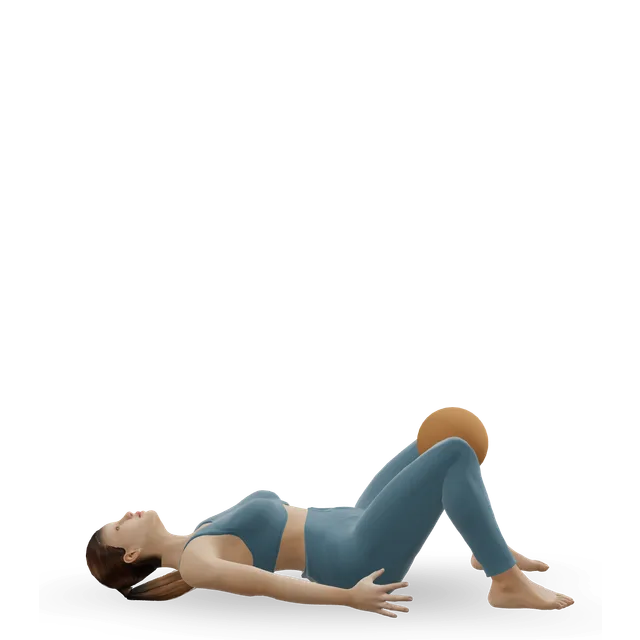
- Lying adductor ball squeeze8 to 10, holding each 5 sBeginner · Adductors, Abs · 3D demoA pillow or soft ball between your thighs; squeeze while you count out loudHarder: Copenhagen plank
- Single-leg circle (Pilates one leg circle)5 circles each direction, each legBeginner · Abs, Hip flexors, Adductors · 3D demoSmall circlesHarder: Corkscrew (Pilates)



Core, on your back (about 3 minutes)
- Chest lift (Pilates curl-up)8, holding each up to 10 sBeginner · Abs, Neck · 3D demoCHOP's "Pilates hold": reach your hands towards your feet, lift your shoulder blades, keep an apple-sized space under your chin, and count out loudHarder: Single-leg stretch (Pilates one leg stretch)
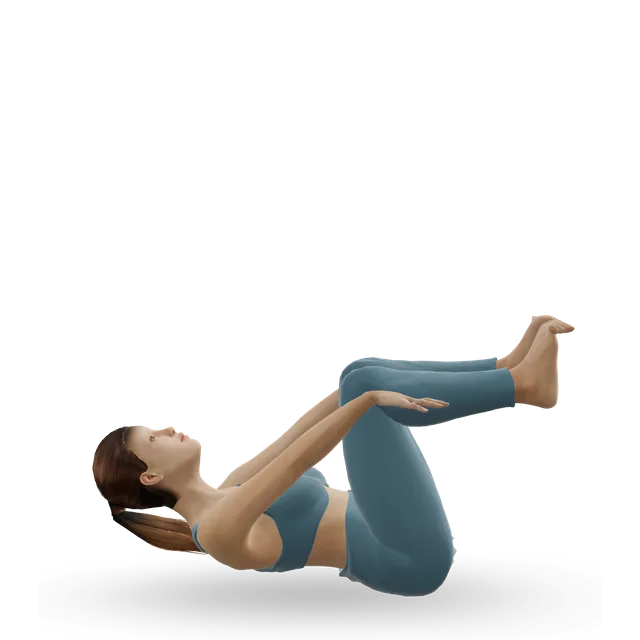
- Dead bug heel taps6 each sideBeginner · Abs, Hip flexors · 3D demoLower one heel at a time; your back stays stillEasier: Bent-knee fall-outHarder: Forearm plank


On your side (about 4 minutes)
- Side-lying leg raise8 to 10 each sideBeginner · Hip abductors, Glutes · 3D demoTop leg in line with your body or slightly behind itEasier: Lateral band walkHarder: Lateral band walk, band at the feet
- Clamshell8 to 10 each sideBeginner · Hip abductors, Glutes · 3D demoAnkles together, hips stillEasier: Supine isometric hip abduction (belt press)Harder: Lateral band walk
- Side kick (Pilates side kick series)8 each sideBeginner · Hip flexors, Glutes, Hip abductors · 3D demoMoving, not heldHarder: Side-lying leg circles (Pilates side kick series)



Finish (about 3 minutes)
- Legs up the wall (Viparita Karani)2 to 3 minBeginner · Hamstrings, Calves · 3D demoOr legs raised on cushions. Then roll onto your side, push up to sitting, and sit for a minute before you stand up slowlyHarder: Plow pose (Halasana)

Tips
- Check with your doctor or PoTS team before you start, and skip this class if your symptoms haven't been diagnosed.
- If you feel faint, stop, lie down and raise your legs. Use the counter-manoeuvres if you can't lie down.
- Start with 1 set of each move. Add a second, then a third set only after a week with no worse symptoms (our suggestion, building towards CHOP's 3 sets).
- If sessions are followed by a crash a day or more later that's out of proportion to what you did, stop increasing and talk to your specialist: it may be post-exertional malaise.
- With hypermobility or EDS (Ehlers-Danlos syndromes), keep every move in the middle of your range, and see a physiotherapist first, as CHOP advises.
- Later, as standing gets easier, finish with a few slow sit-to-stands and calf raises with a hand on a counter (our suggestion).
The doses are suggested starting points, not a prescription. Choose a range you can control and stop for sharp or increasing pain, numbness or tingling. Get individual advice after an injury or surgery, or if you are pregnant or managing a health condition.
Guides that recommend it
Find more moves like these
More pilates


Beginner Pilates workout
A 20-minute mat Pilates workout for complete beginners. It covers breathing, spine position and the foundation moves, each with an easier option.
20 minBeginner13 movesNo equipment

10-minute Pilates abs
Ten minutes of the classic Pilates abdominal series: the hundred, the roll-up and the series of five, with a plank to finish.
10 minIntermediate11 movesNo equipmentFull-body mat Pilates workout
A 30-minute intermediate mat Pilates class that follows the classical order, from the hundred to the push-up, with prep versions of the hardest moves.
30 minIntermediate22 movesNo equipmentQuestions people ask
How long does the floor pilates for pots: a 20-minute class that never asks you to stand take?
About 20 minutes, including any warm-up and cool-down listed. Shorten it by doing fewer rounds; lengthen it by adding one.
What equipment do I need?
You need: Other / check instructions, A wall. Each move links to its guide, where you can find an alternative if you are missing something.
Is it suitable for beginners?
It is written for beginners. 6 of its 14 moves have an easier option listed beside them if you need one.
How do I make it easier or harder?
Use the easier or harder option listed under each move, change the number of rounds, or adjust the rest. Progress one change at a time.