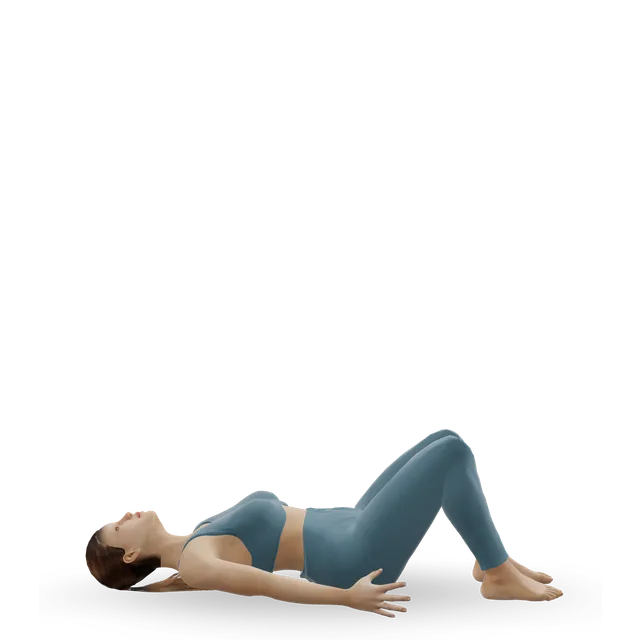
Yoga for an enlarged prostate (BPH): urinary symptoms, the pelvic floor, and when to get checked
An enlarged prostate (benign prostatic hyperplasia, or BPH) is common after 50 and isn't cancer, but it can make peeing slow, urgent or frequent. No yoga pose shrinks the prostate or presses on it, and no trial has tested yoga for an enlarged prostate. The only report claiming yoga shrinks the prostate is two case reports, outside the main medical database, with results that aren't credible.
Active men do tend to have milder symptoms, though, and the pelvic floor work in yoga is the part with a link to symptoms: a strong squeeze after peeing helps clear the last drops, and pelvic floor training added to a tablet eased urgency in one trial. Medicines and surgery are the proven treatments when symptoms bother you.
This guide covers where yoga fits beside walking, bladder training and the treatment your GP (general practitioner) offers: lifting and letting go of your pelvic floor, slow breathing to let an urge pass, poses that keep you moving, cycling and long sitting, tamsulosin and getting up slowly, and the warning signs, including when not being able to pee is an emergency.
The NHS (National Health Service): "It's common and is not usually serious", and "An enlarged prostate is not caused by prostate cancer, and does not increase your risk of getting prostate cancer." It presses on the tube that carries pee, so the symptoms are about peeing: a weak or stop-start flow, straining, dribbling afterwards, and needing to go often or urgently, including at night.
No yoga trial, and no exercise shrinks the prostate
Our search found no trial of yoga for an enlarged prostate. The only report is two case reports, outside PubMed, describing prostates shrinking by about three-quarters in two weeks to a month, which isn't credible. A 2024 urology article says yoga's effect on urinary symptoms "has been poorly studied".
Across 11 studies that observed 43,083 men, moderate or heavy activity went with about a quarter lower odds of an enlarged prostate or urinary symptoms, though a 2026 review calls the evidence inconsistent and the few trials are of very low certainty. NHS inform, Scotland's NHS information service, suggests walking for 30 to 60 minutes a day.
A strong squeeze straight after peeing helps clear the last drops, and in a small trial pelvic floor exercises cut dribbling after peeing. Added to a tablet, pelvic floor training with an urge-suppression technique cut toilet trips by about 2 a day, against 1 with the tablet alone, in one unblinded trial. Lift as you breathe out, and let go fully after every squeeze.
Drink enough, but less before bed and before going out; cut down on caffeine and alcohol; don't strain to pee; and wait a moment and try again before you leave the toilet. European urologists strongly recommend lifestyle advice and self-care information before or alongside treatment. Medicines and surgery are the proven treatments when symptoms bother you.
Suddenly being unable to pee, especially with pain low in your tummy, is a 999 call. Blood in your pee, pain when peeing, or pain with a high temperature needs an urgent GP appointment or NHS 111. The full list is in the warning signs below.
"The prostate is a small gland below the bladder that makes semen and controls the flow of pee from your bladder to your penis." If it gets bigger, "it can put pressure on the tube that carries pee from your bladder (urethra), causing problems with peeing." Doctors call the symptoms lower urinary tract symptoms (LUTS).
The NHS lists difficulty starting to pee or having to strain; a weak flow, stopping and starting, and taking longer to empty your bladder; feeling you can't empty it fully; dribbling after you finish; and needing to pee more often or urgently, including at night. "The symptoms usually develop slowly, and may gradually get worse as you get older."
"An enlarged prostate is most common in men over 50 years old. It can affect anyone with a prostate." Prostate Cancer UK says obese men and men with diabetes may be more likely to develop it, and that "Regular exercise may help to reduce your risk of urinary symptoms."
"If your symptoms are not causing many problems, doctors will usually recommend trying lifestyle changes first." Then come medicines (to help you pee, to calm urgency, or to stop the prostate growing) or surgery. The NHS lists bladder training and pelvic floor muscle training among the support on offer, and NICE (the National Institute for Health and Care Excellence) offers tablets when conservative measures haven't worked or aren't suitable. Prostate Cancer UK adds: "Regular exercise may help your symptoms."
Serious complications are rare. NHS inform: acute urinary retention, suddenly being unable to pee, "should be treated as a medical emergency". Urine infections are another complication.
Yoga can't reach the prostate itself: no pose presses, massages or shrinks it. What a class can reach is your pelvic floor (lifting on the out-breath and letting go fully), general activity if the class moves, calm (slow breathing is one of the ways European urologists list to help an urge pass) and breaks from long sitting. Classes also bring practical things to plan for: getting up from the floor if a tablet makes you dizzy, and needing the toilet mid-class.
Pain in the penis, scrotum, testicles or bottom, pain when peeing or ejaculating, and sometimes a high temperature can mean prostatitis, which needs a GP and sometimes antibiotics. With long-lasting pelvic pain, the pelvic floor is often too tight, and relaxation comes before squeezing, as our yoga for the pelvic floor guide says.
No trial has tested yoga for an enlarged prostate. The tai chi, qigong and pelvic pain trials below are all small, single-centre and unblinded. Medicines and surgery carry the strongest evidence.
No yoga trial for an enlarged prostateStrong evidence
Our PubMed search found 12 records on yoga, tai chi or qigong and an enlarged prostate or urinary symptoms in men, and none was a yoga trial. A 2024 urology article: "the impact of Yoga on LUTS has been poorly studied, despite a rationale for conducting clinical trials in this area." A review of 8 papers on yoga and urinary symptoms said "Rigorous studies are needed". An app-based yoga programme for leaking urine of any type improved scores in 258 users over 8 weeks, with no comparison group.
The only yoga report on the prostate isn't credibleMixed evidence
Two case reports in a journal outside PubMed describe prostates shrinking from 144 to 37 cc (cubic centimetres) in a month and from 91 to 23.6 cc in 14 days. Two men with no comparison group, and a size and speed of change that no treatment produces, can't support any claim.
Tai chi and qigong: one small trial eachMixed evidence
In 56 older men with an enlarged prostate, 12 weeks of tai chi improved urinary symptoms and quality of life against usual care. In a pilot of 30 older men, 6 months of Yi Jin Jing, a qigong (Chinese exercise) routine, improved symptom scores and flow. Neither was blinded, and neither has been repeated.
Active men have fewer symptoms, but trials are very low certaintyEmerging evidence
Across 11 observational studies (43,083 men), moderate and heavy activity each went with odds of 0.74 for an enlarged prostate or urinary symptoms. A 2026 review of 19 studies found protection in some and not others, calling the evidence inconsistent. A Cochrane review of 6 small trials (652 men), mostly of pelvic floor exercise within self-help programmes and one of tai chi, rated every result very low certainty: the reviewers are "uncertain whether physical activity affects symptom scores".
In the UK TRIUMPH trial of 1,077 men in 30 general practices, a self-help booklet with nurse support lowered symptom scores by about 1.8 points at a year against usual care. European urologists: "Offer men with LUTS lifestyle advice and self-care information prior to, or concurrent with, treatment."
Pelvic floor exercises for dribbling after peeingEmerging evidence
In 49 men, 12 weeks of pelvic floor exercises cut the amount of dribble by 4.7 g (grams), urethral milking by 2.9 g, and advice alone not at all. In 55 men with erection problems, 36 also dribbled, and after 6 months of exercises 27 of them were free of it (the comparison group switched to the exercises at 3 months). A 2024 review found only 4 trials of any treatment for dribbling in men who hadn't had surgery. NICE recommends explaining urethral milking to men who dribble.
Pelvic floor training for urgencyEmerging evidence
In 158 men with an enlarged prostate and an overactive bladder (142 analysed), adding pelvic floor training with an urge-suppression technique to the tablet silodosin for 12 weeks cut toilet trips by 1.95 a day, against 0.90 with the tablet alone. The men knew which group they were in, so it needs repeating. NICE recommends supervised bladder training for urgency.
Yoga for chronic pelvic pain in men: one small trialMixed evidence
In 40 men with chronic pelvic pain syndrome, an hour of supervised yoga a day for 6 weeks cut symptom scores by 8.4 points, against 10.8 with two tablets (alfuzosin and amitriptyline), and side effects were less common with yoga (10% against 27.5%). The tablets helped urinary symptoms more. It was single-centre, small and unblinded, and it's about pelvic pain, not an enlarged prostate.
During prostate cancer radiotherapy, yoga didn't change urinary symptomsEmerging evidence
In 68 men (50 analysed), twice-weekly yoga during radiotherapy eased tiredness and sexual problems, but urinary symptom scores changed over time in both groups with "no significant effect of treatment".
Medicines and surgery carry the stronger evidenceStrong evidence
For symptoms that bother you, the proven treatments are medicines and, for some men, surgery. Exercise, fluids, bladder habits and yoga sit alongside them, not instead of them.
Squeeze as if stopping wind and pee at the same time; our pelvic floor exercises guide describes how to check you've found the right muscles. Lift as you breathe out, keep breathing, and let go fully after each squeeze. BAUS (the British Association of Urological Surgeons): "You can also contract your pelvic floor muscles after emptying your bladder to prevent post-micturition dribble" (dribbling after peeing).
In mountain pose, chair pose, warrior II, a bridge and locust, lift gently on the out-breath and let go on the in-breath, as our yoga for the pelvic floor class does. Do your daily squeezes as well: the trials used dedicated pelvic floor training, not yoga.
The NHS method: after peeing, put your fingertips about 3 finger widths behind your scrotum and press gently, moving forwards and upwards towards the base of your penis, to push the last few drops out. NICE: "Explain to men with post-micturition dribble how to perform urethral milking." Our enlarged prostate exercise guide has the steps.
Yoga's "root lock" is a pelvic floor lift. In two small Indian trials, a mula bandha programme changed prolapse symptoms by less than people notice, and didn't build pelvic floor strength more than no programme. Treat it like any pelvic floor squeeze: lift, then let go fully, rather than holding it all class (our suggestion, following POGP's advice to relax fully after every squeeze).
With pelvic pain, pain when you ejaculate or trouble emptying, more squeezing may not help, and the muscles may need to relax instead: see your GP or ask for a pelvic health physiotherapist. The NHS: "do not strain or push when peeing".
The trials ran for 12 weeks to 6 months. Judge the squeezes after about 3 months of doing them every day (our editorial starting point, from the trial lengths).
Pelvic floor exercise: start with 8 slow holds of up to 10 seconds and 8 quick squeezes, three times a day, and build towards 10 of each (from the move page's dose), plus a strong squeeze straight after peeing. Pelvic floor relaxation: 5 to 10 slow breaths, 1 to 3 times a day, plus a full release after every squeeze (from the move page's dose). Slow breathing: 2 minutes, in through your nose for about 4 and out for about 6 (our yoga for the pelvic floor class); a few slow breaths and a squeeze help an urge pass.
Walk briskly for 30 minutes on most days, within NHS inform's 30 to 60 minutes a day (our editorial starting point, as in our enlarged prostate exercise guide). Mountain pose: 5 to 10 slow breaths, twice; chair pose: 3 holds of 5 breaths; warrior II: 5 breaths each side; pelvic tilt into bridge: 6 to 8 slow reps, squeezing on the way up and letting go at the bottom; locust: 3 holds of 3 breaths (all from our yoga for the pelvic floor class). Tree pose: 30 seconds each side, fingertips on a wall (our walk and yoga workout). Lift your pelvic floor on each out-breath, and never hold your breath.
Happy baby: hold 30 to 60 seconds, about 5 to 10 slow breaths, 2 rounds (from the move page's dose). Reclining bound angle: rest 2 to 5 minutes with a support under each thigh (from the move page's dose). Corpse pose: lie still for at least 5 minutes, up to 10, as its move page says. If a tablet makes you dizzy, roll to your side and sit for a moment before you stand.
NICE: "Offer men with storage LUTS suggestive of overactive bladder supervised bladder training, advice on fluid intake, lifestyle advice and, if needed, containment products." You gradually stretch the time between toilet visits, using a bladder chart and techniques such as breathing, relaxation and muscle exercises to take your mind off the urge; NHS inform says it "should only be carried out under medical supervision". BAUS: "Try to distract yourself for five to 15 minutes". Our enlarged prostate exercise guide has the steps.
When an urge comes, stop, squeeze your pelvic floor and breathe slowly until it passes, then walk calmly to the toilet. European urologists list "breathing exercises" among the distraction techniques that help control urgency, and the 2024 trial taught an urge-suppression squeeze.
Pee before class and sip water rather than drinking a lot just before (our suggestion). The NHS: reduce how much you drink before going out, "but make sure you drink enough during the rest of the day", and "do not cut down too much on fluids, as this can cause problems such as urinary tract infections".
Bow pose, hero pose, shoulder stand, butterfly and boat pose are sold online as preventing or treating an enlarged prostate. No study supports any of them. Shoulder stand carries the cautions below; boat pose is one our yoga for the pelvic floor guide suggests changing if you leak; hero pose loads the knees.
With glaucoma, or high blood pressure that isn't under control, skip headstands, shoulder stands and long head-down holds. With osteoporosis, swap deep forward folds for a flat-back hinge from the hips, and twist smoothly. In pregnancy, our yoga in pregnancy guide covers the changes. NCCIH advises beginners to avoid headstands, shoulder stands, the lotus position and forceful breathing.
Twisting should be safe if you do it smoothly and comfortably. Slow down and shorten fast or forceful twists, and leave out the added weight.
Fast, forceful breathing
No study has tested kapalbhati or bellows breath for the prostate, and NCCIH (the US National Center for Complementary and Integrative Health) advises beginners to avoid forceful breathing. Our yoga for the pelvic floor guide leaves it out if you leak.
Stopping your flow as an exercise
Don't use stopping your flow mid-stream as an exercise, and don't strain or push when you pee, as the NHS says. Squeeze after you've finished instead.
Nothing shows that sitting cross-legged or kneeling harms the prostate. In long seated practices, stand and move every 30 minutes or so, and pee before you start (our suggestion).
Tablets that make you dizzy
Alpha blockers such as tamsulosin can cause dizziness, particularly when you sit down or stand up, and low blood pressure and fainting, especially when you first start them. The NHS says that if tamsulosin makes you dizzy, don't drive, ride a bike or use machinery until it passes, and call NHS 111 if you faint. Get up slowly after floor exercises.
Come up from the floor slowly, stand near a wall in standing poses, and choose a room at normal temperature while a tablet makes you dizzy (our suggestion).
Sitting, cycling and PSA tests
Cycling doesn't cause an enlarged prostateEmerging evidence
In 3,932 men, "Cyclists had no worse sexual or urinary functions than swimmers or runners but cyclists were more prone to urethral stricture" (narrowing of the urethra). Standing for more than a fifth of the ride, and a handlebar level with or above the saddle, went with less genital numbness.
Numbness between the legs that doesn't go after a ride, or new erection problems, need a GP check (our suggestion). A recumbent exercise bike takes the pressure off while you sort it out.
Before a PSA test
For 48 hours before a PSA (prostate-specific antigen) blood test, the NHS asks you not to do anything that leaves you out of breath, such as exercise, or ride a bike, as these can raise your PSA level and make the test less accurate. Gentle yoga is fine, but leave out a hard class (our reading).
Do pelvic floor exercises every day, walk briskly on most days, and add a yoga class 2 or 3 times a week (our editorial starting point). Our yoga for the pelvic floor class builds the squeeze into each pose; the walk and yoga workout, or our yoga for erectile dysfunction class, which adds a pelvic floor block to the same brisk walk and standing poses, covers walking and yoga in one session. Use the relaxation routine instead of squeezes for pelvic pain or trouble emptying.
These are the warning signs from our enlarged prostate exercise guide and our yoga guides, word for word, apart from the lines given as the health service's words or marked as our suggestion. This is general information, not a diagnosis. A&E means accident and emergency; in the US, call 911 for 999.
Call 999 or go to A&E
Don't drive yourself to A&E. Call 999 or go to A&E now if:
you suddenly can't pee at all, especially with severe pain low in your tummy or a swelling there you can feel: NHS inform says this "should be treated as a medical emergency"
you have a stomach ache and you cannot pee at all
you have a urine or kidney infection and you're confused, drowsy or have difficulty speaking
Call 999 if an adult is breathing very fast, is confused or has slurred speech, has blue, pale or blotchy skin, or has a rash that doesn't fade when you press it.
With prostatitis symptoms: sudden confusion or slurred speech; blue, grey, pale or blotchy skin, lips or tongue; a rash that doesn't fade when you roll a glass over it; or severe difficulty breathing.
Ask for an urgent GP appointment or get help from NHS 111 if "you have pain when peeing" or "you cannot pee at all". "Blood in your pee must be checked out because it can be a sign of cancer."
difficulty peeing or needing to pee more often: "Try not to be embarrassed. The GP will be used to talking about these symptoms."
symptoms that change, get worse or don't feel normal, as they can overlap with prostate cancer's
a weak flow, leaking at night, a swollen tummy, or feeling you never empty your bladder, which can be signs of chronic retention
swollen ankles, feet or hands, tiredness or itchy skin with your urinary symptoms, which can be signs of kidney problems
Pain when peeing, difficulty peeing, needing to pee more often, pain in the penis, scrotum, testicles or bottom, pain when you ejaculate, or a high temperature: possible prostatitis.
Pain during or after pelvic floor exercises, pelvic pain, pain with sex, or trouble emptying your bladder or bowel.
If you feel dizzy, stop and sit down. If you can't pee after a long ride or session, treat it as retention and use the lists above (our suggestion).
Stop a pose that brings on leaking, heaviness, dragging, a bulge or pain, and make it smaller or leave it out. POGP says pain when you exercise the pelvic floor, or tummy or pelvic pain afterwards, needs advice from a specialist physiotherapist; meanwhile, stop adding squeezes and use the relaxation practice (our suggestion). For men's symptoms such as a weak flow or dribbling, see our pelvic floor exercises guide.
Breathlessness
Call 999 or go to A&E (accident and emergency) straight away for severe difficulty breathing (gasping, choking or not able to get words out), a chest that feels tight or heavy, pain that spreads to your arms, back, neck and jaw, lips or skin turning very pale, blue or grey, or sudden confusion. If you're more short of breath than usual, or your heart is racing, fluttering or skipping beats, contact NHS 111.
A joint pain that is sharp, gets worse during a session, lingers into the next day or changes how you move is a reason to use an easier version, and to see a GP or physiotherapist if it keeps happening (the rule in our plans). Muscle soreness for a day or two after something new is normal. In a hot class, stop if you feel dizzy, sick or unwell; our hot yoga guide lists the signs of heat illness.
You can say no to any hands-on adjustment, and a teacher registered with Yoga Alliance must get your explicit consent each time.
Before you start
The NHS advises getting advice from a healthcare professional first if you have a health problem, an injury or symptoms, or have recently had a heart attack or an operation.
No controlled study has measured the prostate after yoga. The only report is two case reports outside PubMed with results that aren't credible, and in the exercise studies that measured it, activity wasn't linked with prostate size.
"Mula bandha fixes everything below the belt"Strong evidence
Mula bandha is a pelvic floor lift. It hasn't been tested for an enlarged prostate, and in prolapse trials it changed symptoms by less than people notice, as our yoga for the pelvic floor guide says. Holding it all class goes against relaxing fully after every squeeze, and with pelvic pain, more squeezing can make things worse.
No. No study shows a smaller prostate with yoga or any exercise, and the only report claiming it is two case reports with results that aren't credible. Medicines such as finasteride shrink it slowly over years.
Which yoga poses are best for an enlarged prostate?
None has a special effect on the prostate. Choose poses that keep you moving and let you practise lifting and letting go of your pelvic floor, such as mountain pose, chair pose, warrior II and a bridge, and add brisk walking.
Does yoga help with frequent urination or getting up at night?
It hasn't been tested for that. What helps is bladder training, with a squeeze and slow breathing to let an urge pass, drinking less before bed, and cutting down on caffeine and alcohol. In one trial, pelvic floor training added to a tablet cut daily toilet trips.
Do pelvic floor exercises help an enlarged prostate?
They help some symptoms, not the prostate itself: in a small trial they cut dribbling after peeing, and added to a tablet they reduced urgency. Squeeze strongly straight after you pee, and relax fully after every squeeze.
Is mula bandha good for the prostate?
It's a pelvic floor lift, so treat it like one: lift on the out-breath, then let go fully, rather than holding it all class. It hasn't been tested for an enlarged prostate.
Which pranayama is good for the prostate?
None has been tested. Slow breathing is useful for letting an urge pass and for relaxing a tense pelvic floor. Skip forceful breathing such as kapalbhati, which US health advice says beginners should avoid.
Can yoga help prostatitis or chronic pelvic pain?
In one small trial of 40 men with chronic pelvic pain syndrome, an hour of yoga a day eased symptoms nearly as much as two tablets, with fewer side effects, though the tablets helped urinary symptoms more. See a GP first, because prostatitis can need antibiotics.
Is cycling bad for an enlarged prostate?
No: in 3,932 men, cyclists' urinary symptoms were no worse than swimmers' or runners'. Stand on the pedals regularly, and don't cycle or exercise hard for 48 hours before a PSA test.
I take tamsulosin. Is yoga safe?
Yes, but it can make you dizzy when you sit down or stand up, so come up from the floor slowly and stand near a wall. Call NHS 111 if you faint.
Should I drink less before a yoga class?
Pee before class and sip rather than drinking a lot just before, but don't cut down too much overall: the NHS says this can cause problems such as urine infections.
When is it urgent?
If you suddenly can't pee at all, especially with pain low in your tummy, call 999 or go to A&E. Blood in your pee, pain when peeing, or a high temperature with pain needs an urgent GP appointment or NHS 111.
Exercise education, not a personal prescription, and clinical review of these guides is pending. If you are pregnant, have a health condition such as glaucoma, high blood pressure or osteoporosis, or have had recent surgery, check with a doctor, midwife or physiotherapist before starting, and stop for sharp or increasing pain. Health disclaimer.