Strength at home
Morning routine for constipation: a walk, knee hugs and letting go
Built on the morning routine NHS (National Health Service) pelvic health physiotherapists suggest for constipation, and the NHS advice that a daily walk or run helps; it hasn't been tested as a programme. Start with a warm drink when you get up, walk, then lie down for the breathing and knee hugs. After the last move, do the tummy massage from our constipation guide (about 10 minutes, written steps), have breakfast, and about 20 minutes later give yourself unhurried toilet time in the toilet position the guide shows: feet on a low stool, leaning forward, breathing out rather than straining. Do it every day, ideally at the same time, and give it about 4 weeks. It adds to fibre, fluids and anything your GP (general practitioner) or pharmacist has advised.
Walk
- Treadmill walking10 to 15 minBeginner · Quads, Calves, Glutes · 3D demoBrisk, outdoors or round the house, building towards 30 minutes over the weeksHarder: Treadmill jogging

Breathe and hug your knees (lying on your back)
- Beginner · 3D demoLet your belly widen as you breathe inEasier: Breath reachHarder: Crocodile breathing (prone diaphragmatic breathing)
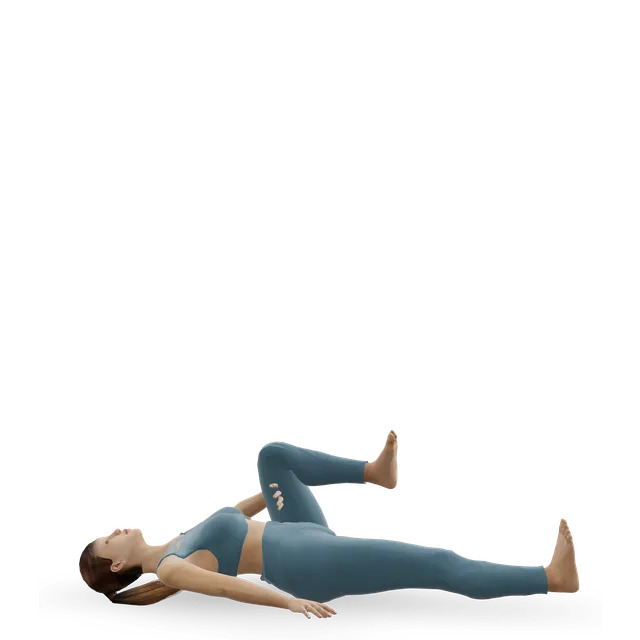
- Single knee-to-chest stretch5 to 10 each sideBeginner · Glutes, Back, Hip flexors · 3D demoHug one knee towards your chest, then the other, alternatingHarder: 90/90 hip lift-off
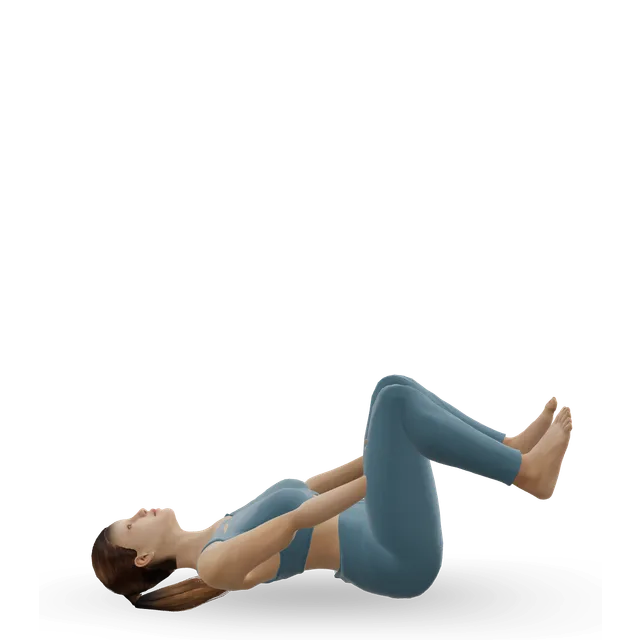
- Double knee-to-chest stretch3 holds of 20 to 30 sBeginner · Back, Glutes · 3D demoThen hug both knees in. Hold behind your thighs if that's easierEasier: Single knee-to-chest stretchHarder: Overhead lat stretch at a bench (elbows on the bench)
- Supine spinal twist (Supta Matsyendrasana)30 to 45 s each sideBeginner · Back, Glutes · 3D demoGentle, for comfortHarder: Seated twist, bottom leg straight


Let go
- Beginner · Adductors, Glutes, Back · 3D demoHold behind your thighs if that's easier; keep your tailbone downEasier: Double knee-to-chest stretchHarder: Lizard pose (Utthan Pristhasana)
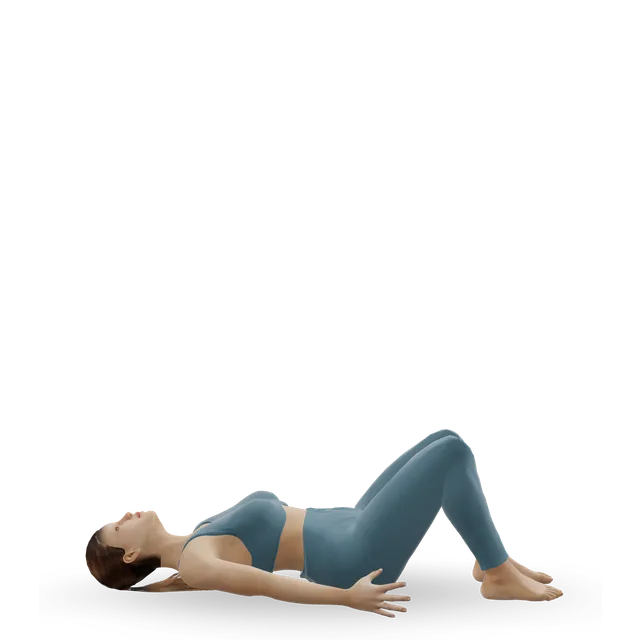
- Pelvic floor relaxation (reverse Kegel)5 slow breathsBeginner · Pelvic floor · 3D demoLet your pelvic floor and bottom soften as you breathe in. Next: the tummy massage from our constipation guide, then breakfast and toilet time

Tips
- Have breakfast and a warm drink after the routine, then give yourself unhurried toilet time about 20 minutes later: that's when the urge often comes.
- On the toilet, rest your feet on a low stool, lean forward and breathe out gently. Don't strain or hold your breath, and if nothing happens after about 5 minutes, come back later.
- Skip the tummy massage if you're pregnant, have a hernia, have had recent tummy surgery, or have cancer, Crohn's disease or colitis, irritable bowel syndrome with a 'spastic colon', or an unstable spinal injury.
- In later pregnancy, do the breathing and knee hugs propped up or on your side rather than flat on your back.
- Give it about 4 weeks. Fibre, fluids and any laxatives your GP or pharmacist advised still matter.
- Call 999 (911 in the US) for severe tummy pain with vomiting or a swollen tummy, or if you can't poo or fart at all.
The doses are suggested starting points, not a prescription. Choose a range you can control and stop for sharp or increasing pain, numbness or tingling. Get individual advice after an injury or surgery, or if you are pregnant or managing a health condition.
Guides that recommend it
Find more moves like these
More strength at home




Beginner bodyweight workout
A 20-minute full-body workout with no equipment: squats, knee push-ups, bridges, lunges and planks.
20 minBeginner10 movesNo equipment


Full-body bodyweight workout
An intermediate no-equipment workout: push-ups, split squats, single-leg bridges, pike push-ups and core work.
30 minIntermediate11 movesNo equipment


Full-body dumbbell workout
A 35-minute full-body strength workout with dumbbells: goblet squats, presses, rows, Romanian deadlifts and carries.
35 minIntermediate9 movesA band, A dumbbellQuestions people ask
How long does the morning routine for constipation: a walk, knee hugs and letting go take?
About 25 minutes, including any warm-up and cool-down listed. Shorten it by doing fewer rounds; lengthen it by adding one.
What equipment do I need?
You need: Cardio machine. Each move links to its guide, where you can find an alternative if you are missing something.
Is it suitable for beginners?
It is written for beginners. 3 of its 7 moves have an easier option listed beside them if you need one.
How do I make it easier or harder?
Use the easier or harder option listed under each move, change the number of rounds, or adjust the rest. Progress one change at a time.