Most people who do yoga are women
In a UK survey of 2,434 practitioners, 87% were women, and in the US in 2022, women were 70% of yoga users, against 49% of adults. The trials on periods, pregnancy and the menopause in this guide were all in women.
Yoga guide
Most people who do yoga are women: 87% of UK practitioners in one survey. There's no separate women's yoga, but what you need from it changes through life, from periods and pregnancy to the menopause and later life, and trials in women give a useful picture at each stage. It counts as strength work when it's hard enough, and it eased depression about as much as other exercise in trials.
It isn't the whole answer: in trials, yoga didn't change bone density, didn't reduce hot flushes and did no better than general exercise for leaking, so pair it with strength training, some impact and pelvic floor exercises.
This guide covers what the trials show at each stage, what to add for your bones and pelvic floor, how to start at 40, 50, 60 or 70, and when to see a GP, with links to our guides for each stage.
In a UK survey of 2,434 practitioners, 87% were women, and in the US in 2022, women were 70% of yoga users, against 49% of adults. The trials on periods, pregnancy and the menopause in this guide were all in women.
The NHS counts yoga as muscle strengthening when you work until you may need a short rest, and UK guidelines ask for strength work on at least 2 days a week, which matters more from about 50. For your bones, add weights and impact: yoga or Pilates didn't change bone density in 11 studies.
In the largest review of exercise for depression (218 trials), yoga eased symptoms about as much as walking or jogging and strength training, at very low certainty.
Source 6
Exercise, including yoga, eased period pain; prenatal yoga eased anxiety and low mood; and yoga eased overall menopause symptoms. The trials were small or of low quality, and yoga didn't reduce hot flushes in the largest menopause trial.
A pelvic yoga programme eased leaking no more than general stretching and strengthening in 240 women, and NICE (the National Institute for Health and Care Excellence) recommends supervised pelvic floor training first.
See a GP for any bleeding from your vagina after the menopause, even once. In pregnancy, get help for the NHS's warning symptoms, such as bleeding, fluid leaking or a change in your baby's movements.
In a US national survey, 16.8% of adults used yoga in 2022, and women made up 70.2% of users, against 48.6% of the adult population. In a UK online survey of 2,434 practitioners, 87% were women, with an average age of about 49.
There's no special women's yoga: the poses are the same, and what changes is how you adapt them, such as no hot yoga in pregnancy and no deep forward folds with osteoporosis. Classes for pregnancy, after birth and the menopause exist, and our guides cover each stage in depth: yoga for period pain, for polycystic ovary syndrome (PCOS, now called polyendocrine metabolic ovarian syndrome, or PMOS), in pregnancy, for the menopause and for seniors. This page is the map.
Strength activities that work all the major muscles on at least 2 days a week, plus 150 minutes of moderate activity: the same for women and men. Strength work helps "to delay the natural decline in muscle mass and bone density which occurs from around 50 years of age". Women lose bone quickly in the first few years after the menopause and are more at risk of osteoporosis than men, and NICE asks doctors to explain "the importance of maintaining muscle mass and strength through physical activity" around the menopause.
The NHS counts yoga as muscle strengthening if you work "to the point where you may need a short rest", and as a balance and flexibility activity. Most yoga is light to moderate activity, from 2.3 METs (multiples of the energy you use at rest) for hatha yoga to 4.0 for power yoga, so it adds to brisk walking rather than replacing it.
In the largest review of exercise for depression (218 trials, 14,170 people), yoga eased symptoms by a moderate amount against active comparison groups, in the same range as walking or jogging and strength training, and it was among the best tolerated. The certainty was very low. Our yoga for depression guide has more, including where to get help now.
Source 6
Exercise, including yoga, eased period pain by about 25 points on a 100-point scale against no exercise (9 trials, 632 women, low quality), with sessions of about 45 to 60 minutes, 3 or more times a week; a review of 4 small yoga trials (230 women) also found a large effect. Yoga eased premenstrual symptoms, except the physical ones. The NHS suggests gentle exercise such as yoga for period pain. Our yoga for period pain guide has more.
Three small randomised trials (258 people, in 5 reports) suggest small changes in hormones and insulin, too varied to combine. The international guideline emphasises a healthy lifestyle and emotional wellbeing, with awareness of weight stigma, and the NHS explains the condition and its new name. Our yoga for PCOS guide covers what this means for you.
Prenatal yoga eased anxiety, low mood and stress in 29 studies of 2,217 women, at low to very low certainty, and was linked with shorter labours. But the largest review of exercise in pregnancy (113 studies, 52,858 women) found no link with labour length or caesarean birth, only fewer births needing instruments such as forceps. The NHS counts yoga toward your 150 minutes and as strength work in pregnancy. Skip hot yoga, and in later pregnancy avoid lying flat on your back for more than a few minutes. Our yoga in pregnancy guide has more.
Yoga lowered postnatal depression scores by about 3 points on a 30-point scale in 6 trials (443 women), though the results varied a lot between trials. After a straightforward birth, the NHS says you can start gentle exercise, such as walking, gentle stretches and pelvic floor exercises, as soon as you feel up to it, and to get advice at your 6-week check before high-impact exercise; recovery takes longer after a caesarean. UK guidelines suggest building up over at least 3 months.
In 24 trials (2,028 women), yoga eased overall, emotional and physical menopause symptoms, vaginal and bladder symptoms, sleep, anxiety and low mood, but not hot flushes. In the largest single trial, 249 women doing 12 weeks of classes and home practice had no fewer flushes, though their sleep improved a little. For flushes, NICE recommends hormone replacement therapy (HRT), with cognitive behavioural therapy (CBT) designed for the menopause as an option, and the NHS suggests relaxing things such as yoga alongside weight-bearing exercise. Our yoga for menopause guide has more.
In women with breast cancer, yoga improved quality of life, tiredness (fatigue) and sleep against no treatment in the short term (moderate quality evidence), and did about as well as other exercise (very low quality evidence). In a 2026 trial of 96 women with arm swelling after a mastectomy, a yoga programme reduced arm volume. Our exercise after breast cancer surgery guide has more.
Any style suits, and strength work on 2 days a week builds a base for later: in women aged 35 to 50, 8 months of twice-weekly Ashtanga yoga raised leg-press strength by 11%, while it fell by 6.5% in women who didn't do it. If you have painful periods or are planning a pregnancy, our stage guides have the details.
Muscle and bone start to decline from around 50, and women lose bone quickly in the first years after the menopause. Keep yoga for strength, balance and calm, and add weights or bands on 2 days a week and some impact if it's safe for you, as the UK osteoporosis consensus advises. NICE asks doctors to talk about staying strong around the menopause, and our yoga for menopause guide covers the symptoms.
In older women, yoga's effects on balance, walking and leg strength were inconsistent across trials, and no clear effect on falls was found. In 32 women with osteoporosis, adding 2 minutes a day of tree pose to an exercise programme improved one-leg standing at 6 weeks. Balance and functional exercise prevents falls, so pair yoga with it, keep a wall or chair within reach in one-leg poses, and bend from your hips with a long back. Our yoga for seniors and wall yoga guides have more.
Chair yoga suits anyone who can't stand safely for long. As you get stronger, use the chair for support in standing poses, because seated exercise alone didn't improve balance in 14 trials. Our chair yoga guide has a class.
Source 37
Across 11 studies of 591 women aged 45 to 78, Pilates or yoga didn't change bone density compared with no programme, and 8 months of twice-weekly Ashtanga yoga didn't change it in 34 women aged 35 to 50.
In 74 trials in women after the menopause, each lasting 24 weeks or more, mind-body exercise combined with resistance training did best for bone density at the spine and hip, and programmes of a year or more did better.
Source 39
Progressive resistance training for bone, building to 2 or 3 sets with a weight you could lift only about 8 to 12 times, on 2 or 3 days a week; about 50 moderate impacts, such as heel drops, on most days, if they're safe for you; and balance and strength exercise, including yoga, at least twice a week. It says yoga and Pilates "should be considered to help with posture and pain", and that forward bending that is sustained, repeated or at the end of your range should be modified or avoided.
Source 16
Three women with low bone density developed new pain or spinal fractures after yoga poses that bent the spine far forward (case reports). With osteoporosis, bend from your hips with a long back, and leave out deep forward folds, shoulder stand and plough. Our exercise for osteoporosis guide has more.
Source 40
In 240 women aged 45 to 90 who leaked every day, 12 weeks of a pelvic yoga programme cut leaking by 2.3 episodes a day, against 1.9 with general stretching and strengthening: no meaningful difference. It's one well-run trial, with no untreated group.
Source 11
A Cochrane review found only 2 small trials (49 women) and couldn't say whether yoga helps leaking.
Source 41
NICE recommends at least 3 months of supervised pelvic floor training as the first treatment for stress or mixed leaking, with at least 8 squeezes 3 times a day, and at least 16 weeks for a mild prolapse. Our pelvic floor exercises guide shows how, and our Pilates for the pelvic floor guide covers Pilates.
Source 12
Stop that pose and see a GP or a pelvic health physiotherapist. Leaking is common, and the NHS says you should not feel embarrassed talking about it.
We found no trial of yoga for "hormone balance" in healthy women. The hormone findings come from PCOS trials, with small changes, and in the menopause yoga didn't reduce hot flushes. It can ease stress and help sleep, which is worth having for its own sake.
Mind-body programmes, including yoga, went with less anxiety and depression in women having fertility treatment, and possibly more pregnancies, in small and mostly non-randomised studies that can't show cause. Our exercise when trying to conceive guide found no trial showing that yoga or any pose makes pregnancy more likely.
Yoga went with more body appreciation and satisfaction, and less dissatisfaction, in 29 studies, though most were unblinded, and yoga programmes eased binge eating in 11 trials. Some surveys linked very high amounts of yoga with more disordered eating. If a class focuses on weight or shape in a way that leaves you feeling worse, choose another (our suggestion), and if you're worried about your eating, our exercise and eating disorders guide has where to get help.
Chair pose: 3 holds of 5 breaths; warrior II: 5 breaths each side, twice; bridges: 10 slow lifts; locust: 3 holds of 3 breaths (our yoga for menopause class). Warrior III, hands on a wall at hip height at first: 3 to 5 breaths each side (our strength yoga workout). Sit to stand: the NHS suggests 5 to start. Goblet squat: build to 2 or 3 sets with a weight you could lift only about 8 to 12 times (the UK osteoporosis consensus). Band row: 3 sets of 10 to 15, stopping 2 to 3 short of failure; heel drops: 20 to 30 at first, building toward about 50 on most days (the moves' pages).
 3D demoChair pose (Utkatasana)Beginner · No equipment
 3D demoWarrior II (Virabhadrasana II)Intermediate · No equipment
 3D demoGlute bridgeBeginner · No equipment
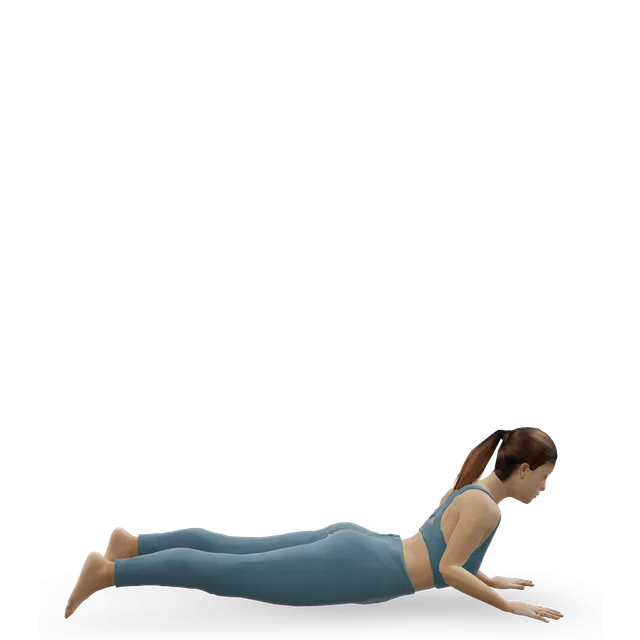
 3D demoLocust pose (Salabhasana)Beginner · No equipment
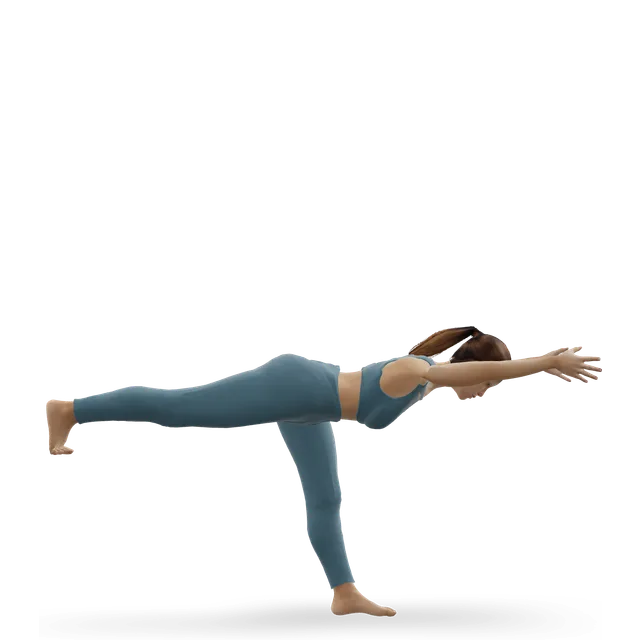 3D demoWarrior III (Virabhadrasana III)Advanced · No equipment
 3D demoSit to stand from a chairBeginner · A bench or box
 3D demoDumbbell goblet squatIntermediate · A dumbbell
 3D demoBand rowBeginner · A band + An anchor point
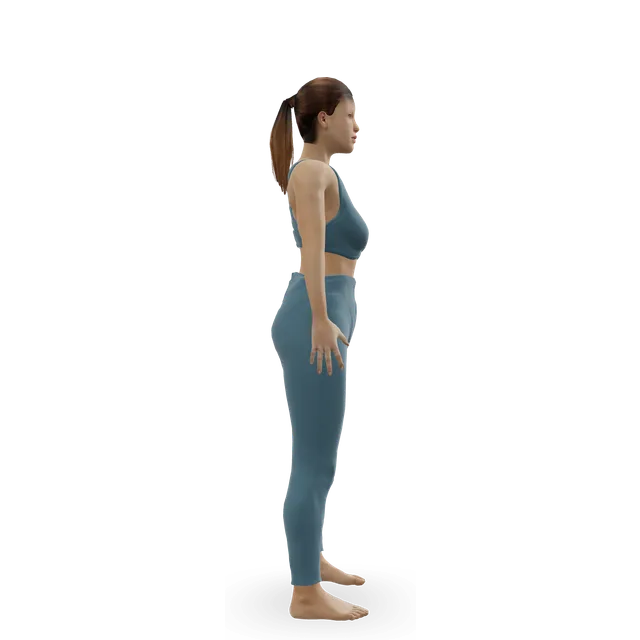 3D demoHeel drop (impact for bone)Beginner · No equipment
Tree, a hand on a wall: 3 to 5 breaths each side (our yoga for menopause class). Single-leg stand, facing a wall with your fingertips on it: 5 to 10 seconds, 3 times each side (the NHS balance exercises). Mountain pose: 5 to 10 slow breaths, 2 or 3 times (the move's page).
Pelvic floor exercise: 8 slow holds of up to 10 seconds and 8 quick squeezes, 3 times a day, building towards 10 of each; pelvic floor relaxation: 5 to 10 slow breaths, 1 to 3 times a day; slow breathing: at least 5 minutes; reclining bound angle: 2 to 5 minutes with a support under each thigh; the hip hinge fold: 5 slow folds, 3 breaths at the bottom (the moves' pages). Child's pose, knees wide: 1 to 3 minutes (our editorial starting point).
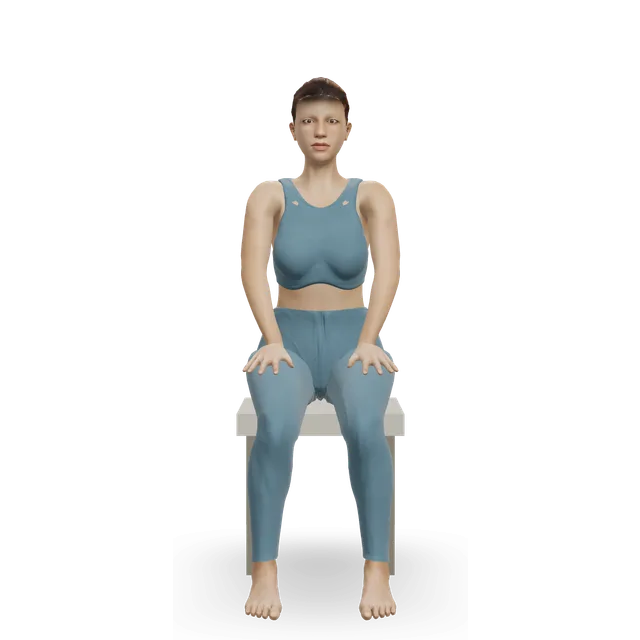 3D demoPelvic floor exercise (Kegel)Beginner · No equipment
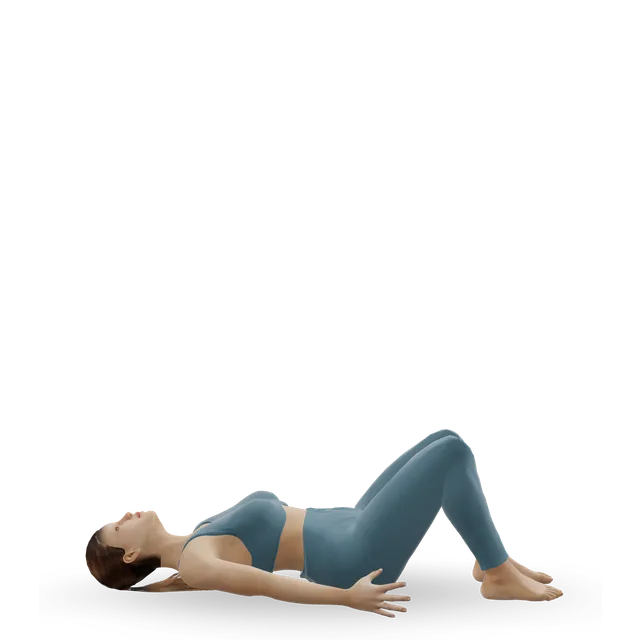 3D demoPelvic floor relaxation (reverse Kegel)Beginner · No equipment
 3D demoSlow breathing (6 breaths a minute)Beginner · No equipment
 3D demoReclining bound angle pose (Supta Baddha Konasana)Beginner · Firm cushion
 3D demoChild's Pose (Balasana)Beginner · No equipment
 3D demoHip hinge foldBeginner · No equipment
Leave out deep rounding, such as the seated forward fold and head-to-knee pose, and shoulder stand and plough: bend from your hips instead. Twisting should be fine if you do it smoothly and comfortably, as our exercise for osteoporosis guide says.
Skip hot yoga. From the end of the first trimester, keep time flat on your back short, swap face-down poses for all fours as your bump grows, and leave out closed twists and poses you could fall from. Our yoga in pregnancy guide has the details.
Leave out moves that make you leak or feel a bulge while pelvic floor training gets going, and see a GP.
Source 12
Start with a beginners' or gentle class, and tell the teacher about any health condition, injury or pregnancy. The US National Center for Complementary and Integrative Health (NCCIH) advises beginners to avoid extreme practices such as headstands, shoulder stands, the lotus position and forceful breathing.
Source 15
For strength, work until you may need a short rest: that's the NHS's test for a strength session. Hold harder poses for longer, or move more slowly, as you get stronger, and add weights for your bones. If you're starting from very little, the NHS strength exercises, such as sit-to-stands and wall press-ups, are a gentle first step, at least twice a week.
Strength training on 2 days (a strong yoga class can be one, with weights or bands for your bones), brisk walking toward 150 minutes, a few minutes of pelvic floor exercises every day, and 1 or 2 calmer yoga sessions for flexibility and winding down. From about 50, add moderate impact if it's safe for you. In pregnancy, after birth, with osteoporosis or from 70, use our stage guides' versions.
Choose the class for your stage: gentle yoga or the hatha class to start; strength yoga or the strength and balance workout for strength; the period pain routine; the prenatal class, with nothing flat on your back; the daily pelvic floor workout; yoga for menopause; the bone-strengthening workout, which follows the UK osteoporosis consensus; yoga for balance or chair yoga from 60 or 70; and the restorative sequence for winding down.
A 25-minute gentle yoga class for complete beginners and over-50s: slow breathing, a warm-up, supported standing poses, floor poses and a closing rest.
25 minBeginner14 movesNo equipmentA 20-minute beginner yoga sequence: mountain, chair, warrior II, triangle, tree, down dog, cobra and child's pose.
20 minBeginner11 movesA stepA 45-minute beginners' hatha yoga class in the order trial teachers used: relaxation, breathing, floor and standing poses held for a few breaths, then rest.
45 minBeginner20 movesA step, Firm cushionThirty-five minutes of yoga built for strength: long standing holds, slow lowering from plank, single-leg balances and a band row, with harder options.
35 minIntermediate18 movesA step, A bandA 40-minute power yoga workout: sun salutations, lunges, strength holds, balances, core work and backbends, moving with the breath, then a rest.
40 minIntermediate18 movesA stepStrength and balance in one session: squats, Romanian deadlifts, push-ups, rows, step-ups, back extensions, carries and single-leg balance.
45 minBeginner14 movesA wall, A dumbbellA gentle 20-minute routine for period pain: an easy walk, then cat-cow, cobra, supported fish, child's pose, bound angle, a twist and bridges.
20 minBeginner9 movesCardio machineA gentle 20-minute routine for endometriosis: slow breathing and letting the pelvic floor go, then trunk and hip control, then stretches for back and hips.
20 minBeginner10 movesFirm cushionA 20-minute prenatal yoga workout for any trimester: seated breathing, all-fours and kneeling poses, supported standing poses and rest, none flat on your back.
20 minBeginner15 movesA step, A wallA 5-minute daily pelvic floor workout for women and men: slow holds and quick squeezes, three times a day, with how to find the right muscles.
5 minBeginner2 movesNo equipmentThirty-five minutes of standing strength, balance, back strengthening and a long relaxation for the menopause, with no deep forward folds or shoulder stands.
35 minBeginner15 movesFirm cushionImpact, strength and balance for stronger bones, following UK osteoporosis consensus advice, with options for every level.
40 minBeginner14 movesA kettlebell, Other / check instructionsThirty minutes of standing yoga for balance: strong standing poses, one-leg poses at the wall, and side steps, backward steps, reaches and sit-to-stands.
30 minBeginner16 movesA wall, A bench or boxA free 20-minute chair yoga class for older adults: slow breathing, gentle seated stretches and twists, standing poses holding the chair, and a calm finish.
20 minBeginner18 movesA bench or box, Something with weightA 45-minute restorative yoga sequence: five fully supported poses held for 4 to 10 minutes each, with slow breathing and a long final rest.
45 minBeginner6 movesFirm cushion, A wallStrength, cardio and recovery across the week, with room for yoga, from your 20s to after the menopause, and through pregnancy and after birth.
A weekly workout plan for women: three strength days, cardio and pelvic floor training, with the evidence on periods, pregnancy and menopause.
3 training days45 minBeginner3 days a weekA 12-week plan for women over 40: three strength days, impact for bone, cardio and recovery through the perimenopause, in a gym or at home, with a 4-day option.
3 training days45 minBeginner3 days a weekA weekly plan for women over 50: strength, bone-loading and balance on 3 days plus walking, built on UK osteoporosis consensus advice.
3 training days45 minBeginner5 days a weekA pregnancy workout plan for each trimester: walks or swims, two strength sessions a week off your back, daily pelvic floor work and when to stop.
5 training days30 minBeginner5 days a weekA postpartum workout plan from the first days after birth to running and lifting again, week by week, with a caesarean track and readiness checks.
5 training days25 minBeginnerThese follow our Pilates for women and yoga in pregnancy guides; our strength training for women guide has more, including breast changes to get checked. A&E means accident and emergency. In the US, call 911 for 999, and contact your doctor or urgent care for NHS 111.
The NHS's signs to get checked:
If period or pelvic pain is severe or worse than usual and painkillers haven't helped.
Source 22
Stop if you feel uncomfortable, too hot or unwell, as the NHS advises. Get help for bleeding from your vagina, fluid leaking from your vagina, a change in your baby's movements, a high temperature, a severe headache, sudden problems with your vision, sudden swelling of your face, hands, legs or feet, or breathlessness that comes on suddenly or with chest pain. Up to 12 weeks, contact your GP surgery or early pregnancy unit; from 12 to 19 weeks, your midwife or early pregnancy unit; from 20 weeks, your midwife or maternity unit. Call 999 if you think it's a life-threatening emergency, and NHS 111 if you're not sure what to do.
Stop exercising and call 999 (911 in the US) for chest pain or discomfort that comes on suddenly and doesn't go away (it can feel like squeezing or pressure, burning or indigestion), pain that spreads to your arms, neck, jaw, stomach or back, or chest pain with sweating, feeling sick, light-headedness or breathlessness.
Source 51
If you leak or feel a bulge during a pose, stop that pose and see a GP or a pelvic health physiotherapist. If your mood is very low, our yoga for depression guide lists where to get help now.
We found no trial of yoga for hormone balance in healthy women. In PCOS, small trials found small changes, and in the menopause, hot flushes didn't change. Yoga can ease stress and help sleep, which is worth having for its own sake.
Yoga counts as muscle strengthening when you work until you need a short rest, and 8 months of Ashtanga yoga raised leg-press strength by 11% in women aged 35 to 50. For bone, add weights and impact.
In 11 studies of 591 women, yoga or Pilates didn't change bone density, and 8 months of Ashtanga didn't either. The UK consensus puts progressive resistance training and impact first for bone, with yoga for strength, balance and posture.
We found no trial of yoga measuring the shape of a muscle, and exercise doesn't take fat off one place: training one leg for 12 weeks didn't take fat off that leg. Yoga builds strength, balance and flexibility; how you look isn't the measure.
Source 52
In small, mostly non-randomised studies, mind-body programmes eased anxiety and low mood during fertility treatment, with a possible rise in pregnancies that hasn't been confirmed. No type of exercise has been shown to help or harm fertility in itself, as our trying to conceive guide explains.
The NHS suggests gentle exercise such as yoga for period pain, and exercise through the month eased period pain in trials. Whether to go upside down on your period is your choice: we found no study of it.
In 249 women who counted their flushes every day, 12 weeks of yoga made no difference, and 24 trials agree. Yoga eased overall symptoms and sleep a little; for flushes, NICE recommends HRT, with CBT as an option.
In 240 women, pelvic yoga did no better than general stretching and strengthening, and NICE recommends at least 3 months of supervised pelvic floor training first.
Yes, at every stage of life. It counts as strength work when it's hard enough, it helped mood about as much as other exercise in trials, and it can be adapted for periods, pregnancy, the menopause and later life. For your bones, add weights and some impact as well.
No: the poses are the same. What changes is how you adapt them, such as no hot yoga in pregnancy and no deep forward folds with osteoporosis, and our guides cover each stage.
Trials in women found less period pain, less anxiety and low mood in pregnancy, fewer overall menopause symptoms, and better quality of life and less tiredness after breast cancer. Most trials were small and unblinded, so the size of the effects is uncertain.
Yes, alongside strength training and brisk walking. UK guidelines ask for strength work on at least 2 days a week, and it matters more as you approach 50, when muscle and bone start to decline.
Yes, with a few changes: bend from your hips with a long back, keep twists smooth, and add weights and some impact for your bones, as the UK osteoporosis consensus advises. Yoga didn't change bone density in 11 studies, but it builds strength and balance.
A gentle class or chair yoga, with a wall or chair within reach for balance poses. In older women, yoga's effects on balance and leg strength were inconsistent, so pair it with strength and balance exercise, and see a GP if you've fallen.
There's no good evidence that it does in healthy women. Small trials in PCOS found small changes, and in the menopause yoga didn't reduce hot flushes.
It may ease the stress of fertility treatment. Whether it raises the chance of pregnancy is uncertain, because the studies are small and mostly not randomised.
It isn't a substitute for pelvic floor exercises: in 240 women, a pelvic yoga programme helped leaking no more than general exercise did. NICE recommends supervised pelvic floor training for at least 3 months first.
Gentle yoga uses little energy, about 2.3 times what you use at rest, so it does more for strength, flexibility and mood than for weight. Our yoga for weight loss guide covers the evidence.
For any bleeding from your vagina after the menopause, even once; a lump or bulge in your vagina; leaking; or periods that become more painful, heavier or irregular. In pregnancy, get help for bleeding, fluid leaking, a severe headache, sudden swelling or a change in your baby's movements.
Exercise education, not a personal prescription, and clinical review of these guides is pending. If you are pregnant, have a health condition such as glaucoma, high blood pressure or osteoporosis, or have had recent surgery, check with a doctor, midwife or physiotherapist before starting, and stop for sharp or increasing pain. Health disclaimer.