Yoga guide

Yoga for knee arthritis: what the trials show, poses to change, chair yoga, kneeling and flares

Yoga counts as exercise for knee osteoarthritis, and exercise is the main treatment. In trials, yoga eased pain and stiffness a little and helped people get about, and in the best trial, 12 weeks of classes helped knee pain about as much as a strengthening programme. It doesn't cure arthritis or rebuild cartilage, and it works best alongside walking and strength work for your thighs.

This guide covers what the trials found and how the classes ran, how yoga compares with other exercise, poses that bend your knee only a little, kneeling and deep bends, chair yoga, what to do in a flare and the warning signs that need help. It ends with a free 30-minute chair yoga class with no kneeling and no floor work. Our yoga for arthritis guide covers other joints and rheumatoid arthritis, and our knee arthritis exercises guide has the strength plan.

The short version

Exercise is the main treatment, and yoga counts

NICE (the National Institute for Health and Care Excellence) says to offer everyone with osteoarthritis exercise tailored to them, and its committee wanted to reassure people "that exercise is not harmful to osteoarthritic joints". The American College of Rheumatology conditionally recommends yoga for knee osteoarthritis.

Sources 1, 2, 3

A modest benefit, on weak evidence

Across 8 trials (756 people), yoga eased pain and stiffness and helped people get about, and a 2026 review of 14 studies agreed, on low-certainty evidence. Most trials were small, run at one centre, and people knew which group they were in.

Sources 4, 5, 6

As good as strengthening in the best trial, not better

In 117 adults in Tasmania, 12 weeks of yoga classes eased knee pain about as much as a strengthening programme. It was one single-centre trial, designed to show yoga was better, which it didn't; yoga was likely to be cost-effective.

Sources 7, 8

Pair it with walking and strength work

No type of exercise is clearly best, and the largest network analysis, of 217 trials, found aerobic exercise such as walking or cycling most likely to help. Use yoga as one part of an active week, alongside strength work for your thighs and hips.

Sources 9, 10

Bend a little, and change the deep kneeling poses

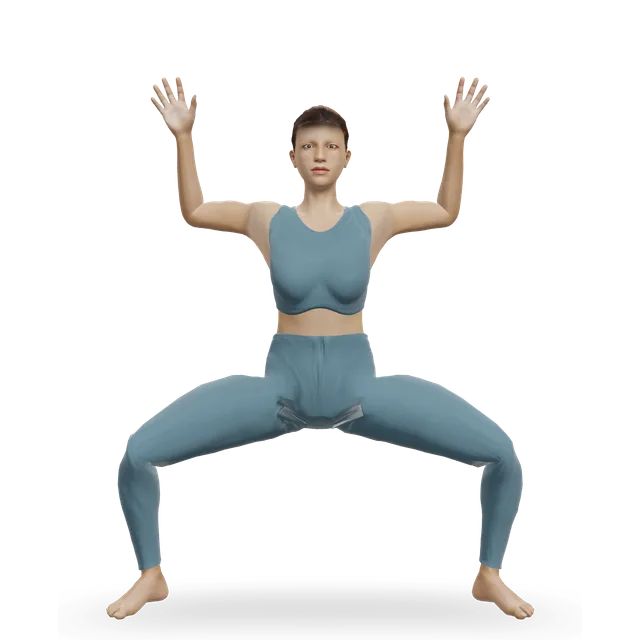
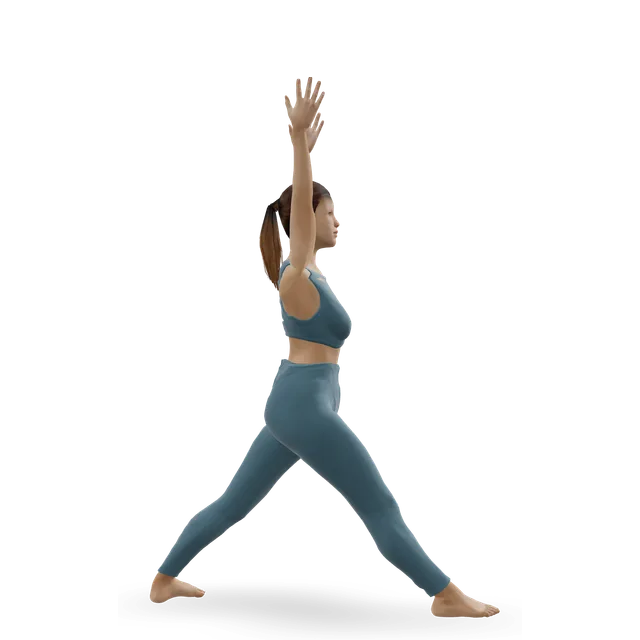
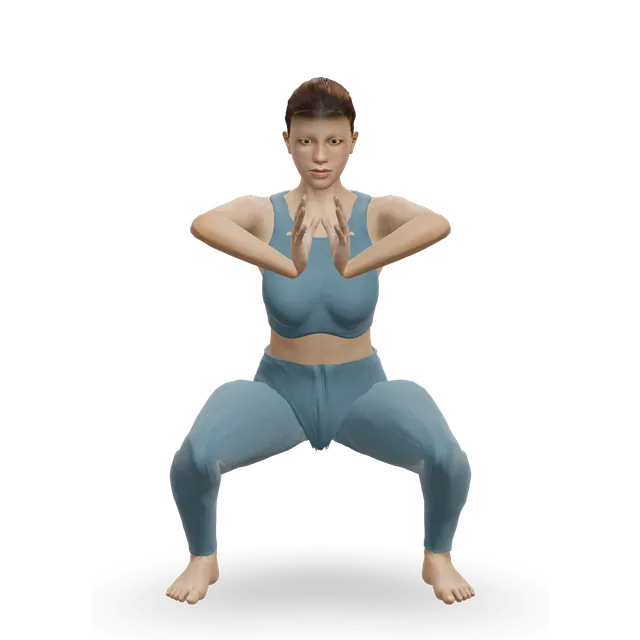
The Arthritis Foundation advises people with arthritis not to bend their knees past a right angle. A wide squat and an upright lunge put the least load on the inside of the knee in a lab study. Pad or swap kneeling, and leave out lotus, hero pose and deep squats while your knee is sore.

Sources 11, 12

Chair yoga is a tested option

In 131 older adults with leg arthritis who couldn't do standing exercise, chair yoga twice a week for 8 weeks reduced how much pain got in the way of life, and that lasted 3 months. Our 30-minute chair class follows the same plan.

Source 13

Knee arthritis, and what a yoga class for it looks like

Knee osteoarthritis

NICE diagnoses osteoarthritis from symptoms, without an X-ray, in people aged 45 or over with joint pain on activity and either no morning stiffness or stiffness that lasts 30 minutes or less. Arthritis UK says it can't be cured but can be managed with lifestyle changes and exercise, and that only about 1 in 10 people with knee osteoarthritis go on to have a knee replacement. Our exercise for arthritis guide explains what happens in the joint.

Sources 1, 14

The core treatments

NICE's core treatments are exercise and, for people living with overweight, weight management, along with information and support. The NHS calls exercise "one of the most important treatments for people with osteoarthritis, whatever your age or level of fitness". Yoga is exercise for the joint and for how you feel, not a weight-loss treatment: in one trial, body weight didn't change. Our knee arthritis exercises guide covers weight and the strength plan.

Sources 1, 15, 16

What the best trial's classes looked like

Two 1-hour group classes and one home session a week for 12 weeks, then 3 home sessions a week, led by yoga teachers and physiotherapists in groups of 10. Each class opened with 10 minutes of breathing and chanting, then 40 minutes of warm-up and poses, and ended with 10 minutes of relaxation and meditation, with poses changed for each person. The authors say their programme was designed for arthritis and doesn't reflect general community classes.

Sources 7, 17

Classes for older adults

Cheung's trials used one 45 to 60-minute hatha class a week for 8 weeks, with home practice of 30 minutes on 4 days, and props: blocks, a strap, blankets and a chair. Only a third of the women kept up home practice as planned. Across 14 effective programmes, classes lasted a median of 8 weeks at about 53 minutes, mostly once a week, with home sessions about 4 times a week.

Sources 16, 18, 19

Why it might help (not proven)

The classes combine standing strength poses, stretching, breathing and relaxation, so any benefit could come from stronger legs, movement, relaxation or the group. No trial has tested which part matters.

Source 20

What the evidence says

Reviews: pain and stiffness ease a littleEmerging evidence

Across 8 trials (756 people), yoga eased pain, stiffness and function compared with control groups, though results varied widely and daily activities and quality of life didn't clearly improve. A 2026 review of 14 studies (1,183 people) found the same on low-certainty evidence, with more pain relief from programmes on 4 or more days a week lasting at least 8 weeks. An earlier review rated all its evidence very low quality, and a 2024 review found most trials of low quality.

Sources 4, 5, 6, 19

The best trial: as good as strengthening, at one centreEmerging evidence

In 117 adults aged 40 and over with moderate knee pain, 12 weeks of yoga eased pain about as much as strengthening exercise: a difference of about 1 point on a 100-point scale, within the margin set in advance for yoga to count as no worse. By 24 weeks, with home practice only, some measures of pain, stiffness and function favoured yoga. It was one single-centre trial of 117 people, designed to show yoga was better, which it didn't, and it fell short of its planned 126 people. Yoga was likely to be cost-effective.

Sources 7, 8, 17

Side effects: mostly minorEmerging evidence

In that trial, side effects possibly linked to the programme were more common with yoga (9 people, 15.5%) than strengthening (4 people, 6.8%), none serious, and a worse knee was about as common in both groups. Across 94 yoga trials in all conditions, side effects were no more common than with usual care or other exercise.

Sources 7, 21

Videos alone did lessEmerging evidence

In 212 adults, 12 weeks of unsupervised online yoga videos improved function by 4 points on a 68-point scale, less than the change people notice, and didn't clearly ease knee pain when walking. The gains had gone by 24 weeks.

Source 22

Small trials in older adultsEmerging evidence

In 36 older women, 8 weekly hatha classes eased pain and stiffness against a waiting list, with no side effects from yoga. In 83 older adults, yoga improved knee symptoms, anxiety and fear of falling more than aerobic and strengthening classes at 8 weeks. In 75 inactive adults with arthritis, 8 weeks of yoga improved physical health and walking. All three were small.

Sources 16, 18, 23

Yoga squats and lunges built to spare the kneeEmerging evidence

A Canadian team built a programme from squats and lunges that bent the knees to 30, then 60, then 80 degrees, three 1-hour classes a week for 12 weeks. In 31 women it eased pain more than meditation and about as much as machine strengthening. In an earlier group of 45 women, pain eased, but 2 developed pain at the front of the knee.

Sources 24, 25, 12

Trials to treat with cautionMixed evidence

One Indian trial of 250 adults reported large benefits from integrated yoga, but it is one trial reported three times, its reports describe the programme's length differently, and both groups first had TENS (electrical nerve stimulation) and ultrasound, which NICE says not to offer for osteoarthritis. A 1-week residential programme and an Iyengar pilot of 7 people with no control group are too small or too short to guide you.

Sources 26, 27, 1, 28, 29

No Cochrane review of yoga yetStrong evidence

The Cochrane review of yoga for hip or knee osteoarthritis is still only a protocol, published in 2021.

Source 30

Yoga, strengthening and walking: how they compare

No type of exercise is clearly bestStrong evidence

The 2024 Cochrane review of exercise for knee osteoarthritis (139 trials, 12,468 people) found pain about 9 points better on a 100-point scale than with a placebo or comparison treatment, gains of uncertain importance, and no differences between types of exercise. European guidance finds it hard to recommend one type over another, and NICE's committee wanted the choice shared with you, depending on what you like and what's available.

Sources 9, 31, 2

Aerobic exercise ranks highestEmerging evidence

A 2025 network analysis of 217 trials (15,684 people) found aerobic exercise most likely to be best for knee osteoarthritis, and mind-body exercise, which includes yoga, probably improved function in the short term, on moderate-certainty evidence. Another, of 92 trials, ranked yoga third for pain, with no significant differences between types. Rankings rest on indirect comparisons of small trials.

Sources 10, 32

Among mind-body exercisesMixed evidence

Reviews of mind-body exercise ranked Pilates and tai chi highest for pain and function, found yoga helped mental health, or rated all the comparisons very low certainty. A ranking isn't proof that one exercise beats another. Our Pilates for knee arthritis guide covers the Pilates trials.

Sources 20, 33, 34

What guidelines say about yogaStrong evidence

The American College of Rheumatology strongly recommends exercise and tai chi for knee osteoarthritis and conditionally recommends yoga, which it calls "far less well studied than tai chi". OARSI (the Osteoarthritis Research Society International) makes education and structured land-based exercise the core treatments, and a Canadian panel graded hatha yoga B for pain relief from a small number of trials.

Sources 3, 35, 36

What this means for you

Yoga is a reasonable choice if you enjoy it, and it helps about as much as other exercise. Keep walking or cycling and strength work for your thighs and hips going too: our knee arthritis exercises guide has the plan.

Sources 7, 10, 1

How the trial classes ran, and how often to go

What the trials used

Two 1-hour classes plus one home session a week for 12 weeks in the best trial; one class a week plus home practice for 8 weeks in older adults; three classes a week for 12 weeks in the knee-sparing programme. Across 14 studies, programmes on 4 or more days a week for at least 8 weeks gave the most pain relief, on low-certainty evidence.

Sources 7, 16, 24, 5

Classes or videos

NICE's committee judged that "supervised exercise is likely to be of greater benefit than unsupervised exercise", and unsupervised videos gave small gains that faded. The Arthritis Foundation says a good teacher will help you change poses to protect your joints, so tell them about your knee.

Sources 2, 22, 11

Our editorial starting point

Two or three sessions a week for at least 8 to 12 weeks, ideally starting with a class, with walking or cycling on other days and strength work for your thighs on 2 or 3 days. Bend a little deeper over the weeks, never past a right angle.

Sources 7, 5

Which class to choose

The Johns Hopkins arthritis team says a beginner, gentle or therapeutic class will generally be appropriate. It recommends Iyengar and other gentle styles for most people with arthritis, and doesn't recommend hot yoga, because of the extreme heat, or ashtanga, which is very strenuous. You don't need to be flexible to start: the Arthritis Foundation says "Almost anyone, at any age and fitness level can start a yoga program".

Sources 37, 11

Protecting your knee: bends, kneeling and balance

Bend a little, knees over toesMixed evidence

The Arthritis Foundation says people with arthritis "should avoid poses that require you to balance on one foot or bend your joints, such as your knees, more than 90 degrees". In a lab study of healthy young women, a wide squat (goddess) and an upright lunge (warrior) put the least load on the inside of the knee. Start about a third of the way to sitting, and go a little deeper over the weeks.

Sources 11, 12, 25

Kneeling: no trial has tested itMixed evidence

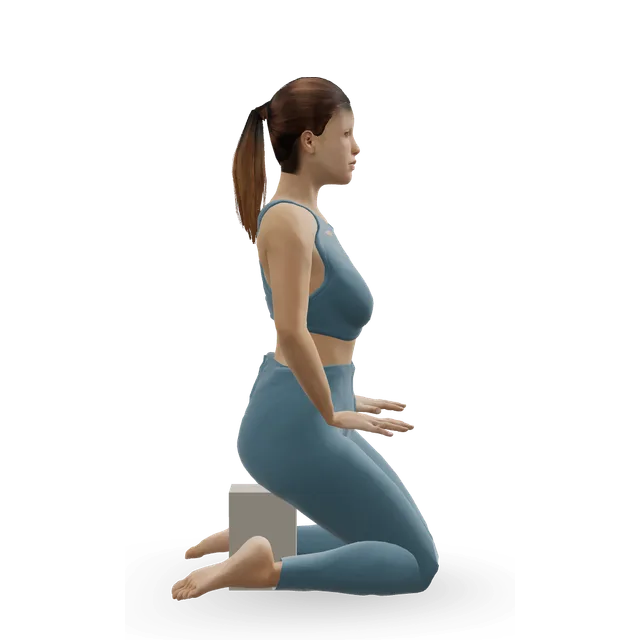
We found no trial of kneeling in yoga for knee arthritis, so this is our suggestion: pad your knees with a folded blanket, keep kneeling short, and swap it for a standing or chair version if it hurts. Our knee pain when kneeling guide explains why everyday kneeling hasn't been shown to damage knees. The Johns Hopkins team says modifications are available if you can't kneel.

Sources 38, 37

Deep bends and twisting on a bent kneeMixed evidence

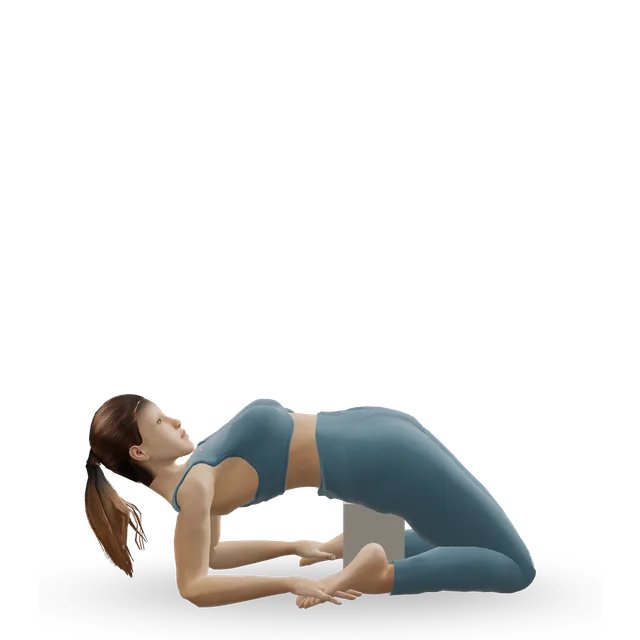
Hero pose, reclining hero, lotus and deep squats fold the knee fully under your weight, and pigeon and fire log can twist it when the hip runs out of turn. Leave them out while your knee is sore, or sit high on a block, as the moves' own cautions say. NCCIH (the US National Center for Complementary and Integrative Health) advises beginners to avoid the lotus position.

Sources 11, 39

Balance, with a hand on a chairMixed evidence

A one-leg balance put the most load on the inside of the knee in the lab study, and the Arthritis Foundation advises against balancing on one foot, but the American College of Rheumatology conditionally recommends balance exercise for osteoarthritis. Keep tree pose with your toes on the floor and a hand on a chair (our suggestion), and skip it on bad days.

Sources 12, 3, 11

If you've had a knee replacement

Follow your surgical team's advice on kneeling and bending first (our suggestion). Our yoga after knee replacement guide covers the poses and timings.

A knee-friendly chair pose, holding a chair

Depth from the Arthritis Foundation's limit of a right angle and the knee-sparing yoga programme's first level (30 degrees); 3 holds of 3 breaths, as in our yoga for knee pain class.

  1. Stand behind a sturdy chair, feet hip-width apart, hands resting on its back.
  2. Breathe in and lengthen your spine; let your knees soften.
  3. Breathe out and sit back as if towards a high stool, bending about a third of the way to sitting.
  4. Keep your knees in line with your second toes and your weight through your heels; stop well before a right angle.
  5. Hold for 3 slow breaths, then press through your feet to stand tall. Do it 3 times.

See the movement on the 3D figure: Chair pose (Utkatasana)

Chair yoga

The chair yoga trialEmerging evidence

In 131 older adults with arthritis in the legs who couldn't do standing exercise, chair yoga twice a week for 45 minutes over 8 weeks reduced how much pain got in the way of life, against health education, and that lasted 3 months. Pain, walking speed and tiredness improved only during the programme, and balance didn't change. Frailer people gained more. It was a pilot at two sites, and more people dropped out of one group than the other.

Sources 13, 40

What the classes involved

Four parts: poses, breathing, deep relaxation and meditation, sitting or standing while holding a chair, led by teachers registered with Yoga Alliance.

Source 13

Chair yoga or chair exerciseEmerging evidence

A smaller pilot found chair yoga and chair-based exercise improved function about equally.

Source 41

Who it suits

People for whom standing for long, balance or getting to the floor is hard, and anyone on a bad day. Our 30-minute chair class has a knee strength block and no kneeling or floor work.

Source 13

Yoga in a flare

What a flare is

A flare is a temporary worsening of pain, swelling and stiffness, worse than your normal, that can disturb sleep and activity. The NHS says flares can last several days.

Sources 1, 42

Keep moving gently

Arthritis UK's physiotherapists advise slow, gentle movement during a flare rather than stopping altogether; even exercises in bed help. High-intensity, high-impact or high-volume exercise is the most likely to aggravate it, so swap a 30-minute walk for a 15-minute stroll, reduce the load before the number of sets, and never force a movement into pain. Swimming and walking on the flat are usually tolerated. This is expert advice: flare strategies haven't been tested in trials. A gout flare is different: the NHS advises resting and raising the joint and keeping pressure off it, as our gout guide explains.

Sources 43, 44

Yoga on a flare day (our suggestion)

Do the breathing, the seated knee movements and a supported rest, leave out the standing strength poses, and build back up over a few days. A hot, red, swollen knee with a high temperature isn't a flare to manage at home: see the warning signs below.

Source 43

Poses to start with: standing at a chair

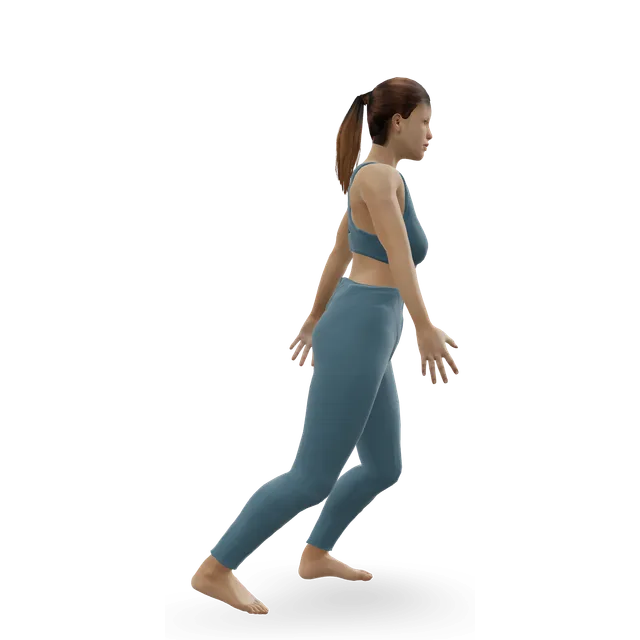
Mountain pose: "Stand for 5 to 10 slow breaths, 2 or 3 times" (the move page's dose), a hand on a chair. Chair pose, 3 holds of 3 breaths, about a third of the way to sitting; goddess pose, 2 holds of 3 breaths, a small bend; warrior II and warrior I, 3 breaths each side with a short stance (all our yoga for knee pain class). Hip hinge fold: "5 slow folds, 3 breaths at the bottom" (the move page's dose). Tree pose, 3 breaths each side with your heel at your ankle and fingertips on a chair, and sit to stand, 8 to 10 slow repetitions from a higher seat (our yoga for arthritis class). Side-stepping: "10 steps each way, next to a counter" (the move page's dose). Keep every bend short of a right angle, knees over toes.

Strength for your thighs and hips

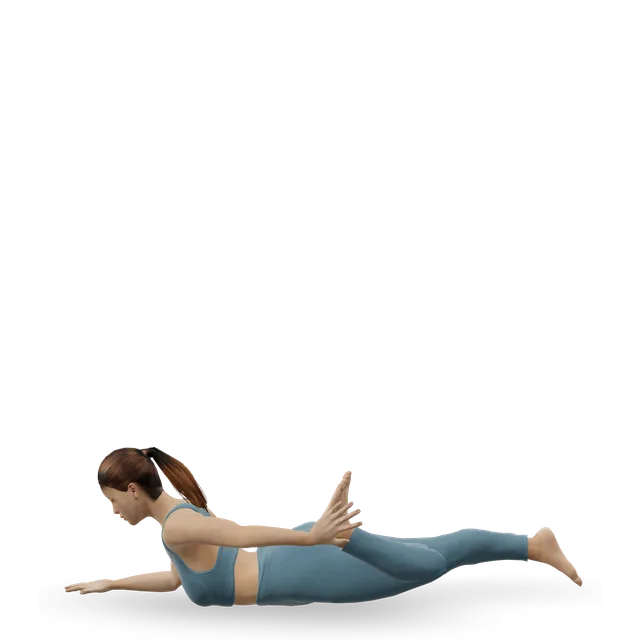
Seated knee extension: "3 sets of 10 to 15 each leg, 2 to 3 days a week" (the move page's dose), working from 90 to about 45 degrees if the full range hurts. Quad set, 10 holds of 5 seconds, twice a day (our knee arthritis exercises guide). Straight-leg raise, 10 each side; glute bridge, 8 slow lifts; locust pose, 3 holds of 3 breaths, face down on a folded blanket (all our yoga for knee pain class).

Breathing, supported stretches and rest

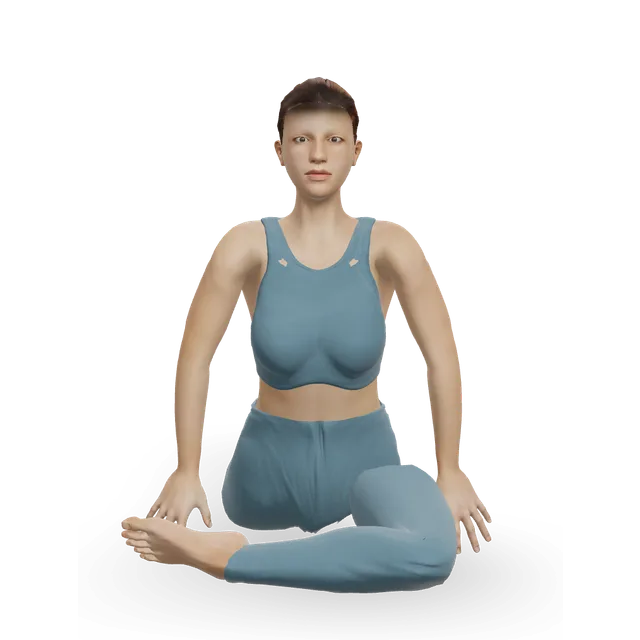
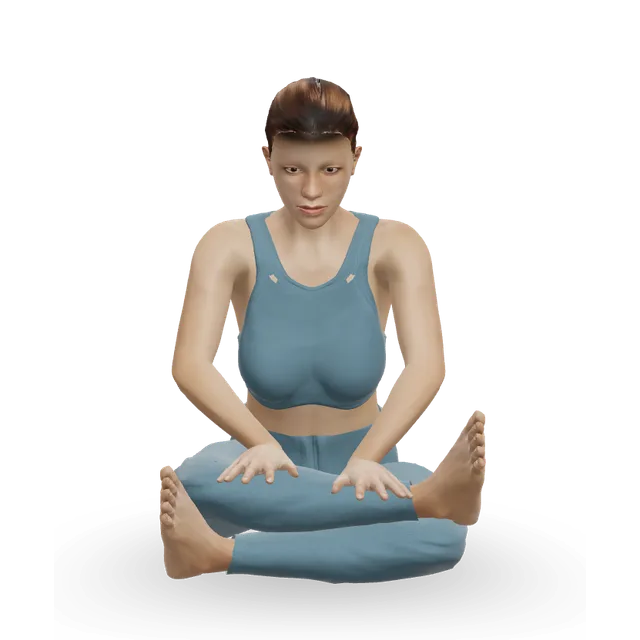
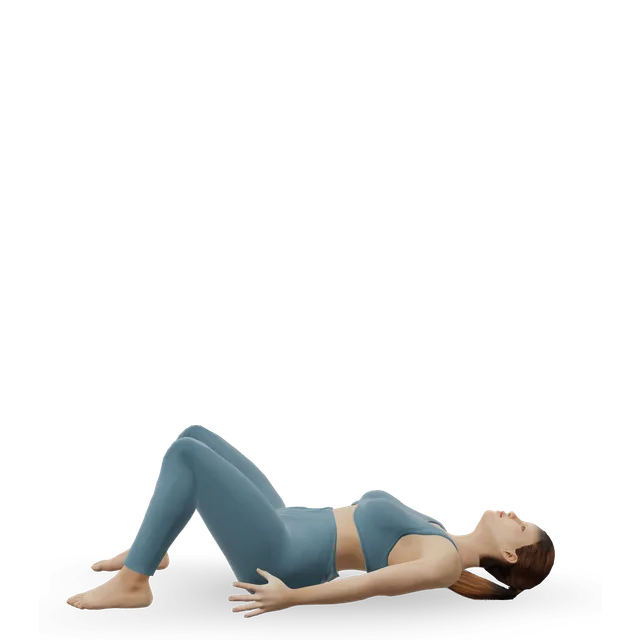
Slow breathing: "At least 5 minutes, done regularly as part of your daily routine" (the move page's dose), in for about 4 and out for about 6. Easy pose, 1 minute, sitting high on a cushion or a chair, and strap hamstring stretch, 2 holds of 30 seconds each leg (our yoga for knee pain class). Heel slide: "10 slow repetitions each side, once or twice a day" (the move page's dose). Reclining bound angle: "Rest 2 to 5 minutes with a support under each thigh" (the move page's dose). Corpse pose: "Lie still for at least 5 minutes, up to 10, usually at the end of a session" (the move page's dose), with a cushion under your knees.

Kneeling and deep bends: change or leave out

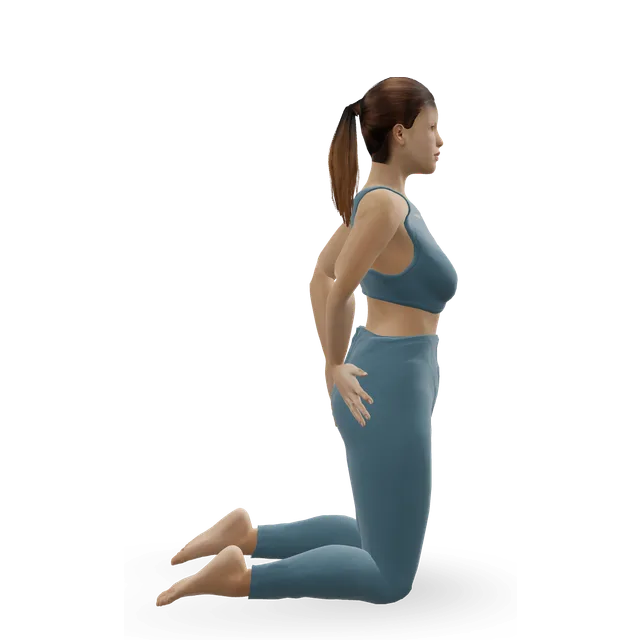
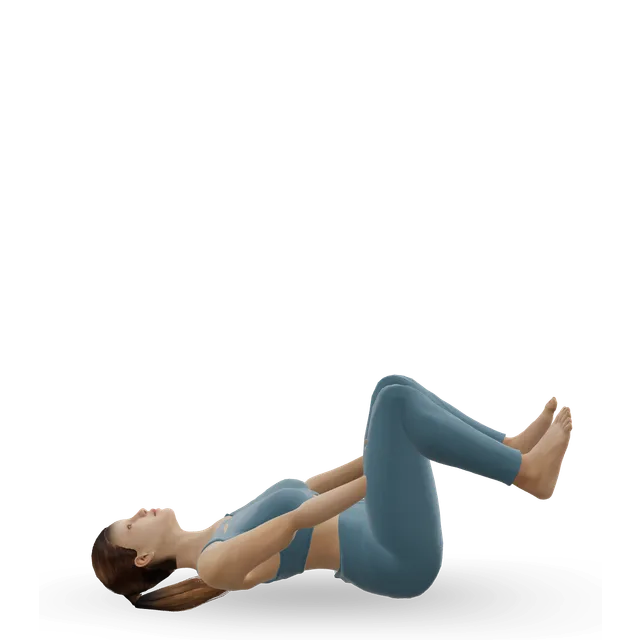
While your knee is sore: sit high on a block or a chair instead of hero pose, and leave out reclining hero, deep squats and half frog. Pad your knees in child's pose, low lunge and camel, or swap child's pose for the lying knee hug ("Hold 20 to 30 seconds, 2 to 4 times", the move page's dose). Swap pigeon and fire log for the reclined figure four if your knee complains. Lotus and half lotus, which have no 3D demo, wait too. Our reading of the moves' own cautions and the Arthritis Foundation's 90-degree limit.

A 30-minute chair class and other workouts

Our 30-minute chair class first, twice a week, as in the chair yoga trial: breathing, seated knee warm-ups and strength, standing poses holding a chair and a seated rest, with no kneeling or floor work. Its structure is our own and untested, built on that trial's four parts. The yoga for knee pain class is the mat version, and the arthritis class suits sore hands too. Pair them with the knee strengthening workout or the arthritis routine on 2 or 3 days; the flare-up routine suits bad days, and the knee replacement class is for after surgery.

Chair yoga for knee arthritis: a 30-minute class sitting, then standing at a chair, with no kneeling and no floor work

A 30-minute chair yoga class for knee arthritis: breathing, seated knee warm-ups and strength, standing poses holding a chair with a small knee bend, and a seated rest.

30 minBeginner17 movesBench or box, something with weight

Yoga for knee pain: a 25-minute knee-friendly sequence

A 25-minute knee-friendly yoga practice with no kneeling and no deep bends: shallow standing poses, hip and thigh strength on the floor, and supported stretches.

25 minBeginner15 movesFirm cushion

Yoga for arthritis: a 30-minute joint-friendly class with a chair

A 30-minute joint-friendly yoga class for arthritis: seated breathing and joint warm-ups, standing poses with a chair, gentle lying poses and a long relaxation.

30 minBeginner17 movesBench or box, wall

Knee strengthening workout: from first steps to full range

A 25-minute session for knees that don't currently hurt: thigh and hamstring strength, single-leg control, then an optional full-range block with knees over toes.

25 minBeginner14 movesBench or box, wall

Arthritis exercise routine: a joint-friendly circuit

A 30-minute joint-friendly circuit built like the GLA:D and ESCAPE-pain programmes: a gentle warm-up, chair, step and band strength moves, balance, then stretches.

30 minBeginner14 movesBench or box, step

Chair yoga for seniors

A free 20-minute chair yoga class for older adults: slow breathing, gentle seated stretches and twists, standing poses holding the chair, and a calm finish.

20 minBeginner18 movesBench or box, something with weight

Seated chair yoga: 15 minutes, no standing

A 15-minute chair yoga routine done entirely sitting: slow breathing, neck, shoulder and wrist stretches, seated twists and side bends, and a calm finish.

15 minBeginner16 movesBench or box

Chronic pain flare-up routine: gentle movement for a bad day

A 10-minute routine for a pain flare-up: slow breathing, small gentle moves lying and sitting, a short stroll if you can, then rest. Repeat later in the day.

10 minBeginner10 movesBand, bench or box

Yoga after a knee replacement: a 25-minute chair-and-mat class with no kneeling

A 25-minute kneel-free yoga class for after a knee replacement: seated breathing, standing poses at a chair, gentle bends lying down and a heel-supported rest.

25 minBeginner18 movesBench or box, something with weight

A weekly plan

To build a habit of 2 or 3 sessions a week, with walking on other days. Swap one of its sessions for the chair class (our suggestion).

Warning signs and when to get help

These are the warning signs from our knee pain, arthritis and other yoga guides, word for word. This is general information, not a diagnosis. A&E means accident and emergency; in the US, call 911 for 999.

Call 999 or go to A&E

Stop exercising and call 999 for:

  • Chest pain that feels tight or like squeezing, or spreads to your arms, neck or jaw.
  • Severe difficulty breathing, or pale, blue or grey lips or skin.
  • Someone who has passed out and isn't responding normally.
  • Call 999 or go to A&E if breathing suddenly becomes difficult, if pain in your chest or upper back comes on suddenly with breathlessness or a very fast heartbeat, or if someone passes out. Do not drive yourself. It can be a blood clot that has reached the lungs.

Sources 45, 46

Get advice from NHS 111 now, or the same day

  • Get advice from NHS 111 now: a hot, red or swollen knee with sudden severe pain, a very high temperature, or feeling hot, cold or shivery. This can be a joint infection.
  • Get advice from NHS 111 now: the knee locks, gives way or clicks painfully. Painless clicking is normal.
  • Get advice from NHS 111 now: you cannot move the knee or put any weight on it, or it is very painful, badly swollen or has changed shape.
  • Same day (urgent GP appointment or NHS 111): throbbing pain in one leg (rarely both), usually the calf or thigh; swelling in one leg (rarely both); red, blue or darkened skin; or swollen veins; or sudden worse pain and swelling around a lump at the back of the knee (a possible clot or a burst Baker's cyst).

Sources 47, 48, 49, 50

From our arthritis guide: get help the same day

Ask for an urgent GP appointment or get help from NHS 111 if:

  • You have severe pain and swelling in just one joint that started suddenly.
  • The skin around a joint is red or hot (redness can be harder to see on brown and black skin), or you have sore joints with a high or low temperature, or you feel hot, cold or shivery. A joint infection usually needs hospital treatment.
  • Sudden pain and swelling in a joint is getting worse, with a very high temperature, or feeling sick or unable to eat.

Sources 42, 48, 44

See a GP or physiotherapist

Knee pain that has not improved within a few weeks of looking after it at home. Many areas offer NHS physiotherapy without a GP referral.

Source 47

During yoga: the knee pain rule

Rate your knee pain from 0 to 10 during and after exercise. In the pain-monitoring model used in knee trials, 0 to 2 counts as safe, up to 5 as acceptable and above 5 as too much. Aim for 0 to 3 most of the time.

By the next morning your knee should be back to its usual level. If it is not, drop back one step next time (fewer sets, a shallower range, a lower step), not to nothing. Over the weeks pain should hold steady or ease; that last check is our suggestion rather than a tested rule.

Sharp, catching or giving-way pain, or new swelling, is a reason to stop and get it checked.

A joint pain that is sharp, gets worse during a session, lingers into the next day or changes how you move is a reason to use an easier version, and to see a GP or physiotherapist if it keeps happening (the rule in our plans). Muscle soreness for a day or two after something new is normal. In a hot class, stop if you feel dizzy, sick or unwell; our hot yoga guide lists the signs of heat illness.

You can say no to any hands-on adjustment, and a teacher registered with Yoga Alliance must get your explicit consent each time.

Sources 51, 52, 53, 39, 54

Chest pain or fainting while exercising: call 999

Call 999 if:

  • You get sudden pain or discomfort in your chest that doesn't go away; it can feel like squeezing or pressure, burning or indigestion.
  • The pain spreads to your left or right arm, or your neck, jaw, stomach or back.
  • You have chest pain and feel sweaty, sick, light-headed or short of breath.
  • Someone faints while exercising, can't be woken within 1 minute, or has chest pain or a pounding, fluttering or irregular heartbeat.

Sources 55, 56

Head-down poses, bones and pregnancy

With glaucoma, or high blood pressure that isn't under control, skip headstands, shoulder stands and long head-down holds. With osteoporosis, swap deep forward folds for a flat-back hinge from the hips, and twist smoothly. In pregnancy, our yoga in pregnancy guide covers the changes. NCCIH advises beginners to avoid headstands, shoulder stands, the lotus position and forceful breathing.

Sources 57, 39

Before you start

The NHS advises getting advice from a healthcare professional first if you have a health problem, an injury or symptoms, or have recently had a heart attack or an operation.

Myths

"You shouldn't exercise with knee arthritis"Strong evidence

NICE's committee wanted to reassure people "that exercise is not harmful to osteoarthritic joints", and NICE asks clinicians to offer exercise to everyone with osteoarthritis. The NHS calls exercise one of the most important treatments. Build up gradually.

Sources 2, 1, 15

"Yoga cures arthritis"Strong evidence

Arthritis UK says knee osteoarthritis can't be cured. The trials measured pain, stiffness and function, not cartilage, and the gains were modest.

Sources 14, 4

"Yoga is bad for arthritic knees"Emerging evidence

In trials, side effects were mostly minor and none serious, though one trial found a few more minor ones with yoga than with strengthening. The risk sits with deep kneeling, lotus and deep squats, which are easy to change.

Sources 7, 21

"Yoga is only for flexible people"Strong evidence

The Arthritis Foundation says almost anyone can start, and the Johns Hopkins arthritis team says people with limited movement may benefit the most. Trials enrolled inactive adults and older adults who couldn't stand to exercise.

Sources 11, 37, 23, 13

"Yoga is better than strengthening for knee arthritis"Emerging evidence

In the best trial it was about as good, not better. The largest network analysis ranked aerobic exercise highest, and the Cochrane review found no differences between types.

Sources 7, 10, 9

"Hot yoga loosens arthritic knees"Mixed evidence

We found no trial of hot yoga in arthritis, and the Johns Hopkins arthritis team doesn't recommend hot yoga for arthritis because of the extreme heat.

Sources 38, 37

"Never bend an arthritic knee"Emerging evidence

Programmes that bent the knees to 30, then 60, then 80 degrees eased pain in women with knee osteoarthritis, and the Arthritis Foundation's limit is a right angle, not no bending.

Sources 25, 24, 11

Questions people ask

Is yoga good for knee arthritis?

For most people it's a reasonable way to get the exercise that is the main treatment for knee osteoarthritis. Trials found small improvements in pain, stiffness and function, on low-certainty evidence, and in the best trial yoga helped knee pain about as much as strengthening. Pair it with walking or cycling and strength work for your thighs.

Is yoga bad for arthritic knees?

Not when the poses are adapted. Side effects in trials were mostly minor, though one trial found a few more with yoga than with strengthening. Change deep kneeling, lotus, hero pose and deep squats, and stop for sharp, catching or giving-way pain or new swelling.

What are the best yoga poses for knee arthritis?

Poses that bend the knee only a little or strengthen the thighs and hips: mountain, a shallow chair pose and goddess, short-stance warriors, bridge, locust, a seated knee extension and a strap hamstring stretch, with a supported lying bound angle to rest. These are close to the poses used in the trials.

Which yoga poses should I avoid with knee arthritis?

While your knee is sore, leave out lotus, reclining hero and deep squats, sit high on a block or a chair instead of in hero pose, and pad or swap kneeling poses such as child's pose and camel. The Arthritis Foundation advises not bending the knees past a right angle.

Is chair yoga good for knee arthritis?

Yes, if standing or getting to the floor is hard. In 131 older adults with leg arthritis who couldn't do standing exercise, chair yoga twice a week for 8 weeks reduced how much pain got in the way of life, and that lasted 3 months. Our 30-minute chair class follows the same plan.

Is yoga better than strengthening exercises for knee osteoarthritis?

No, about the same. In one trial of 117 adults, 12 weeks of yoga eased knee pain about as much as strengthening, though it was designed to show yoga was better and didn't. Large reviews rank aerobic exercise such as walking or cycling highest and find no clear difference between types.

Can yoga cure knee arthritis or rebuild cartilage?

No. Knee osteoarthritis can't be cured, and the yoga trials measured pain, stiffness and function, not cartilage. Yoga can help you stay strong and active alongside your other treatment.

How often should I do yoga for knee arthritis?

The trials used one or two classes a week plus home practice for 8 to 12 weeks, and a review found programmes on 4 or more days a week did best for pain, on low-certainty evidence. Two or three sessions a week for at least 8 to 12 weeks, alongside walking and strength work, is a good start.

Can I do yoga during a knee arthritis flare?

Yes, gently: Arthritis UK's physiotherapists advise slow, gentle movement during a flare rather than stopping altogether. Do breathing, seated knee movements and supported rest, and build back up over a few days. A hot, red, swollen knee with a high temperature needs NHS 111.

Is hot yoga good for knee arthritis?

We found no trial of it, and the Johns Hopkins arthritis team doesn't recommend hot yoga for arthritis because of the extreme heat. Choose a gentle class at room temperature.

Are online yoga videos enough for knee arthritis?

They helped less in a trial: unsupervised videos gave a small gain in function that had faded by 24 weeks. Start with a class led by a teacher who can change poses for you, and tell them about your knee.

Should yoga hurt my knee?

Some discomfort is acceptable: our knee guides use 0 to 2 out of 10 as safe and up to 5 as acceptable, if your knee is back to its usual level by the next morning. NICE says joint pain may rise when you start exercising. Sharp, catching or giving-way pain, or new swelling, means stop and get it checked.


Sources

  1. NICE NG226 · Osteoarthritis in over 16s: diagnosis and management, recommendations (2022; read in full)
  2. NICE NG226 · Osteoarthritis in over 16s: why the committee made the therapeutic exercise recommendations (read in full)
  3. Kolasinski 2020 · 2019 American College of Rheumatology and Arthritis Foundation guideline for osteoarthritis of the hand, hip and knee (guideline, Arthritis Rheumatol; read in full; its 2021 erratum corrects a figure of medicines, not the exercise advice)
  4. Lu 2024 · Yoga for knee osteoarthritis: 8 trials, 756 people (systematic review and meta-analysis, PLoS One; read in full)
  5. Zhou 2026 · Yoga for knee osteoarthritis: 14 studies, 1,183 people (three-level meta-analysis, J Back Musculoskelet Rehabil)
  6. Lauche 2019 · Yoga for osteoarthritis: 9 trials, 640 people (systematic review and meta-analysis, Curr Rheumatol Rep)
  7. Abafita 2025 · Yoga or strengthening exercise for knee osteoarthritis: 117 adults in Tasmania (randomised trial, JAMA Netw Open; read in full)
  8. Abafita 2026 · Cost-effectiveness of yoga or strengthening exercise for knee osteoarthritis (economic evaluation of a randomised trial, Osteoarthritis Cartilage)
  9. Lawford 2024 · Exercise for osteoarthritis of the knee: 139 trials, 12,468 people (Cochrane review; read in full)
  10. Yan 2025 · Exercise types for knee osteoarthritis: 217 trials, 15,684 people (network meta-analysis, BMJ; read in full)
  11. Arthritis Foundation · Top 5 yoga myths debunked
  12. Longpré 2015 · Knee load in six standing yoga poses: healthy young women (lab study, Clin Biomech)
  13. Park 2017 · Chair yoga for leg osteoarthritis: 131 older adults who couldn't do standing exercise (pilot randomised trial, J Am Geriatr Soc; read in full)
  14. Arthritis UK · Osteoarthritis of the knee
  15. NHS · Osteoarthritis: treatment (past its review date: reviewed March 2023, review due March 2026)
  16. Cheung 2014 · Hatha yoga for knee osteoarthritis in 36 older women (pilot randomised trial, BMC Complement Altern Med; read in full)
  17. Singh 2022 · The YOGA trial's protocol, with its class structure (trial protocol, J Funct Morphol Kinesiol; read in full)
  18. Cheung 2017 · Yoga or aerobic and strengthening exercise for knee osteoarthritis in 83 older adults (pilot randomised trial, Rheumatol Int; read in full)
  19. Biswas 2024 · What effective yoga programmes for osteoarthritis contained: 16 trials (systematic review and meta-analysis, Rheumatol Int; read in full)
  20. Gao 2025 · Mind-body exercise for knee osteoarthritis: 38 trials, 2,561 people (network meta-analysis, J Orthop Surg Res; read in full)
  21. Cramer 2015 · The safety of yoga: 94 randomised trials, 8,430 people (systematic review and meta-analysis, Am J Epidemiol)
  22. Bennell 2022 · Unsupervised online yoga for knee osteoarthritis: 212 adults (randomised trial, Ann Intern Med)
  23. Moonaz 2015 · Yoga for 75 sedentary adults with arthritis (randomised trial, J Rheumatol)
  24. Kuntz 2018 · Yoga squats and lunges, machine strengthening or no exercise for knee osteoarthritis: 31 women (randomised trial, PLoS One; read in full)
  25. Brenneman 2015 · A yoga strengthening programme designed to limit knee load: 45 women with knee osteoarthritis (cohort study, PLoS One; read in full)
  26. Ebnezar 2012 · Integrated hatha yoga or exercise after electrotherapy for knee osteoarthritis: 250 adults (randomised trial, J Altern Complement Med)
  27. Ebnezar 2011 · The same trial's quality of life report (randomised trial, Int J Yoga; read in full)
  28. Deepeshwar 2018 · A 1-week residential yoga programme for knee osteoarthritis: 66 people (randomised trial, Front Psychiatry; read in full)
  29. Kolasinski 2005 · Iyengar yoga for knee osteoarthritis: 11 people, 7 analysed (uncontrolled pilot study, J Altern Complement Med)
  30. Wieland 2021 · Yoga for osteoarthritis of the hip or knee (Cochrane review protocol; no full review yet)
  31. Moseng 2024 · EULAR recommendations for the non-pharmacological core management of hip and knee osteoarthritis: 2023 update (Ann Rheum Dis; read in full)
  32. Liang 2025 · Exercise types and dose for pain in knee or hip osteoarthritis: 92 trials, 6,079 people (network meta-analysis, Semin Arthritis Rheum)
  33. Pan 2026 · Mind-body exercises for knee osteoarthritis: 29 trials, 2,095 people (network meta-analysis, Front Med; read in full)
  34. Wu 2025 · Mind-body exercise and pain in knee osteoarthritis: 13 trials, 558 people (network and dose-response meta-analysis, Complement Ther Med)
  35. Bannuru 2019 · OARSI guidelines for the non-surgical management of knee, hip and polyarticular osteoarthritis (guideline, Osteoarthritis Cartilage)
  36. Brosseau 2017 · Ottawa panel guidelines for knee osteoarthritis: mind-body exercise programmes (guideline, Clin Rehabil)
  37. Johns Hopkins Arthritis Center · Yoga for arthritis (updated January 2019)
  38. Europe PMC · Searches for yoga trials in osteoarthritis (38 records), yoga and knee osteoarthritis 2024 to 2026 (16), chair yoga and arthritis (14), and hot or Bikram yoga and arthritis (3 records, no trial in arthritis) (2 November 2026)
  39. NCCIH 2023 · Yoga: effectiveness and safety (US National Center for Complementary and Integrative Health)
  40. Park 2020 · Frailty and the effect of chair yoga on pain: 112 older adults (secondary analysis of a randomised trial, Exp Gerontol; read in full)
  41. McCaffrey 2019 · Chair yoga or chair-based exercise for leg osteoarthritis (pilot randomised study, Holist Nurs Pract)
  42. NHS · Arthritis
  43. Arthritis UK 2025 · How to maintain movement during a flare-up
  44. NHS · Gout (past its review date: reviewed August 2023, review due August 2026)
  45. NHS · Heart attack
  46. NHS · Pulmonary embolism
  47. NHS · Knee pain
  48. NHS · Septic arthritis
  49. NHS · DVT (deep vein thrombosis)
  50. NHS · Baker's cyst
  51. Thomeé 1997 · Treating patellofemoral pain in young women with a pain-monitoring model (randomised trial, Phys Ther)
  52. Ageberg 2010 · NEMEX-TJR neuromuscular training for severe hip or knee osteoarthritis, and its pain rule (feasibility study, BMC Musculoskelet Disord)
  53. Smith 2017 · Should exercises be painful in chronic musculoskeletal pain? (systematic review and meta-analysis, Br J Sports Med)
  54. Yoga Alliance · Code of conduct: consent before hands-on adjustments
  55. NHS · Chest pain (past its review date: reviewed August 2023, review due August 2026)
  56. NHS · Fainting
  57. Jasien 2015 · Eye pressure in four common yoga positions: 10 people with glaucoma and 10 without (lab study, PLoS One)

Exercise education, not a personal prescription, and clinical review of these guides is pending. If you are pregnant, have a health condition such as glaucoma, high blood pressure or osteoporosis, or have had recent surgery, check with a doctor, midwife or physiotherapist before starting, and stop for sharp or increasing pain. Health disclaimer.