Pilates guide

Pilates for arthritis: what helps, how to adapt it, and what to do in a flare

Exercise is one of the main treatments for arthritis, and Pilates is one gentle, low-impact way to do it: the NHS lists it among the activities that suit arthritis and has a Pilates class for it. In trials in knee osteoarthritis, Pilates eased pain more than doing nothing and about as much as other exercise; in ankylosing spondylitis, small trials found it helped.

For hip, back and hand arthritis, and for rheumatoid arthritis, there's little research on Pilates itself, but the case for exercise in general still holds, and the moves are easy to adapt for sore knees, hips, hands and necks.

This guide covers what the trials found for each kind of arthritis, how much pain is all right, the moves to start with and how to adapt them, what to do in a flare, and the warning signs that need help the same day. Our 25-minute Pilates for arthritis class has no kneeling and no weight on your hands.

The short version

Exercise is a core treatment

The National Institute for Health and Care Excellence (NICE) says to offer exercise to everyone with osteoarthritis, and that exercise "is not harmful to osteoarthritic joints". The American College of Rheumatology strongly recommends regular exercise in rheumatoid arthritis, and NICE recommends a structured exercise programme in axial spondyloarthritis, which includes ankylosing spondylitis.

Sources 1, 2, 3, 4

Pilates is one good way to do it

The NHS lists Pilates among the low-impact activities that suit arthritis, and Arthritis UK counts it as strengthening and balance work. No guideline names Pilates, and the American College of Rheumatology found no reason to prefer one type of exercise over another.

Sources 5, 6, 7, 8

Knee osteoarthritis: about as good as other exercise

In small trials, Pilates eased knee pain more than no exercise, and about as much as other exercise programmes.

Sources 9, 10

Some pain is all right

Our arthritis guide counts pain of 0 to 2 out of 10 as safe and up to 5 as acceptable if it has settled by the next morning. Hot or swollen joints need a rest from strengthening until they settle.

Sources 11, 7

Adapt the moves, and keep moving in a flare

Use lying, side-lying and chair versions, keep your head down if rheumatoid arthritis affects your neck, and follow your team's limits after a joint replacement. In a flare, do less, not nothing.

Sources 12, 13, 14, 15, 16

Arthritis, exercise and where Pilates fits

Kinds of arthritis

The NHS describes arthritis as a condition that causes pain, swelling and stiffness in one or more joints. Osteoarthritis is the most common type and often affects weight-bearing joints such as the knees; rheumatoid arthritis is usually first felt in the small joints of the hands and feet; ankylosing spondylitis often causes lower back pain and stiffness that lasts longer than ordinary backache. Symptoms can flare up for several days at a time.

Source 5

What the guidelines recommend

For osteoarthritis, NICE recommends therapeutic exercise tailored to the person, such as local muscle strengthening and general aerobic fitness, and suggests considering supervised sessions; it says joint pain may increase when you start and that regular exercise will still help. For rheumatoid arthritis, NICE recommends physiotherapy to improve fitness, flexibility and muscle strength. For axial spondyloarthritis, it recommends a structured programme with stretching, strengthening and posture exercises, deep breathing, spinal extension, range-of-motion exercises for the whole spine, and aerobic exercise. International osteoarthritis guidelines put structured exercise at the centre of care, and European rheumatology recommendations make physical activity part of standard care in arthritis.

Sources 1, 2, 17, 4, 18, 19, 20, 21

Where Pilates fits

No guideline names Pilates. The American College of Rheumatology found "insufficient evidence to recommend one form of exercise over another" in osteoarthritis, and said mind-body practices other than tai chi and yoga couldn't be assessed; in rheumatoid arthritis it gives a conditional recommendation to mind-body exercise, which improved function but not pain. The NHS, Arthritis UK, the National Rheumatoid Arthritis Society and the National Axial Spondyloarthritis Society all list Pilates as a suitable option, and the NHS has a 32-minute Pilates class for arthritis.

Sources 8, 3, 5, 6, 7, 15, 22

What a trial class looked like

In the knee trials, classes ran 2 or 3 times a week for 6 to 10 weeks, and the commonest moves were the hundred, single-leg stretch, double-leg stretch, clam and shoulder bridge; most trials didn't describe how hard the work was or how it progressed. Trials in ankylosing spondylitis used sessions 3 times a week for 8 to 12 weeks.

Sources 9, 23, 24

What the evidence says

Exercise helps arthritis, by a modest amountStrong evidence

In a 2024 Cochrane review of 139 trials in knee osteoarthritis, exercise reduced pain by about 9 to 13 points out of 100 and improved function by about 11 to 13 points, compared with placebo or usual care. In a 2026 review of 18 hip studies, pain fell by about 7 points against no treatment. The reviewers judged these average effects small or of uncertain importance; NICE recommends exercise for everyone with osteoarthritis.

Sources 25, 26, 1

Knee osteoarthritis: better than nothing, about the same as other exerciseEmerging evidence

A 2025 review of 11 trials (476 people) found Pilates reduced knee pain more than no exercise (3 trials, 66 people, low certainty) but not more than conventional exercise (5 trials, 210 people, very low certainty). Another review of 8 trials found the same pattern, with signs that small studies with negative results may be missing. The trials were small and short, and few reported side effects.

Sources 9, 10, 27

Two network analyses ranked Pilates highlyEmerging evidence

One network meta-analysis found large effects of Pilates on knee pain and function against usual care and rated the evidence moderate certainty, but that rests on just 2 small Pilates trials. Another, of 29 trials, ranked Pilates first for knee function, with no significant effect on pain, at low or very low certainty.

Sources 28, 29

Hip, back and hand arthritis: little Pilates researchMixed evidence

We found no published trial of Pilates in hip osteoarthritis; one finished in June 2025 with no results posted. For back pain in general, a Cochrane review of 10 trials found Pilates eased pain and disability more than minimal treatment and about as much as other exercise, at low to moderate quality, and a review of exercise for worn spinal discs found no clear differences between types. We found no Pilates trials in spinal arthritis or hand arthritis.

Sources 30, 31, 32, 33, 34, 35

Ankylosing spondylitis: small trials, fairly consistent gainsEmerging evidence

In small trials of 20 to 96 people, Pilates improved disease activity and everyday function more than usual care or home exercise, and adding Pilates to aerobic training helped more than aerobic training alone. In a review of 15 studies of mind-body exercise, 4 of them Pilates, function and disease activity scores improved, at moderate to low certainty, with no serious side effects.

Sources 23, 36, 24, 37, 38, 39

Spinal mobility: the reviews disagreeMixed evidence

In a 2026 network meta-analysis of 59 trials, which we could read only as an abstract, Pilates improved disease activity, function and pain against usual care, but no type of exercise improved spinal mobility. Another network analysis ranked aerobic exercise plus Pilates first for disease activity and spinal mobility, and the review of mind-body exercise found a small gain in mobility. Whether Pilates beats other structured exercise isn't known.

Sources 40, 41, 39

Rheumatoid arthritis: too few trials to sayMixed evidence

There are only two small Pilates trials, of 30 people each: in one, Pilates, aerobic exercise and both together didn't differ; in the other, pain and knee strength improved more than in a control group. A network meta-analysis ranked Pilates first for pain, but on one of these trials, whose own Pilates group didn't improve significantly, so we don't rely on it. Regular exercise of any kind is the recommendation.

Sources 42, 43, 44, 3

Children with juvenile arthritisMixed evidence

In two small trials, of 50 and 40 children, Pilates on its own or added to physiotherapy improved quality of life, pain and function more than conventional exercise or physiotherapy alone.

Sources 45, 46

Side effects were rarely reportedMixed evidence

Only 2 of 11 knee trials reported side effects (none, or none serious), and reviewers noted that monitoring was limited. Exercise in general may bring more minor aches than usual care.

Sources 9, 10, 39, 25

How often, how hard, and how it should feel

How often

Arthritis UK suggests strengthening on at least two days a week and balance work on two days, with walking, cycling or swimming as well. The Pilates trials used 2 or 3 sessions a week for 6 to 12 weeks. Supervised sessions help, the American College of Rheumatology and NICE say: a physiotherapist-led class, or a teacher who knows about your arthritis.

Sources 7, 9, 8, 1

How it should feel

Some pain is all right. Our arthritis guide counts pain of 0 to 2 out of 10 as safe and up to 5 as acceptable if it has settled by the next morning. The 0 to 2 and up to 5 bands come from a training programme for severe hip and knee osteoarthritis, where 93% of sessions stayed at acceptable pain or below; across long-term muscle and joint pain, exercising into some pain did no worse than pain-free exercise.

Sources 11, 47, 1

Hot or swollen joints

Arthritis UK says that if your joints are hot or swollen, "it's sometimes a good idea to focus on stretching exercises and avoid strengthening exercises until they settle down". The NHS: if an activity makes your joints warm and swollen or causes severe pain, stop and rest.

Sources 7, 48

Choosing a class

Mat, chair and reformer classes can all work; tell the teacher about your arthritis. The National Axial Spondyloarthritis Society says Pilates classes are low impact and "less likely to lead to a flare". In one trial of 20 people with ankylosing spondylitis, reformer Pilates beat mat Pilates for disease activity, too small a study to say the reformer is better.

Sources 22, 6, 49

Moves to start with

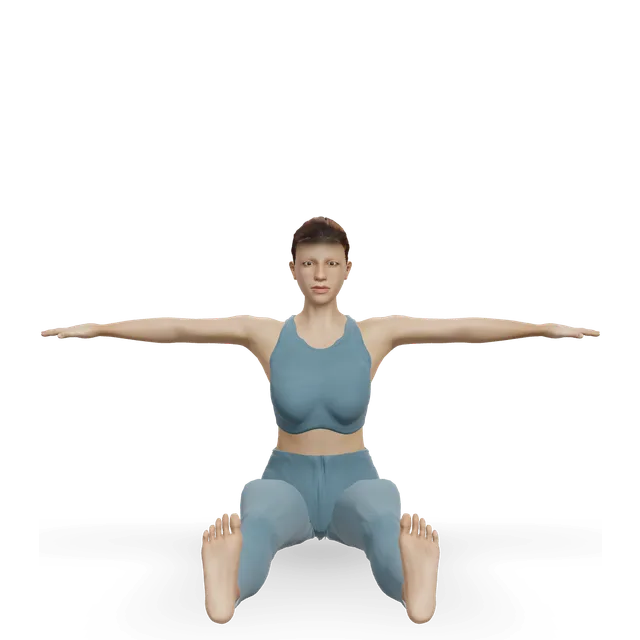
Lying, side-lying, chair and standing moves, with no kneeling and no weight on your hands. Keep your head down in the hundred and the single-leg stretch, keep circles small, and use the doses in our Pilates for arthritis class below, which includes all of these moves.

For a stiff spine

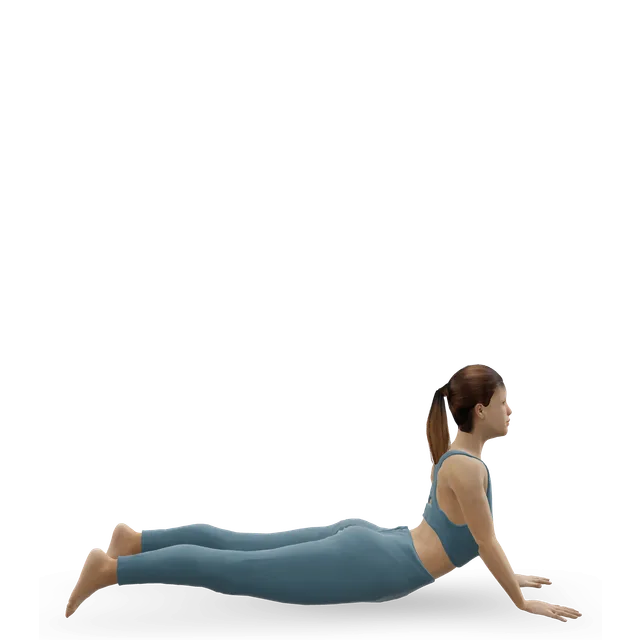
Bending back, turning and side bending, as NICE recommends for axial spondyloarthritis. Keep each move small and smooth, and do the mermaid on a chair if side-sitting is hard.

For a flare or a stiff day

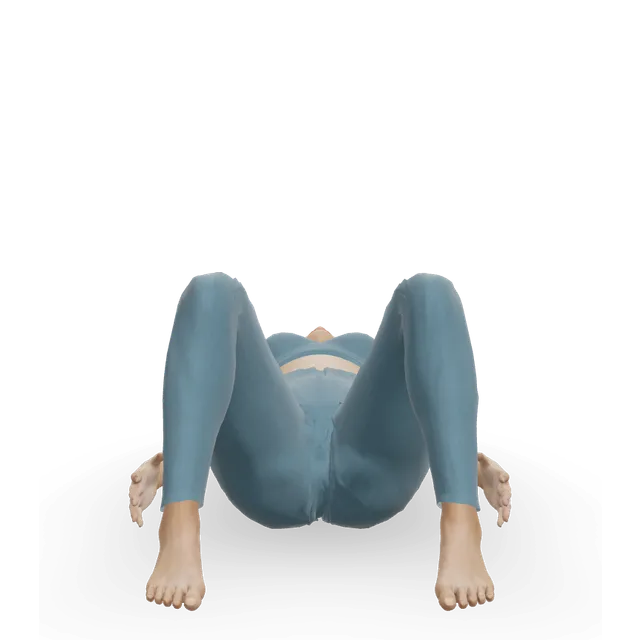
Breathing and gentle range for days when your joints are sore: a few slow repetitions of each, then build back up over the following days.

Adapting moves for your joints

Knees

With painful knees, pad or skip kneeling moves such as the knee hover, bird dog and kneeling side kick, and sit on a chair for the mermaid. After a knee replacement, the NHS says not to kneel on the new knee until your doctor says you can, and not to sit with your legs crossed for the first 6 weeks.

Source 14

Hips

While a new hip recovers, the NHS advises not bending it more than 90 degrees, not crossing your legs, not bending down to touch your feet, and avoiding jumping and sudden turns. That rules out the roll-up, the teaser and the rolling moves, a deep knee-to-chest in the single-leg stretch, and the inner thigh lift, which crosses one leg over the other. Keep leg circles small, and follow your own team's limits.

Source 13

Hands and wrists

Make fists or use your forearms, or swap planks, leg pulls, the side bend and push-ups for lying or chair moves. For hand pain in rheumatoid arthritis, NICE recommends a tailored hand exercise programme from a trained practitioner; tendon glides keep the fingers moving.

Source 17

The neck in rheumatoid arthritis

Long-standing rheumatoid arthritis can, uncommonly, damage the joints at the top of the neck, which the NHS calls a serious condition. Keep your head down in curl-ups, and leave out moves that put weight on your neck: the roll-over, jack knife, control balance and boomerang.

Source 12

The spine: osteoporosis and spinal fusion

Ankylosing spondylitis can cause osteoporosis in the spine and raise the risk of spinal fractures. With osteoporosis or a spinal fusion, check with your physiotherapist first, and avoid deep, repeated or loaded rounding of the spine; the National Axial Spondyloarthritis Society suggests low weights and high repetitions.

Sources 50, 51, 52

In a flare

Keep moving gently

The National Rheumatoid Arthritis Society's steps: relative rest, doing less than usual; ice or heat for 15 to 20 minutes; keep the joints moving; return gently, with only a few repetitions; then gradually work back. Arthritis UK suggests slow, gentle movement rather than stopping, cutting the load first and then the number of sets, and never forcing a movement.

Sources 15, 16

What to drop, and for how long

Leave strengthening until hot or swollen joints settle, and keep to breathing and gentle range, such as heel slides, ankle circles and hand glides. High-intensity, high-impact or high-volume exercise is the most likely to aggravate symptoms. A flare can last several days; if an activity always brings one on, avoid it.

Sources 7, 16, 5, 48

Workouts to follow

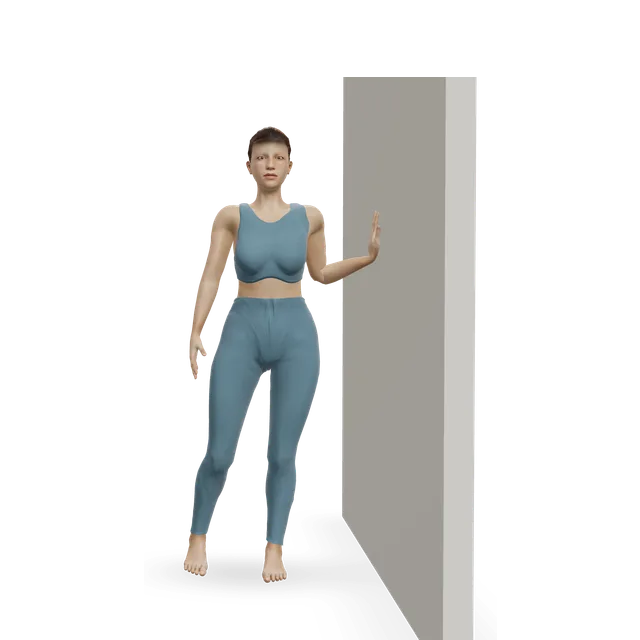
Start with the 25-minute Pilates for arthritis class twice a week. The knee and hip classes focus on one joint, chair Pilates suits days when the floor is hard, and the flare-up routine suits bad days.

Pilates for arthritis: a 25-minute joint-friendly class (no kneeling)

A gentle 25-minute Pilates class for arthritis: lying, side-lying, chair and standing moves, with no kneeling or weight on your hands, and flare-day options.

25 minBeginner16 movesA bench or box, Something with weight

Pilates for knee pain: a 25-minute class with no kneeling

A 25-minute Pilates class for sore knees and knee arthritis: lying and side-lying leg work, shallow squats and balance, with no kneeling at all.

25 minBeginner15 movesA bench or box, Something with weight

Pilates for hip pain: a 20-minute class that spares the hip

A 20-minute Pilates class for hip pain: bridges, outer-hip holds, standing leg work and balance, without deep bends, crossed legs or lying on the sore side.

20 minBeginner14 movesA band, A wall

Chair Pilates workout

A 20-minute chair Pilates workout for beginners and older adults: breathing, sitting tall, gentle spine and leg moves, and a standing finish at the chair.

20 minBeginner14 movesA bench or box, Something with weight

Clinical Pilates exercises: an NHS-style physio class routine for home

A 15-minute routine of the exercises NHS physiotherapy Pilates classes send home: bridge, knee folds, leg slides, clam, side kick and side openings.

15 minBeginner10 movesNo equipment

Chronic pain flare-up routine: gentle movement for a bad day

A 10-minute routine for a pain flare-up: slow breathing, small gentle moves lying and sitting, a short stroll if you can, then rest. Repeat later in the day.

10 minBeginner10 movesA band, A bench or box

Arthritis exercise routine: a joint-friendly circuit

A 30-minute joint-friendly circuit built like the GLA:D and ESCAPE-pain programmes: a gentle warm-up, chair, step and band strength moves, balance, then stretches.

30 minBeginner14 movesA bench or box, A step

Yoga for arthritis: a 30-minute joint-friendly class with a chair

A 30-minute joint-friendly yoga class for arthritis: seated breathing and joint warm-ups, standing poses with a chair, gentle lying poses and a long relaxation.

30 minBeginner17 movesA bench or box, A wall

Follow a plan

The seniors plan adds walking, strength and balance through the week; the beginner Pilates plan builds a habit of 3 short classes a week.

When to get help

Get help the same day if

Ask for an urgent GP appointment or get help from NHS 111. In the US, use your doctor's urgent line or urgent care.

  • You have severe pain and swelling in just 1 joint that started suddenly.
  • Your pain doesn't get better with painkillers, such as paracetamol.
  • The skin around your joint is red or hot (redness may be harder to see on brown and black skin).
  • You have sore joints with a high or low temperature, or you feel hot, cold or shivery.
  • You have sore joints and conjunctivitis, or sore eyes and problems with your vision.
  • You have sore joints and pain when you pee, discharge from your penis or vagina, or a rash or sores on your genitals.

Source 5

Call 999 or go to A&E if

In the US, call 911. These can be signs of cauda equina syndrome, when the nerves at the bottom of the spine are squashed: very rare in ankylosing spondylitis, but an emergency.

  • Sciatica on both sides of your body, or weakness or numbness in both legs that is severe or getting worse.
  • Numbness around or under your genitals, or around your anus.
  • Finding it hard to start peeing, being unable to pee or to control when you pee, or not noticing when you need to poo or being unable to control it, when this isn't normal for you.

Sources 50, 53

Rheumatoid arthritis and your neck

If you've had rheumatoid arthritis for some time, you're at higher risk of a problem at the top of the spine called cervical myelopathy, uncommon but serious. Our rheumatoid arthritis guide lists the warning signs that need help the same day.

Source 12

See a GP or physiotherapist if

In many areas you can refer yourself to NHS musculoskeletal (MSK) services, such as physiotherapy, without seeing a GP first.

  • You have unexplained pain, swelling or stiffness in your joints that doesn't go away in a few days.
  • You're starting exercise after a long break with inflammatory arthritis, a joint replacement, spinal surgery or fusion, or other health conditions.
  • You get chest pain, palpitations, breathlessness or dizziness when you exercise.

Sources 5, 51

Myths

"Arthritis means you should avoid exercise"Strong evidence

NICE wanted "to reassure people with osteoarthritis and healthcare professionals that exercise is not harmful to osteoarthritic joints", and the NHS calls exercise one of the most important treatments for osteoarthritis. Exercise is strongly recommended in rheumatoid arthritis too.

Sources 2, 1, 54, 3

"Pilates is better than other exercise for arthritis"Emerging evidence

In knee osteoarthritis, Pilates was better than no exercise but not better than other exercise programmes, and the American College of Rheumatology found no type of exercise better than another.

Sources 9, 10, 8

"Any pain during exercise means you're doing damage"Emerging evidence

Some pain when you start is common and isn't a sign of harm if it settles. A hot, swollen joint is different: rest it from strengthening.

Sources 11, 47, 1

"Rest completely during a flare"Strong evidence

The arthritis charities advise relative rest with gentle movement, then a gradual return. The NHS says that without movement, joints stiffen and muscles get weaker.

Sources 15, 16, 48

"You need a reformer for Pilates to help arthritis"Mixed evidence

The knee trials mostly used mat classes, and the NHS class uses a mat and a cushion. One small trial in ankylosing spondylitis favoured the reformer, too small to generalise from.

Sources 9, 6, 22, 49

Questions people ask

Is Pilates good for arthritis?

Yes, as one way to do the exercise that's a core treatment for arthritis. The NHS lists Pilates among the low-impact activities that suit arthritis, and Arthritis UK counts it as strengthening and balance work. In trials it's better than no exercise and about as good as other exercise.

Is Pilates good for knee arthritis?

In knee osteoarthritis, Pilates reduced pain more than no exercise in small trials, and as much as other exercise programmes. The trials were short and small, so the certainty is low. Our Pilates for knee pain guide has a class with no kneeling.

Is Pilates good for hip arthritis?

No Pilates trial in hip osteoarthritis has been published yet. Exercise in general helps hip osteoarthritis a little, and Pilates' lying, side-lying and standing hip work is a sensible way to do it. After a hip replacement, follow your team's limits on bending and crossing your legs.

Is Pilates good for arthritis in the back or spine?

There are no Pilates trials in spinal arthritis itself. For back pain in general, Pilates helps about as much as other exercise, and NICE suggests group exercise programmes, including mind-body ones. Keep rounding moves gentle, and avoid deep or repeated rounding if you also have osteoporosis.

Can Pilates help rheumatoid arthritis?

Possibly, but there are only two small trials. Exercise is strongly recommended in rheumatoid arthritis, and mind-body exercise improved function more than pain in the American College of Rheumatology's review. If rheumatoid arthritis affects your neck, keep your head down and leave out moves that put weight on it.

Is Pilates good for ankylosing spondylitis?

Small trials found Pilates improved disease activity and everyday function more than usual care or home exercise, and the National Axial Spondyloarthritis Society lists Pilates classes as an option. Reviews disagree on whether any exercise improves spinal mobility. Check with your physiotherapist first if you have a spinal fusion or osteoporosis.

Can Pilates make arthritis worse?

Exercise doesn't harm arthritic joints, NICE says, and Pilates trials reported few side effects, though most didn't check carefully. Some aching is normal; if a joint becomes hot, swollen or much more painful, stop and rest it.

Should I do Pilates during a flare-up?

Keep moving gently: do less than usual, use heat or ice, and keep your joints moving through a comfortable range. Leave the strengthening moves until the joint settles, then come back with a few repetitions.

Is mat, chair or reformer Pilates best for arthritis?

Any can work: the knee trials mostly used mat classes, the NHS class uses a mat and a cushion, and chair Pilates avoids getting down to the floor. Tell the teacher about your arthritis, whichever you choose.

How often should I do Pilates for arthritis?

The trials used 2 or 3 sessions a week for 6 to 12 weeks. Arthritis UK suggests strengthening on at least two days a week and balance work on two days, with walking, cycling or swimming as well.

Is Pilates or yoga better for arthritis?

No trial has compared them in arthritis, and the American College of Rheumatology found no reason to prefer one type of exercise over another. Pick the one you'll keep doing; our yoga for arthritis guide covers yoga.

Can Pilates help arthritis in the hands?

No Pilates trial has studied hand arthritis. Gentle hand exercises such as tendon glides keep the fingers moving, and NICE recommends a tailored hand programme for hand pain in rheumatoid arthritis. In Pilates, use fists or your forearms instead of flat hands if your wrists or fingers hurt.

Sources

  1. NICE NG226 · Osteoarthritis in over 16s: diagnosis and management (guideline, 2022)
  2. NICE NG226 · Osteoarthritis: why the committee recommended exercise (rationale and impact)
  3. England 2023 · American College of Rheumatology 2022 guideline on exercise, rehabilitation, diet and integrative treatments for rheumatoid arthritis (guideline, Arthritis Rheumatol; read in full)
  4. NICE NG65 · Spondyloarthritis in over 16s: diagnosis and management (guideline, 2017)
  5. NHS · Arthritis
  6. NHS · Arthritis Pilates exercise video (past its review date: reviewed August 2022, review due August 2025; the video was reviewed in August 2025)
  7. Arthritis UK · What type of exercise should I do?
  8. Kolasinski 2020 · American College of Rheumatology and Arthritis Foundation 2019 guideline for osteoarthritis of the hand, hip and knee (guideline, Arthritis Rheumatol; exercise section read in full)
  9. de Oliveira 2025 · Pilates for knee osteoarthritis: 11 trials, 476 people (systematic review and meta-analysis, Int J Rheum Dis; read in full)
  10. Zhang 2025 · Pilates for knee osteoarthritis: 8 trials, 322 people (systematic review and meta-analysis, Ann Med)
  11. Ageberg 2010 · The NEMEX-TJR training programme in 76 people with severe hip or knee osteoarthritis (feasibility study, BMC Musculoskelet Disord; read in full)
  12. NHS · Rheumatoid arthritis: complications (past its review date: reviewed March 2023, review due March 2026)
  13. NHS · Recovering from a hip replacement
  14. NHS · Knee replacement: recovery
  15. National Rheumatoid Arthritis Society (NRAS) · Where do I begin? Exercise and rheumatoid arthritis
  16. Arthritis UK · How to maintain movement during a flare-up (January 2025)
  17. NICE NG100 · Rheumatoid arthritis in adults: management (guideline, updated 2020)
  18. Bannuru 2019 · OARSI guidelines for the non-surgical management of knee, hip and widespread osteoarthritis (guideline, Osteoarthritis Cartilage)
  19. Moseng 2024 · EULAR recommendations for the core non-drug management of hip and knee osteoarthritis (recommendations, Ann Rheum Dis)
  20. Rausch Osthoff 2018 · EULAR recommendations for physical activity in inflammatory arthritis and osteoarthritis (recommendations, Ann Rheum Dis)
  21. Rausch Osthoff 2026 · Updated EULAR recommendations for physical activity in inflammatory arthritis and osteoarthritis (recommendations, Ann Rheum Dis)
  22. NASS · Exercise classes, including Pilates
  23. Altan 2012 · Pilates in 55 people with ankylosing spondylitis (RCT, Rheumatol Int)
  24. Acar 2023 · Clinical Pilates or home exercise in people with ankylosing spondylitis (RCT, J Bodyw Mov Ther)
  25. Lawford 2024 · Exercise for knee osteoarthritis: 139 trials, 12,468 people (Cochrane review)
  26. Hall 2026 · Exercise for hip osteoarthritis: 18 studies, 1,368 people (Cochrane review)
  27. Denham-Jones 2022 · Pilates for osteoarthritis: 7 studies, 397 people (systematic review, Musculoskeletal Care)
  28. Gao 2025 · Mind-body exercise for knee osteoarthritis: 38 studies, 2,561 people (network meta-analysis, J Orthop Surg Res; read in full)
  29. Pan 2026 · Traditional and modern mind-body exercise for knee osteoarthritis: 29 trials, 2,095 people (network meta-analysis, Front Med; read in full)
  30. ClinicalTrials.gov · NCT06783452: Pilates for hip osteoarthritis, completed June 2025, no results posted (trial registration)
  31. PubMed · Our search for trials of Pilates in hip osteoarthritis (24 October 2026)
  32. Yamato 2015 · Pilates for low back pain: 10 trials, 510 people (Cochrane review)
  33. Aali 2025 · Exercise for lumbar degenerative disc disease (systematic review, Healthcare)
  34. PubMed · Our search for trials of Pilates in spinal osteoarthritis and stenosis (24 October 2026)
  35. PubMed · Our search for trials of Pilates in hand arthritis (24 October 2026)
  36. Roşu 2014 · Pilates, McKenzie and Heckscher exercise in 96 people with ankylosing spondylitis (RCT, Rheumatol Int)
  37. Oksüz 2023 · Aerobic training with or without clinical Pilates in 28 people with ankylosing spondylitis (RCT, Physiother Theory Pract)
  38. Zaggelidou 2023 · Home Pilates with walking in 30 people with non-radiographic axial spondyloarthritis (RCT, J Funct Morphol Kinesiol)
  39. Wang 2024 · Mind-body exercise for axial spondyloarthritis: 15 studies (systematic review and meta-analysis, J Orthop Surg Res; read in full)
  40. Huo 2026 · Exercise for axial spondyloarthritis: 59 trials, 3,404 people (network meta-analysis, Ann Phys Rehabil Med)
  41. Ye 2025 · Types of exercise and disease activity in ankylosing spondylitis (network meta-analysis, Front Physiol; read in full)
  42. Yentür 2021 · Pilates, aerobic exercise or both in 30 people with rheumatoid arthritis (trial, Ir J Med Sci)
  43. Rezaei 2021 · Pilates in 30 women with rheumatoid arthritis (randomised trial in Persian, English abstract, Anesthesiology and Pain)
  44. Zhang 2025 · Exercise for rheumatoid arthritis: 34 trials, 2,435 people (network meta-analysis, J Pain Res; read in full)
  45. Mendonça 2013 · Pilates in 50 children with juvenile idiopathic arthritis (RCT, Arch Phys Med Rehabil)
  46. Azab 2022 · Clinical Pilates added to physiotherapy in 40 children with juvenile idiopathic arthritis (RCT, Int J Environ Res Public Health)
  47. Smith 2017 · Should exercises be painful in long-term muscle and joint pain? 9 papers, 385 people (meta-analysis, Br J Sports Med)
  48. NHS · Rheumatoid arthritis: living with (past its review date: reviewed March 2023, review due March 2026)
  49. Kabul 2025 · Reformer or mat Pilates in 20 people with ankylosing spondylitis (RCT, J Bodyw Mov Ther)
  50. NHS · Ankylosing spondylitis: complications (past its review date: reviewed January 2023, review due January 2026)
  51. NASS · Safety first: exercising safely with axial spondyloarthritis
  52. Brooke-Wavell 2022 · Strong, steady and straight: UK consensus on exercise for osteoporosis (Br J Sports Med; read in full)
  53. NHS · Back pain
  54. NHS · Osteoarthritis: treatment (past its review date: reviewed March 2023, review due March 2026)

Exercise education, not a personal prescription, and clinical review of these guides is pending. If you are pregnant, have a health condition or have had recent surgery, check with a doctor, midwife or physiotherapist before starting, and stop for sharp or increasing pain. Health disclaimer.