No Pilates trial yet
We found no published trial of Pilates for hip arthritis, outer hip pain, hip impingement or after a hip replacement. One trial in hip arthritis finished in 2025 but hasn't posted its results.
Pilates guide
Pilates can be a good way to strengthen a painful hip, but some of its best-known moves, like clams and side-lying leg work, can aggravate pain on the outside of the hip. We found no published trial of Pilates for any hip condition, so this guide uses the evidence for exercise in general and for outer hip pain, and shows how to adapt Pilates to fit.
It covers hip arthritis, outer hip pain (often called bursitis), hip impingement and Pilates after a hip replacement, including how precautions differ between operations, which moves to start with and which to change, and the warning signs that need a doctor. For a class that spares the hip, try our 20-minute Pilates for hip pain workout.
We found no published trial of Pilates for hip arthritis, outer hip pain, hip impingement or after a hip replacement. One trial in hip arthritis finished in 2025 but hasn't posted its results.
In a 2026 Cochrane review, exercise eased hip arthritis pain and improved function slightly compared with no treatment. Every guideline still puts exercise first, and Pilates is one way to do it.
In a trial of 204 people, education plus exercise that avoided squeezing the outer hip tendons beat a steroid injection. In Pilates terms, that means no clams, no lying on the sore side and no crossed or dropped top leg.
At least 3 months of exercise is the first step. Keep deep hip bends above any pinch, keep leg circles small, and skip big circles with your feet in straps.
Precautions differ between operations and hospitals. A surgeon's case series used modified Pilates from 2 weeks after leaving hospital, within each person's precautions, and reported no problems.
Sudden hip, thigh or knee pain, a limp, or not putting weight on a leg needs an urgent GP appointment or NHS 111 the same day. Hip problems in children can be felt in the thigh or knee.
Source 12
"Hip pain is common, especially as you get older", the NHS says. Common causes include osteoarthritis (over 45, pain worse when walking and stiffness after moving), bursitis on the outside of the hip (pain that can spread to the thigh and is worse when moving or lying on your side), and strains after exercise; severe pain after a fall can be a broken hip. Our hip pain guide helps you work out the likely cause.
Source 13
Pain over the bony point on the side of the hip is usually the gluteal tendons rather than just a bursa, a condition also called greater trochanteric pain syndrome. A review by tendon researchers says the combination of compression and high tension is thought to harm tendons most, and that excessive hip adduction (the thigh drifting across the body) is a key factor. That's why the advice is to avoid positions that squeeze the tendons.
Side-lying moves mean lying on the bottom hip, and if the top knee drops, the top hip moves across the body. A hip physiotherapist and researcher advises removing clams for people with outer hip pain, because "As the knees come together the ITB is wrapped firmly around the greater trochanter, compressing the gluteal tendons" (the ITB, or IT band, is the tough band down the outside of the thigh, and the greater trochanter the bony point of the hip), and for pain at the front of the hip or after hip keyhole surgery. In healthy adults, clams worked the main side-hip muscle (gluteus medius) about half as hard as side-lying leg lifts, and a review of 56 studies found weight-bearing exercises worked it best. That's expert advice and lab studies, not treatment trials.
Rolling moves, the roll-up, the teaser and spine stretch forward bend the hip past a right angle, which matters after some hip replacements and with impingement. The same physiotherapist says long-lever leg circles with the feet in straps can provoke hip joint pain and pain at the sitting bone. Crossing your legs, or moves that take the thigh across the middle of your body, matter after a hip replacement and with outer hip pain.
Our search found no published trial of Pilates for hip arthritis. One trial randomised 52 people with hip arthritis to clinical Pilates or standard exercise, both supervised by a physiotherapist for 45 minutes twice a week for 12 weeks. It was completed in June 2025, and no results have been posted.
A 2026 Cochrane review (18 studies, 1,368 people) found that, compared with no treatment, exercise "probably reduces pain slightly", by about 7 points on a 0 to 100 scale, and improves function slightly, by about 9 points, at moderate certainty: changes the authors judged unlikely to be clinically meaningful on average. Against a placebo or attention control, there was little or no difference in pain (low certainty).
Source 3
The National Institute for Health and Care Excellence (NICE) recommends exercise tailored to you for everyone with osteoarthritis. The American College of Rheumatology and Arthritis Foundation strongly recommend exercise and tai chi for hip arthritis, and OARSI, an international osteoarthritis research society, lists structured exercise as a core treatment. None names Pilates.
A teacher-training school's guide for instructors says research suggests Pilates "can significantly improve pain, function, and quality of life" in hip arthritis. We found no published trial that shows this. Its practical advice (modified moves, a pain-free range and checking with your doctor) is sensible.
In the LEAP trial, 204 people aged 35 to 70 with outer hip pain for more than 3 months had 14 physiotherapy sessions of education and exercise over 8 weeks, one steroid injection, or wait and see. At 8 weeks, 77% of the education and exercise group reported success, against 59% after the injection and 29% with wait and see. At a year, education and exercise still did better than the injection on overall improvement, though pain didn't differ. No major side effects were reported.
Source 5
The education taught people to avoid postures and movements that squeeze the tendons against the bone, and to build up load gradually; the authors say it "could plausibly contribute" to the benefit. The programme left out the usual stretches for the outer hip and buttock, because they hold the thigh across the body, and limited that movement in the exercises.
In the first week of the LEAP programme:
Source 6
No clams. Lie on your good side with a pillow between your knees so the top leg stays level, and don't let the top leg drop to touch the other ankle each time; if it still hurts, do the standing version at a wall. Leave out the inner thigh lift (its top leg crosses over), outer hip stretches and crossed legs, and never lie on the sore side (our suggestion, from the trial programme and a hip physiotherapist's advice).
An international consensus of 38 researchers and clinicians (Zurich 2018) recommends exercise-based treatment for at least 3 months for young and middle-aged active adults with hip-related pain, along with physical activity, including sport, and education and shared decisions. It notes that strong trial evidence for physiotherapist-led treatment is lacking.
Source 7
Keep deep hip bends above any pinch at the front of the hip (rolling moves, the roll-up, the teaser, spine stretch forward and knees hugged to your chest), keep leg circles small, skip long-lever circles with your feet in straps, and stop clams if they pinch at the front of the hip. That's expert advice: no trial has tested Pilates for impingement. Our hip impingement guide has a staged plan.
A surgeon's case series of 22 hip replacements in 21 people (average age 46) used modified mat Pilates from within 2 weeks of leaving hospital, adapted to back-approach precautions: no bending the hip past 90 degrees, no crossing the middle of the body and limited inward turning, with pillows and balls for support. The precautions eased from 6 weeks, and no adverse events were reported. As reported in that paper (Levine 2009), most US hip surgeons in a survey allowed Pilates after a hip replacement: 58%, and another 24% for people who already did it.
Source 11
The NHS lists examples: don't sit with your legs crossed, don't bend your hip more than 90 degrees (a right angle), don't bend down to touch your feet, avoid low chairs and chairs without arms, and avoid jumping and sudden turns while you recover. AAOS (the American Academy of Orthopaedic Surgeons) says the precautions, and how long you follow them, depend on the surgical technique, and that most people can do most of the "don'ts" after 6 to 8 weeks.
An NHS specialist orthopaedic hospital tells most people with a normally shaped hip to carry on guided by pain, and keeps precautions, for up to 12 weeks, for higher-risk hips. After a front (anterior) approach, one US surgeons' sheet says not to turn your knee or foot outward, not to pivot on the operated leg and not to take the hip back beyond straight, typically for 6 weeks.
Follow your own team's precautions (our suggestion, from the NHS, the case series and the precaution sheets). Moves that bend the hip past a right angle, such as the roll-up, rolling moves, the teaser and knees hugged in, often wait until you're cleared after a back approach; moves that turn the leg out (the clam, the bent-knee fall-out) or lift it behind you (the leg lifts in swimming) often wait after a front approach. Moves lying on your back and standing at a wall usually come first.
AAOS lists "unlimited walking, swimming, golf, driving, hiking, biking, dancing, and other low-impact sports" as realistic after a hip replacement, and says most surgeons advise against high-impact activities such as running and jumping. Mat Pilates is low-impact (our reading).
Source 23
Two or three Pilates sessions a week, with walking or cycling on other days (our editorial starting point). With outer hip pain, the LEAP programme added daily home exercises to 14 physiotherapy sessions over 8 weeks. The NHS also has a 32-minute Pilates video class for arthritis, which needs a cushion or pillow.
During the exercise, pain up to about 5 out of 10 is acceptable. It should settle within an hour or so, and your hip should be no worse that night or the next morning. If it is, do less next time (fewer repetitions, a smaller range, a lighter load), not nothing.
Pain can go up a little when you start a new exercise programme; guidelines for arthritis say so and still recommend keeping going. If pain climbs week after week, or a warning sign appears, stop and get it checked.
There should be no extra outer hip pain in squats, bridges and side-steps, as in the LEAP programme.
Source 6
These load the hip without squeezing the outer hip or pinching the front. Our 20-minute class below gives a starting dose for each; the belt press and wall press follow the LEAP trial programme.
 3D demoLateral breathing (Pilates breathing)Beginner · No equipment
 3D demoSupine heel slideBeginner · No equipment
 3D demoKnee foldBeginner · No equipment
 3D demoSupine isometric hip abduction (belt press)Beginner · A band
 3D demoPelvic tilt into bridgeBeginner · No equipment
 3D demoStanding wall-press hip abductionBeginner · A wall
 3D demoWall side leg lift (standing side kick at the wall)Beginner · A wall
 3D demoSide-stepping (sideways walking)Beginner · A wall
 3D demoSingle-leg standBeginner · A wall
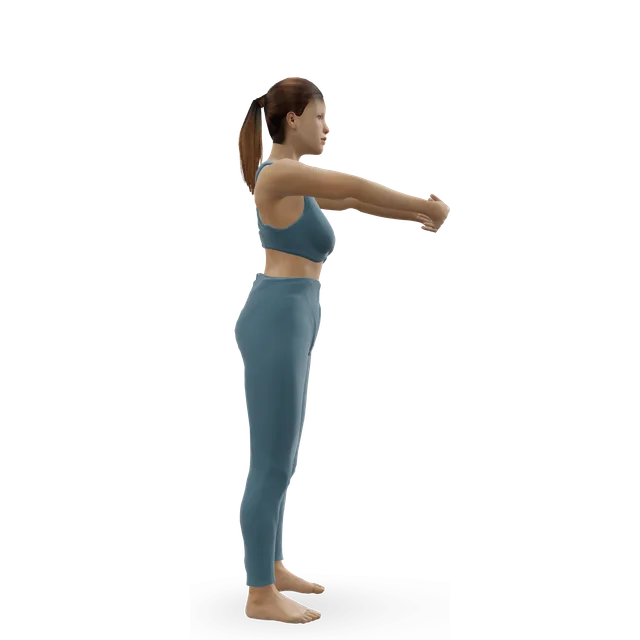 3D demoSit squat (partial squat)Beginner · No equipment
 3D demoSit to stand from a chairBeginner · A bench or box
 3D demoStanding marchBeginner · No equipment
 3D demoBreath reachBeginner · No equipment
Keep circles small, do the side kick on your comfortable side with a pillow between your knees, and skip the fall-out after a front-approach replacement if turning the leg out is restricted.
Clams and side-lying lifts can squeeze the outer hip, the inner thigh lift crosses the top leg over, and the rest bend the hip deeply or sit you on it. The notes above say which matters for your hip.
 3D demoClamshellBeginner · No equipment
 3D demoSide-lying leg raiseBeginner · No equipment
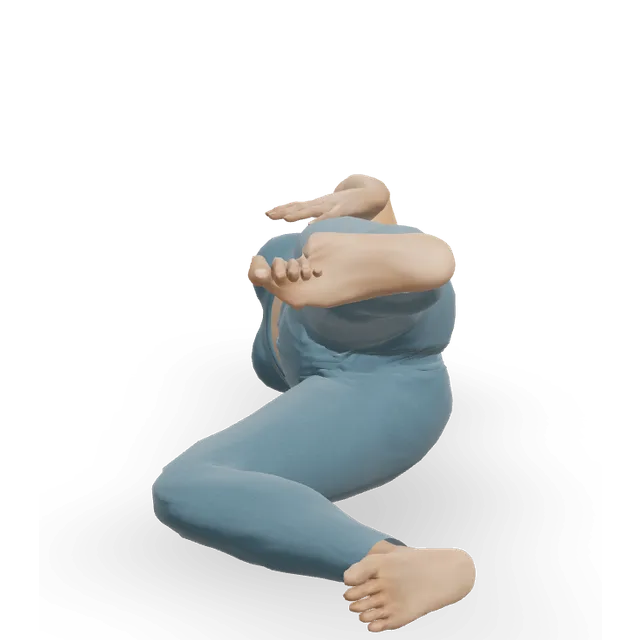 3D demoSide-lying leg circles (Pilates side kick series)Beginner · No equipment
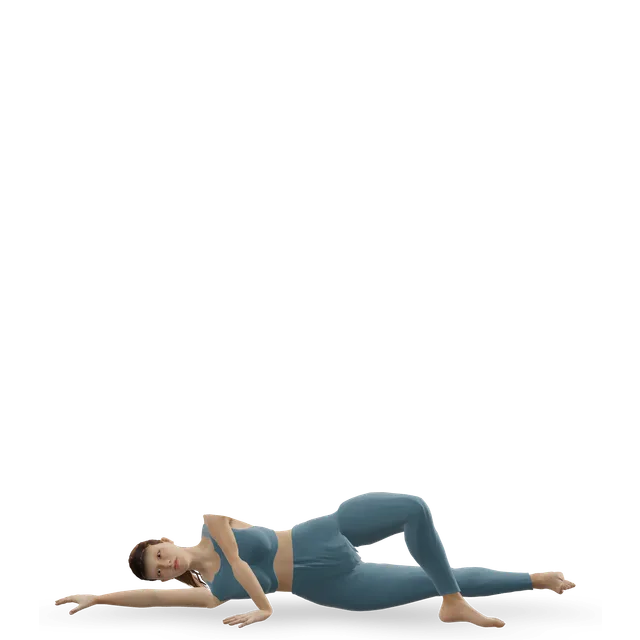 3D demoSide-lying inner thigh lift (Pilates side kick series)Beginner · No equipment
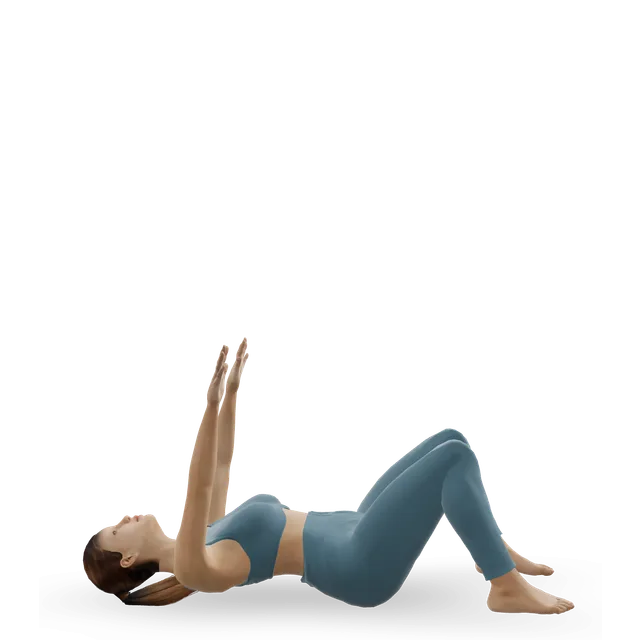 3D demoRoll-up (Pilates)Intermediate · No equipment
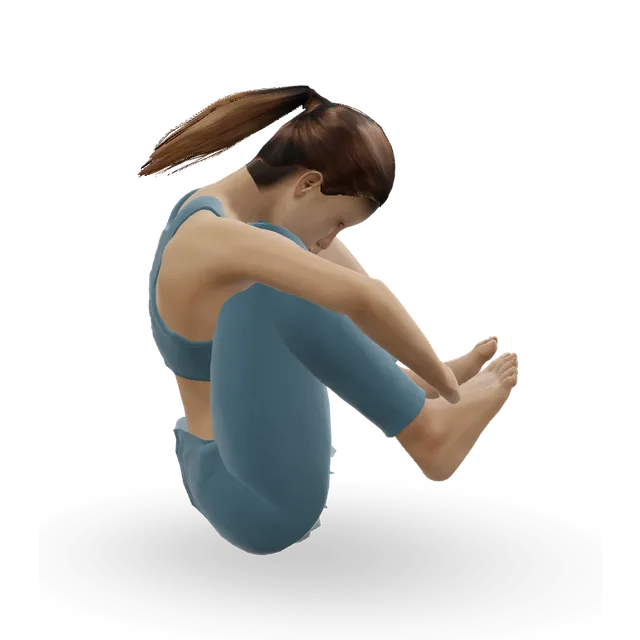 3D demoRolling like a ball (Pilates rolling back)Intermediate · No equipment
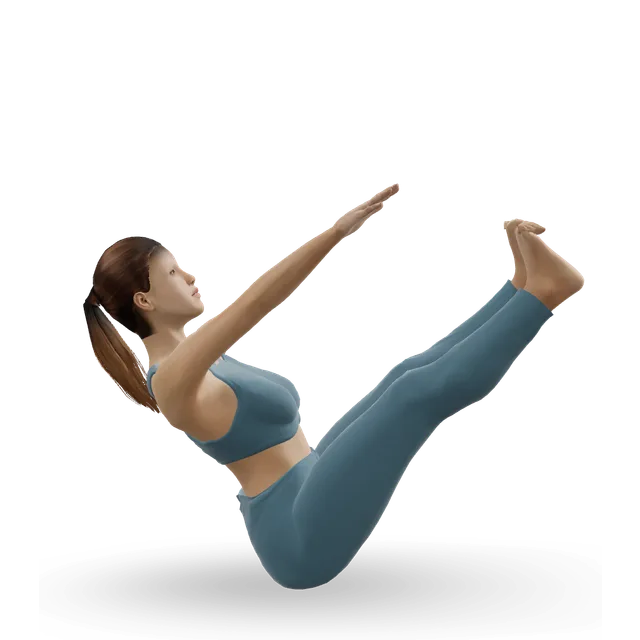 3D demoTeaser (Pilates)Advanced · No equipment
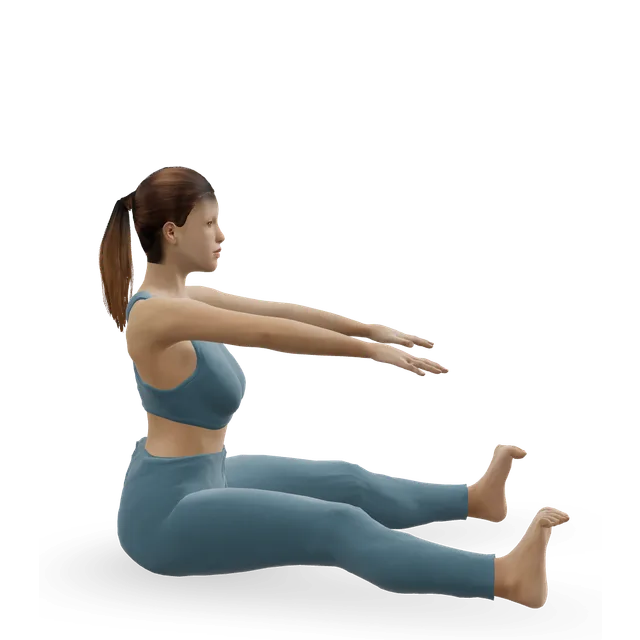 3D demoSpine stretch forward (Pilates spine stretch)Beginner · No equipment
 3D demoMermaid (Pilates seated side bend)Beginner · No equipment
 3D demoChild's Pose (Balasana)Beginner · No equipment
Start with the 20-minute hip class two or three times a week. The other workouts add standing strength and balance.
A 20-minute Pilates class for hip pain: bridges, outer-hip holds, standing leg work and balance, without deep bends, crossed legs or lying on the sore side.
20 minBeginner14 movesA band, A wallA gentle leg strength routine with no jumping: sit-to-stands, step-ups, wall sits, bridges and calf raises.
20 minBeginner7 movesA bench or box, A stepBalance practice in 10 minutes: tandem stance, single-leg stands, marches, heel walks, tree pose and floor transfers.
10 minBeginner7 movesA wall, A bench or boxA 20-minute chair Pilates workout for beginners and older adults: breathing, sitting tall, gentle spine and leg moves, and a standing finish at the chair.
20 minBeginner14 movesA bench or box, Something with weightA 30-minute joint-friendly circuit built like the GLA:D and ESCAPE-pain programmes: a gentle warm-up, chair, step and band strength moves, balance, then stretches.
30 minBeginner14 movesA bench or box, A stepStrength and balance in one session: squats, Romanian deadlifts, push-ups, rows, step-ups, back extensions, carries and single-leg balance.
45 minBeginner14 movesA wall, A dumbbellIn the Pilates plan, swap clams and side-lying work as above.
A 12-week exercise plan for over-65s: strength and balance three times a week, short balance sessions and daily walks, based on falls-prevention trials.
3 training days40 minBeginner3 days a weekA free 4-week, 3-day Pilates plan for complete beginners. Two mat days and one wall day, with clear rules for when to move each exercise to its harder version.
3 training days25 minBeginnerThese are the same warning signs as our hip pain guides. In the US, call 911 for 999, and use your doctor's urgent line or urgent care for NHS 111.
Source 13
The warning signs in our hip replacement guide, which gives their sources:
Always follow the precautions your team gives you. They depend on the surgical approach, how stable your hip was in the operation and your own risk; some teams give several for up to 12 weeks, others few or none. Ask before you start Pilates, and ask which moves to leave out and for how long.
Stop the move for a sharp pinch at the front of the hip in deep bends or circles, a catching or locking feeling, or outer hip pain that builds during side-lying work, and swap to the versions on this page (our suggestion).
Tell the teacher about hip pain, arthritis or a replacement before a class. The NHS advises getting advice from a GP or other health professional before following its exercise videos if you have a health problem, an injury or any symptoms, or have recently had an operation.
Source 25
A surgeon's case series used modified mat Pilates from 2 weeks after leaving hospital, within each person's precautions, with no adverse events reported, and most surgeons in a survey reported in that paper allowed Pilates. Follow your own team's precautions, which vary between operations.
No trial has been published; the one registered trial finished in 2025 without posting results. The evidence is for exercise in general, which helps a little and is recommended first by every guideline.
In healthy adults, clams worked the main side-hip muscle about half as hard as side-lying leg lifts, and weight-bearing exercises did best. A hip physiotherapist advises against clams for outer hip pain and hip joint pain, and the outer hip pain trial used belt presses, standing holds, bridges, squats and side-steps instead.
The LEAP programme left those stretches out, because the stretch position squeezes the tendons, and education plus exercise without them beat a steroid injection.
They depend on the surgical technique and your risk, and some hospitals give few or none to people at ordinary risk. AAOS says most people can do most of the "don'ts" after 6 to 8 weeks. Follow what your team gives you.
The NHS says it's best to keep moving if you can, without overdoing it, and NICE offers exercise to everyone with osteoarthritis.
It can be, with changes, though we found no trial of Pilates for any hip condition. Exercise helps hip arthritis a little, and education plus exercise beat a steroid injection for pain on the outside of the hip. Pilates is one way to do that exercise if you adapt it.
Guidelines recommend exercise first for hip arthritis, and Pilates is a low-impact way to strengthen the hip. One trial of Pilates for hip arthritis has finished but not posted results, so there's no direct evidence yet. Keep movements in a range that feels all right, and add walking or cycling.
Yes, with changes. Skip clams, never lie on the sore side, keep a pillow between your knees if you lie on the other side, and leave out outer hip stretches and crossed legs. Belt presses, standing wall presses, bridges, shallow squats and side-steps are the trial-tested starting moves.
Common culprits are clams and side-lying leg work that squeeze the outer hip, lying on a sore hip, deep hip bends that pinch the front of the joint, and big leg circles. Swap them for the versions on this page. If pain builds week after week or comes with warning signs, get it checked.
Usually yes, within your team's precautions. In a surgeon's case series, modified mat Pilates started within 2 weeks of leaving hospital without problems, and most surgeons in a survey reported in that paper allowed Pilates. Most people can do most restricted movements after 6 to 8 weeks, but ask your own team.
It depends on your operation. After a back approach, teams often restrict bending the hip past a right angle and crossing the middle of the body, which rules out rolling moves, the roll-up, the teaser and crossed-leg side work for a while. After a front approach, teams often restrict turning the leg out and taking it behind you.
No trial has tested Pilates for these, but at least 3 months of exercise is the recommended first step for hip-related pain. In Pilates, work short of any pinch: keep deep hip bends shallower, circles small, and skip long-lever circles with your feet in straps.
Not always. Clams work the main side-hip muscle less than side-lying leg lifts or standing exercises, and a hip specialist advises against them with pain on the outside of the hip or at the front of the joint. Try a belt press or a standing wall press instead.
It can be adapted, but no trial has tested it. Footwork and lying work suit many people, while big circles with your feet in straps can aggravate hip joint pain. After a replacement, check your precautions before using equipment.
Painless clicking at the hip is common in leg circles; stop if you feel pain in your groin. Clicking with catching, locking or pain needs checking, and our hip pain guides explain the causes.
Two or three times a week is a sensible start; the outer hip pain trial used 14 sessions over 8 weeks plus daily home exercises. Pain up to 5 out of 10 is fine if it settles within an hour and your hip is no worse the next morning.
Call 999 for severe hip pain after a fall, or if you can't put weight on the leg, and get urgent advice for a hot, swollen hip or hip pain with a fever. See a GP or physiotherapist if it hasn't improved after 2 weeks. A child with a limp, or sudden hip, thigh or knee pain, needs checking the same day.
Exercise education, not a personal prescription, and clinical review of these guides is pending. If you are pregnant, have a health condition or have had recent surgery, check with a doctor, midwife or physiotherapist before starting, and stop for sharp or increasing pain. Health disclaimer.














